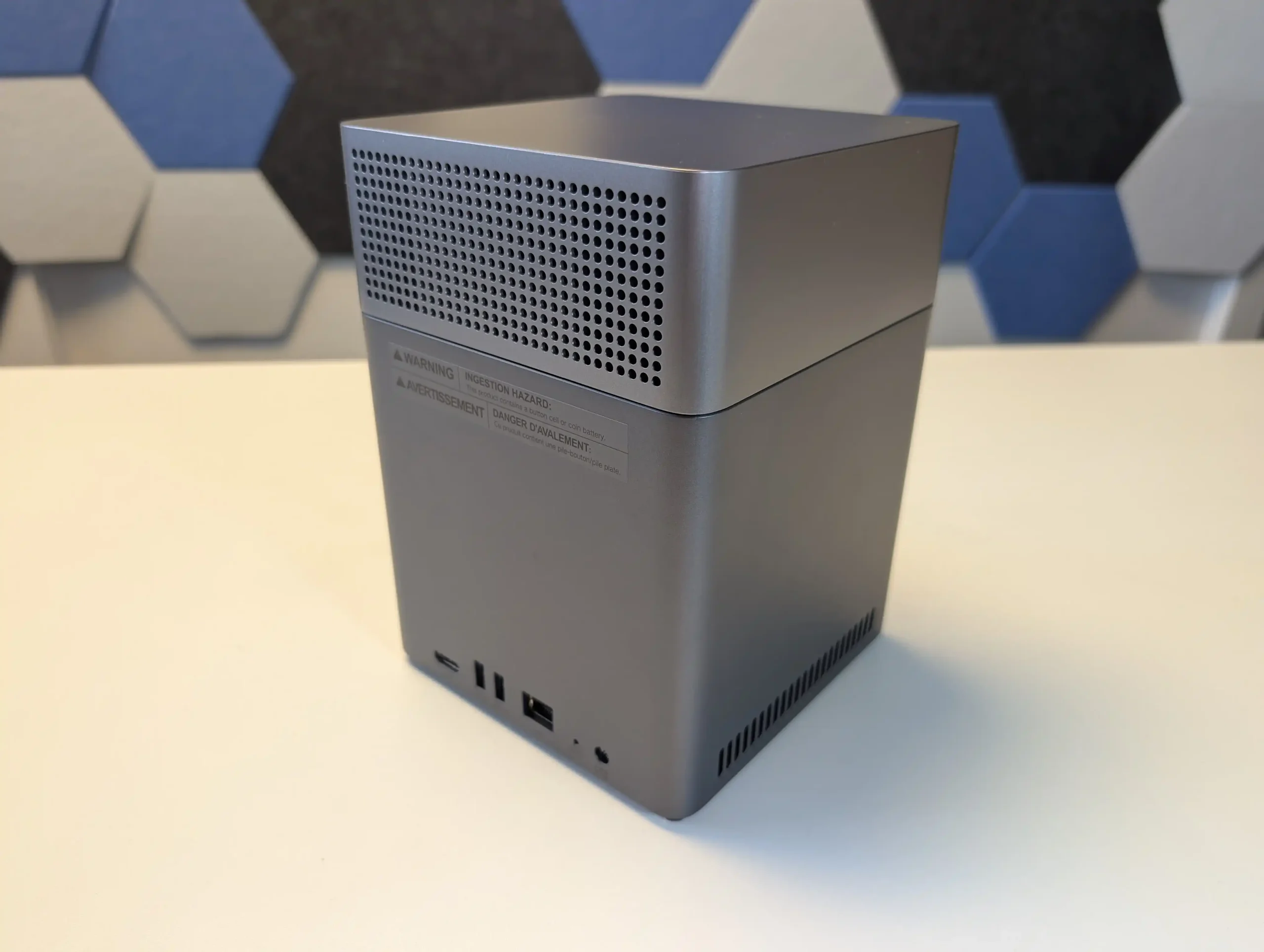
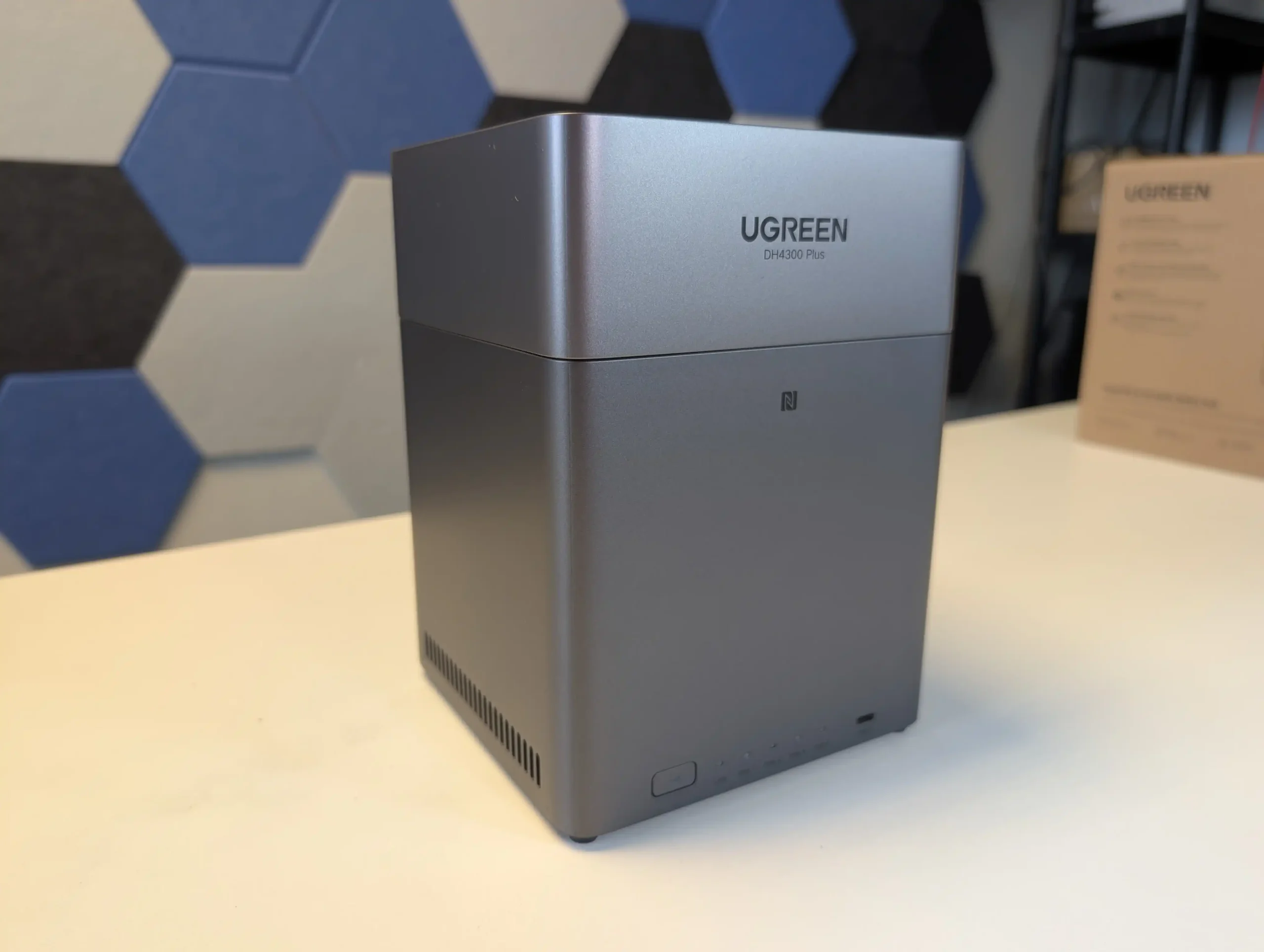
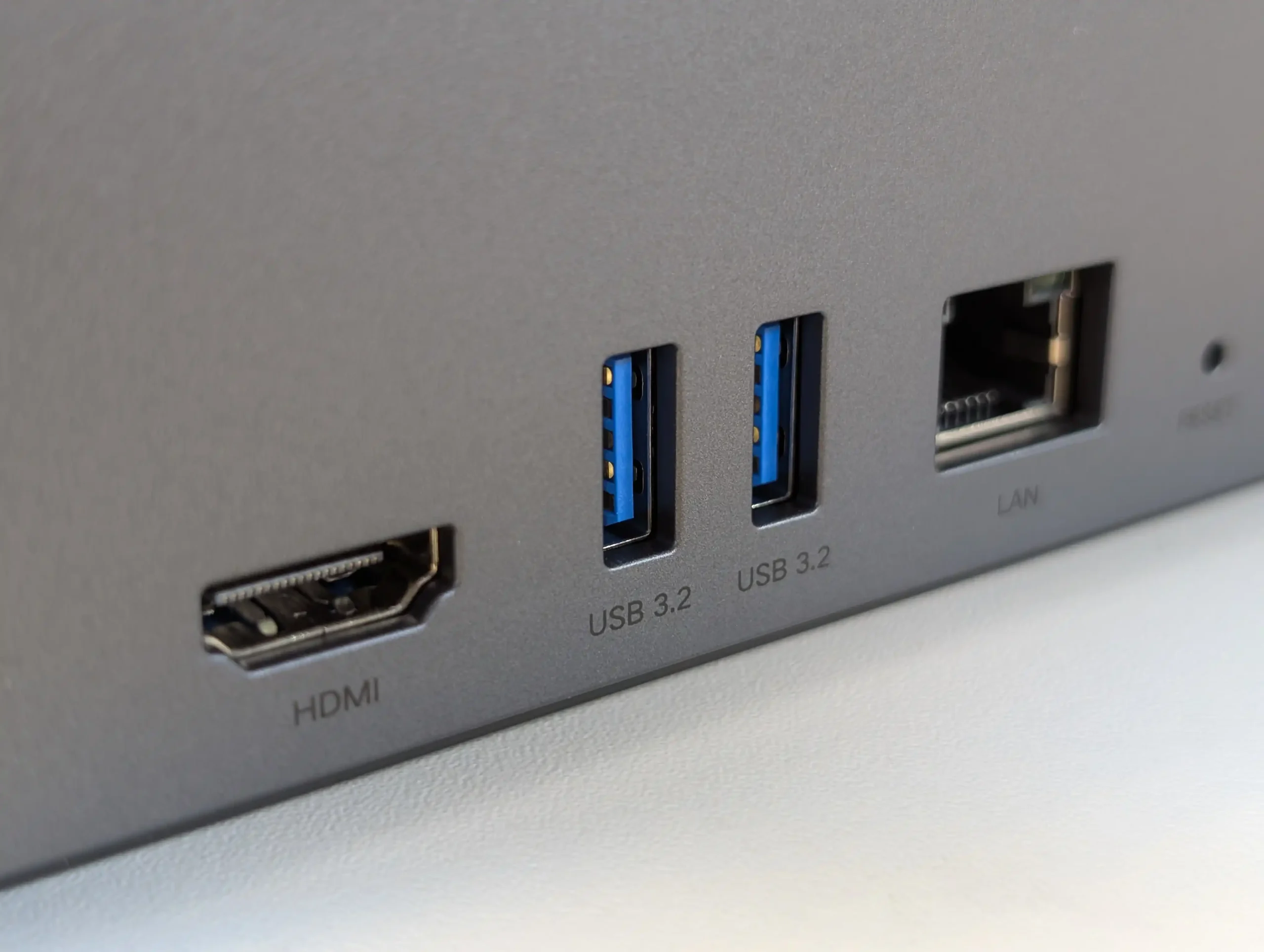
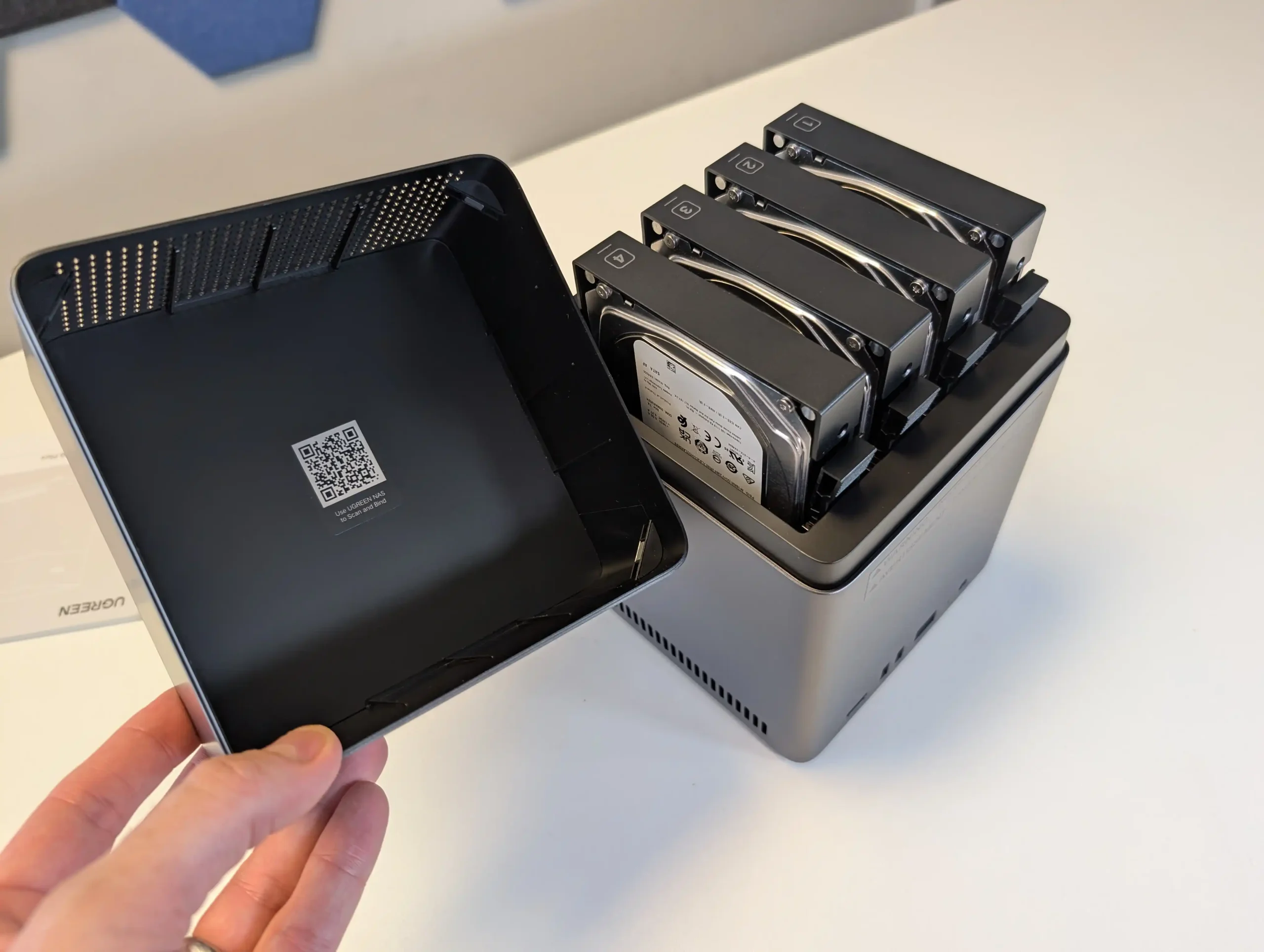
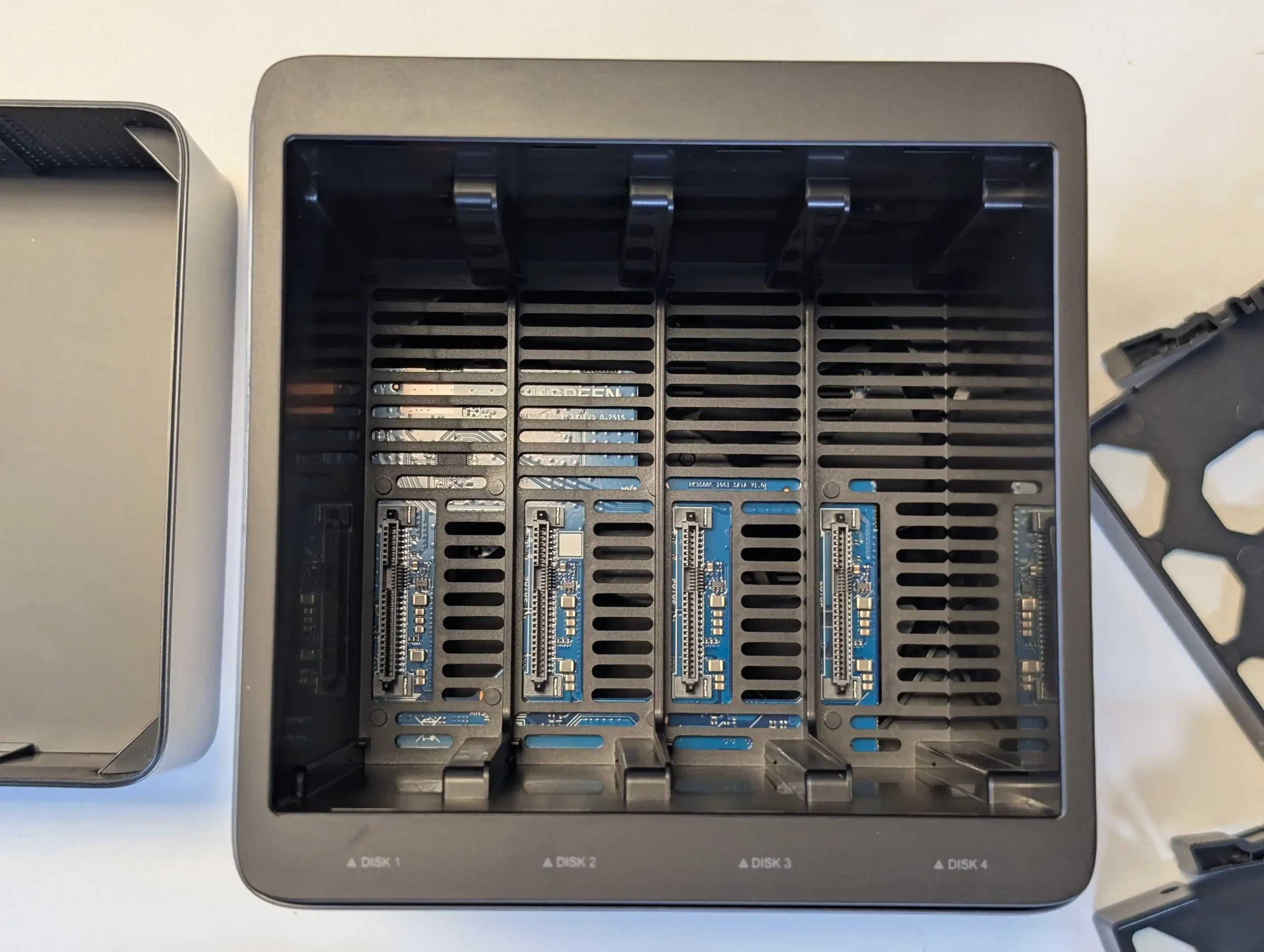
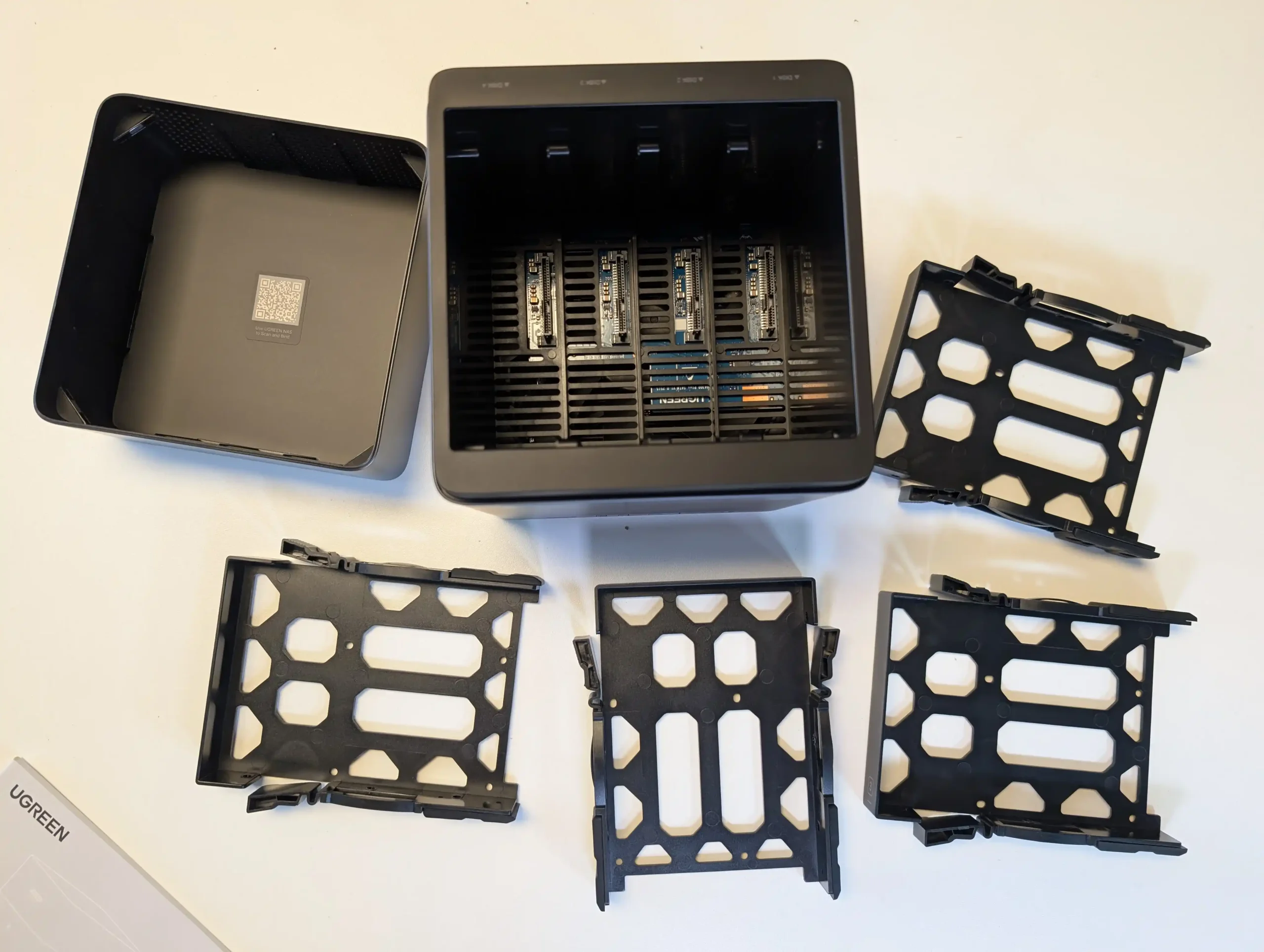
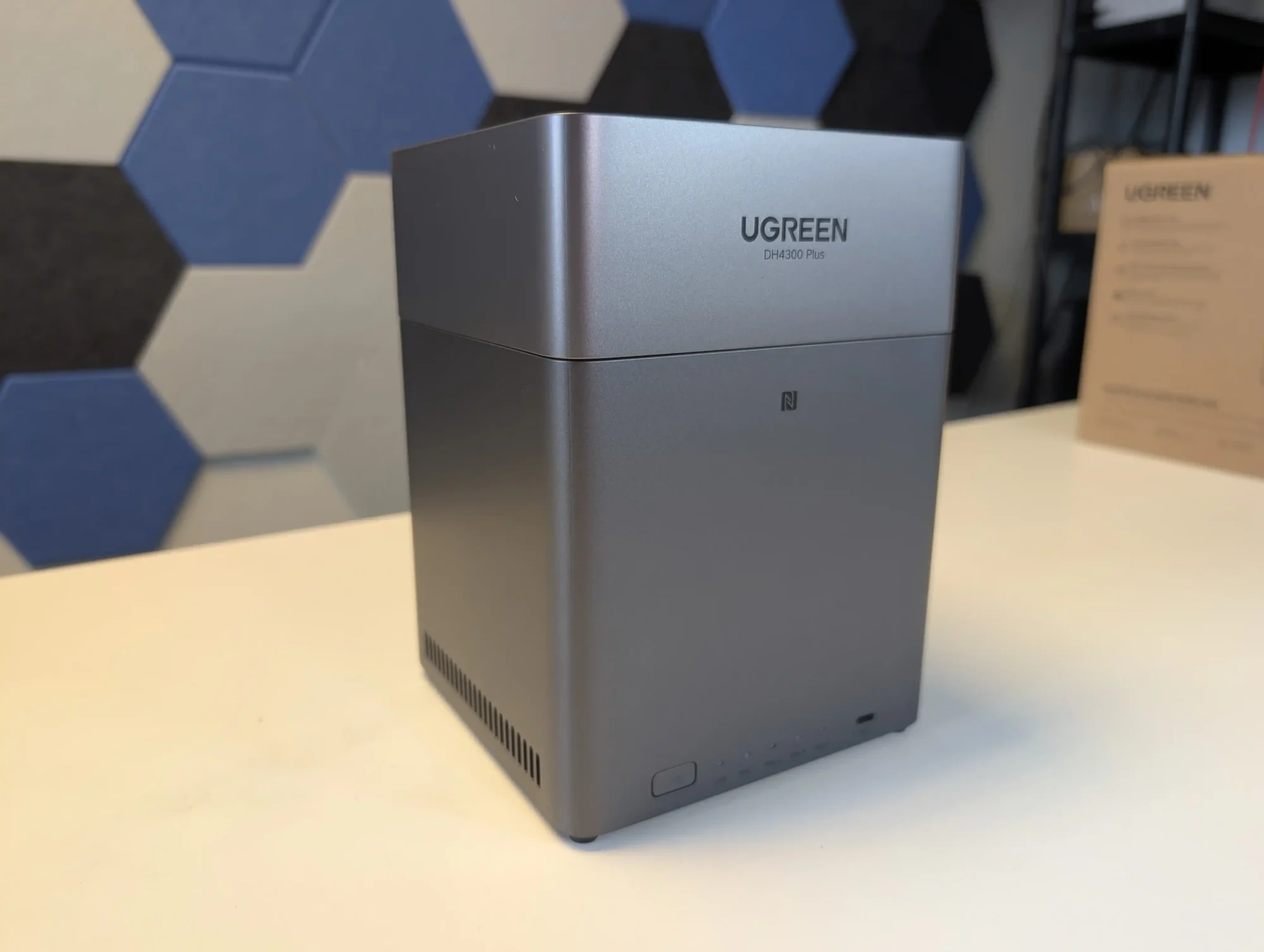
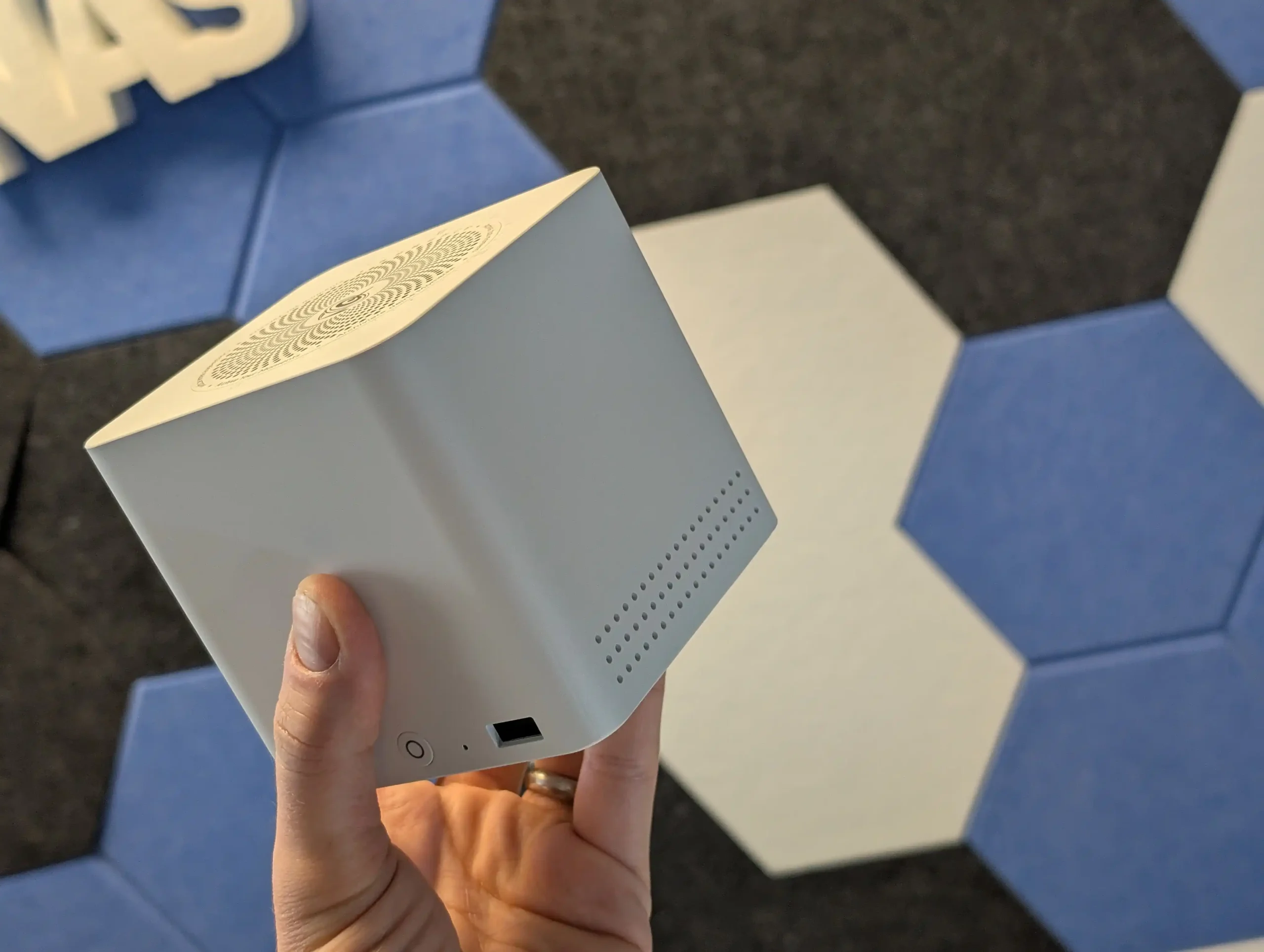
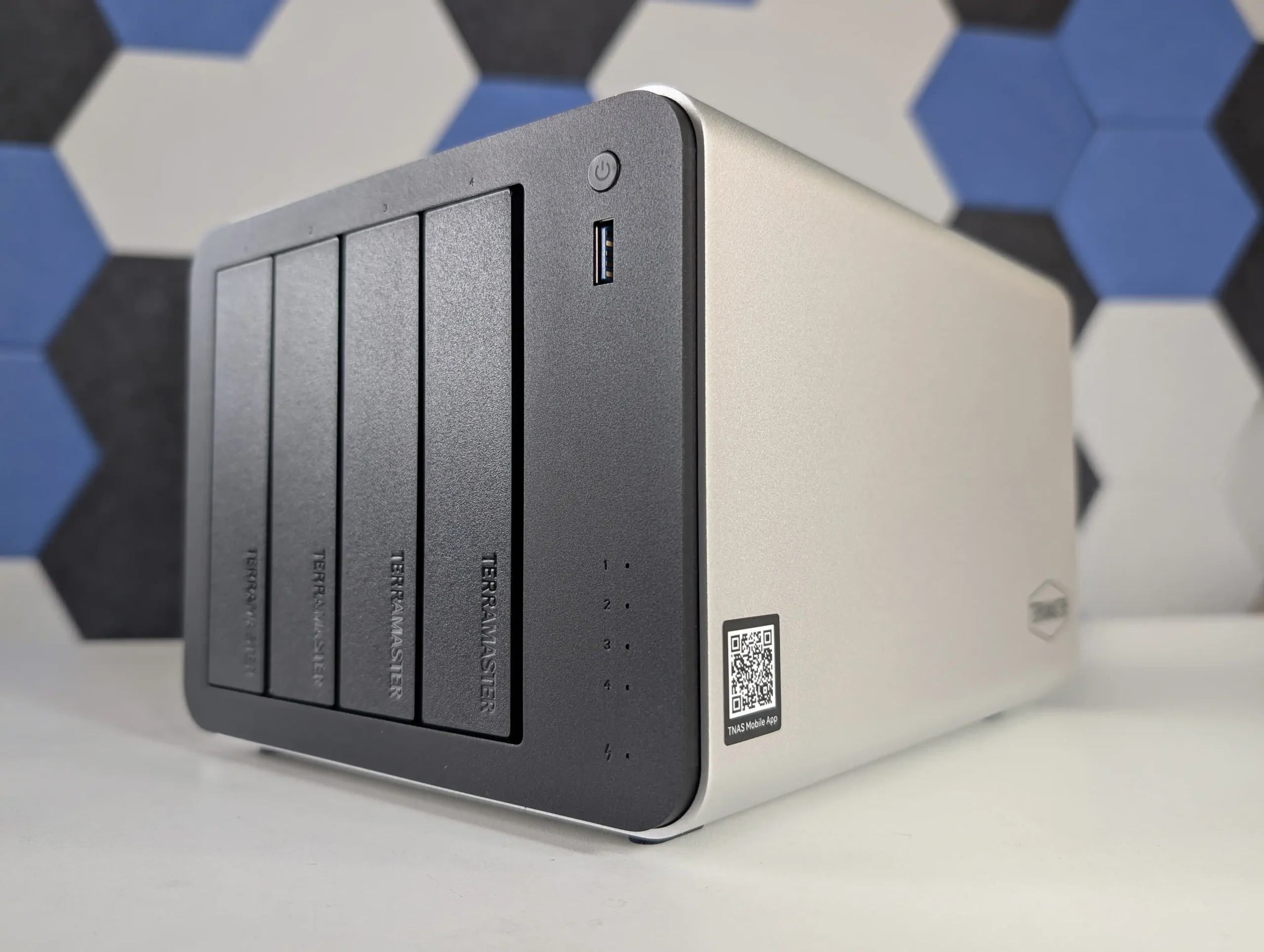
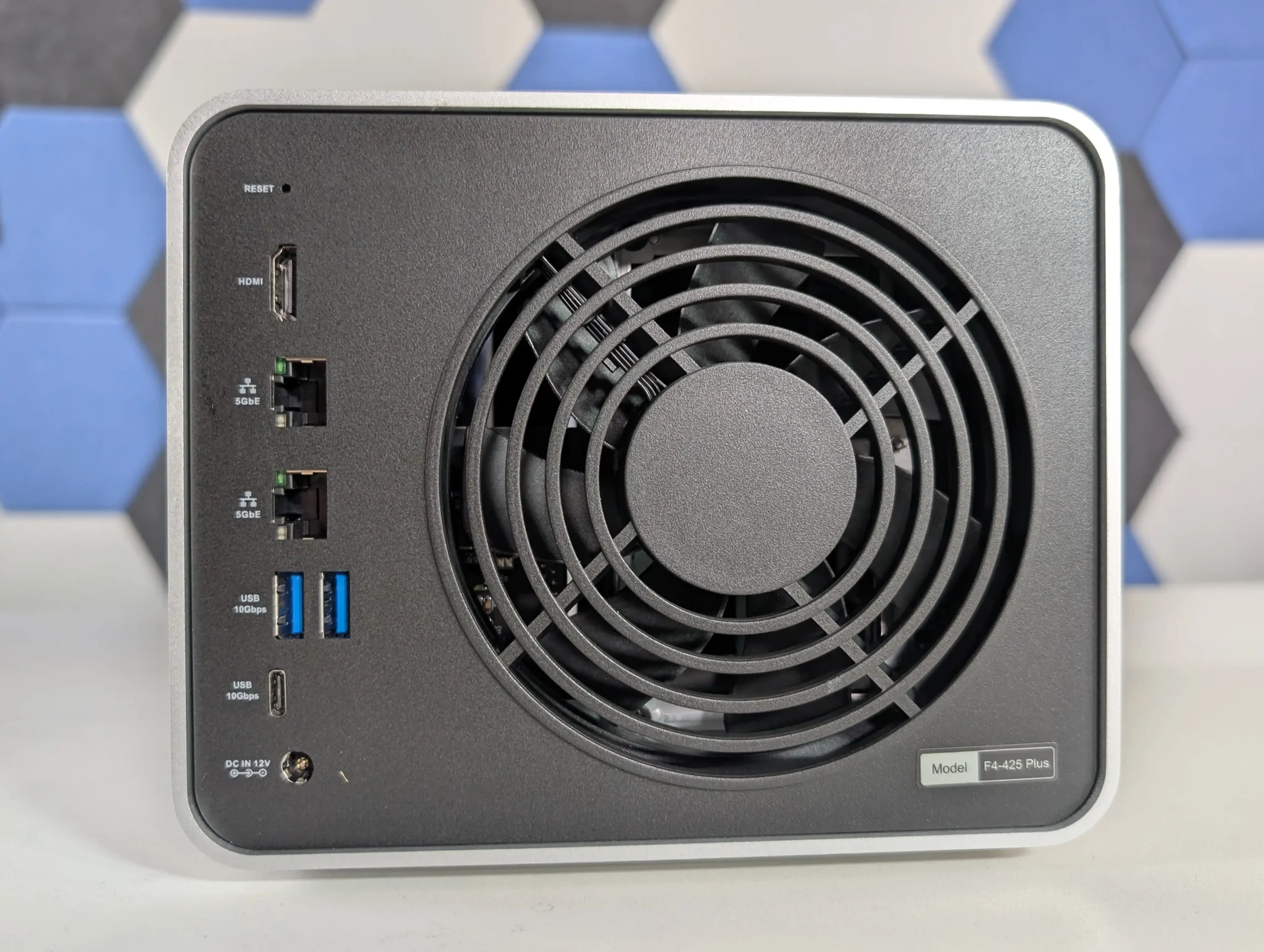
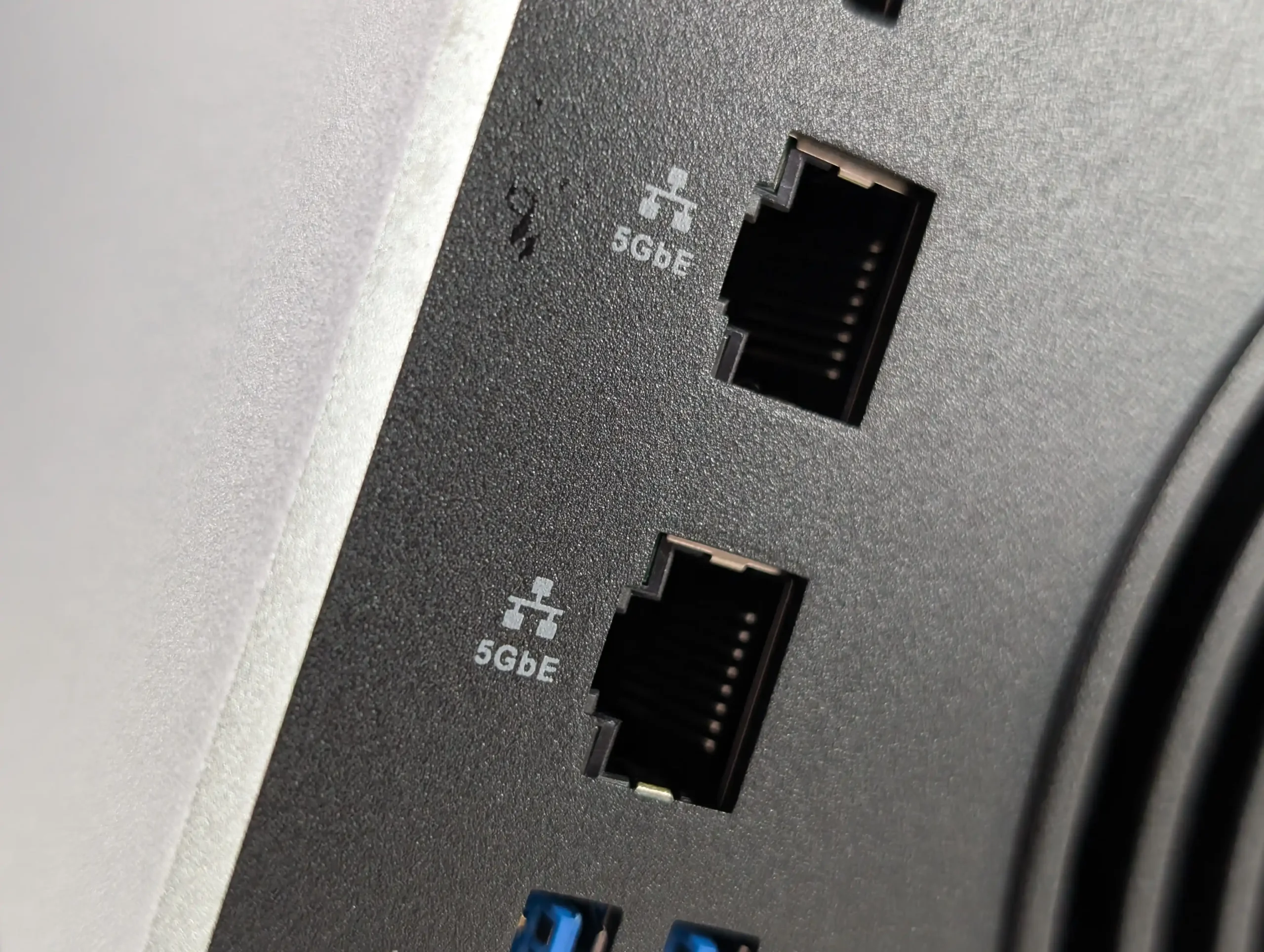
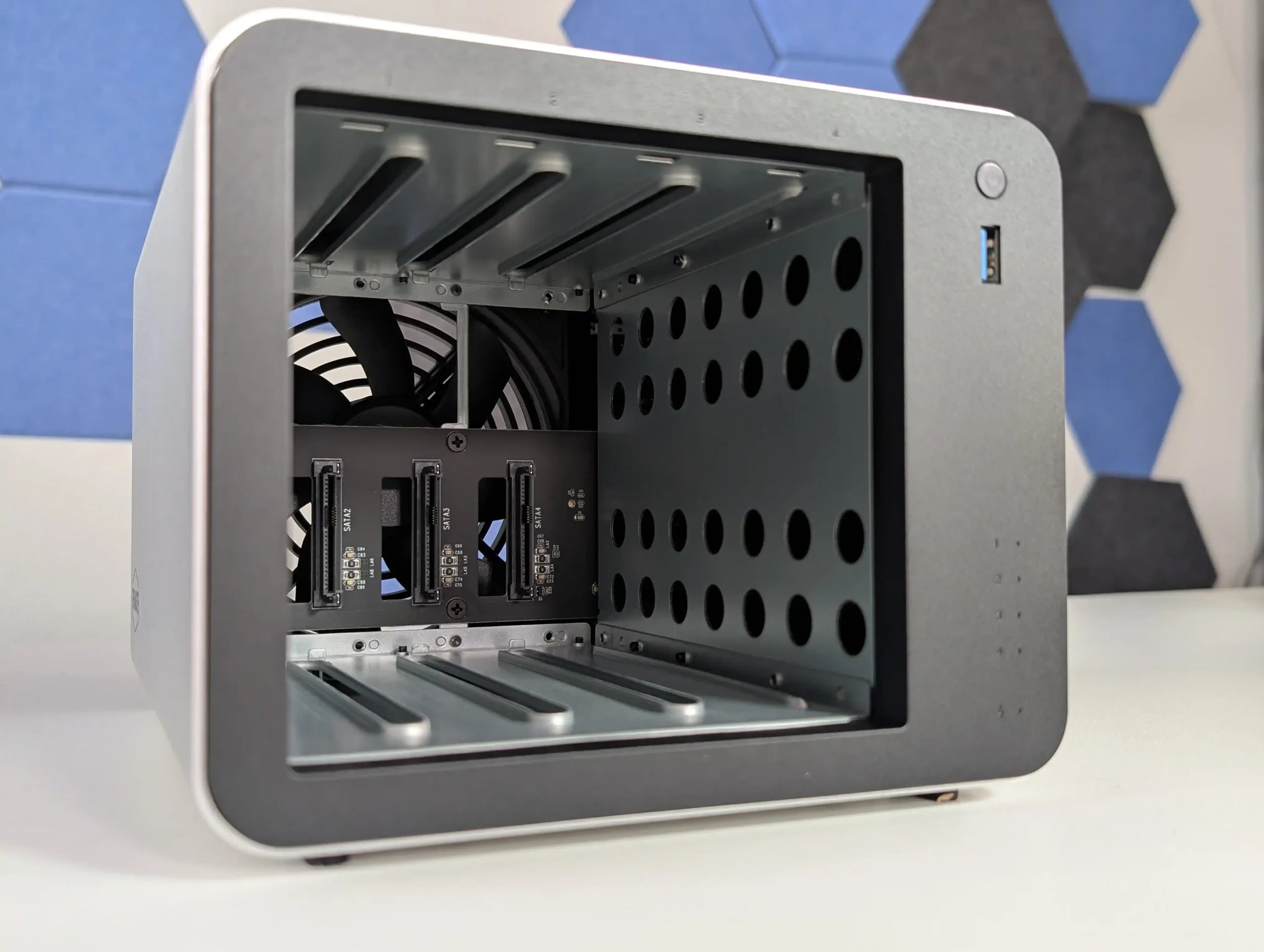
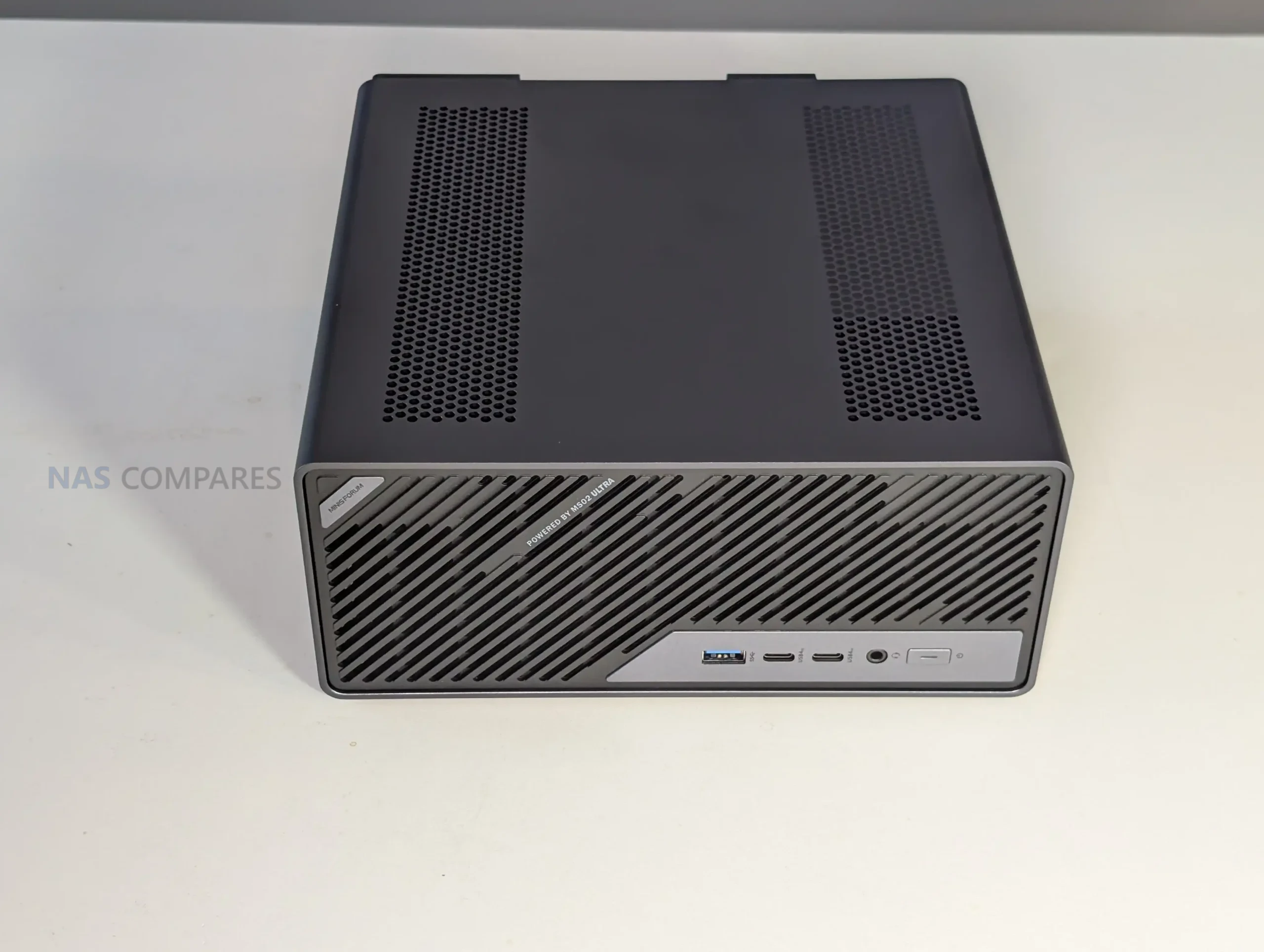
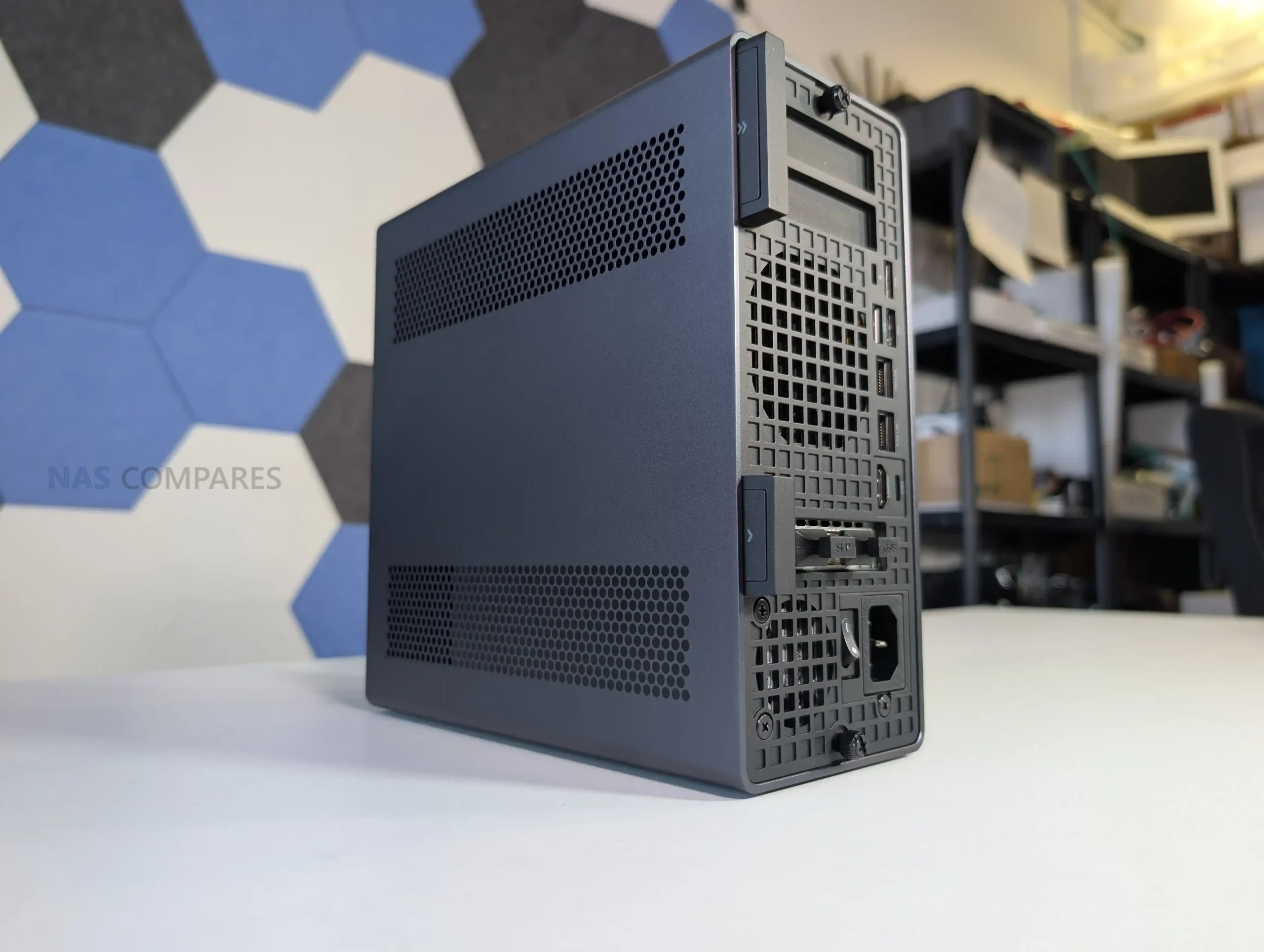
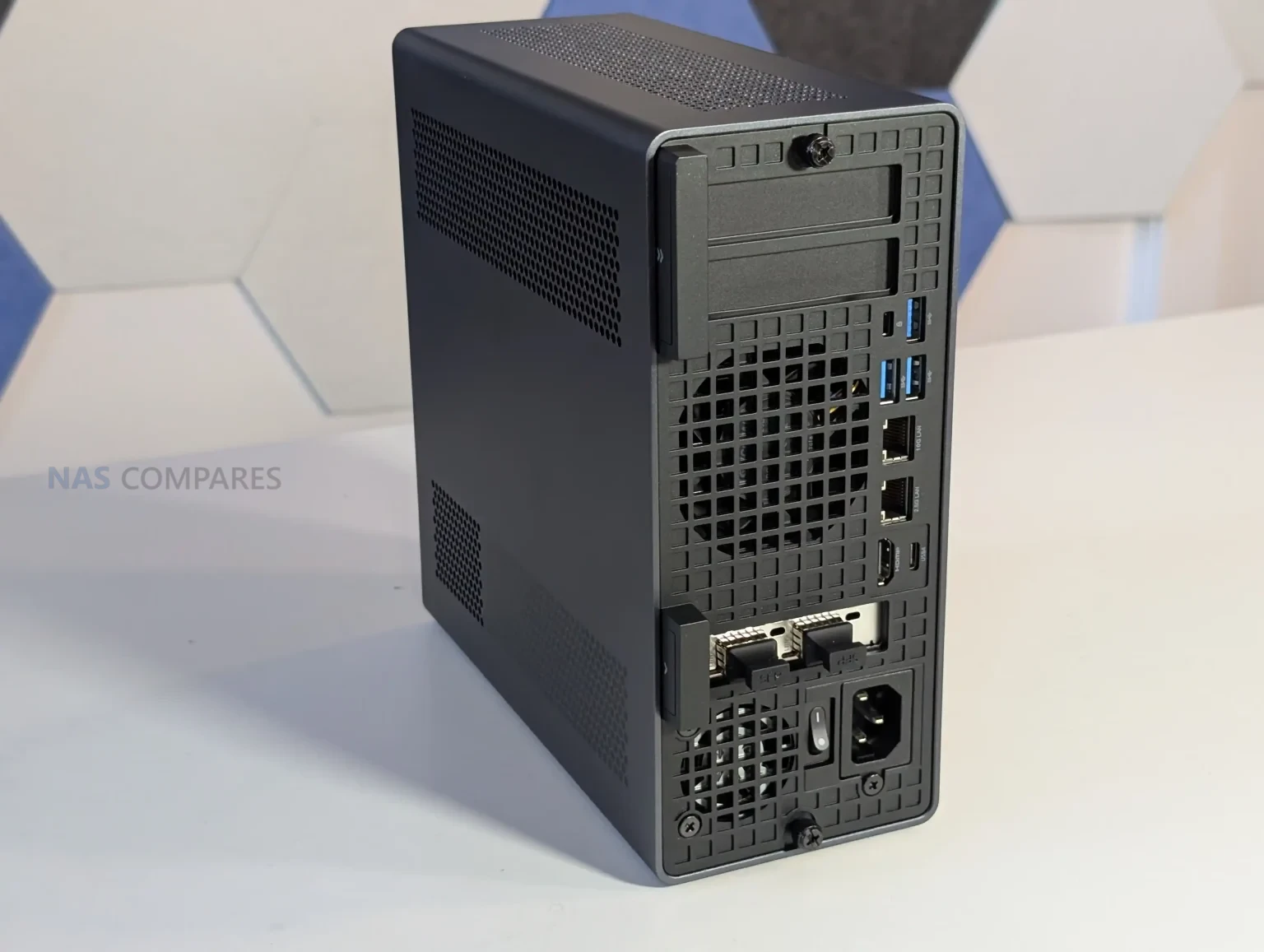
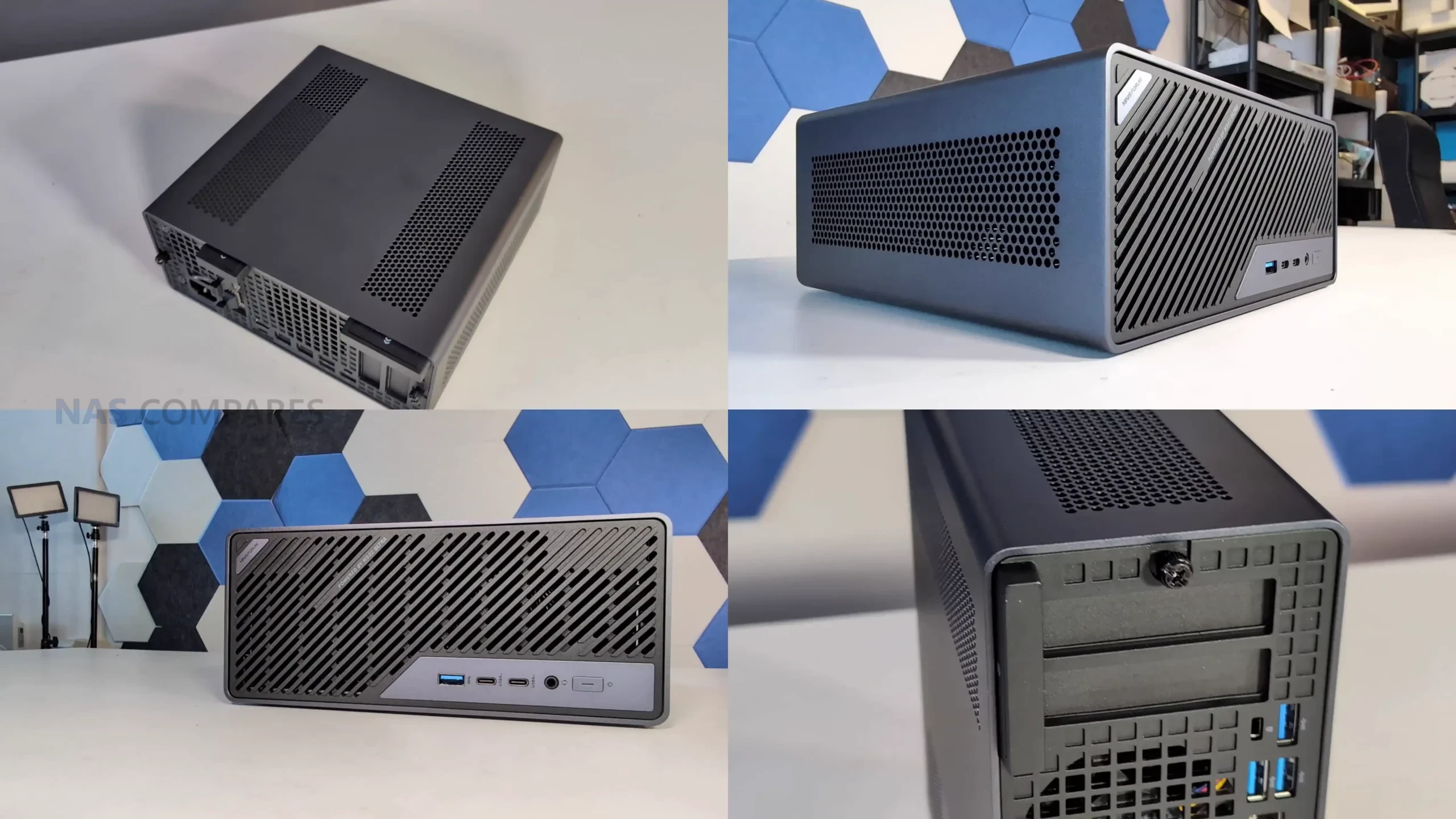
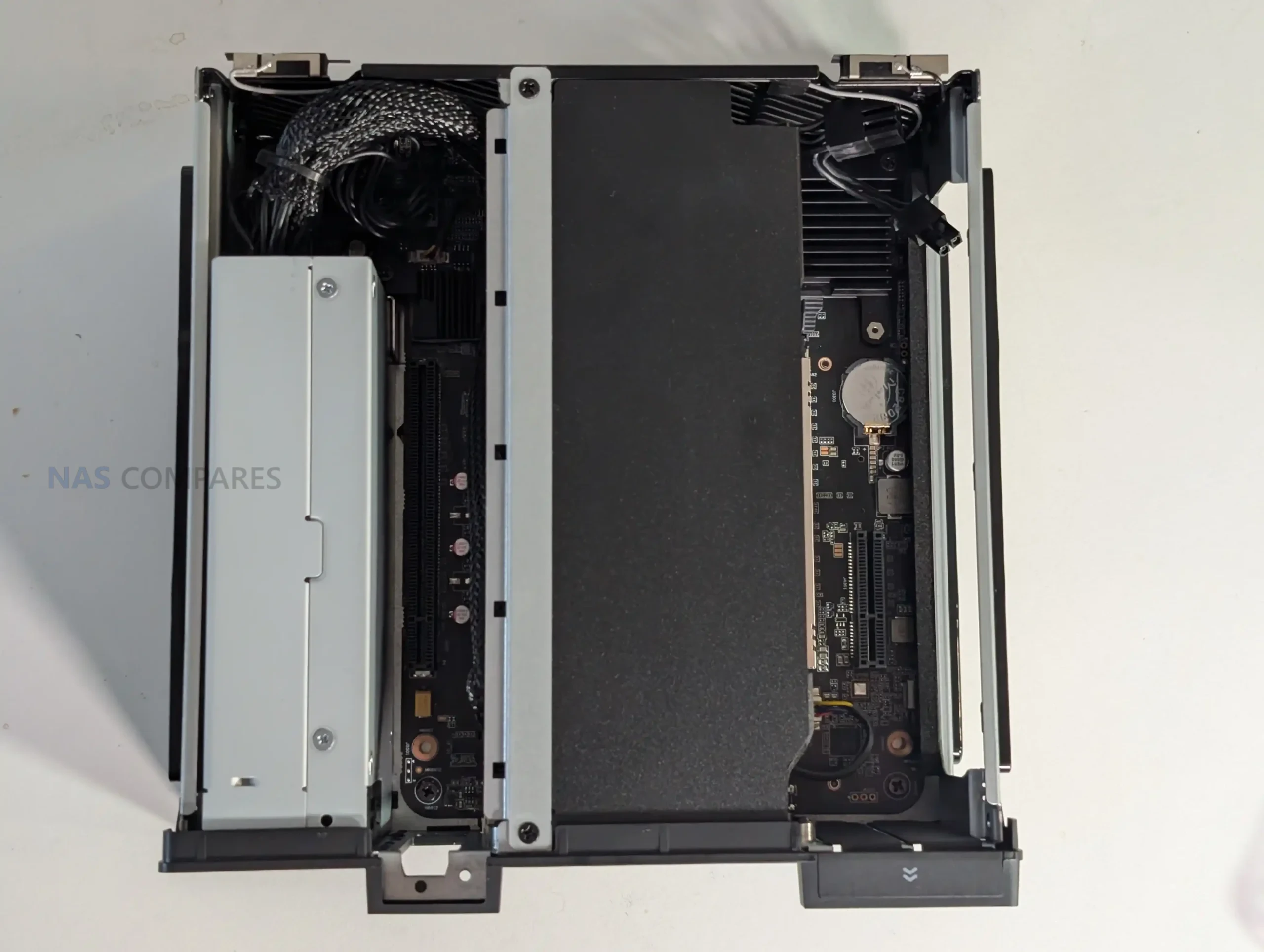
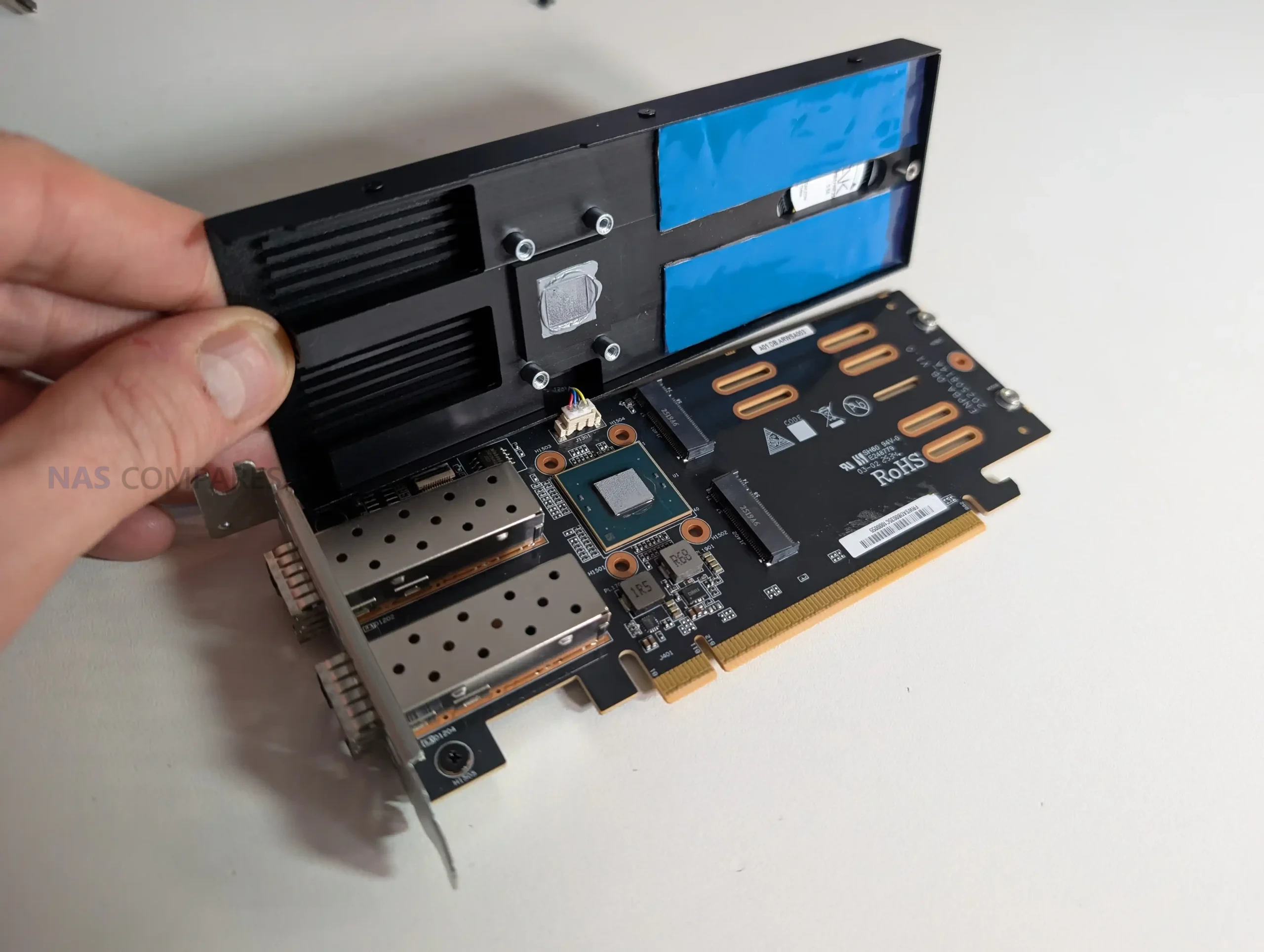
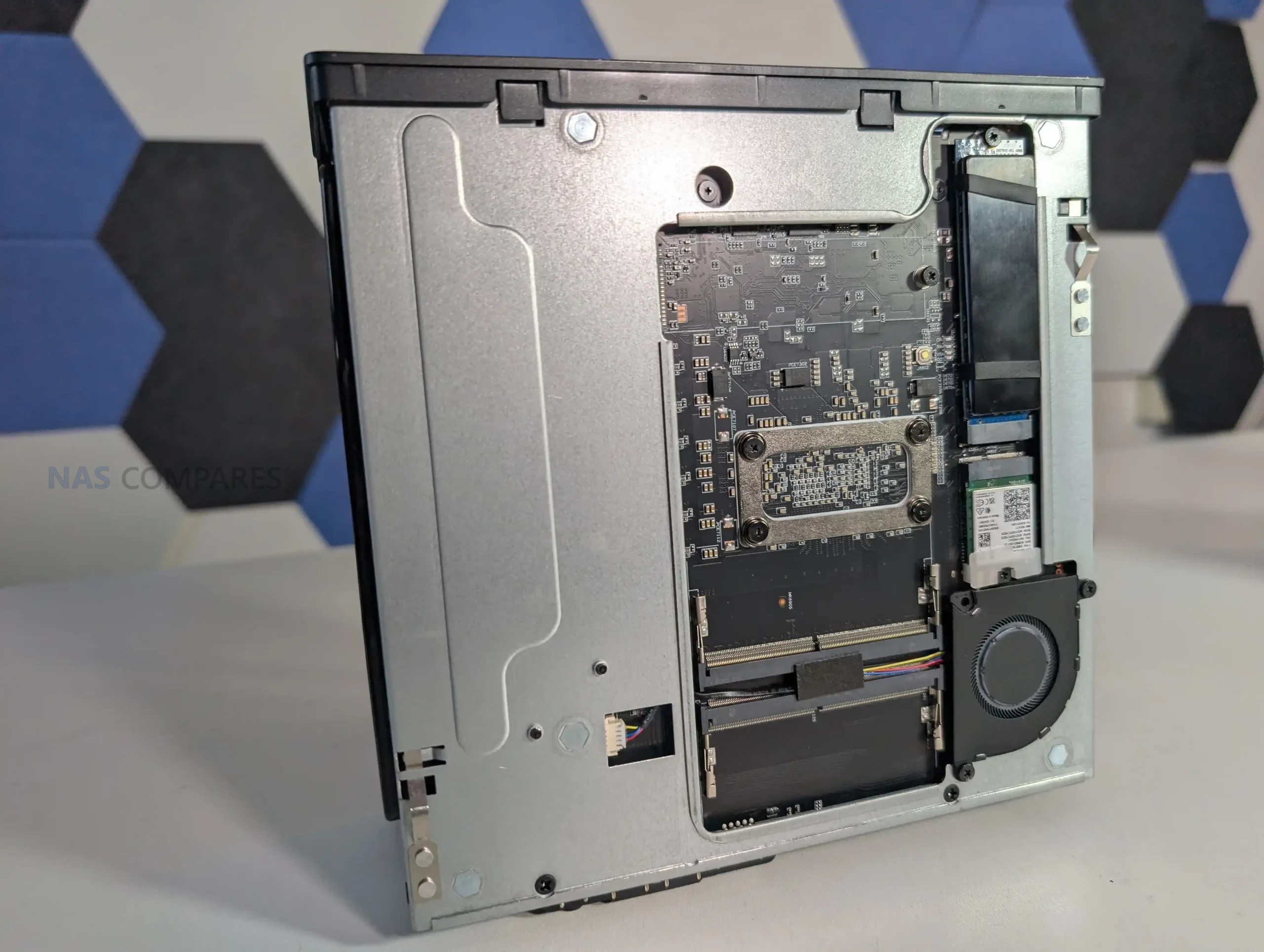
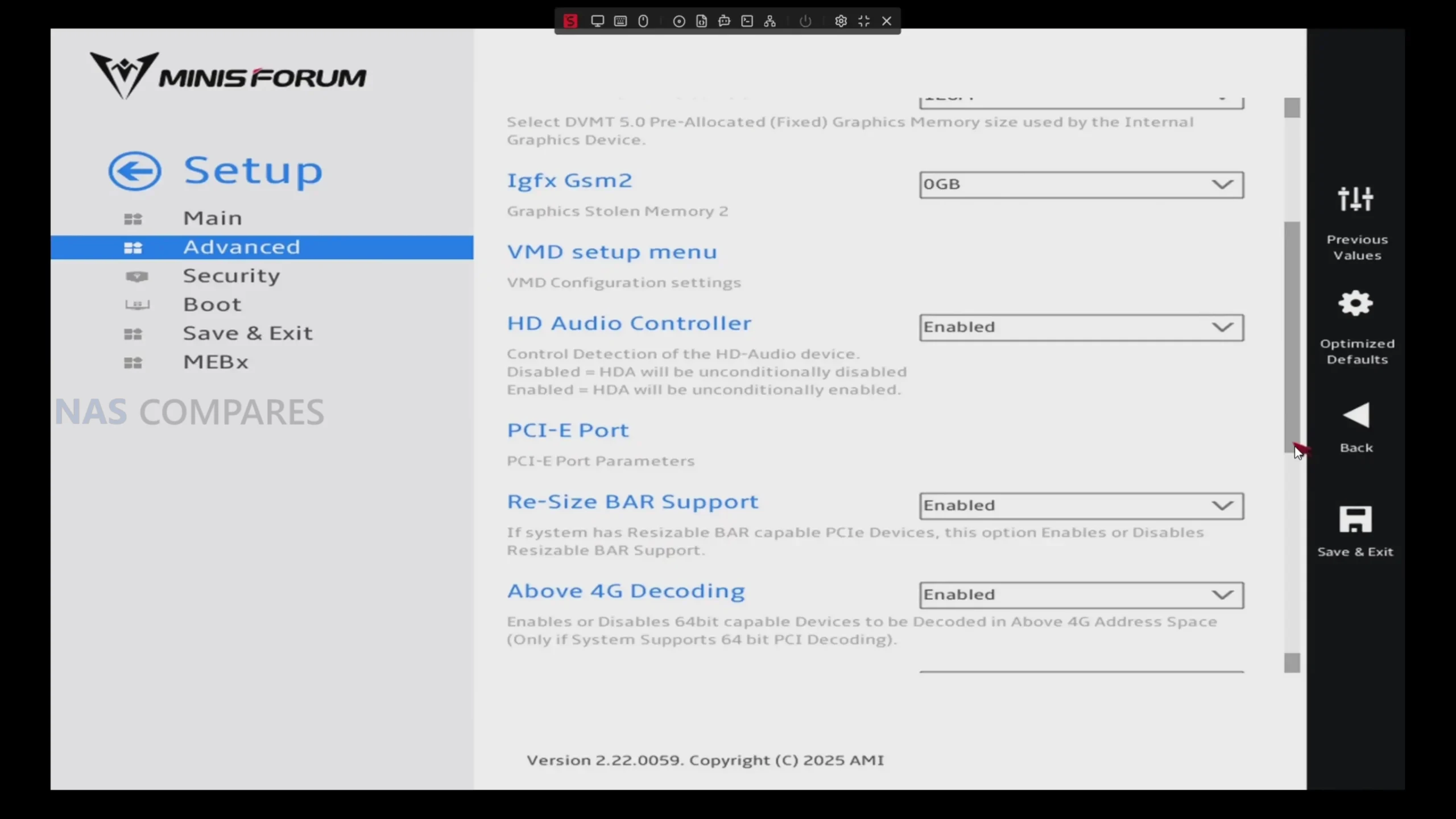
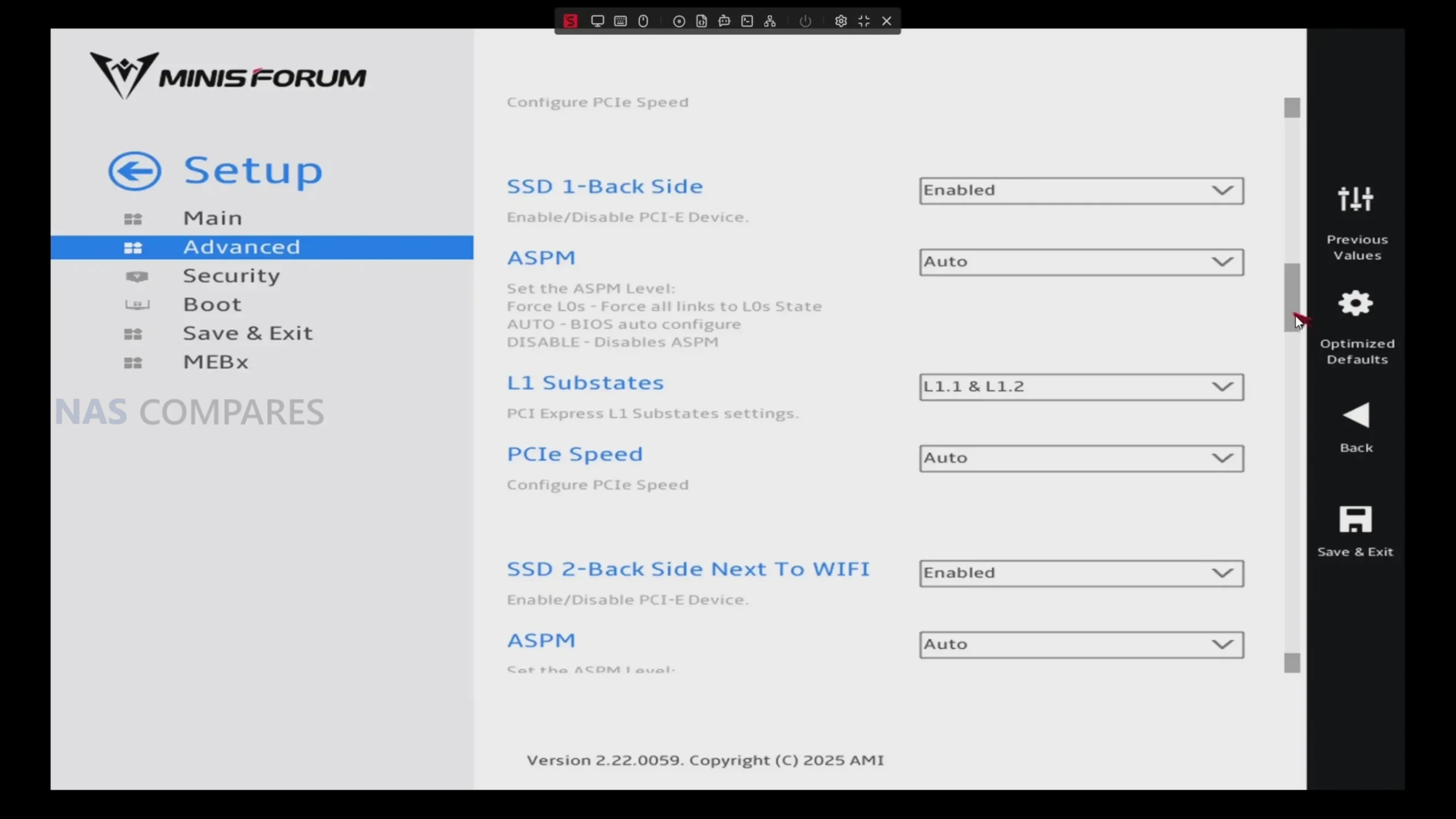
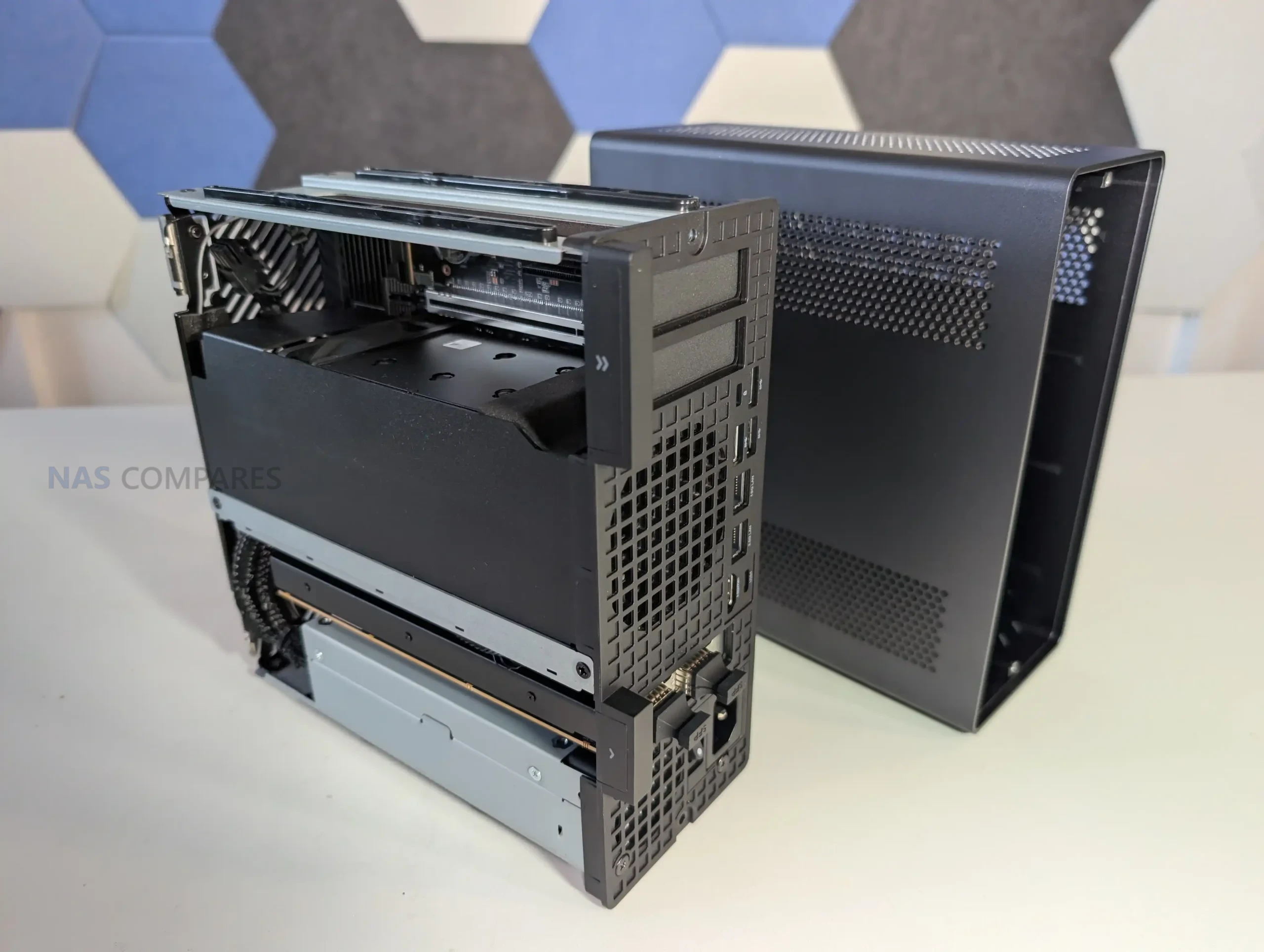
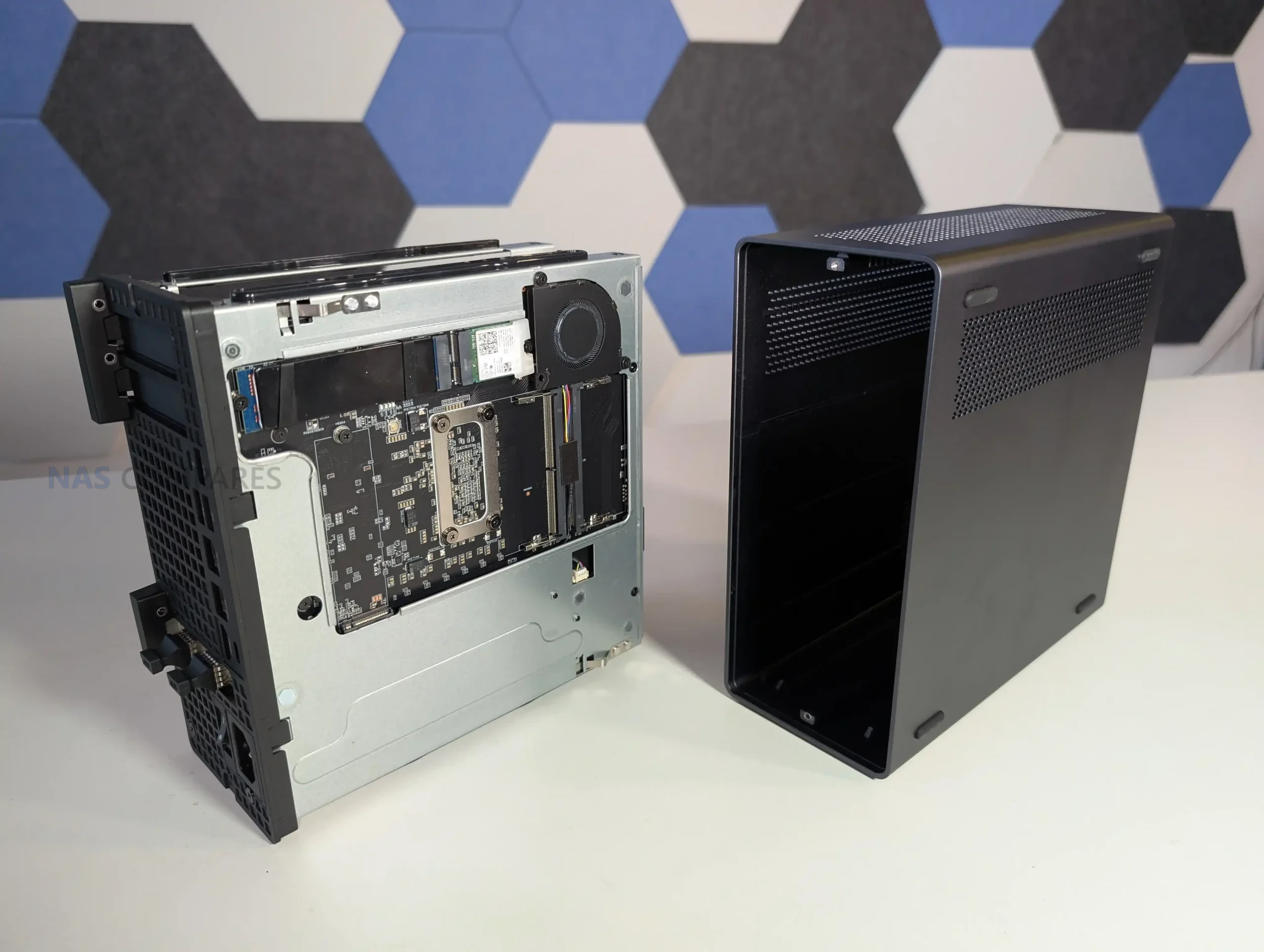
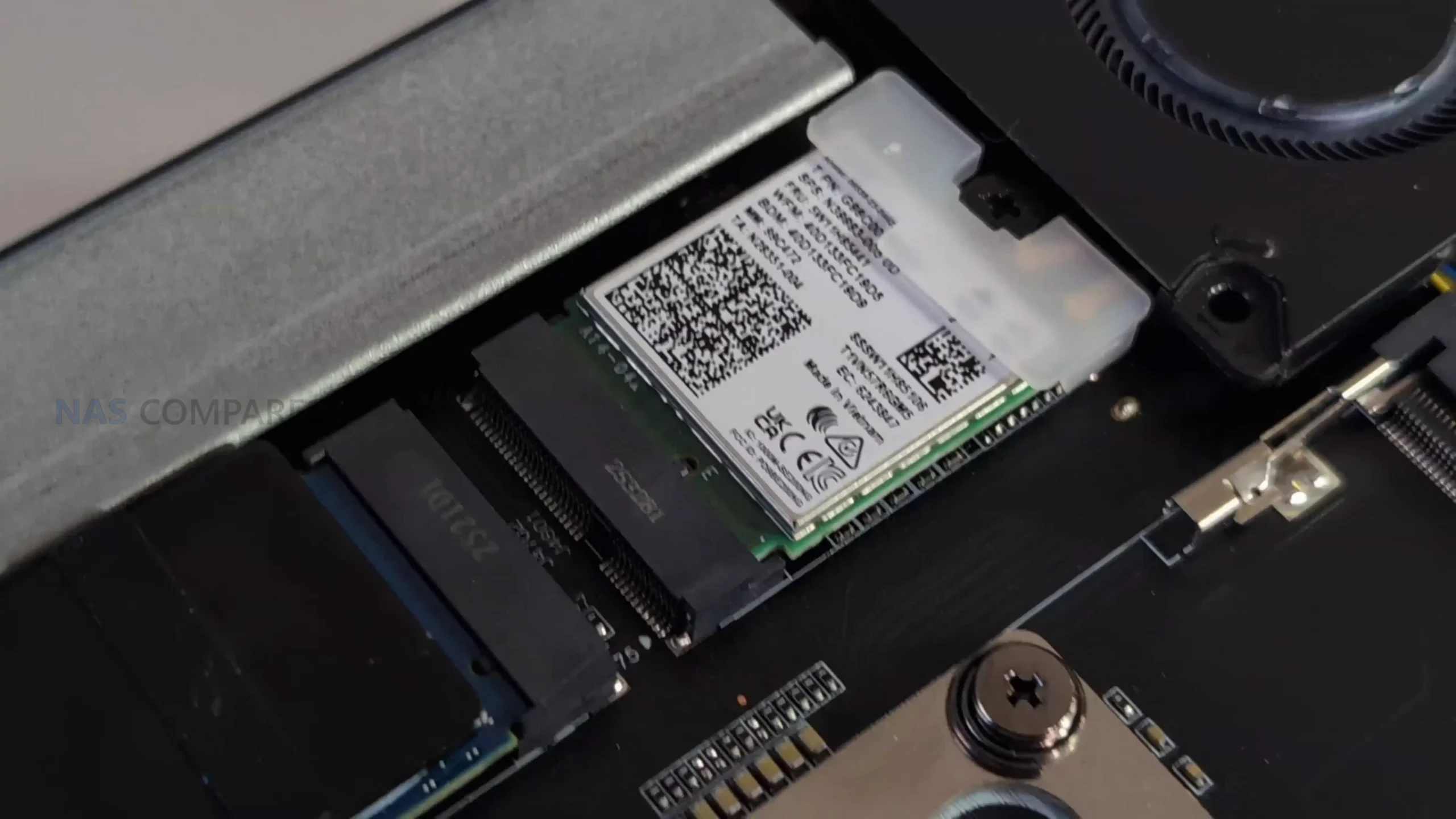
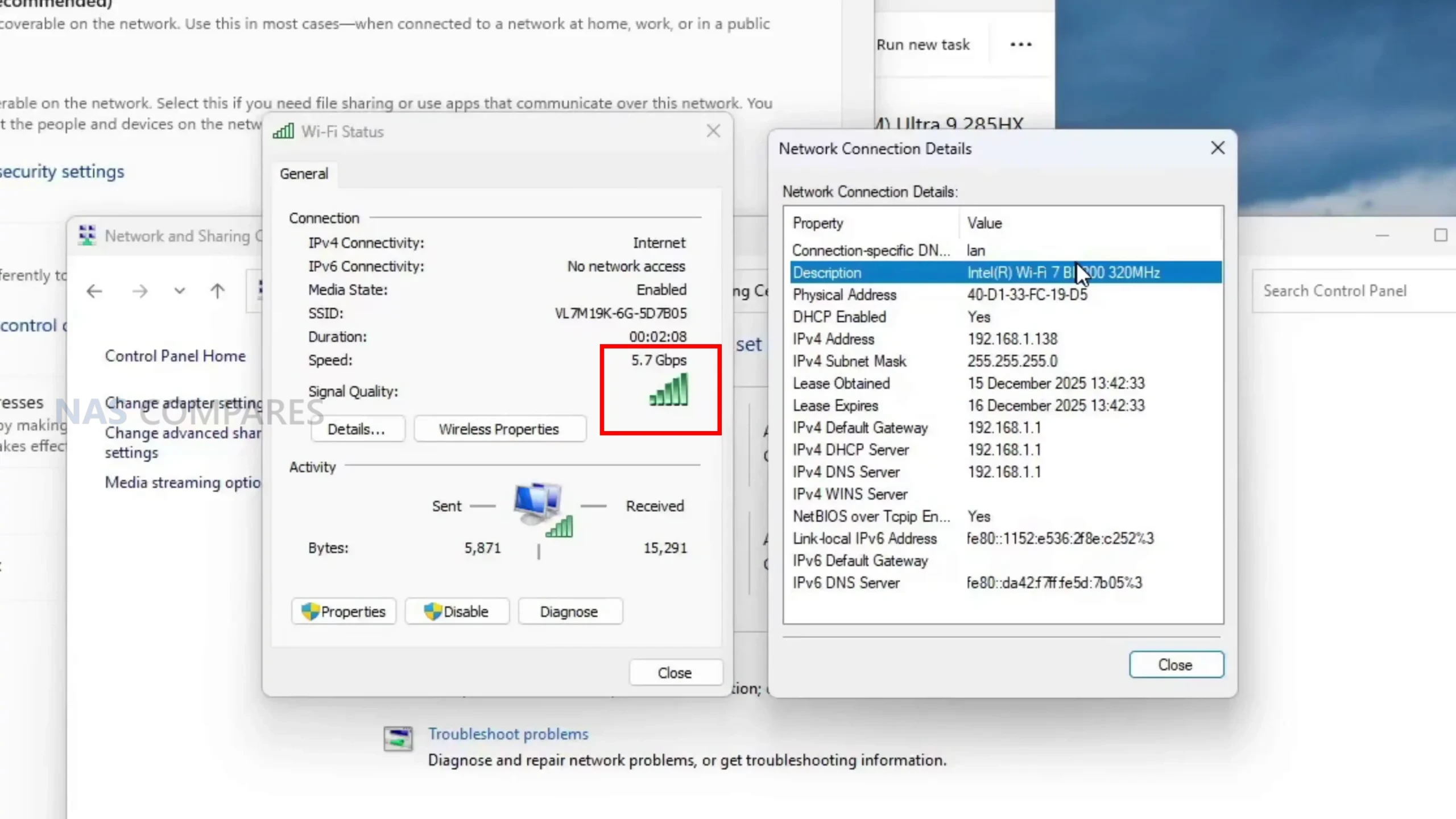
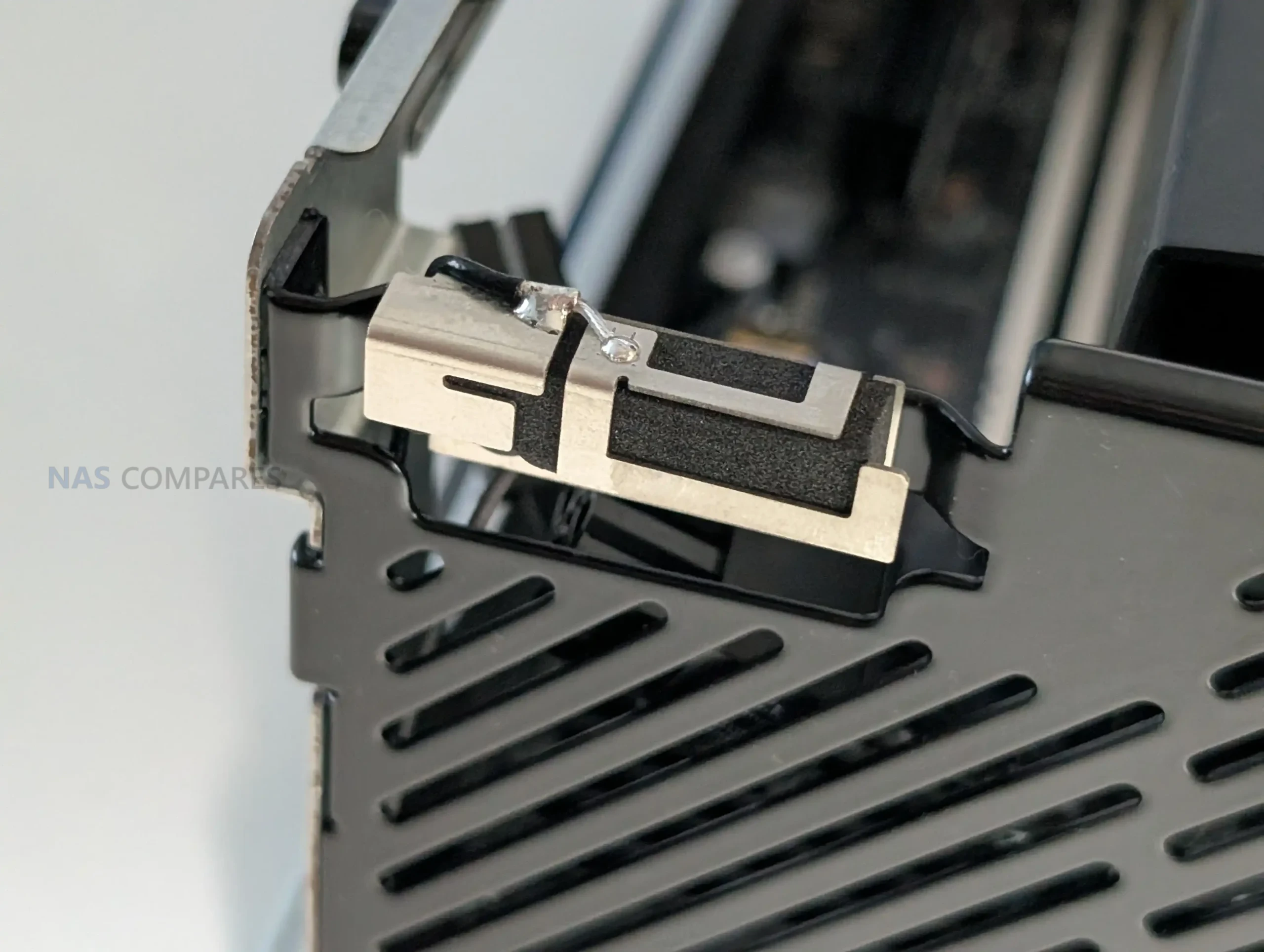
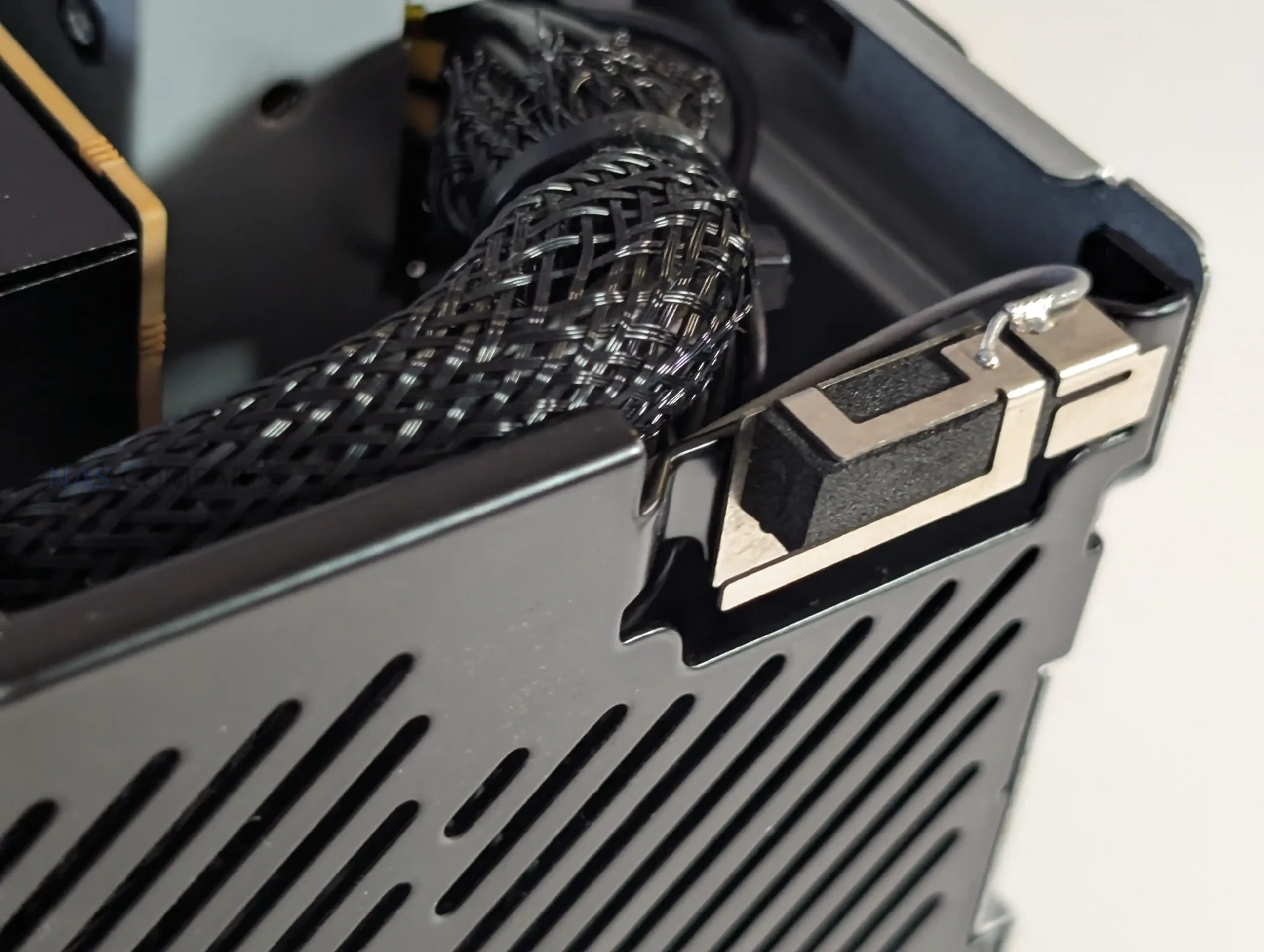
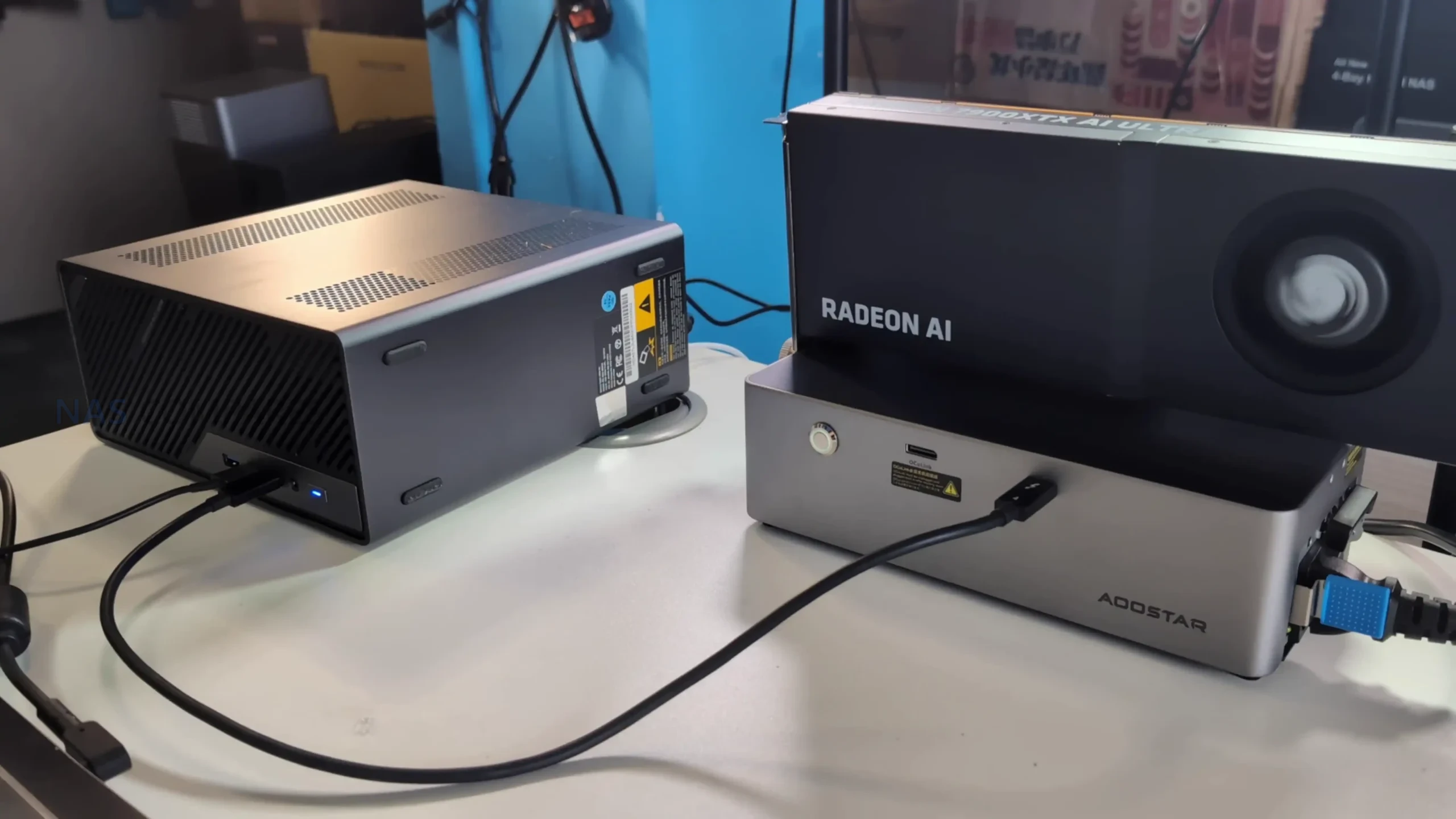
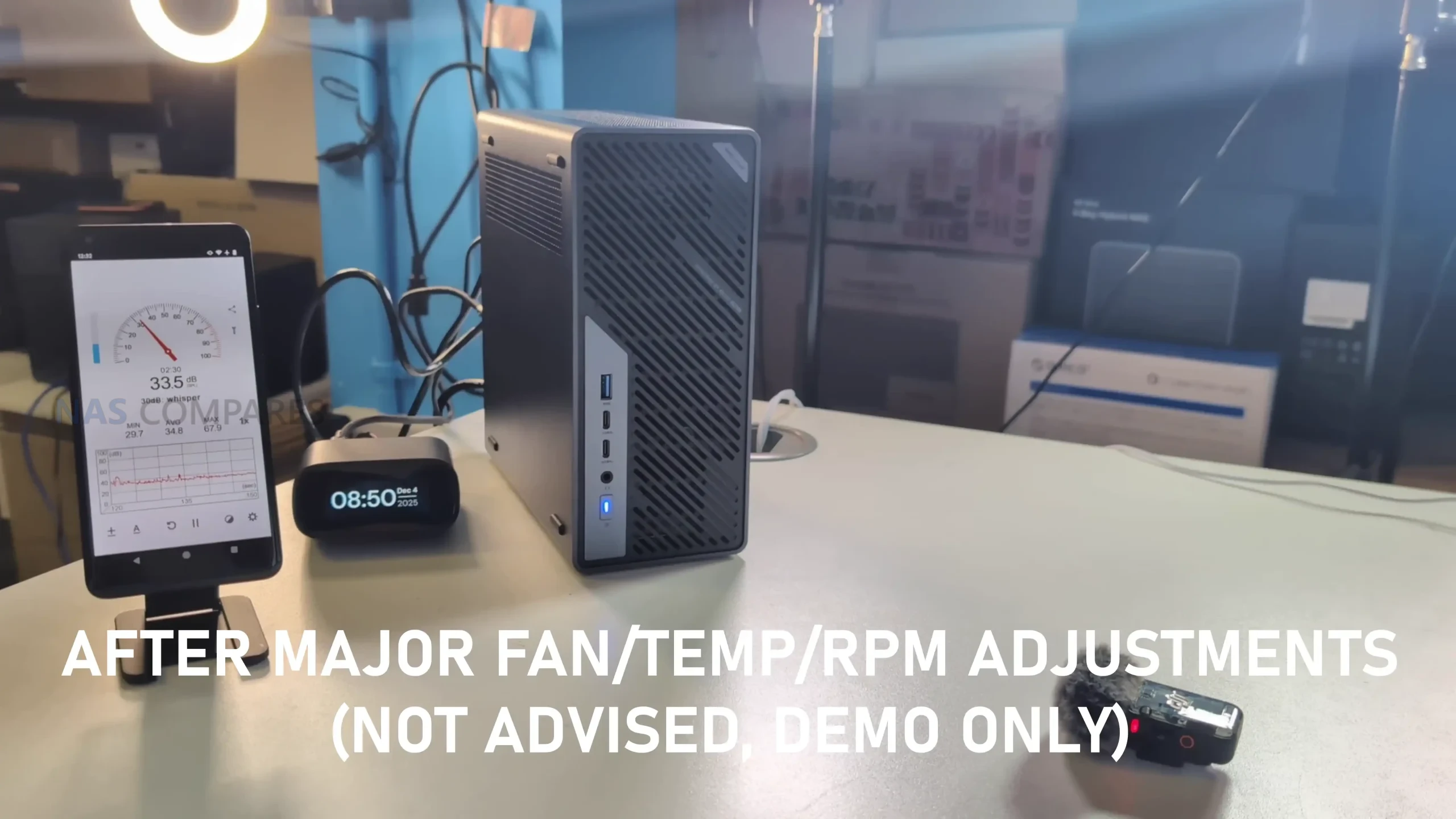
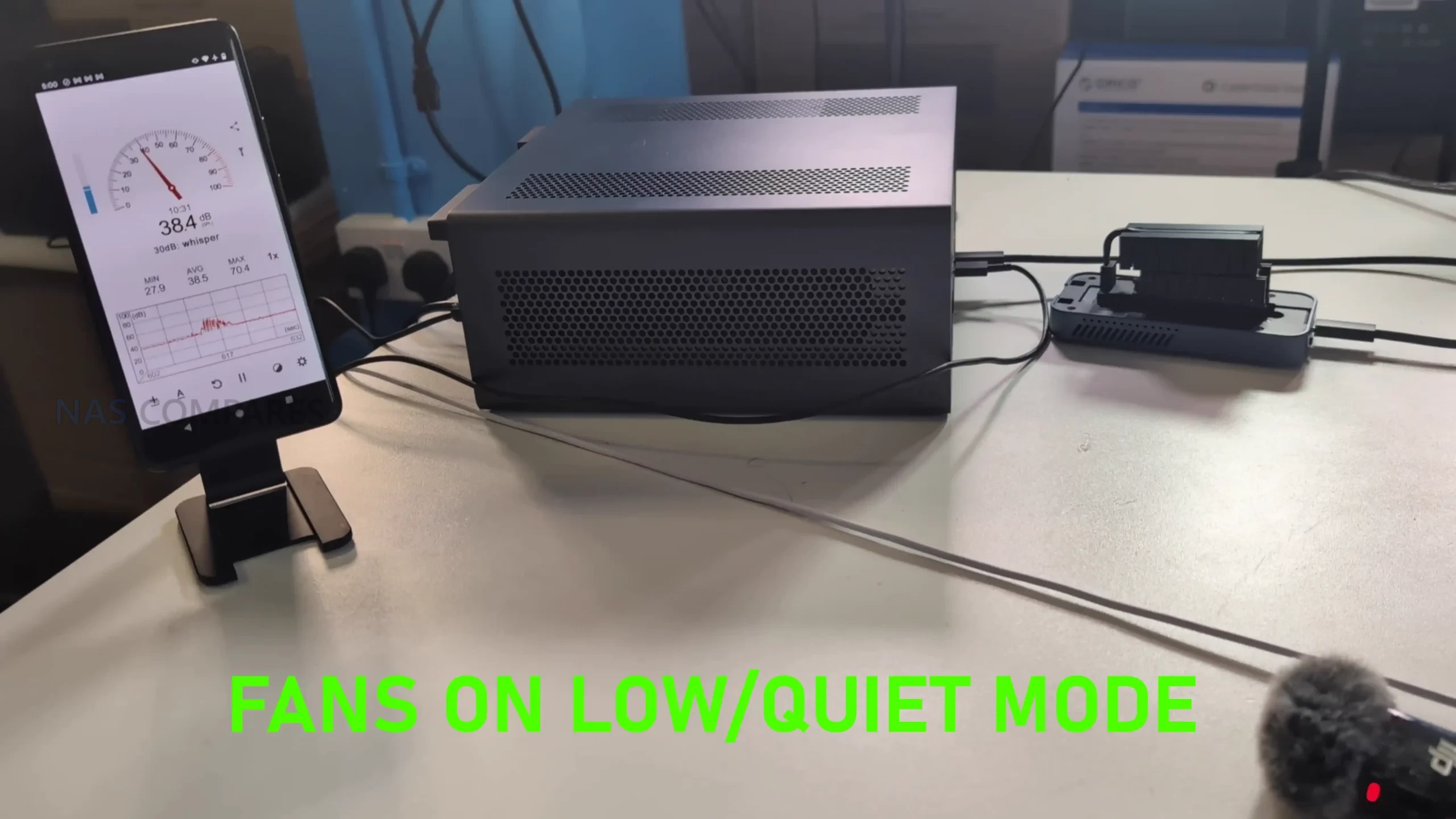
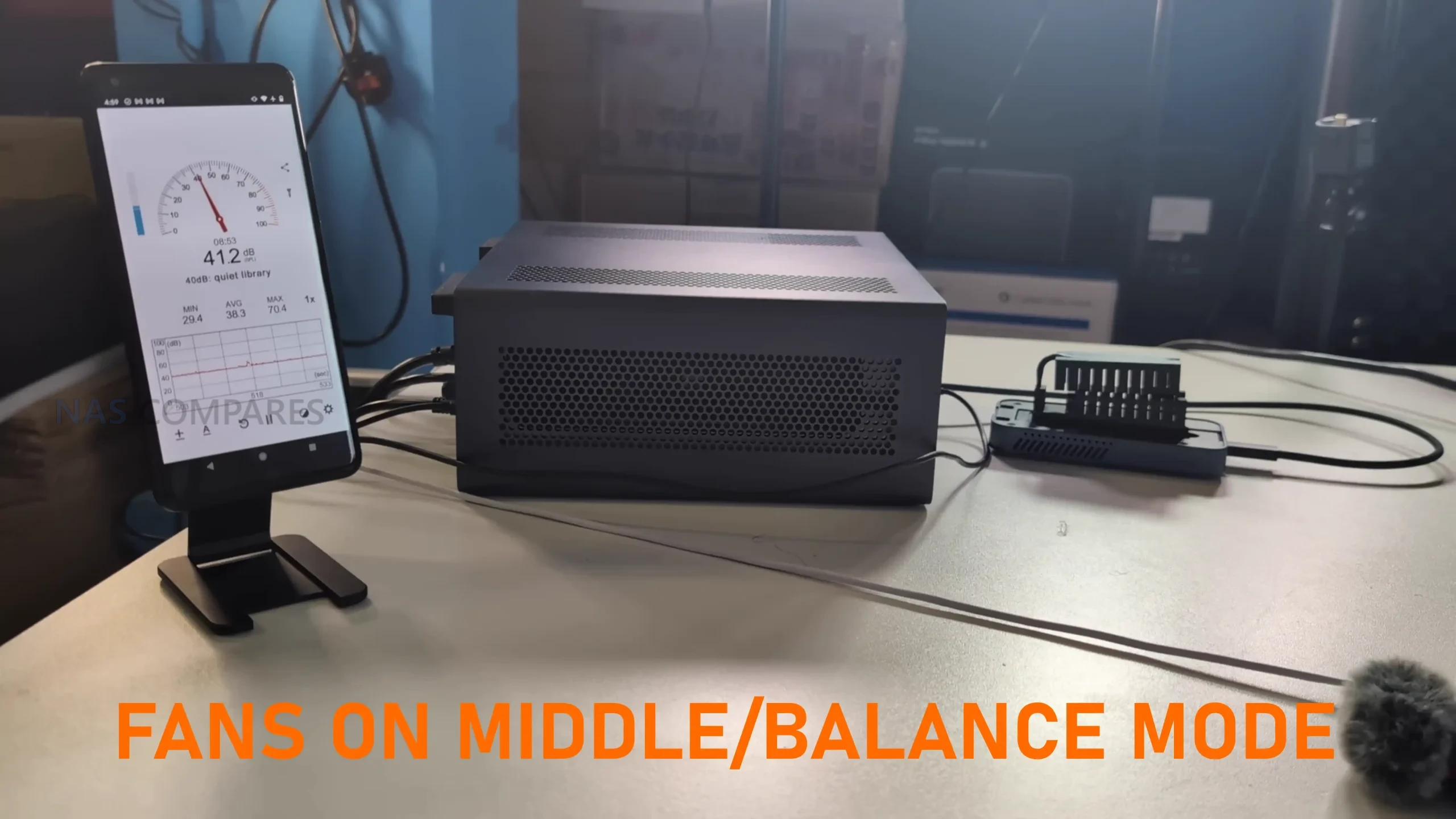
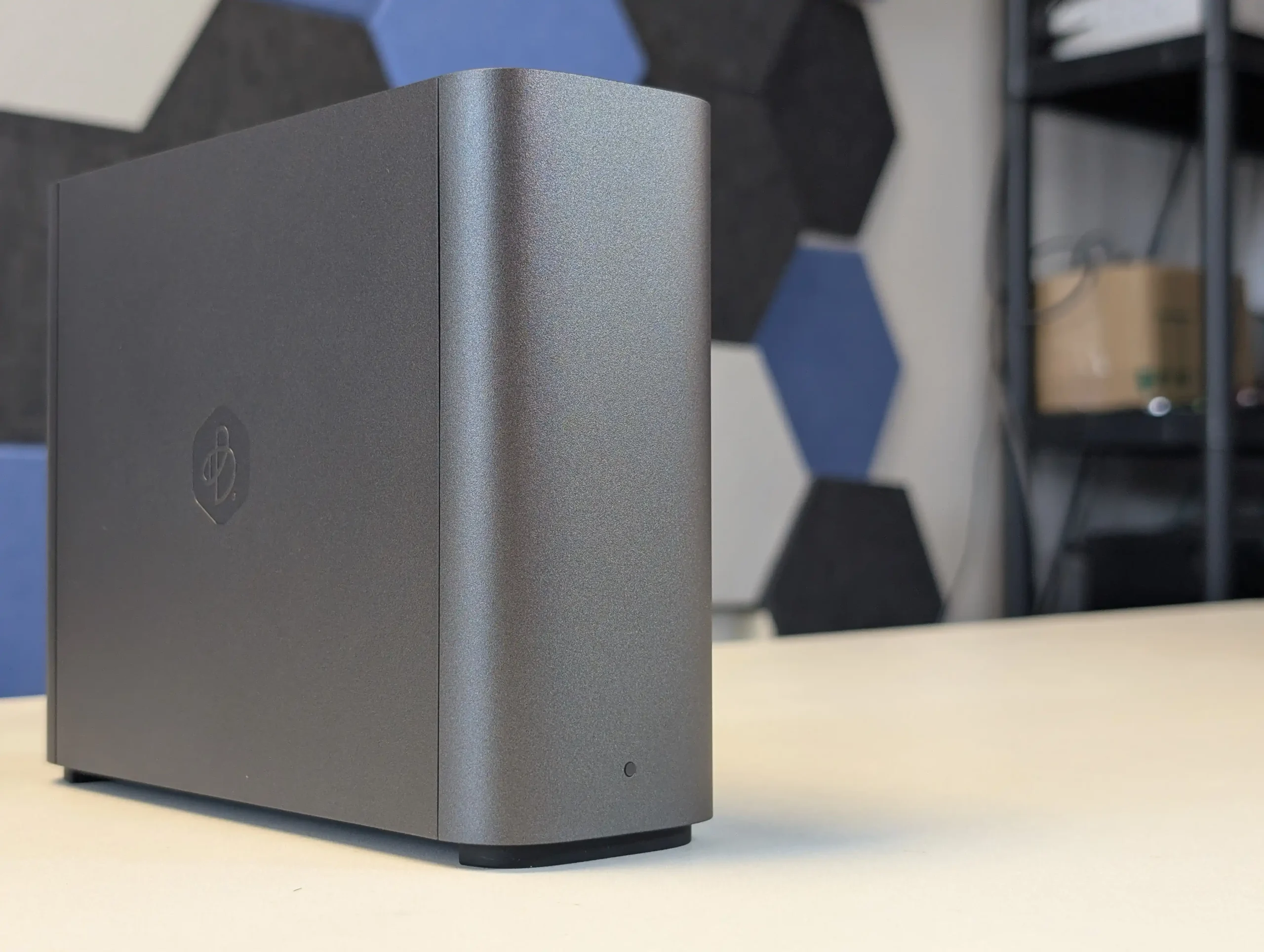
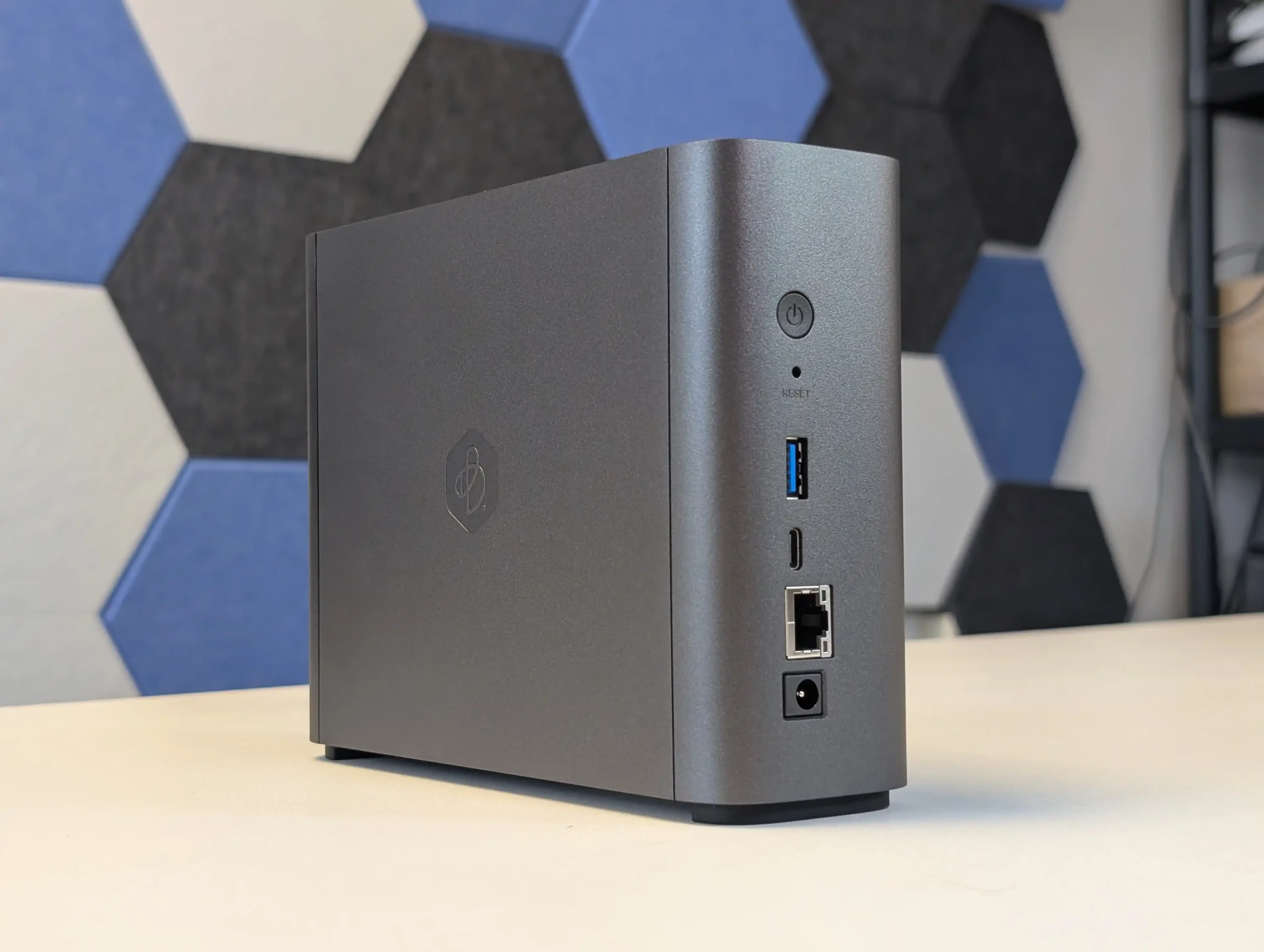
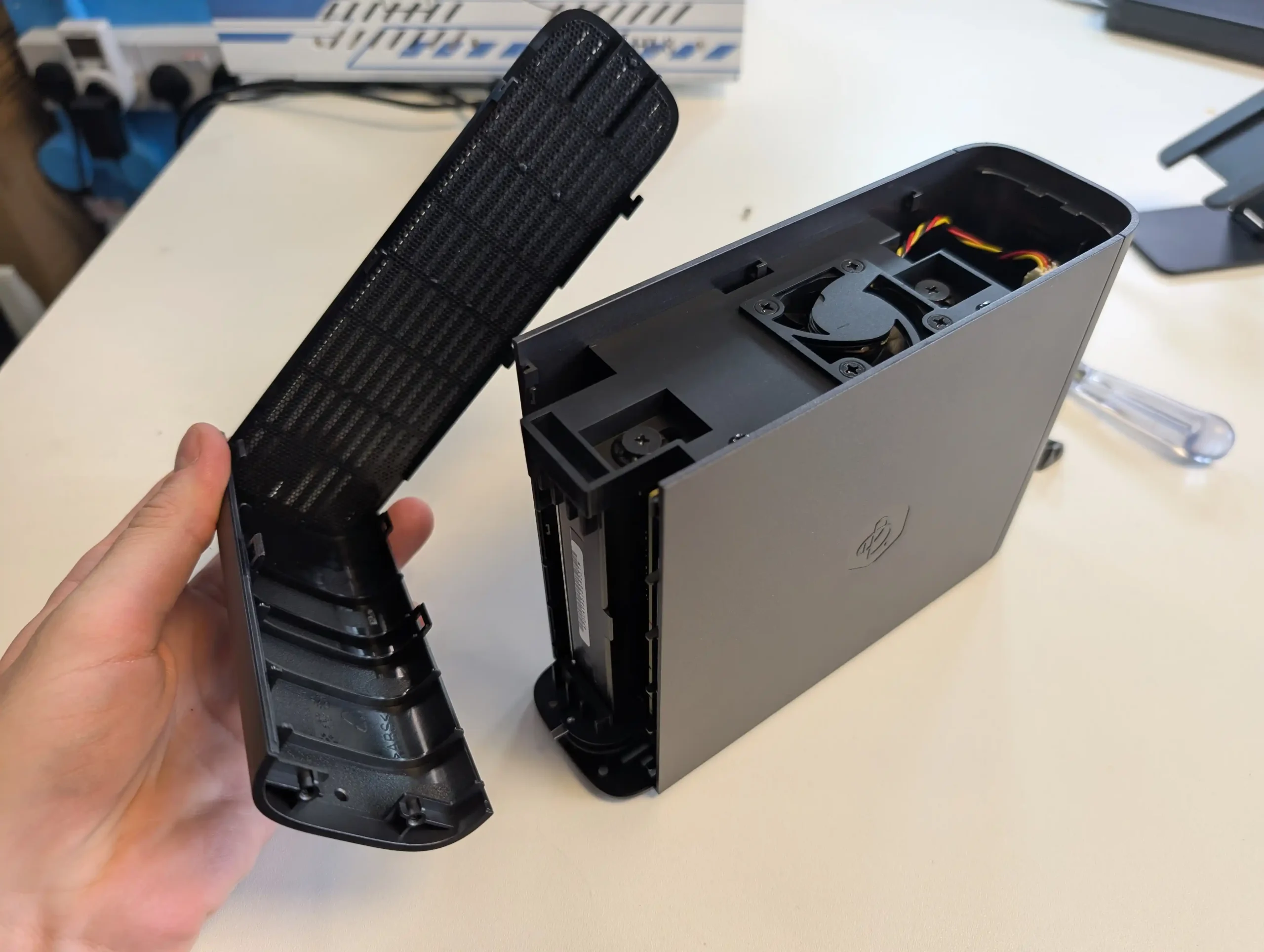
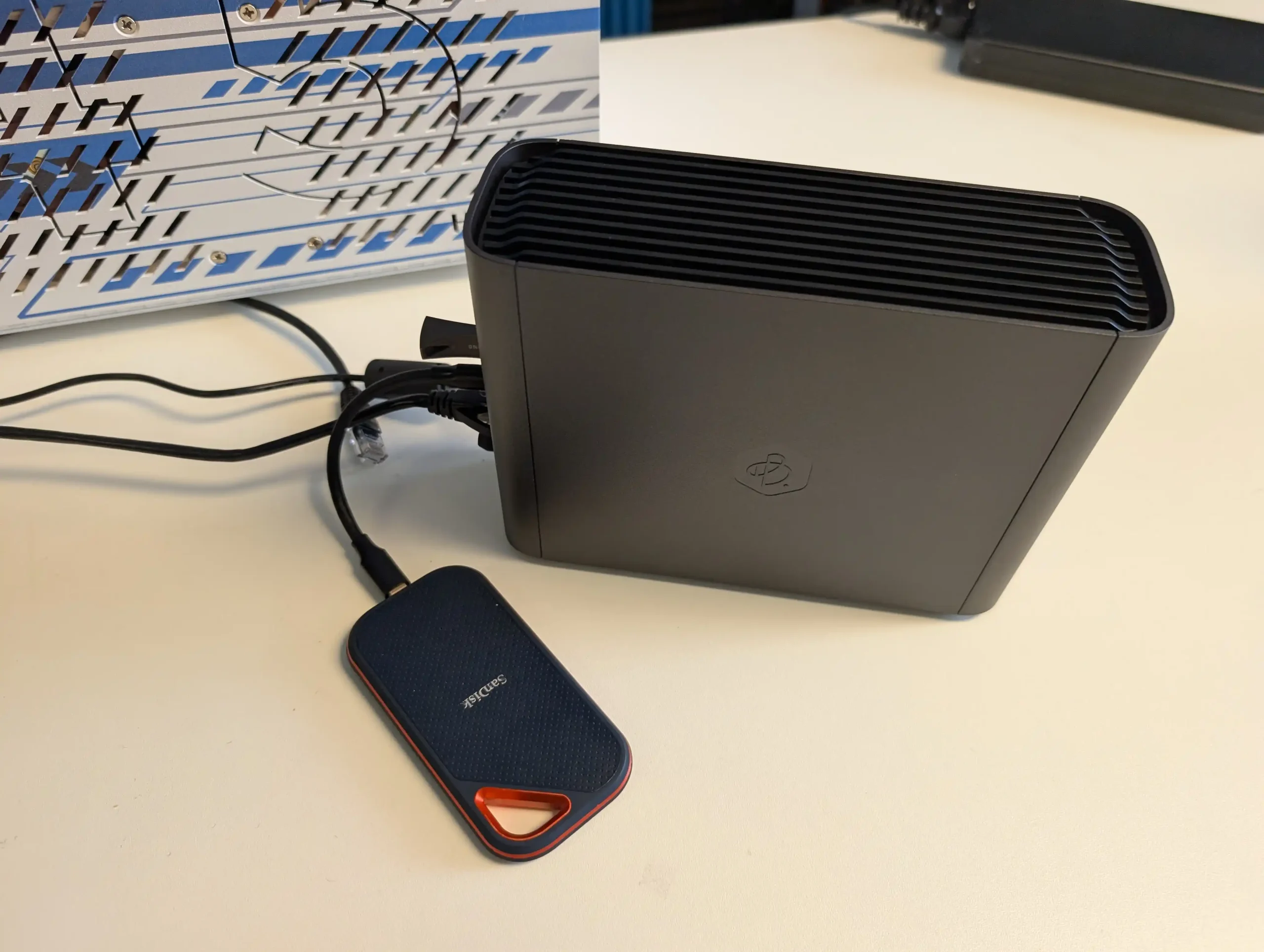
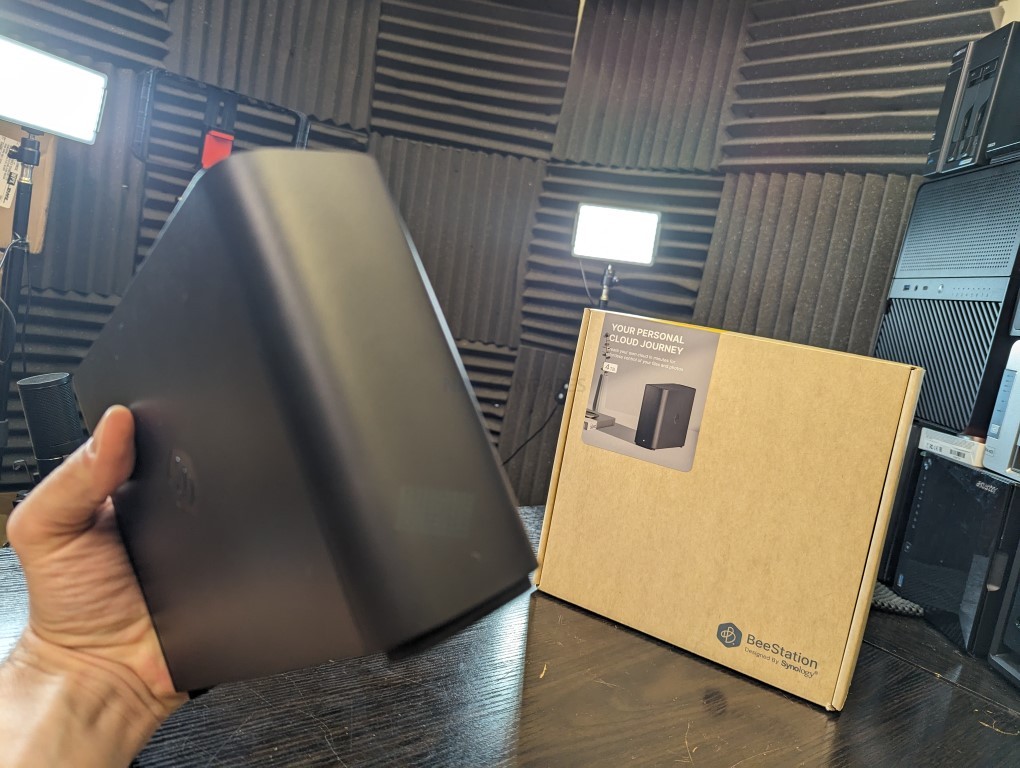
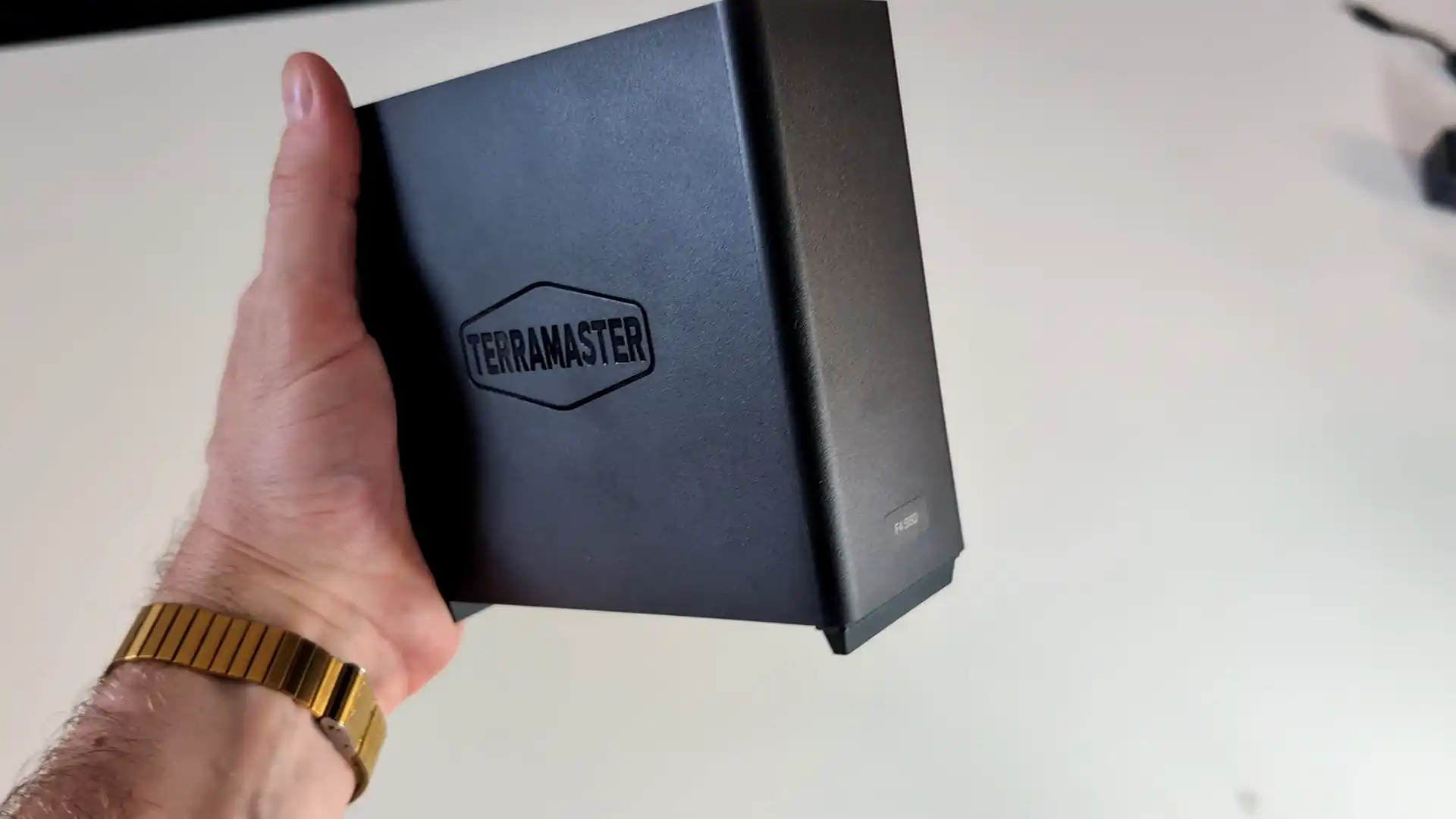
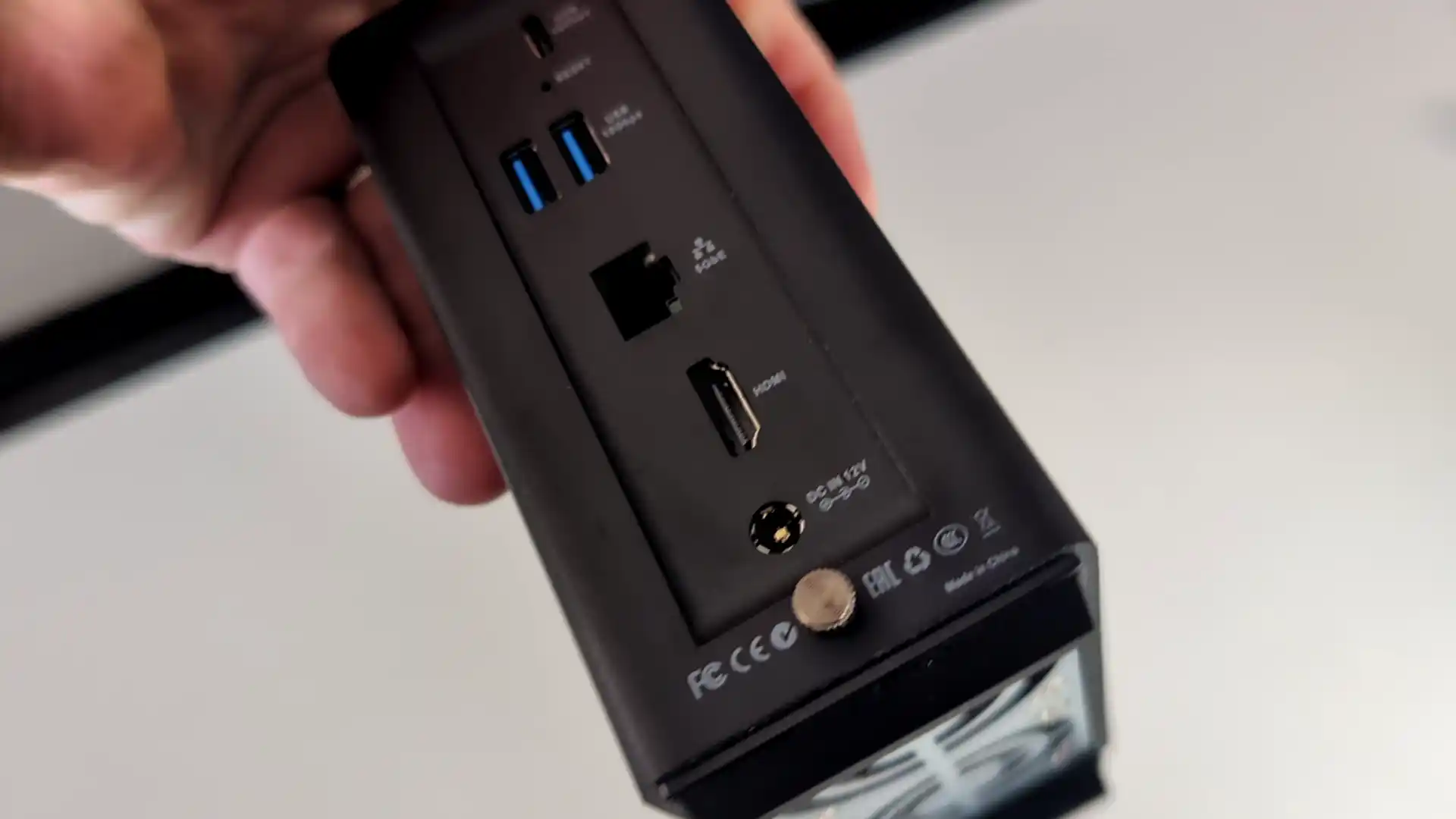
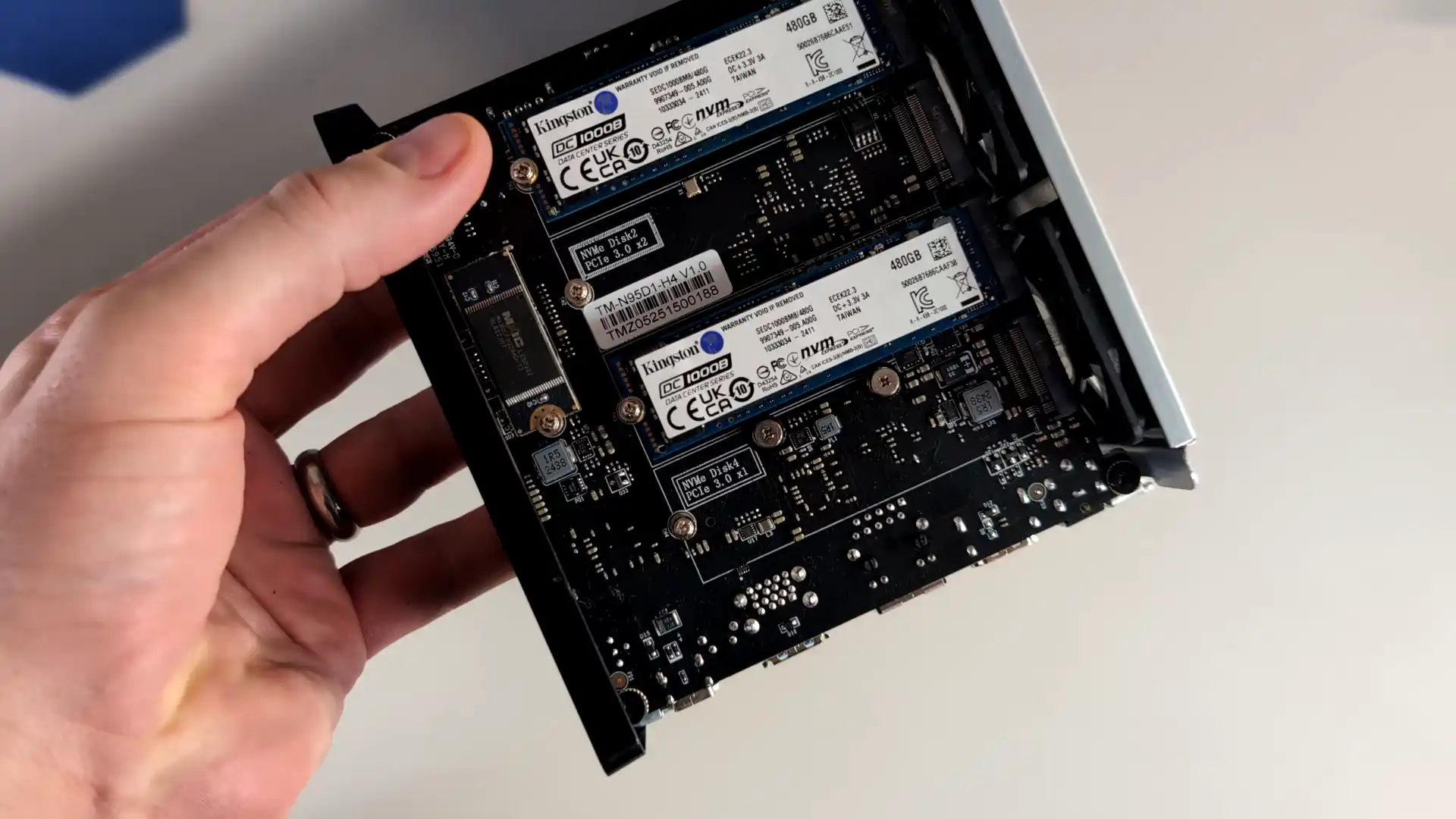
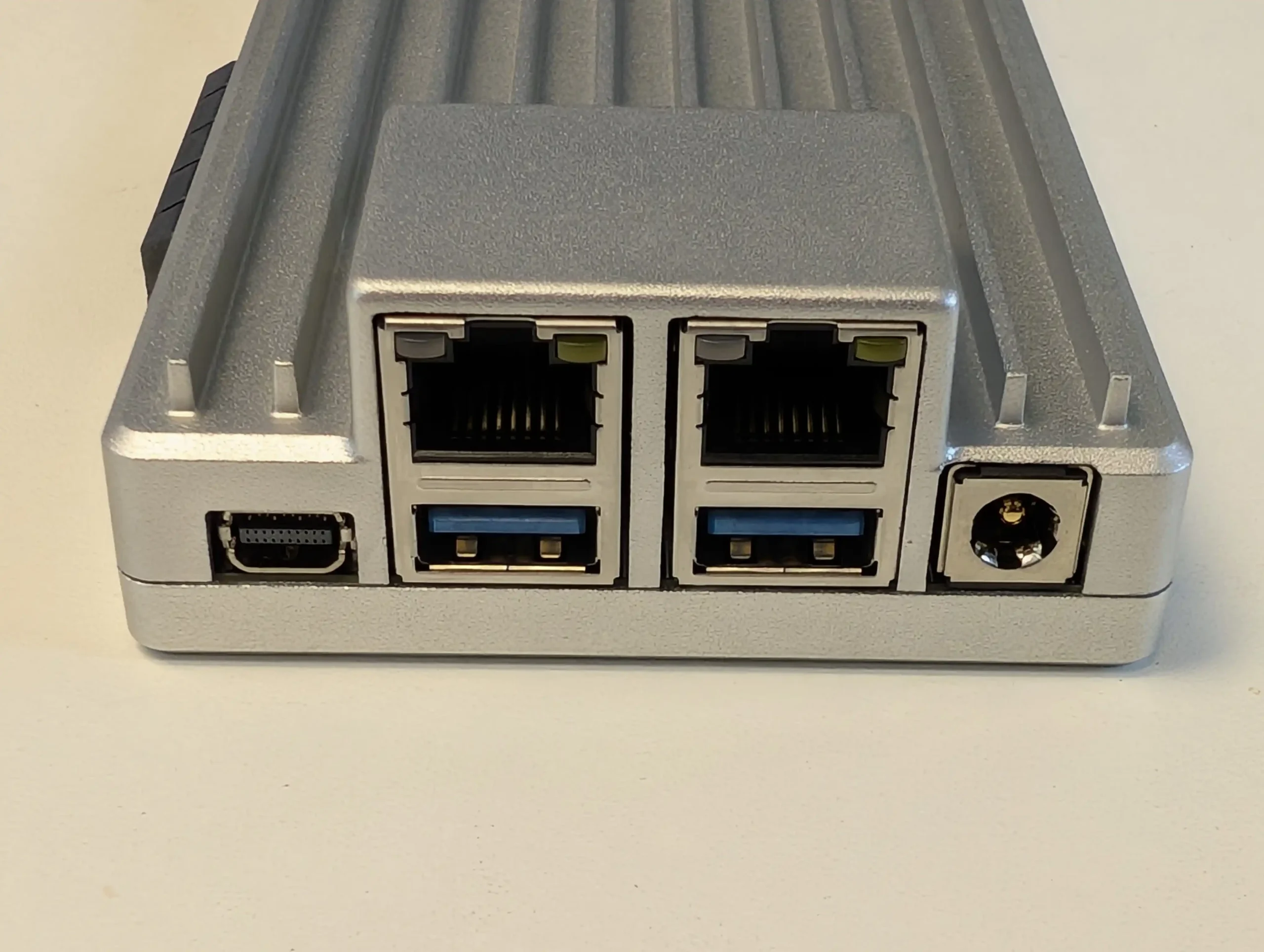
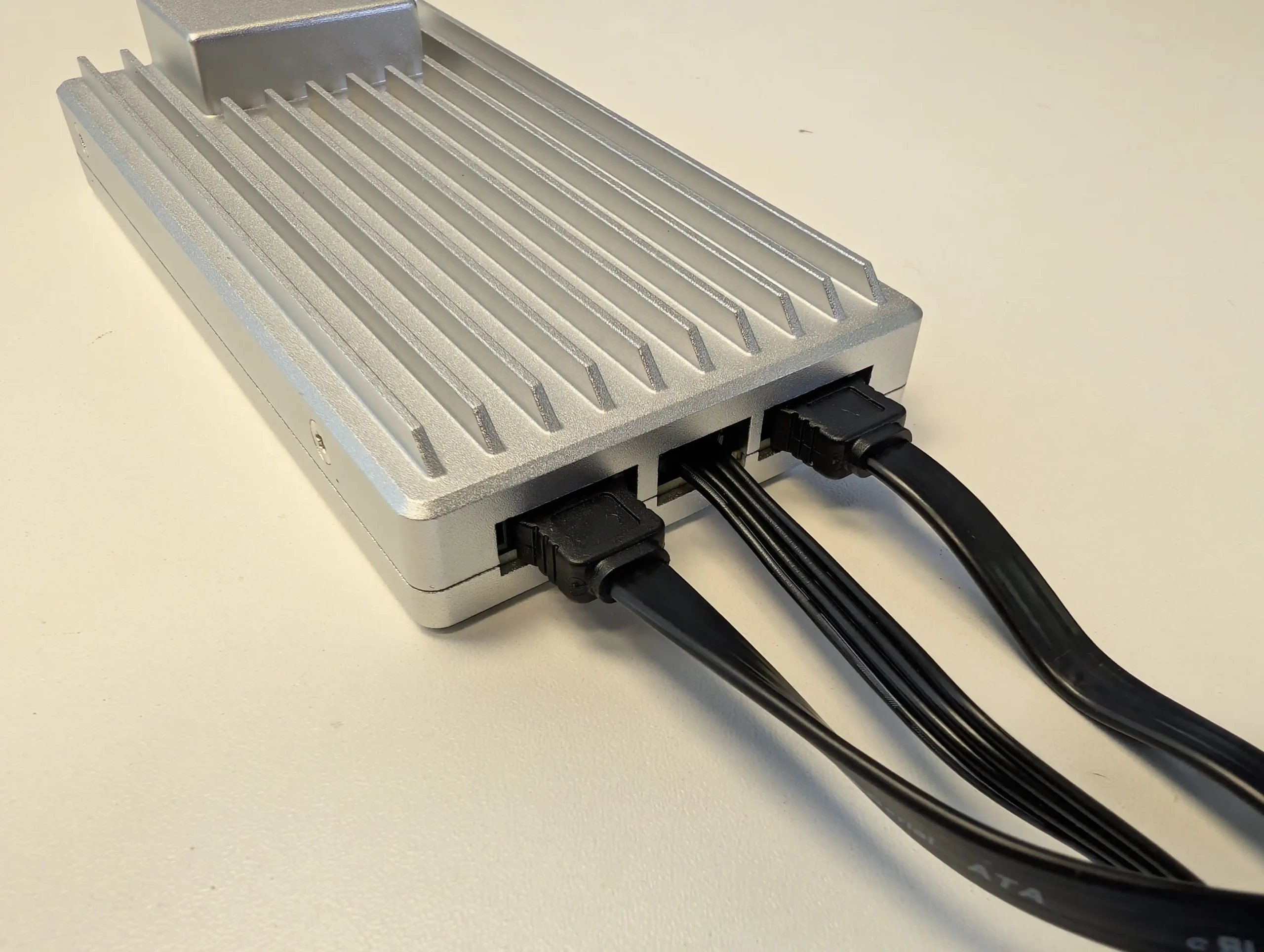
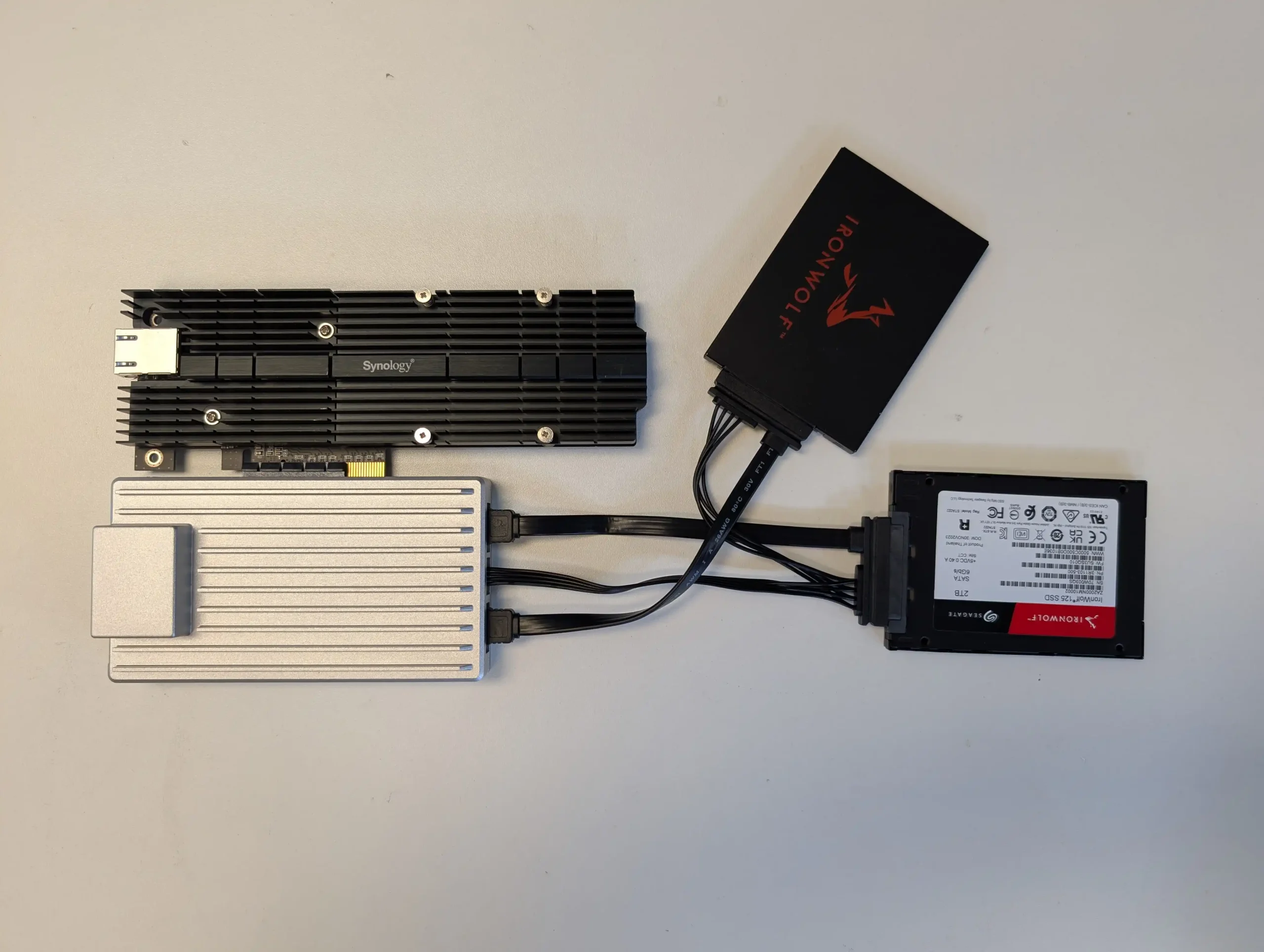
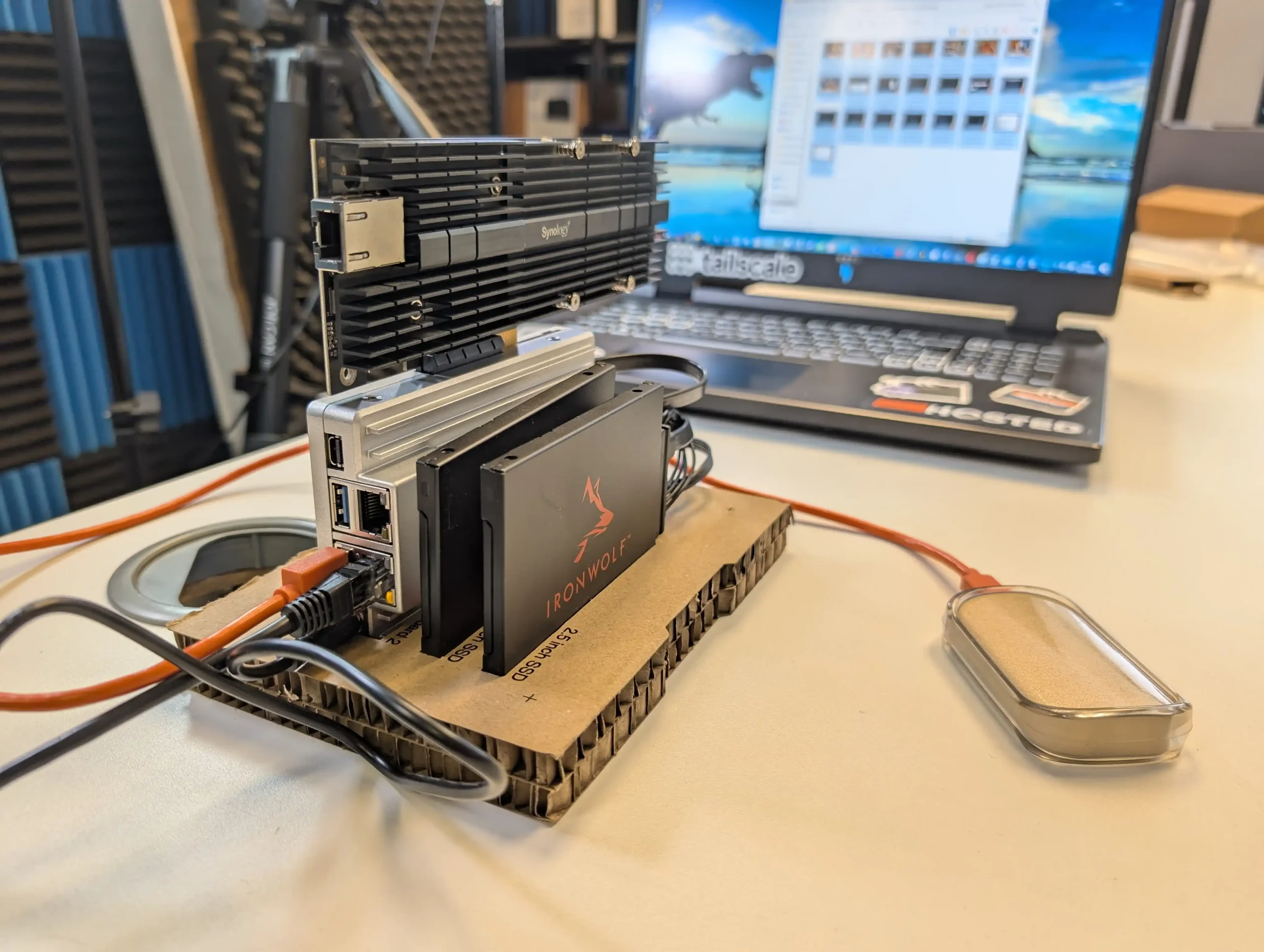
Minisforum est en grande forme et annonce l’arrivée de 2 nouveaux NAS « All-Flash » : les S5 et S7. Ces machines reposent sur les processeurs Intel Core Ultra Série 3 et Intel Core Série 3. Elles illustrent surtout la volonté du constructeur de pousser l’IA générative directement dans les foyers et les petites entreprises… sans dépendre du cloud. Regardons de plus près ces nouveaux NAS.
S5 : le NAS qui veut se faire oublier
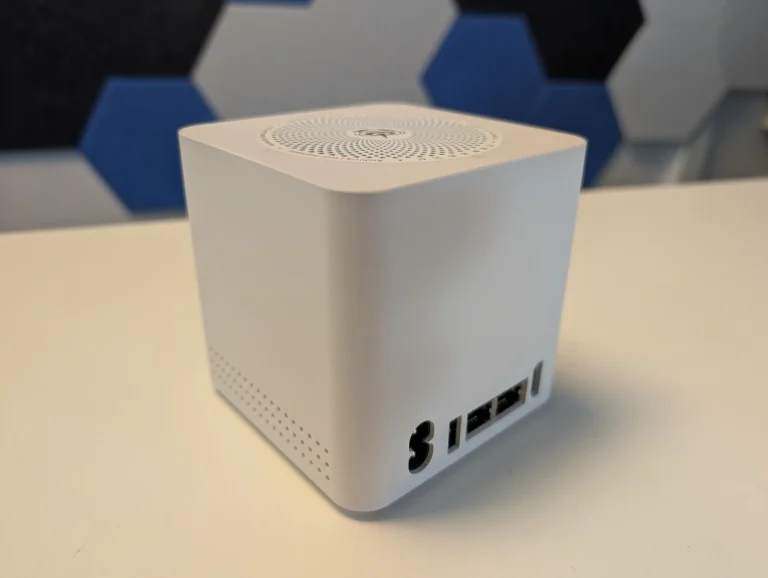
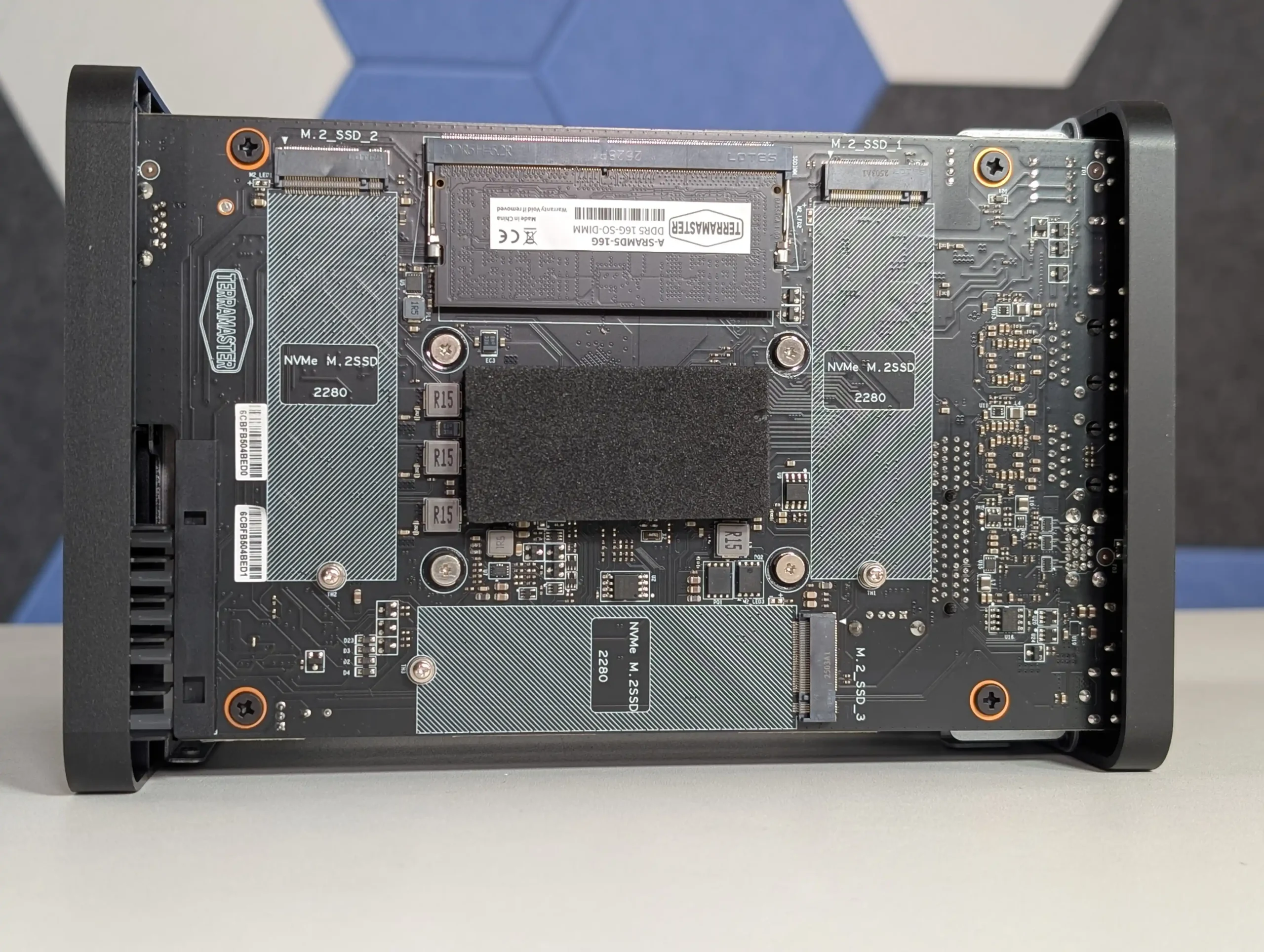
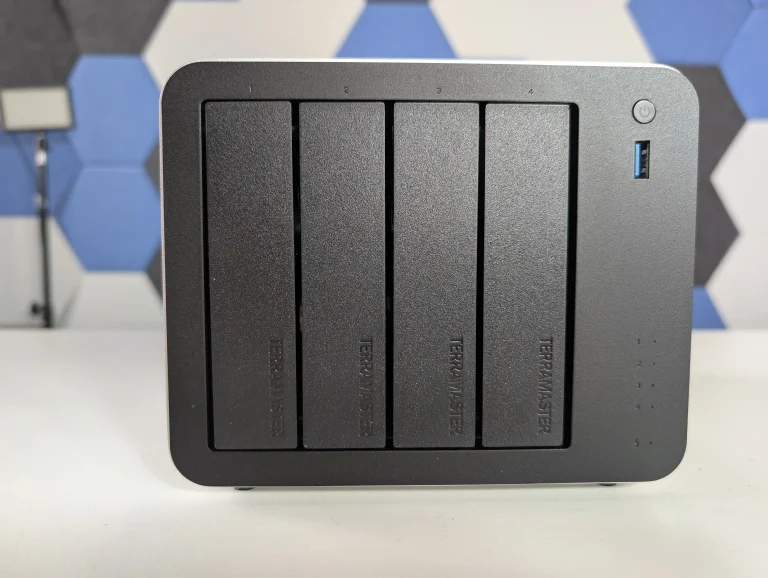
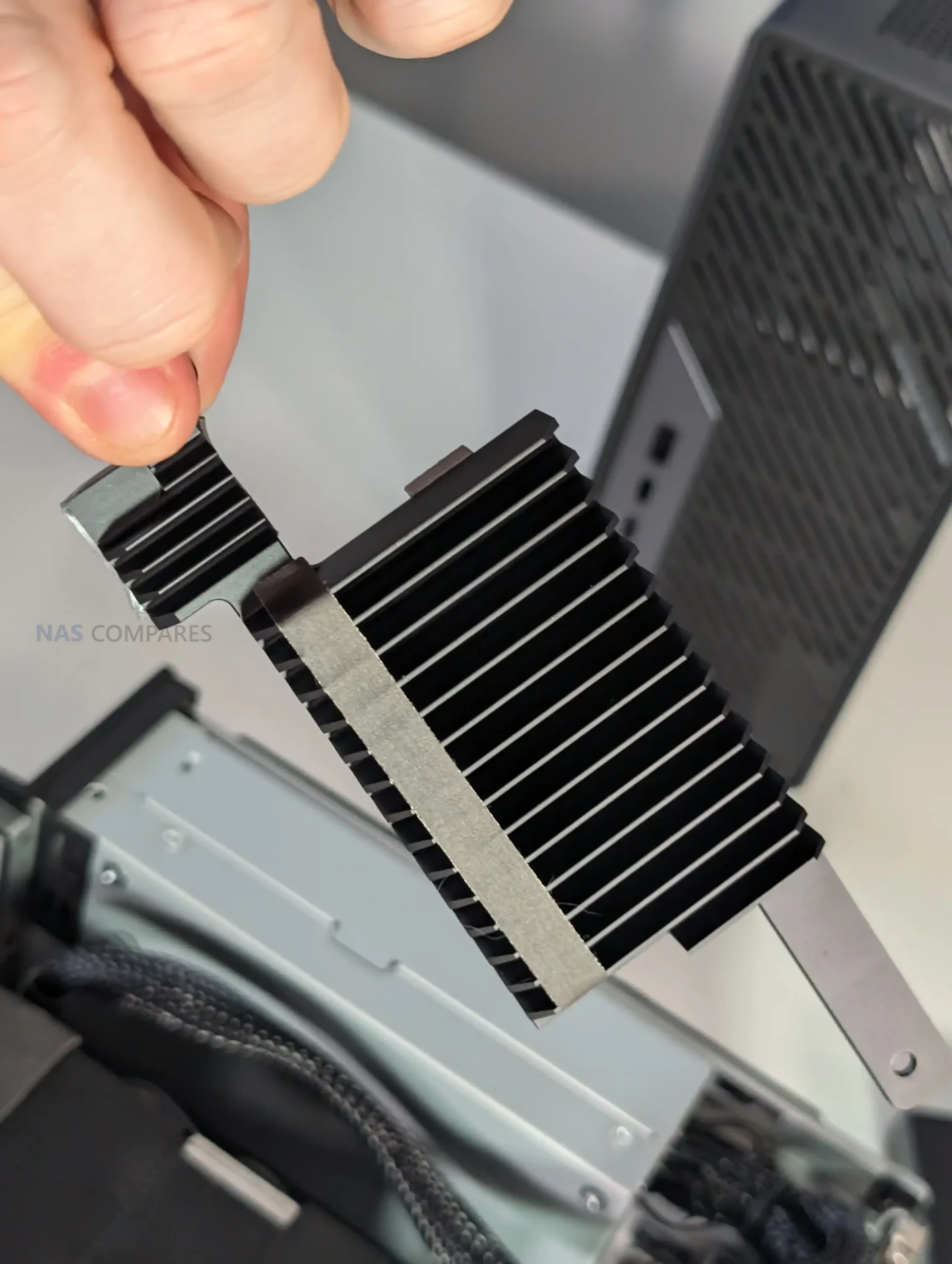
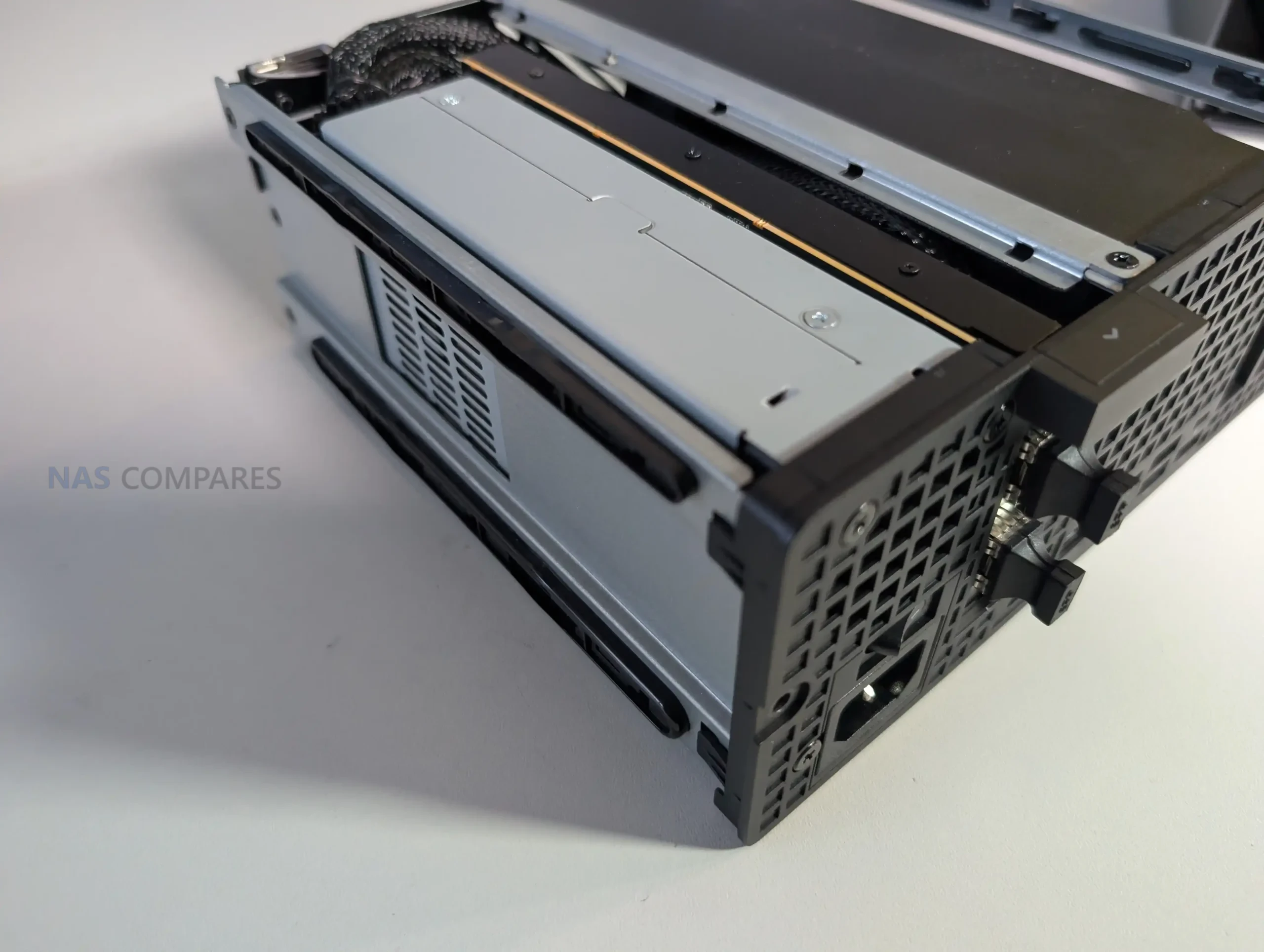
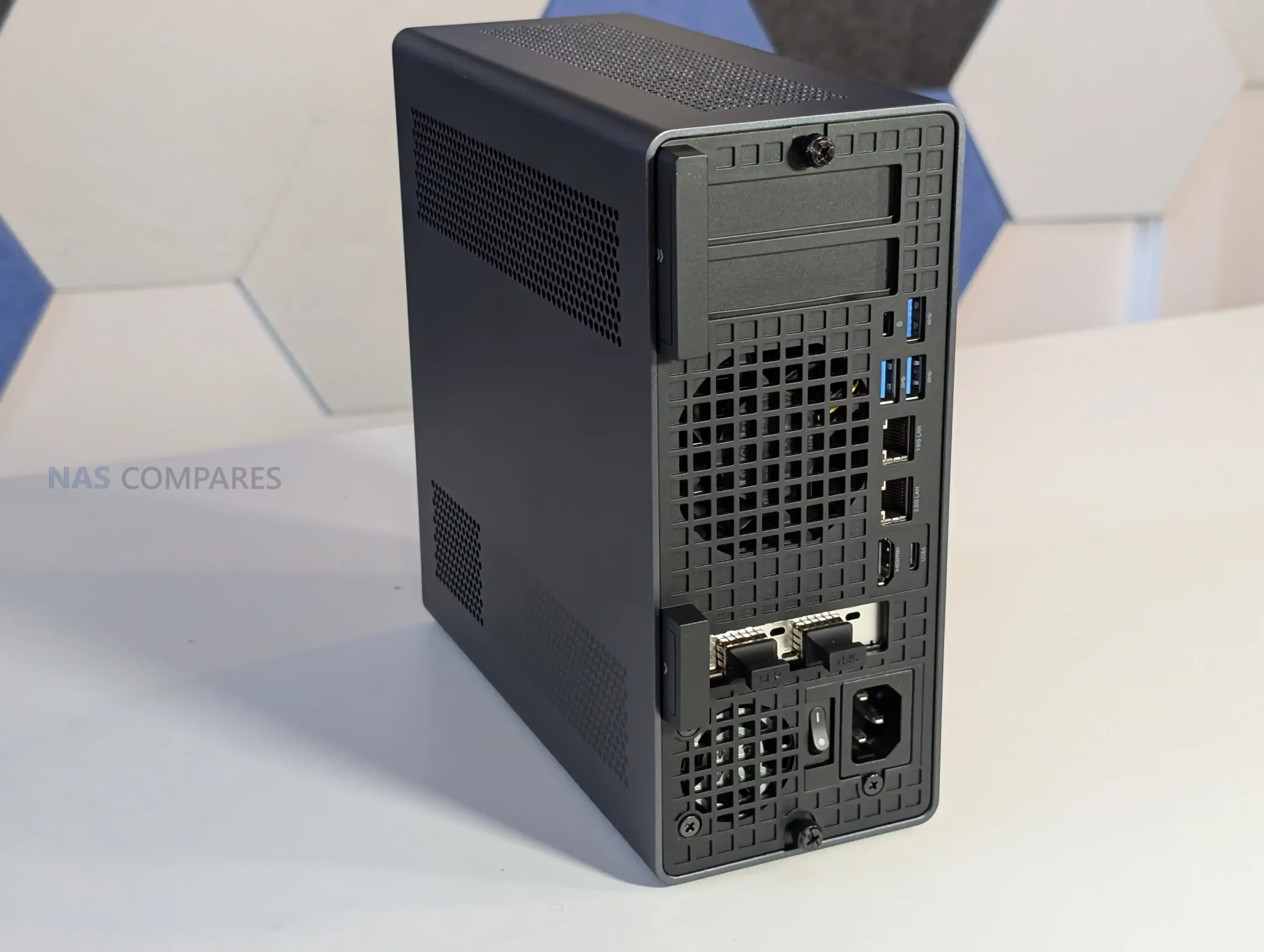
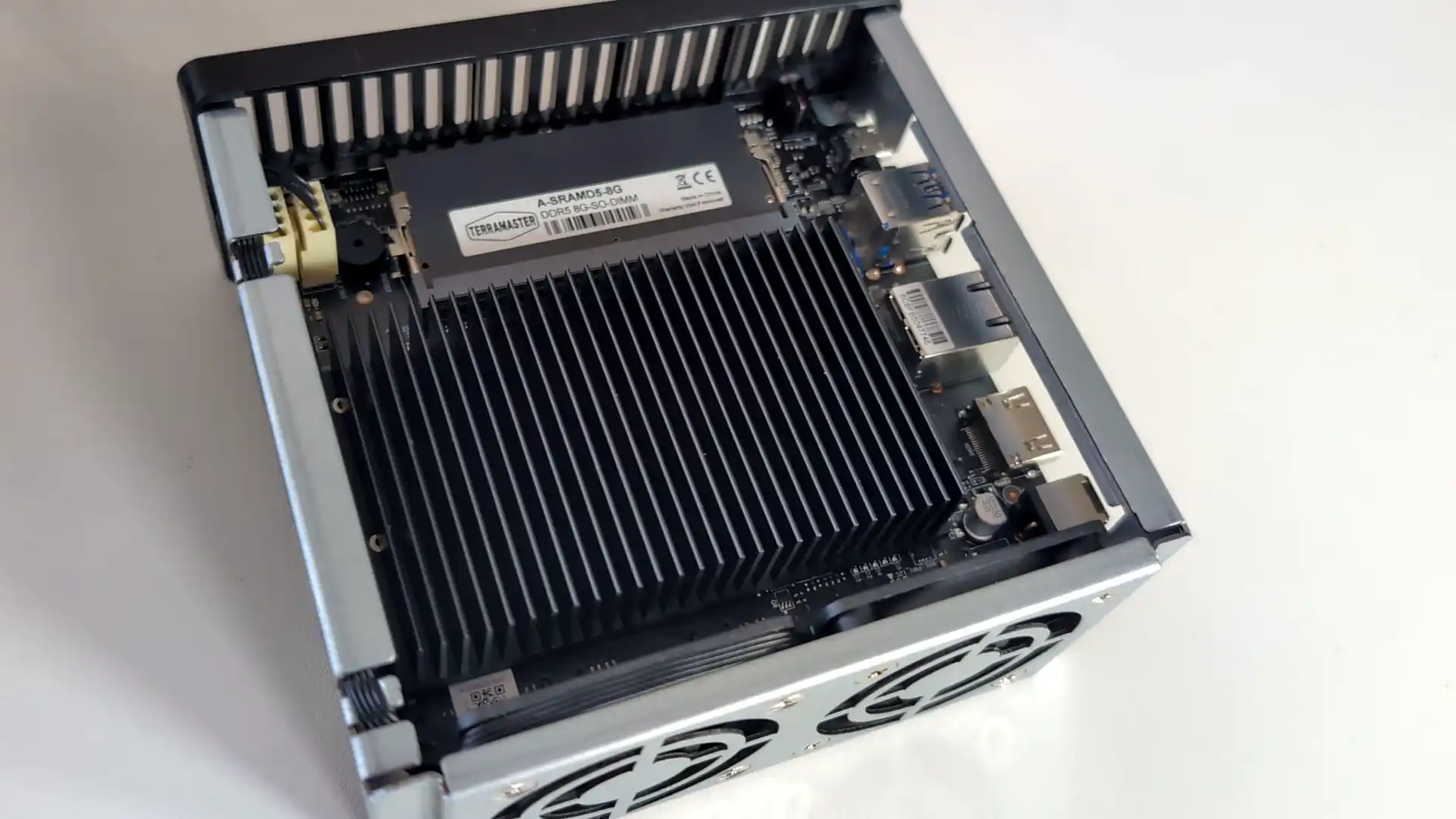
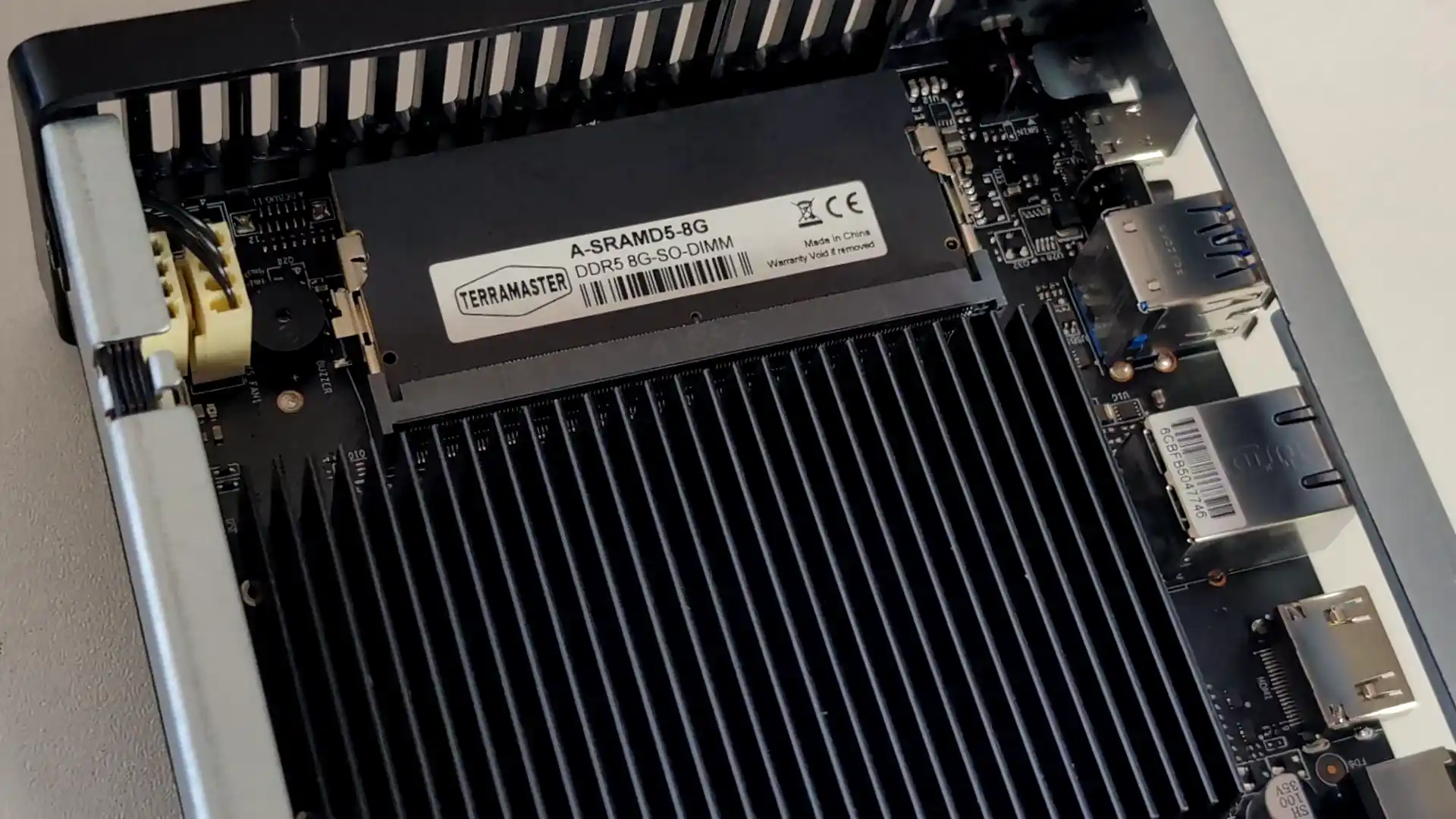
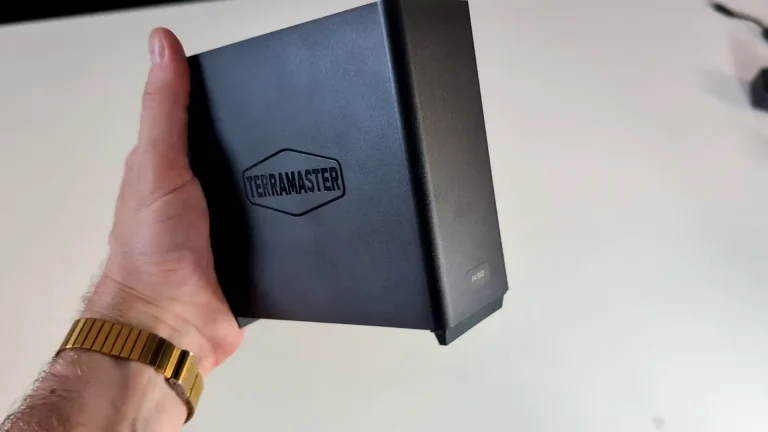
Le Minisforum S5 mise sur la discrétion et la performance. Ce NAS fonctionne exclusivement avec des SSD et n’a aucun ventilateur. Le boîtier dispose de 5 emplacements M.2 2280 PCIe 4.0 destinés aux SSD NVMe. Comme le montrent les visuels, le design est plutôt compact, sobre et moderne.
Photo fanlesstech.com
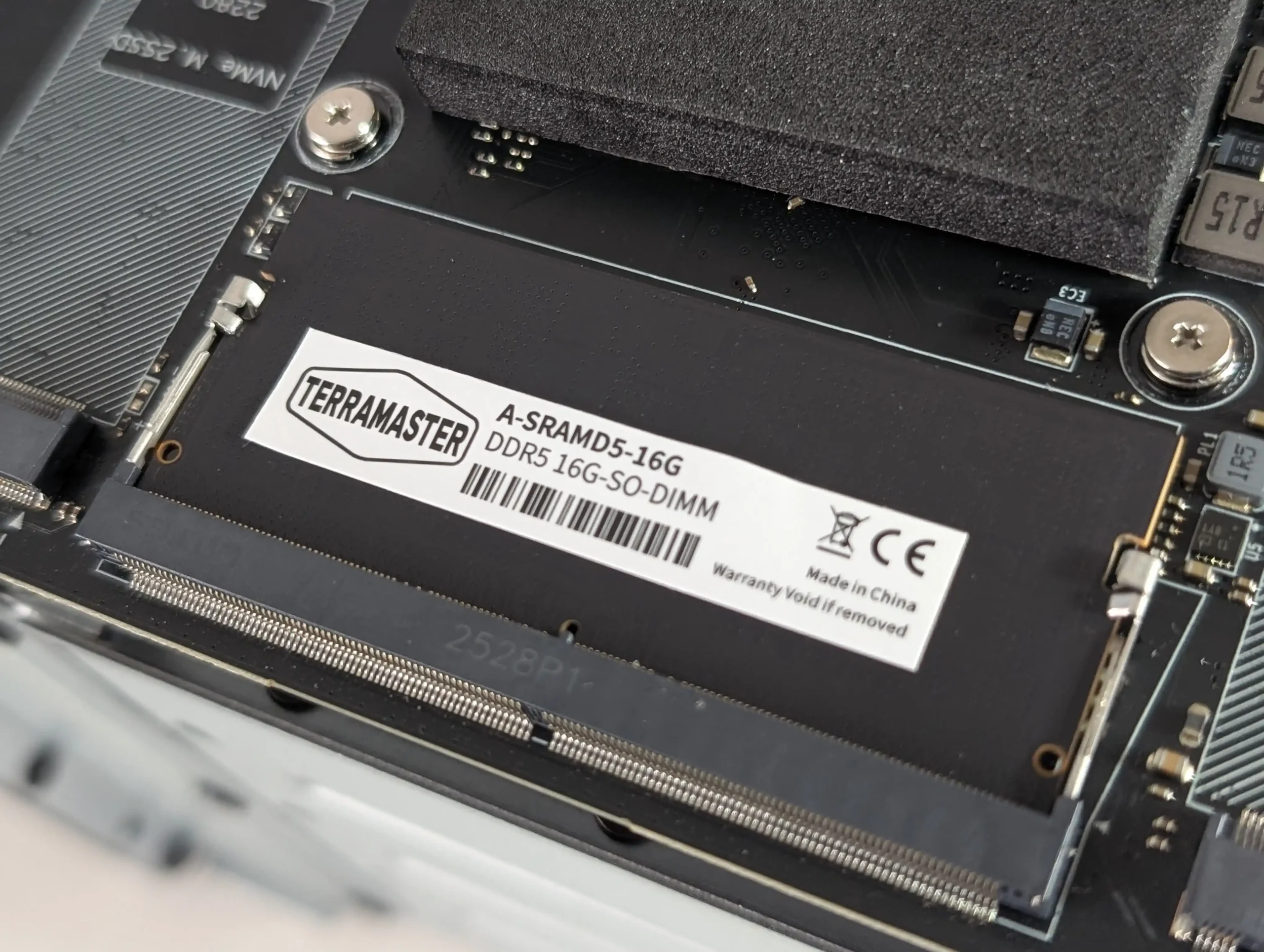
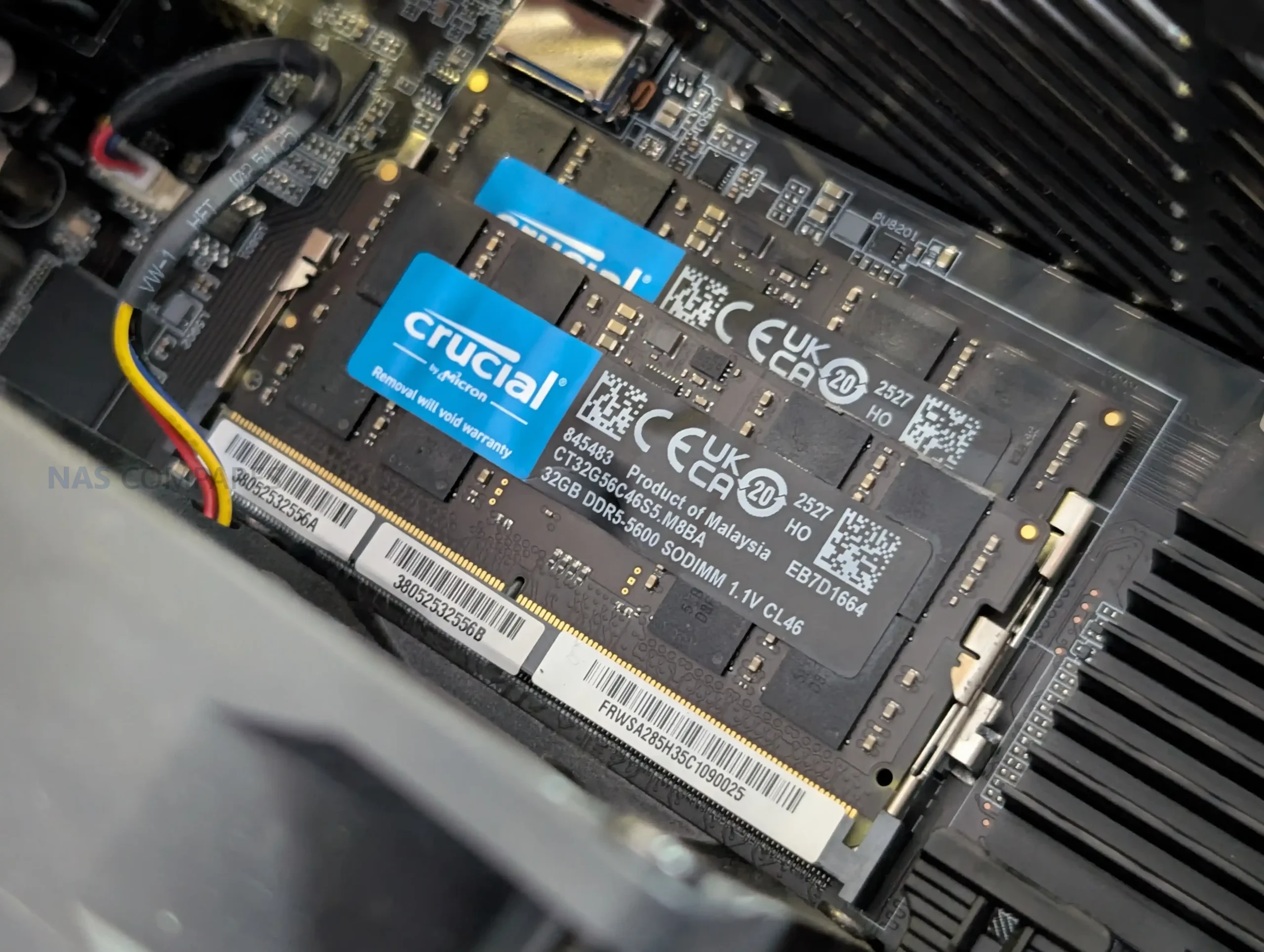
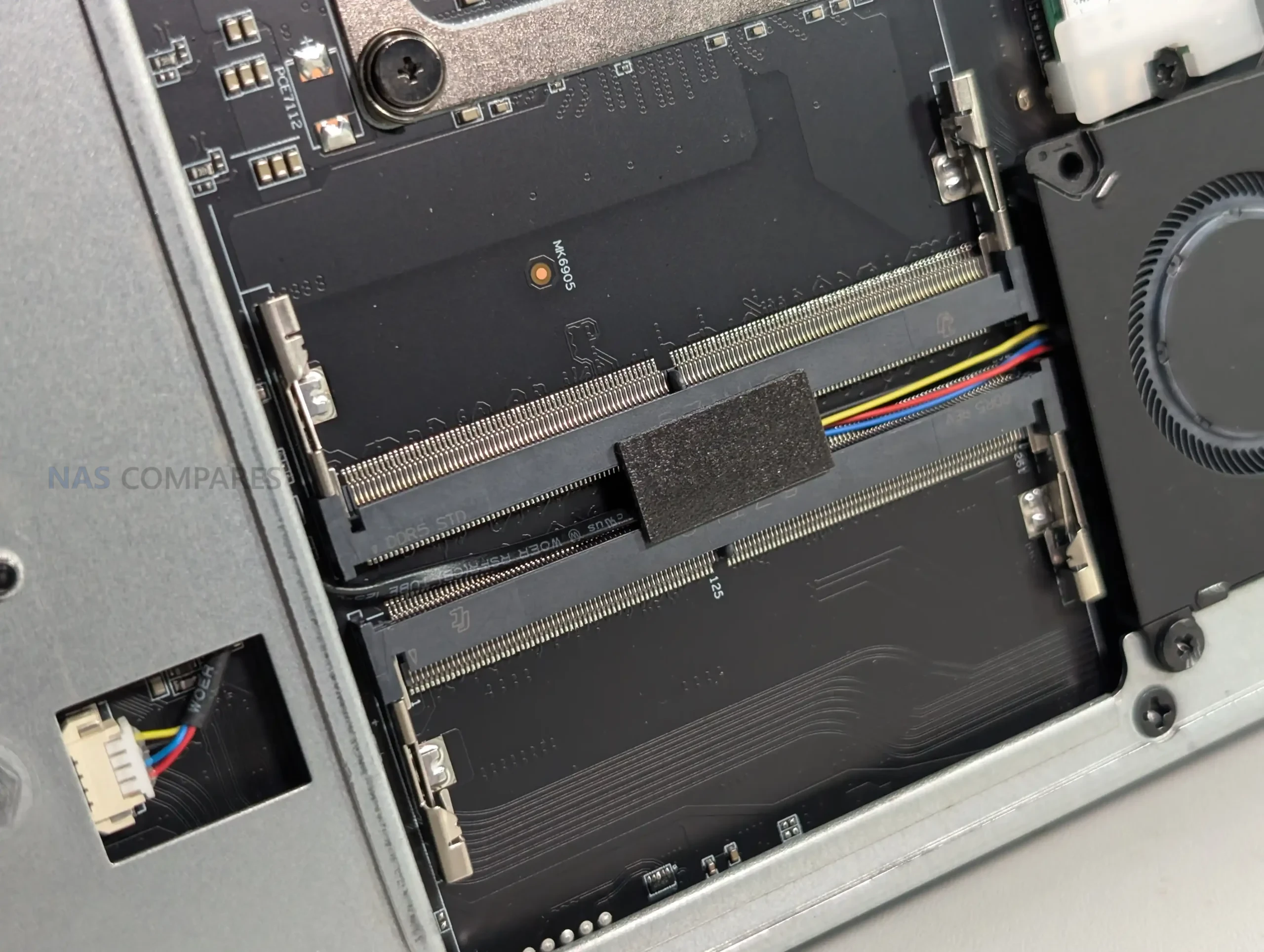
Le S5 est animé par un processeur Intel Core Series 3, sans plus de précision supplémentaire pour le moment. Il pourrait s’agir d’un IntelCore7350. Ce que l’on sait en revanche, c’est qu’il appartient à la famille Wildcat Lake et qu’il intègre un NPU capable d’atteindre 17 TOPS. Le NAS serait livré avec 16 Go de mémoire vive.
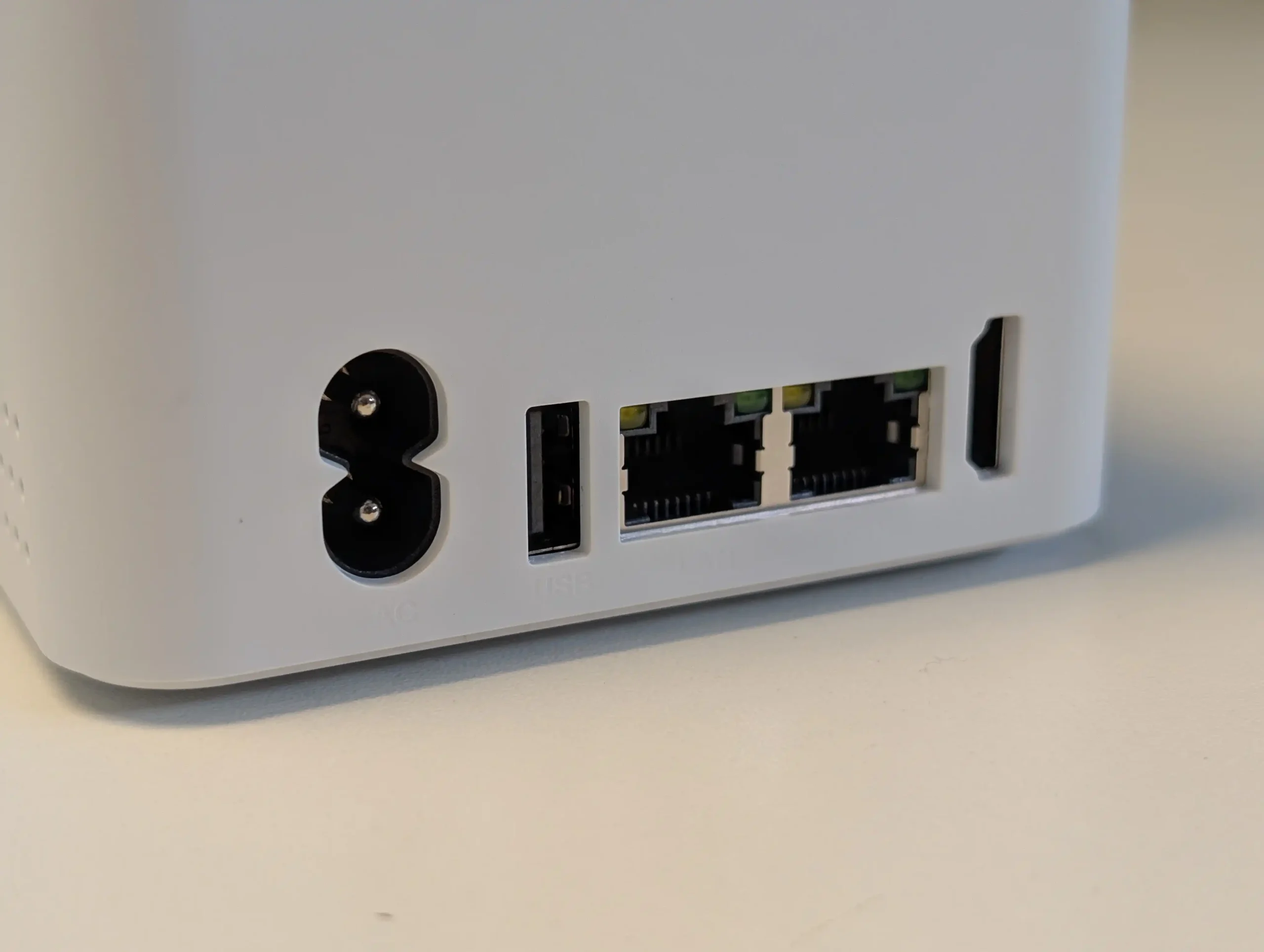
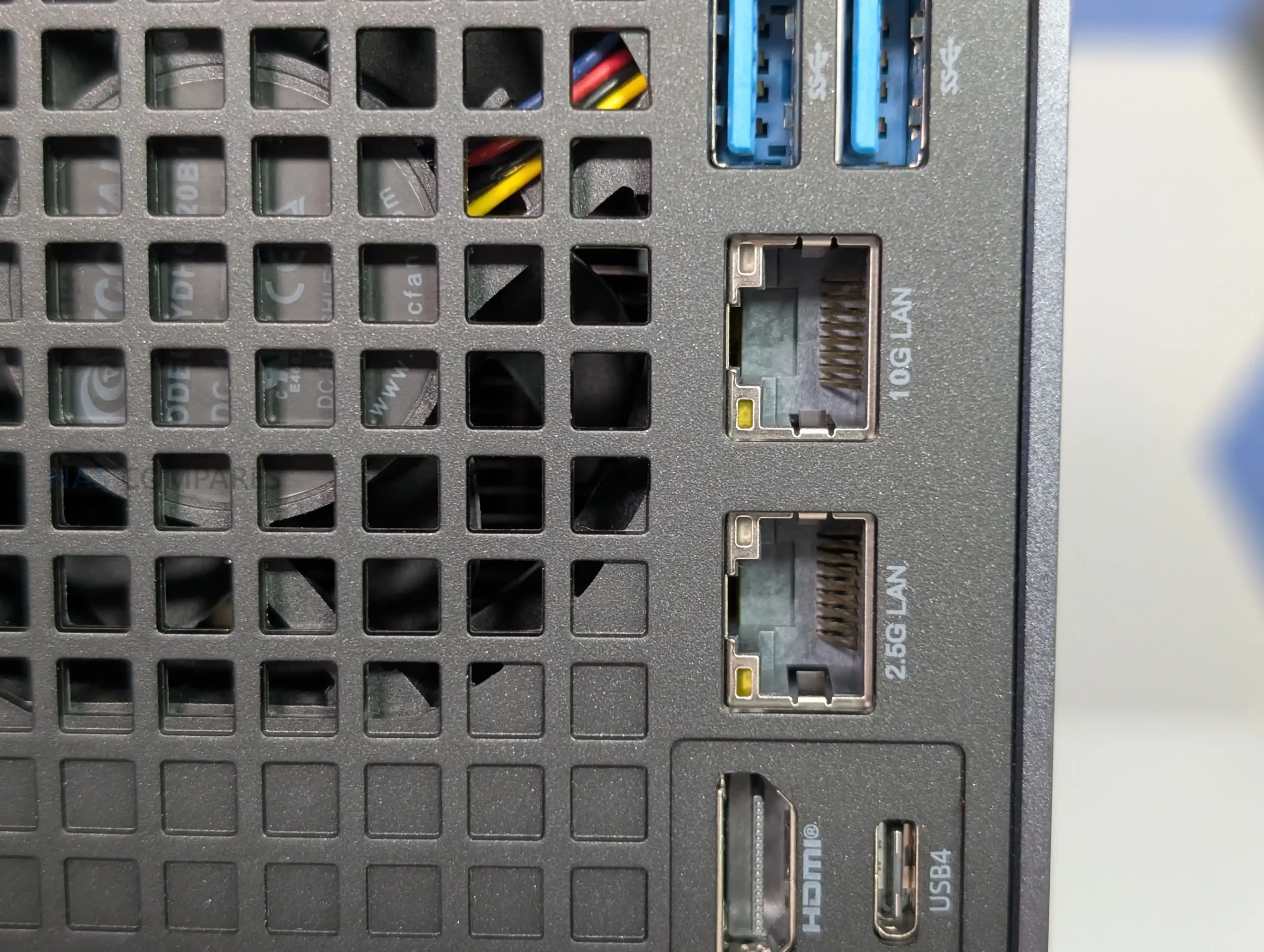
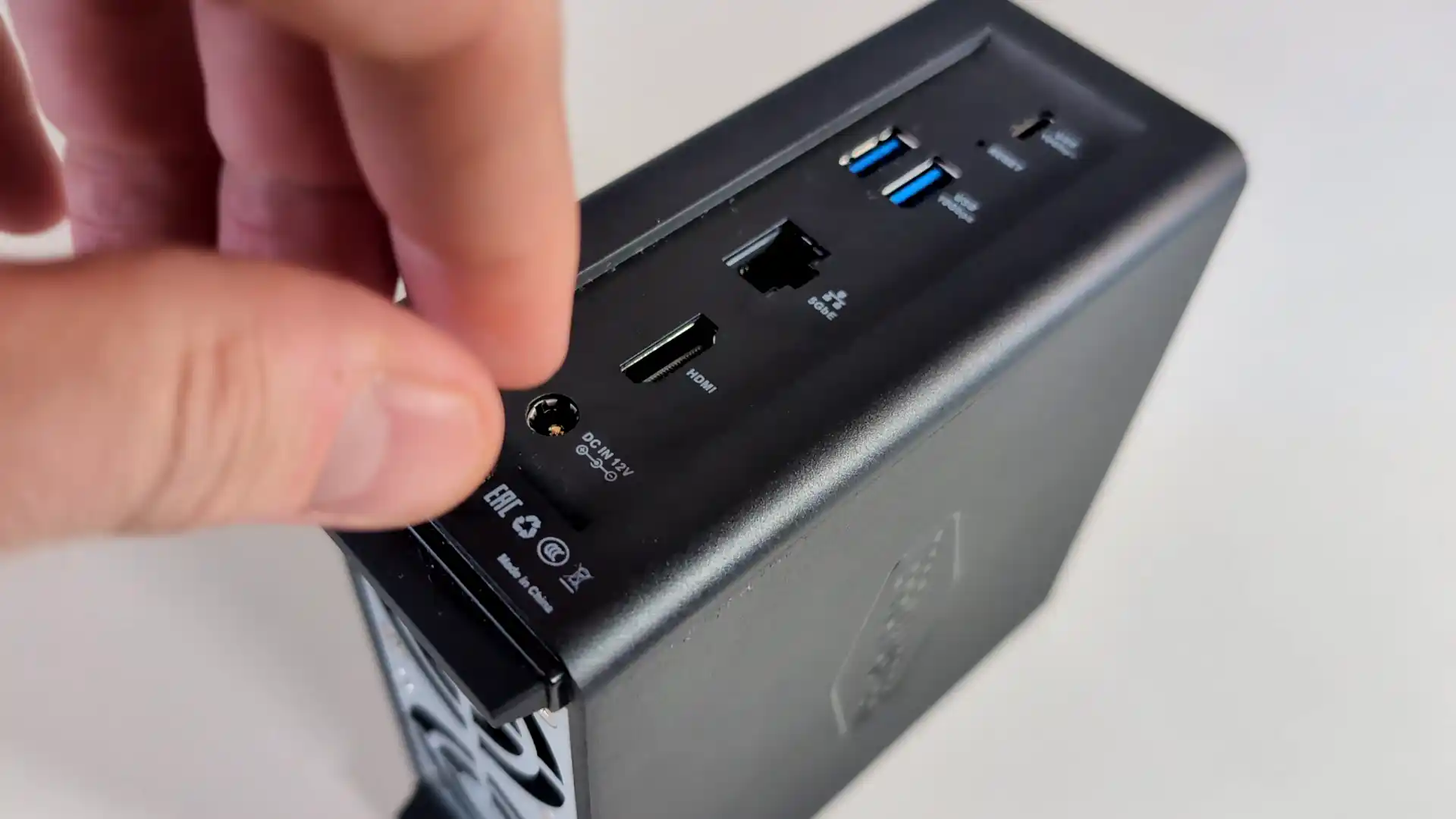
Côté connectique, le Minisforum S5 propose une configuration complète pour un format réduit :
2 ports USB4 ;
2 ports USB 3.2 Gen 2×2 ;
1 port réseau RJ45 10 Gb/s ;
1 port réseau RJ45 2,5 Gb/s ;
1 sortie HDMI 2.1
Toutes les interfaces sont positionnées à l’arrière du boîtier. Pour une machine aussi compacte, c’est assez impressionnant. On a vu des NAS bien plus volumineux et bien moins équipées.
S7 : une machine pensée pour le homelab
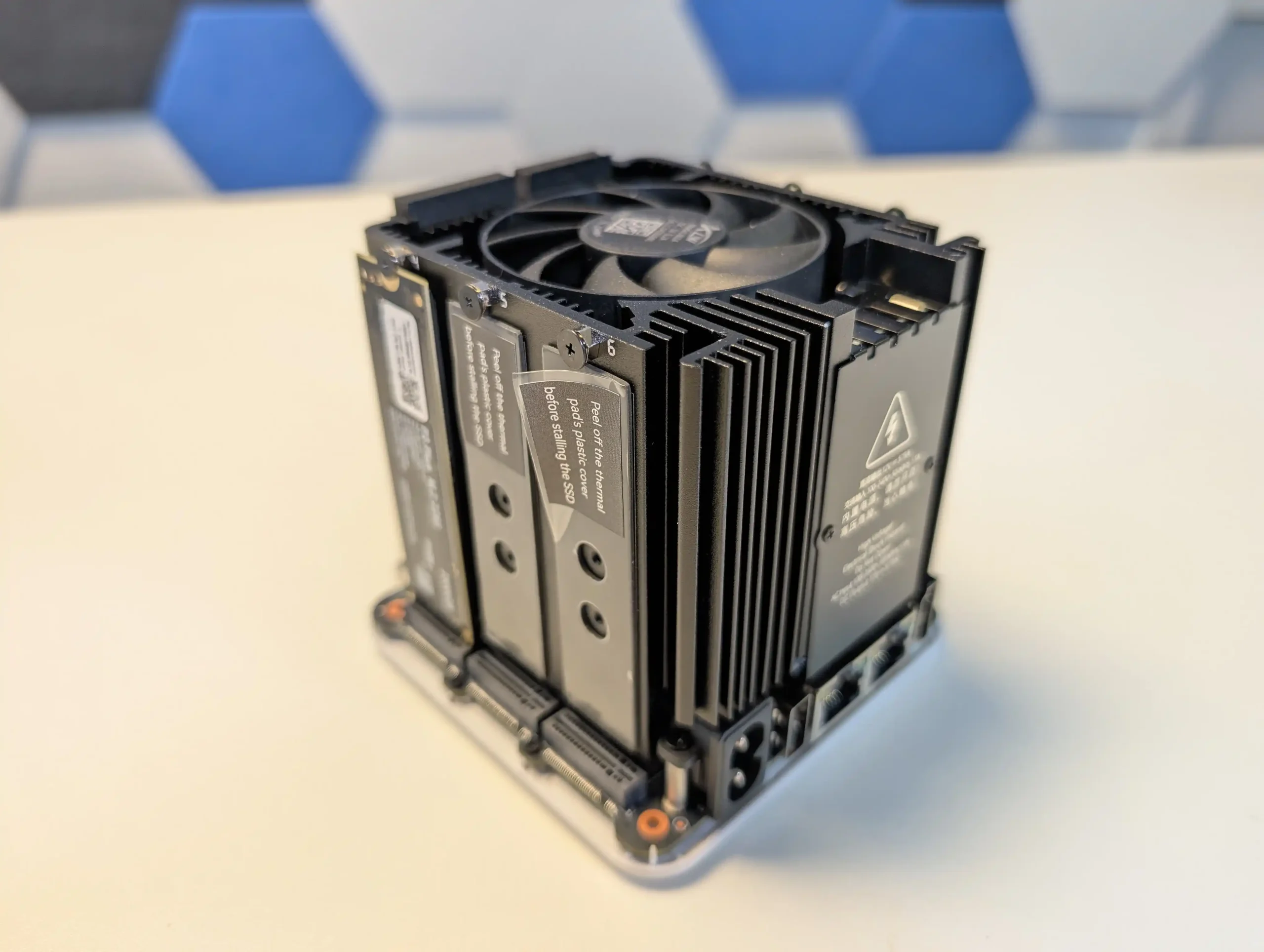
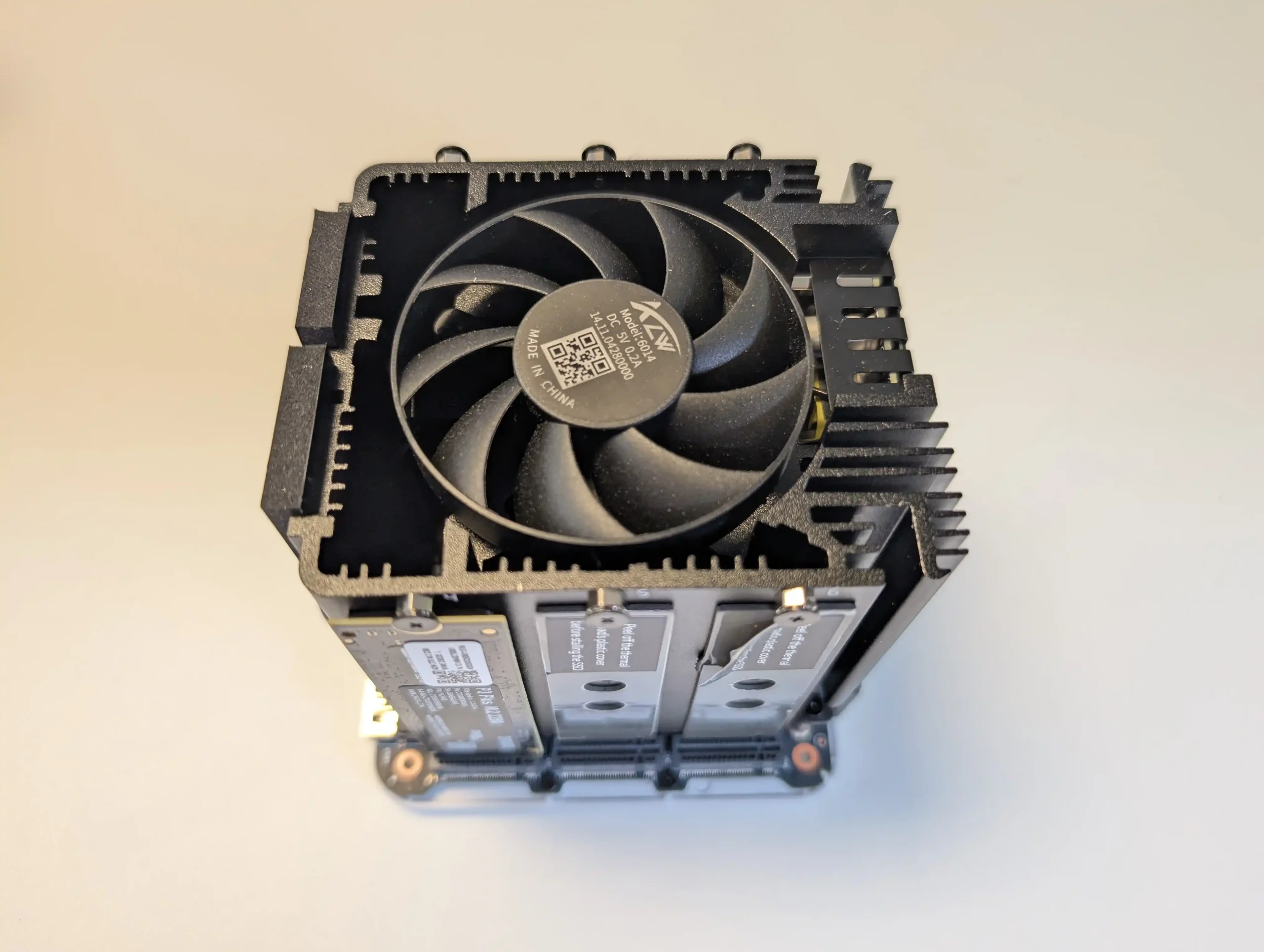
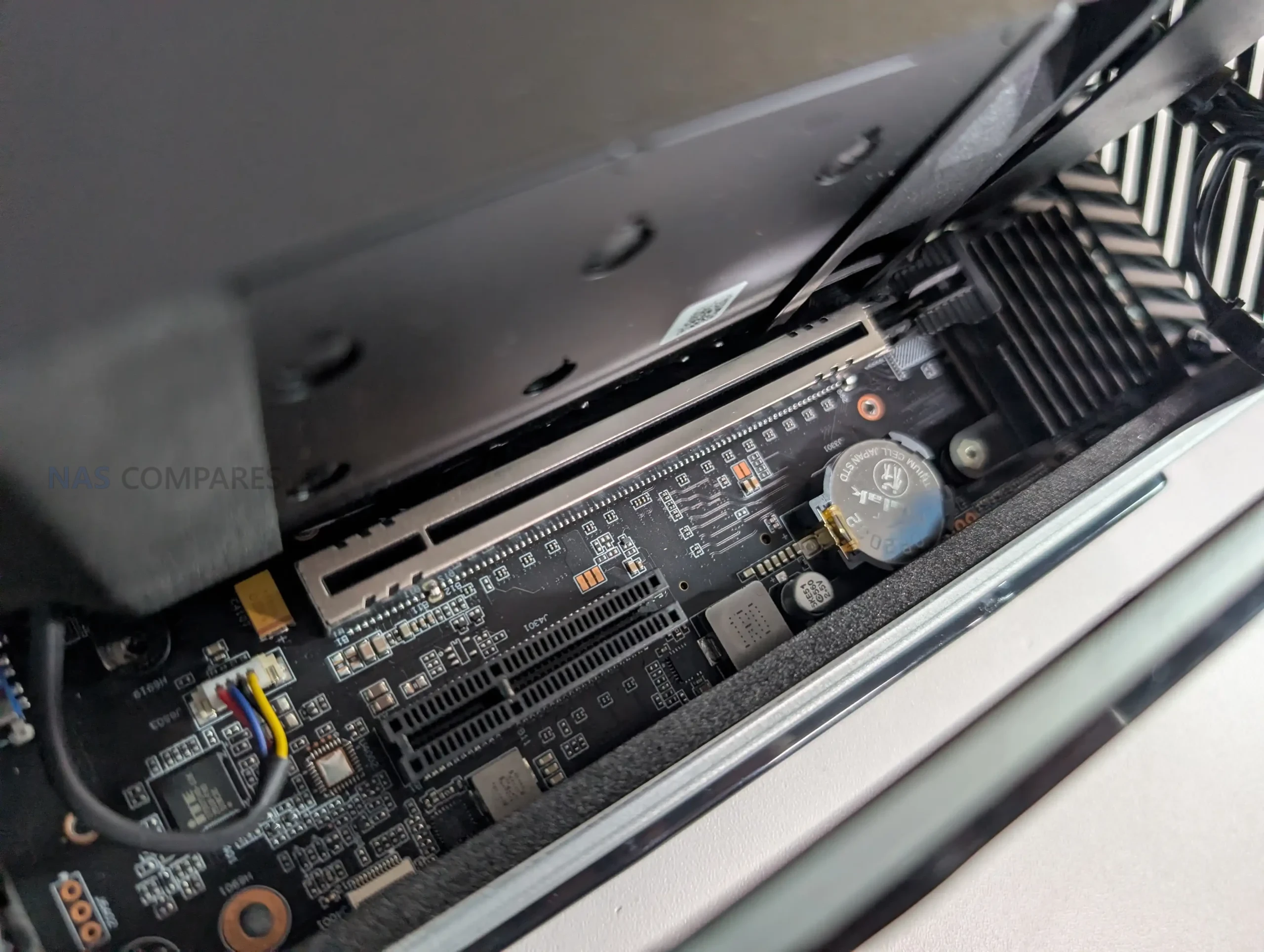
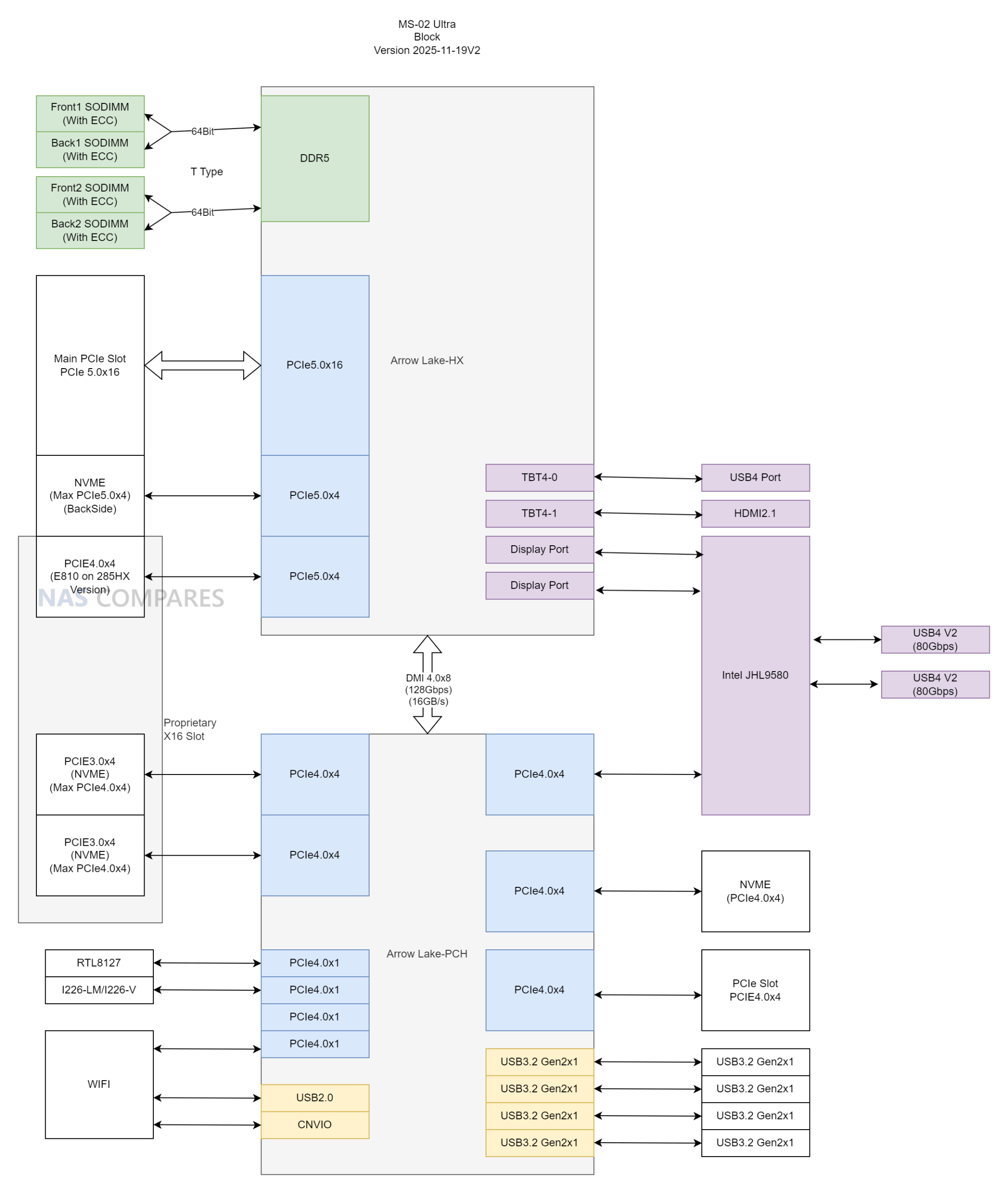
Le Minisforum S7 vise un public différent. Ce modèle reprend la plateforme MS-03 du constructeur et l’adapte dans une configuration NAS full-flash équipée de 7 emplacements NVMe.
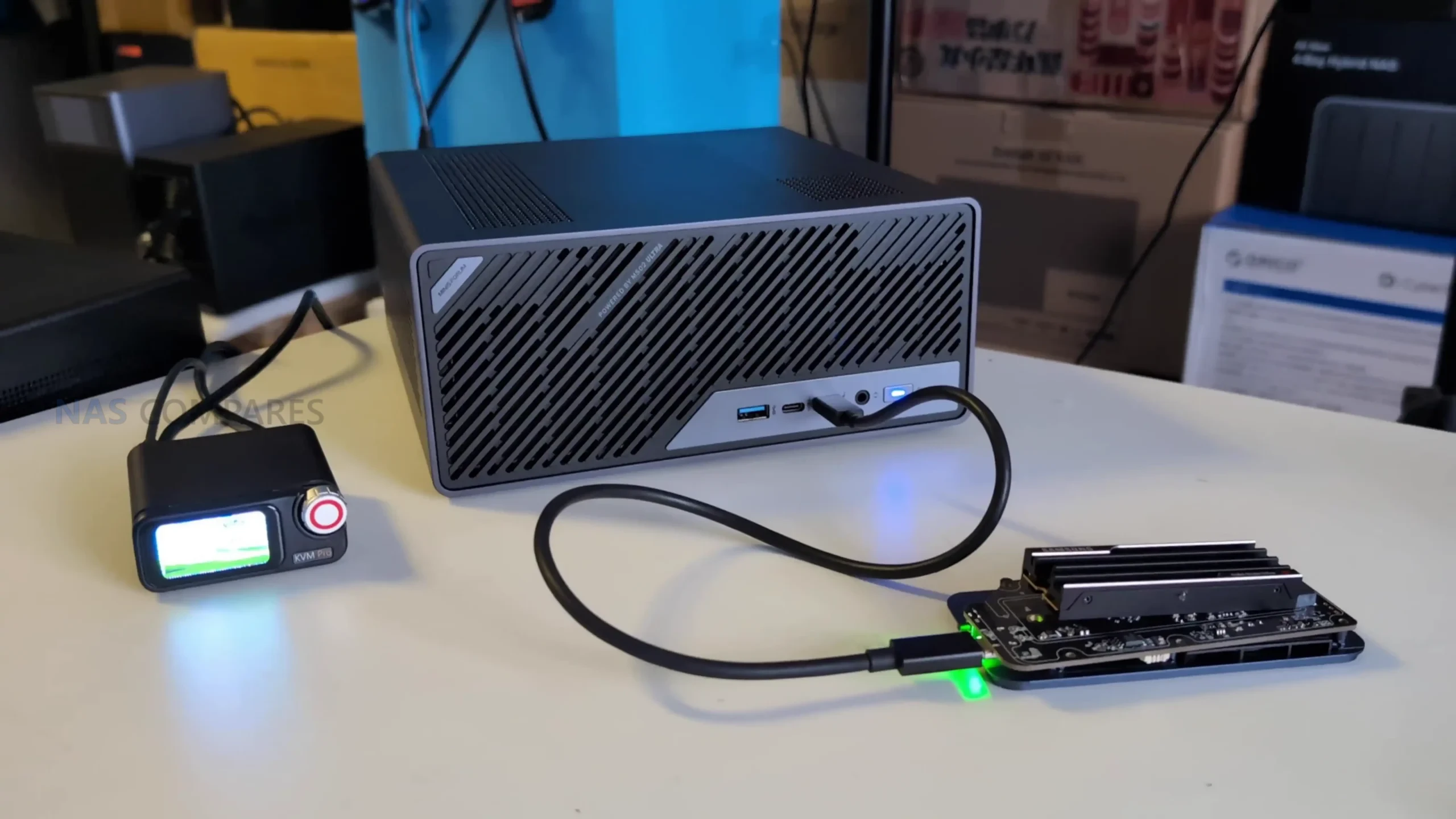
Ici, le design est plus imposant et un écran LED est présent façade pour afficher l’état du système, l’activité réseau ou encore certaines informations de monitoring.
Le S7 est construit autour d’un processeur Intel Core Ultra 7 356H (16 cœurs) capable d’atteindre 4,7 GHz, épaulé par un iGPU Intel Xe3. Ce dernier obtient un score de 34 066 points selon Passmark. L’architecture intègre également un NPU pouvant atteindre 50 TOPS.
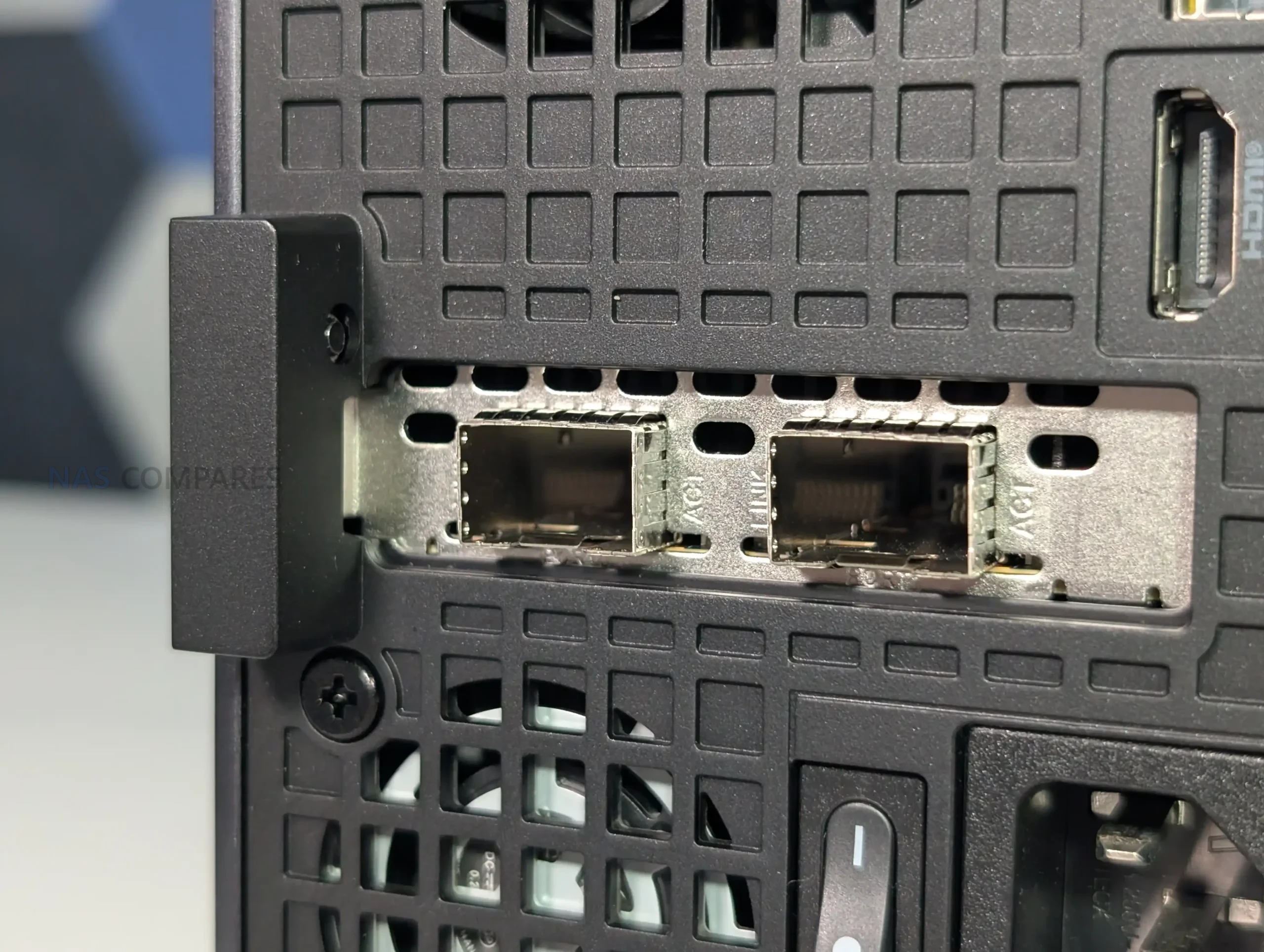
La connectivité réseau confirme clairement les ambitions du produit :
2 ports 10 Gb/s SFP+ ;
1 port RJ45 10 Gb/s ;
1 port RJ45 2,5 Gb/s ;
2 ports USB4.
Sur le papier, le S7 coche pratiquement toutes les cases du NAS orienté virtualisation, IA locale et homelab haut de gamme.
MinisCloud OS et MinisOpenClaw : l’IA locale
Comme le modèle N5 Max, Minisforum met en avant son système MinisCloud OS et MinisOpenClaw (son agent IA maison dérivée d’OpenClaw). Reste toutefois une question essentielle : un agent IA ne sert à rien sans modèle derrière lui. Toute la problématique sera donc de savoir si ces NAS disposeront réellement de suffisamment de puissance pour faire tourner des modèles d’IA localement dans de bonnes conditions. A noter que le système MinisCloud OS serait installé sur une clé USB.
Si Minisforum parvient à proposer une expérience fluide et des cas d’usage pertinents, ces machines pourraient être intéressantes pour les utilisateurs souhaitant conserver leurs données en local tout en profitant des outils IA modernes. Sur le papier, la proposition est séduisante…. mais il faudra vérifier ce que cela donne en conditions réelles.
En synthèse
Minisforum poursuit son offensive sur le marché des NAS avec 2 modèles clairement orientés IA locale et hautes performances réseau. Les S5 et S7 misent sur des SSD NVMe, une connectivité 10 Gb/s et des processeurs Intel intégrant des NPU dédiés à l’accélération IA. Une approche cohérente avec l’évolution du marché vers des solutions capables d’exécuter des modèles localement, sans dépendance au Cloud.
Les prix et dates de disponibilité n’ont pas encore été dévoilés, mais ces NAS sont à surveiller…
Le Minisforum N5 Max avait été présenté lors du CES 2026, mais on en sait désormais davantage à son sujet. Le constructeur a officialisé son prix ainsi que sa date de lancement. Avec son processeur AMD Ryzen AI Max+ 395, ce NAS à 5 baies s’annonce comme l’un des modèles les plus puissants jamais commercialisés sur le marché du stockage réseau. Voici ce qu’il faut retenir…
Minisforum N5 Max
Minisforum s’est imposé depuis 2018 comme un spécialiste reconnu des Mini PC performants. En 2025, la marque avait déjà fait une première percée sur le marché des NAS avec le N5 Pro, un modèle aux caractéristiques particulièrement ambitieuses.
Avec le N5 Max, le constructeur conserve le même châssis compact que les autres modèles de la gamme N5. L’appareil mesure 199 × 202,4 × 252,3 mm pour un poids d’environ 5 kg.
Ce nouveau boîtier embarque 5 baies SATA et 5 emplacements M.2 NVMe (1 slot PCIe 4.0 x4 et 4 slots PCIe 4.0 x1). Un SSD de 128 Go préinstallé accueille le système d’exploitation et occupe l’un des emplacements NVMe.
Le Minisforum N5 Max est construit autour d’un processeur AMD Ryzen AI Max+ 395 (capable d’atteindre 5,1 GHz), épaulé par un iGPU Radeon 8060S, ainsi qu’un NPU affichant une puissance de 126 TOPS (tera-opérations par seconde). Le NAS serait livré avec 64 Go de mémoire LPDDR5x (non extensible).
Vous l’aurez compris, Minisforum positionne clairement ce modèle comme un véritable serveur local dédié à l’intelligence artificielle. L’objectif est de permettre l’exécution locale de modèles IA, sans dépendre d’infrastructures cloud externes. Selon le site PassMark, ce processeur obtient 55 141 points… un niveau de performances bien éloigné des configurations habituellement. À noter que le fabricant annonce un TDP de 55W.
Connectique
Le N5 Max ne fait aucun compromis côté connectivité. Le boîtier intègre notamment :
2 ports RJ45 10 Gb/s ;
2 ports USB4 à 80 Gb/s ;
1 port USB4 à 40 Gb/s ;
1 sortie audio-vidéo HDMI 2.1.
Une fiche technique qui vise clairement les usages professionnels avancés, le traitement de données massif ou encore les workflows vidéo lourds.
MinisCloud OS et MinisOpenClaw : l’IA locale au centre du projet
Le système maison MinisCloud OS intègre la plateforme MinisOpenClaw (OpenClaw préinstallé). Celle-ci propose un assistant IA local (images et vidéos déjà pris en charge, support de tous les fichiers prévu d’ici la fin du troisième trimestre 2026), une recherche sémantique, la gestion de snapshots ZFS, des machines virtuelles, l’isolation multicomptes et un contrôle de permissions en un clic (cette dernière devrait arriver un peu plus tard, d’ici fin 2026). L’objectif affiché est clair : offrir de l’IA générative et du traitement de données localement, sans dépendance au cloud.
Prix et disponibilité
Ce nouveau NAS vise les professionnels qui travaillent sur des fichiers lourds, les entreprises qui souhaitent exécuter des modèles d’IA locaux sans passer par un fournisseur cloud… ou encore les particuliers les plus exigeants.
Le N5 Max occupe donc clairement le sommet de la gamme, avec un écart tarifaire significatif justifié par une puissance de calcul sans équivalent dans ce segment.
The Minisforum N5 Max was originally shown in January 2026 during CES 2026 as the next step in the company’s 5 bay NAS series, following the N5 Pro that arrived in summer 2025 and later sitting above the N5 Air that was introduced in February 2026. At that stage, most of the information around the system came from early hands on coverage, reveal material, and first wave specification details, which meant some elements were still provisional or inconsistent depending on source. Now, in April 2026, the picture around the N5 Max is much clearer. Minisforum has provided a more defined specification set, a clearer description of the hardware layout, and a much stronger explanation of how the system is intended to be positioned, not just as another compact 5 bay NAS, but as a higher tier platform that combines local AI capability, multi tier storage, and more advanced infrastructure features. This update is therefore intended to bring the original January reveal into line with what is currently known, clarify where earlier CES details have since been refined, and set out the N5 Max as it stands now based on the latest available information.
The N5 Max keeps the same broad chassis direction first seen in the earlier N5 systems, using a compact 5 bay enclosure that supports both 3.5 inch and 2.5 inch SATA drives. Physically, it remains very close to the N5 Pro and N5 Air in footprint, with the April 2026 dimensions now listed at 199 × 202.4 × 252.3 mm and a base unit weight of 5 kg. That means Minisforum has not redesigned the platform into a larger desktop tower, but instead chosen to scale capability within the same general enclosure class that defined the rest of the series.
One of the more visible design changes carried over from the original January reveal is the inclusion of lockable drive trays. That may seem like a small revision, but it directly addresses one of the practical complaints raised around the earlier N5 generation. Minisforum is also still using the pull out internal layout, where the main board and flash storage area can be accessed through a more service friendly internal assembly rather than a completely fixed internal frame.
In structural terms, the N5 Max remains very much part of the same family, but it has been revised in several small ways that make it look more mature than the first N5 design.
On the hard drive side, the N5 Max is now specified with 5 SATA 3.0 bays supporting up to 30 TB per bay, giving the system a stated raw HDD ceiling of 150 TB before any NVMe storage is counted. Minisforum also lists the platform as supporting up to 190 TB total storage overall. Compared with the 22 TB per drive guidance attached to earlier N5 series documentation, this higher ceiling does not change the number of bays, but it does position the Max for a higher total capacity target within the same physical format. As with most NAS vendors, real world drive compatibility will still depend on validation over time, but the intent is clearly to place the N5 Max above the earlier models in maximum raw storage potential.
Flash storage is where the N5 Max diverges most clearly from the N5 Pro and N5 Air. Instead of the mixed M.2 and U.2 style arrangement used on those systems, the N5 Max is now described as having 5 M.2 NVMe positions in total. The current April 2026 specification lists 1 × M.2 2280 NVMe slot running at PCIe 4.0 x4 with support up to 8 TB, plus 4 × M.2 2280 NVMe slots running at PCIe 4.0 x1 with support up to 8 TB each. Minisforum also states that the system disk is a preinstalled 64 GB module occupying 1 of those SSD positions, which is relevant because it affects how many slots are immediately free to the user out of the box.
That layout gives the N5 Max a storage structure that is more layered than the earlier N5 models, with large capacity HDDs handling primary bulk storage while multiple NVMe slots can be used for cache, active project data, containers, VM storage, model files, or application workloads. It also fits the broader April 2026 positioning of the unit as a system meant to keep more data in an active state rather than simply acting as a passive archive box. The tradeoff is that the Max no longer appears to prioritize the same U.2 flexibility seen on the N5 Pro and N5 Air, instead leaning harder into a denser onboard M.2 arrangement within the same 5 bay chassis.
Minisforum N5 Max NAS Internal Hardware
The N5 Max is built around the AMD Ryzen AI Max+ 395, a 16 core, 32 thread processor with a 3 GHz base frequency and boost up to 5.1 GHz. Minisforum lists the chip with Radeon 8060S integrated graphics featuring 40 graphics cores, alongside AMD Ryzen AI support rated at up to 126 TOPS overall and up to 50 TOPS on the NPU. In simple terms, this places the N5 Max in a very different compute class to the original N5 and above the N5 Pro as well, making it much closer to a compact workstation platform than a conventional 5 bay NAS in processor terms.
Memory is also handled very differently from the rest of the series. Rather than using upgradeable SO-DIMM slots, the N5 Max is listed with 128 GB of LPDDR5x memory on a 256 bit interface, with support references of 7500 to 8000 MT/s depending on source. That fixed memory design should provide substantially more bandwidth than the socketed DDR5 approach in the N5 Pro and N5 Air, which matters for integrated graphics and local AI workloads, but it also removes user upgrade flexibility. This is one of the clearest examples of Minisforum prioritizing performance density over long term modularity in the Max model.
Cooling and power delivery have also been scaled up to match that higher tier hardware. Minisforum lists a cooling system built around 5 heat pipes with PCM, dual 80 × 15 mm turbo fans for the CPU area, dual 92 × 25 mm axial fans for the HDD section, and a separate 60 × 12 mm turbo fan for the SSD and PSU area. Power is now handled by an internal 250 W supply with AC input built directly into the chassis, replacing the external brick used on the earlier N5 systems. Taken together, these changes suggest that the N5 Max is not simply using a faster CPU in the same shell, but has been reworked internally to support higher sustained load, denser flash storage, and a more integrated overall design.
Minisforum N5 Max NAS Connectivity
The N5 Max keeps the same broad I/O philosophy as the rest of the N5 family, but with a more aggressive top end specification. On the front, Minisforum lists 1 × USB4 port with DisplayPort Alt Mode 2.0 support and 1 × USB 3.2 Gen 2 port. On the rear, the system is listed with 2 × USB4 v2, 1 × USB 3.2 Gen 2, 1 × USB 2.0, 1 × HDMI 2.1 FRL, and 1 × AC input. There is also still an internal PCIe x16 slot operating at PCIe 4.0 x4, which means the N5 Max continues to support internal expansion in the same general way as the earlier N5 systems.
Networking is one of the areas where the April 2026 information has become more specific, but it is also where earlier coverage created some confusion. The latest specification material lists 2 × 10GbE LAN ports using Realtek RTL8127 controllers. That differs from some earlier CES era references that described 1 × 10GbE plus 1 × 5GbE, and it also differs from the N5 Pro and N5 Air, which were generally presented as 10GbE plus 5GbE systems. Based on the most recent material now available, the safest reading is that the N5 Max is currently positioned as a dual 10GbE model, though that was not consistently communicated in the earliest reveal phase.
Display and high speed external bandwidth are also stronger on the N5 Max than on the other N5 variants. Minisforum lists video output support through HDMI and USB4, with the current specification stating up to 8K at 60 Hz or 4K at 144 Hz. More notably, the USB configuration now includes 2 × USB4 v2 connections, which is a substantial increase in external bandwidth compared with standard USB4 implementations. In practical terms, that gives the N5 Max a better fit for high speed external storage, direct attach workflows, fast ingest tasks, and display connectivity, while reinforcing that this system is being pitched as more than just a standard network storage appliance.
What Can You Do with the Minisforum N5 Max NAS
At the most basic level, the N5 Max can still be understood as a compact 5 bay NAS for centralised storage, backup, and multi user file access. With support for up to 150 TB of raw HDD capacity across its SATA bays, plus additional NVMe storage for faster tiers, it can be used for the same core roles as more traditional NAS systems, including shared folders, media libraries, workstation backups, and project archives. The difference is that Minisforum is not presenting it as a storage box first and everything else second. Instead, the current messaging places storage alongside compute and local services as equal parts of the platform.
The second role is as a higher performance working data system for users who need more than simple network storage. The combination of 5 HDD bays, multiple NVMe slots, dual 10GbE, PCIe expansion, and high speed USB4 v2 means the N5 Max is better suited to active workloads than a typical 5 bay desktop NAS. That can include media production, large photo libraries, virtual machine storage, container workloads, active project caching, and heavier multi user access. In that sense, the N5 Max sits closer to a compact storage server or workstation adjacent appliance than to an entry level NAS.
The third and most distinctive role is local AI processing. Minisforum’s March 2026 positioning pushes the N5 Max as a platform for private AI workloads running directly on the device rather than through cloud services. The company has specifically highlighted OpenClaw deployment on local LLMs, semantic photo search, voice to text, summarisation, smart organisation, and a more unified AI assistant style interface inside its software environment. Whether all of those functions arrive in the same form and at the same maturity level at launch remains something that still needs real world validation, but the intended direction is clearly toward keeping both data and AI interactions local.
For more advanced users, the N5 Max is also being framed as a private infrastructure platform rather than only an appliance. Minisforum has attached features such as ZFS, snapshots, virtualization, Docker, UPS support, and stronger permission control to the product direction, which broadens its appeal beyond simple home storage. That means the N5 Max could be used not just for storing files or running AI assisted search, but also for self hosting services, managing recoverable local data pools, running isolated applications, or building a more controlled homelab environment around the same hardware.
Minisforum N5 Max Price & Release Date
As of April 6, 2026, Minisforum still does not appear to have published an official retail price or a confirmed shipping date for the N5 Max. The company’s March 11 announcement described the system as “to-be-launched,” and contemporaneous reporting also noted that pricing and release timing had not yet been announced. That means the N5 Max remains in a pre-release stage from a commercial point of view, even though the hardware platform, software direction, and much of the specification set are now clearer than they were during the original January CES reveal.
What can be said with more confidence is where the N5 Max is likely to sit within the existing Minisforum NAS range. On Minisforum’s current store listings, the N5 Air is shown at $519 sale price on the official store home page, the base N5 is shown at $599, and the N5 Pro is shown at $959, while no live product listing or price is currently visible there for the N5 Max. Given the Ryzen AI Max+ 395 platform, fixed 128 GB LPDDR5x memory, internal 250 W PSU, and broader AI focused positioning, it is reasonable to expect the N5 Max to land above the N5 Pro rather than alongside it, but until Minisforum formally opens orders or publishes a listing, that remains an informed expectation rather than a confirmed launch price.
This description contains links to Amazon. These links will take you to some of the products mentioned in today's content. As an Amazon Associate, I earn from qualifying purchases. Visit the NASCompares Deal Finder to find the best place to buy this device in your region, based on Service, Support and Reputation - Just Search for your NAS Drive in the Box Below
Need Advice on Data Storage from an Expert?
Finally, for free advice about your setup, just leave a message in the comments below here at NASCompares.com and we will get back to you.Need Help?
Where possible (and where appropriate) please provide as much information about your requirements, as then I can arrange the best answer and solution to your needs. Do not worry about your e-mail address being required, it will NOT be used in a mailing list and will NOT be used in any way other than to respond to your enquiry.
[contact-form-7]
TRY CHAT Terms and Conditions
If you like this service, please consider supporting us.
We use affiliate links on the blog allowing NAScompares information and advice service to be free of charge to you.Anything you purchase on the day you click on our links will generate a small commission which isused to run the website. Here is a link for Amazon and B&H.You can also get me a Ko-fi or old school Paypal. Thanks!To find out more about how to support this advice service checkHEREIf you need to fix or configure a NAS, check FiverHave you thought about helping others with your knowledge? Find Instructions Here
Or support us by using our affiliate links on Amazon UK and Amazon US
Alternatively, why not ask me on the ASK NASCompares forum, by clicking the button below. This is a community hub that serves as a place that I can answer your question, chew the fat, share new release information and even get corrections posted. I will always get around to answering ALL queries, but as a one-man operation, I cannot promise speed! So by sharing your query in the ASK NASCompares section below, you can get a better range of solutions and suggestions, alongside my own.
Update on the ZimaCube 2 NAS + Your Questions Answered
Following the original ZimaCube and ZimaCube Pro, IceWhale is now preparing the ZimaCube 2 range as a more mature follow-up to its first desktop NAS platform, combining the same broad idea of a compact, open, software-defined personal cloud with clearer attention paid to refinement, validation, and retail readiness. Based on the specifications revealed so far, the standard $799 ZimaCube 2, the $1,299 ZimaCube 2 Pro, and the $2,499 Creator Pack continue to target users who want a turnkey system that still leaves room for alternative operating systems, PCIe expansion, direct Thunderbolt 4 or USB4 connectivity, and mixed storage workloads, but the second generation also arrives in the shadow of the first model’s early issues around cooling, power handling, and hardware compatibility, all of which IceWhale now says informed the redesign. Rather than presenting the ZimaCube 2 as a radically different product category, the company appears to be positioning it as a more stable and better validated version of the same formula, with a stronger base model, revised cooling, closer hardware and software integration, and a retail launch path instead of another crowdfunding campaign.
Remember to use the NASCompares Channel Discount Code: ‘NASCOMPARES50’
Zimacube 2 First Look at the Design
In physical terms, the ZimaCube 2 remains very close to the original system. The listed chassis dimensions are still 240 x 221 x 220 mm, and the overall layout continues to center on a compact desktop enclosure with 6 front-facing drive bays, a removable front panel, and a secondary internal sled for the 7th-bay M.2 storage section. That means this is not a major departure in footprint or format, but rather a continuation of the same small-tower NAS concept that IceWhale introduced with the first ZimaCube generation.
The external build also keeps the same broad industrial approach, with an all-metal enclosure and a design that is intended to be visible on a desk rather than hidden away. Based on the Shenzhen hands-on material, the finish has been revised to a silver tone rather than the darker look associated with earlier models, and there are still decorative touches such as copper-coloured screws and RGB lighting. The magnetic front cover also remains part of the design language, although the hands-on notes suggest that removability is still not especially refined, with no obvious front handle to make access easier.
Internally, the most significant design revision appears to be in thermals rather than structure. The original ZimaCube family drew recurring criticism over cooling behaviour and fan noise, and IceWhale itself later issued optimisation guidance and revised cooling components for early units. On the ZimaCube 2, the cooling assembly appears to have been reworked substantially, with a much larger vapor-chamber style module, extended heatpipe routing, and a direct airflow path toward a rear-mounted fan. In practical terms, this is one of the clearest visible signs that the company is treating thermal control as a first-order design issue rather than a secondary adjustment.
The storage layout remains one of the most recognisable elements of the platform. At the front are 6 SATA bays for 3.5-inch and 2.5-inch drives, while the separate 7th-bay board carries 4 M.2 slots. What has changed is the clarification around performance tiers. Following the post-video corrections, both the standard and Pro use PCIe Gen 4 for the 7th-bay architecture, but the actual throughput differs because of the ASMedia bridge hardware: the standard model is rated for 800MB/s R/W, while the Pro and Creator Pack are rated for 3200MB/s R/W. So although the physical design remains familiar, the storage subsystem is now segmented more clearly by model.
Taken together, the ZimaCube 2’s design changes are best understood as a revision rather than a clean-sheet rethink. The enclosure, bay structure, general scale, and visual concept are all recognisably derived from the earlier ZimaCube, but the thermal hardware, finish, and some of the internal implementation details suggest a product that has been adjusted in response to first-generation feedback. From a design perspective, the main story is not reinvention. It is that IceWhale appears to have revisited the same chassis idea with greater emphasis on cooling headroom, validation, and long-term use as a retail product rather than a first-wave crowdfunded device.
Zimacube 2 Internal Hardware Confirmation
The internal hardware changes are more substantial than the exterior suggests, particularly at the lower end of the range. The standard ZimaCube 2 now moves from the original ZimaCube’s Intel N100 to a 12th Gen Intel Core i3-1215U, giving the base model 6 cores, 8 threads, and a much stronger starting point for mixed storage and application workloads.
The ZimaCube 2 Pro and Creator Pack both use the 12th Gen Intel Core i5-1235U with 10 cores and 12 threads, which keeps the Pro class in the same broad processor tier as the earlier ZimaCube Pro, but still gives the second-generation lineup a more balanced split between entry and higher-tier models. Memory has also shifted upward in platform terms, with DDR5 SODIMM support and upgradeable slots rather than fixed memory, allowing the standard model to start at 8GB, the Pro at 16GB, and the Creator Pack at 64GB.
One of the more important details here is that IceWhale is not presenting the hardware purely as a NAS board with attached storage, but as a compact compute platform that also happens to handle large-scale local storage. The system still uses an internal NVMe SSD for the operating system, with 256GB on the standard and Pro and 1TB on the Creator Pack, while retaining dual PCIe slots on a Mini-ITX based custom board. That means the core platform is still built around expandability, and not just in a theoretical sense. IceWhale continues to point toward GPU cards, AI accelerators, network cards, and SSD-focused upgrades as intended use cases, which places the ZimaCube 2 somewhere between a traditional NAS, a compact home server, and a turnkey prosumer workstation-style storage appliance.
At the same time, the scale of the internal upgrade depends on which earlier model is being used as the reference point. Against the original non-Pro ZimaCube, the jump is obvious: newer CPU class, higher memory ceiling, improved internal segmentation, and a platform that appears better prepared for virtualization, media handling, and direct-attached workloads. Against the original ZimaCube Pro, however, the advance is more limited, because the Pro remains on the same Core i5-1235U family and much of the underlying capability was already present in some form. So while the internal hardware is clearly stronger overall, especially in the standard model, this still reads more as a focused revision of the existing architecture than a complete hardware reset.
Zimacube 2 Final Ports and Connectivity
Externally, the ZimaCube 2 continues to position itself as something broader than a conventional NAS, and the port layout reflects that. On the rear, the standard model includes 2 x 2.5GbE network ports alongside 2 x Thunderbolt 4 or USB4-capable USB-C connections, which gives it both networked and direct-attached workflow options. That matters because IceWhale is still treating direct host connection as one of the platform’s defining features, particularly for users who want local high-speed access without routing everything through standard Ethernet alone. It also keeps the ZimaCube 2 distinct from many turnkey NAS systems that rely almost entirely on network connectivity as the primary access path.
The separation between the standard and Pro models is more visible in networking than in external appearance. The standard ZimaCube 2 is limited to 2 x 2.5GbE, while the ZimaCube 2 Pro adds an additional 10GbE port. That makes the Pro the more complete option for users intending to deploy the system as shared high-speed network storage, while the standard model leans more heavily on its direct-connect Thunderbolt 4 or USB4 story to offset the absence of 10GbE. In practical terms, this is an important distinction, because although both systems look closely related on paper, the network capabilities create a clear difference in how they are likely to be used in creative or multi-user environments.
The rest of the I/O remains relatively conventional but still useful for a system of this class. IceWhale lists 4 x USB-A 3.0 ports, 1 x USB-C 3.0 port, DisplayPort 1.4, HDMI 2.0, and a 3.5mm audio jack, while the internal platform also keeps 2 PCIe expansion slots available for broader configuration. None of these ports alone are unusual, but taken together they reinforce the same point as the rest of the hardware: this is not being framed as a sealed appliance. It is being framed as a turnkey system with room for local expansion, direct attachment, and mixed workload deployment, even if the actual value of that depends on whether the buyer is choosing the standard model’s lower-cost balance or the Pro model’s more complete network specification.
Next, I spent some time with the founder of Icewhale (the company behind the Zimacube and ZimaOS, as well as the popular Zimaboard and Zimablade) and put forward a few questions about the current development of Zimacube 2 and their recent pricing changes to ZimaOS.
What is the ZimaCube 2 bringing to the market that your previous ZimaCube/ZimaCube Pro does not?
Based on the hands-on session and Lauren Pan’s comments, IceWhale is not presenting the ZimaCube 2 as a completely new product category, but rather as a more refined and better balanced version of the same idea. The biggest practical difference is that the standard model is no longer a clearly compromised entry point in the way the original N100-based ZimaCube often appeared next to the first Pro. The move to a Core i3-1215U, DDR5 memory, dual Thunderbolt 4 or USB4, 6 SATA bays, 4 M.2 slots, 2 PCIe slots, and upgradeable SODIMM memory means the base model now looks much closer to the wider prosumer NAS and compact server market, instead of acting mainly as the cheaper route into the ecosystem. That gives the range a stronger starting point and makes the standard unit a more serious option in its own right.
The second major difference is maturity rather than raw specification. IceWhale is tying the ZimaCube 2 more directly to the lessons learned from the first generation, especially around cooling, stability, hardware validation, and closer coordination between hardware and software development. The revised thermal module, the stronger emphasis on compatibility testing, the claim of more OS-level control over system parameters such as fans, and the move away from crowdfunding toward direct retail all suggest that the ZimaCube 2 is intended to arrive as a more settled product. So while the overall concept remains familiar, what IceWhale appears to be bringing to market this time is a more fully developed turnkey platform, not just in hardware terms, but in how the product is being prepared, sold, and supported.
What lessons were learnt in the development of the original ZimaCube that are going to be applied in the development of ZimaCube 2?
The clearest lesson appears to have been that the original ZimaCube needed tighter coordination between hardware and software from the outset. According to Lauren Pan, one of the main internal changes for the second generation is that both teams now work far more closely together, discussing hardware and software details in the same development cycle rather than treating them as separate tracks. In practical terms, that matters because the first-generation platform showed that a NAS or personal cloud product is not defined by hardware alone. It also depends heavily on how well thermals, fan control, storage behaviour, connectivity, and OS-level management are integrated into a single system.
A second lesson concerns validation and first-batch readiness. The original ZimaCube attracted feedback around cooling, fan behaviour, drive compatibility, and power-related issues, and IceWhale now appears to be treating those areas much more seriously in the ZimaCube 2. Pan specifically pointed to a redesigned thermal module, more extensive compatibility testing, and additional work with drive manufacturers such as Seagate and Western Digital after earlier issues emerged. The broader implication is that ZimaCube 2 is being developed less like an experimental first-generation product and more like a revision intended to reduce the kind of early hardware and integration problems that affected the first release.
What was the biggest challenge that you have faced in the development of ZimaCube 2?
According to Lauren Pan, the biggest challenge in developing the ZimaCube 2 was production cost. That answer fits the wider context of the current hardware market, where CPU, memory, SSD, and other component pricing has remained a significant pressure on system builders. In the case of the ZimaCube 2, IceWhale appears to have been trying to hold onto several features that are often reduced or removed in competing products at this price level, including upgradeable SODIMM memory, bundled system storage, dual Thunderbolt 4 or USB4 connectivity, PCIe expansion, and a more substantial cooling solution. So the challenge was not simply making a new box, but doing so while keeping the product within a price band that still looked competitive against other turnkey and semi-DIY NAS systems in 2026.
That issue appears especially relevant to the standard model. IceWhale is trying to position the $799 ZimaCube 2 as a stronger base platform than the original non-Pro unit, while still including a Core i3-1215U, 8GB of DDR5, 256GB of NVMe storage, 6 SATA bays, 4 M.2 slots, and full ZimaOS licensing as part of the package. In that respect, the development challenge seems to have been balancing specification, manufacturability, and margin without moving the product out of reach of the same buyers it is trying to attract. The result is that cost control appears to have shaped not just pricing, but also the way IceWhale talks about the ZimaCube 2 as a price versus performance compromise rather than an attempt to maximise specifications at any cost.
What has the user response been to your switch towards a free/paid $29 model of your ZimaOS software since the announcement?
According to Lauren Pan, the response to the move from a fully free model to the current free tier plus $29 lifetime ZimaOS+ model has been mixed, but not unexpected. Some community members were confused by the change or felt the software should have remained fully free, while others accepted that the platform needed a sustainable business model if development was going to continue over the long term.
That split is fairly typical for software that begins as a no-cost offering and later introduces paid licensing, particularly when it has built much of its reputation through community use, testing, and feedback. In IceWhale’s case, the company’s position is that the low-cost lifetime fee is intended to make the software commercially sustainable without undermining its accessibility.
IceWhale has also tried to frame the pricing change as part of a broader community model rather than just a revenue switch. Pan said the company had explained the reasoning publicly in late 2025 and described a plan under which 33% of license revenue would be directed back toward community contributors, including moderators, app maintainers, and users helping support the wider ZimaOS and CasaOS ecosystem.
Whether that model proves sustainable over time remains to be seen, but the immediate point is that IceWhale does not appear to be treating the $29 fee as a traditional software upsell. Instead, it is presenting it as a low-cost, lifetime contribution intended to keep development active while maintaining a relatively low barrier to entry compared with other paid NAS software platforms.
Will ZimaCube 2 be headed for crowdfunding, or direct to traditional retail?
IceWhale says the ZimaCube 2 is going direct to traditional retail rather than returning to crowdfunding. In Lauren Pan’s explanation, Kickstarter is something the company now sees as useful in 2 specific cases: either when a product concept still needs market validation, or when production costs are high enough that outside funding is needed to get the first batch built. IceWhale’s position is that the original ZimaCube fit that earlier stage of the company, when the product was more expensive to bring to market and the business itself was still proving demand for this kind of home server and personal cloud hardware. With the ZimaCube 2, the company appears to believe it no longer needs crowdfunding for either of those reasons.
That change is also part of the wider message around the second generation. Moving straight to store-based pre-orders gives the impression that IceWhale wants the ZimaCube 2 to be seen less as an experimental or community-funded device and more as a normal retail product. Pan also described the early response as active, with roughly 200 to 300 community applications tied to testing and usage scenarios, suggesting that demand discovery is now happening around a product that already exists, rather than one still needing crowdfunding to justify its creation. In practical terms, the retail-first approach supports IceWhale’s broader attempt to position the ZimaCube 2 as a more mature follow-up to the first generation.
The NASCompares Conclusion and Verdict so Far on ZimaCube 2
Taken as a whole, the ZimaCube 2 looks less like a dramatic reinvention of the original platform and more like a deliberate correction and refinement of it. The overall chassis concept, storage layout, and broader product identity remain familiar, but IceWhale appears to have focused this second generation on the areas that mattered most after the first release: a stronger base model, revised thermals, closer hardware and software coordination, more validation around compatibility, and a direct retail launch rather than another crowdfunding cycle. That means the scale of change is uneven depending on which earlier model it is compared against, but the direction is clear enough. The ZimaCube 2 does not appear to be trying to replace the original with a wholly different vision. Instead, it looks like IceWhale is trying to turn the ZimaCube formula into a more complete and commercially mature turnkey platform, with ZimaOS, direct Thunderbolt 4 or USB4 connectivity, PCIe expansion, and hybrid storage still forming the core of its appeal.
Remember to use the NASCompares Channel Discount Code: ‘NASCOMPARES50’
This description contains links to Amazon. These links will take you to some of the products mentioned in today's content. As an Amazon Associate, I earn from qualifying purchases. Visit the NASCompares Deal Finder to find the best place to buy this device in your region, based on Service, Support and Reputation - Just Search for your NAS Drive in the Box Below
Need Advice on Data Storage from an Expert?
Finally, for free advice about your setup, just leave a message in the comments below here at NASCompares.com and we will get back to you.Need Help?
Where possible (and where appropriate) please provide as much information about your requirements, as then I can arrange the best answer and solution to your needs. Do not worry about your e-mail address being required, it will NOT be used in a mailing list and will NOT be used in any way other than to respond to your enquiry.
[contact-form-7]
TRY CHAT Terms and Conditions
If you like this service, please consider supporting us.
We use affiliate links on the blog allowing NAScompares information and advice service to be free of charge to you.Anything you purchase on the day you click on our links will generate a small commission which isused to run the website. Here is a link for Amazon and B&H.You can also get me a Ko-fi or old school Paypal. Thanks!To find out more about how to support this advice service checkHEREIf you need to fix or configure a NAS, check FiverHave you thought about helping others with your knowledge? Find Instructions Here
Or support us by using our affiliate links on Amazon UK and Amazon US
Alternatively, why not ask me on the ASK NASCompares forum, by clicking the button below. This is a community hub that serves as a place that I can answer your question, chew the fat, share new release information and even get corrections posted. I will always get around to answering ALL queries, but as a one-man operation, I cannot promise speed! So by sharing your query in the ASK NASCompares section below, you can get a better range of solutions and suggestions, alongside my own.
ZimaCube 2 NAS Announced – Bigger? Better? The Same?
IceWhale’s original ZimaCube and ZimaCube Pro established the company’s move beyond compact single-board servers and into desktop NAS hardware aimed at prosumers, creators, and home lab users. The standard ZimaCube launched at $699 with an Intel N100, while the ZimaCube Pro raised the ceiling with an Intel Core i5-1235U, 10GbE, Thunderbolt 4, faster 7th-bay M.2 performance, and broader appeal for heavier workloads. Both systems were positioned less as closed NAS appliances and more as flexible personal cloud platforms, with ZimaOS pre-installed and support for alternative operating systems such as TrueNAS, Unraid, Proxmox, pfSense, and Linux distributions. As with many crowdfunded hardware products, the first generation also required some early post-launch refinement, particularly around areas such as fan behaviour, thermal tuning, and broader system optimisation, which was reflected in community support discussions and early optimisation guidance from IceWhale.
Remember to use the NASCompares Channel Discount Code: ‘NASCOMPARES50’
The newly revealed ZimaCube 2 family builds directly on that same idea, but with a clearer emphasis on higher-performance local storage, hybrid workloads, and hardware expansion. The new range starts with the $799 ZimaCube 2 Standard, moves to the $1,299 ZimaCube 2 Pro, and extends to a $2,499 Creator Pack that adds 64GB of memory, 1TB of SSD storage, and an NVIDIA RTX Pro 2000 GPU. Based on the specifications revealed so far, IceWhale is positioning this generation as a more capable platform for media serving, virtualization, containers, AI-assisted workloads, and direct-attached creative workflows, while continuing to stress open hardware, multi-OS support, and the absence of ecosystem lock-in. Unlike the first ZimaCube generation, which began as a Kickstarter-era product, the ZimaCube 2 line is already being presented through standard pre-order retail channels ahead of its expected March 30 shipment window.
ZimaCube 2 – Design & Storage
From a design standpoint, the ZimaCube 2 family appears to retain the same broad desktop form factor as the earlier models, with listed dimensions of 240 x 221 x 220 mm. IceWhale is continuing with the same general visual approach: a compact metal chassis, magnetic front panel, and a visible RGB lighting element rather than the more utilitarian styling used by many conventional NAS systems. The company is also still presenting the system as something intended to sit on a desk rather than be hidden away, which places equal weight on appearance, acoustics, and accessibility alongside storage capacity.
The storage layout remains one of the more distinctive parts of the design. As before, the system uses a 6-bay SATA arrangement for 3.5-inch and 2.5-inch drives, but it is paired with a separate 7th-bay expansion structure built around 4 M.2 slots.
IceWhale continues to frame this as a hybrid storage design, separating bulk-capacity HDD storage from faster solid-state tiers for cache, active project data, applications, or virtualised workloads. In practical terms, that gives the ZimaCube 2 a broader remit than a basic backup NAS, since it is being positioned to handle both long-term storage and higher-speed local workloads within the same enclosure.
What is different in this generation is less the physical layout itself and more the way IceWhale is defining its purpose. The company is now pushing the 6+4 architecture more explicitly as a tiered storage platform for creators, self-hosters, and home lab users, with references to 164TB+ capacity, active “hot zone” NVMe storage, and room for long-term archive duties. That said, the overall storage philosophy is still familiar rather than radically new: the ZimaCube 2 appears to refine and repackage an existing concept instead of introducing a fundamentally different chassis or bay arrangement. The main change is that IceWhale is placing greater emphasis on workflow separation, SSD acceleration, and long-term expandability than it did with the original launch material.
ZimaCube 2 – Internal Hardware
Internally, the ZimaCube 2 range is split more clearly than the first generation. The base ZimaCube 2 moves to an Intel Core i3-1215U with 8GB of DDR5 memory, while the ZimaCube 2 Pro uses an Intel Core i5-1235U with 16GB of DDR5. At the top end, the Creator Pack keeps the same Core i5 platform but adds 64GB of memory, 1TB of NVMe storage, and a discrete NVIDIA RTX Pro 2000. That gives IceWhale a broader spread than before, from an entry configuration that is still positioned above the original N100-based ZimaCube to a much more workstation-like variant aimed at GPU-assisted workloads.
The wider platform also reflects a shift in how IceWhale wants these systems to be used. The first ZimaCube family already supported alternative operating systems, containers, media serving, and some expansion, but the ZimaCube 2 line places far more emphasis on concurrent mixed workloads. IceWhale is explicitly framing the hardware around virtual machines, Docker containers, AI tools, real-time media handling, and direct high-speed project access, which explains the move to newer mobile Intel processors, DDR5 memory, and a more aggressive expansion story. In that sense, the second generation is less a conventional NAS refresh and more an attempt to position the product as a compact storage server with broader compute utility.
CPU spec
ZimaCube 2
ZimaCube 2 Pro
Processor
Intel Core i3-1215U
Intel Core i5-1235U
Generation
12th Gen Intel Core U-series
12th Gen Intel Core U-series
Total cores
6
10
Performance cores
2
2
Efficient cores
4
8
Threads
8
12
Max turbo frequency
4.40GHz
4.40GHz
P-core max turbo
4.40GHz
4.40GHz
E-core max turbo
3.30GHz
3.30GHz
Intel Smart Cache
10MB
12MB
Processor base power
15W
15W
Maximum turbo power
55W
55W
Integrated graphics
Intel UHD Graphics
Intel Iris Xe Graphics
In practical terms, the main difference is not clock speed, since both chips top out at 4.40GHz, but core count and thread count. The i5-1235U adds 4 more Efficient cores, 4 more threads, and 2MB more cache, which should make it noticeably better suited to heavier multitasking, containers, background services, and mixed NAS plus VM workloads.
Model
CPU
Key CPU difference
ZimaCube 2
Intel Core i3-1215U
Lower-tier chip with 6 cores and 8 threads
ZimaCube 2 Pro
Intel Core i5-1235U
Higher-tier chip with 10 cores and 12 threads, better suited to heavier parallel workloads
At the same time, the headline changes need to be read carefully. The ZimaCube 2 Pro remains on the same Core i5-1235U class processor as the previous ZimaCube Pro, so not every model represents a major CPU leap. The more meaningful changes are in how the range is tiered, the addition of a pre-configured GPU-equipped Creator Pack, and the clearer effort to make higher-end use cases part of the official positioning rather than secondary possibilities. For buyers comparing model to model, the internal hardware story is therefore partly about real platform flexibility and partly about IceWhale packaging familiar capabilities into more defined product tiers.
Specification
ZimaCube 2
ZimaCube 2 Pro
ZimaCube 2 Creator Pack
Processor
Intel Core i3-1215U
Intel Core i5-1235U
Intel Core i5-1235U
CPU cores / threads
6 cores
10 cores / 12 threads
10 cores / 12 threads
Max clock
Up to 4.4GHz
Up to 4.4GHz
Up to 4.4GHz
GPU
Integrated graphics
Intel Iris Xe
NVIDIA RTX Pro 2000
Memory
8GB DDR5-4800
16GB DDR5-4800
64GB DDR5-4800
Max memory
64GB
64GB
64GB
System storage
256GB NVMe SSD
256GB NVMe SSD
1TB NVMe SSD
PCIe expansion
PCIe 4.0 x4 + PCIe 3.0 x2
PCIe 4.0 x4 + PCIe 3.0 x2
PCIe 4.0 x4 + PCIe 3.0 x2
M.2 support
1 onboard + 4 in 7th bay
1 onboard + 4 in 7th bay
1 onboard + 4 in 7th bay
SATA drive support
6 bays
6 bays
6 bays
Rated power
247W
247W
247W
ZimaCube 2 – Ports & Connections
The connectivity story is one of the clearer areas where IceWhale is trying to separate the ZimaCube 2 family from entry-level NAS hardware. Across the new range, the headline feature is the inclusion of 2 rear Thunderbolt 4 or USB4-class USB-C connections rated at 40Gbps on both the standard and Pro tier, which IceWhale is positioning for direct Mac or PC attachment as well as high-speed external expansion. That is a notable distinction from many mainstream NAS products, which typically rely on Ethernet alone for primary high-speed access. Here, IceWhale is clearly trying to support both networked storage use and direct-attached workflow scenarios from the same box.
Networking is also relatively strong on paper. Based on the revealed specifications, the ZimaCube 2 family includes 2 x Intel i226 2.5GbE ports and 1 x Marvell AQC113 10GbE port exclusively on the Pro model. In practical terms, that allows for several deployment options, including direct multi-gig connections, use as a higher-speed shared storage node, or separation of management and data traffic. For users comparing it with the previous generation, the main point is that higher-end network capability now appears to be treated as a core part of the wider ZimaCube 2 platform rather than something reserved only for the Pro model.
The rest of the external I/O is fairly conventional but functional. IceWhale lists 4 x USB-A 3.0 ports, 1 x USB-C 3.0 port, DisplayPort 1.4, HDMI 2.0, and a 3.5mm audio jack. Combined with the PCIe expansion support inside the chassis, that gives the platform a broader connection profile than a typical sealed NAS appliance. Even so, the real significance here is not any single port in isolation, but the fact that IceWhale continues to present the ZimaCube 2 as a hybrid device that sits somewhere between a NAS, a small server, and a compact workstation-class storage platform.
Connection
ZimaCube 2 family
Ethernet
2 x Intel i226 2.5GbE, 1 x Marvell AQC113 10GbE (Pro Only)
Thunderbolt / USB4
2 x rear USB-C, up to 40Gbps
USB-A
4 x USB-A 3.0
USB-C
1 x USB-C 3.0
Display outputs
1 x DisplayPort 1.4, 1 x HDMI 2.0
Audio
1 x 3.5mm audio jack
PCIe expansion support
PCIe 4.0 x4 in physical x16, PCIe 3.0 x2 in physical x8
ZimaCube 2 vs ZimaCube 1 – What Has Changed?
The biggest change is at the bottom of the range. The original ZimaCube was built around Intel’s N100, DDR4 memory, Gen 3 expansion, and 2 x 2.5GbE, which made it the more basic model in the lineup. By contrast, the new ZimaCube 2 raises the baseline to a Core i3-1215U with DDR5 memory, while keeping the same overall 6-bay chassis concept and hybrid storage approach. That is a meaningful improvement in entry-level compute capability, but it does not completely remove the gap between standard and Pro variants, since the non-Pro ZimaCube 2 still stops at 2 x 2.5GbE and does not gain the extra 10GbE port.
The Pro side is a more mixed story. The original ZimaCube Pro already offered a Core i5-1235U, DDR5, 10GbE, Thunderbolt 4, and faster M.2 performance in the 7th bay, so the ZimaCube 2 Pro does not represent the same kind of obvious jump seen on the standard model. In CPU terms, it appears to stay in essentially the same class, which makes this look more like a product refinement than a full hardware reset. IceWhale is clearly pushing the second generation more aggressively toward creator workflows, virtualization, AI-related use cases, and direct-attached high-speed storage, but that broader messaging should not be mistaken for a major leap in every core hardware area.
That leaves the ZimaCube 2 generation looking unevenly improved depending on which model is being compared. The standard ZimaCube 2 is substantially more capable than the first non-Pro system, while the ZimaCube 2 Pro looks more like a cleaner, more retail-ready continuation of what the first Pro already set out to do. The new Creator Pack is the main addition that materially changes the shape of the lineup, since it introduces a pre-configured GPU-equipped option rather than leaving that path entirely to user expansion. So while IceWhale is presenting the ZimaCube 2 family as a broader second-generation platform, the actual extent of change varies quite sharply between the base and Pro tiers.
Specification
ZimaCube
ZimaCube 2
ZimaCube Pro
ZimaCube 2 Pro
Launch price
$699
$799
$1,099
$1,299
Processor
Intel N100
Intel Core i3-1215U
Intel Core i5-1235U
Intel Core i5-1235U
CPU class change
Baseline
Clear upgrade over ZimaCube
Higher-end original model
Largely same CPU tier as ZimaCube Pro
Memory
8GB DDR4-3200
8GB DDR5-4800
16GB DDR5-4800
16GB DDR5-4800
Max memory
16GB
64GB
32GB
64GB
System storage
256GB NVMe SSD
256GB NVMe SSD
256GB NVMe SSD
256GB NVMe SSD
6-bay SATA storage
Yes
Yes
Yes
Yes
7th bay
4 x M.2
4 x M.2
4 x M.2
4 x M.2
7th-bay speed
800MB/s R/W
800MB/s R/W listed
3200MB/s R/W
3200MB/s R/W listed
PCIe expansion
Gen 3
PCIe 4.0 x4 + PCIe 3.0 x2
Gen 4 + Gen 3
PCIe 4.0 x4 + PCIe 3.0 x2
Networking
2 x 2.5GbE
2 x 2.5GbE
2 x 2.5GbE + 1 x 10GbE
2 x 2.5GbE + 1 x 10GbE
Thunderbolt 4 / USB4
No
2 x rear USB-C
2 x rear USB-C
2 x rear USB-C
USB
More limited
4 x USB-A 3.0, 1 x USB-C 3.0
4 x USB-A 3.0, 1 x USB-C 3.0
4 x USB-A 3.0, 1 x USB-C 3.0
Display outputs
DP 1.4, HDMI 2.0
DP 1.4, HDMI 2.0
DP 1.4, HDMI 2.0
DP 1.4, HDMI 2.0
Dimensions
240 x 221 x 220 mm
240 x 221 x 220 mm
240 x 221 x 220 mm
240 x 221 x 220 mm
ZimaOS – The Software that is included with the ZimaCube 2 (Is it actually any good?)
ZimaOS is IceWhale’s Linux-based NAS operating system, developed out of the earlier CasaOS foundation and originally tied closely to the ZimaCube hardware before becoming available more broadly as a standalone platform. In practical terms, its main appeal is that it tries to lower the barrier to entry for first-time NAS users without stripping away too much of the flexibility expected from a self-hosted system. Based on the information provided, the software combines a browser-based management interface with a dedicated Zima Client application for desktop and mobile, giving it a more guided and consumer-facing feel than many free NAS operating systems.
Installation appears relatively straightforward, using a standard image-writing process and USB boot method, and the platform is light enough to run on modest boot media rather than requiring a large dedicated SSD. The interface focuses heavily on accessibility: native file browsing, straightforward share creation, basic RAID setup, network management, cloud and LAN storage integration, drive mapping, local backup jobs, and remote access are all presented in a simplified GUI rather than being heavily dependent on command line work. That simplicity is one of its clearest points of distinction from platforms such as TrueNAS and OpenMediaVault, which can offer deeper storage control but are often more intimidating to less experienced users.
At the same time, ZimaOS is not being positioned as a stripped-down toy platform. IceWhale is clearly treating it as a full software layer for a turnkey NAS or personal cloud deployment, with support for app containers, developer mode, SSH access, SMB sharing, Time Machine compatibility, AI-assisted semantic search, and direct Thunderbolt connectivity on supported hardware. The client application is also an important part of the package, since it extends the platform beyond simple browser access by adding local discovery, mapped access, backup synchronisation, and peer-to-peer file transfer in a way that many free NAS platforms do not include by default.
However, the software still has some visible limits: configuration depth remains lighter than enterprise-oriented rivals, some features appear to be more polished than others, and direct Thunderbolt or USB4 support may still depend heavily on driver compatibility and the exact hardware being used. Its RAID tools are deliberately simple, but do not currently match the flexibility of more mature systems in areas such as mixed-drive storage schemes.
Pricing also shows how IceWhale is segmenting the platform in 2026: the base ZimaOS Free tier includes core features, the Zima Client for mobile and PC, Thunderbolt support, developer mode, support for up to 4 disks, and 3 members, while ZimaOS+ adds unlimited disks and unlimited users for a $29 lifetime license (to confirm, any ZimaCube, Zimaboard and ZimaBlade device includes the lifetime license). Taken together, ZimaOS appears to sit in a useful middle ground: more approachable than many traditional NAS operating systems, more complete than many lightweight hobbyist options, and increasingly viable both as bundled software for ZimaCube hardware and as a standalone OS for low-cost custom systems.
ZimaCube 2 – Worth it? Price and Release Date?
Taken at face value, the ZimaCube 2 family looks more like a measured revision of the original concept than a major generational leap. Compared with the first ZimaCube, there are clear upgrades in entry-level processor choice, memory platform, expansion framing, and product segmentation, but the broader structure remains very familiar. The unchanged chassis dimensions, continued 6-bay plus 7th-bay layout, and the fact that the Pro model remains in essentially the same CPU class as before all make this feel closer to the kind of 2 to 3 year refresh cycle often seen from established turnkey NAS vendors such as Synology and QNAP, rather than a wholly new platform that significantly expands the portfolio or redefines what the product is.
That said, this does not make the ZimaCube 2 underwhelming in absolute terms. Even if the scale of change appears evolutionary rather than transformative, it is still a notably well-equipped system on paper, with ZimaOS included, direct Thunderbolt 4 or USB4 connectivity, PCIe expansion, hybrid storage flexibility, and a full hardware and software turnkey approach that many DIY alternatives do not offer in one package. The result is a platform that may not radically depart from the first ZimaCube’s formula, but still presents a relatively complete and capable storage server solution for users who want open deployment options without having to assemble and integrate everything themselves.
In pricing terms, IceWhale is placing the ZimaCube 2 range above the original entry model but still within the upper end of the prosumer NAS and compact server market. The ZimaCube 2 starts at $799, the ZimaCube 2 Pro rises to $1,299, and the Creator Pack reaches $2,499 with its added GPU, memory, and larger SSD allocation. That means the new range is not being introduced as a low-cost disruption, but rather as a more fully specified turnkey platform aimed at users who want performance, flexibility, and direct connectivity in a single package. IceWhale is currently listing the systems as pre-orders, with shipping expected to begin from March 30, suggesting that the second generation is being brought to market through a more conventional retail path than the original crowdfunding-led launch.
Remember to use the NASCompares Channel Discount Code: ‘NASCOMPARES50’
This description contains links to Amazon. These links will take you to some of the products mentioned in today's content. As an Amazon Associate, I earn from qualifying purchases. Visit the NASCompares Deal Finder to find the best place to buy this device in your region, based on Service, Support and Reputation - Just Search for your NAS Drive in the Box Below
Need Advice on Data Storage from an Expert?
Finally, for free advice about your setup, just leave a message in the comments below here at NASCompares.com and we will get back to you.Need Help?
Where possible (and where appropriate) please provide as much information about your requirements, as then I can arrange the best answer and solution to your needs. Do not worry about your e-mail address being required, it will NOT be used in a mailing list and will NOT be used in any way other than to respond to your enquiry.
[contact-form-7]
TRY CHAT Terms and Conditions
If you like this service, please consider supporting us.
We use affiliate links on the blog allowing NAScompares information and advice service to be free of charge to you.Anything you purchase on the day you click on our links will generate a small commission which isused to run the website. Here is a link for Amazon and B&H.You can also get me a Ko-fi or old school Paypal. Thanks!To find out more about how to support this advice service checkHEREIf you need to fix or configure a NAS, check FiverHave you thought about helping others with your knowledge? Find Instructions Here
Or support us by using our affiliate links on Amazon UK and Amazon US
Alternatively, why not ask me on the ASK NASCompares forum, by clicking the button below. This is a community hub that serves as a place that I can answer your question, chew the fat, share new release information and even get corrections posted. I will always get around to answering ALL queries, but as a one-man operation, I cannot promise speed! So by sharing your query in the ASK NASCompares section below, you can get a better range of solutions and suggestions, alongside my own.
If you like this service, please consider supporting us. We use affiliate links on the blog allowing NAScompares information and advice service to be free of charge to you.Anything you purchase on the day you click on our links will generate a small commission which isused to run the website. Here is a link for Amazon and B&H.You can also get me a Ko-fi or old school Paypal. Thanks!To find out more about how to support this advice service checkHERE
Ever Wanted a Modern Mac Mini, but Windows? And for AI? The MS-S1 Max Review
The Minisforum MS-S1 Max is one of those mini workstations that looks straightforward on paper, but starts to feel unusual once you look at how it is put together and who it seems to be aimed at. It is built around AMD’s Ryzen AI Max+ 395, pairing a 16C/32T CPU with Radeon 8060S integrated graphics and an NPU that contributes to a quoted platform total of up to 126 TOPS. The big differentiator is the memory design: 128GB of LPDDR5x-8000 UMA, shared between the CPU and GPU, which changes the usual limits you hit on iGPU systems where VRAM is the first bottleneck. Minisforum also leans into “serious deployment” features here, including dual 10GbE, WiFi 7, USB4 v2, a slide-out chassis for maintenance, and even references to clustering and 2U rack mounting. The result is a machine that can make sense for creators, power users, and AI-focused workloads, but it also comes with a price level that forces the obvious question: what are you actually getting for that money beyond raw specs.
Spec
Details
Model
MS-S1 Max (128GB + 2TB bundle)
Price (USD)
$2,639
CPU
AMD Ryzen AI Max+ 395 (16C/32T, up to 5.1GHz)
GPU
AMD Radeon 8060S (40 CUs, up to 2900MHz)
AI performance
NPU up to 50 TOPS; total up to 126 TOPS
Memory
128GB LPDDR5x-8000, 256-bit UMA (shared CPU/GPU)
Storage included
2TB SSD (bundle listing)
M.2 expansion
2x M.2 2280 (1x PCIe 4.0 x4 up to 8TB, 1x PCIe 4.0 x1 up to 8TB)
PCIe expansion
PCIe x16 physical slot (PCIe 4.0 x4 electrical)
Wired networking
2x 10GbE RJ45 (Realtek RTL8127)
Wireless
WiFi 7, Bluetooth 5.4
Front I/O
2x USB4 (40Gbps, DP Alt Mode, 15W PD), 1x USB 3.2 Gen2 (10Gbps), 1x 3.5mm TRRS combo, 2x DMIC, power button (LED)
Rear I/O
2x USB4 v2 (80Gbps, DP Alt Mode, 15W PD), 2x USB 3.2 Gen2 (10Gbps), 2x USB 2.0, 2x 10GbE RJ45, 1x HDMI 2.1 FRL, BIOS reset hole
Video output
HDMI 2.1 FRL (up to 8K@60Hz / 4K@120Hz), DP Alt Mode over USB4/USB4 v2
The Minisforum MS-S1 Max is best understood as a compact Strix Halo workstation rather than a conventional mini PC, because its value is tied to the Ryzen AI Max+ 395 APU, the Radeon 8060S iGPU, and especially the 128GB LPDDR5x-8000 UMA memory pool that helps avoid the usual iGPU VRAM ceiling in creation, GPU-accelerated work, and local AI experimentation. It pairs that core platform with unusually strong external connectivity for its size, including dual 10GbE RJ45, WiFi 7, and a mix of USB4 and USB4 v2 ports that make high-bandwidth docks and storage setups practical, while the internal 320W PSU and heavy cooling stack are clearly built for sustained loads rather than short bursts. In testing, the system’s behavior has a few quirks that matter in daily use, particularly the way the chassis can feel hot to the touch in idle until the fan profile becomes more reactive under load, and the fact that noise ramps into the low 50 dBA range once the cooling really gets going, even if idle acoustics are more modest. Expandability is also a mixed bag: the slide-out design is convenient, but the storage layout includes a PCIe 4.0 x4 M.2 slot alongside a second M.2 limited to PCIe 4.0 x1, and the PCIe x16 slot is PCIe 4.0 x4 electrically, so it rewards buyers who already know what they plan to add. The price is the real gatekeeper here, because it only makes sense if you will actually use the UMA memory capacity, the iGPU performance, and the high-speed networking and USB bandwidth, but for that narrower audience, it offers a rare combination of compact form factor, strong APU compute, and connectivity that is difficult to match without moving to a much larger desktop or adding a discrete GPU.
BUILD QUALITY - 10/10
HARDWARE - 10/10
PERFORMANCE - 9/10
PRICE - 6/10
VALUE - 7/10
8.4
PROS
Ryzen AI Max+ 395 (16C/32T) delivers workstation-class CPU performance in a compact chassis Radeon 8060S (40 CUs) iGPU is capable enough for 1080p gaming and GPU-accelerated workloads without a dGPU 128GB LPDDR5x-8000 UMA reduces typical iGPU VRAM limitations for creation and local AI tasks Strong idle efficiency with power draw observed around 13 to 16W in light desktop use Dual 10GbE RJ45 enables high-throughput workflows without needing add-in NICs WiFi 7 and Bluetooth 5.4 provide fast wireless connectivity for setups where wired is not practical 4 total USB4-class ports (2x USB4 40Gbps + 2x USB4 v2 80Gbps) support high-speed docks and storage Slide-out chassis design improves serviceability compared with many compact desktops Multiple power and fan modes (Performance/Balanced/Quiet/Rack) allow tuning for noise vs sustained load
CONS
High price puts it outside typical mini PC value expectations Storage expansion is uneven (1x M.2 PCIe 4.0 x4 + 1x M.2 PCIe 4.0 x1), limiting the second slot for high-performance SSD use Exterior can feel very hot at idle, with fan response seeming less aggressive until load begins PCIe x16 slot is PCIe 4.0 x4 electrically, and physical space constraints limit card choices
Check Amazon in Your Region for the Minisforum MS-S1 Max
Check AliExpress or the Minisforum MS-S1 Max
Minisforum MS-S1 Max Review – Design & Storage
The MS-S1 Max feels like Minisforum took the general “mini workstation” idea and then built a thicker, more industrial version of it to cope with the Strix Halo platform. The chassis is metal and noticeably more substantial than the smaller MS-series boxes, with ventilation cut across multiple sides rather than relying on a single intake and exhaust path. It can be used vertically or horizontally thanks to feet on more than one face, which makes sense given how much of the marketing leans toward desk use one day and rack or shelf use the next.
Minisforum also keeps the slide-out structure here, and it is clearly intended to make maintenance less annoying than a traditional small desktop. In practice, it is still a compact, dense build, but you are not dismantling the entire enclosure just to access the main service areas. The system also has a couple of physical touches that make it feel more “deployment aware” than most mini PCs, like the mounting points underneath and the general emphasis on stacking, shelving, or grouping more than 1 unit together.
Storage is one of the areas where the MS-S1 Max shows both its strengths and its compromises. You get 2 internal M.2 2280 slots, but they are not equal: 1 is PCIe 4.0 x4 and the other is PCIe 4.0 x1. That means you can have a fast primary NVMe for OS and active work, but the second slot is better treated as capacity storage, warm data, or a secondary pool where peak throughput matters less. Minisforum ships the reviewed configuration with a 2TB Gen 4 SSD, so you can start testing immediately, but once you begin planning expansion, that lane split becomes a real consideration.
Physically, the M.2 placement is functional but not especially convenient. The slots sit low in the chassis near the base and tucked behind a lot of the cooling hardware, which makes upgrades feel more fiddly than they need to be. There is airflow down there, but it is not the kind of open, easy-access layout you get in a larger desktop. It also does not really encourage tall, pre-fitted heatsinks on SSDs, since clearance is limited and the space around the cooling assembly is tight. If you plan to run heavy sustained writes, you will probably end up choosing low-profile drives or slim heatsinks simply because it is the easiest fit.
On the expansion side, the MS-S1 Max includes a full-length PCIe x16 physical slot, but it is PCIe 4.0 x4 electrically, and that matters if you are buying cards based on the x16 shape alone. The form factor also pushes you toward half-height, half-length cards in most practical installs, and even then it can get cramped depending on cabling and where the PSU wiring runs.
In other words, the slot is useful for NICs, storage adapters, capture cards, and some compact accelerators, but it is not a “drop in any x16 card” situation, and the system rewards planning ahead before you buy hardware for it.
Minisforum MS-S1 Max Review – Internal Hardware
At the heart of the MS-S1 Max is AMD’s Ryzen AI Max+ 395, and the main thing to understand is that it is an APU platform built to behave more like a compact workstation than a typical integrated-graphics mini PC. You are getting a 16C/32T Zen 5 CPU with boost up to 5.1GHz, paired with an on-die Radeon 8060S GPU with 40 CUs and up to 2900MHz. In real use, that combination shifts the expectations around what “no discrete GPU” actually means, because the compute and graphics capability are designed to scale together rather than feeling like a strong CPU with an afterthought iGPU.
The most defining hardware choice is memory, because you do not get SODIMM slots here at all. The system uses up to 128GB LPDDR5x-8000 on a 256-bit bus, and it is shared between CPU and GPU via UMA. That has practical implications in workloads that normally hit VRAM limits first, like GPU-accelerated creative work or local AI inference, where the ability to allocate a much larger pool to the GPU can matter more than raw shader count. It also means your “upgrade path” is basically decided at purchase, so the value proposition depends heavily on whether 128GB UMA is something you will genuinely use, rather than just admire on a spec sheet.
On the AI side, the platform is marketed around a combined figure of up to 126 TOPS, with the NPU itself rated up to 50 TOPS. In day-to-day terms, that does not automatically translate into every app running faster, because it depends on whether your software actually targets the NPU, the GPU, or the CPU. What is clear from the positioning, and from how similar Strix Halo systems are being used, is that this design is meant to handle local model work without immediately forcing you into a discrete GPU purchase. That also explains why Minisforum leans into “run large models locally” messaging more than it usually does on its mainstream mini PCs.
Cooling and power delivery are tightly linked to the internal hardware decisions. Minisforum rates the system at 130W in Performance mode, 95W in Balanced, and 60W in Quiet, and the cooling stack is built around a copper base, 6 heat pipes, phase change material, and dual turbine fans, with a max fan speed of 3600 RPM. The PSU is internal and rated up to 320W, which helps explain why the chassis is thicker than many of Minisforum’s earlier workstations. In practice, that internal PSU choice also supports the idea that this box is expected to hold higher sustained loads than a typical mini PC without relying on a large external power brick.
There are also a few platform-level details that shape how “workstation-like” it feels. The system supports Windows 11 Pro and Windows 11 24H2 Pro/Home, and the BIOS is positioned as feature-rich, with fan monitoring and tuning options plus platform toggles that matter to power users. This is relevant because the MS-S1 Max is not just built for one narrow purpose, it is built for people who will switch between modes, tweak profiles, and repurpose it across different roles over time. If you treat it like a sealed appliance, you will still get high performance, but you are leaving a lot of what the platform is trying to offer on the table.
Minisforum MS-S1 Max Review – Ports & Connections
The MS-S1 Max is one of the more connectivity-heavy systems Minisforum has put out, and it is clearly designed around the assumption that it will sit in a workstation or lab environment rather than acting as a living-room mini PC. On the front, you get 2 USB4 ports at 40Gbps, a USB 3.2 Gen2 Type-A at 10Gbps, and a 3.5mm TRRS combo jack, plus 2 built-in DMIC mics that are pitched for voice and AI-assisted capture use. In practice, that front layout feels aimed at day-to-day convenience: fast external storage, a dock or capture device, and simple headset or mic options without needing to reach around the back.
On the rear, Minisforum doubles down on bandwidth. There are 2 USB4 v2 ports at 80Gbps, which is the kind of future-proofing that only really makes sense if you plan to use high-speed docks, external storage, or potentially GPU enclosures over time. The review experience lines up with that idea: the ports work as normal USB4 for most peripherals, but the value is really in the headroom, because 80Gbps devices and adapters are still not common in most studios. Alongside those, you get 2 USB 3.2 Gen2 ports at 10Gbps and 2 USB 2.0 ports, which is a more practical mix than it sounds, because it means you are not “wasting” high-speed ports on low-speed peripherals like keyboards, UPS management cables, or dongles.
Networking is a major selling point here, but it is also a slightly divisive one depending on your setup. The MS-S1 Max provides 2 10GbE RJ45 ports, both using Realtek RTL8127 controllers, and it also includes WiFi 7 and Bluetooth 5.4. In use, the wired ports are straightforward and do what you would expect in a compact workstation, including saturating 10GbE when paired with storage that can keep up.
WiFi 7 is also immediately usable, and the practical takeaway is that you can get multi-gig wireless performance without much effort if you already have a WiFi 7 router, but it is still not a replacement for wired 10GbE if you are treating this as part of a storage or production workflow.
Video output is handled through 1 HDMI 2.1 FRL port plus DisplayPort Alt Mode over USB4 and USB4 v2, which makes multi-display setups easy without any additional hardware. Minisforum rates these outputs up to 8K@60Hz and 4K@120Hz, and in the real world that means you can run high-refresh 4K displays or multiple monitors with less compromise than most iGPU-based mini PCs. The only real caveat is that the system leans heavily on USB4 for flexible display and peripheral expansion, so the people who get the most out of the port selection are the ones already planning to use docks, external storage, or high-bandwidth accessories, rather than just plugging in a keyboard and a single monitor.
Minisforum MS-S1 Max Review – Performance & Tests
In day-to-day use, the MS-S1 Max feels less like a typical mini PC and more like a compact workstation that happens to have an iGPU. General desktop operation is consistently responsive, and the platform’s bandwidth-heavy design shows up most clearly when you start stacking tasks that normally push integrated graphics systems into obvious slowdown. One thing that stood out early is how “hot to the touch” the exterior can feel when the system is sitting idle, with thermal imaging showing roughly 55 to 60°C around sections of the chassis and vents in that state. At the same time, internal sensor readings were not presenting anything alarming, which suggests the metal body is doing what it is meant to do as part of heat dissipation, but the idle fan curve behavior did not feel especially reactive until a workload actually kicked in.
Once the system is put under load, the cooling behavior becomes easier to understand and, in practice, more reassuring. During active workloads, the external readings dropped notably in many areas, with measurements around 31 to 34°C being observed on parts of the casing once sustained tasks were running, and internal hot spots that had looked extreme during idle did not remain in that range once the fan profile ramped. Noise levels followed the same pattern: at idle the system sat around 39 to 41 dBA, but under heavier load it ramped to roughly 51 to 53 dBA. It is not silent, but it is also not unexpectedly loud for a high-power APU system with multiple fans and a chassis that is clearly built to move air.
Power draw is one of the more interesting parts of the MS-S1 Max story because it is unusually low when the system is doing very little, then rises quickly once the GPU side is engaged. Idle consumption landed around 13 to 16 W, which is striking given the CPU, GPU, memory bandwidth, and overall positioning of the device. More moderate CPU-oriented workloads pushed consumption into roughly the 45 to 58 W range, with brief spikes into the 70 to 80 W area depending on thread behavior in the test. Once the Radeon 8060S was hit hard in GPU-heavy testing, total system power moved into triple digits, with figures around 141 to 158 W being recorded, which lines up with the idea that this chassis is designed to translate a lot of electrical budget into sustained APU performance rather than short bursts.
Benchmarking results were strong, but the platform’s newness made comparison data less useful than usual in several tools. PCMark produced a score of 8,353, and a run through 3DMark showed a wide spread depending on the test: Solar Bay scored 5,200, Speedway landed at 1,900 with frame rates around 18 to 19 FPS, and Steel Nomad Light cleared 11,000 with an average of 82.3 FPS. Night Raid, which is a better fit for integrated graphics platforms, came in at 70,000 overall, with a graphics score of 130,522 and a CPU score of 19,312. The practical takeaway from these results is that the MS-S1 Max can behave like a “real” gaming-capable APU system in the right workloads, but it also sits in a strange middle ground where some benchmark suites still struggle to place it cleanly against older mini PCs or discrete-GPU desktops.
Minisforum MS-S1 Max Review – Verdict & Conclusion
The MS-S1 Max is easier to understand once you stop thinking of it as a “mini PC with good specs” and instead treat it as a purpose-built Strix Halo workstation in a compact chassis. The big wins are the APU design and the 128GB UMA memory pool, because that combination changes what is practical on integrated graphics, especially for workloads that normally fall over due to VRAM limits. In use, it shows up as a system that can handle serious creative and compute tasks without immediately forcing you into a discrete GPU upgrade path, while still giving you enough connectivity to fit into faster workflows through dual 10GbE, WiFi 7, and USB4 v2. It is not flawless though: the system can feel surprisingly hot to the touch in idle despite internal sensors looking fine, and the fan behavior seems more tuned for “react under load” than “stay cool at rest,” which is a real-world usability detail you notice when it is sitting on a desk near you.
Where things get more complicated is the value discussion. At pricing around the mid/high $2,000 range depending on configuration, this is not competing with mainstream mini PCs at all, and it is not trying to. The audience is much narrower: people who want a high-bandwidth APU platform, who will actually use the memory capacity and fast external connectivity, and who are comfortable paying for that kind of compact engineering. If your workload is mostly general office, light creation, or basic homelab tasks, it is difficult to justify over more conventional systems, including Minisforum’s own smaller workstations. But if you are specifically chasing a compact workstation that can credibly do gaming, content work, and local AI experimentation without a discrete GPU, the MS-S1 Max is one of the few systems that makes that argument feel realistic, even if it comes with the usual early-platform quirks and a price tag that will still put off most buyers.
Check Amazon in Your Region for the Minisforum MS-S1 Max
Check AliExpress or the Minisforum MS-S1 Max
Minisforum MS-S1 Max PROs
Minisforum MS-S1 Max CONs
Ryzen AI Max+ 395 (16C/32T) delivers workstation-class CPU performance in a compact chassis
Radeon 8060S (40 CUs) iGPU is capable enough for 1080p gaming and GPU-accelerated workloads without a dGPU
128GB LPDDR5x-8000 UMA reduces typical iGPU VRAM limitations for creation and local AI tasks
Strong idle efficiency with power draw observed around 13 to 16W in light desktop use
Dual 10GbE RJ45 enables high-throughput workflows without needing add-in NICs
WiFi 7 and Bluetooth 5.4 provide fast wireless connectivity for setups where wired is not practical
4 total USB4-class ports (2x USB4 40Gbps + 2x USB4 v2 80Gbps) support high-speed docks and storage
Slide-out chassis design improves serviceability compared with many compact desktops
Multiple power and fan modes (Performance/Balanced/Quiet/Rack) allow tuning for noise vs sustained load
High price puts it outside typical mini PC value expectations
Storage expansion is uneven (1x M.2 PCIe 4.0 x4 + 1x M.2 PCIe 4.0 x1), limiting the second slot for high-performance SSD use
Exterior can feel very hot at idle, with fan response seeming less aggressive until load begins
PCIe x16 slot is PCIe 4.0 x4 electrically, and physical space constraints limit card choices
This description contains links to Amazon. These links will take you to some of the products mentioned in today's content. As an Amazon Associate, I earn from qualifying purchases. Visit the NASCompares Deal Finder to find the best place to buy this device in your region, based on Service, Support and Reputation - Just Search for your NAS Drive in the Box Below
Need Advice on Data Storage from an Expert?
Finally, for free advice about your setup, just leave a message in the comments below here at NASCompares.com and we will get back to you.Need Help?
Where possible (and where appropriate) please provide as much information about your requirements, as then I can arrange the best answer and solution to your needs. Do not worry about your e-mail address being required, it will NOT be used in a mailing list and will NOT be used in any way other than to respond to your enquiry.
[contact-form-7]
TRY CHAT Terms and Conditions
If you like this service, please consider supporting us.
We use affiliate links on the blog allowing NAScompares information and advice service to be free of charge to you.Anything you purchase on the day you click on our links will generate a small commission which isused to run the website. Here is a link for Amazon and B&H.You can also get me a Ko-fi or old school Paypal. Thanks!To find out more about how to support this advice service checkHEREIf you need to fix or configure a NAS, check FiverHave you thought about helping others with your knowledge? Find Instructions Here
Or support us by using our affiliate links on Amazon UK and Amazon US
Alternatively, why not ask me on the ASK NASCompares forum, by clicking the button below. This is a community hub that serves as a place that I can answer your question, chew the fat, share new release information and even get corrections posted. I will always get around to answering ALL queries, but as a one-man operation, I cannot promise speed! So by sharing your query in the ASK NASCompares section below, you can get a better range of solutions and suggestions, alongside my own.
Le Forum des NAS fête aujourd’hui son 12ᵉ anniversaire. Douze années d’engagement, de passion et d’entraide au service des utilisateurs de NAS, qu’ils soient débutants ou experts.
Créé en janvier 2014, le forum s’est progressivement imposé comme une référence francophone pour l’installation, la configuration et le dépannage des NAS. Chaque jour, des milliers d’utilisateurs y trouvent des réponses concrètes, des solutions ou tout simplement un espace d’échange convivial autour du stockage réseau et…
12 ans, déjà !
Lancé à l’origine sous le nom forum.cachem.fr, le projet a rapidement évolué pour devenir le Forum des NAS tel que vous le connaissez aujourd’hui, avec son propre nom de domaine : forum-nas.fr.
Cette évolution n’était pas qu’un simple changement d’adresse. Elle a permis de renforcer l’identité du forum et d’affirmer clairement sa mission : proposer un espace entièrement dédié aux NAS, indépendant, durable et orienté communauté.
Modeste, avec de grandes ambitions
Dès le départ, l’objectif était simple : créer une plateforme d’échange efficace et facile à utiliser. À l’époque, les commentaires sur le site Cachem.fr ne permettaient pas de véritables discussions structurées. Contrairement aux groupes Facebook, où les informations se perdent rapidement et restent dépendantes des règles du réseau social, le forum offrait une solution pérenne, indépendante et évolutive. Avec le recul, je pense sincèrement que c’était le meilleur choix.
Forum au lancement (2014)
Défis techniques
Créer un forum était alors un véritable défi pour moi. N’ayant jamais administré de forum auparavant, j’ai dû apprendre sur le tas : gestion des utilisateurs, modération, sécurité, sauvegardes…
Le choix s’est porté sur phpBB (comme moteur pour le forum), plutôt que sur WordPress avec une extension comme bbPress. Ce choix s’est avéré judicieux : phpBB offrait une structure solide, pensée dès l’origine pour la gestion de communautés. Ces premières années ont été extrêmement formatrices et ont posé les bases du forum tel qu’il existe aujourd’hui.
Amélioration continue au fil des années
Le Forum des NAS n’a jamais cessé d’évoluer. En 2021, une étape majeure a été franchie avec la migration vers XenForo, un moteur de forum plus moderne et plus performant.
Cette transition a permis :
une meilleure expérience utilisateur,
des fonctionnalités avancées,
un confort accru pour les modérateurs et administrateurs.
Le forum s’est ainsi adapté aux attentes d’une communauté toujours plus active et exigeante.
2018
2020
2021
2024
Passion, entraide et bonne humeur
Depuis le premier jour, le Forum des NAS repose sur trois valeurs fondamentales :
le partage,
l’entraide,
la convivialité.
Animer et gérer un forum demande du temps et de l’investissement. Très vite, il est devenu évident que cela ne pouvait pas se faire seul. Après quelques années, un premier modérateur m’a rejoint. Aujourd’hui, une équipe de 5 personnes assure le bon fonctionnement du forum au quotidien : modération, assistance technique et échanges avec les membres.
Indépendant et neutre
Le Forum des NAS revendique pleinement son indépendance. Les échanges y sont transparents, sans parti pris commercial… et chacun peut partager librement ses expériences et connaissances. Cette neutralité est essentielle pour garantir des discussions constructives et fiables et contribue à maintenir un espace sain, exempt de spam. On ne va pas se mentir, cela demande un sacré investissement au quotidien.
Il n’y a aucune publicité et aucun tracker… comme sur Cachem
Gouvernance partagée pour assurer la pérennité
Depuis un an, l’administration du forum est désormais partagée entre 3 administrateurs. Cette organisation renforce la pérennité du site et garantit sa continuité, quelles que soient les circonstances.
Quel avenir pour le Forum des NAS ?
L’avenir du Forum des NAS s’inscrit dans la continuité :
continuer à innover pour répondre aux besoins des utilisateurs,
proposer de nouvelles fonctionnalités,
élargir la communauté tout en conservant l’esprit qui fait sa force.
Que vous soyez novice ou expert, le forum restera un lieu d’échange ouvert, bienveillant et orienté solutions.
Merci à la communauté
L’histoire du Forum des NAS ne fait que commencer. Un immense merci à toutes celles et ceux qui participent, posent des questions, apportent des réponses et font vivre cette communauté depuis 12 ans.
Rendez-vous pour les prochaines étapes de cette belle aventure… et pour fêter ensemble les prochains anniversaires !
Minisforum New Minisforum N5 Max and N5 Air NAS Revealed
Minisforum used CES 2026 to extend its 5 bay N5 NAS lineup with 2 new models, the N5 Max and the N5 Air, building on the original N5 and the better known N5 Pro that arrived in Summer 2025. The N5 Pro drew a lot of attention in the small form factor NAS space because it combined a compact 5 drive chassis with higher end AMD mobile silicon, 10 GbE plus 5 GbE networking, and expansion options like OCuLink and a PCIe slot, all in a system that was positioned as approachable for homelab and prosumer storage. That visibility also meant its weaker points were discussed publicly, including practical items such as drive tray security and the use of an external power brick, alongside broader questions about how far the platform could scale without changing the chassis concept.
The CES 2026 announcements read as an attempt to answer those conversations while keeping the core N5 identity intact. The N5 Max is framed as the scale up option, keeping the modular approach but shifting to a higher tier CPU platform, moving to 128 GB of onboard LPDDR5x at 8000 MT/s, expanding internal NVMe options, and switching to a built-in 250 W PSU rather than an external adapter. Minisforum also points to a larger internal thermal solution, which fits the idea of sustaining heavier compute and storage workloads. In parallel, the N5 Air effectively replaces the originally positioned base N5, keeping the same overall layout and I/O concept but aiming at a more cost conscious configuration while still retaining features that defined the series, including multi-gig Ethernet and the same general expansion philosophy.
Category
Minisforum N5 Max
Minisforum N5 Air
CPU
Up to AMD Ryzen AI Max+ 395 (16C/32T)
AMD Ryzen 7 255 (8C/16T)
GPU
Radeon 8060S (per CPU platform)
Radeon 780M
NPU / AI
AMD specs: up to 50 TOPS NPU, up to 126 TOPS overall
N/A listed
Memory
128 GB LPDDR5x, 256-bit, 8000 MT/s (soldered)
2x DDR5 SO-DIMM (non-ECC)
SATA bays
5x 3.5 inch or 2.5 inch SATA 3.0, up to 30 TB each
5x 3.5 inch or 2.5 inch SATA 3.0, up to 22 TB each
NVMe / U.2 storage
1x M.2 2280 NVMe PCIe 4.0 x4 (capacity listed as “BTB”); 1x M.2 2230/2280 NVMe up to 8 TB PCIe 4.0 x1; 3x M.2 2280 NVMe up to 8 TB each PCIe 4.0 x1
1x M.2 2230/2280/22110 NVMe up to 4 TB PCIe 4.0 x1; 1x U.2 or M.2 2280/22110 NVMe up to 15 TB PCIe 4.0 x1; 1x U.2 or M.2 2280/22110 NVMe up to 15 TB PCIe 4.0 x2
HDMI up to 8K 60 Hz or 4K 144 Hz; USB4 up to 8K 60 Hz or 4K 144 Hz
Audio
Via HDMI and Type-C (Alt DP)
Via HDMI and USB4
Power
Built-in 250 W PSU; secondary input USB-C PD 140 W (20 V 7 A)
DC 5525, 19 V 14.73 A, 280 W
OS listed
Linux, Windows 11
MinisCloud OS, Windows 11 Pro, Linux
Size
199 x 202.4 x 252.3 mm
199 x 202 x 252 mm class
Minisforum N5 Max and N5 Air NAS Design & Storage
Across the N5 family, the core physical concept remains a compact 5 bay enclosure designed around 3.5 inch or 2.5 inch SATA drive trays, with the internal platform arranged to keep compute, cooling, and expansion in a relatively dense footprint. The N5 Max keeps that same overall direction but applies several practical design revisions that align with feedback around the earlier models. One visible change is the inclusion of lockable drive trays, addressing a small but commonly noted omission on the original implementation. Minisforum also continues to lean into a modular internal layout, where key components and storage areas are organized around a pull-out or service-friendly mechanism rather than a fully fixed internal frame.
For bulk storage, the N5 Max increases the stated per-bay ceiling to 30 TB per drive across its 5 SATA bays, compared with 22 TB per drive on the N5 Air, N5 Pro, and original N5 specifications. In practical terms, that suggests the Max is being positioned for higher raw capacity targets without changing the 5 bay limit, which keeps it in the same general footprint category as the earlier systems. The N5 Air retains the same 5 bay arrangement and chassis approach as the prior N5 tier, intended to preserve the basic storage layout while shifting the internal bill of materials. The N5 Pro and N5 remain closely aligned on the SATA side, both being specified for 5 bays and the same 22 TB per disk guidance (realistically, this is just a compatibility on HDDs that needs updating on the docs!).
The larger differentiation in this generation is on flash storage density and placement. The N5 Pro and original N5 were defined by a mix of 1 standard M.2 slot and 2 additional high capacity NVMe positions that could be populated via U.2 or longer M.2 formats, allowing up to 15 TB on those larger bays depending on configuration. The N5 Air keeps that general storage strategy, with an M.2 slot plus 2 NVMe positions that can be used as U.2 or longer M.2, including a PCIe 4.0 x2 lane allocation on 1 of those slots. The N5 Max shifts the emphasis toward multiple M.2 placements instead, listing 5 total NVMe positions across 2230 and 2280 formats with PCIe 4.0 lanes spread between x4 and multiple x1 links, and also highlighting that the additional NVMe options are split across both sides of the internal assembly rather than being confined to a single board-facing area.
Minisforum N5 Max and N5 Air Internal Hardware
The main divider between these systems is the compute platform. The N5 Max moves to an AMD Ryzen AI Max+ 395, a 16 core, 32 thread Zen 5 processor with boost up to 5.1 GHz and a default 55 W TDP, with configurable TDP listed at 45 to 120 W. It also integrates Radeon 8060S graphics with 40 compute units and advertises an AI engine capability up to 126 TOPS overall, including up to 50 TOPS on the NPU. By comparison, the N5 Air is specified with an AMD Ryzen 7 255 and Radeon 780M graphics, matching the original N5 tier orientation rather than the higher end Pro or Max positioning. The earlier N5 Pro used an AMD Ryzen AI 9 HX PRO 370, pairing a higher class CPU with Radeon 890M graphics and an NPU rating up to 50 TOPS, while the original N5 stayed in the Ryzen 7 255 class without an NPU listed.
Memory design is also handled differently across the lineup. The N5 Max is specified with 128 GB of LPDDR5x on a 256-bit interface running at 8000 MT/s, and it is described as soldered rather than socketed. That approach fixes capacity at the factory but aligns with the CPU platform’s native support for LPDDR5x-8000 and the 128 GB maximum in AMD’s published specifications. The N5 Pro and original N5 both used 2 DDR5 SO-DIMM slots with a stated ceiling of 96 GB at up to 5600 MT/s, with the key difference being ECC support on the N5 Pro and non-ECC on the N5. The N5 Air follows the same SO-DIMM approach and is specified as non-ECC, aligning it more closely with the original N5 than the N5 Pro.
Power delivery and thermals are presented as a direct area of revision on the N5 Max. It is specified with a built-in 250 W PSU, replacing the external power brick approach used on the N5 Air, N5 Pro, and original N5, which are listed with a DC 5525 19 V 14.73 A 280 W adapter. The N5 Max also adds a secondary power input option via USB-C PD at up to 140 W (20 V 7 A), which is described separately from the internal PSU. On cooling, the N5 Max is described as having a larger heatsink and a scaled-up cooling solution compared with earlier N5 designs, positioned to better match the higher tier CPU platform and the denser NVMe configuration.
Minsforum N5 Max and N5 Air – Ports and Connections
Minisforum keeps a consistent external I/O layout across the N5 family, centered on a mix of high speed USB, direct display output, and storage or expansion links. The N5 Max and N5 Air are both listed with a rear HDMI 2.1 FRL output and USB4 Type C that supports DisplayPort Alt Mode (DP 2.0). Both also retain OCuLink on the rear, which is typically used for attaching external PCIe storage or expansion hardware, plus additional USB ports split between rear and front for local peripherals and service access. Audio output is handled through HDMI and USB-C DisplayPort Alt Mode rather than separate analog jacks.
Networking is positioned as a key feature, but the exact N5 Max configuration depends on which source you reference. The show floor description referenced 2 copper 10 GbE ports, while the specification set provided lists 1x 10 GbE (Realtek RTL8127) and 1x 5 GbE (Realtek RTL8126). The N5 Air matches the broader series approach with 1x 10 GbE (Realtek RTL8127) plus 1x 5 GbE (Realtek RTL8126). For the earlier N5 Pro and N5, the published configuration is also dual ports at 10 GbE plus 5 GbE, with the 10 GbE module listed as Marvell AQtion AQC113 and the 5 GbE module as Realtek RTL8126. Functionally, all of these configurations target multi-gig wired networking for faster client access, direct workstation links, or higher throughput to a switch.
USB4 capability is another differentiator on the N5 Max. The general port list shows USB4 on both the front and rear panels, while the additional connectivity notes for the Max indicate a combination of 2x USB4 v2 Type C ports capable of 80 Gbps or 120 Gbps operation, plus 1x USB4 Type C at 40 Gbps. Alongside USB4, the rear I/O includes USB 3.2 Gen 2 and USB 2.0, and the front adds another USB 3.2 Gen 2. Internally, all the N5 variants listed include a PCIe x16 physical slot wired for PCIe 4.0 x4, plus an internal USB 3.2 Gen 2 header or port, keeping the option open for add-in cards or internal devices without relying only on external ports.
Specification
Minisforum N5 Max
LAN: 1x 10 GbE (RTL8127) + 1x 5 GbE (RTL8126) listed, 2x 10 GbE described in show floor discussion
Rear: 1x USB4 (Alt DP 2.0), 1x HDMI 2.1 FRL, 1x OCuLink, 1x USB 3.2 Gen 2, 1x USB 2.0
Front: 1x USB4 (Alt DP 2.0), 1x USB 3.2 Gen 2
Internal: 1x PCIe x16 slot (PCIe 4.0 x4), 1x USB 3.2 Gen 2 header/port
Video notes: HDMI 2.1 (4K 60), USB4 Type C 40 Gbps (Alt DP 2.0), USB4 v2 Type C up to 80/120 Gbps (Alt DP 2.0)
Minisforum N5 Air
LAN: 1x 10 GbE (RTL8127) + 1x 5 GbE (RTL8126)
Rear: 1x USB4 (Alt DP 2.0), 1x HDMI 2.1 FRL, 1x OCuLink, 1x USB 3.2 Gen 2, 1x USB 2.0
Front: 1x USB4 (Alt DP 2.0), 1x USB 3.2 Gen 2
Internal: 1x PCIe x16 slot (PCIe 4.0 x4), 1x USB 3.2 Gen 2 header/port
Video notes: HDMI up to 8K 60 Hz or 4K 144 Hz, USB4 up to 8K 60 Hz or 4K 144 Hz
Minsforum N5 Max vs N5 Air vs N5 Pro NAS
For a straightforward view of where the lineup sits now, I compare the N5 Max, N5 Air, and the earlier N5 Pro side by side because they represent the clearest tiering of the platform. The N5 Max is the top spec option, built around the Ryzen AI Max+ 395 and a fixed 128 GB LPDDR5x-8000 memory configuration, with a built-in 250 W PSU and a storage layout that shifts toward multiple M.2 slots alongside the 5 SATA bays. The N5 Air stays closer to the original N5 concept with a Ryzen 7 255 and 2 DDR5 SO-DIMM slots (non-ECC), while keeping the same general chassis approach, dual multi-gig networking, and the same style of rear I/O and expansion features. The N5 Pro remains the point of reference from Summer 2025 because it pairs a higher tier Ryzen AI 9 HX PRO 370 with 2 DDR5 SO-DIMM slots that support ECC, while retaining the same 5 bay layout and the same overall connectivity concept. Where there are spec conflicts in early CES coverage, such as how many 10 GbE ports the N5 Max ultimately ships with, I treat the provided spec sheet values as the baseline and note the discrepancy separately.
Category
Minisforum N5 Max
Minisforum N5 Air
Minisforum N5 Pro
CPU
Up to AMD Ryzen AI Max+ 395 (16C/32T)
AMD Ryzen 7 255 (8C/16T)
AMD Ryzen AI 9 HX PRO 370 (12C/24T)
GPU
Radeon 8060S (per CPU platform)
Radeon 780M
Radeon 890M
NPU / AI
AMD specs: up to 50 TOPS NPU, up to 126 TOPS overall
N/A listed
Up to 50 TOPS
Memory
128 GB LPDDR5x, 256-bit, 8000 MT/s (soldered)
2x DDR5 SO-DIMM (non-ECC), up to 96 GB, up to 5600 MT/s
2x DDR5 SO-DIMM (ECC supported), up to 96 GB, up to 5600 MT/s
SATA bays
5x 3.5 inch or 2.5 inch, up to 30 TB each
5x 3.5 inch or 2.5 inch, up to 22 TB each
5x 3.5 inch or 2.5 inch, up to 22 TB each
NVMe layout
5x M.2 total: 1x 2280 PCIe 4.0 x4 (capacity listed as “BTB”), 1x 2230/2280 up to 8 TB PCIe 4.0 x1, 3x 2280 up to 8 TB each PCIe 4.0 x1
1x M.2 2230/2280/22110 up to 4 TB PCIe 4.0 x1; 1x U.2 or M.2 2280/22110 up to 15 TB PCIe 4.0 x1; 1x U.2 or M.2 2280/22110 up to 15 TB PCIe 4.0 x2
1x M.2 2230/2280/22110 up to 4 TB PCIe 4.0 x1; 1x U.2 or M.2 2280/22110 up to 15 TB PCIe 4.0 x1; 1x U.2 or M.2 2280/22110 up to 15 TB PCIe 4.0 x2
HDMI up to 8K 60 Hz or 4K 144 Hz; USB4 up to 8K 60 Hz or 4K 144 Hz
HDMI up to 8K 60 Hz or 4K 144 Hz; USB4 up to 8K 60 Hz or 4K 144 Hz
Power
Built-in 250 W PSU; secondary input USB-C PD 140 W (20 V 7 A)
DC 5525, 19 V 14.73 A, 280 W
DC 5525, 19 V 14.73 A, 280 W
OS listed
Linux, Windows 11
MinisCloud OS, Windows 11 Pro, Linux
MinisCloud OS, Windows 11 Pro, Linux
Size
199 x 202.4 x 252.3 mm
199 x 202 x 252 mm class
199 x 202 x 252 mm
Minsforum N5 Max and N5 Air – Conclusion
Taken together, the CES 2026 updates split the N5 lineup into clearer tiers than before. The N5 Max is positioned as the upper configuration, combining a higher class CPU platform with a fixed 128 GB memory design and a stronger emphasis on internal NVMe density. The N5 Air sits closer to the original N5 tier in processor class and upgrade flexibility, while keeping the same general chassis direction and expansion approach that defined the earlier models. The practical tradeoffs follow from those choices. The N5 Max concentrates capability into a more integrated build, which can simplify ownership but reduces user control over memory configuration and may increase base cost due to the included LPDDR5x. The N5 Air, N5 Pro, and original N5 retain socketed DDR5 and a more traditional external power arrangement, which can be easier to service or adjust over time. The series overall remains defined by a compact 5 bay layout paired with multi-gig networking and expansion options, with the main differences now centered on compute tier, memory strategy, and how far the platform is intended to scale.
This description contains links to Amazon. These links will take you to some of the products mentioned in today's content. As an Amazon Associate, I earn from qualifying purchases. Visit the NASCompares Deal Finder to find the best place to buy this device in your region, based on Service, Support and Reputation - Just Search for your NAS Drive in the Box Below
Need Advice on Data Storage from an Expert?
Finally, for free advice about your setup, just leave a message in the comments below here at NASCompares.com and we will get back to you.Need Help?
Where possible (and where appropriate) please provide as much information about your requirements, as then I can arrange the best answer and solution to your needs. Do not worry about your e-mail address being required, it will NOT be used in a mailing list and will NOT be used in any way other than to respond to your enquiry.
[contact-form-7]
TRY CHAT Terms and Conditions
If you like this service, please consider supporting us.
We use affiliate links on the blog allowing NAScompares information and advice service to be free of charge to you.Anything you purchase on the day you click on our links will generate a small commission which isused to run the website. Here is a link for Amazon and B&H.You can also get me a Ko-fi or old school Paypal. Thanks!To find out more about how to support this advice service checkHEREIf you need to fix or configure a NAS, check FiverHave you thought about helping others with your knowledge? Find Instructions Here
Or support us by using our affiliate links on Amazon UK and Amazon US
Alternatively, why not ask me on the ASK NASCompares forum, by clicking the button below. This is a community hub that serves as a place that I can answer your question, chew the fat, share new release information and even get corrections posted. I will always get around to answering ALL queries, but as a one-man operation, I cannot promise speed! So by sharing your query in the ASK NASCompares section below, you can get a better range of solutions and suggestions, alongside my own.
The Best RAID 5 Ready 4/5/6-Bay NAS Servers of 2025
Multi bay NAS units in the 4,5 and 6 bay bracket have become the default choice for users who want a single chassis that can handle RAID 5 or larger arrays, mix HDD and NVMe storage and still fit under a desk or on a shelf. This roundup looks at systems released in 2025 that sit in that space, from compact ARM based 4 bay boxes up to more expandable x86 platforms with additional M.2 slots and higher network bandwidth. The focus is on how each unit balances raw storage capacity across SATA and NVMe, the type of RAID and pool layouts it can realistically support, and the power, noise and feature overhead that comes with those choices, so readers can match a chassis to their plans for backup, media, virtualisation or general home lab use without stepping up to larger, more complex rack or 8 bay solutions.
SPECS: AMD Ryzen 7 255 8 core 16 thread up to 4.9 GHz – up to 96 GB DDR5 via 2 SODIMM slots – 5 x 3.5″/2.5″ SATA bays – 1 x 10 GbE RJ45 / 1 x 5 GbE RJ45 – 3 x M.2 NVMe or U.2 SSD slots (PCIe 4.0, mixed x1 and x2 lanes) plus 128 GB OS storage.
With 5 SATA bays rated for up to 22 TB per disk and 3 PCIe 4.0 NVMe or U.2 positions, the N5 can be configured as a hybrid array where high capacity RAID 5 or RAID 6 sits on HDDs while SSDs are used for fast pools or tiered storage. MinisCloud OS exposes ZFS style RAID options including RAID 0, 1, 5 and 6, snapshots and compression, so the storage layout can be tuned for sequential workloads, mixed containers or heavier virtualisation without replacing the base system. The Ryzen 7 255 and Radeon 780M iGPU give it enough compute and PCIe bandwidth for multi gig throughput over the combined 10 GbE and 5 GbE interfaces, but they also raise power use and thermal output compared with simpler ARM or low end x86 models. In a 4 or 5 bay context it therefore suits users who expect to keep expanding with higher density drives and multiple NVMe pools over several years, rather than those who just need a small RAID 5 and basic apps.
The Minisforum N5 Pro is an impressive and highly versatile NAS platform that successfully combines the core strengths of a storage appliance with the capabilities of a compact, workstation-class server, making it suitable for demanding and varied use cases. Its defining features include a 12-core Ryzen AI 9 HX PRO 370 CPU with 24 threads and onboard AI acceleration up to 50 TOPS, support for up to 96GB of ECC-capable DDR5 memory for data integrity, and a hybrid storage architecture offering up to 144TB total capacity through a mix of five SATA bays and three NVMe/U.2 slots. Additional highlights such as ZFS file system support with snapshots, inline compression, and self-healing, along with high-speed networking via dual 10GbE and 5GbE ports, and expansion through PCIe Gen 4 ×16 and OCuLink interfaces, position it well beyond the capabilities of typical consumer NAS systems. The compact, fully metal chassis is easy to service and efficiently cooled, enabling continuous operation even under sustained virtual machine, AI, or media workloads.
At the same time, the bundled MinisCloud OS, while feature-rich with AI photo indexing, Docker support, and mobile integration, remains a work in progress, lacking some enterprise-grade polish, robust localization, and more advanced tools expected in mature NAS ecosystems. Minor drawbacks such as the external PSU, the thermally challenged pre-installed OS SSD, and the higher cost of the Pro variant relative to the standard N5 are important to weigh, particularly for users who may not fully utilize the Pro’s ECC and AI-specific advantages. For advanced users, homelab builders, and technical teams who require high compute density, flexible storage, and full control over their software stack, the N5 Pro delivers workstation-level performance and configurability in NAS form—offering one of the most forward-thinking and adaptable solutions available today in this segment.
High-performance AMD Ryzen AI 9 HX PRO 370 CPU with 12 cores, 24 threads, and AI acceleration (50 TOPS NPU) is INCREDIBLE for a compact desktop purchase Support for up to 96GB DDR5 memory with ECC, ensuring data integrity and stability in critical environments ZFS-ready storage with numerous ZFS and TRADITIONAL RAID configurations, snapshots, and inline compression Hybrid storage support: five 3.5\\\"/2.5\\\" SATA bays plus three NVMe/U.2 SSD slots, with up to 144TB total capacity Versatile expansion options including PCIe Gen 4 ×16 slot (×4 electrical) and OCuLink port for GPUs or NVMe cages Dual high-speed networking: 10GbE and 5GbE RJ45 ports with link aggregation support + (using the inclusive MinisCloud OS) the use of the USB4 ports for direct PC/Mac connection! Fully metal, compact, and serviceable chassis with thoughtful cooling and accessible internal layout - makes maintenance, upgrades and troubleshooting a complete breeze! Compatibility with third-party OSes (TrueNAS, Unraid, Linux) without voiding warranty, offering flexibility for advanced users
CONS
MinisCloud OS is functional but immature, with unfinished localisation and limited advanced enterprise features - lacks MFA, iSCSI, Security Scanner and More. Nails several key fundamentals, but still feels unfinished at this time. Despite External PSU design (will already annoy some users), it generates a lot of additional heat and may not appeal to all users overall Preinstalled 64GB OS SSD runs hot under sustained use and lacks dedicated cooling. Plus, losing one of the 3 m.2 slots to it will not please everyone (most brands manage to find a way to apply an eMMC into the board more directly, or use a USB bootloader option as a gateway for their OS Premium $1000+ pricing may be hard to justify for users who don’t need ECC memory or AI capabilities compared to the standard N5 at $500+
SPECS: Rockchip RK3588 8 core ARM up to 2.0 GHz – 8 GB LPDDR4X – 4 x 3.5″/2.5″ SATA bays – 1 x 2.5 GbE RJ45 – no internal M.2 SSD slots.
The DH4300 Plus concentrates all of its storage on 4 SATA bays with support for RAID 0, 1, 5, 6 and 10, up to a stated 120 TB raw using 30 TB disks, which makes it a straightforward choice for traditional RAID 5 capacity rather than mixed media architectures. The absence of M.2 slots means there is no internal SSD cache tier, although SSDs can still be used in the main bays if lower latency is required, at the cost of capacity per bay. In return, the RK3588 SoC and LPDDR4X memory keep power consumption relatively low, with quoted figures under 25 W under load, and the 2.5 GbE interface is enough to saturate what 4 mechanical drives in RAID 5 or RAID 6 can usually deliver. UGreen’s UGOS Pro platform adds a container system, snapshot capable file services and consumer facing features such as AI photo indexing, so for a 4 bay RAID 5 appliance the trade off is clear: a fixed, HDD focused storage layout with no internal NVMe, in exchange for low complexity, modest power draw and a simple upgrade path based mainly on higher capacity disks.
The UGREEN DH4300 Plus carves out a unique niche in the budget NAS landscape by delivering hardware typically reserved for higher-tier systems at a much lower price point. Its RK3588 processor, 8GB of RAM, and support for 2.5GbE networking place it well ahead of most similarly priced competitors in terms of raw specifications. Additionally, features such as HDMI output, 10Gbps USB ports, and local AI-powered photo indexing are rare to find in entry-level NAS systems. Despite its plastic-heavy internal design and lack of expansion options like PCIe or M.2, the device delivers stable performance for file sharing, media access, and low-intensity AI workloads. It is not suited for power users demanding virtual machines or advanced snapshot automation, but within its class, the DH4300 Plus presents an appealing balance between cost and capability.
That said, the software experience is still a work in progress. UGOS Pro covers the essentials and offers a visually accessible UI, but lacks the advanced features and ecosystem integration found in more mature platforms like Synology DSM or QNAP QTS. Docker and snapshot support add welcome flexibility, but the absence of native Jellyfin, iSCSI, and VM functionality limits its use in more complex environments. Still, for home users, media collectors, or small office setups looking for reliable backup, modest AI-enhanced photo sorting, and smooth 4K playback, the DH4300 Plus delivers value well beyond its price tag. While it won’t replace high-end NAS appliances, it serves as a capable, efficient, and quietly innovative option in a saturated entry-level NAS market.
Powerful ARM CPU: Equipped with the RK3588 SoC, offering 8 cores, integrated GPU, and NPU for AI workloads. Generous (but fixed!) Memory: 8GB LPDDR4X RAM, rare in budget NAS systems, supports multitasking and Docker use. 2.5GbE Network Port: Provides faster-than-Gigabit throughput for backups, media streaming, and multi-user access. HDMI 2.1 Output: Rare on ARM powered turnkey NAS, and enables direct media playback or NAS control at up to 4K 60Hz, uncommon in value-tier NAS units. USB 10Gbps Ports: Dual USB-A 10Gbps and one USB-C 5Gbps allow for high-speed backups or external storage expansion. AI Photo Management: Built-in NPU supports facial recognition and scene detection for local, private media organization. Low Power Consumption: Efficient under load (~30W) and idle (~5W without drives), suitable for 24/7 operation.
CONS
No PCIe or M.2 Expansion: Lacks future scalability for NVMe caching, 10GbE, or other upgrades. Single LAN Port: Only one 2.5GbE port, with no failover or link aggregation support. Limited Software Ecosystem: UGOS Pro lacks iSCSI, VM support, and native Jellyfin, trailing behind DSM/QTS in maturity.
SPECS: Intel N150 quad core up to 3.6 GHz – 12 GB LPDDR5 (16 GB variants available) – 6 x M.2 SSD slots (1 preinstalled 2 TB PCIe 3.0 x2, 5 user accessible PCIe 3.0 x1) plus 64 GB eMMC – dual 2.5 GbE RJ45.
The ME Mini replaces conventional 3.5″ or 2.5″ bays with 6 M.2 sockets, one wired as a PCIe 3.0 x2 system drive and 5 as PCIe 3.0 x1, giving up to 24 TB of all flash capacity in a 99 mm cube chassis when populated with current 4 TB modules. Because there is no SATA backplane, any RAID is provided by the chosen OS or software layer, whether that is a Linux distribution, ZFS based platform or a dedicated NAS operating system installed in place of the default Windows image. From a power and thermal standpoint, the combination of an 8 to 10 W class Intel N150 and low voltage NVMe SSDs keeps system draw relatively low compared with multi bay HDD units, while still allowing the dual 2.5 GbE ports to be used effectively for small sequential workloads and many concurrent small reads. In practical terms this makes the ME Mini a compact all flash alternative to 4 or 5 bay HDD chassis for users willing to handle their own OS choice, trading spinning disk capacity and native RAID controls for high IOPS, small physical footprint and lower acoustic impact.
The Beelink ME Mini NAS delivers an uncommon blend of size, functionality, and efficiency in a market segment often dominated by larger, louder, and less integrated alternatives. It is not designed to compete with traditional enterprise-grade NAS devices or modular, scalable solutions for prosumers. Instead, its strengths lie in targeting the needs of home users who want a quiet, energy-efficient storage solution that is easy to deploy, aesthetically unobtrusive, and capable of handling daily tasks such as media streaming, file backup, or soft routing. The inclusion of six M.2 NVMe SSD slots—paired with a Gen 3 x2 system slot—offers a rare level of expansion in such a small enclosure. The integration of an internal PSU, silent fan-assisted cooling, and a surprisingly effective thermal design are thoughtful touches that differentiate it from the majority of DIY NAS mini PCs.
That said, it is not without limitations. The memory is non-upgradable, thermal accumulation at the base suggests room for improvement, and bandwidth ceilings imposed by Gen 3 x1 lanes will constrain users who demand high parallel throughput. Still, for its price point—particularly when pre-order discounts are applied—the ME Mini offers significant value, especially when compared to ARM-based NAS solutions with similar or lower specifications. With bundled Crucial SSD options and support for a wide range of NAS operating systems, it positions itself as a ready-to-go platform for tech-savvy users wanting to avoid the assembly of a fully DIY system. Overall, while not a product for every use case, the Beelink ME Mini succeeds in its aim to be a compact, stylish, and capable home NAS.
BUILD QUALITY - 9/10
HARDWARE - 8/10
PERFORMANCE - 8/10
PRICE - 9/10
VALUE - 10/10
8.8
PROS
Compact cube design (99x99x99mm) ideal for discreet home deployment Supports up to 6x M.2 NVMe SSDs with total capacity up to 24TB Integrated PSU eliminates bulky external power adapters Dual 2.5GbE LAN ports with link aggregation support Wi-Fi 6 and UnRAID7 Support means not limited to 2x2.5G Low power consumption (as low as 6.9W idle, ~30W peak with full load) Silent fan and effective internal thermal management via large heatsink Includes Crucial-branded SSDs in pre-configured options for reliability
CONS
Five of the six SSD slots are limited to PCIe Gen 3 x1 bandwidth Memory is soldered and non-upgradable Not 10GbE Upgradable (maybe m.2 adapter - messy) Bottom panel retains heat due to lack of active ventilation
Check Amazon in Your Region for the Beelink ME Mini NAS ($329 4/6)
Check AliExpress for the Beelink ME Mini NAS ($344 4/6)
Check the Official Beelink Site for the ME Mini NAS ($209 4/6)
SPECS: Intel N150 quad core up to 3.6 GHz – 16 GB DDR5 (1 slot, up to 32 GB) – 4 x 3.5″/2.5″ SATA bays – 2 x 5 GbE RJ45 – 3 x M.2 2280 NVMe PCIe 3.0 x1 slots.
The F4-425 Plus is built as a hybrid 4 bay chassis with 3 additional M.2 NVMe slots, allowing a mixed layout where HDDs hold bulk data in conventional RAID while SSDs are used for cache or as separate RAID 5 or RAID 1 pools. TerraMaster quotes support for up to 120 TB on the 4 SATA bays plus up to 24 TB across the 3 M.2 sockets, and TOS 6 can treat the SSDs as either acceleration for HDD arrays or discrete volumes for latency sensitive workloads. The dual 5 GbE ports give a potential aggregated 10 Gb link that better aligns with SSD capable throughput than 1 GbE or single 2.5 GbE designs, while the N150 CPU and 16 GB DDR5 memory are sized for small office backup, virtualisation light use and multi user file serving rather than heavy compute tasks. From a RAID planning perspective the device suits scenarios where a 4 disk RAID 5 or RAID 6 on large SATA drives is combined with SSD based scratch or application volumes, without moving to a physically larger 6 or 8 bay enclosure.
The TerraMaster F4-425 Plus demonstrates how far the company’s mid-range NAS lineup has progressed in terms of hardware refinement and real-world usability. By combining Intel’s efficient N150 processor with 16GB of DDR5 memory, dual 5GbE connectivity, and triple M.2 NVMe slots, it provides a specification normally reserved for higher-priced units. The build quality, centered around a full-metal chassis and quiet cooling design, contributes to consistent thermals and low power usage even under multi-day workloads. While the design omits premium touches like drive locks or redundant fans, the emphasis on practicality and efficient cooling makes it a dependable solution for continuous operation. From a user experience perspective, the integration of TOS 6 represents TerraMaster’s most stable and capable operating system to date, offering improved security features, cloud synchronization tools, snapshot management, and flexible storage configurations that appeal to both home and small office users.
From a value standpoint, the F4-425 Plus stands out as one of the most competitively priced NAS units in its category. At $569.99, or $484.99 during the initial discount period, it delivers strong network and storage performance that aligns closely with rivals from Synology and QNAP while retaining open installation flexibility for third-party platforms such as Unraid or TrueNAS. Its combination of high-speed connectivity, compact design, and mature software environment makes it an appealing option for anyone seeking a 4-bay system capable of multitasking across media streaming, data backup, and light virtualization. Although it cannot fully match the polish of Synology DSM or the plugin ecosystem of QNAP QTS, TerraMaster has successfully positioned this device as a bridge between affordability and professional performance, solidifying its place as one of the more balanced NAS releases of 2025.
• Dual 5GbE network ports with full independent bandwidth for high-speed transfers + lots of USB-to-5GbE $30 upgrades in the market now • Three PCIe 3.0 x1 M.2 NVMe slots supporting cache or storage pool configurations • Intel N150 processor with integrated graphics enabling 4K hardware decoding and AES-NI encryption • 16GB DDR5 memory (expandable to 32GB) offering improved bandwidth and multitasking performance • Full-metal chassis with efficient thermals, low noise levels, and minimal vibration • Comprehensive RAID and storage management through TOS 6 with snapshot and HyperLock-WORM protection • Supports Docker, virtual machines, Plex, Emby, and Jellyfin natively within TOS 6 • Competitive pricing with strong value relative to Synology and QNAP alternatives
CONS
• Cheaper N150 NAS Systems have arrived earlier in 2025 • 5GbE adoption is low, so only larger 10GbE ready groups (via auto-negotiation) will enjoy the benefits of 5GbE • TOS 6 interface and app ecosystem remain less polished than top-tier NAS platforms
SPECS: AMD Ryzen V1500B quad core 2.2 GHz – 8 GB DDR4 ECC (2 slots, up to 32 GB) – 5 x 3.5″/2.5″ SATA bays – 2 x 2.5 GbE RJ45 – 2 x M.2 2280 NVMe slots plus 1 x PCIe 3.0 x2 expansion slot.
The DS1525+ follows Synology’s typical pattern of putting all primary capacity on 5 hot swap SATA bays while reserving 2 internal M.2 slots for NVMe SSDs used as cache or, in some scenarios, as separate pools under DSM. Raw capacity on the main bays is specified around 100 TB, and with 2 supported DX525 expansion units the platform can scale to 15 drives and roughly 300 TB, giving it more growth headroom than most standalone 4 or 5 bay devices. DSM prefers Synology certified NVMe modules for cache, and the typical deployment is therefore a RAID 5 or RAID 6 array on the 5 SATA disks with SSD cache accelerating small random access workloads such as virtual machines, databases or heavy Synology Drive usage. The Ryzen V1500B and ECC memory are adequate for that role and integrate with DSM features like Btrfs snapshots, Active Backup Suite and Virtual Machine Manager, but they do not drive NVMe storage as a primary all flash tier in the way more other NAS brands do (i.e you can only use them for caching, or limited ‘synology only SSD’ use for pools to comparatively lower performance than most). The result is a system where the storage design is conservative but predictable, emphasising SATA RAID resilience and cache-assisted responsiveness rather than radical hybrid layouts, backed by a mature software stack.
The Synology DS1525+ is a capable and well built NAS that continues the company’s focus on dependable performance, solid build quality and very tight integration with DSM, which is the main justification for choosing this platform over more open hardware from other vendors. Its compact 5 bay design, quiet operation and scalable storage make it suitable for small offices, creative studios and prosumers who want a single system to handle file serving, backup and light virtualisation. The inclusion of a server grade Ryzen V1500B CPU and ECC memory support provides predictable performance for DSM services such as Synology Drive, Synology Office, Virtual Machine Manager and Surveillance Station, while the dual M.2 slots and PCIe expansion give enough headroom for cache and 10 GbE upgrades. DSM itself remains the central strength: Btrfs based volumes with snapshots, Active Backup Suite for Windows, Linux and SaaS workloads, integrated directory and access control, and relatively polished mobile and web clients mean that much of the day to day administration, recovery and user management can be handled inside a single, consistent interface rather than across multiple third party tools.
More importantly for many buyers, Synology’s 2025 Plus series, including the DS1525+, now fully supports third party hard drives without on screen warnings or functional restrictions, which removes a major concern from earlier policies and restores flexibility for users reusing existing disks or mixing capacities and brands under DSM’s storage manager. By contrast, M.2 SSD support remains locked to Synology’s own validated modules, so NVMe upgrades for DSM cache or SSD pools still carry a vendor premium and limit hardware choice. The switch from four 1 GbE ports to two 2.5 GbE ports trades some port level redundancy for higher per port bandwidth and may require compatible switches to realise the benefit, but DSM can aggregate links, shape traffic and expose detailed monitoring from within its own interface.
In practice the DS1525+ suits users who prioritise DSM’s software maturity, integrated backup and collaboration stack and the relative simplicity of a managed ecosystem over maximum hardware openness; for those who want unrestricted NVMe choices or the highest raw performance per dollar, more generic x86 systems with looser SSD validation may be a better fit.
Compact and quiet 5-bay design with support for 15 drives total Dual 2.5GbE ports with aggregation and optional 10GbE upgrade ECC memory support with upgradable capacity up to 32 GB Hot-swappable drive bays and tool-free tray design Integrated M.2 NVMe slots for caching or storage pools are easy to access, tooless and uncomplicated to deploy Excellent DSM software suite with extensive features Stable performance under multi-user and virtualized workloads Efficient cooling with low noise levels in office environments
CONS
Huge limitations on the choice of HDD and SSD Media you can use on this system USB ports limited to basic storage/UPS functionality M.2 NVMe performance has limited scope in current configuration and support
Taken together, the Minisforum N5, UGREEN DH4300 Plus, Beelink ME Mini, TerraMaster F4-425 Plus and Synology DS1525+ outline the main paths available in the 4,5 and 6 bay segment in 2025: high core count x86 with mixed SATA and NVMe for heavier workloads, low power ARM with straightforward 4 bay RAID for cost sensitive deployments, compact all flash designs where capacity scales through M.2 rather than 3.5 inch bays, hybrid chassis that combine 4 bay RAID with several SSD slots, and software led platforms where DSM’s feature set is the primary reason to buy. None of them is universally better than the others; the practical choice depends on whether the priority is raw HDD capacity in RAID 5 or RAID 6, a larger number of NVMe slots, lower power use, or tighter integration of backup, collaboration and virtualisation tools. For buyers who understand how they intend to balance SATA and NVMe storage over the next few years, these units set a useful reference point for what can realistically be expected from a modern 4,5 or 6 bay NAS without moving to larger rackmount or 8 bay hardware.
This description contains links to Amazon. These links will take you to some of the products mentioned in today's content. As an Amazon Associate, I earn from qualifying purchases. Visit the NASCompares Deal Finder to find the best place to buy this device in your region, based on Service, Support and Reputation - Just Search for your NAS Drive in the Box Below
Need Advice on Data Storage from an Expert?
Finally, for free advice about your setup, just leave a message in the comments below here at NASCompares.com and we will get back to you.Need Help?
Where possible (and where appropriate) please provide as much information about your requirements, as then I can arrange the best answer and solution to your needs. Do not worry about your e-mail address being required, it will NOT be used in a mailing list and will NOT be used in any way other than to respond to your enquiry.
[contact-form-7]
TRY CHAT Terms and Conditions
If you like this service, please consider supporting us.
We use affiliate links on the blog allowing NAScompares information and advice service to be free of charge to you.Anything you purchase on the day you click on our links will generate a small commission which isused to run the website. Here is a link for Amazon and B&H.You can also get me a Ko-fi or old school Paypal. Thanks!To find out more about how to support this advice service checkHEREIf you need to fix or configure a NAS, check FiverHave you thought about helping others with your knowledge? Find Instructions Here
Or support us by using our affiliate links on Amazon UK and Amazon US
Alternatively, why not ask me on the ASK NASCompares forum, by clicking the button below. This is a community hub that serves as a place that I can answer your question, chew the fat, share new release information and even get corrections posted. I will always get around to answering ALL queries, but as a one-man operation, I cannot promise speed! So by sharing your query in the ASK NASCompares section below, you can get a better range of solutions and suggestions, alongside my own.
Did Minisforum FINALLY Go Too Far with the MS-02 Ultra?
The Minisforum MS-02 Ultra is positioned as a compact workstation that deliberately blurs the line between a high-end mini PC and a small server platform. While its physical footprint remains relatively small at 4.8 L, the design choices made across CPU selection, PCIe expansion, storage layout, and networking place it well beyond the scope of conventional desktop minis. During extended hands-on testing, it becomes clear that this system is not designed around a single use case. Instead, it targets users who expect to adapt the hardware over time, whether for professional content creation, software development, virtualization, NAS deployment, or mixed workloads that benefit from high I/O density. This flexibility comes with complexity, and the MS-02 Ultra expects a certain level of user familiarity with BIOS tuning, PCIe lane allocation, and thermal tradeoffs that are rarely encountered in this form factor. A key point that emerged during testing is how sharply the experience changes depending on which CPU configuration is selected. The Ultra 9 285HX variant is not simply faster than the lower-tier models. It fundamentally alters what the system can do by unlocking ECC memory support, enabling dual 25GbE SFP+ networking, and adding a PCIe combo card that expands total M.2 capacity to 4 slots. The Ultra 9 275HX and Ultra 5 235HX versions retain the same chassis and core platform, but they operate closer to a traditional high-end mini PC, with fewer storage options and reduced network throughput. As a result, the MS-02 Ultra range should be viewed less as a single product and more as a tiered platform, where hardware capability and intended role scale directly with price.
From a value perspective, pricing spans a wide range and reflects both component availability and Minisforum’s attempt to offer barebones and fully populated options. The entry barebones Ultra 9 285HX configuration sits at $1,199, while fully populated ECC-based builds can reach $2,999. During testing, it became apparent that much of the system’s long-term value is tied to its scalability rather than its out-of-the-box configuration. Users who intend to keep the system static may find better value in smaller Minisforum models, while those planning to expand storage, networking, or PCIe devices over time are more likely to benefit from the MS-02 Ultra’s architecture. This distinction frames the rest of the review, which focuses less on raw specifications and more on how those design choices behave in real-world use.
The Minisforum MS-02 Ultra is best understood as a compact but highly modular platform rather than a conventional mini PC, and its design clearly reflects that intent. It delivers strong CPU performance, extensive connectivity, and an uncommon level of internal expansion for a system of this size, but it also expects the user to engage actively with its configuration, cooling behavior, and upgrade planning. The system’s real strength lies in how well it can scale over time through additional storage, PCIe expansion, or higher-speed networking, rather than in any single out-of-the-box performance metric. Its pricing and hardware complexity place it firmly in enthusiast and professional territory, making it ill-suited for users who want a simple or inexpensive desktop replacement, but a compelling option for those seeking a compact system that can grow into demanding roles such as a workstation, NAS, or virtualization host as their needs evolve.
BUILD QUALITY - 10/10
HARDWARE - 9/10
PERFORMANCE - 9/10
PRICE - 6/10
VALUE - 8/10
8.4
PROS
Strong multi-core CPU performance that approaches compact desktop-class systems Unusually high internal expandability for a 4.8 L chassis PCIe 5.0 x16 slot available for future expansion Dual 25GbE SFP+ networking on the 285HX model Support for ECC DDR5 memory on the 285HX configuration Four M.2 NVMe slots available on the top-tier model Internal 350 W PSU with auxiliary power for PCIe devices USB4 v2 ports capable of very high external storage and docking throughput Suitable for multiple roles including workstation, NAS, and virtualization host
CONS
High pricing for a area of the market where buyers are getting used to low, low prices, even for ECC-equipped or fully populated configurations Limited physical space restricts larger GPU and PCIe card choices Fan control largely confined to BIOS with limited OS-level adjustment (TBC) Complexity and tuning requirements may deter less experienced users who want to maximize their investment in this system
Check Amazon in Your Region for the Minisforum MS-02 Ultra ($999-1499)
Check AliExpress or the Minisforum MS-02 Ultra
Check the Official Site for the Minisforum MS-02 Ultra
Minisforum MS-02 Ultra Review – Design & Storage
The MS-02 Ultra immediately distinguishes itself from earlier Minisforum workstation designs by abandoning the lighter, more modular internal layout used in systems like the MS-01 and MS-S1 Max. Instead, the chassis adopts a far denser internal structure that resembles a compressed micro-tower, with components stacked tightly around a central airflow channel. While the system still uses a slide-out internal frame, the motion is more deliberate and less fluid than previous designs due to the weight and density of the installed hardware. This approach prioritizes structural rigidity and thermal containment over ease of access, signaling that the MS-02 Ultra is designed to be configured carefully rather than frequently opened.
Storage implementation is one of the defining aspects of the MS-02 Ultra, particularly on the Ultra 9 285HX configuration. In this model, storage is split across the motherboard and a dedicated PCIe combo card. Two M.2 NVMe slots are mounted directly on the board and are positioned close to the CPU and memory area, which places them inside an active airflow path but also imposes strict height limitations. SSDs with tall, pre-attached heatsinks are not practical here, and Minisforum instead supplies low-profile heatsinks intended to work within the confined space. During testing, this design proved functional, though it requires more planning than a conventional desktop layout.
The additional two M.2 slots are integrated into the PCIe card that also houses the dual 25GbE controllers. This card is exclusive to the Ultra 9 285HX version and is responsible for expanding total NVMe capacity from 2 drives to 4. Unlike typical expansion cards, this unit combines networking and storage on a single PCB and includes its own active cooling solution. In use, the card introduces noticeable power draw even when the network interfaces are idle, but it also centralizes high-speed I/O in a way that simplifies cabling and internal layout. This design choice is unusual, but it aligns with the system’s goal of maximizing capability within a small enclosure.
There are also important performance considerations tied to how storage bandwidth is allocated. The motherboard-mounted M.2 slots are specified as PCIe 4.0 x4, but during testing, lane sharing and PCIe crossover behavior resulted in scenarios where one slot operated at PCIe 5.0 x4 while others were reduced to PCIe 3.0 x4. This was not immediately obvious from the documentation and required closer inspection of the PCIe lane map and BIOS configuration to fully understand. While overall throughput remained strong across all drives, the behavior highlights that the MS-02 Ultra expects users to pay attention to lane allocation if they intend to fully populate all storage bays.
From a practical standpoint, the storage design reflects the broader philosophy of the MS-02 Ultra. It offers unusually high capacity and flexibility for a system of this size, but it does so by imposing constraints related to drive selection, thermal clearance, and PCIe bandwidth sharing. For users planning a fixed configuration, these limitations are manageable once understood. For those intending to experiment with different storage combinations over time, the layout rewards careful planning rather than casual swapping. This reinforces the idea that the MS-02 Ultra is engineered for deliberate, long-term deployment rather than frequent hardware iteration.
Minisforum MS-02 Ultra Review – Internal Hardware
At the core of the MS-02 Ultra is Intel’s Core Ultra HX platform, with the Ultra 9 285HX representing the most complete implementation of what this chassis can support. This processor combines 8 P-cores and 16 E-cores, allowing the system to scale from low-load background tasks to sustained multi-threaded workloads without the immediate thermal collapse often seen in compact systems. In practice, the CPU feels closer to a desktop-class part than a mobile processor, particularly when sustained power limits are raised in the BIOS. That capability comes with tradeoffs in power draw and cooling demand, but it also defines the MS-02 Ultra’s positioning as something far more ambitious than a conventional mini PC.
Memory support further reinforces that distinction. The system includes 4 DDR5 SODIMM slots, but only the Ultra 9 285HX variant enables ECC functionality. During testing, ECC was supported at 4800 MT/s, and while that frequency is lower than some non-ECC DDR5 kits, the stability benefits are clearly aligned with the system’s server-adjacent ambitions. The physical layout of the memory slots is unconventional, with 2 slots positioned close to the CPU cooling path and the remaining 2 mounted on the opposite side of the board.
Minisforum has added a custom heatsink over part of the memory and nearby controllers, suggesting thermal behaviour around the DIMMs was significant enough during development to warrant dedicated mitigation.
PCIe lane availability is one of the most critical aspects of the MS-02 Ultra’s internal design. The system exposes 3 PCIe slots: 1 PCIe 5.0 x16 slot, 1 PCIe 4.0 x16 slot, and 1 PCIe 4.0 x4 slot. Notably, the PCIe 5.0 x16 slot is not occupied by the bundled 25GbE combo card, leaving it available for future expansion. This is an unusual design choice in a system of this size and points to forward-looking intent rather than immediate necessity. However, physical space limits the practicality of using this slot to low-profile, short-length cards, which significantly narrows the pool of compatible GPUs and accelerators.
Power delivery inside the chassis is handled by an internal 350 W PSU, which is uncommon for systems in this size class. During teardown and testing, it became clear that Minisforum opted for an internal unit to support higher transient loads and to provide direct power connectors for PCIe devices. While an external PSU would have simplified thermals and internal space management, the internal design enables a cleaner external setup and removes a common bottleneck seen in expandable mini PCs. The tradeoff is increased internal heat density, which places more responsibility on the cooling system to manage both CPU and power delivery components simultaneously.
Overall, the internal hardware configuration of the MS-02 Ultra reflects a deliberate shift away from simplicity and toward flexibility and scalability. Each major subsystem, CPU, memory, PCIe, and power delivery, is implemented in a way that assumes the user will actively engage with BIOS settings, lane allocation, and hardware planning.
This makes the system less forgiving for casual users but far more capable for those who intend to push it beyond default configurations. Rather than hiding complexity, the MS-02 Ultra exposes it, which is both its defining strength and a potential barrier depending on the user’s expectations.
Minisforum MS-02 Ultra Review – Ports and Connections
The MS-02 Ultra offers a port layout that reflects its hybrid workstation and infrastructure-focused design rather than a consumer desktop orientation. On the front panel, Minisforum has placed 2 USB4 v2 Type-C ports operating at up to 80 Gbps, alongside a single USB 10 Gbps Type-A port, a 3.5 mm audio jack, and the power button. In practical use, the front USB4 v2 ports proved capable of sustained high-throughput operation, including external NVMe enclosures where transfer speeds in the 6 to 7 GB/s range were observed. This makes the front panel suitable not just for peripherals, but for temporary high-speed storage, capture devices, or docking solutions without needing to access the rear of the system.
The rear I/O panel expands connectivity significantly and is where the system’s infrastructure focus becomes clearer. It includes 1 USB4 Type-C port at 40 Gbps, 3 USB-A ports at 10 Gbps, and a full-size HDMI 2.1 port supporting high-resolution and high-refresh output. The HDMI port provides a straightforward display option for setups that do not rely on DisplayPort over USB4, which is useful in environments where compatibility or cable length is a concern. Together, these ports support multi-display configurations without requiring a discrete GPU, though display bandwidth sharing across USB4 ports should still be considered when attaching multiple high-resolution monitors.
Networking is one of the defining characteristics of the MS-02 Ultra, particularly on the Ultra 9 285HX model. This version includes the previously mentioned 2 25GbE SFP+ ports delivered via the internal PCIe combo card, in addition to a 10GbE RJ45 port and a 2.5GbE RJ45 port. Each wired interface uses a separate controller, allowing simultaneous multi-tier networking without shared bandwidth bottlenecks.
In testing, the presence of multiple active network controllers contributed to higher idle power draw, but it also enables complex routing, storage, or virtualization scenarios that would normally require a much larger system. The 2.5GbE interface also supports Intel vPro, allowing remote management and BIOS-level access in supported environments.
Wireless connectivity is handled by an onboard WiFi 7 and Bluetooth 5.4 module, with external antenna connectors located at the rear. In close-range testing, WiFi 7 throughput exceeded 5 Gbps when paired with a compatible router, making it a viable option for high-speed wireless workflows when cabling is impractical.
While wireless connectivity is unlikely to replace the wired interfaces for sustained workloads, its inclusion rounds out the system’s connectivity and reinforces the idea that the MS-02 Ultra is designed to function in a wide range of deployment scenarios, from desk-based workstations to lab or rack-adjacent environments.
Minisforum MS-02 Ultra Review – Speed, Noise, Heat and Power Tests
In day-to-day operation, the MS-02 Ultra behaves closer to a compact desktop workstation than a typical mini PC, particularly when configured with the Core Ultra 9 285HX. General responsiveness under Windows 11 Pro was consistently strong, even with multiple background tasks running, and the system showed no signs of instability during extended uptime.
Light workloads such as desktop productivity, media playback, and development tools rarely pushed power draw beyond moderate levels, although the presence of the 25GbE combo card does raise baseline consumption compared to smaller Minisforum systems.
CPU-focused testing highlighted the platform’s ability to sustain high loads, but also underscored how aggressively the system can scale power. In Cinebench, single-core workloads typically drew around 65 to 70 W, while full multi-core runs pushed total system power beyond 200 W at peak. These figures are unusually high for a system of this size, but they align with what would be expected from a high-core-count HX processor running with elevated power limits. Despite this, the cooling system maintained control, with external chassis temperatures remaining within reasonable limits even during prolonged stress periods.
Integrated graphics performance was evaluated using a mix of synthetic benchmarks and real-world gaming tests. Cinebench GPU and PCMark scores placed the system solidly ahead of most integrated-graphics mini PCs, but well below even mid-range discrete GPUs. In practice, games such as Sons of the Forest and Street Fighter 6 were playable at 60 FPS using medium settings, confirming that casual and light gaming is viable without additional hardware.
However, more demanding benchmarks like Steel Nomad and Solar Bay Extreme demonstrated clear limitations, reinforcing that users seeking higher graphical fidelity or advanced rendering will need a discrete GPU or external GPU solution.
Where the MS-02 Ultra differentiates itself is in scalability rather than raw out-of-the-box performance. USB4 ports supported external GPUs and high-speed storage without issue, and internal PCIe expansion allowed for measurable gains when discrete graphics were introduced. Storage benchmarks showed expected scaling across PCIe generations, with PCIe 5.0 NVMe drives exceeding 12 GB/s, PCIe 4.0 drives reaching around 6 GB/s, and PCIe 3.0 drives performing in line with their specifications. Overall, performance testing confirmed that the system’s architecture prioritizes flexibility and sustained throughput over specialization in any single workload.
Disclaimer on 25GbE and NAS Testing
This review does not include full performance validation of the dual 25GbE SFP+ interfaces or in-depth NAS and virtualization benchmarking. At the time of testing, a complete 25GbE network environment was not yet in place, which prevented meaningful throughput, latency, and sustained load testing of those ports. As a result, the networking discussion in this article is limited to hardware behavior, configuration, and early observations rather than verified performance metrics. A dedicated follow-up video and article are planned that will focus specifically on deploying the MS-02 Ultra as a NAS and Proxmox host, including detailed 25GbE testing, storage performance under RAID and VM workloads, and long-term stability analysis.
After extended testing, the Minisforum MS-02 Ultra stands out as one of the most ambitious small-form-factor systems Minisforum has produced to date. It is not designed to be a simple plug-and-play mini PC, and it does not try to hide that fact. Almost every aspect of the system, from PCIe lane allocation to storage layout and cooling behavior, assumes the user will be willing to spend time understanding how the hardware fits together. In return, it offers a level of flexibility that is uncommon at this size, combining workstation-class CPU performance with expansion options that normally require a much larger chassis. The result is a system that feels closer to a modular platform than a fixed appliance.
In practical use, the MS-02 Ultra proves capable across a wide range of workloads, but its real value lies in how well it scales beyond its default configuration. CPU performance is strong enough for sustained professional tasks, integrated graphics are sufficient for light gaming and creative work, and the internal and external expansion options open the door to far more demanding roles over time. At the same time, the pricing, particularly for ECC-equipped or fully populated configurations, places it firmly in enthusiast and professional territory. Users who want something quiet, simple, and inexpensive will likely be better served by smaller Minisforum systems. For those who are comfortable tinkering, planning future upgrades, and investing in a platform that can evolve alongside their needs, the MS-02 Ultra delivers a rare combination of compact size, connectivity, and long-term adaptability that few systems currently match.
PROs of the Minisforum MS-02 Ultra
CONs of the Minisforum MS-02 Ultra
Strong multi-core CPU performance that approaches compact desktop-class systems
Unusually high internal expandability for a 4.8 L chassis
PCIe 5.0 x16 slot available for future expansion
Dual 25GbE SFP+ networking on the 285HX model
Support for ECC DDR5 memory on the 285HX configuration
Four M.2 NVMe slots available on the top-tier model
Internal 350 W PSU with auxiliary power for PCIe devices
USB4 v2 ports capable of very high external storage and docking throughput
Suitable for multiple roles including workstation, NAS, and virtualization host
High pricing for a area of the market where buyers are getting used to low, low prices, even for ECC-equipped or fully populated configurations
Limited physical space restricts larger GPU and PCIe card choices
Fan control largely confined to BIOS with limited OS-level adjustment (TBC)
Complexity and tuning requirements may deter less experienced users who want to maximize their investment in this system
Check Amazon in Your Region for the Minisforum MS-02 Ultra ($999-1499)
Check AliExpress or the Minisforum MS-02 Ultra
Check the Official Site for the Minisforum MS-02 Ultra
This description contains links to Amazon. These links will take you to some of the products mentioned in today's content. As an Amazon Associate, I earn from qualifying purchases. Visit the NASCompares Deal Finder to find the best place to buy this device in your region, based on Service, Support and Reputation - Just Search for your NAS Drive in the Box Below
Need Advice on Data Storage from an Expert?
Finally, for free advice about your setup, just leave a message in the comments below here at NASCompares.com and we will get back to you.Need Help?
Where possible (and where appropriate) please provide as much information about your requirements, as then I can arrange the best answer and solution to your needs. Do not worry about your e-mail address being required, it will NOT be used in a mailing list and will NOT be used in any way other than to respond to your enquiry.
[contact-form-7]
TRY CHAT Terms and Conditions
If you like this service, please consider supporting us.
We use affiliate links on the blog allowing NAScompares information and advice service to be free of charge to you.Anything you purchase on the day you click on our links will generate a small commission which isused to run the website. Here is a link for Amazon and B&H.You can also get me a Ko-fi or old school Paypal. Thanks!To find out more about how to support this advice service checkHEREIf you need to fix or configure a NAS, check FiverHave you thought about helping others with your knowledge? Find Instructions Here
Or support us by using our affiliate links on Amazon UK and Amazon US
Alternatively, why not ask me on the ASK NASCompares forum, by clicking the button below. This is a community hub that serves as a place that I can answer your question, chew the fat, share new release information and even get corrections posted. I will always get around to answering ALL queries, but as a one-man operation, I cannot promise speed! So by sharing your query in the ASK NASCompares section below, you can get a better range of solutions and suggestions, alongside my own.
The Best PLEX, Emby and/or Jellyfin NAS Devices Released in 2025
Network media servers in 2025 range from tiny single drive boxes to fairly serious multi bay systems that can sit at the center of a home network. This article looks specifically at NAS hardware released in 2025 that can sensibly replace or supplement streaming services by running Plex, Jellyfin or Emby. The focus is on devices that arrive as complete appliances, with both hardware and a NAS style operating system included, so you can put a box on the network, install a media server app and start watching without building a PC or learning a full server stack.
To be included here, a NAS has to have gone on general sale in 2025, ship with its own OS rather than as a bareboard, and be able to run Plex Media Server, with Jellyfin and Emby support noted where it exists. In practical terms, that means hardware that can handle 4K and 1080p playback for multiple users and is realistically capable of at least 2 simultaneous 4K transcodes and 5 simultaneous 1080p transcodes, with a single exception where the overall package still makes sense for more limited workloads. RAID options, expansion, power use and noise are all taken into account, but the main filter is whether the device can function reliably as a modern media server on a typical home or small office network.
SPECS: Intel Celeron J4125 quad core 2.0 to 2.7 GHz – 4 GB DDR4 – 1 x 3.5″ 8 TB SATA bay (pre installed) – 1 x 1 GbE RJ45 / 1 x USB A 3.2 Gen 1 / 1 x USB C 3.2 Gen 1 – no M.2 SSD support.
BeeStation Plus is aimed at users who want a simple, appliance like Plex box rather than a configurable NAS. It runs Synology’s cut down BeeStation OS, has Plex Media Server support built in, and is set up entirely through a guided app and browser flow, so there is minimal configuration overhead. The hardware is sufficient for basic 4K and 1080p Plex use for a small number of clients, but the single non replaceable drive bay and lack of expansion, RAID options or M.2 slots mean it is best treated as a starter Plex unit for light libraries rather than a long term, scalable media server, and there is no official Jellyfin or Emby integration at this time.
The Synology BeeStation marks a significant shift in Synology’s product line, targeting a new segment of users with its simplified yet functional design. This device stands out as an excellent middle ground between ease of use and a comprehensive private cloud system, providing secure and seamless access to stored data. While it is incredibly user-friendly and easy to set up, the lack of LAN access by default and its single-bay, 4TB-only configuration at launch might limit its appeal to more tech-savvy users or those seeking greater flexibility and expandability. The BeeStation’s unique selling point is its simplicity, making it a compelling choice for those new to NAS systems or for users who prioritize ease of use over extensive customization options. However, its simplicity also means that it lacks the extensive app support found in Synology’s DSM platform, potentially disappointing users accustomed to the richer application ecosystem offered by Synology’s more advanced models.
For users concerned about security, the BeeStation still upholds Synology’s reputation for secure data handling, with encrypted data transmission as a standard feature. However, experienced users who prefer a more hands-on approach to their NAS setup might find the BeeStation’s lack of advanced configuration options and its reliance on internet access for setup somewhat restrictive. In terms of market positioning, the BeeStation fills a gap left by other brands like WD and Seagate in offering ‘Easy NAS’ systems. Its competitive pricing, particularly considering the included 4TB of storage, makes it an attractive option for users seeking a private cloud solution without the recurring costs associated with third-party cloud services. Despite these potential drawbacks, the BeeStation is a solid entry-level NAS solution, especially for those seeking a personal cloud with minimal setup and maintenance. It may not be as feature-rich as Synology’s DSM-based NAS devices, but for its intended audience, the BeeStation provides a well-balanced combination of functionality, ease of use, and affordability. Synology’s move to cater to a broader, less technically inclined audience with the BeeStation demonstrates their understanding of market trends and user needs, offering a solution that balances simplicity with the reliability and quality Synology is known for.
In the end, the Synology BeeStation is an ideal choice for users seeking a straightforward, reliable, and cost-effective personal cloud solution. It represents Synology’s commitment to diversifying their product range, catering to the evolving needs of different user segments. While it may not suit everyone, especially those looking for advanced features and customization, it excels in its role as a user-friendly, secure, and affordable entry-level NAS device.
SOFTWARE - 7/10
HARDWARE - 8/10
PERFORMANCE - 7/10
PRICE - 10/10
VALUE - 10/10
8.4
PROS
User-friendly setup, ideal for beginners or those seeking a simple cloud solution. Secure data handling with encrypted data transmission. Comes with 4TB of storage included, offering good value. Compact and lightweight design, enhancing portability. Quiet operation, suitable for home or office environments. Integrates seamlessly with popular cloud services like Google Drive and OneDrive. Affordable pricing at $199, a cost-effective alternative to third-party cloud services. Supports remote access, allowing data management from anywhere and across client devices/OS Synologys reputation for quality and reliability is still clear on this smaller scale. Several client tools (BeeFiles, BeePhotos and Desktop sync tool) for Windows, Mac, iOS and Android available for tailored access System configuration backup option to USB/C2 (Often absent in budget cloud solutions) AI Photo Recognition in BeePhotos for faces, Objects and geo data scraping + Advanced filter/search
CONS
Lacks the extensive app support and customization found in Synology\'s DSM platform. Only available in a single-bay, 4TB configuration at launch, limiting expandability. Single 5400RPM HDD running everything leads to slowdown more than you think! LAN access is disabled by default, which may not suit all users. Designed for a specific user base, may not meet the needs of more advanced users.
SPECS: AMD Ryzen 7 255 8 core 16 thread up to 4.9 GHz – up to 96 GB DDR5 via 2 SODIMM slots – 5 x 3.5″/2.5″ SATA bays – 1 x 10 GbE RJ45 / 1 x 5 GbE RJ45 / 2 x USB4 – 3 x M.2 2280 NVMe or U.2 SSD slots (PCIe 4.0).
The Minisforum N5 is a compact 5-bay NAS that targets users who want preconfigured hardware with some workstation derived design features. It uses an x86 CPU in the same general class as the Aoostar WTR Max, paired with an internal storage module of 64 GB for the system volume, and is typically sold in the 599 to 699 USD range, with the separate Pro variant occupying a higher bracket. The chassis integrates a removable drive base section for easier maintenance, and the platform includes multi-gig networking up to 10 GbE and 5 GbE, a PCIe expansion slot and USB4 connectivity for additional bandwidth or external devices. Minisforum ships the N5 with its own NAS operating system to provide an immediate out of box experience, but the software is still relatively young and many buyers elect to overwrite the included module with a more established NAS or server OS. Throughout 2025, availability has been intermittent, reflecting a level of demand from home lab users who want higher specification NAS hardware without building entirely from individual components.
The Minisforum N5 Pro is an impressive and highly versatile NAS platform that successfully combines the core strengths of a storage appliance with the capabilities of a compact, workstation-class server, making it suitable for demanding and varied use cases. Its defining features include a 12-core Ryzen AI 9 HX PRO 370 CPU with 24 threads and onboard AI acceleration up to 50 TOPS, support for up to 96GB of ECC-capable DDR5 memory for data integrity, and a hybrid storage architecture offering up to 144TB total capacity through a mix of five SATA bays and three NVMe/U.2 slots. Additional highlights such as ZFS file system support with snapshots, inline compression, and self-healing, along with high-speed networking via dual 10GbE and 5GbE ports, and expansion through PCIe Gen 4 ×16 and OCuLink interfaces, position it well beyond the capabilities of typical consumer NAS systems. The compact, fully metal chassis is easy to service and efficiently cooled, enabling continuous operation even under sustained virtual machine, AI, or media workloads.
At the same time, the bundled MinisCloud OS, while feature-rich with AI photo indexing, Docker support, and mobile integration, remains a work in progress, lacking some enterprise-grade polish, robust localization, and more advanced tools expected in mature NAS ecosystems. Minor drawbacks such as the external PSU, the thermally challenged pre-installed OS SSD, and the higher cost of the Pro variant relative to the standard N5 are important to weigh, particularly for users who may not fully utilize the Pro’s ECC and AI-specific advantages. For advanced users, homelab builders, and technical teams who require high compute density, flexible storage, and full control over their software stack, the N5 Pro delivers workstation-level performance and configurability in NAS form—offering one of the most forward-thinking and adaptable solutions available today in this segment.
High-performance AMD Ryzen AI 9 HX PRO 370 CPU with 12 cores, 24 threads, and AI acceleration (50 TOPS NPU) is INCREDIBLE for a compact desktop purchase Support for up to 96GB DDR5 memory with ECC, ensuring data integrity and stability in critical environments ZFS-ready storage with numerous ZFS and TRADITIONAL RAID configurations, snapshots, and inline compression Hybrid storage support: five 3.5\\\"/2.5\\\" SATA bays plus three NVMe/U.2 SSD slots, with up to 144TB total capacity Versatile expansion options including PCIe Gen 4 ×16 slot (×4 electrical) and OCuLink port for GPUs or NVMe cages Dual high-speed networking: 10GbE and 5GbE RJ45 ports with link aggregation support + (using the inclusive MinisCloud OS) the use of the USB4 ports for direct PC/Mac connection! Fully metal, compact, and serviceable chassis with thoughtful cooling and accessible internal layout - makes maintenance, upgrades and troubleshooting a complete breeze! Compatibility with third-party OSes (TrueNAS, Unraid, Linux) without voiding warranty, offering flexibility for advanced users
CONS
MinisCloud OS is functional but immature, with unfinished localisation and limited advanced enterprise features - lacks MFA, iSCSI, Security Scanner and More. Nails several key fundamentals, but still feels unfinished at this time. Despite External PSU design (will already annoy some users), it generates a lot of additional heat and may not appeal to all users overall Preinstalled 64GB OS SSD runs hot under sustained use and lacks dedicated cooling. Plus, losing one of the 3 m.2 slots to it will not please everyone (most brands manage to find a way to apply an eMMC into the board more directly, or use a USB bootloader option as a gateway for their OS Premium $1000+ pricing may be hard to justify for users who don’t need ECC memory or AI capabilities compared to the standard N5 at $500+
SPECS: Intel N95 quad core up to 3.4 GHz – 8 GB DDR5 (expandable to 32 GB) – 4 x M.2 2280 NVMe SSD bays – 1 x 5 GbE RJ45 / 2 x USB A 3.2 Gen 2 / 1 x USB C 3.2 Gen 2 / HDMI 2.0b – 4 x M.2 NVMe PCIe 3.0 slots (2 x2 / 2 x1).
The F4 SSD is an all flash NAS designed for users who want a compact, relatively low power Plex or Jellyfin server without mechanical drives. Its Intel N95 CPU and integrated graphics are sufficient for multiple 1080p and a modest number of 4K transcodes, and the 5 GbE interface allows the box to make use of higher network throughput than 1 GbE units. TerraMaster’s TOS 6 system offers a one click Plex package and container support for Jellyfin and Emby, but the interface and ecosystem are less refined than those from the largest NAS brands, and performance is ultimately limited by the entry level CPU and PCIe layout when many concurrent streams or heavier background tasks are involved.
The TerraMaster F4 SSD presents itself as a well-considered entry into the compact, all-flash NAS segment, balancing low noise, energy efficiency, and competitive performance at a sub-$400 price point. With its fanless NVMe-based design, Intel N95 quad-core processor, and DDR5 memory, it meets the essential needs of home and small office users looking for a reliable and responsive storage solution. The inclusion of TerraMaster’s increasingly capable TOS 6 operating system, featuring AI-driven photo management, centralized backup, and Docker/VM support, makes it more than just a network storage device—it becomes a lightweight but versatile data center for the home. Its TRAID support allows for mixed SSD deployments with easy expansion, which is particularly attractive to users upgrading gradually or working within budget constraints. The thoughtful internal layout and cooling also ensure performance remains consistent even under sustained load, without sacrificing the near-silent operation.
However, the F4 SSD is not without caveats. The use of a single 5GbE port, without redundancy or aggregation, may deter users requiring network failover or higher throughput for simultaneous operations. Additionally, although the PCIe lane allocation strategy maximizes the N95’s limited bandwidth, the asymmetry between Gen3 x2 and x1 slots could bottleneck RAID performance depending on how volumes are configured. When compared to the larger F8 SSD or DIY options with dual 10GbE or ECC support, the F4 SSD may feel limiting to power users or business environments with stricter reliability requirements. That said, for the vast majority of home users, content creators, and prosumers looking for an all-in-one, high-speed NAS that blends well into living spaces, the F4 SSD delivers a solid and accessible solution. Its price-to-performance ratio, combined with the simplicity of deployment and maturing software ecosystem, makes it a compelling option in the growing market of SSD NAS devices.
Compact, toolless chassis with easy-access thumb screw and SSD installation All-flash NVMe architecture with support for four M.2 2280 SSDs 5GbE network port enables high-speed local and remote transfers TRAID and TRAID+ allow mixed-capacity SSDs and seamless storage expansion TOS 6 OS includes Plex, Jellyfin, Docker, VM support, and AI photo indexing Quiet operation (19 dB) and low power usage (32W under load) Priced competitively at $399 for a turnkey SSD NAS
CONS
Single 5GbE port with no failover or link aggregation Two of the four SSD slots are limited to PCIe Gen3 x1, creating potential RAID bottlenecks Non-ECC DDR5 memory may not meet strict data integrity requirements
SPECS: Intel N150 quad core up to 3.6 GHz – 8 or 16 GB LPDDR5x – 2 x SATA 3.0 6 Gb/s ports for 3.5″/2.5″ drives (external bays or enclosures required) – 2 x 2.5 GbE RJ45 / 2 x USB 3.1 Type A / 1 x Mini DisplayPort 1.4 – M.2 SSD support via PCIe 3.0 x4 add in card only.
ZimaBoard 2 functions as a small, fanless compute module that can be combined with any suitable SATA enclosure or loose drives to create a highly customised Plex or Jellyfin server. It ships with ZimaOS, which exposes a NAS style interface, app catalogue and container options, so the system is usable out of the box without manually installing a general purpose Linux distribution. Dual 2.5 GbE ports and Intel Quick Sync support give it enough capability for several 1080p and selected 4K transcodes, but the absence of internal bays or native M.2 slots means storage design is entirely external, and the device is better suited to users who do not mind assembling their own chassis or reusing existing cases and drive cages.
The ZimaBoard 2 is a competent and thoughtfully assembled single-board server that builds meaningfully on IceWhale’s earlier efforts, especially the original ZimaBoard and the ZimaBlade. Its design clearly targets users who want more flexibility and performance than traditional ARM-based boards can offer, but who also value power efficiency, silence, and a small footprint. The use of an Intel N150 CPU, 8GB of LPDDR5x memory, dual 2.5GbE ports, and a PCIe 3.0 x4 slot makes it viable for a variety of home server roles—from basic NAS and smart home coordination to lightweight container hosting and local media streaming. Features like onboard SATA, USB 3.1, and a DisplayPort connection further add to its utility. However, there are hardware limitations that may affect long-term suitability for advanced deployments. The soldered RAM cannot be upgraded, and the internal eMMC storage, while useful for initial setup, is too slow for OS-level responsiveness in more demanding use cases. Passive cooling, while appreciated for silence, also imposes some thermal limitations depending on the deployment environment.
On the software side, ZimaOS offers a decent out-of-the-box experience that caters to users with minimal technical background. It handles core tasks like application deployment, file sharing, and system monitoring without requiring advanced configuration, and its Docker-based App Store simplifies access to popular tools. For more experienced users, the system supports third-party OS installation, which is likely how many will ultimately use the ZimaBoard 2. Still, as a bundled solution, ZimaOS has matured significantly and now presents itself as a lightweight, capable, and non-intrusive platform for those who prefer to get started immediately. In the broader context of DIY server hardware, ZimaBoard 2 occupies a middle ground: more powerful and modular than Raspberry Pi-class systems, yet more constrained than full x86 mini PCs or enthusiast-grade NAS hardware. For those who understand and accept these trade-offs, and are willing to plan around its limitations, the ZimaBoard 2 offers a reliable and flexible foundation for compact, energy-efficient computing at the edge.
Check Amazon in Your Region for the Zimaboard 2
Check AliExpress for the Zimaboard 2
BUILD QUALITY - 10/10
HARDWARE - 8/10
PERFORMANCE - 8/10
PRICE - 9/10
VALUE - 10/10
9.0
PROS
x86 Architecture – Compatible with a wide range of operating systems including ZimaOS, Unraid, TrueNAS SCALE, and Proxmox. Dual 2.5GbE LAN Ports – Offers strong networking capabilities for multi-service workloads and gateway setups. PCIe 3.0 x4 Slot – Enables high-speed expansion for 10GbE NICs, NVMe storage, or combo cards. Fanless, Silent Operation – Completely passively cooled, ideal for home or quiet office environments. Compact and Durable Build – Small footprint with an all-metal chassis that doubles as a heatsink. ZimaOS Included – User-friendly OS with a Docker-based App Store and basic VM tools, ready out of the box. Flexible Storage Options – Dual SATA ports plus USB 3.1 support for connecting SSDs, HDDs, or external drives. Low Power Consumption – Efficient 6W CPU with ~10W idle and ~40W max under heavy load scenarios.
CONS
Non-Upgradable RAM – 8GB of soldered LPDDR5x limits long-term scalability for memory-intensive tasks. Slow/Small Default Internal Storage – 32GB eMMC is convenient but underperforms for OS-level responsiveness or high I/O workloads. Thermal Headroom is Limited – Passive cooling alone may not be sufficient in closed environments or under sustained load without added airflow. Not Launching on Traditional Retail, but instead on Crowdfunding.
SPECS: Rockchip RK3588 8 core ARM (4 x Cortex A76 + 4 x Cortex A55) up to around 2.4 GHz – 8 GB DDR5 – 4 x 3.5″/2.5″ SATA bays – 1 x 2.5 GbE RJ45 / HDMI 2.0b / 1 x front USB C 3.2 Gen 1 / 2 x USB A 3.2 Gen 1 – no internal M.2 SSD slots.
The NASync DH4300 Plus is a 4 bay ARM based NAS that targets users who want RAID 5 capable storage for Plex or Jellyfin along with general backup duties at a moderate price. UGREEN’s UGOS Pro operating system includes its own media apps, an app store and containerisation features, and community testing has confirmed that Plex can achieve multiple 1080p and several 4K streams, benefiting from the RK3588’s hardware video engines. There is only a single 2.5 GbE port and no M.2 cache or expansion options, so scaling is limited to the 4 SATA bays and external USB storage, but for users who prioritise RAID 5 resilience, low to mid range transcoding capacity and comparatively low power use, it fits the role of a budget multi user media and file server.
The UGREEN DH4300 Plus carves out a unique niche in the budget NAS landscape by delivering hardware typically reserved for higher-tier systems at a much lower price point. Its RK3588 processor, 8GB of RAM, and support for 2.5GbE networking place it well ahead of most similarly priced competitors in terms of raw specifications. Additionally, features such as HDMI output, 10Gbps USB ports, and local AI-powered photo indexing are rare to find in entry-level NAS systems. Despite its plastic-heavy internal design and lack of expansion options like PCIe or M.2, the device delivers stable performance for file sharing, media access, and low-intensity AI workloads. It is not suited for power users demanding virtual machines or advanced snapshot automation, but within its class, the DH4300 Plus presents an appealing balance between cost and capability.
That said, the software experience is still a work in progress. UGOS Pro covers the essentials and offers a visually accessible UI, but lacks the advanced features and ecosystem integration found in more mature platforms like Synology DSM or QNAP QTS. Docker and snapshot support add welcome flexibility, but the absence of native Jellyfin, iSCSI, and VM functionality limits its use in more complex environments. Still, for home users, media collectors, or small office setups looking for reliable backup, modest AI-enhanced photo sorting, and smooth 4K playback, the DH4300 Plus delivers value well beyond its price tag. While it won’t replace high-end NAS appliances, it serves as a capable, efficient, and quietly innovative option in a saturated entry-level NAS market.
mazon in Your Region for $349 the UGREEN DH4300 PLUS
Powerful ARM CPU: Equipped with the RK3588 SoC, offering 8 cores, integrated GPU, and NPU for AI workloads. Generous (but fixed!) Memory: 8GB LPDDR4X RAM, rare in budget NAS systems, supports multitasking and Docker use. 2.5GbE Network Port: Provides faster-than-Gigabit throughput for backups, media streaming, and multi-user access. HDMI 2.1 Output: Rare on ARM powered turnkey NAS, and enables direct media playback or NAS control at up to 4K 60Hz, uncommon in value-tier NAS units. USB 10Gbps Ports: Dual USB-A 10Gbps and one USB-C 5Gbps allow for high-speed backups or external storage expansion. AI Photo Management: Built-in NPU supports facial recognition and scene detection for local, private media organization. Low Power Consumption: Efficient under load (~30W) and idle (~5W without drives), suitable for 24/7 operation.
CONS
No PCIe or M.2 Expansion: Lacks future scalability for NVMe caching, 10GbE, or other upgrades. Single LAN Port: Only one 2.5GbE port, with no failover or link aggregation support. Limited Software Ecosystem: UGOS Pro lacks iSCSI, VM support, and native Jellyfin, trailing behind DSM/QTS in maturity.
This description contains links to Amazon. These links will take you to some of the products mentioned in today's content. As an Amazon Associate, I earn from qualifying purchases. Visit the NASCompares Deal Finder to find the best place to buy this device in your region, based on Service, Support and Reputation - Just Search for your NAS Drive in the Box Below
Need Advice on Data Storage from an Expert?
Finally, for free advice about your setup, just leave a message in the comments below here at NASCompares.com and we will get back to you.Need Help?
Where possible (and where appropriate) please provide as much information about your requirements, as then I can arrange the best answer and solution to your needs. Do not worry about your e-mail address being required, it will NOT be used in a mailing list and will NOT be used in any way other than to respond to your enquiry.
[contact-form-7]
TRY CHAT Terms and Conditions
If you like this service, please consider supporting us.
We use affiliate links on the blog allowing NAScompares information and advice service to be free of charge to you.Anything you purchase on the day you click on our links will generate a small commission which isused to run the website. Here is a link for Amazon and B&H.You can also get me a Ko-fi or old school Paypal. Thanks!To find out more about how to support this advice service checkHEREIf you need to fix or configure a NAS, check FiverHave you thought about helping others with your knowledge? Find Instructions Here
Or support us by using our affiliate links on Amazon UK and Amazon US
Alternatively, why not ask me on the ASK NASCompares forum, by clicking the button below. This is a community hub that serves as a place that I can answer your question, chew the fat, share new release information and even get corrections posted. I will always get around to answering ALL queries, but as a one-man operation, I cannot promise speed! So by sharing your query in the ASK NASCompares section below, you can get a better range of solutions and suggestions, alongside my own.

 Connexion
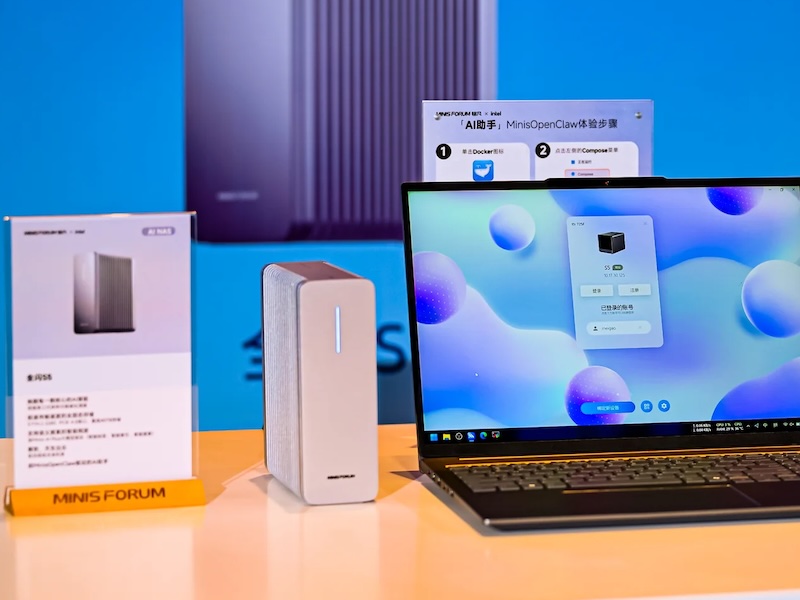
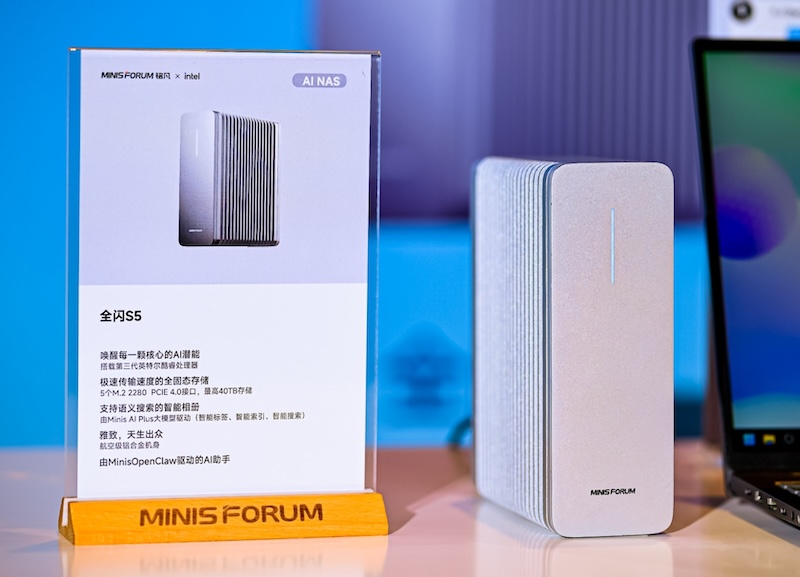
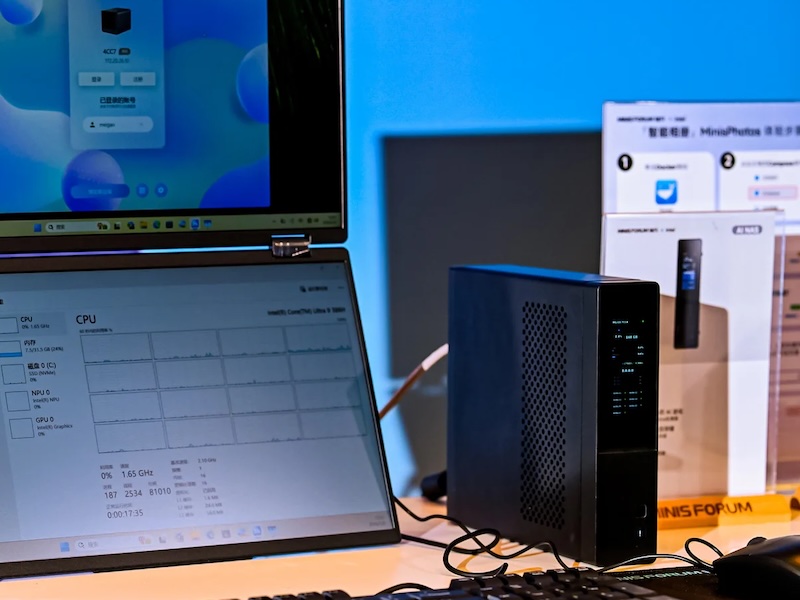
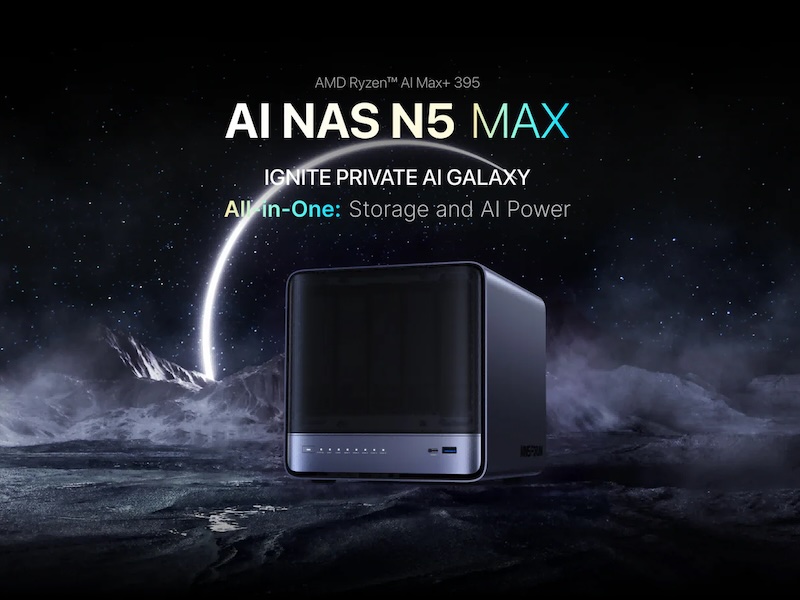
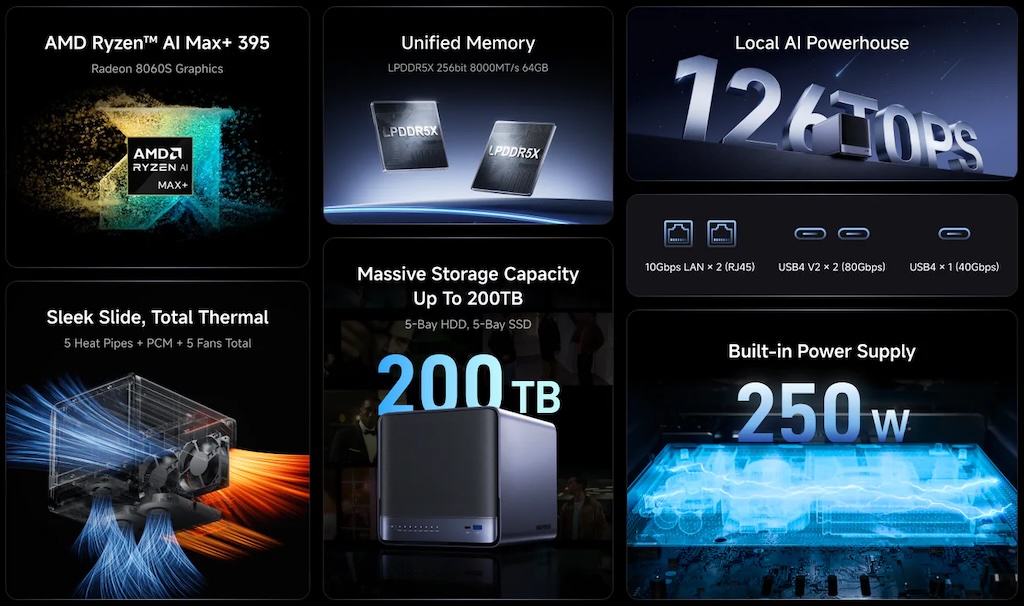


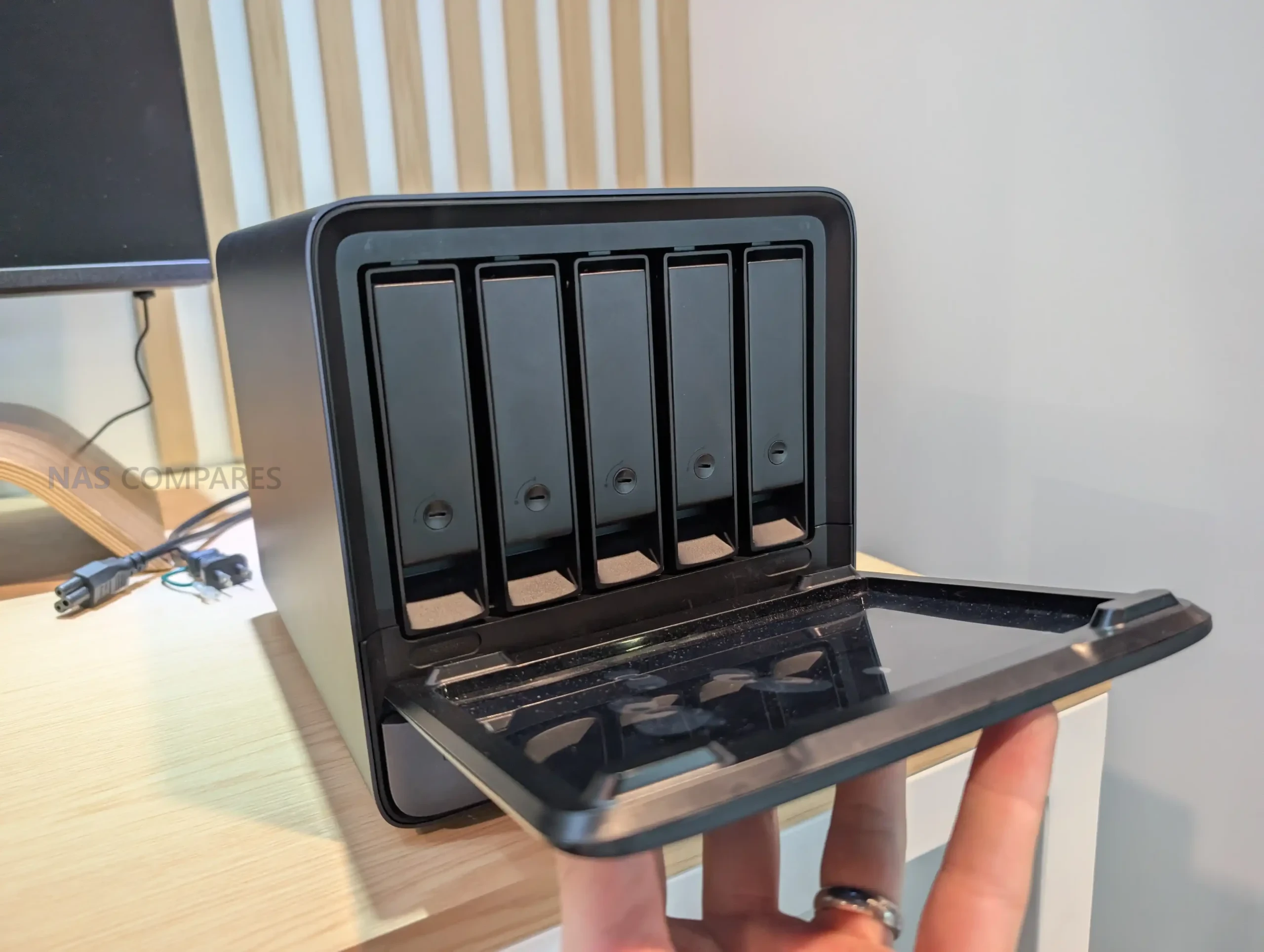
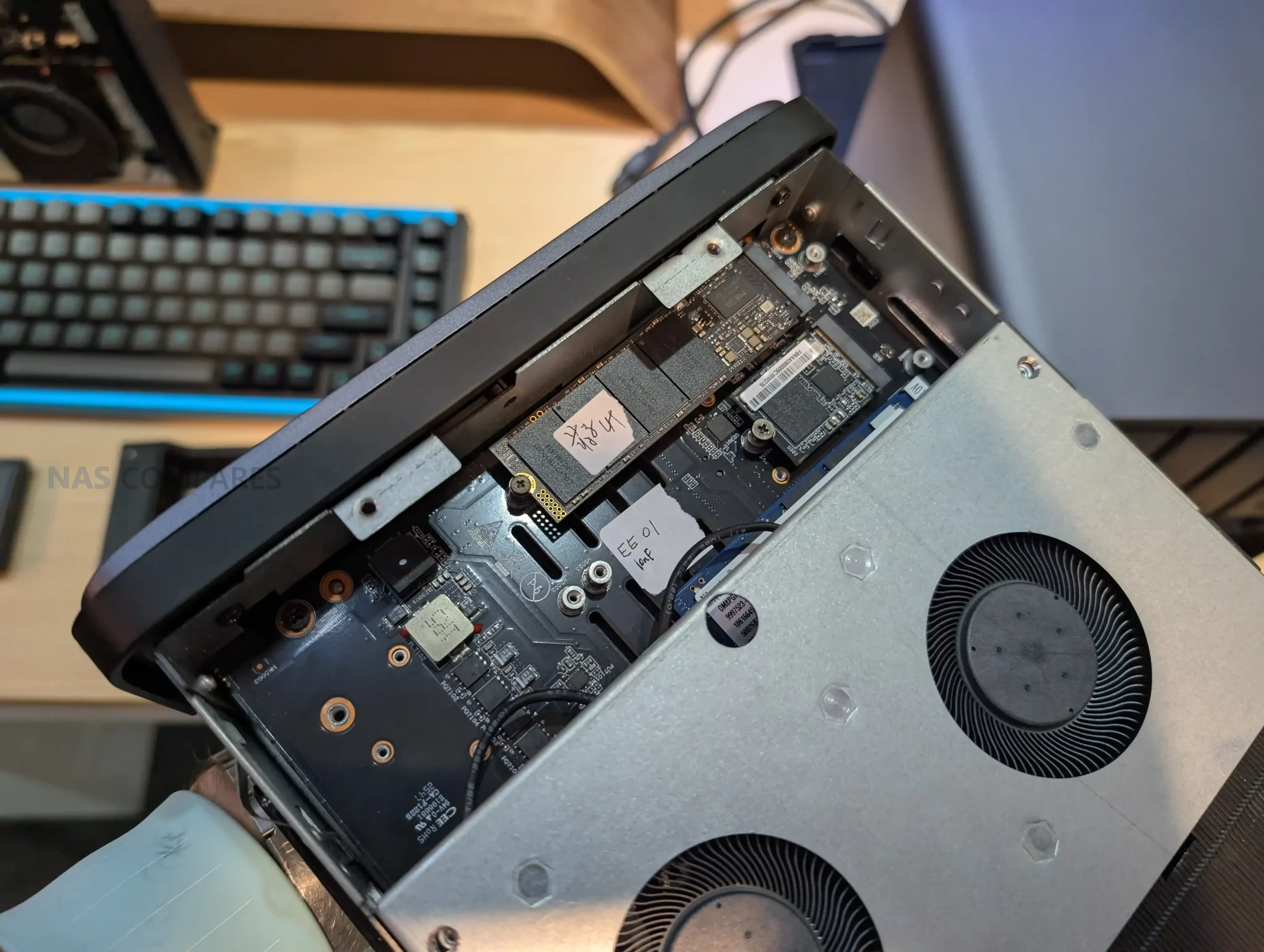
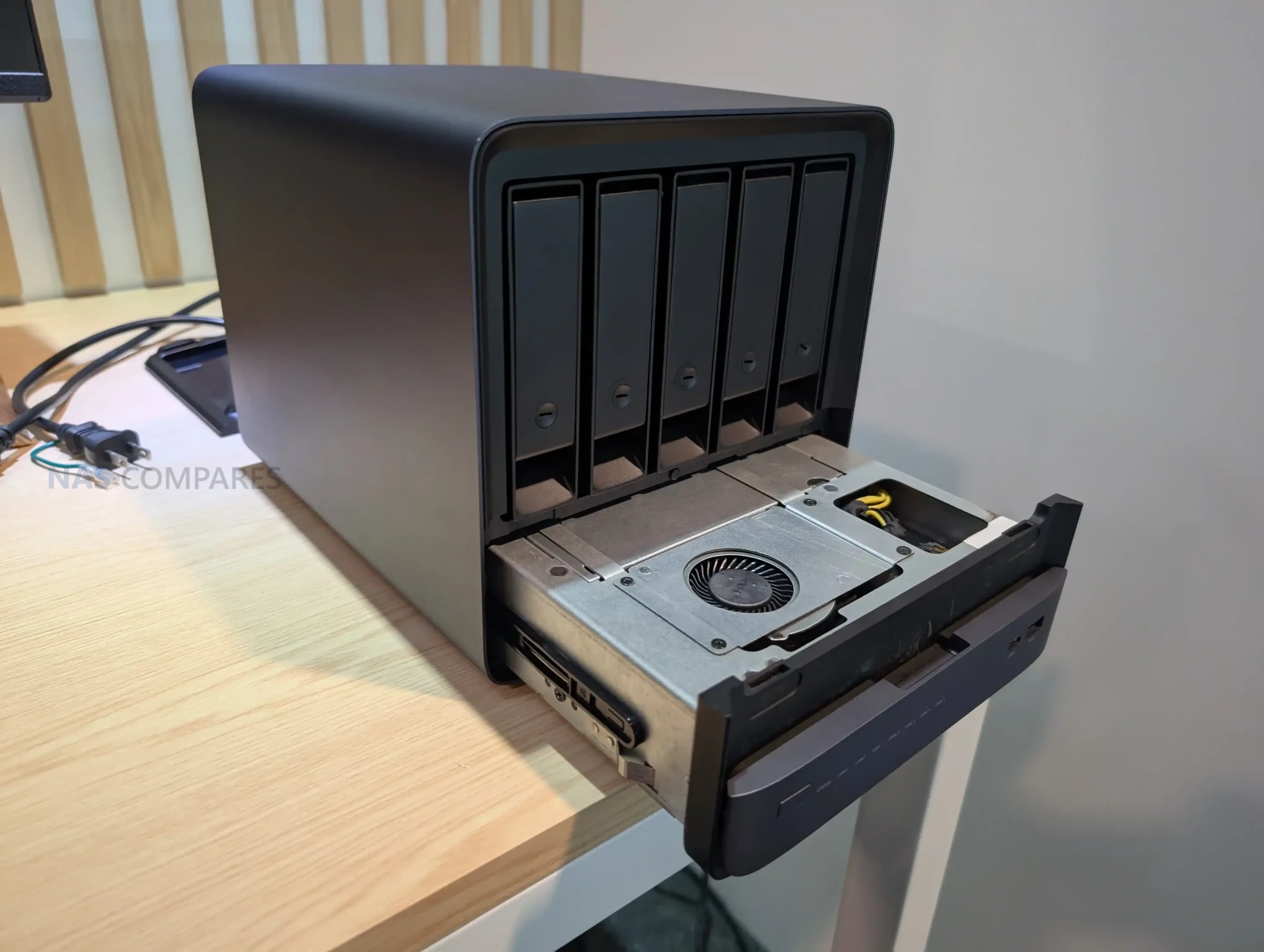

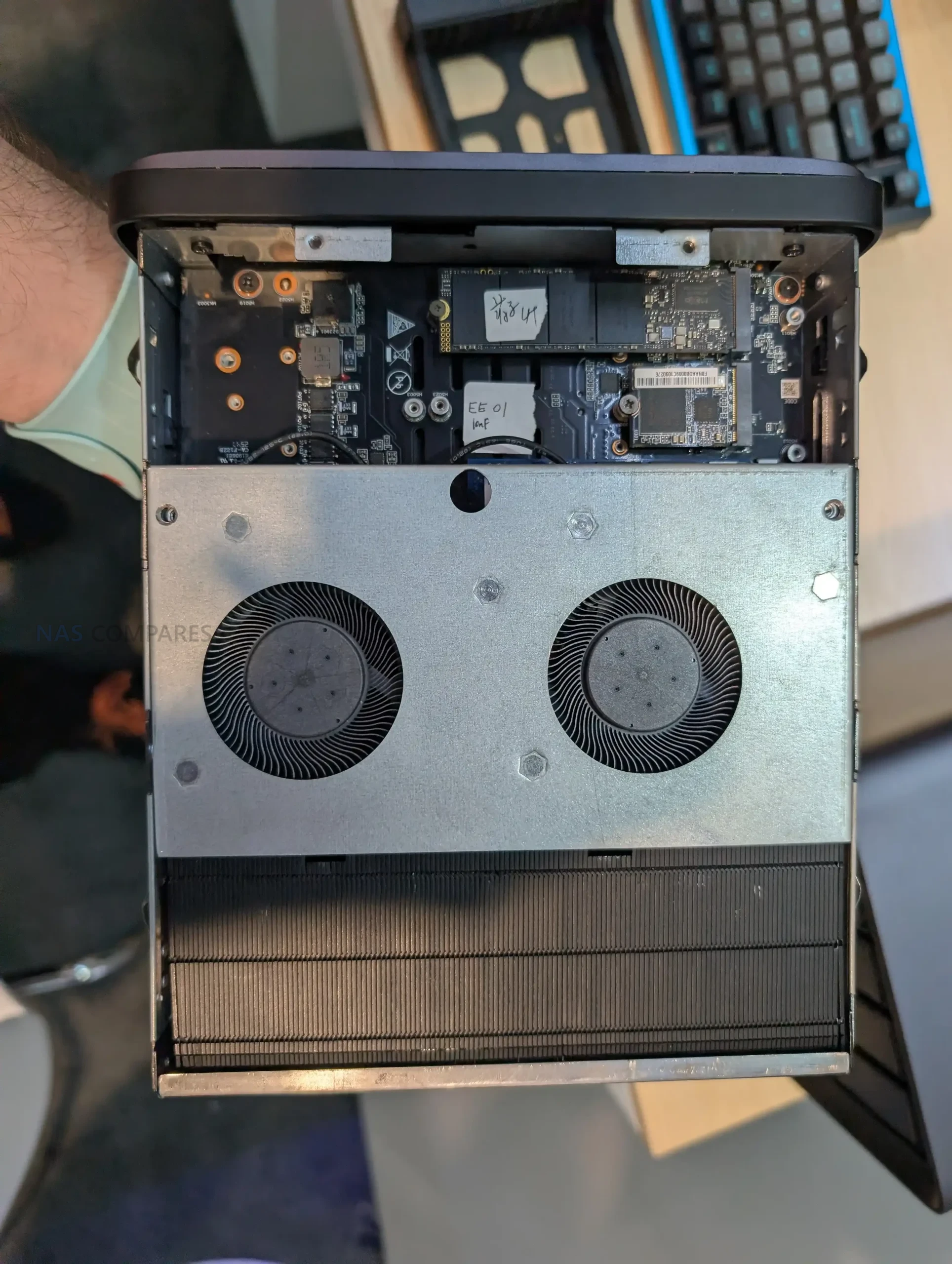

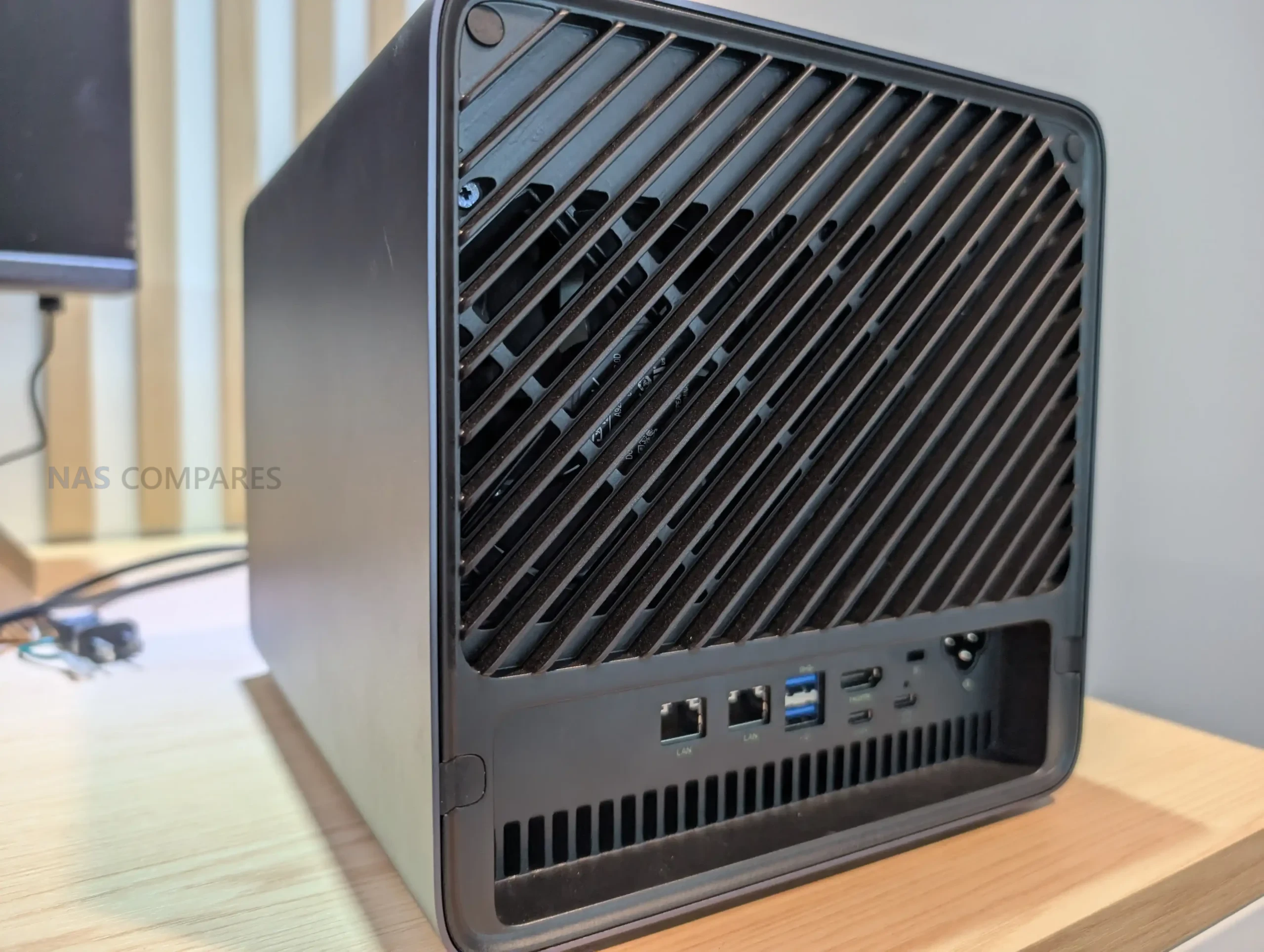

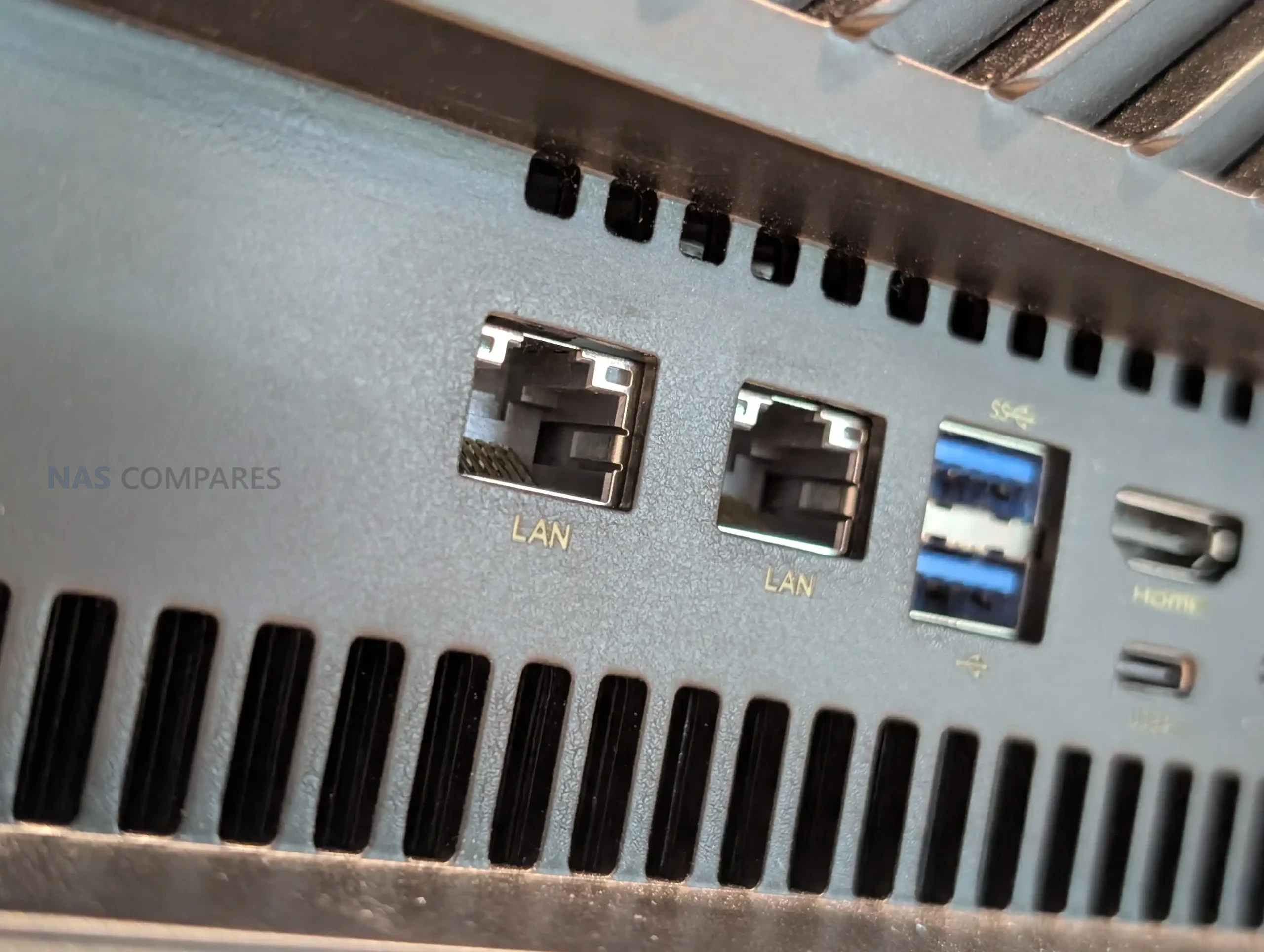
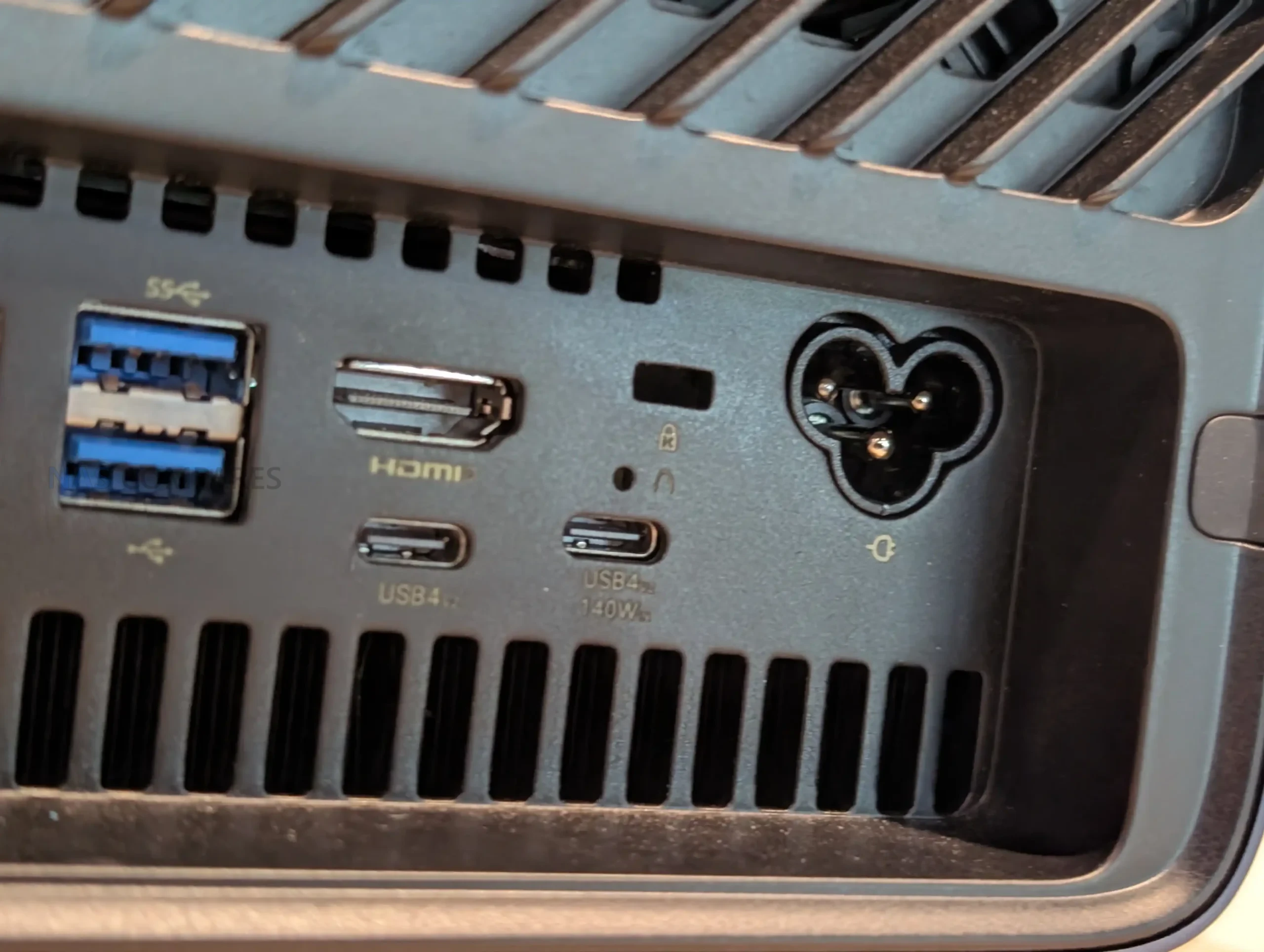


 SUBSCRIBE TO OUR NEWSLETTER


 TRY CHAT








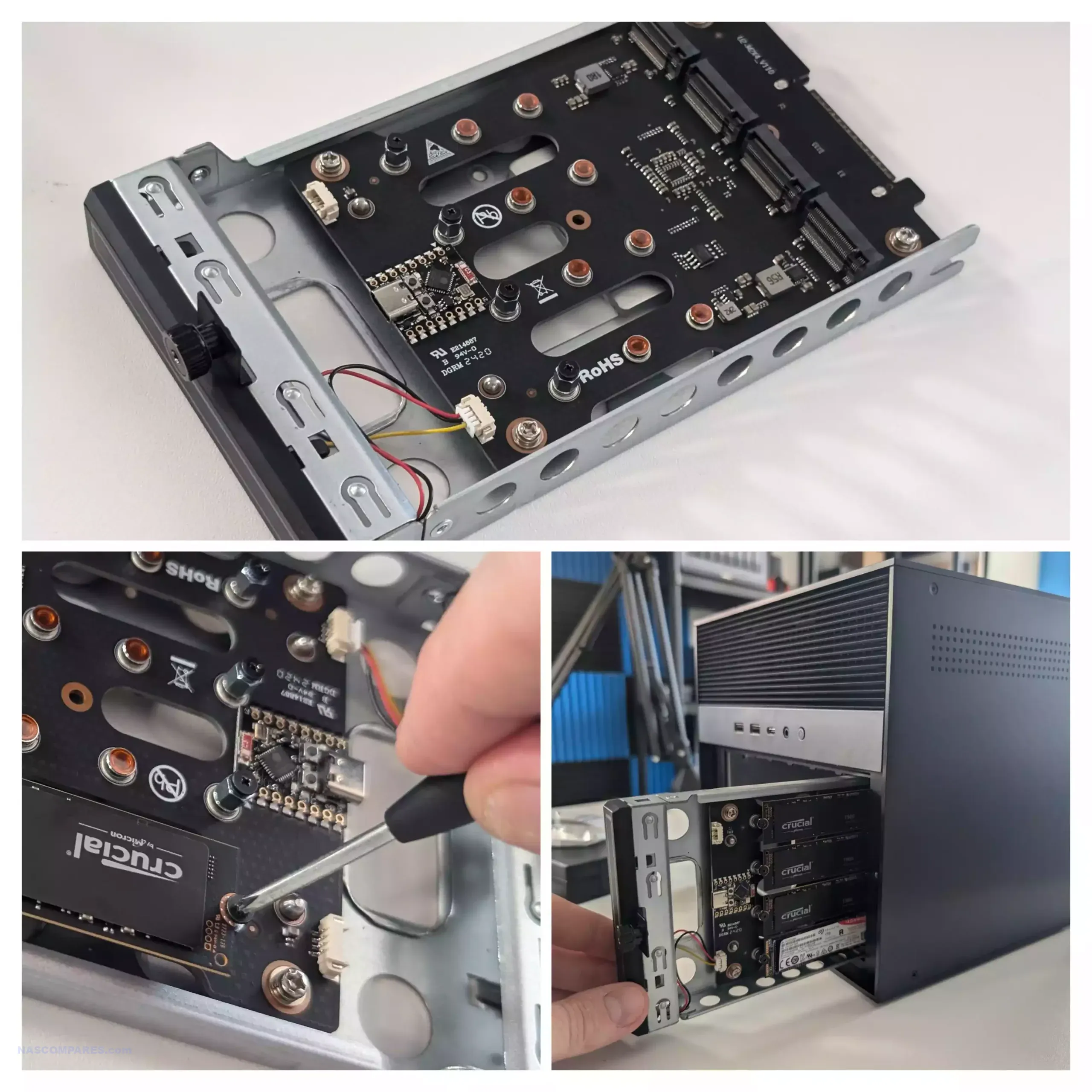


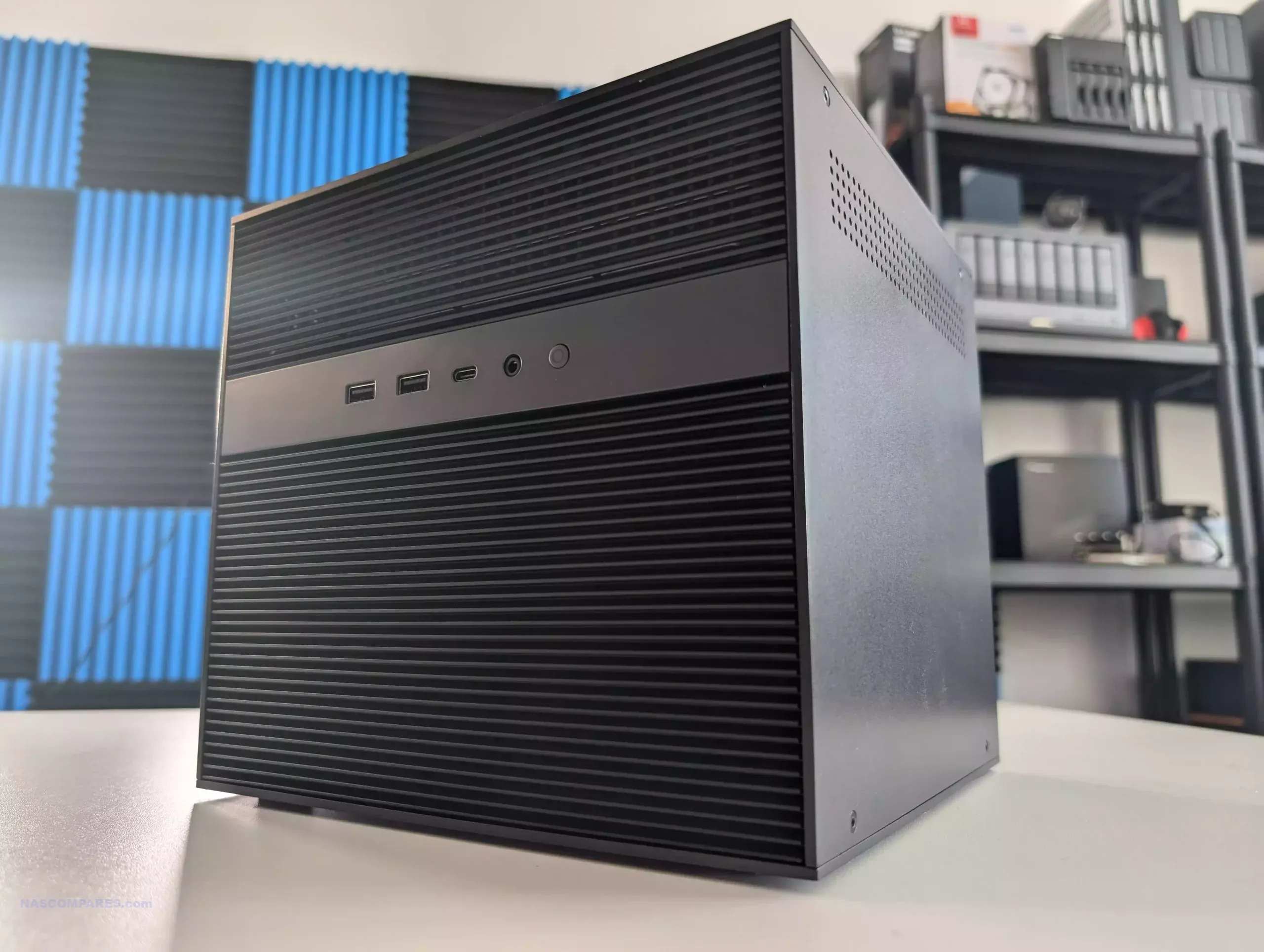
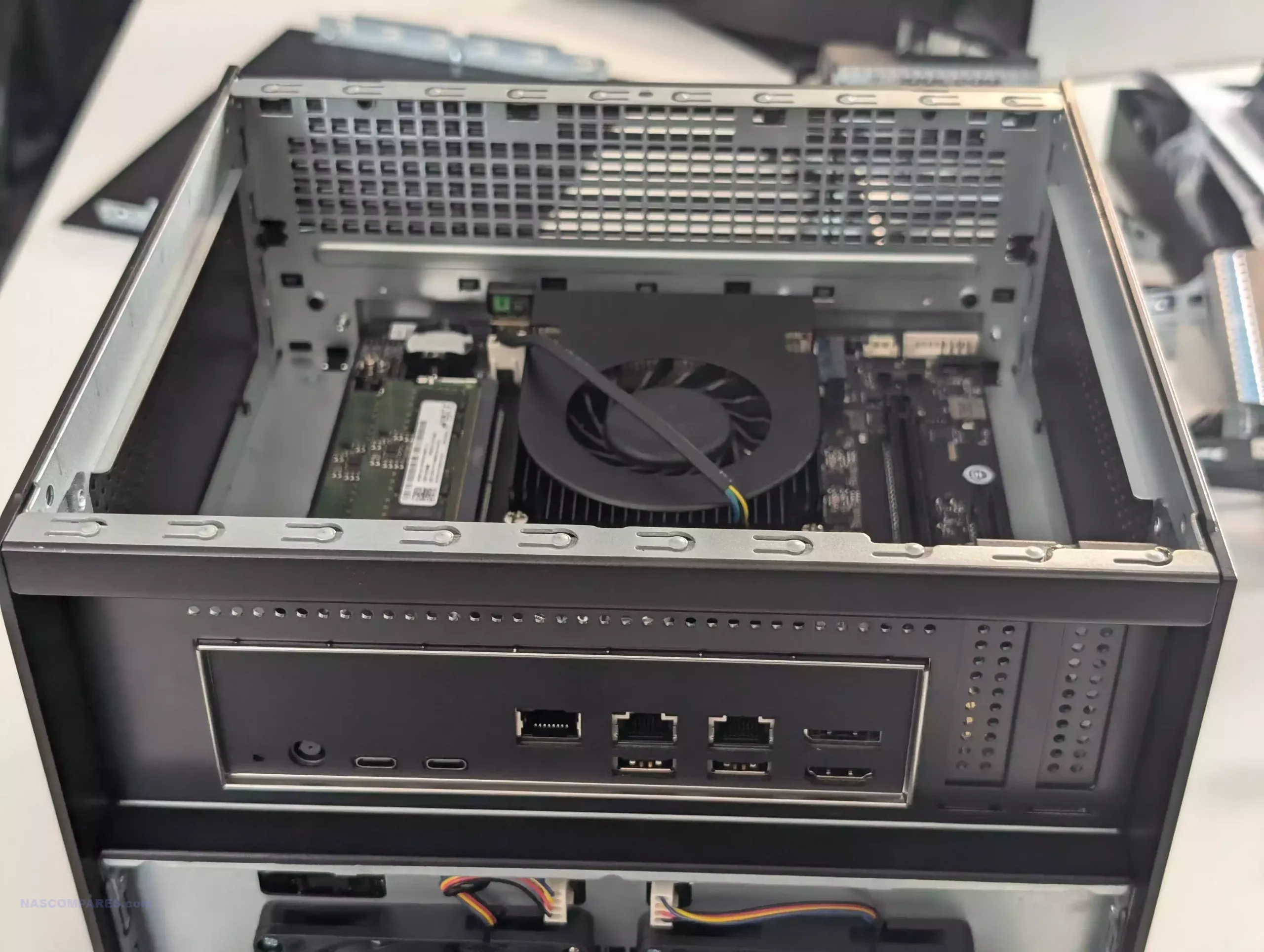





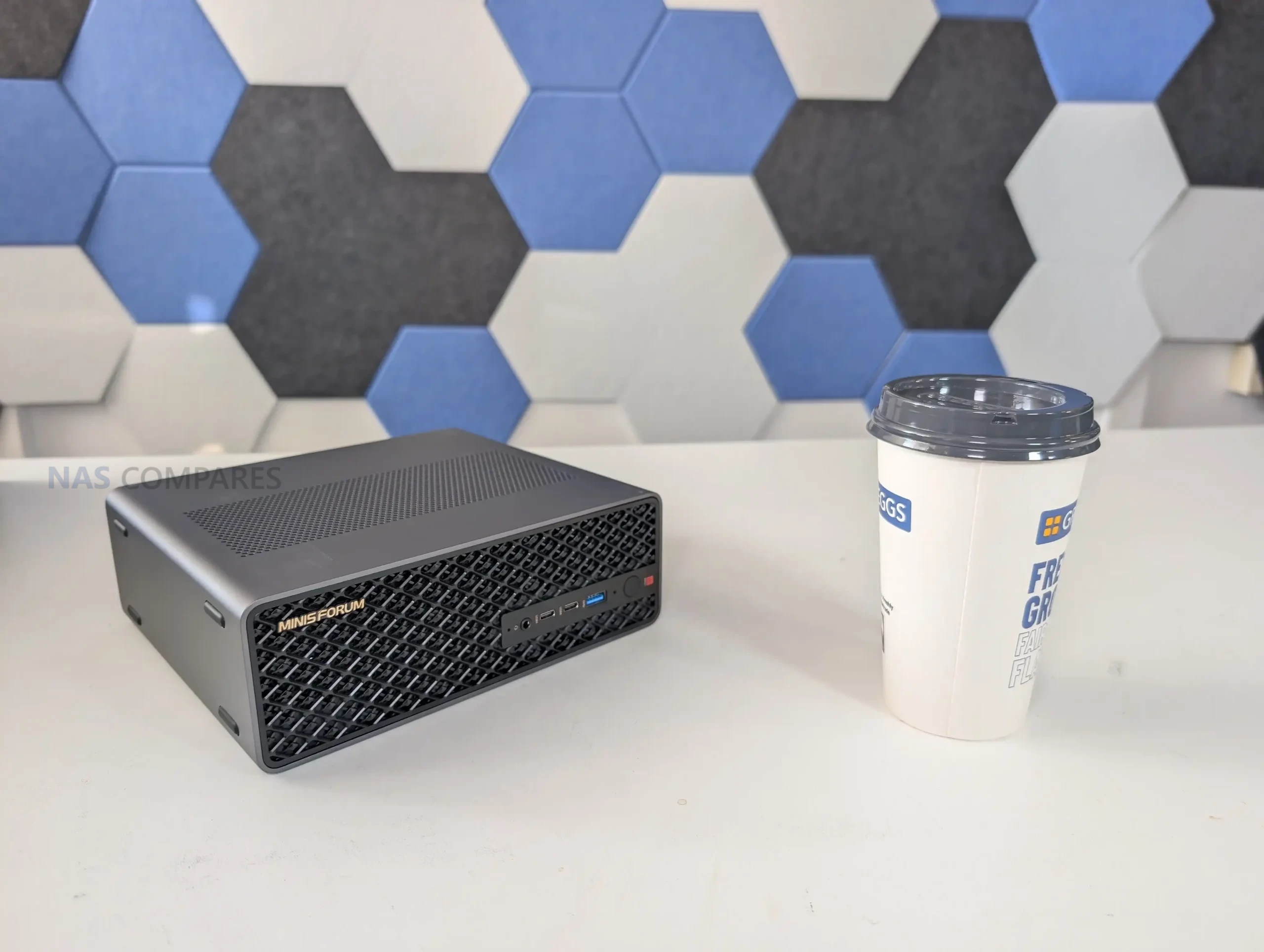
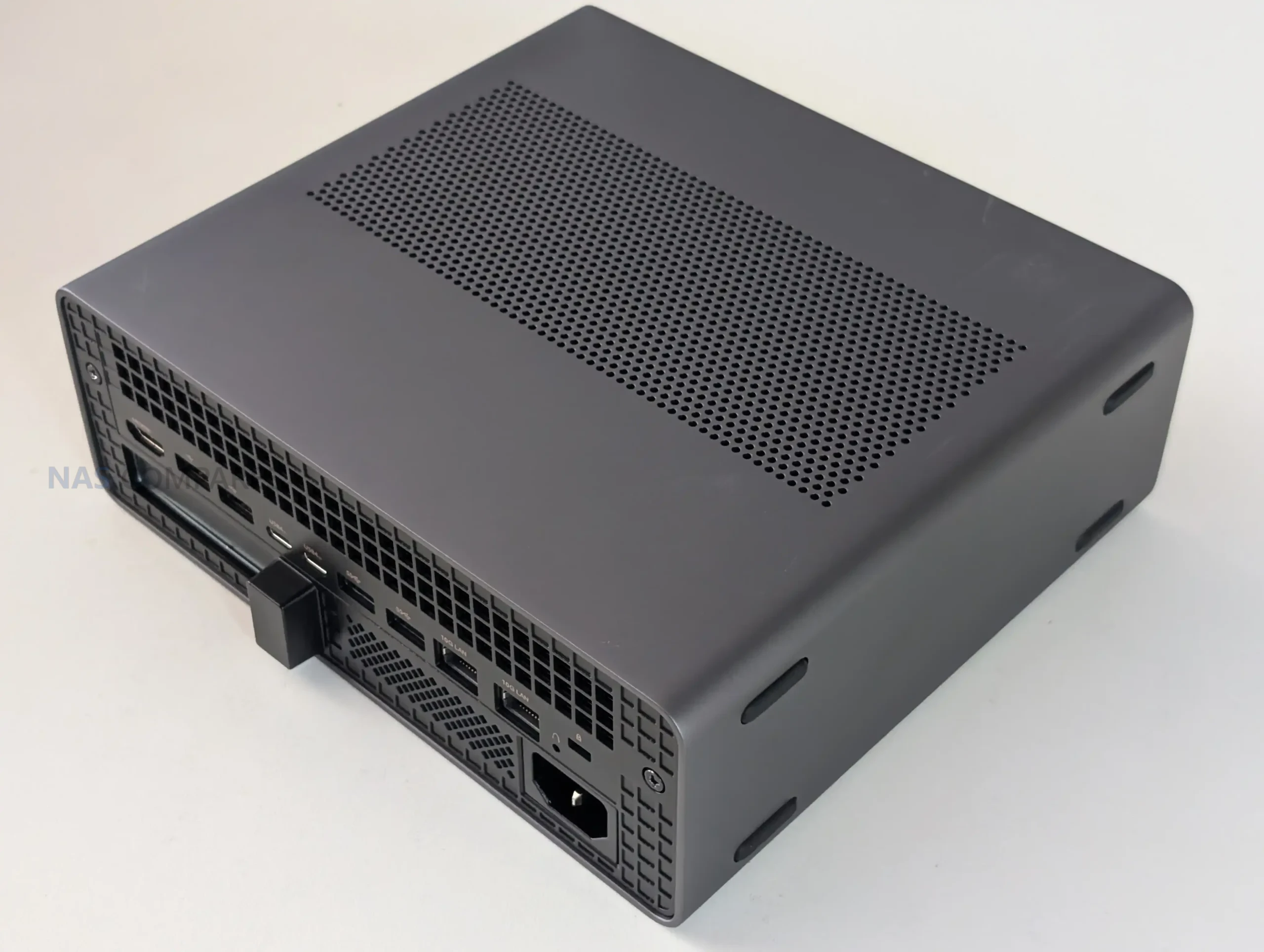


 Ryzen AI Max+ 395 (16C/32T) delivers workstation-class CPU performance in a compact chassis
 High price puts it outside typical mini PC value expectations

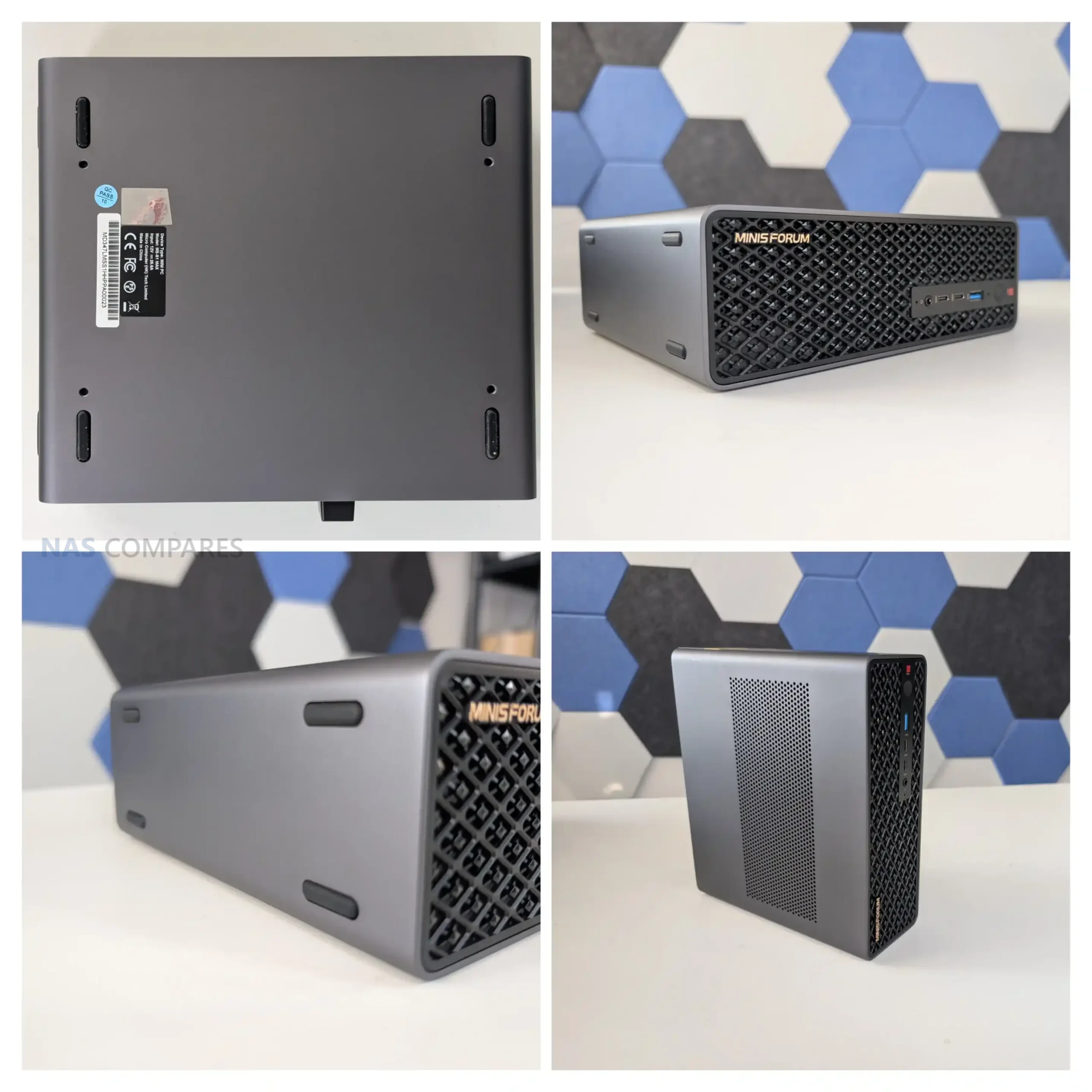
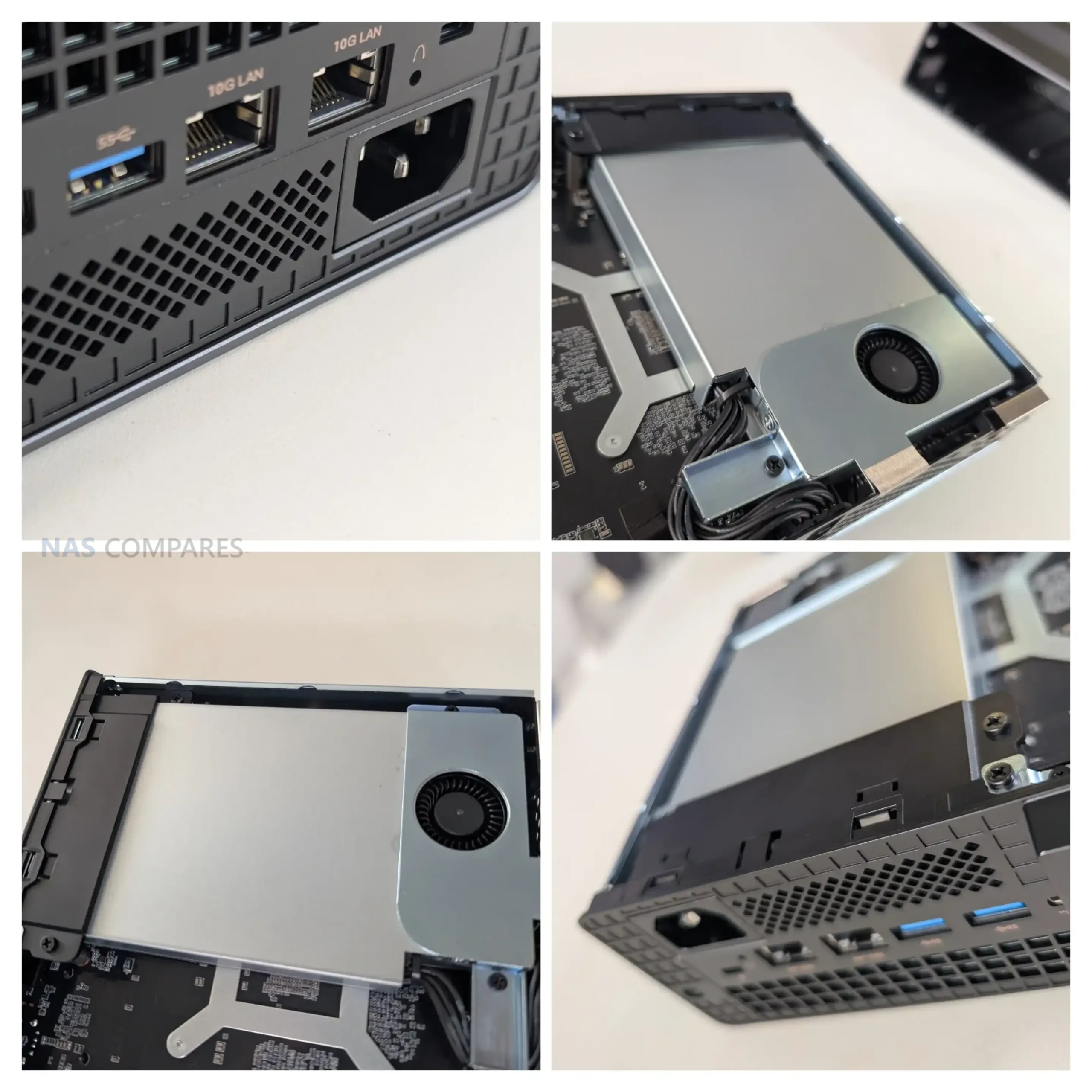
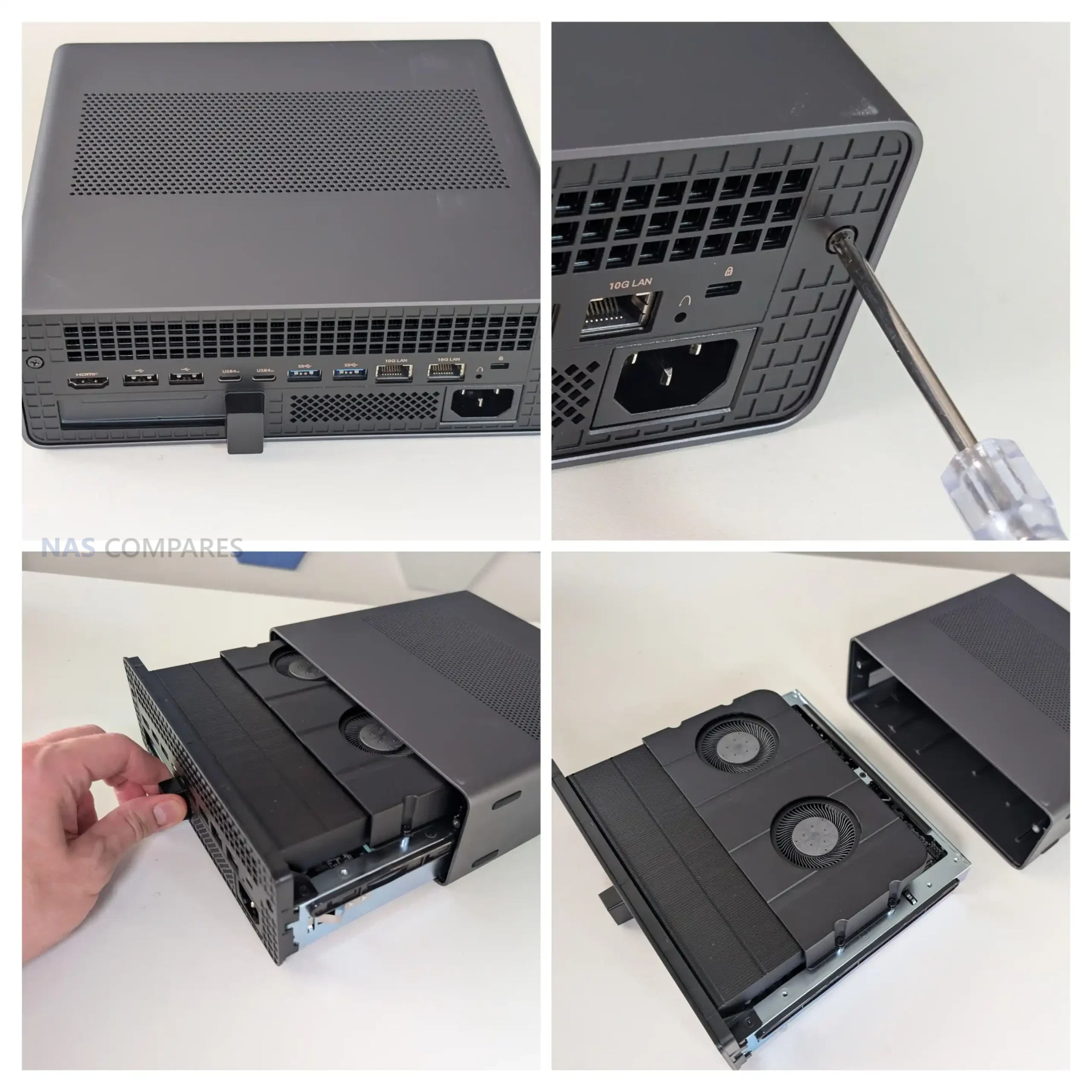
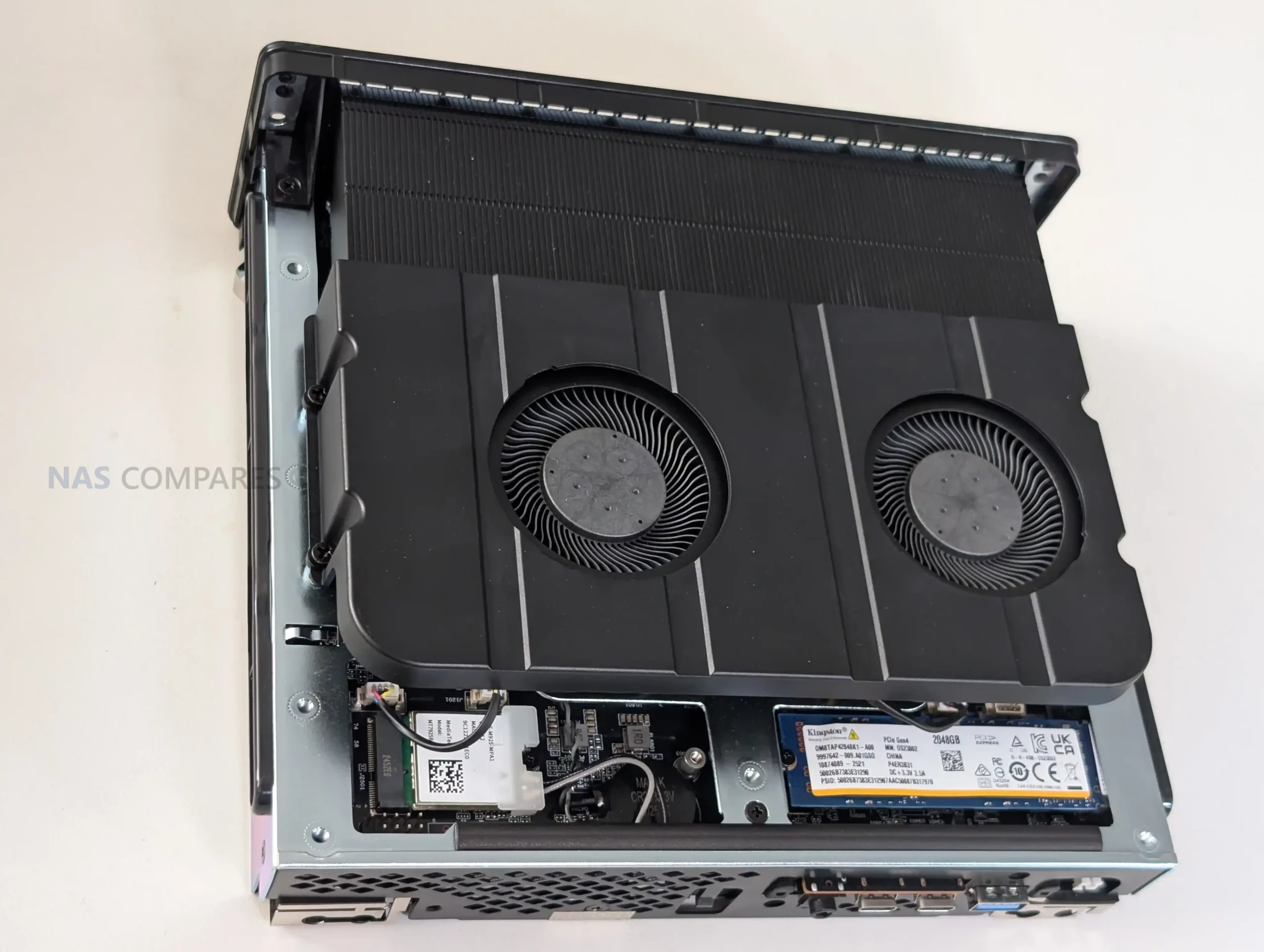
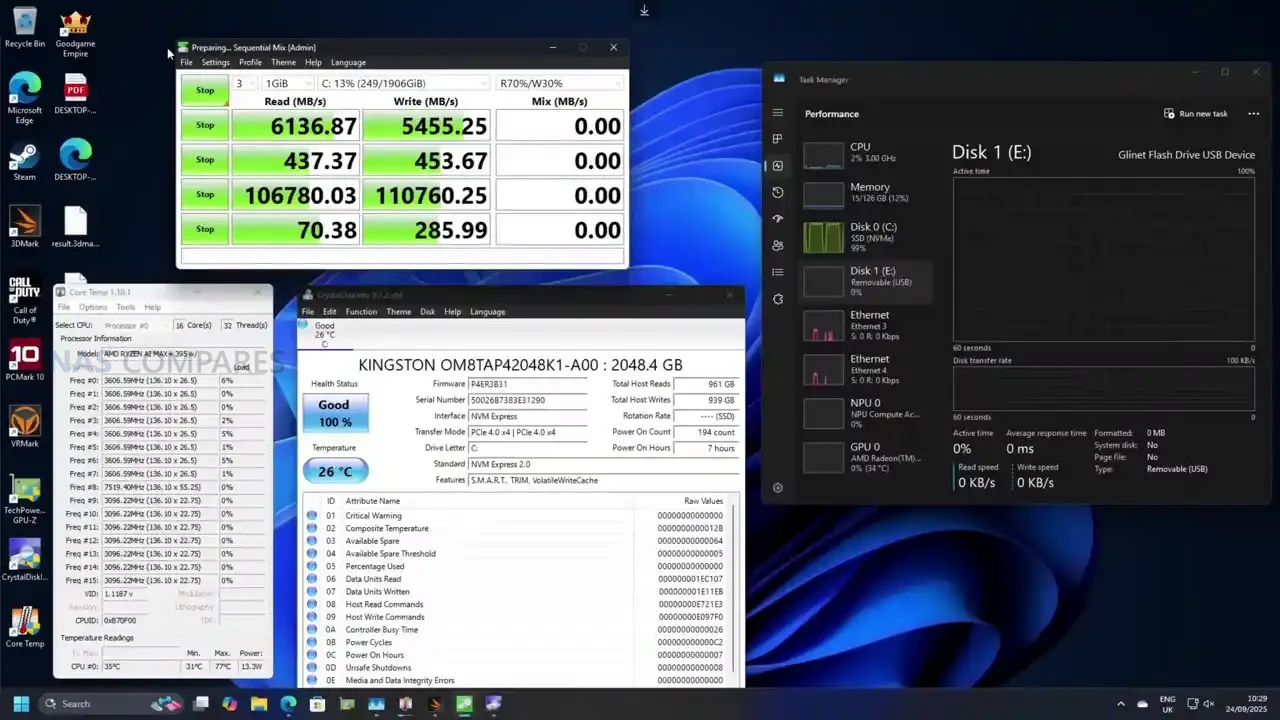
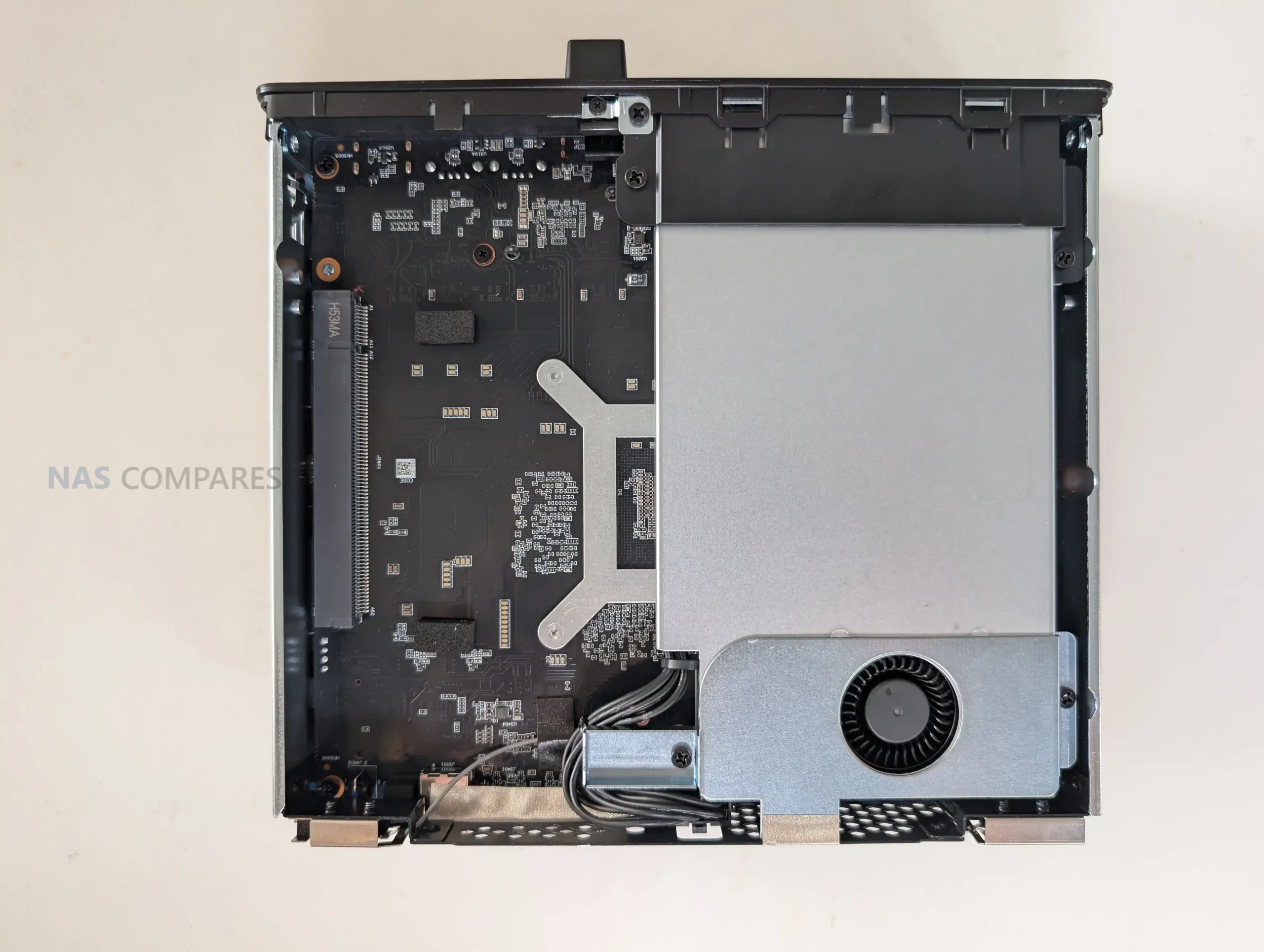
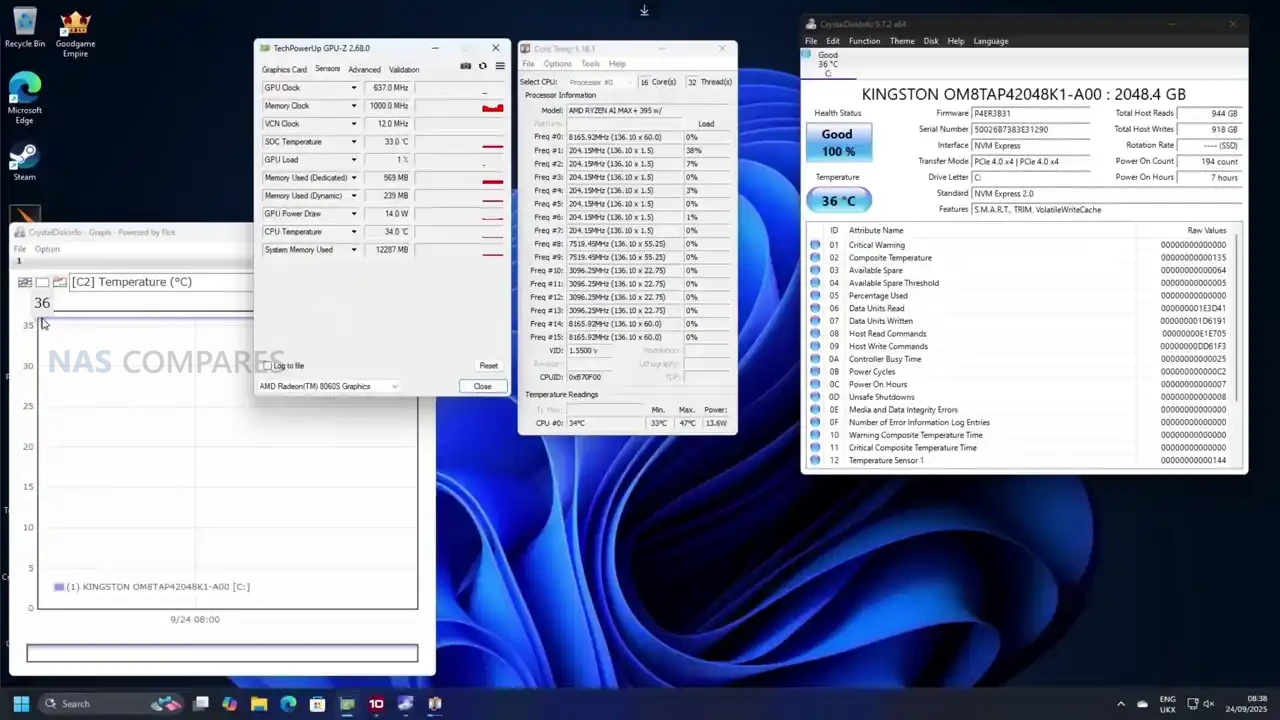
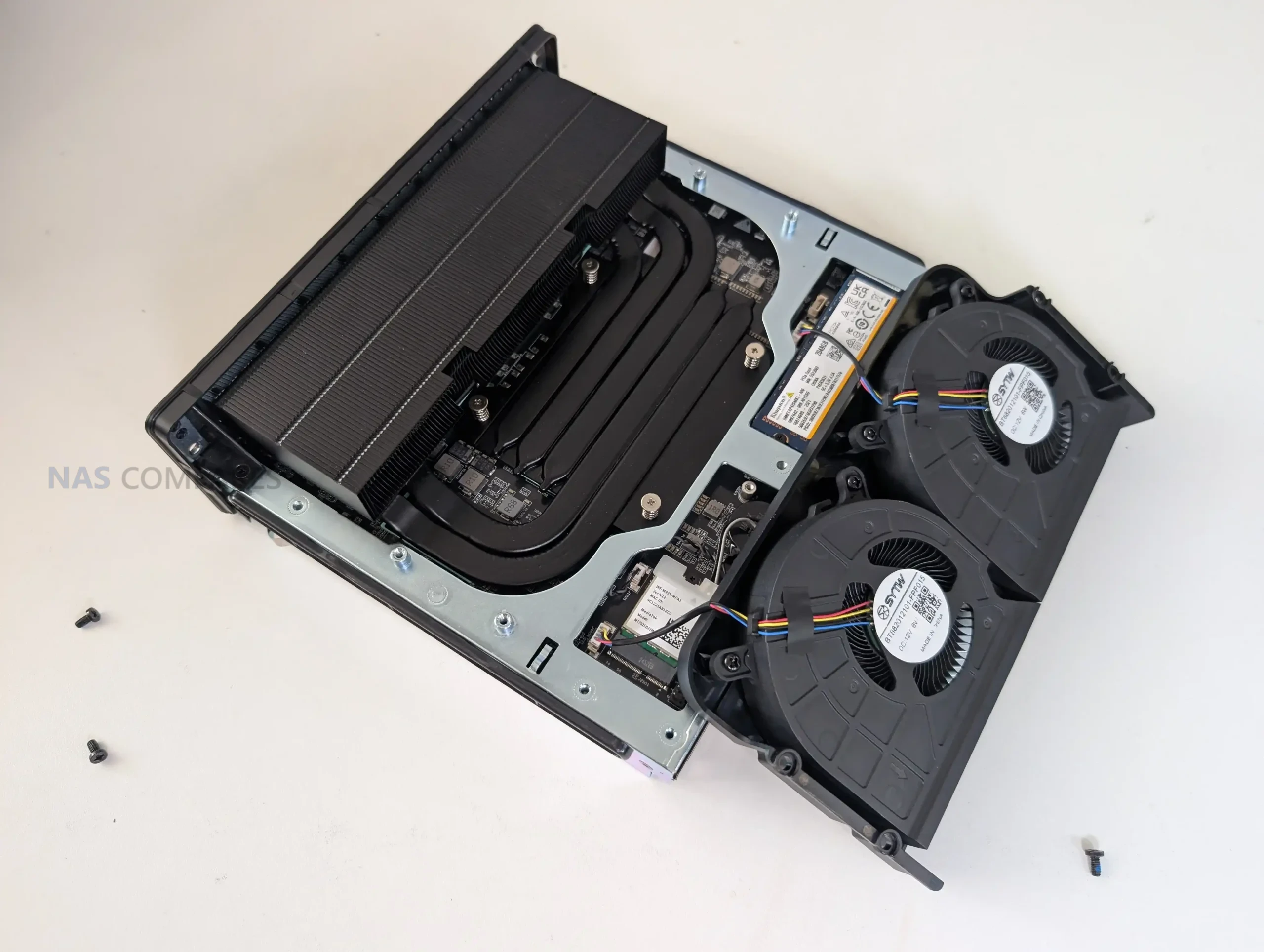
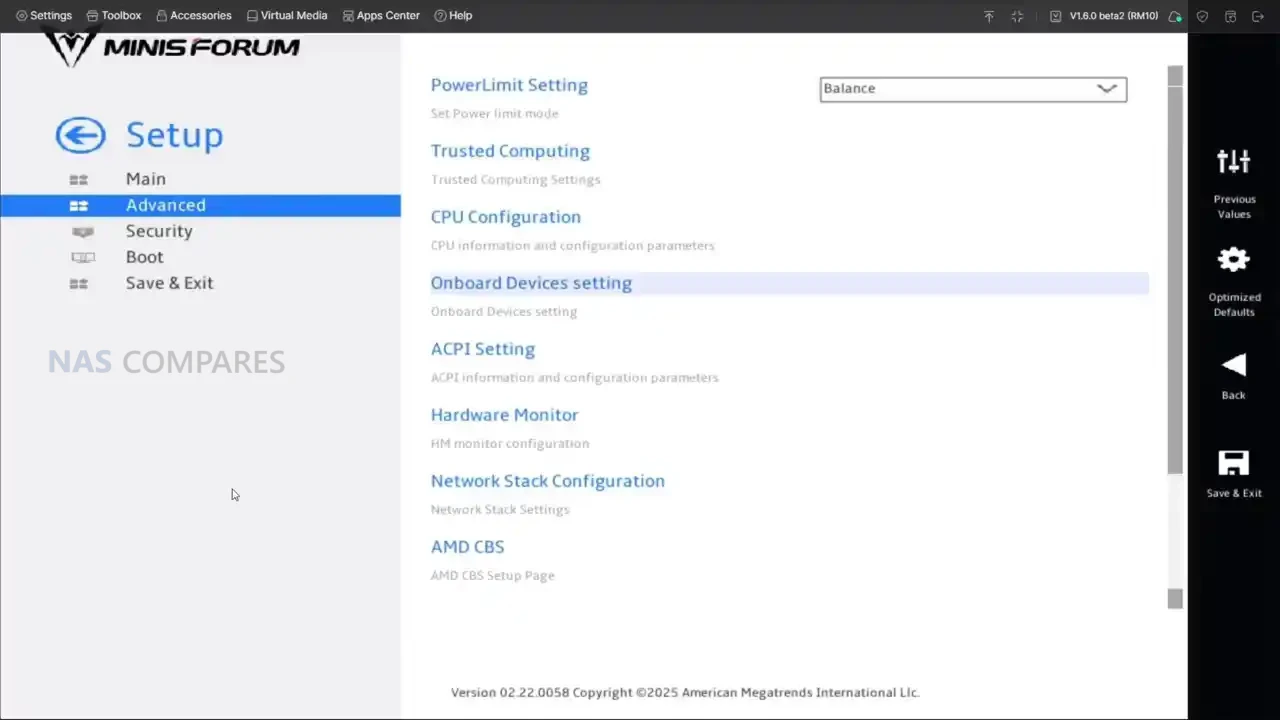
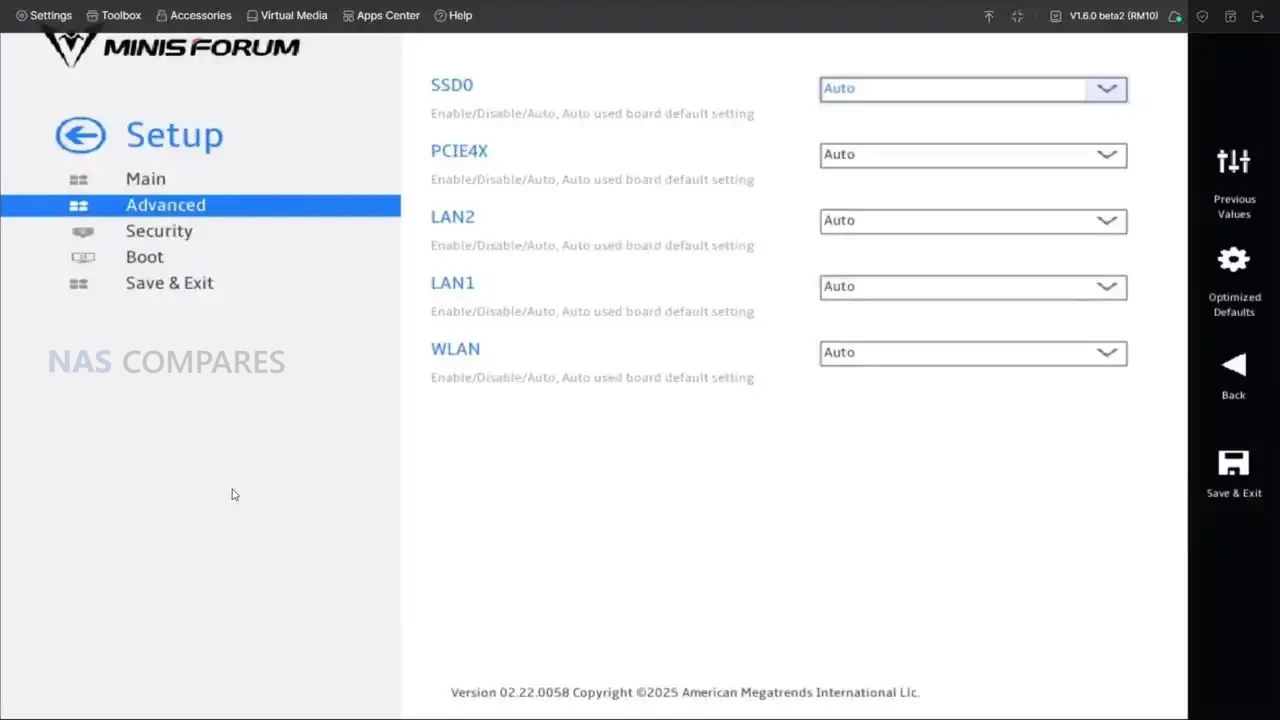
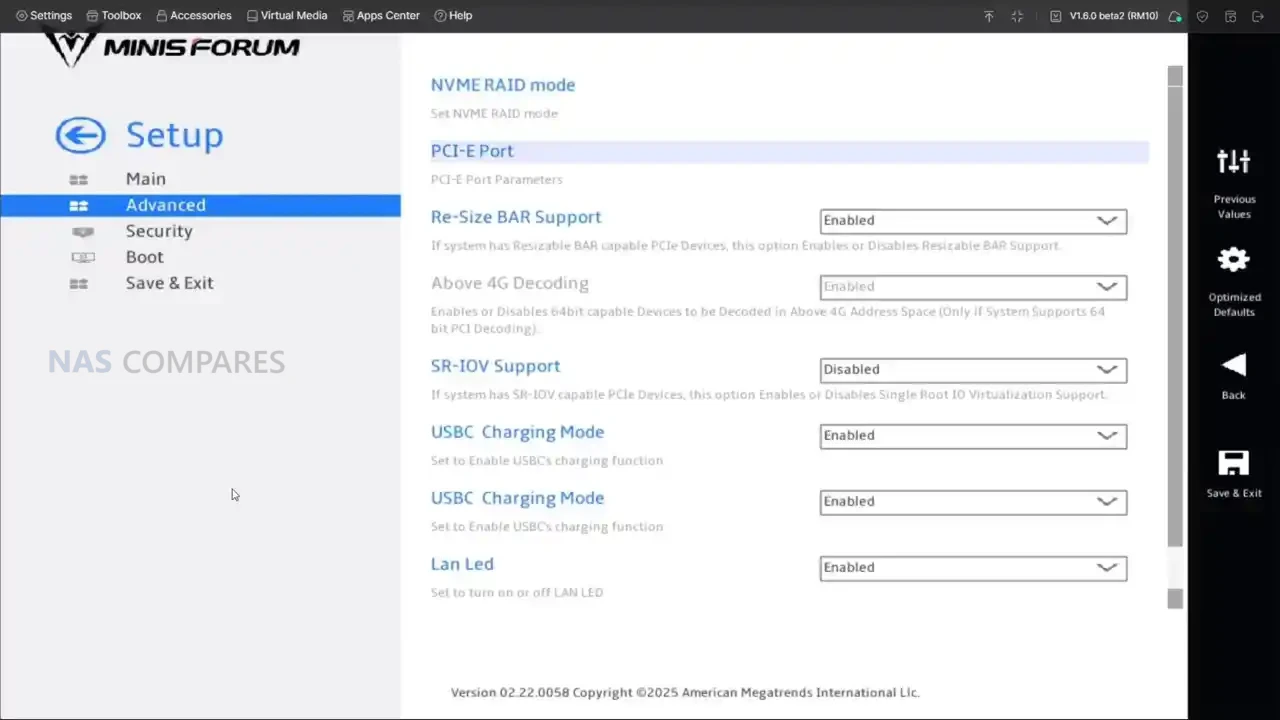
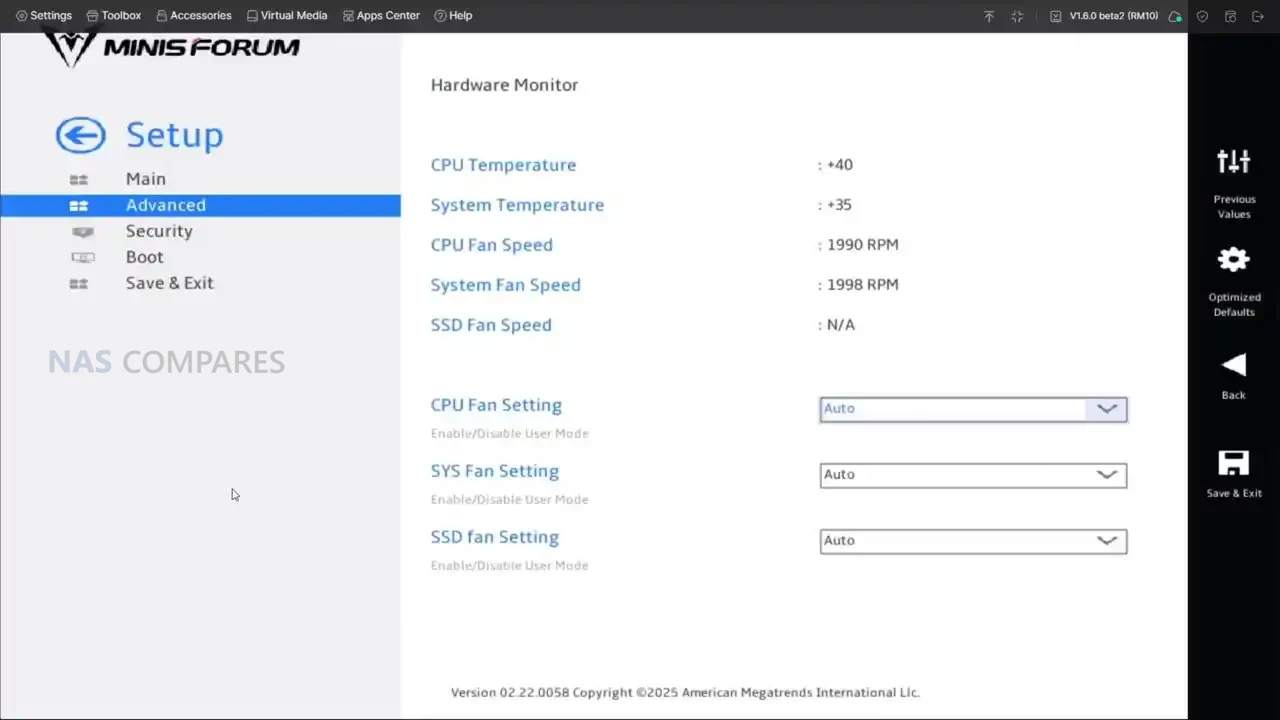
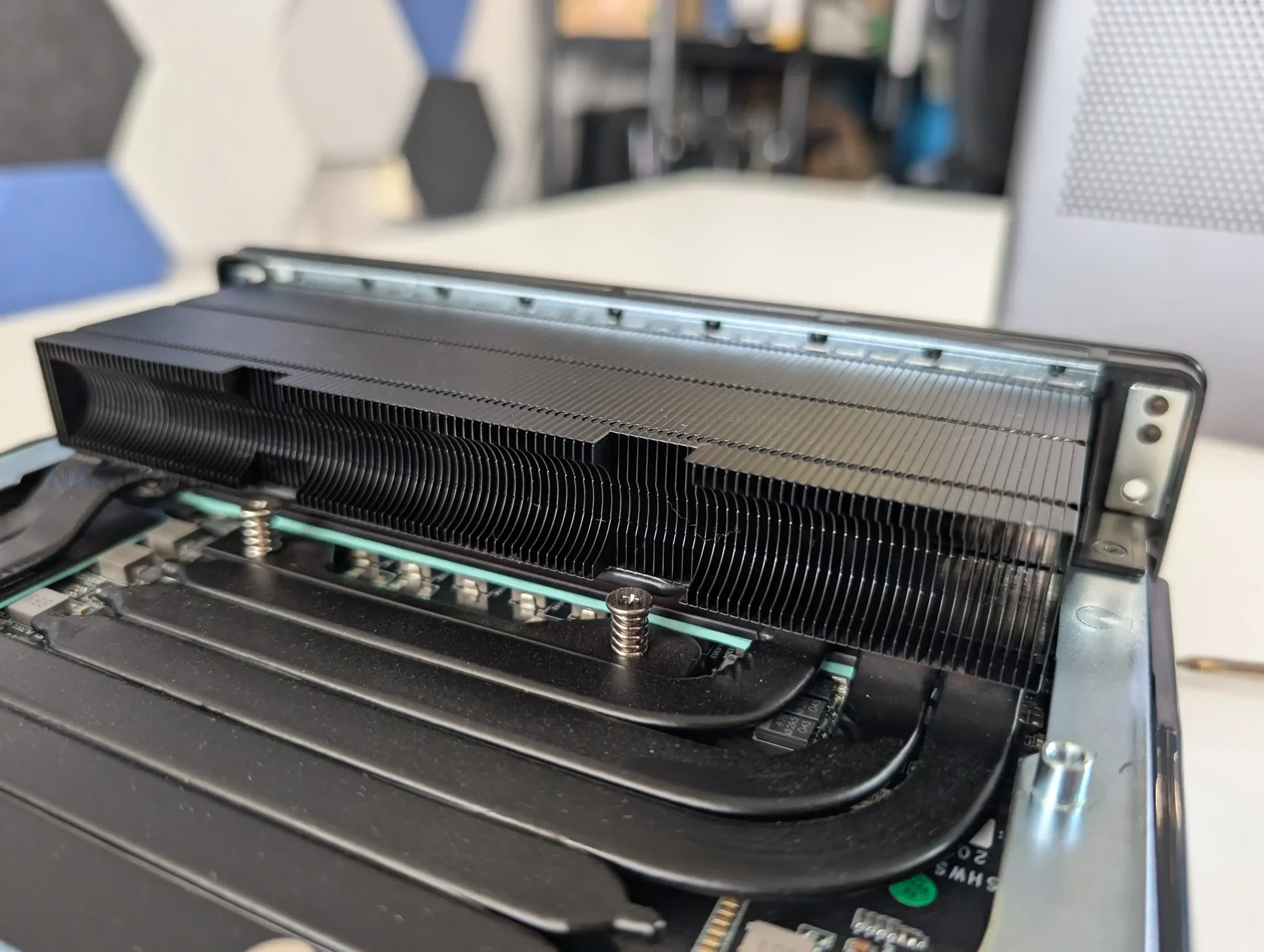
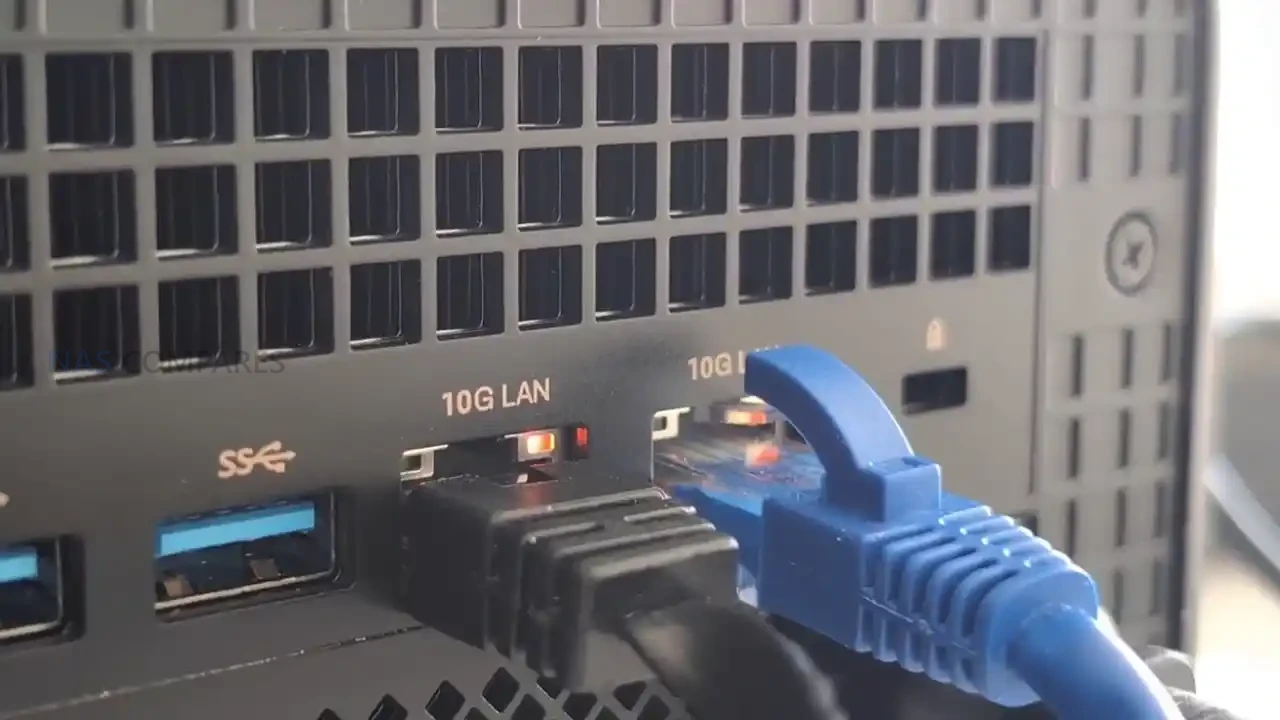
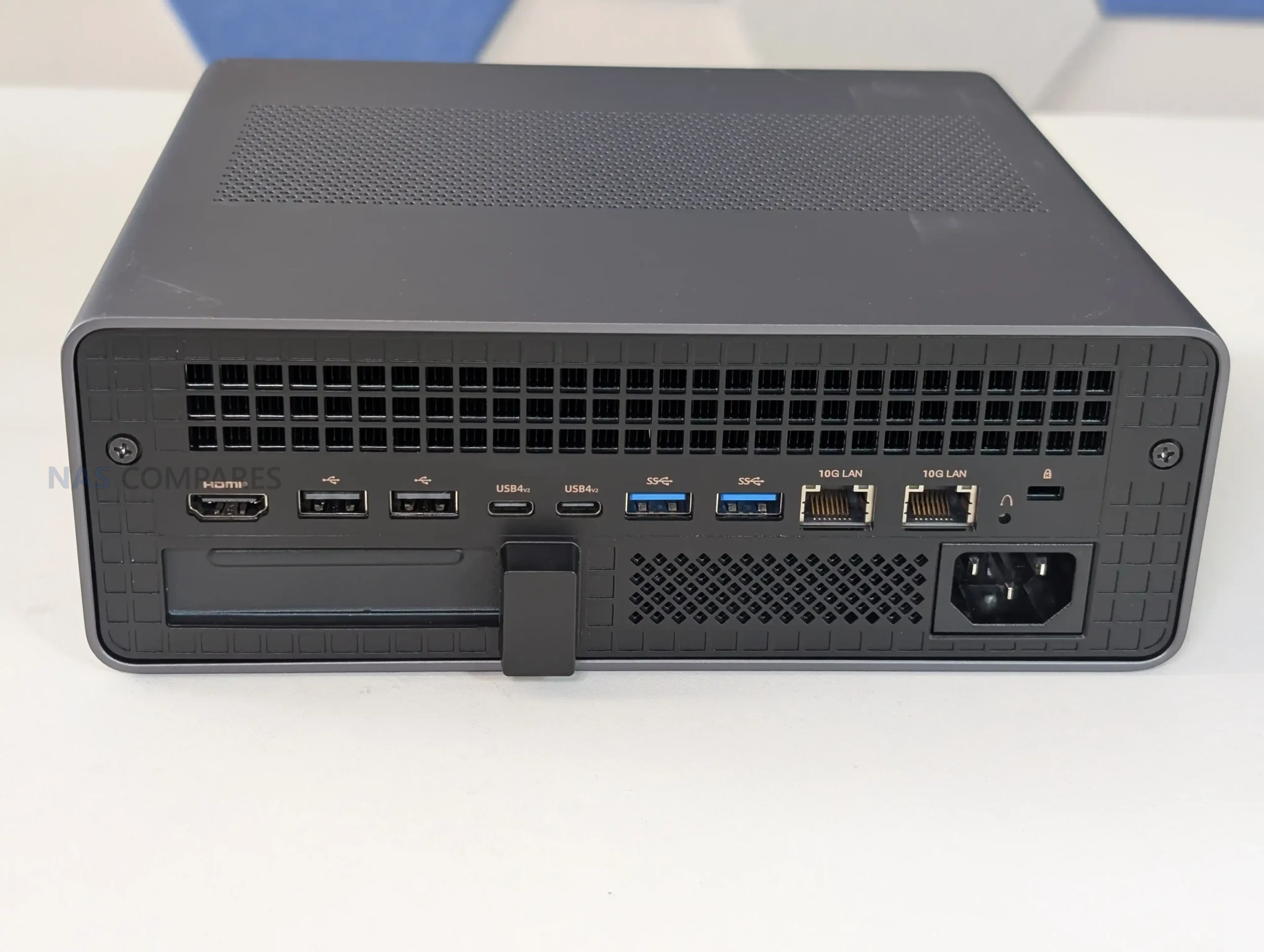
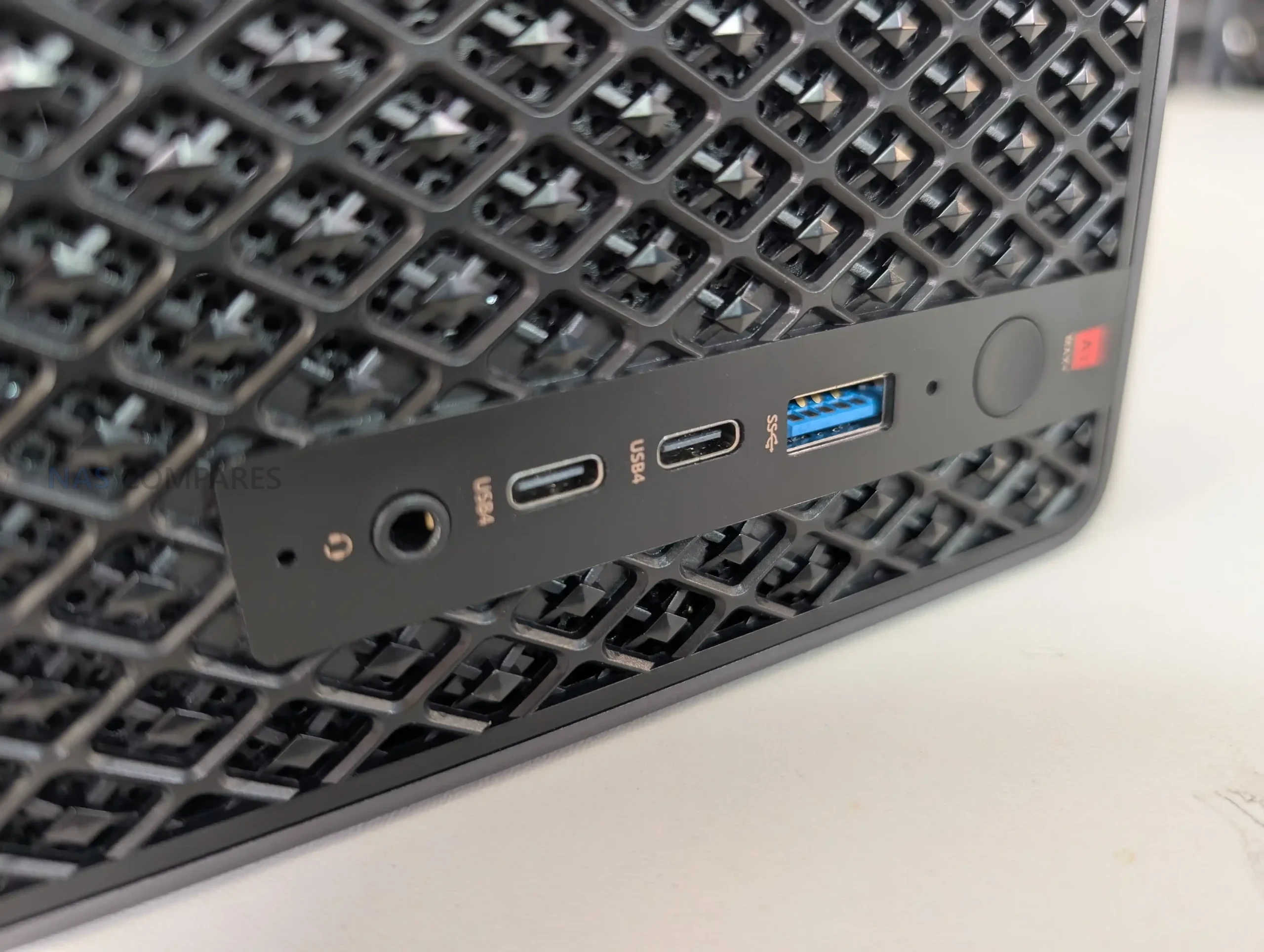
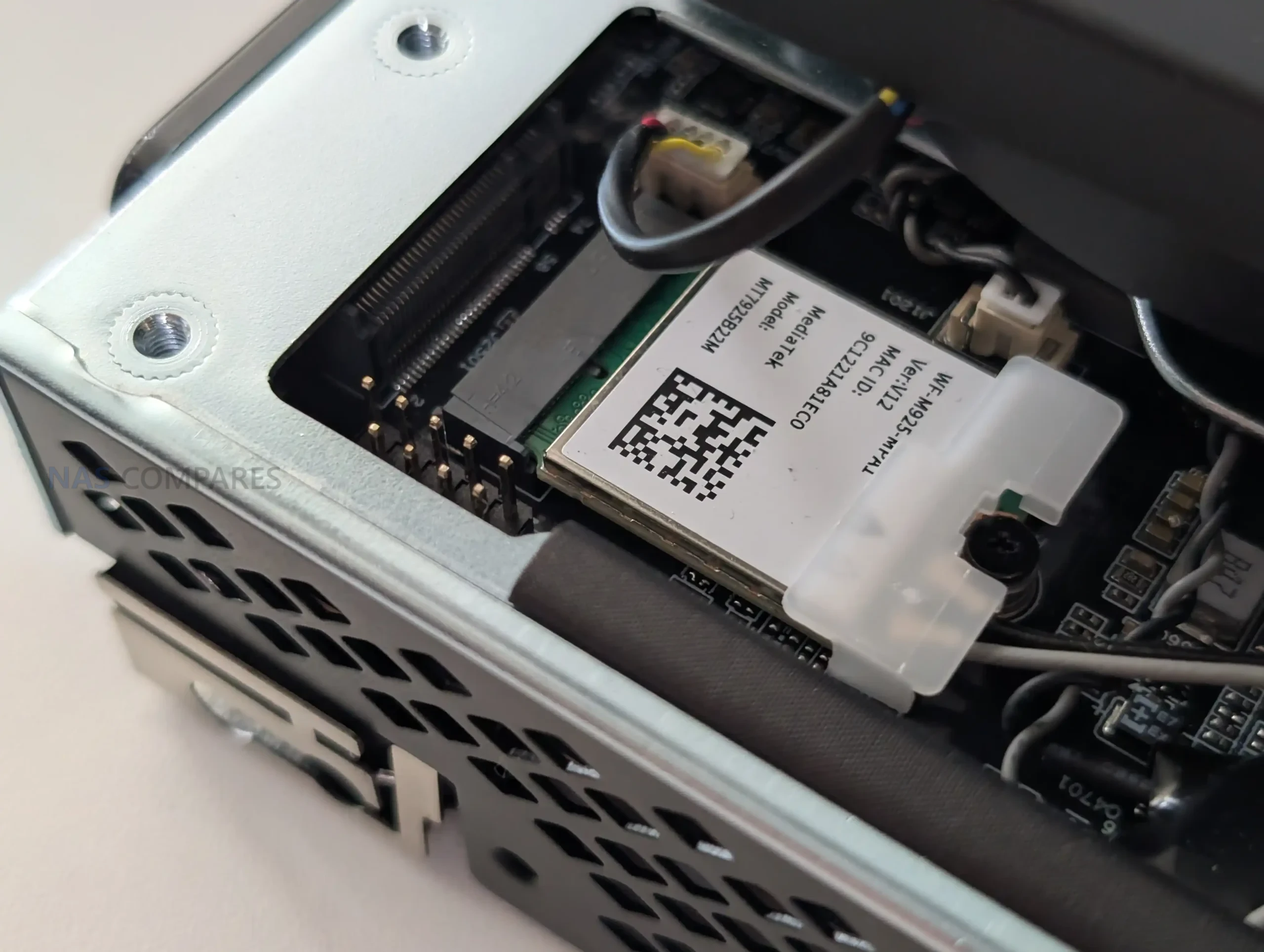
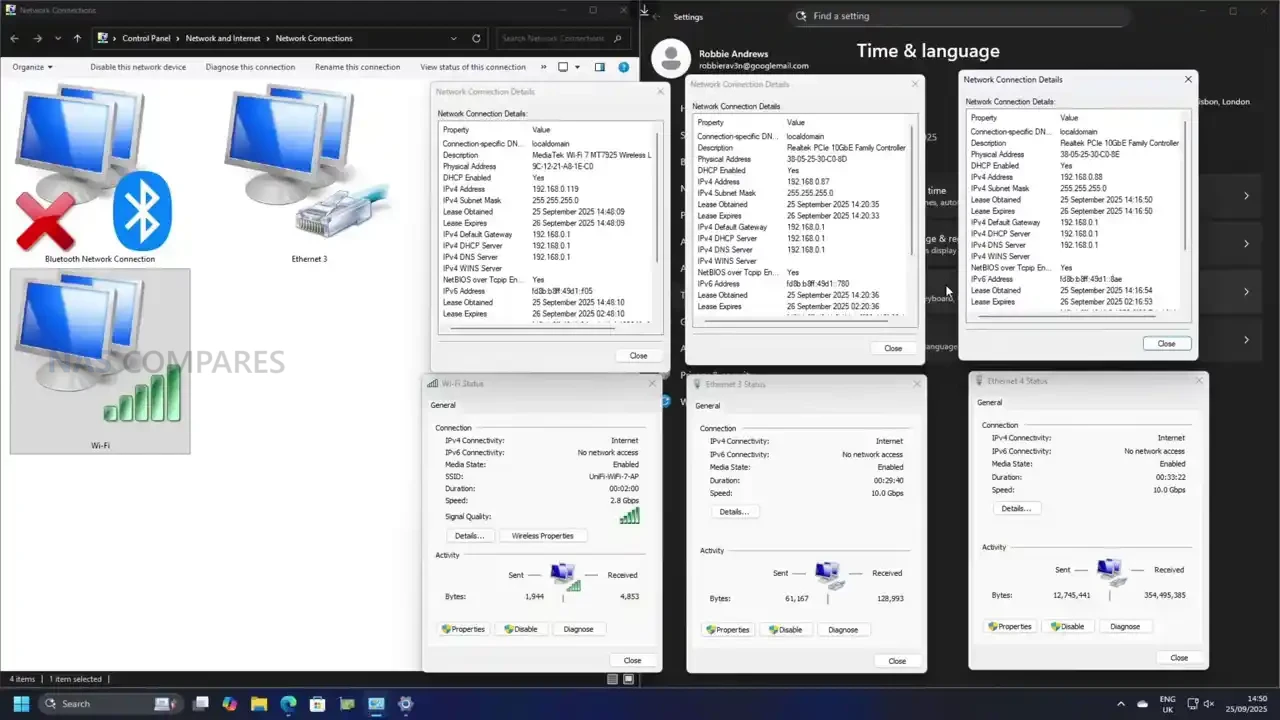

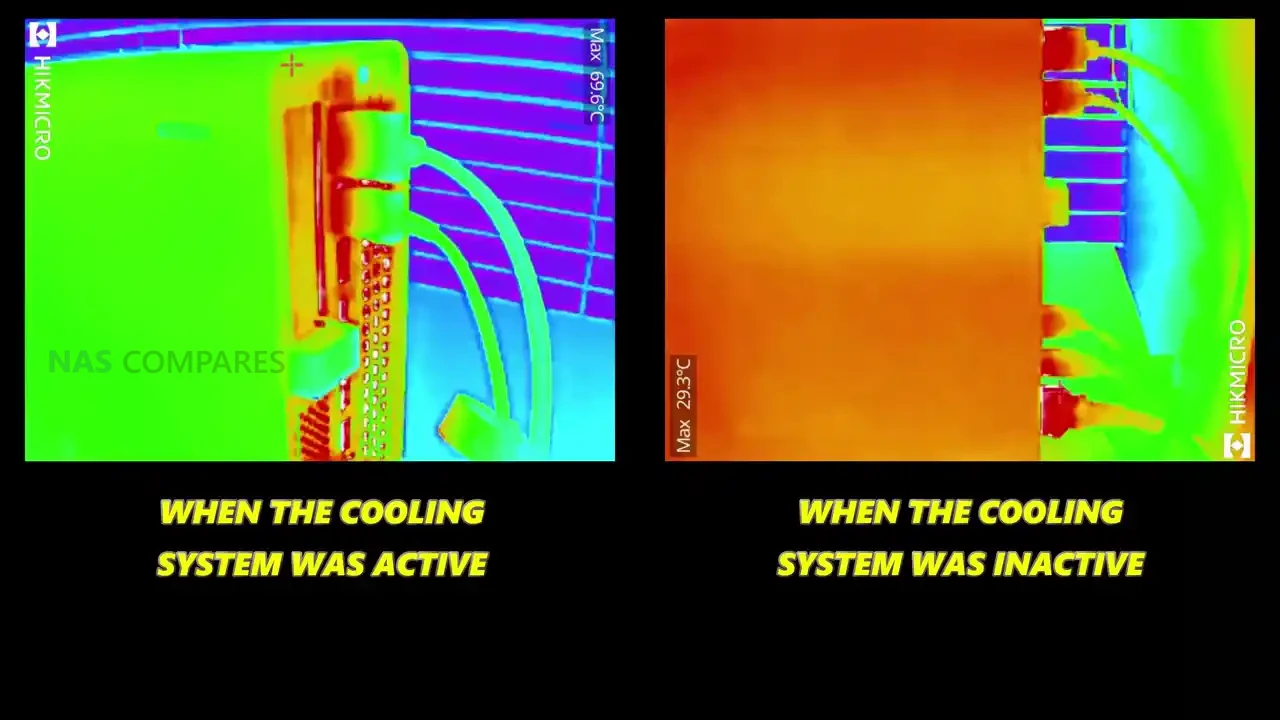

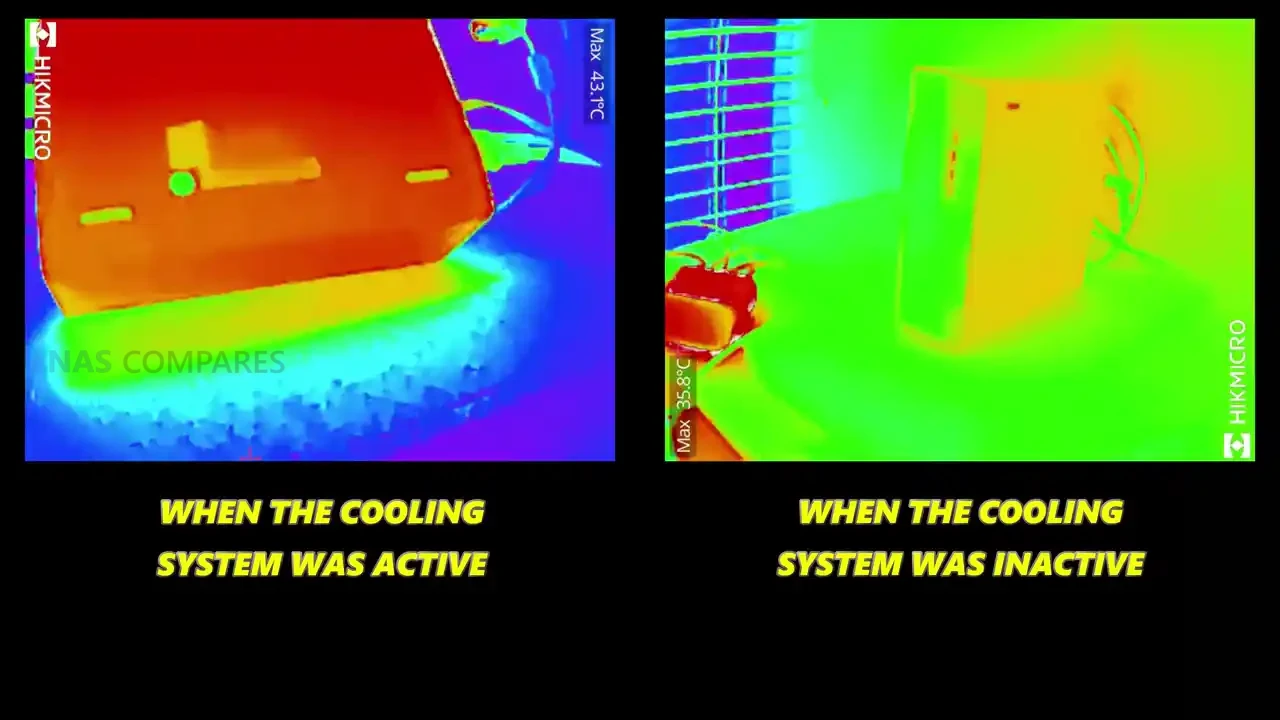
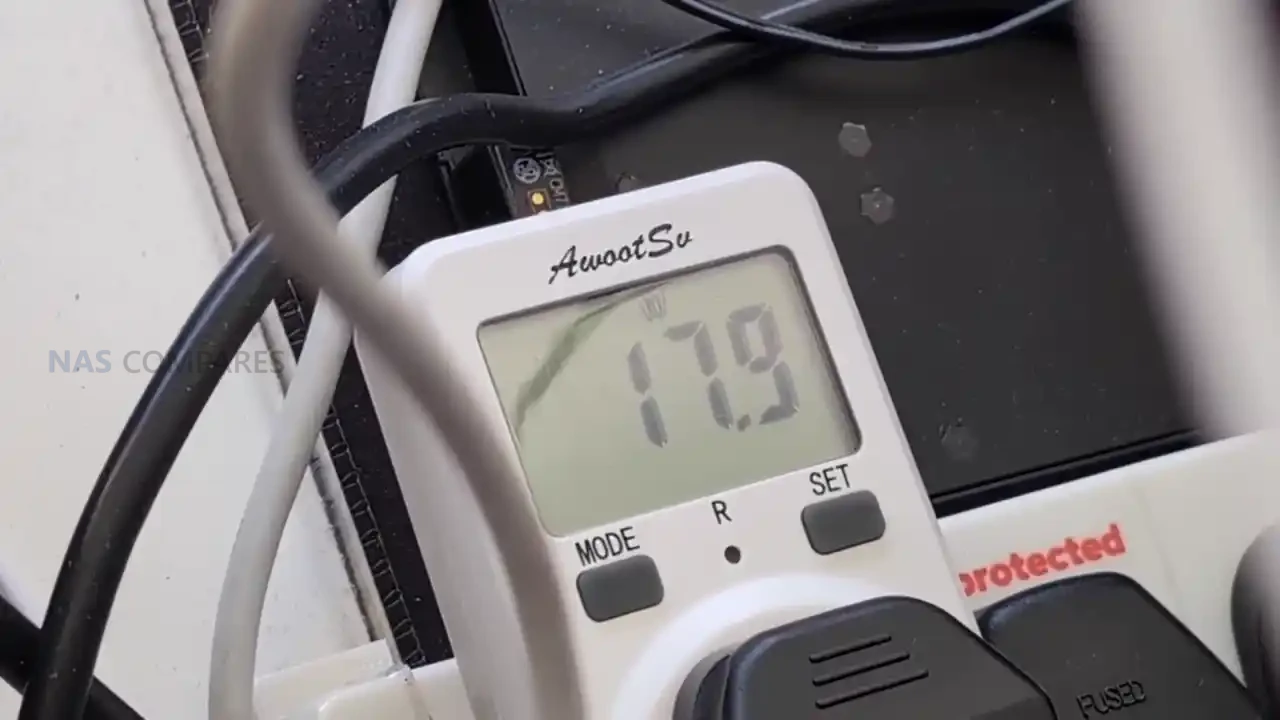
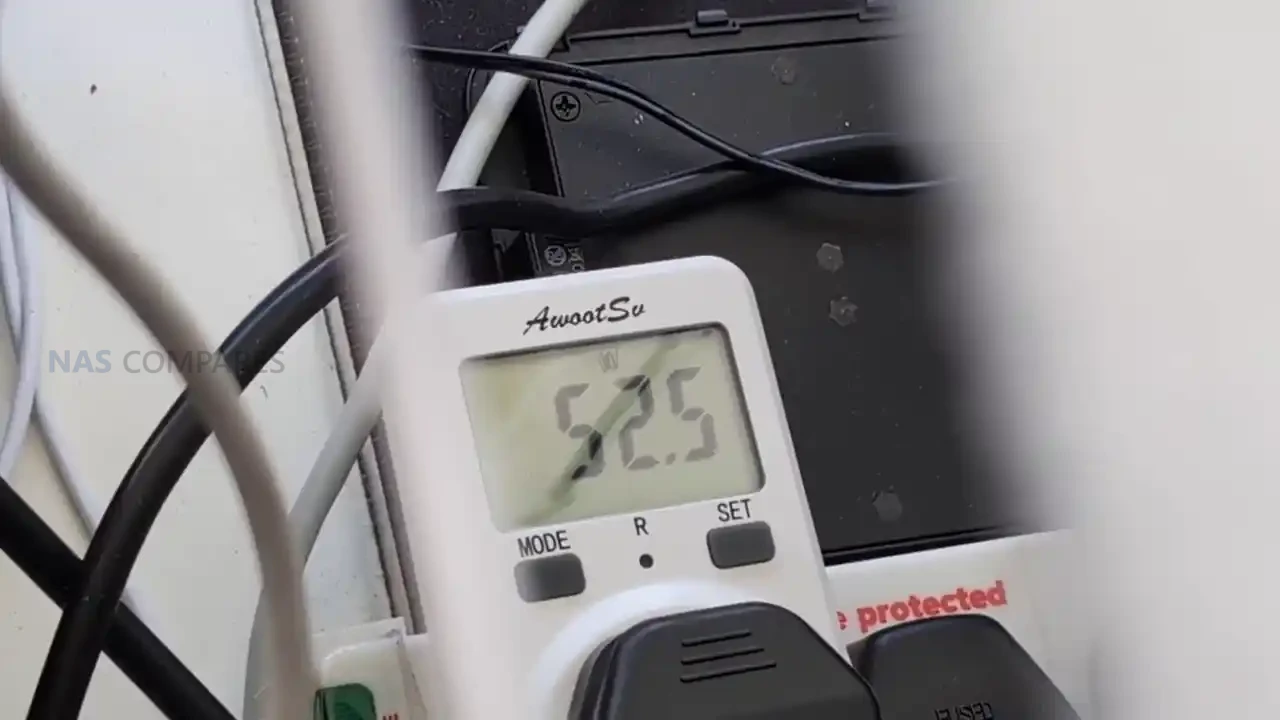
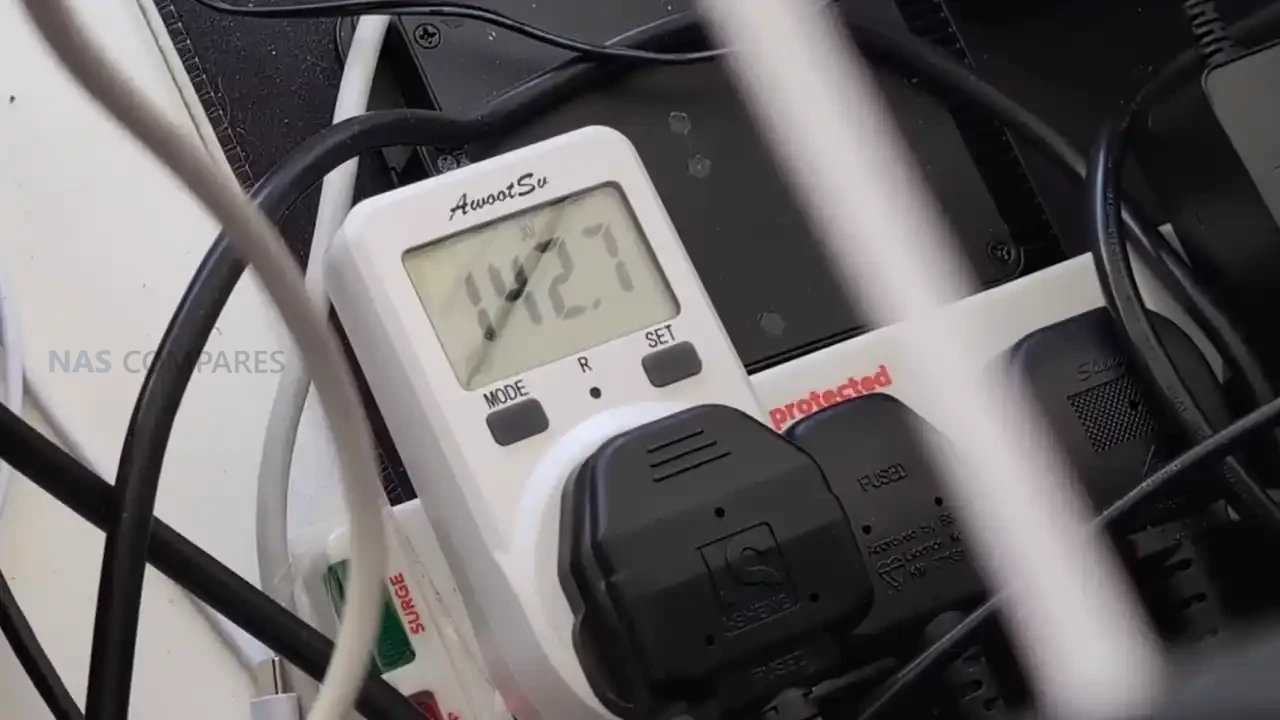
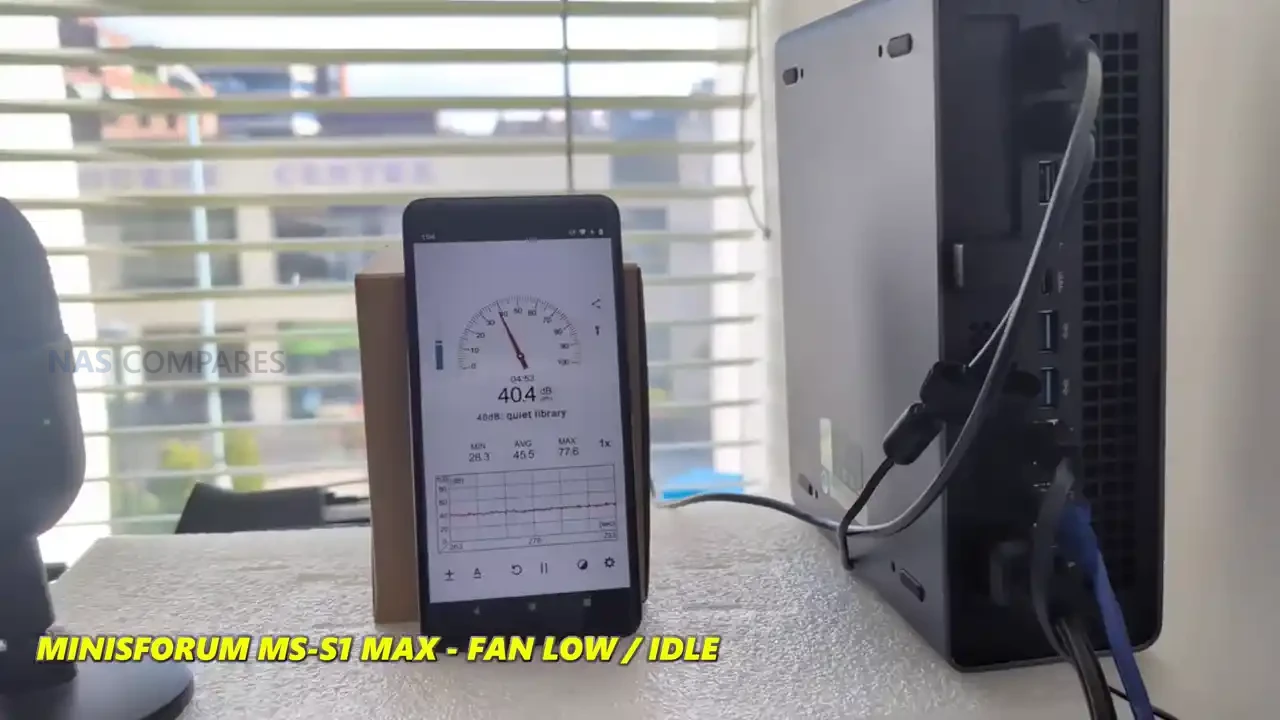
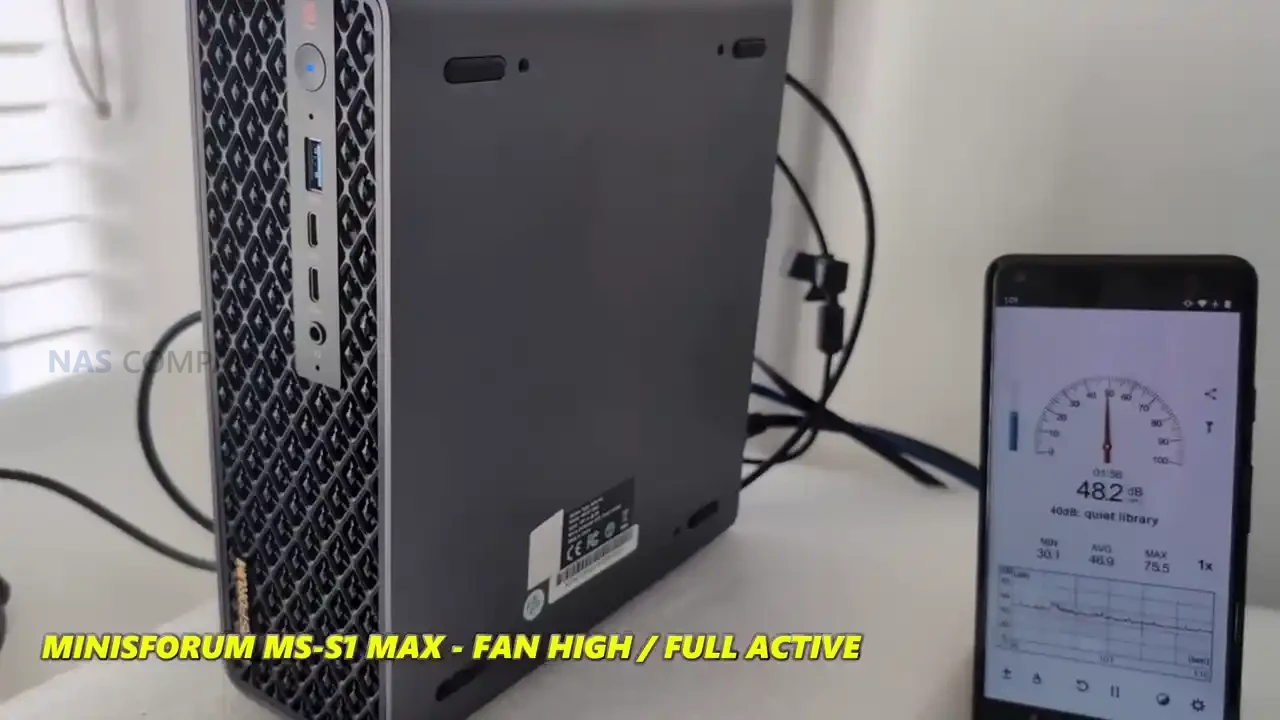
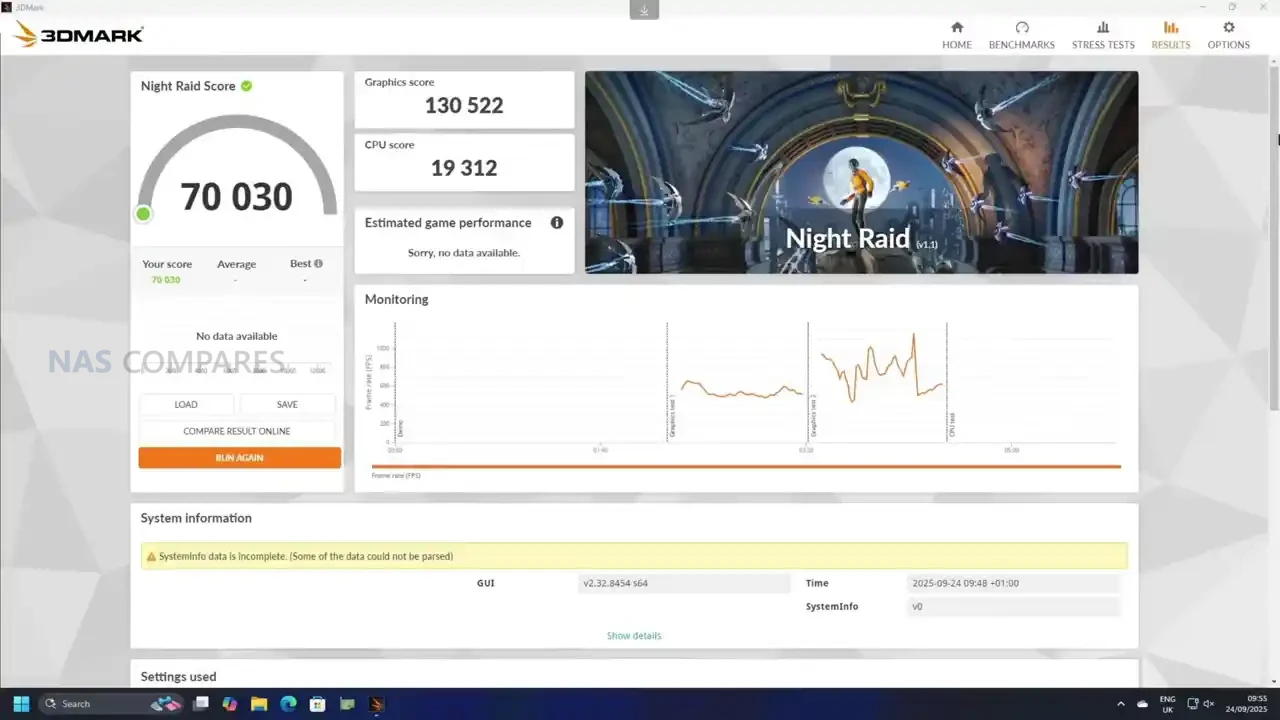
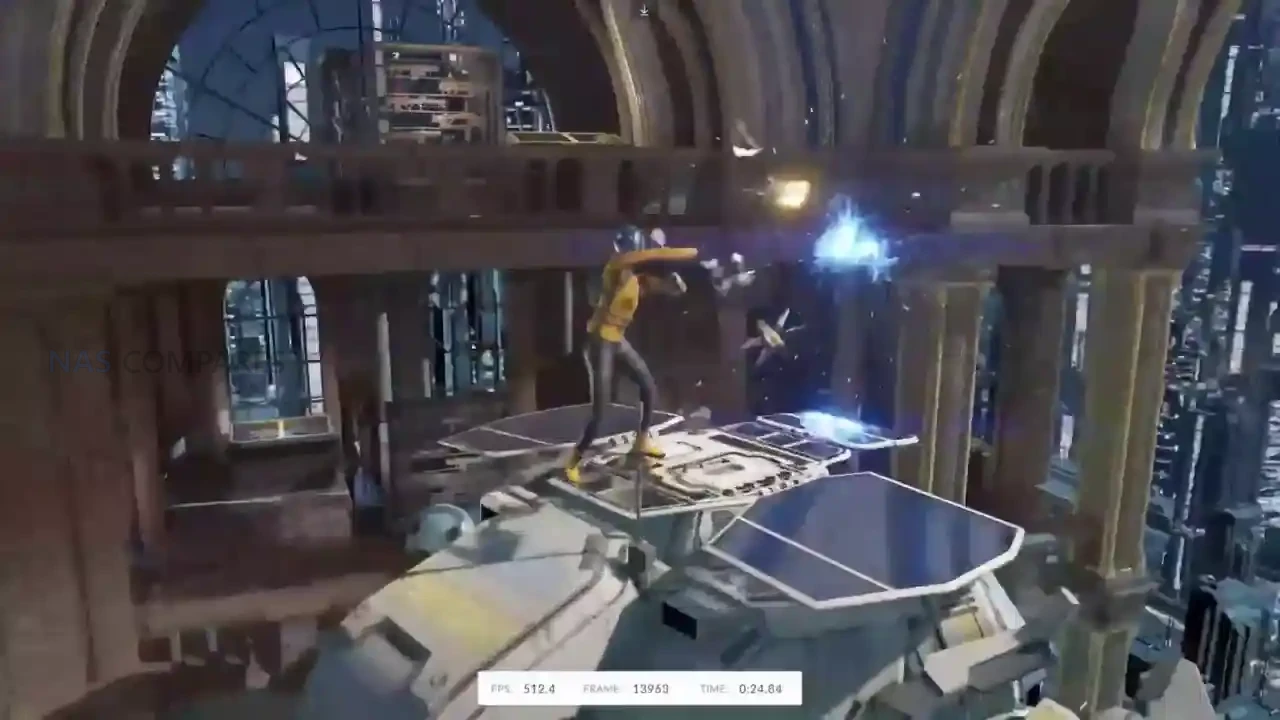
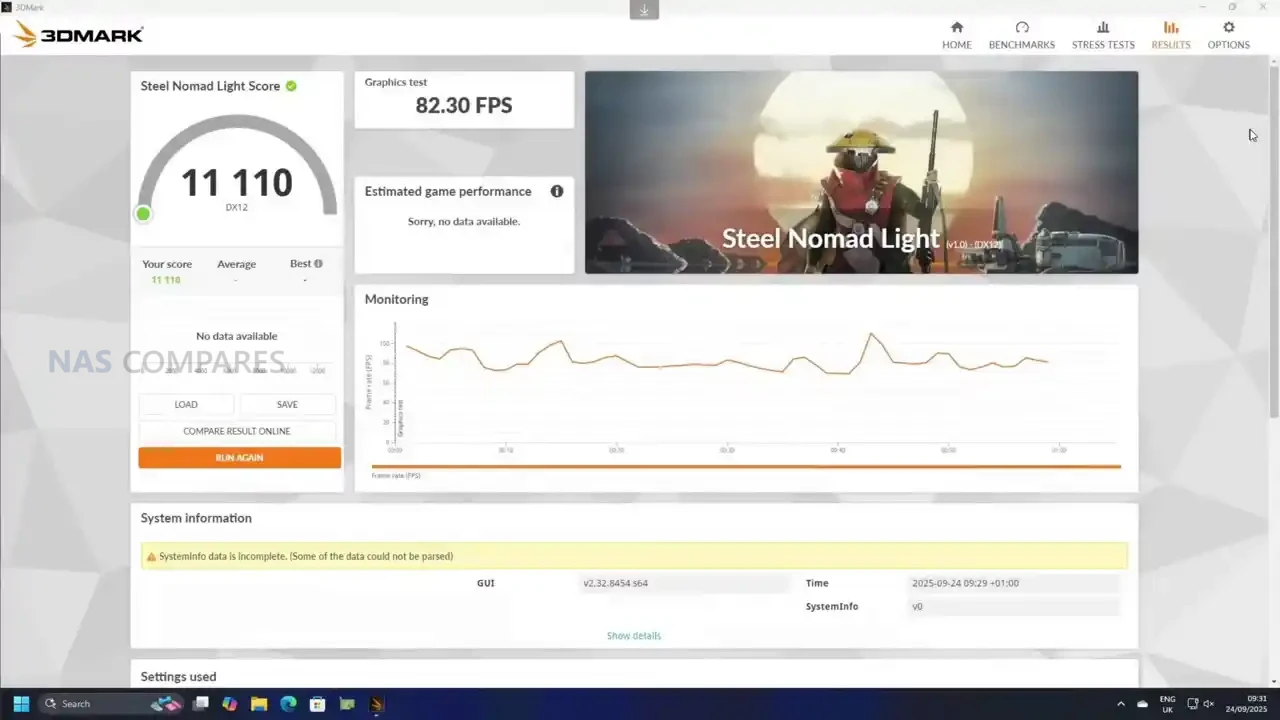

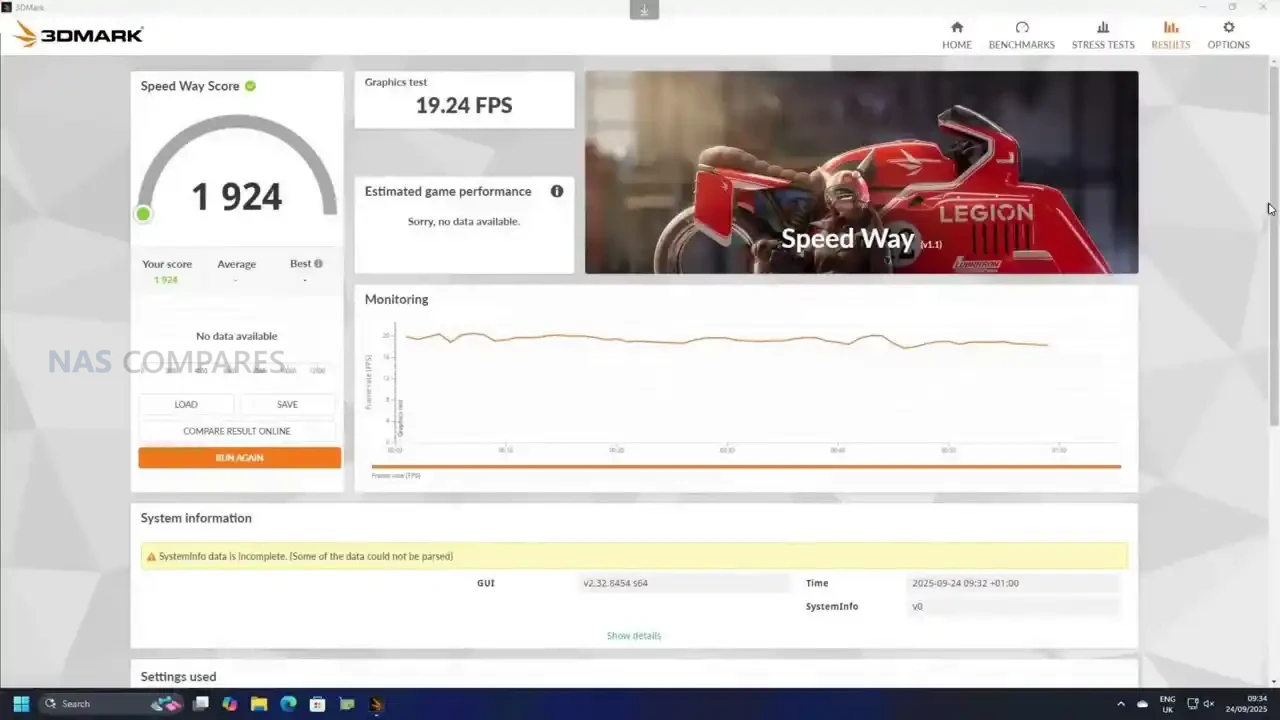
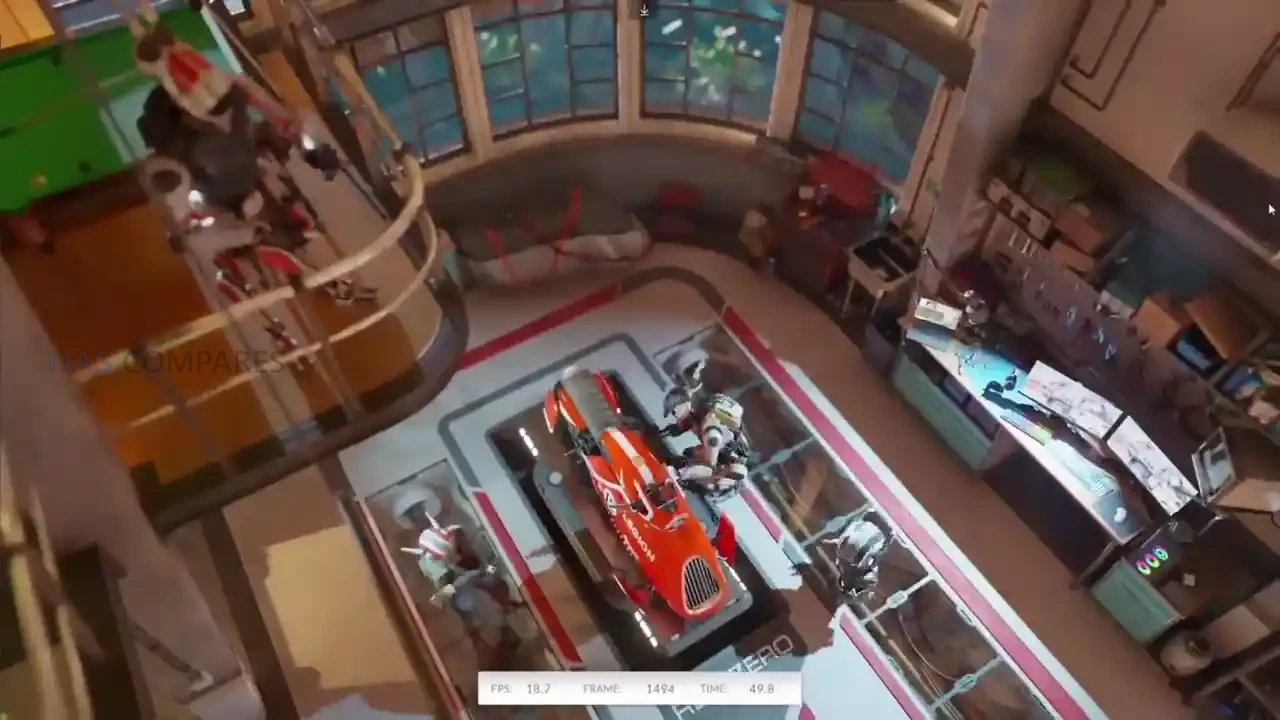
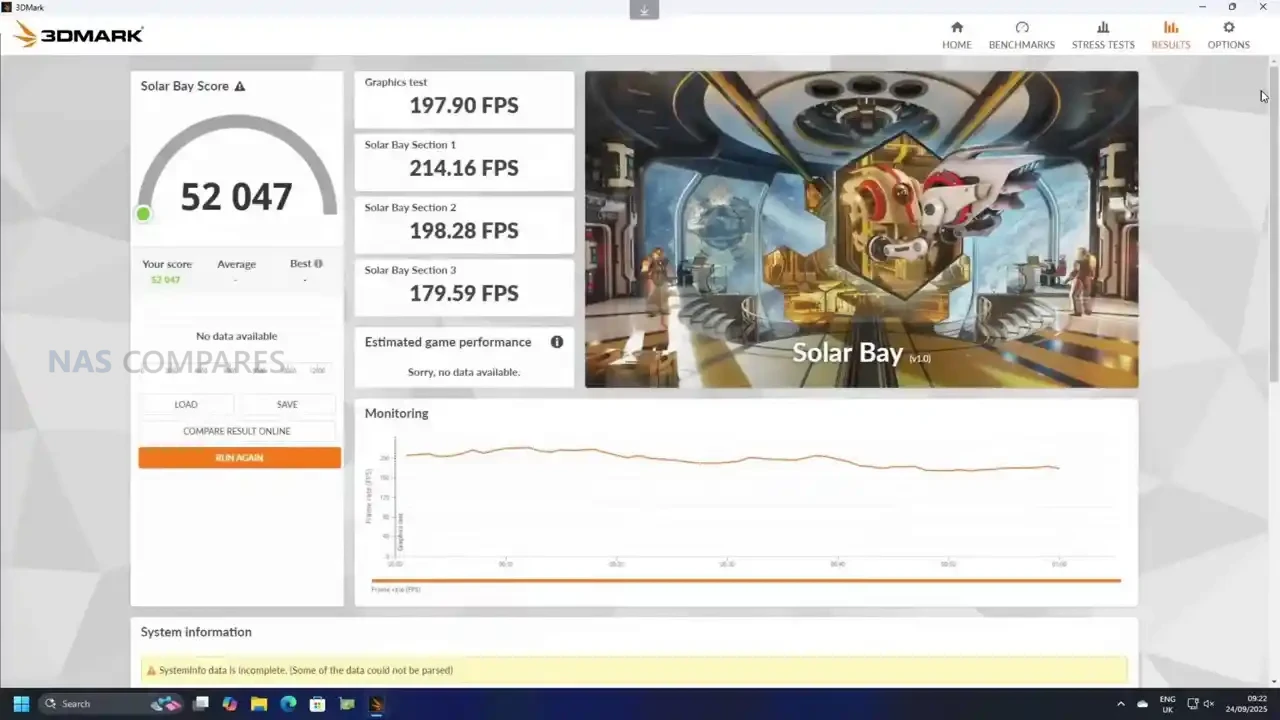
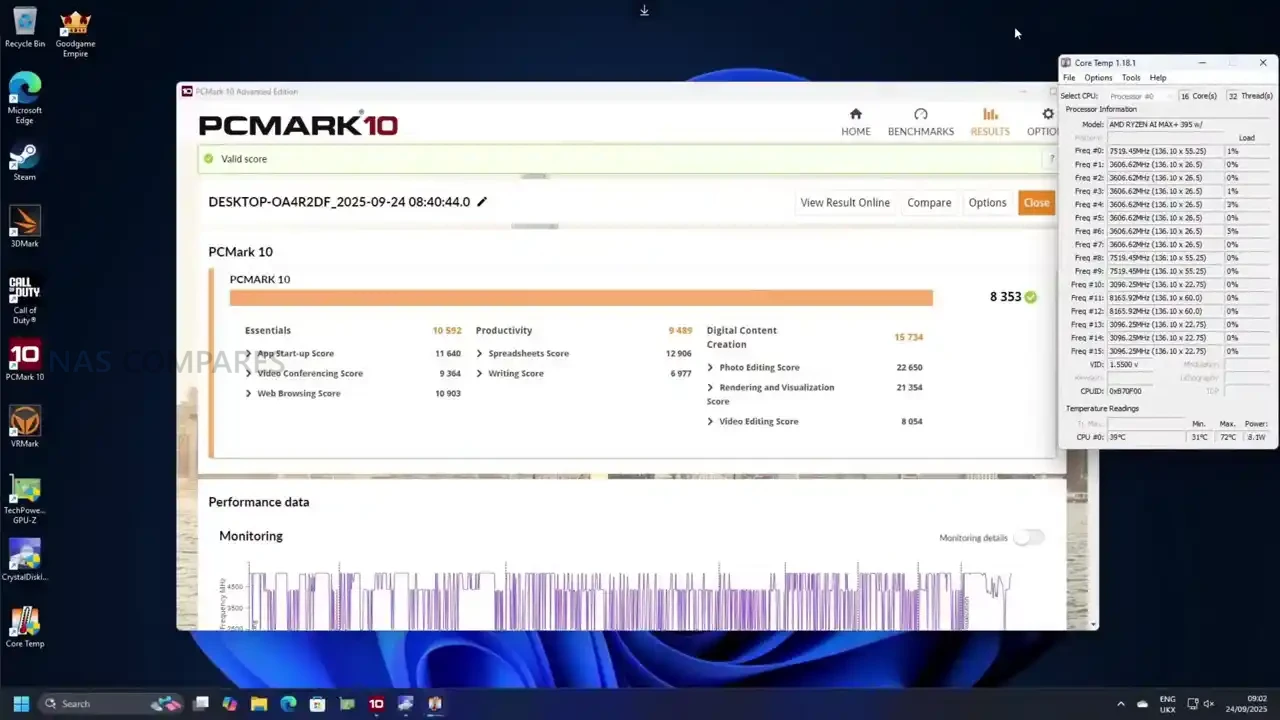
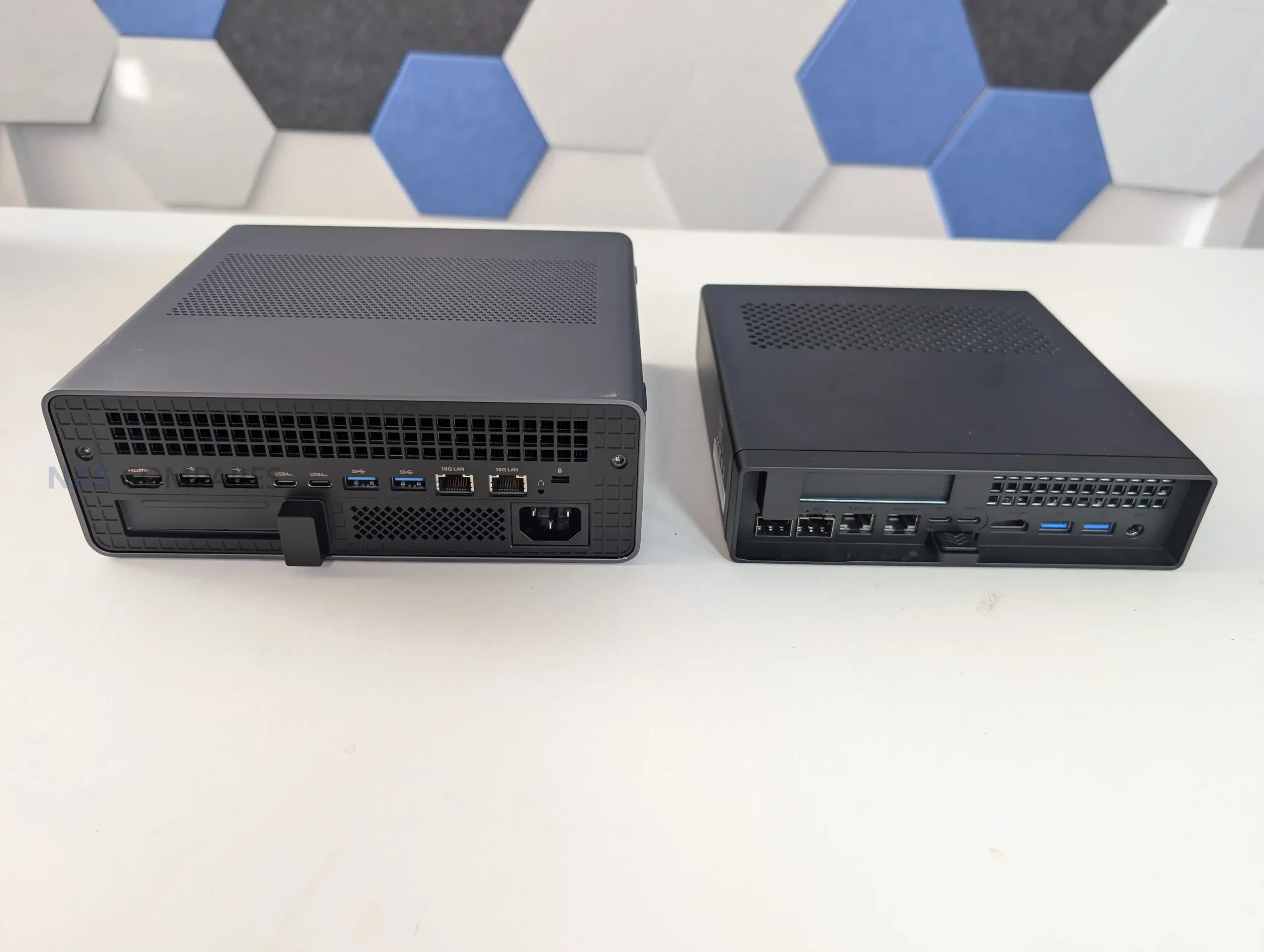
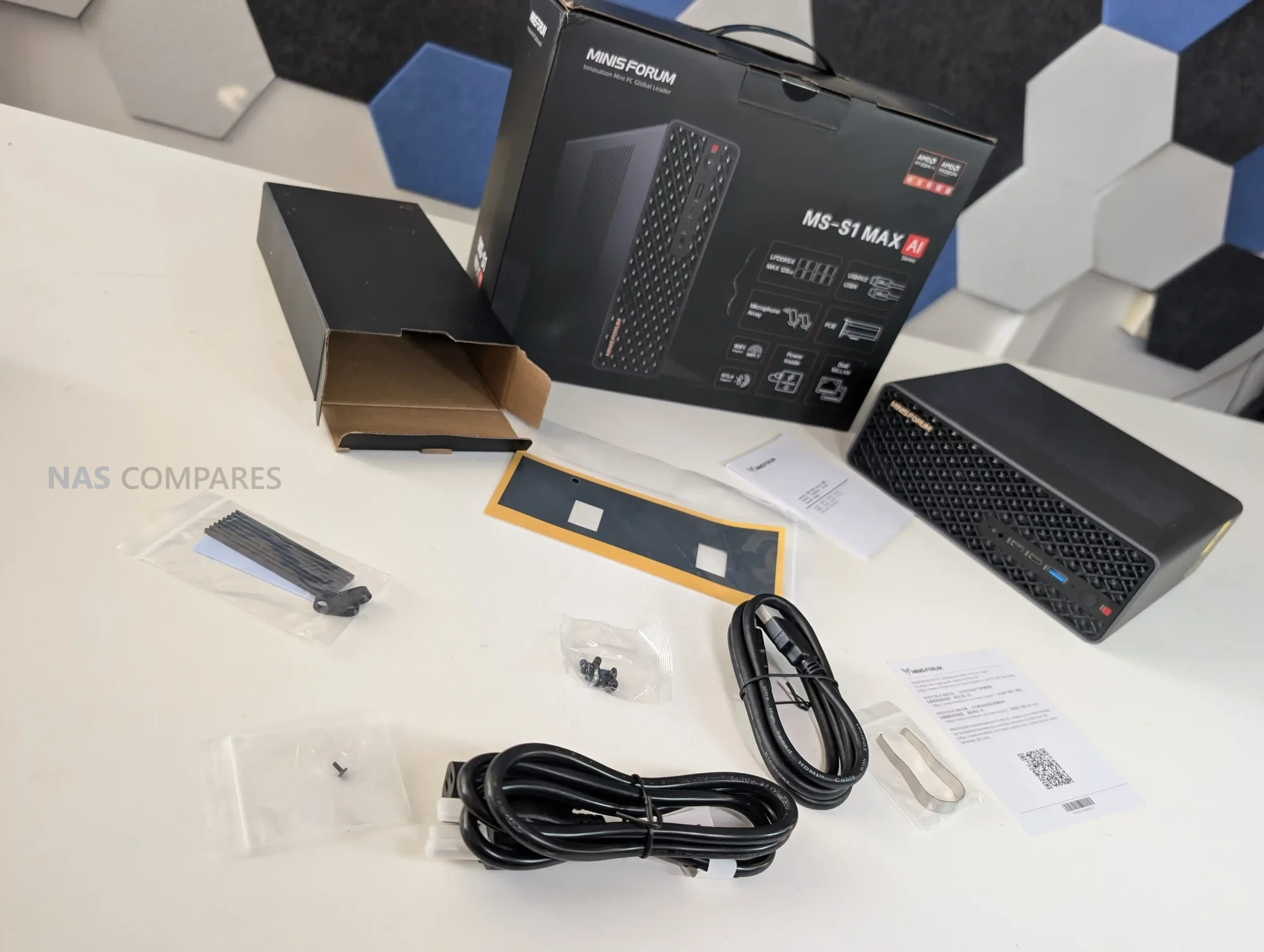




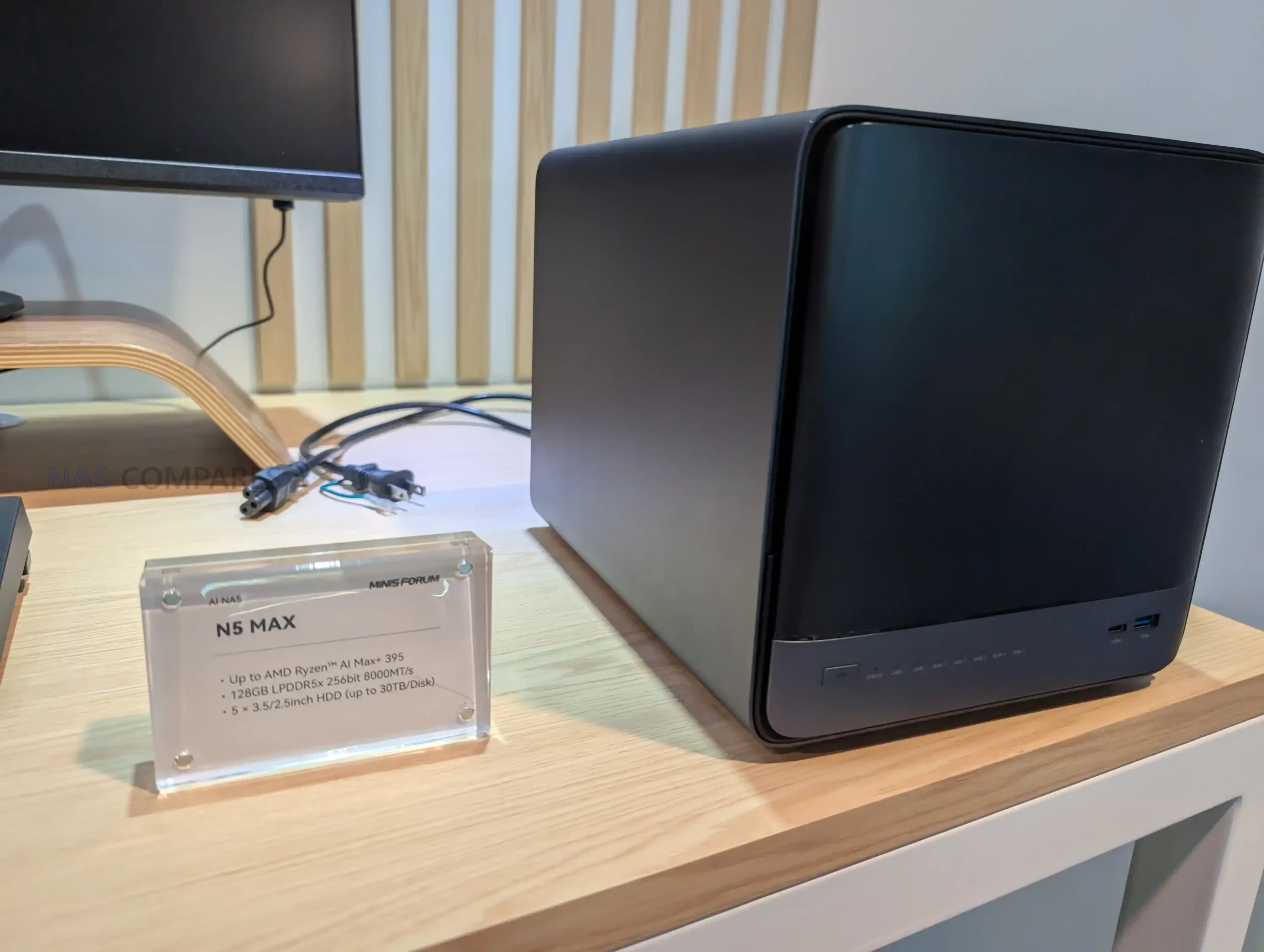
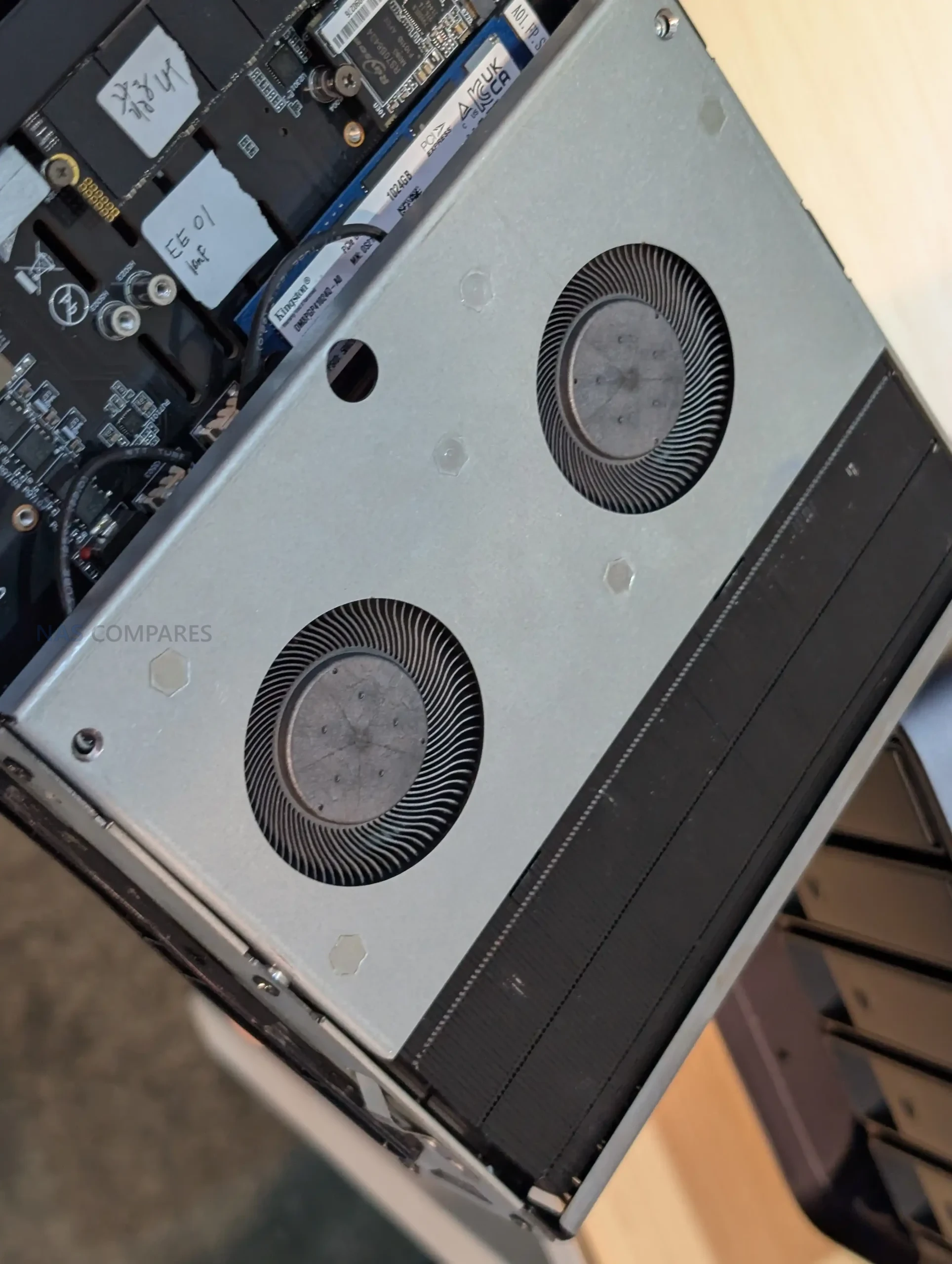
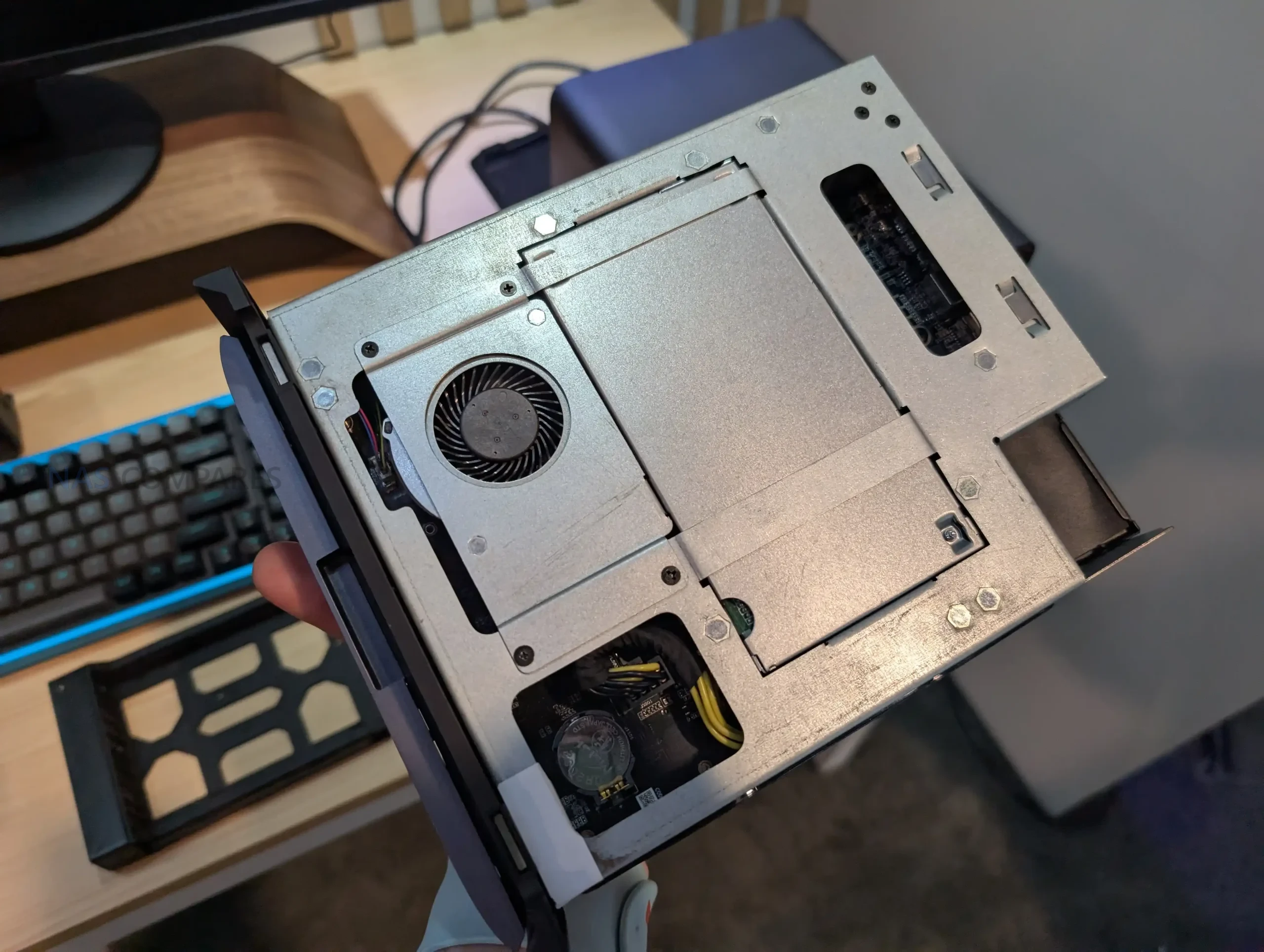
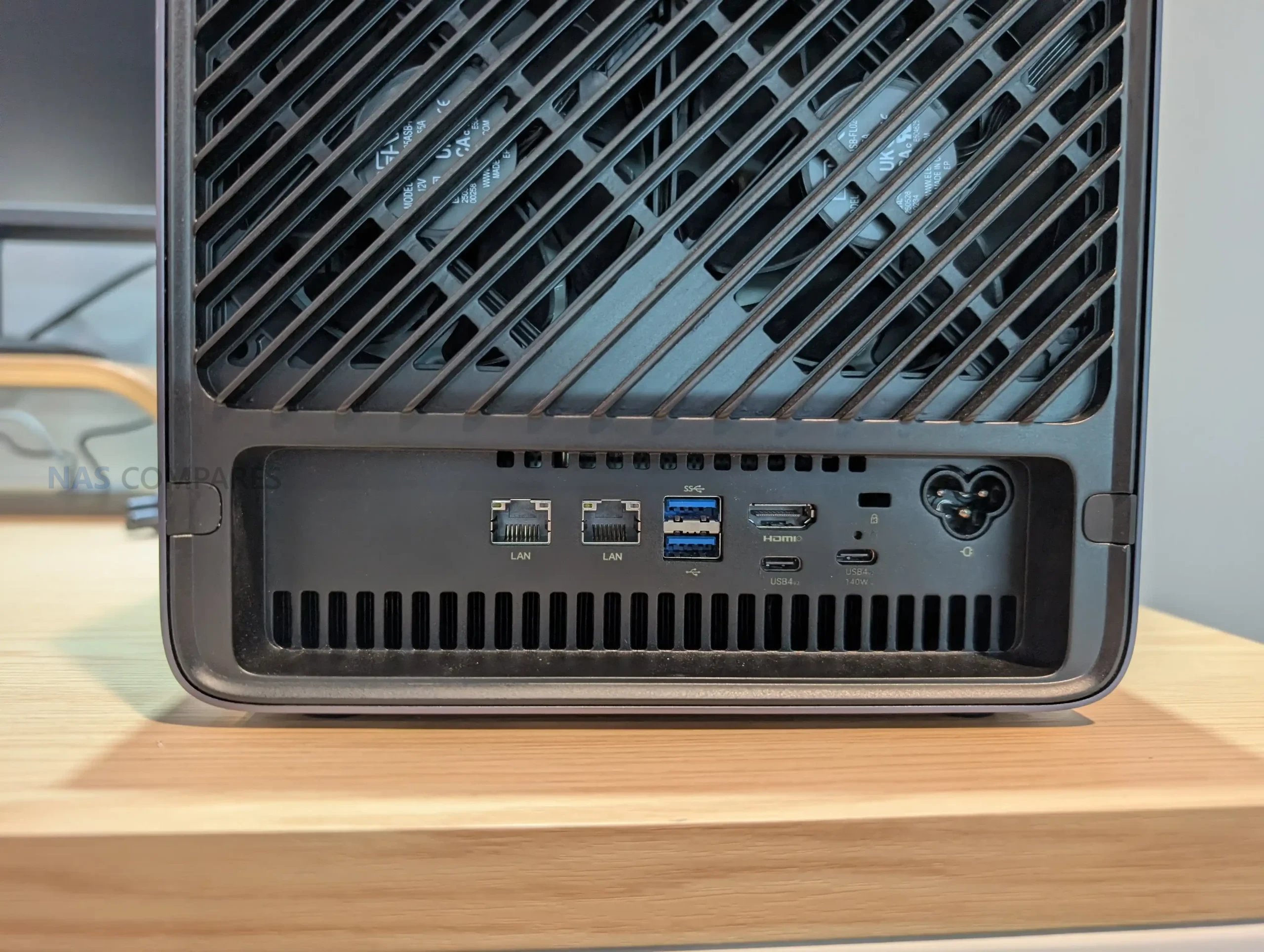
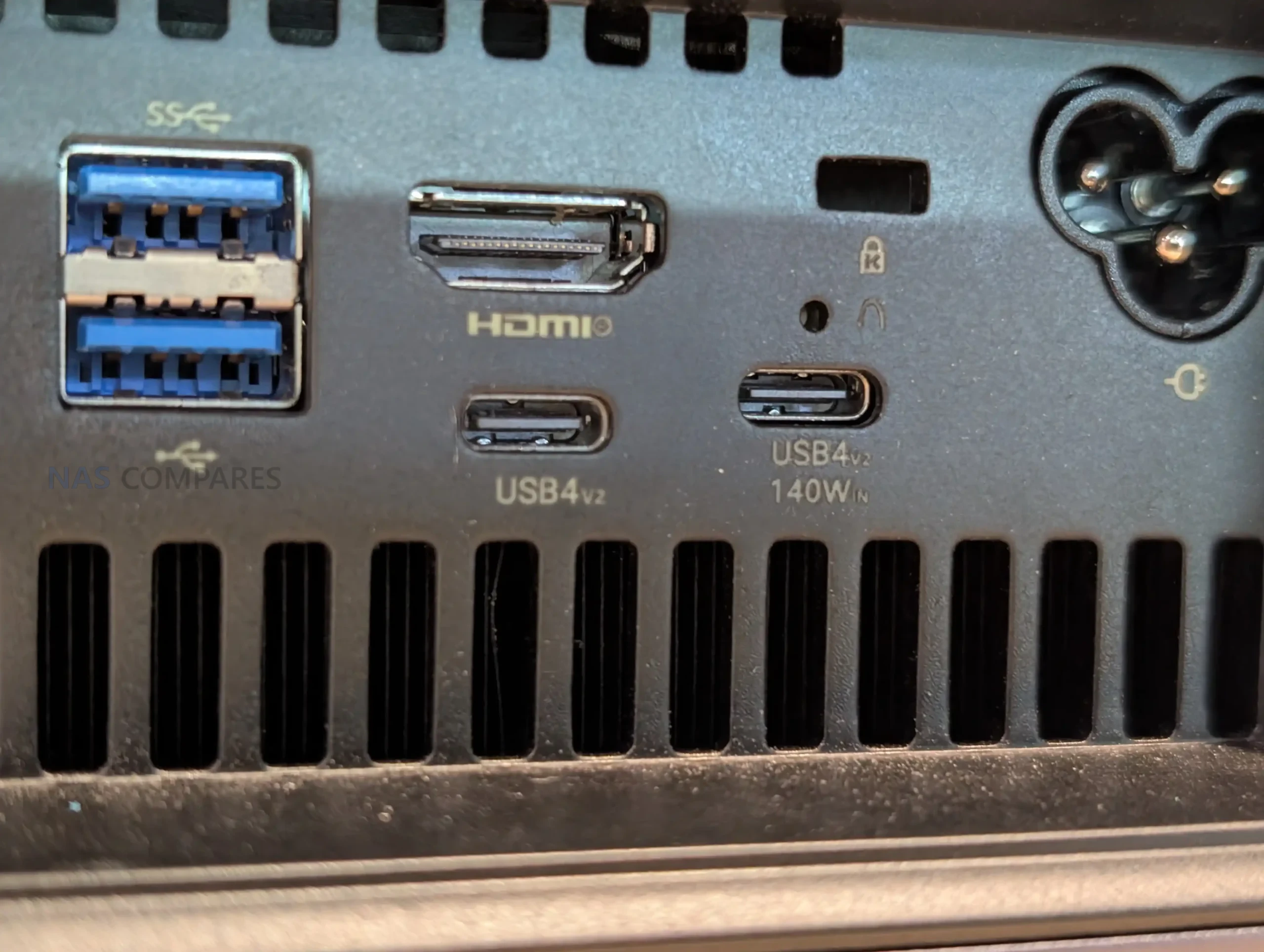
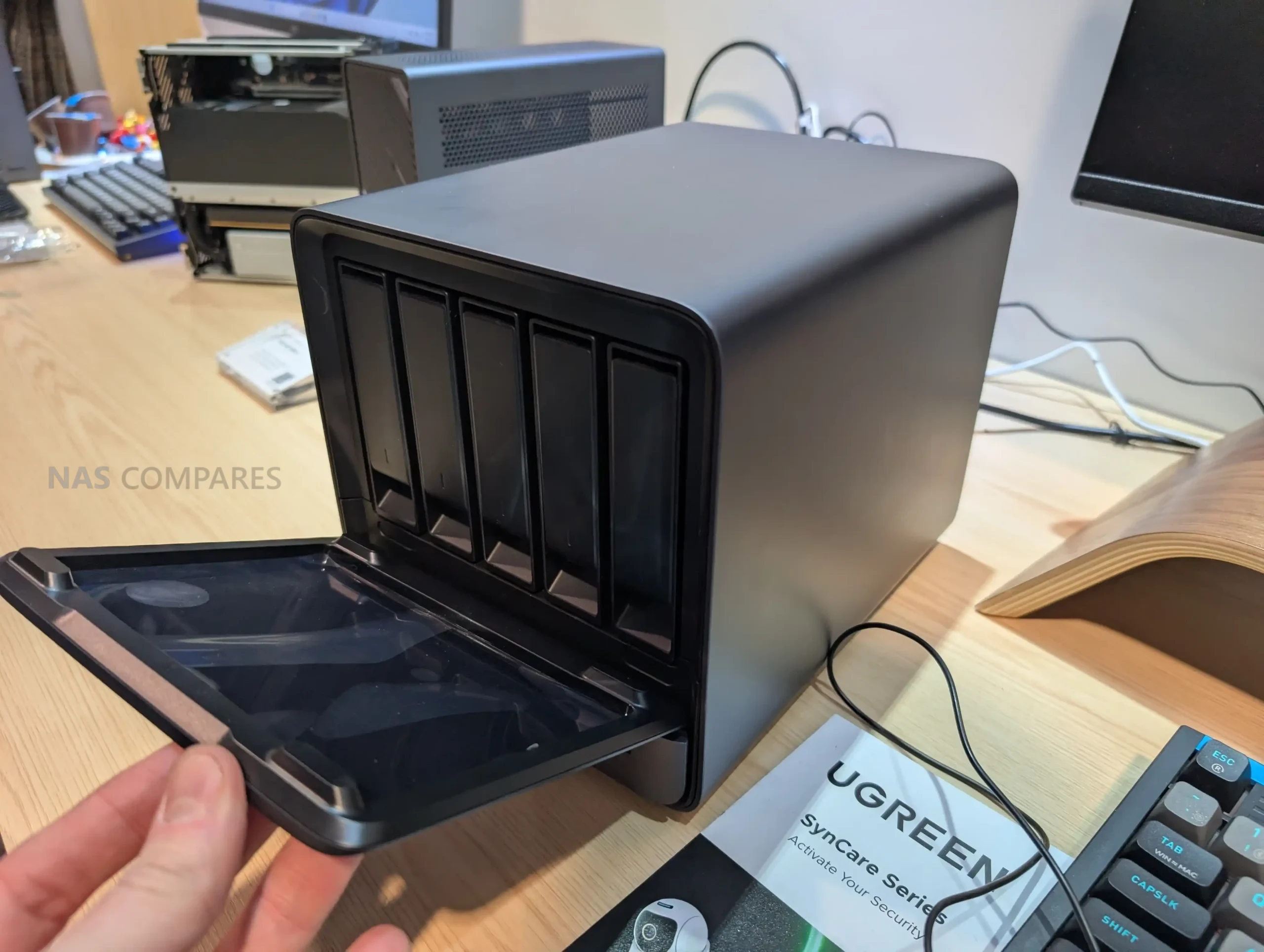
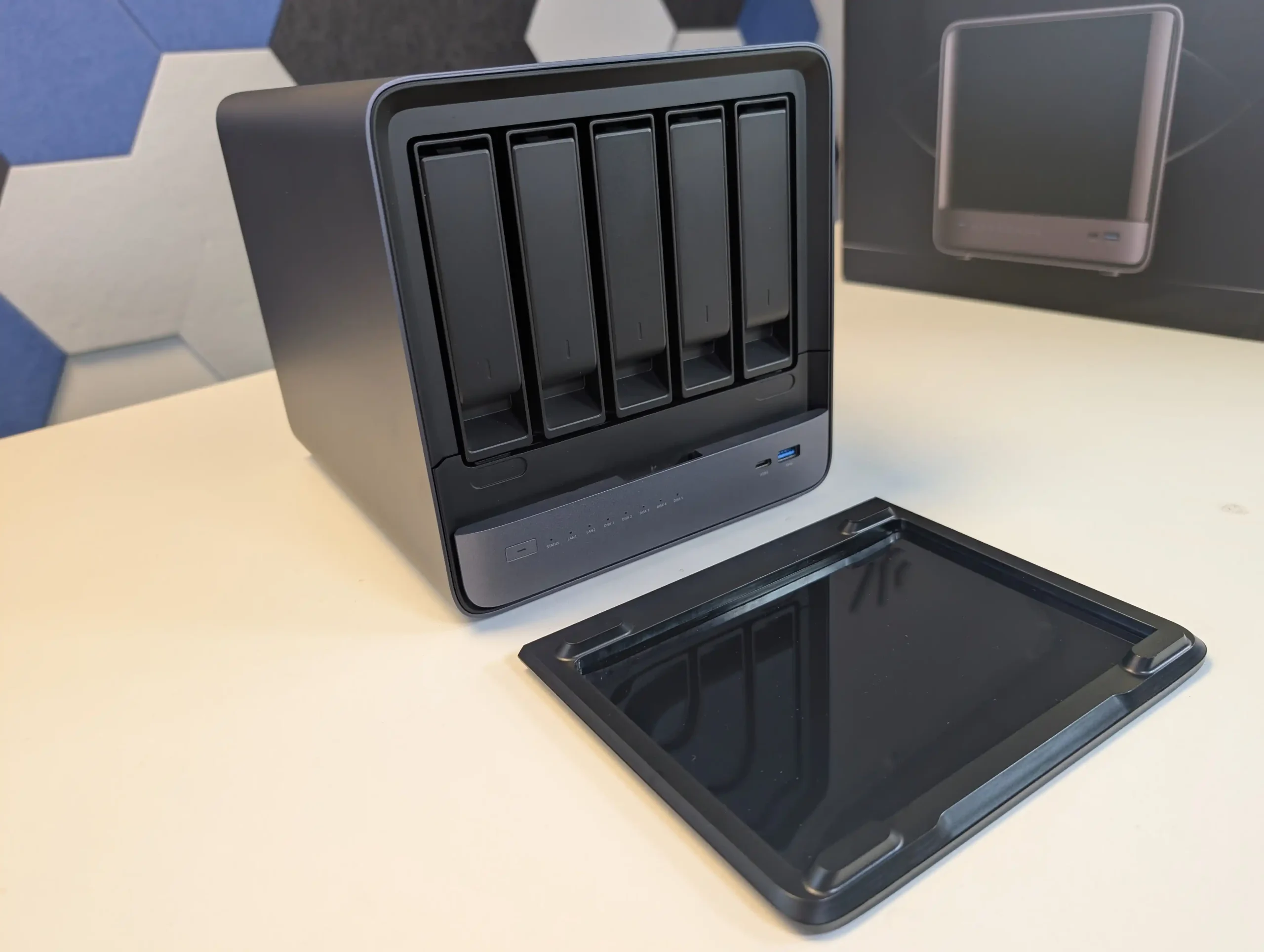
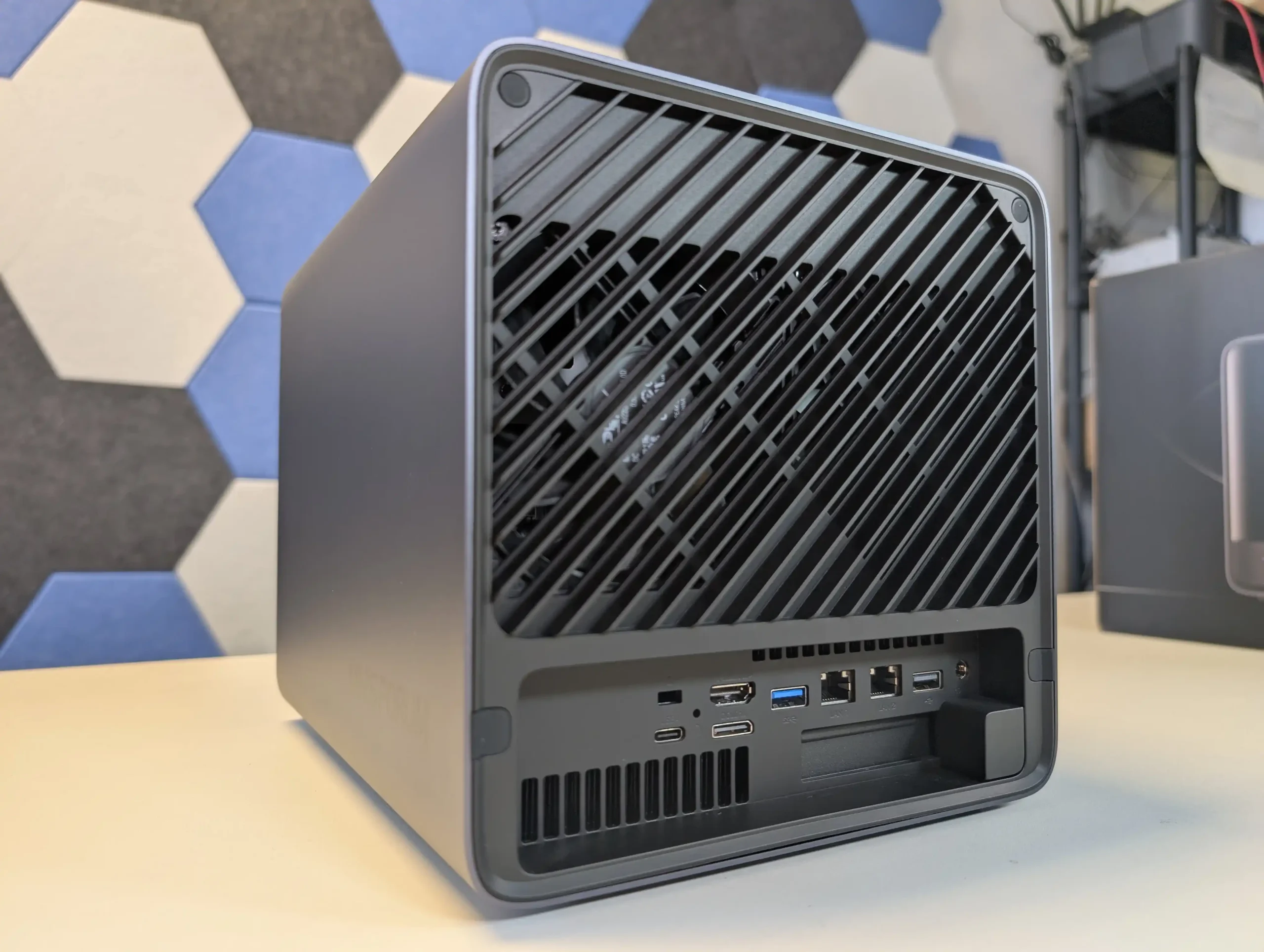
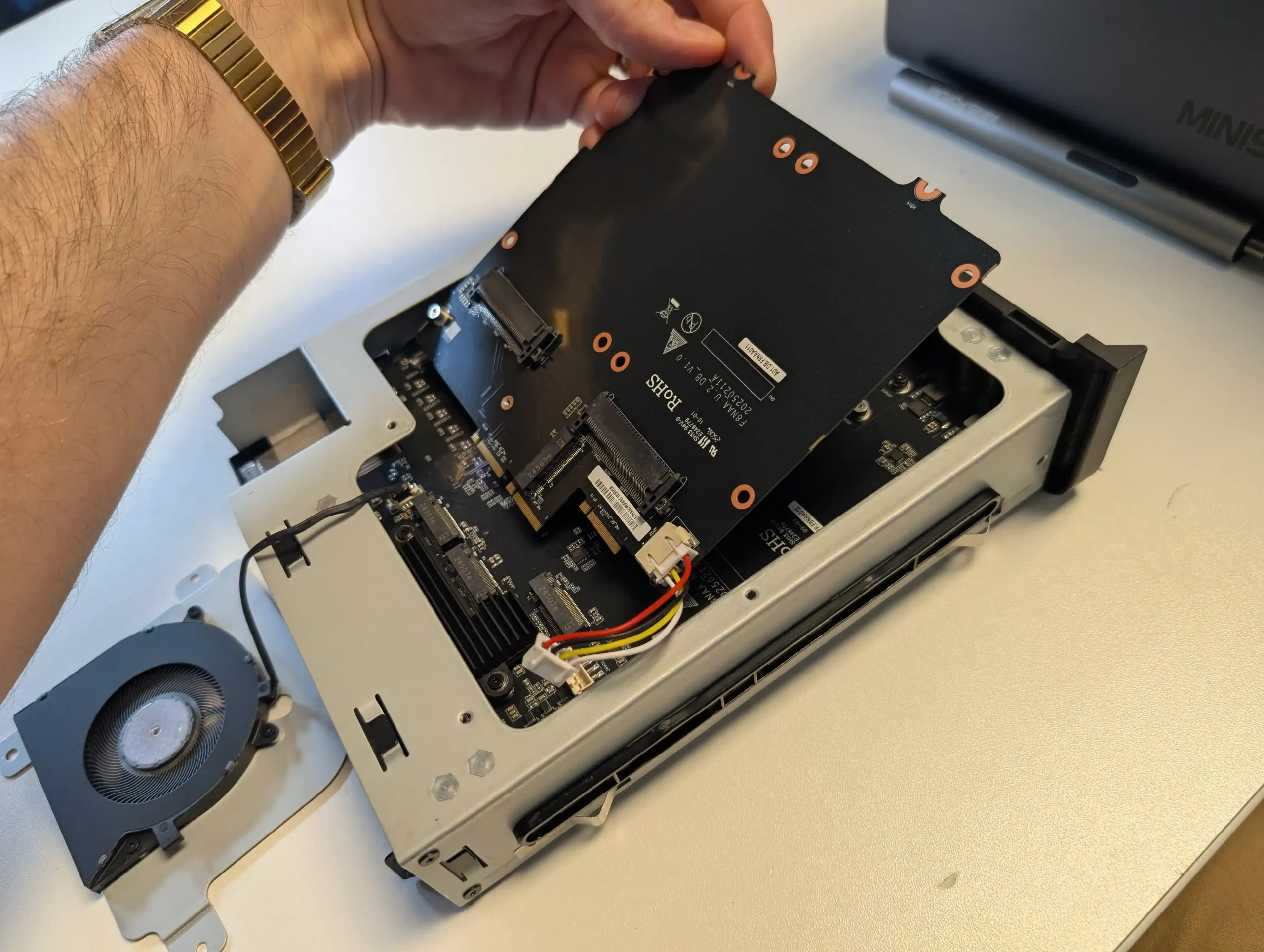
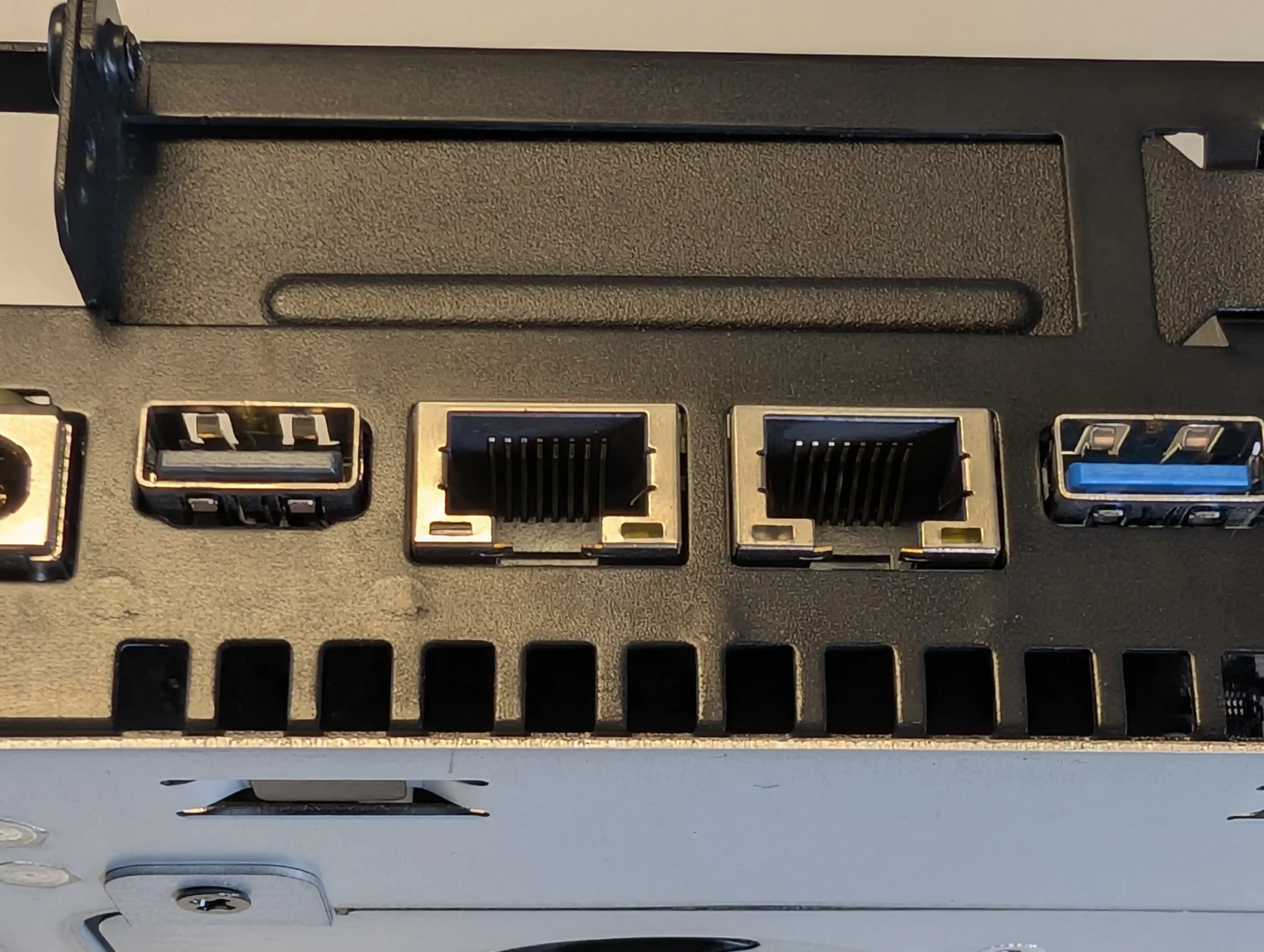
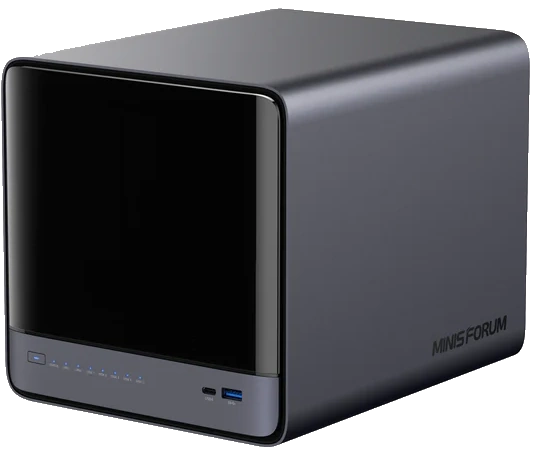
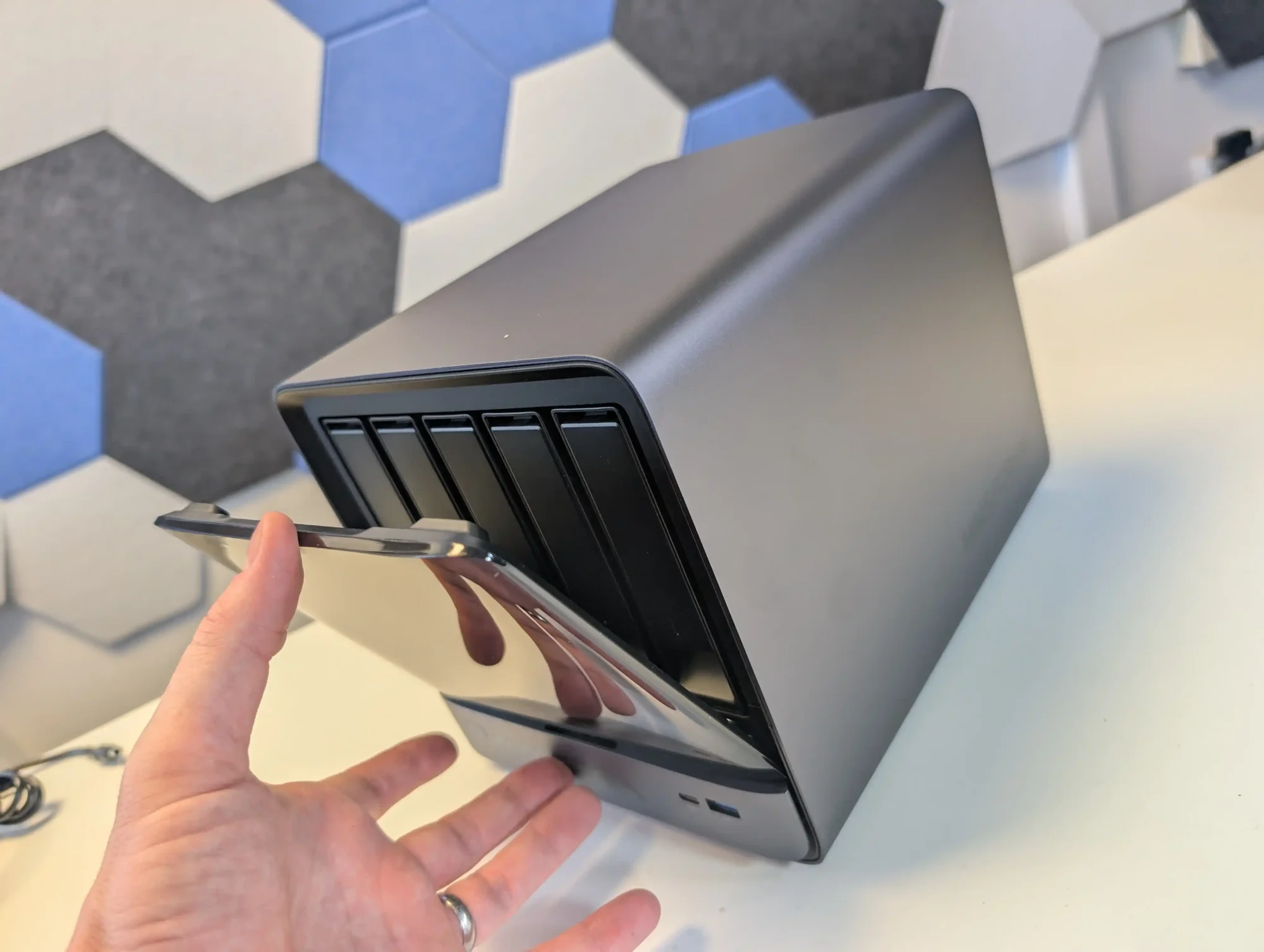

 AI 9 HX PRO 370 CPU with 12 cores, 24 threads, and AI acceleration (50 TOPS NPU) is INCREDIBLE for a compact desktop purchase