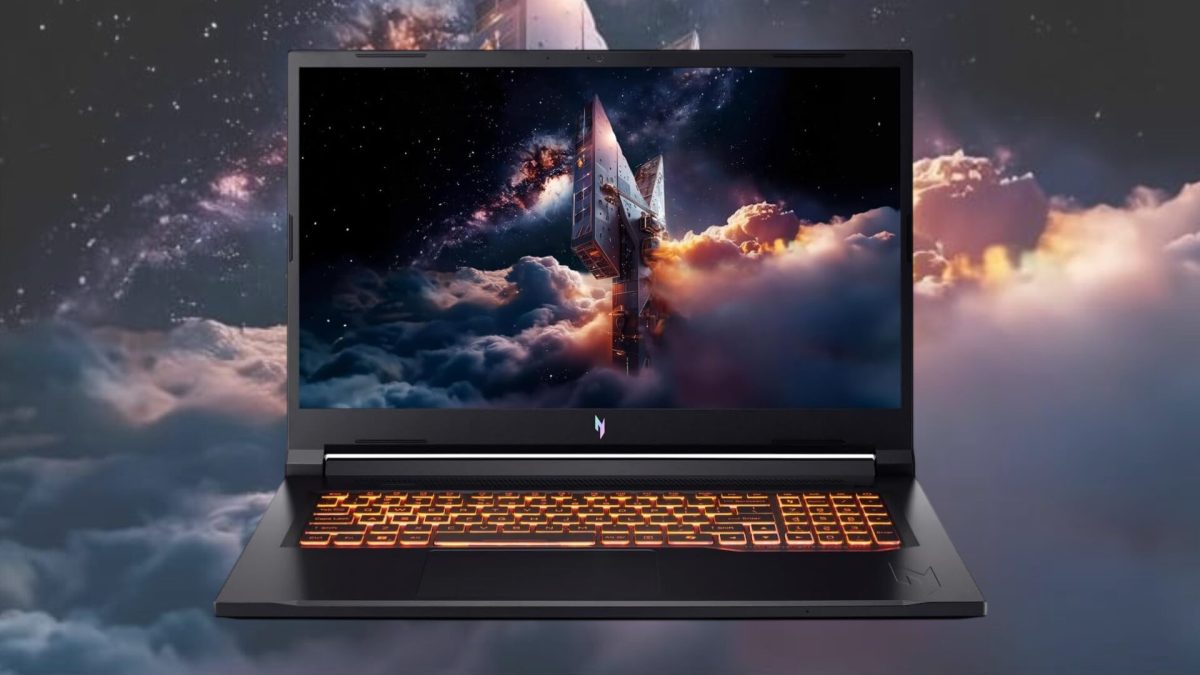
[Deal du jour] Si vous cherchez un laptop assez puissant pour jouer à vos jeux dans les meilleures conditions possibles, ce modèle d'Acer proposé en promotion devrait vous plaire.
I'm a big fan of Intel's laptop-centric mobile processors, and I'll jump at the chance to test more of its modern Core Ultra Series 3 "Panther Lake" range. Acer isn't my usual go-to manufacturer for Windows laptops, but it's one that has pleasantly surprised me in the past. So, is the Swift Go 16 AI worth your money? Here's what I thought after a week of testing.
How much does the Swift Go 16 AI cost?
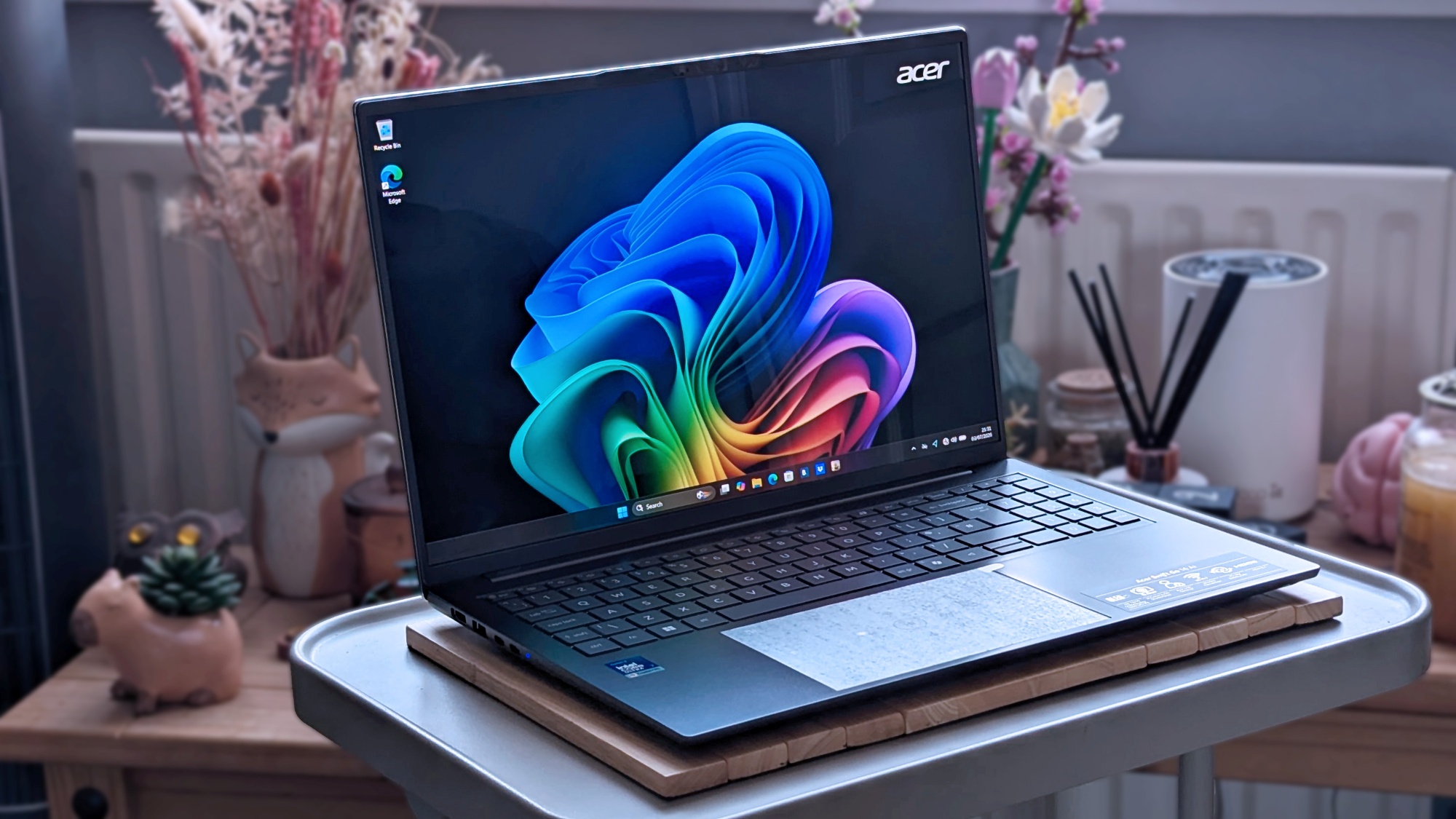
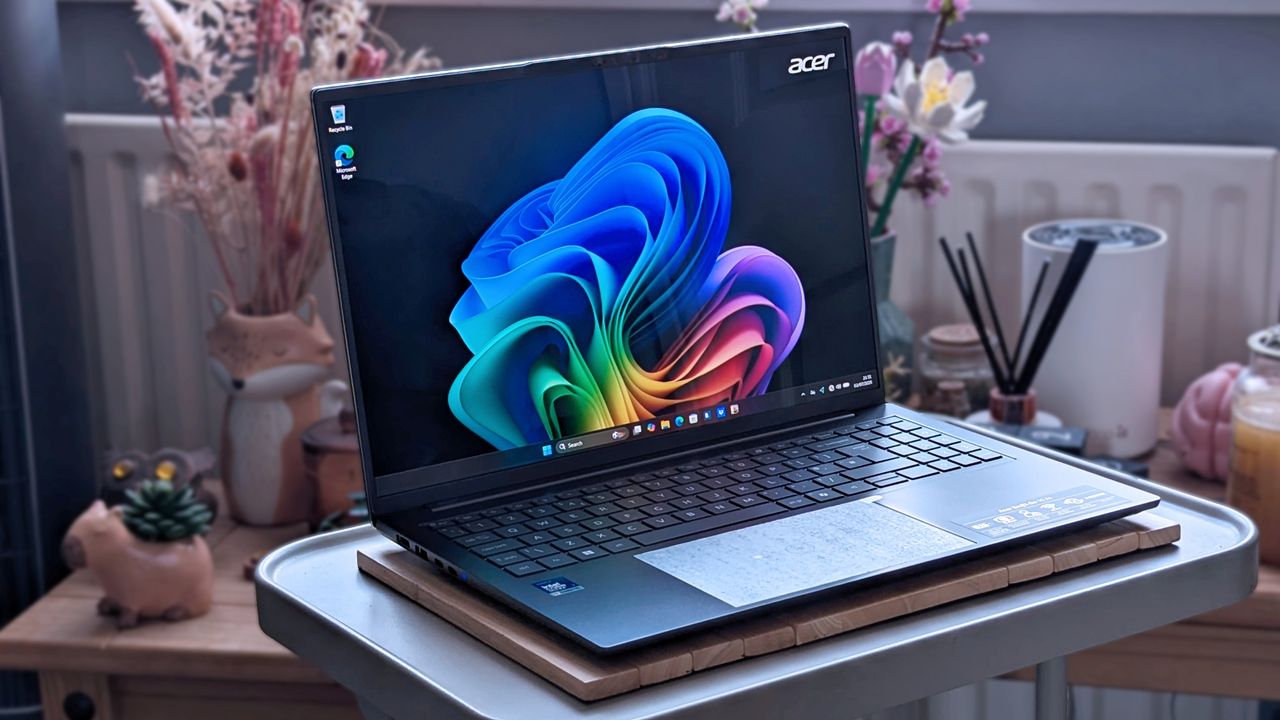
That color-accurate OLED panel maxes out at 60Hz, but it looks gorgeous for everyday productivity. (Image credit: Ben Wilson | Windows Central)
You can buy the Swift Go 16 AI for $1,599.99 from Acer.com with the same specs as my sample and in the same color. However, at the time of writing, a cheaper listing at Best Buy for $1,399 offers a lighter-colored "Vapor Silver" variant with the same CPU, RAM, and storage components.
In the United Kingdom, a listing on Acer.co.uk for £1,299.99 cuts the RAM and storage to 16GB and 512GB — half of the US equivalent — and is not currently listed at any other major retailer. Importantly, the UK variant does not include an AC power adapter (charger), due to Acer's sustainability pledge.
Swift Go 16 AI sample specifications
Component
Spec
CPU
Intel Core Ultra 7 355
RAM
32GB LPDDR5X-7467MT/s
GPU
Intel Graphics (Integrated)
Display
16" 16:10 WUXGA (1920 x 1200) non-touch 60Hz OLED
Storage
1TB M.2 NVMe PCIe 4.0 SSD
Battery / Charger
71WHrs / 100W USB-C
Weight
2.95 lbs (1.34 kg)
Recommended model
Pick up the same model from my testing, with only a different color on its chassis, and save your cash. You'll still get 32GB of RAM and a 1TB SSD.View Deal
Is the Swift Go 16 AI a good laptop?
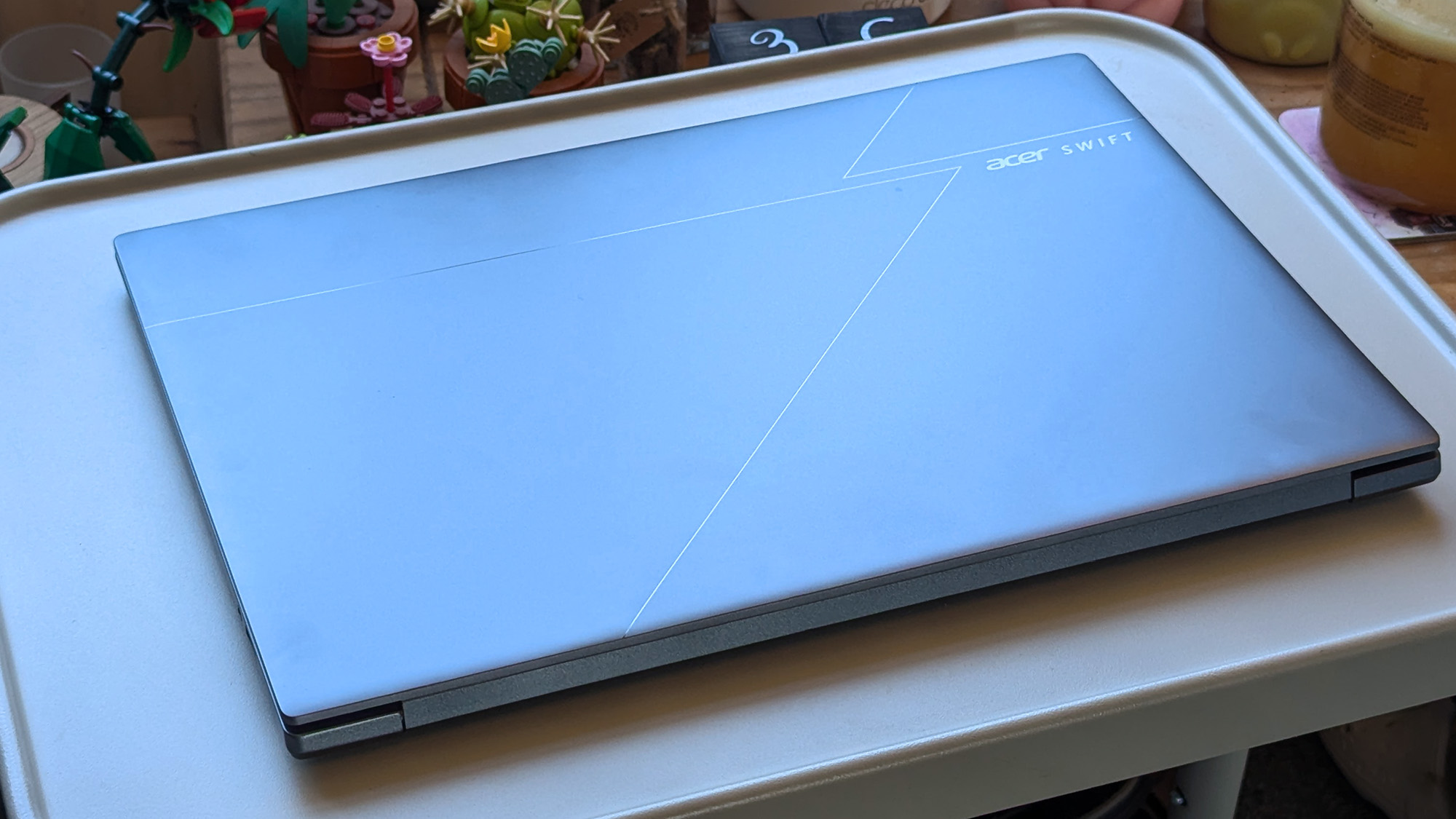
A relatively subtle pattern covers the lid, giving the Swift Go 16 AI a sense of identity.Ben Wilson | Windows CentralI strongly recommend removing the stickers, but the rest looks clean.Ben Wilson | Windows Central
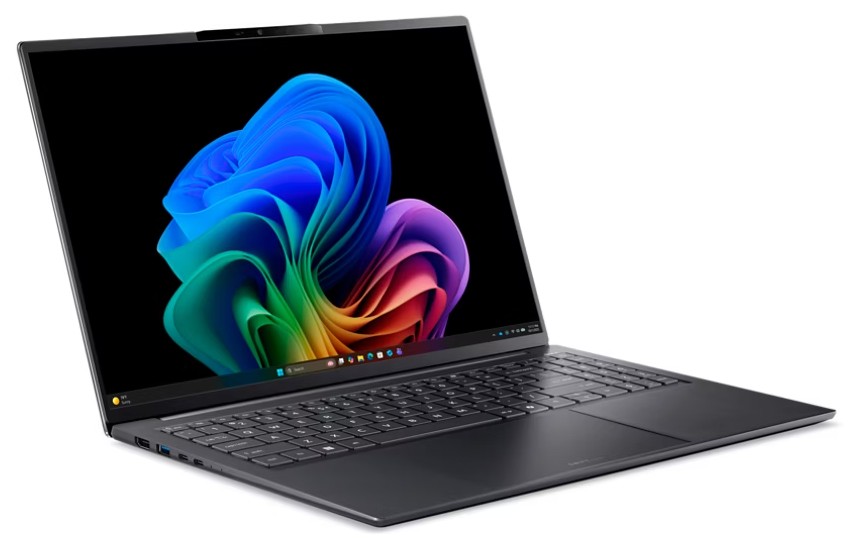
My first impressions of the Swift Go 16 AI were quite positive, as the 16-inch laptop weighs around 2.95 lbs (1.34 kg) and is quite thin at 150mm (200mm with the rubber feet). That's lighter and thinner than a 16-inch MacBook Pro, presuming Apple doesn't include rubber feet in its own measurements. The chassis lid is also reasonably subtle, with a dark, reflective 'Acer' logo alongside geometric lines in its design.
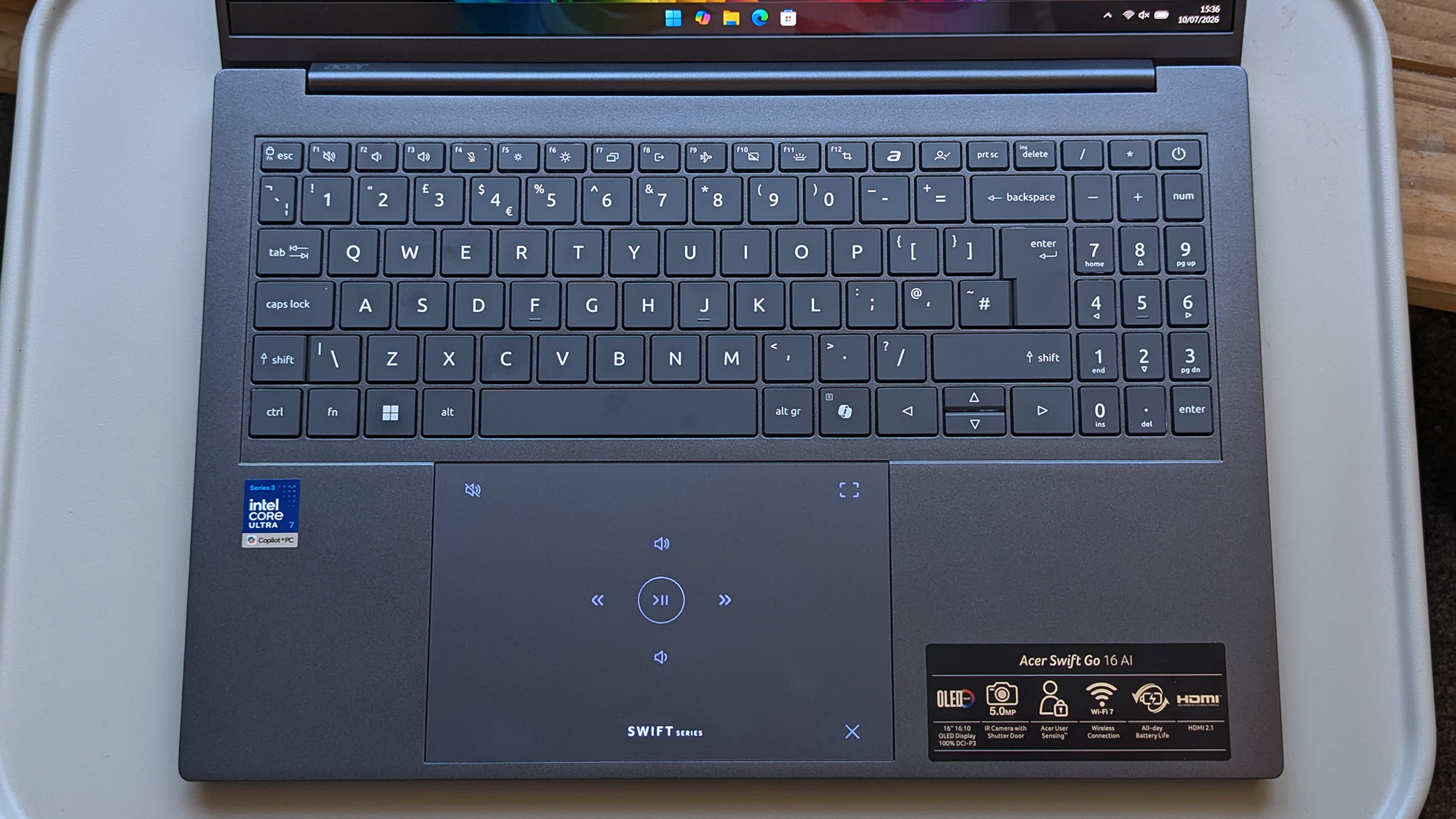
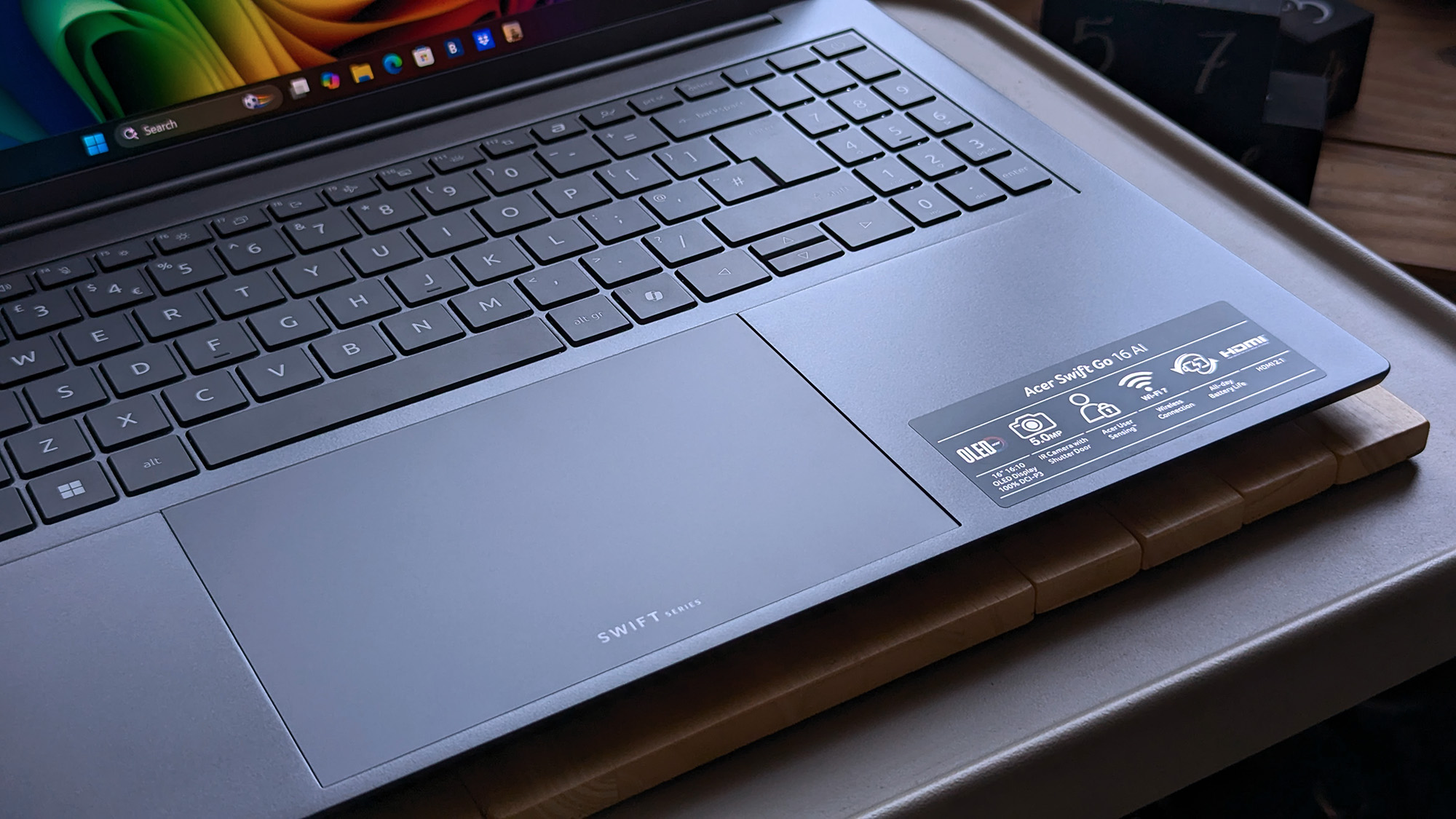
The illuminated 'Swift Series' logo is actually a mode switcher that changes the touchpad to tappable media buttons and video meeting controls when you swipe a finger over it.
So, despite being larger than the 14-inch laptops I'm used to, it's off to a good start as the lid opens with a single finger to reveal a vibrant OLED panel and a backlit keyboard with a number pad. Plus, the 0.68 in (175 cm) mechanical trackpad has a clever quirk in that the illuminated 'Swift Series' logo is actually a mode switcher that changes the touchpad to tappable media buttons and video meeting controls when you swipe a finger over it.
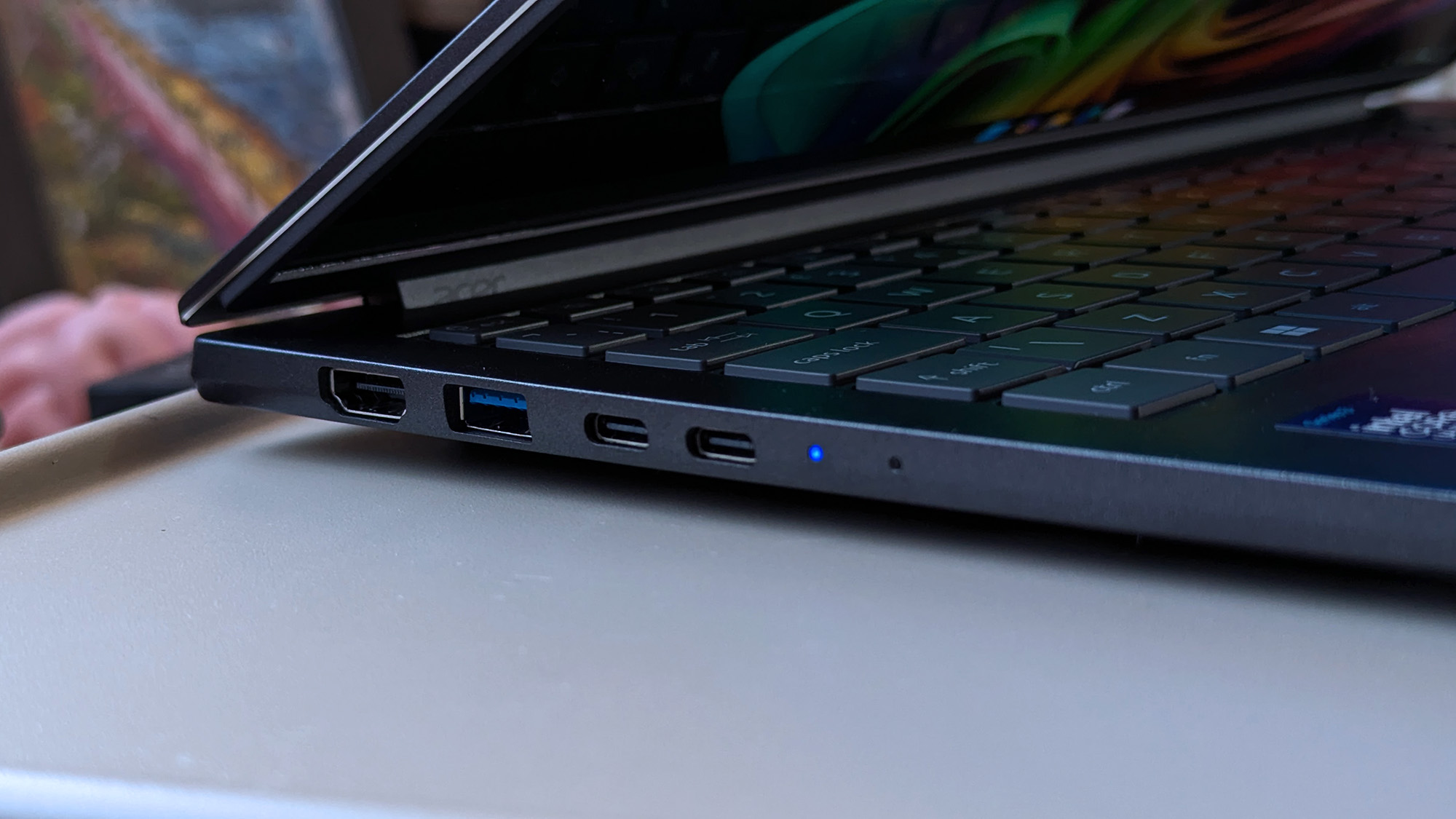
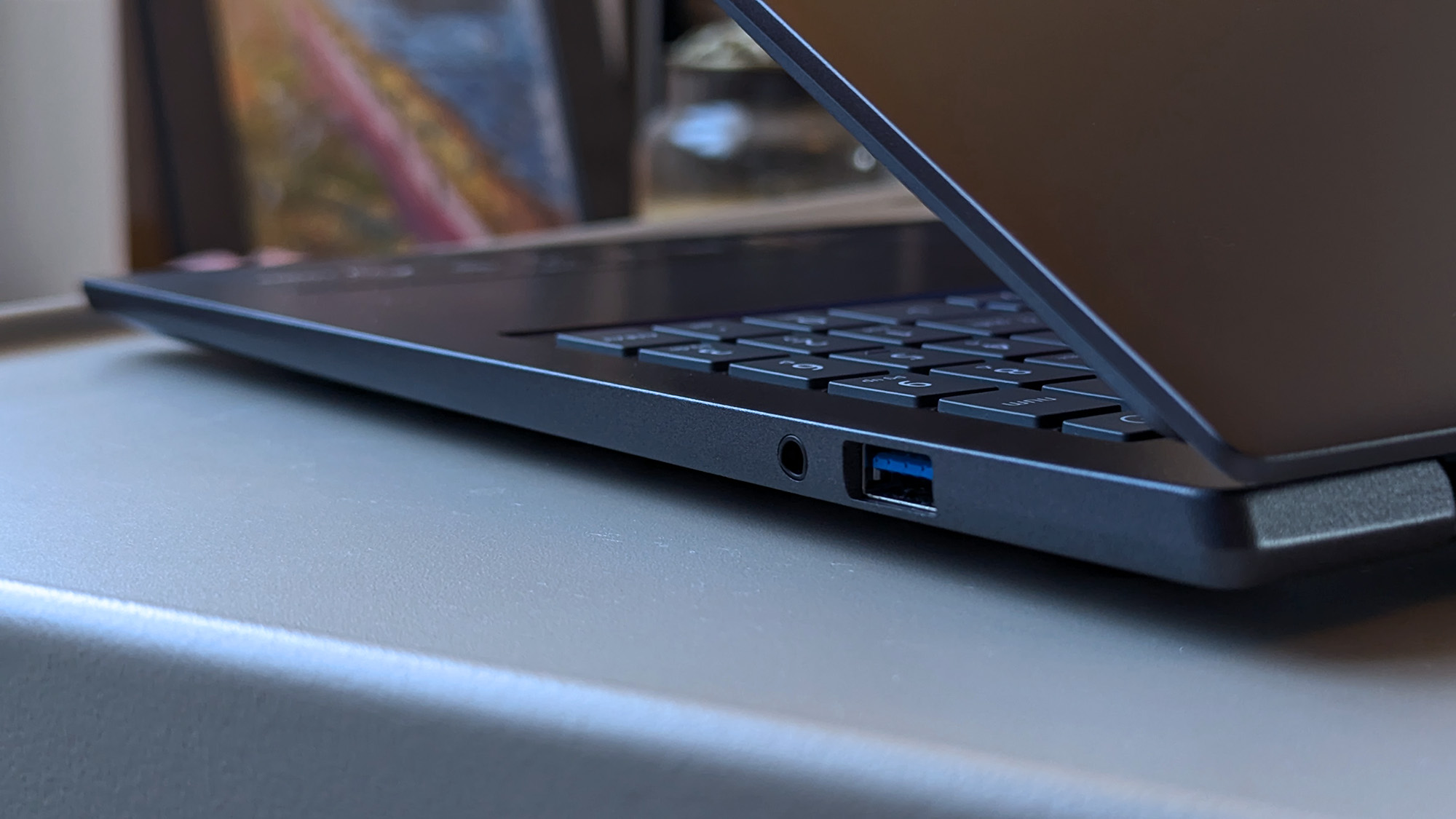
Traditional ports galore; I'm happy to see USB-A in particular for my mouse dongle.Ben Wilson | Windows CentralA physical 3.5 mm audio jack supports wired headphones, and I'd strongly recommend using it.Ben Wilson | Windows Central
It's entirely optional, and you can disable the touchpad mode switching in the pre-installed AcerSense companion app if you want to, along with the specific logo backlight. There's a key beside F12 dedicated to that specific app, and then another, configurable 'My Key' that can launch just about anything, including apps, Windows commands, or a direct web link to Windows Central. Otherwise, the Copilot key lights up when it detects NPU activity — clever.
The webcam is impressive for a built-in option, with Windows Hello compatibility for facial-recognition logins and Human Presence Detection (HPD) to optionally lock the screen if I walk away or even dim the brightness when I look away. A multi-microphone array pairs well with the camera, making me sound remarkably good in meetings, to the point where I wouldn't bother traveling with a plug-in alternative.
Does the Swift Go 16 AI have any issues?
A disappointing array of pre-installed adds and third-party bloatware junk will need manually removing. (Image credit: Ben Wilson | Windows Central)
My list of downsides is quite short, but it splits into hardware and software gripes for the Swift Go 16 AI. The former is the smallest, as some chassis flex around the keyboard and screen is a byproduct of making such a thin laptop, but the lackluster speaker performance is disappointing for a 16-inch model. Audio isn't terrible, but the slight hint of bass response doesn't hold up to music or cinematic videos.
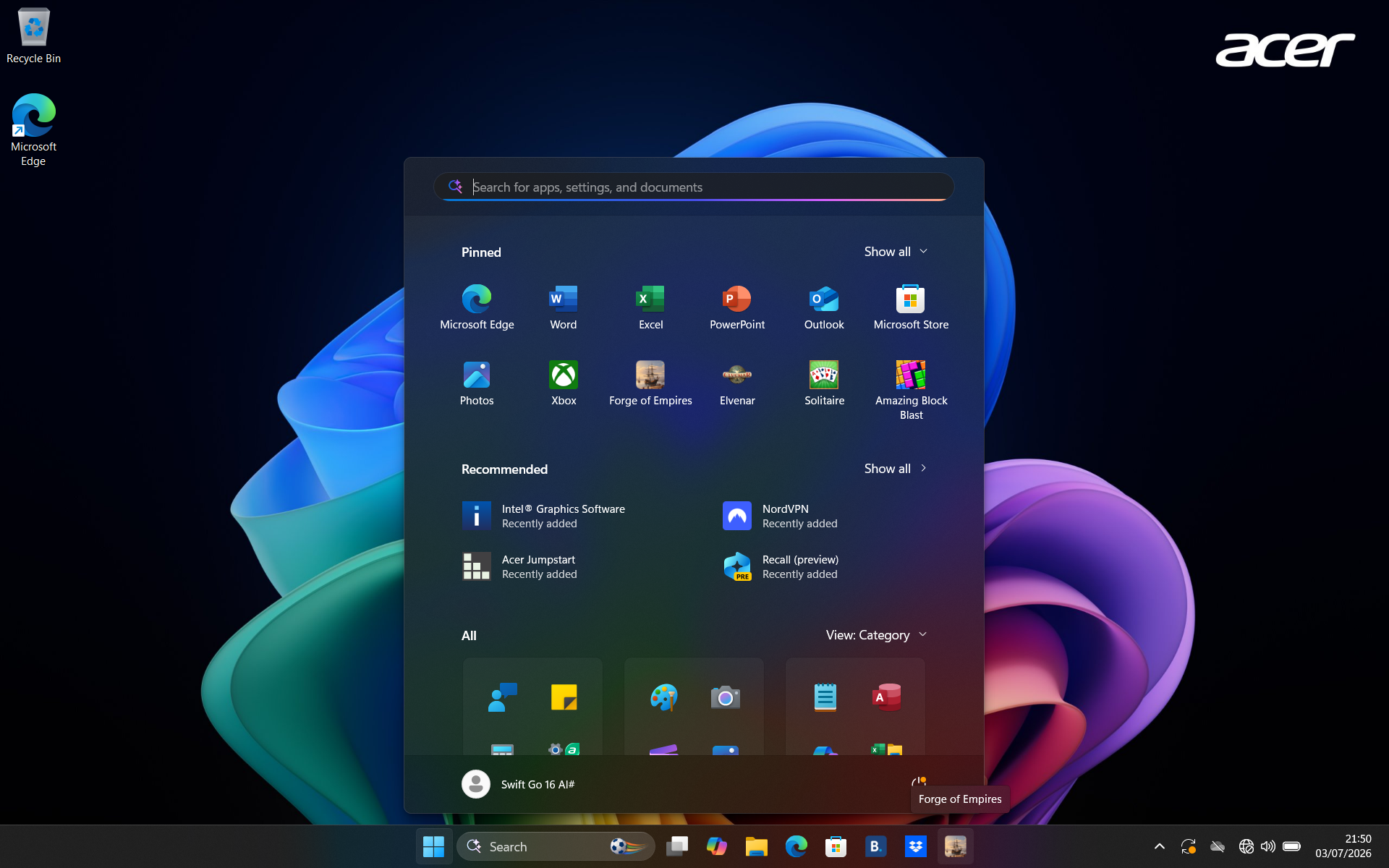
The software experience suffers from heavy bloatware — advertisements are pinned to the taskbar while the Start menu includes more.
For the latter, the software experience suffers from heavy bloatware. Advertisements for Booking.com, Dropbox, and a mobile game, Forge of Empires, are all pinned to the taskbar upon first boot, while the Start menu includes more games like Elvenar, a third-party Solitaire, Amazing Block Blast, Google Play Games beta, and McAfee. I'd recommend uninstalling it all, leaving only Acer's self-made apps.
Finally, the touchpad exhibits a subtle delay in cursor movement, which feels stranger the more I use it. While it won't be obvious to everyone, I noticed this "mouse lag" from the start, and switching from my Surface Laptop Go 2 to the Swift Go 16 AI makes it even more apparent. It's not the end of the world, but it's enough to deter me from making this my primary laptop. Again, its impact will vary between users, but it's worth highlighting.
How fast is the Swift Go 16 AI?
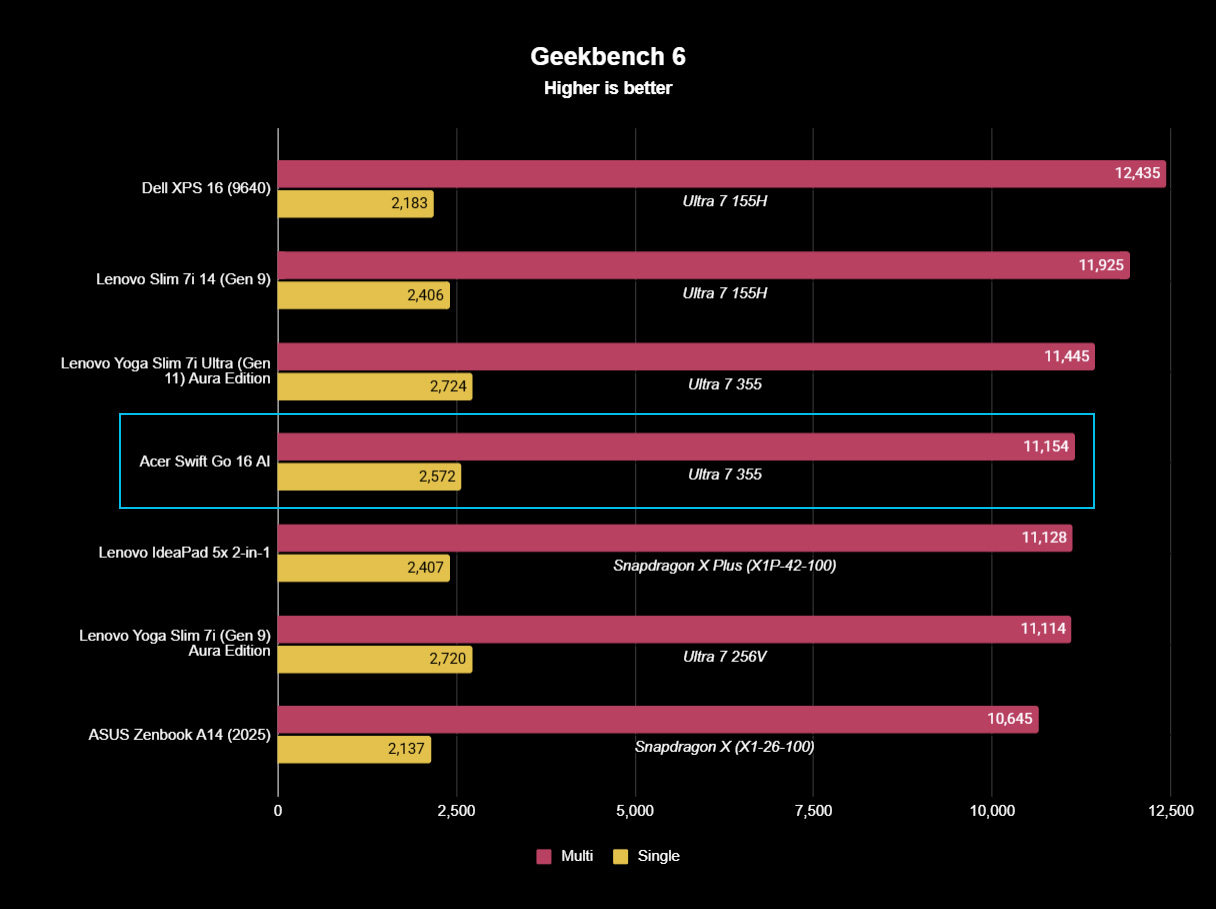
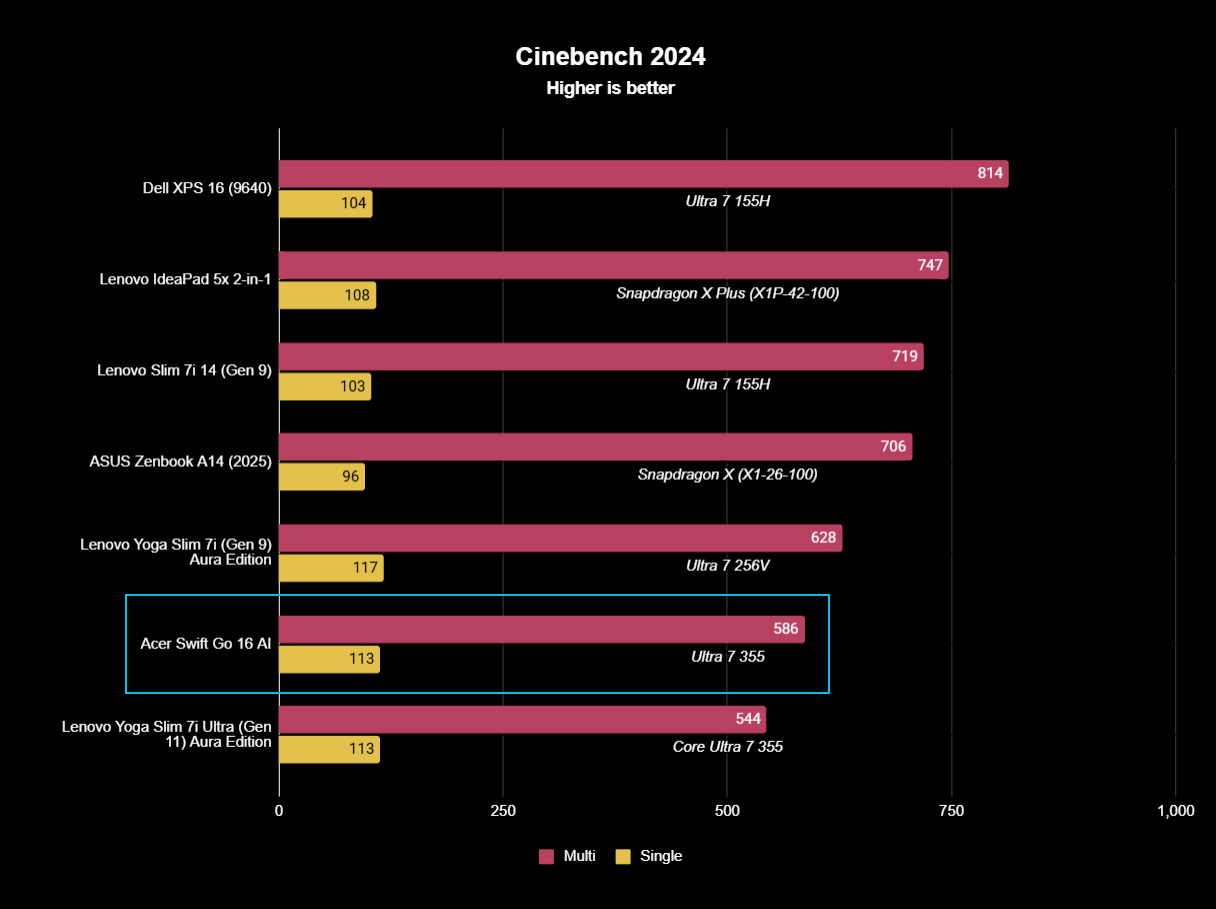
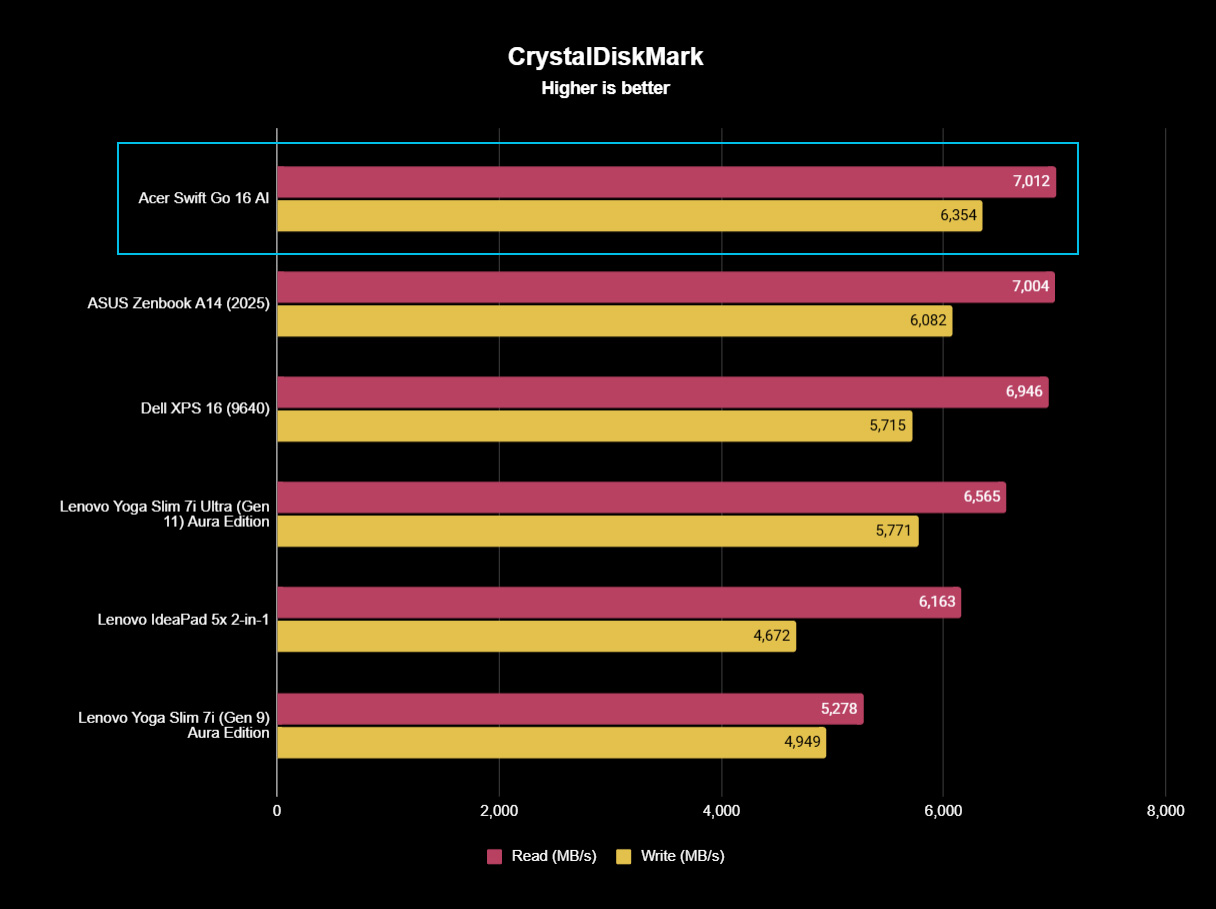
Panther Lake does offer high-performance "H" CPUs, but the standard Ultra 7 355 is still strong.Ben Wilson | Windows CentralUnder extended CPU stress, others move ahead, but the Ultra 7 355 performs well enough.Ben Wilson | Windows CentralAcer is generous with a particularly speedy SSD in the Swift Go 16 AI. Great storage.Ben Wilson | Windows Central
Cinebench results show Acer moves slightly ahead of Lenovo in extended multi-core stress testing, presumably owing to its larger chassis and more substantial CPU cooling solution. The opposite is true in burst performance benchmarks in Geekbench 6, but the single- and multi-core scores are within a comparable window.
If you buy the Swift Go 16 AI, you'll get a capable laptop that boots quickly and performs well.
It's a decent effort, and it places where it should. On top of that, Acer includes an NVMe PCIe 4.0 solid-state drive that hits over 7,000 MB/s read speeds, putting it firmly in my self-appointed "fast" category that helps simplify the numbers for anyone who doesn't care to know about SSD speeds. If you buy the Swift Go 16 AI, you'll get a capable laptop that boots quickly and performs well.
Battery life
The 71 Whr battery in the Swift Go AI (detected as 71,031 mWh) delivers what I would call "all-day" performance, even if it slightly underperformed compared to my expectations for another Intel Panther Lake-based laptop. PCMark 10 tests repeatedly failed, so generating a battery report in Windows 11 was my best indicator, showing estimates ranging from 8 to 14 hours on a full charge.
I kept the display at around 82% brightness as I worked on the Swift Go 16 AI, a value that targeted 250 nits based on my colorimeter tests. The OLED panel maxed out at 300 nits and achieved 100% sRGB color accuracy, plus 100% of the P3 and 91% of the Adobe RGB gamuts. So, the Swift Go 16 AI has a beautifully color-accurate panel, but not an especially bright screen.
Should you buy the Swift Go 16 AI?
It might look plain at a glance, but this Acer offering is actually quite impressive under the hood, despite some minor gripes. (Image credit: Ben Wilson | Windows Central)
You should buy this if ...
✅ You want an affordable but modern OLED laptop
✅ You're a hybrid worker with regular video meetings
You should not buy this if ...
❌ You're looking for a dedicated content creation or gaming PC
Acer offers a great range of modern features in the Swift Go 16 AI, including one of Intel's latest Core Ultra Series 3 processors with fantastic power efficiency, 32GB of plentiful RAM, a vibrant OLED display, and a great webcam with presence detection. That alone makes it an attractive option, but extras like its huge, quirky touchpad also help offset its downsides.
There are strong competitors in the current Windows laptop landscape, but Acer has pleasantly surprised me with what otherwise seemed like yet another AI-centric Copilot+ PC. You get a fast CPU, fast RAM, fast storage, and even fast Wi-Fi 7 — extremely capable components inside an otherwise pedestrian chassis. It's already tempting, but future discounts will make this one irresistible.
Acer
Swift Go 16 AI
It's better suited for indoor work than for outdoor use, but ultimately, it's a quality laptop with strong performance for a good price.
Join us on Reddit at r/WindowsCentral to share your insights and discuss our latest news, reviews, and more.
Acer's Nitro 65 arrives at a time when the PC market is undergoing major stress caused by RAM, storage, and other component shortages.
Nevertheless, the Nitro 65's pricing remains reasonable, its performance is spot on, the case is far better than I expected, and it uses (mostly) regular parts that you can upgrade or replace yourself without much effort.
I've been using the PC for a couple of weeks, and while it's mainly been a positive experience, there are a couple of quirks that you need to know about before buying.
Acer sent Windows Central a review unit on loan for testing. It had no input, nor saw the contents of this review, prior to publication.
How much does the Acer Nitro 65 cost?
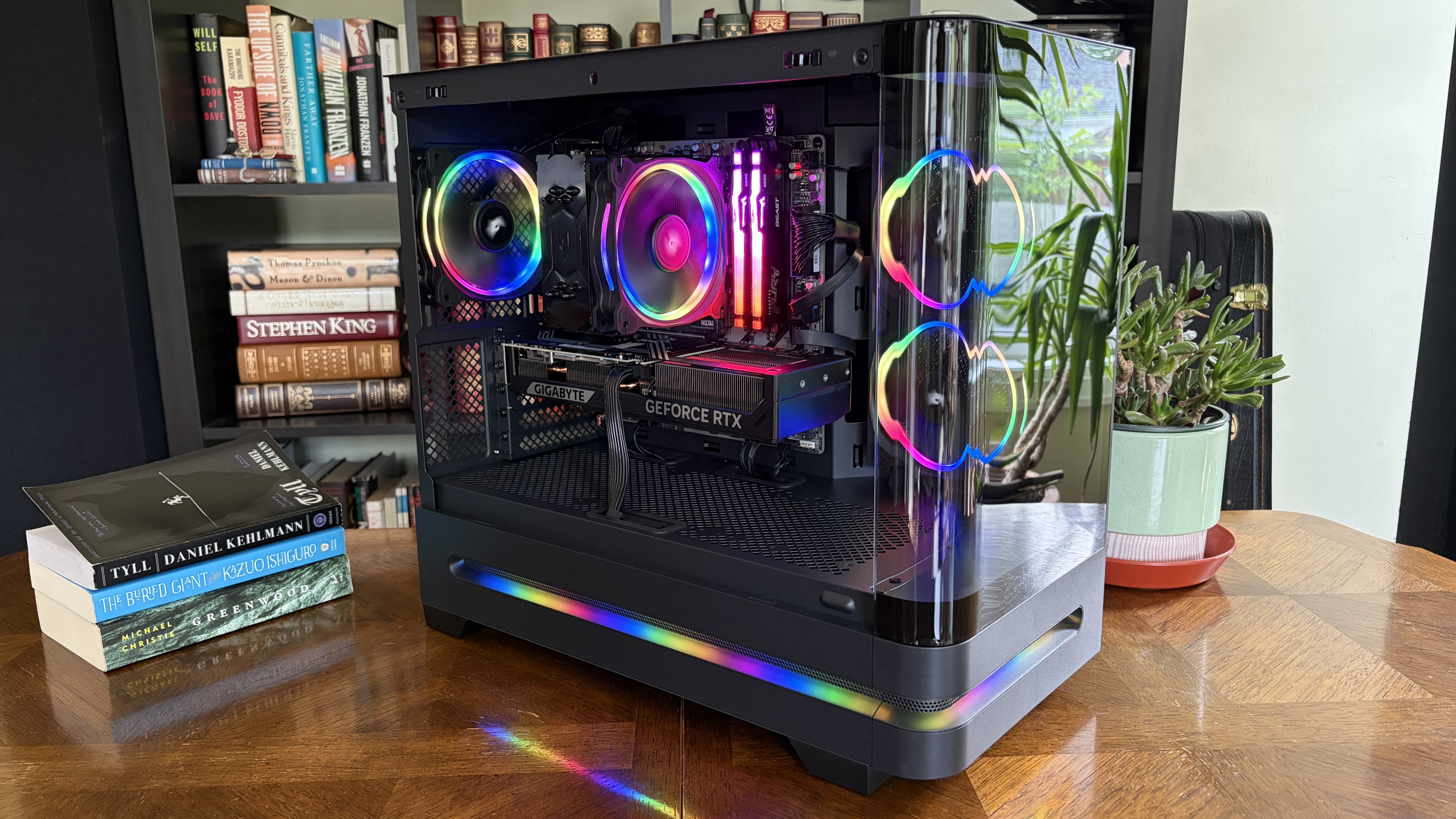
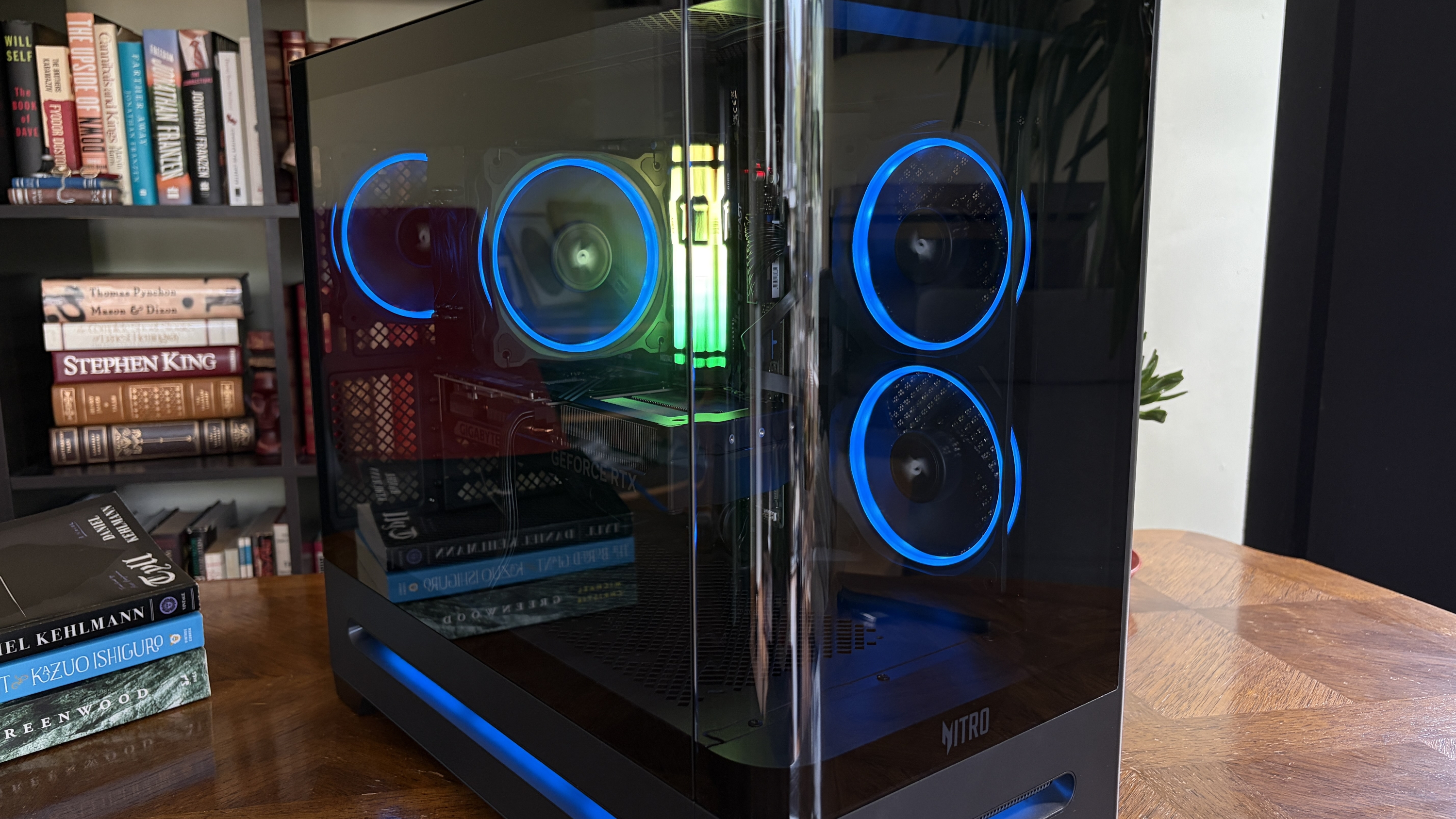
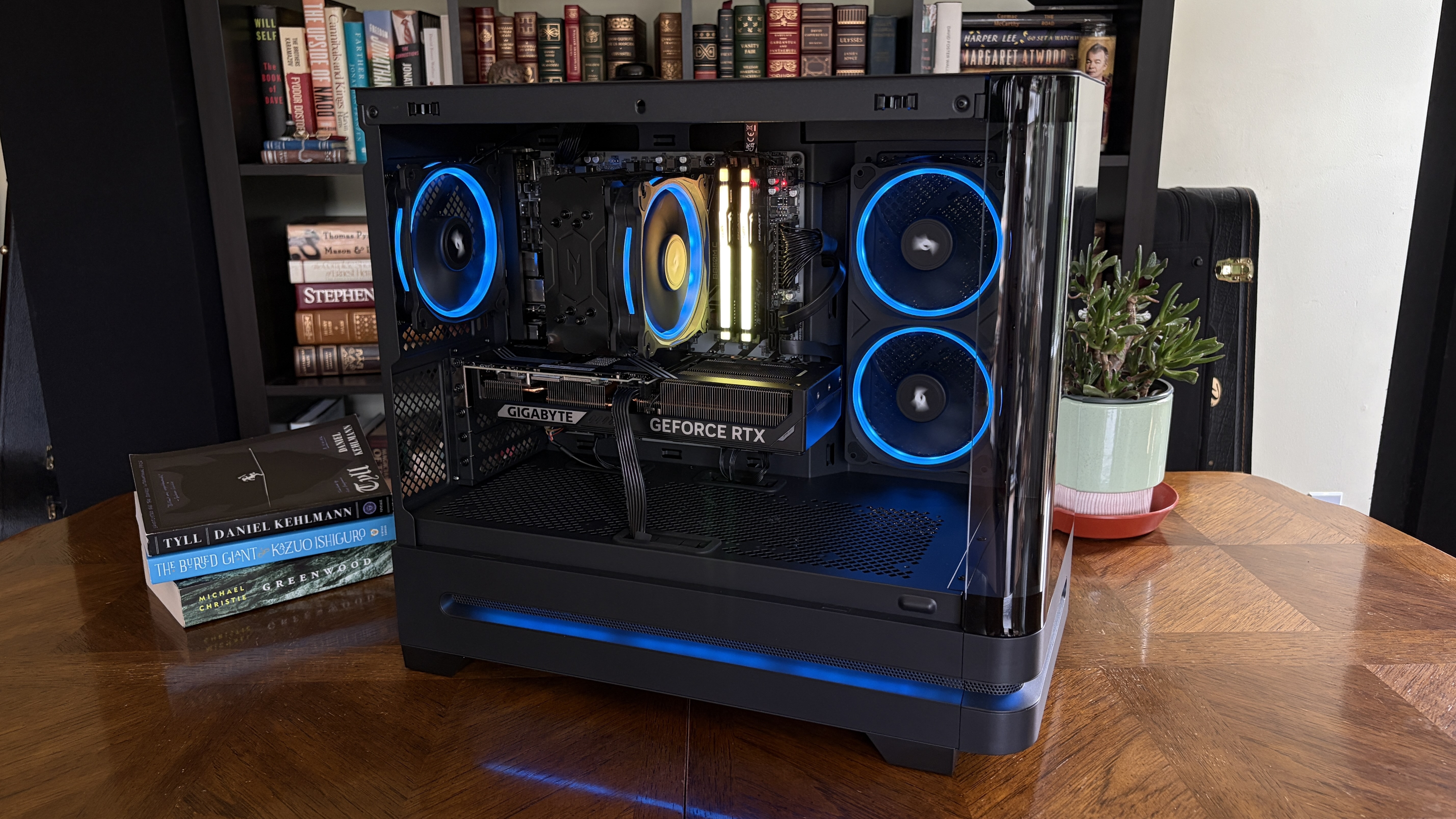
The Nitro 65's curved case is a definite perk for this build. (Image credit: Future)
The Acer Nitro 65 model I'm reviewing, with Ryzen 9 9900X CPU, RTX 5070 GPU, 32GB of RAM, and 1TB SSD, costs $2,304.99 regularly at Best Buy, although it seems to enjoy frequent sales that drop it closer to $2,100 or less.
I'm always curious to see how that compares to building your own system, so I went ahead and put something together using the same (or as similar as possible) components.
You're looking at a similar cost compared to building your own system.
I used a $150HYTE X50 case (because it's awesome), a $120 motherboard, and left about $200 to $300 for a 1TB SSD. That comes out to $350 to $450 on top of the $1,611 cost at PCPartPicker. Add some RGB case fans and other small accessories, and you're looking at a similar cost compared to building your own system.
If you like the look of the PC but don't need quite as much performance, models with an AMD Ryzen 7 8700F CPU and either an NVIDIA RTX 5060 or an AMD Radeon 9060 XTrange from $1,100 to $1,600, depending on available discounts.
Here's a closer look at the specs in the unit I'm reviewing.
Acer Nitro 65
CPU
AMD Ryzen 9 9900X
GPU
NVIDIA RTX 5070 (12GB, Gigabyte WindForce)
RAM
32GB DDR5 (Kingston Fury Beast)
Storage
1TB M.2 PCIe 4.0 NVMe (Lexar NQ7A1)
Motherboard
Gigabyte B850M C
PSU
850W 80+ Gold (non-modular)
Wireless
Wi-Fi 7, Bluetooth 5.4
Dimensions
18.4 (W) x 9.6 (D) x 17 (H) inches
Warranty
1 year
Is the Acer Nitro 65 built well with good cable management?
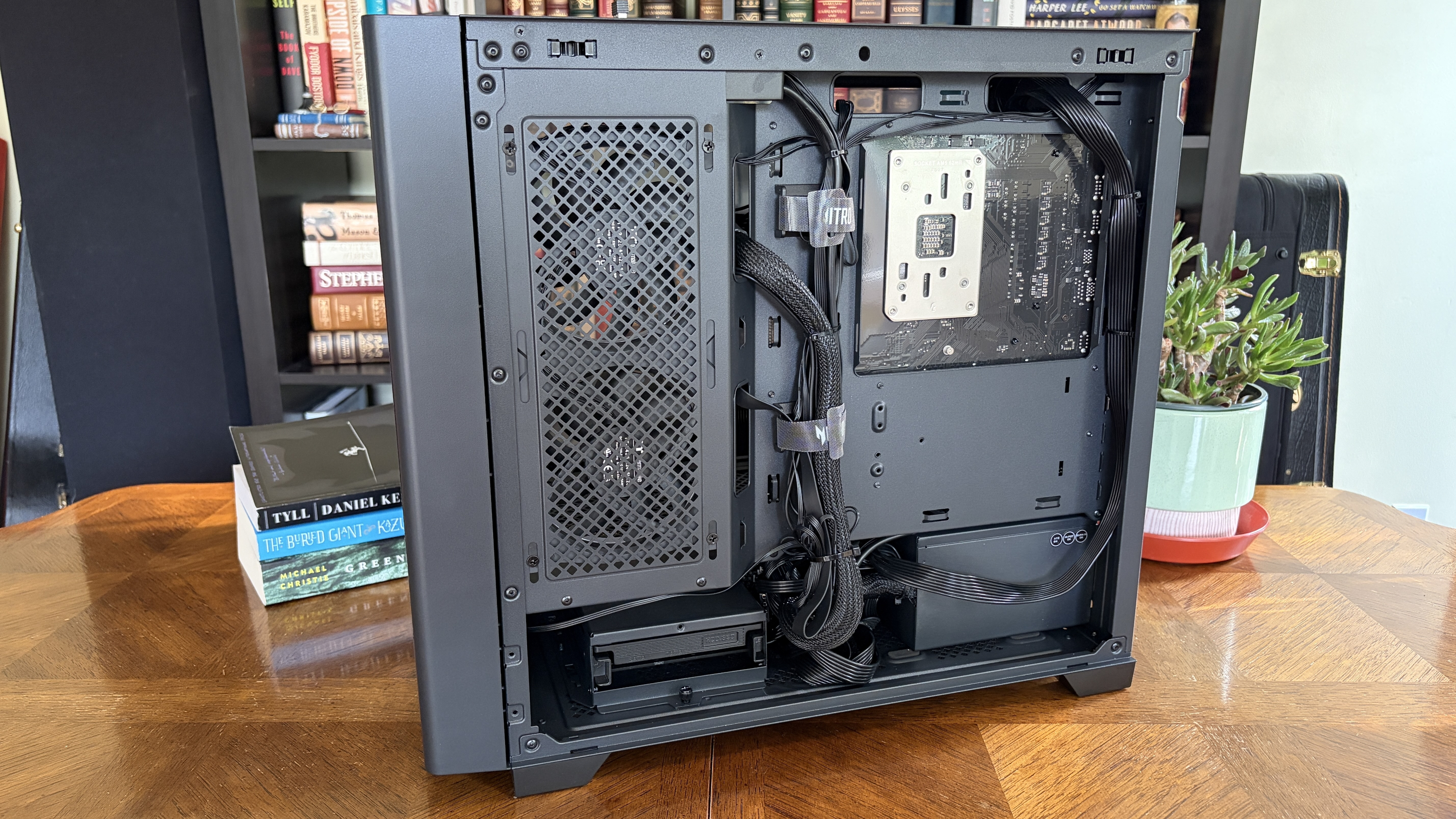
A look at the back of the PC with the panel removed, revealing cable management. (Image credit: Future)
Acer is definitely making money on the Nitro 65, but as I laid out above, the margin isn't as big as some might expect. So, where are the corners being cut to make up the difference?
The first thing that stands out to me is the no-name PSU. It's non-modular, making it harder to upgrade, and it's tough to judge what sort of quality it is.
Acer lists it as 850W 80+ Gold, which just means it's fairly energy efficient and has plenty of power for the installed hardware and for future upgrades. Its actual durability remains questionable. If I were buying this PC, I'd definitely replace the PSU with something else before the one-year warranty ran out.
The other off-brand piece is the Nitro-branded CPU air cooler. But as we'll see, it does a decent job of keeping the 9900X cool under load. If you prefer liquid cooling, the 35L case can easily accommodate the extra hardware.
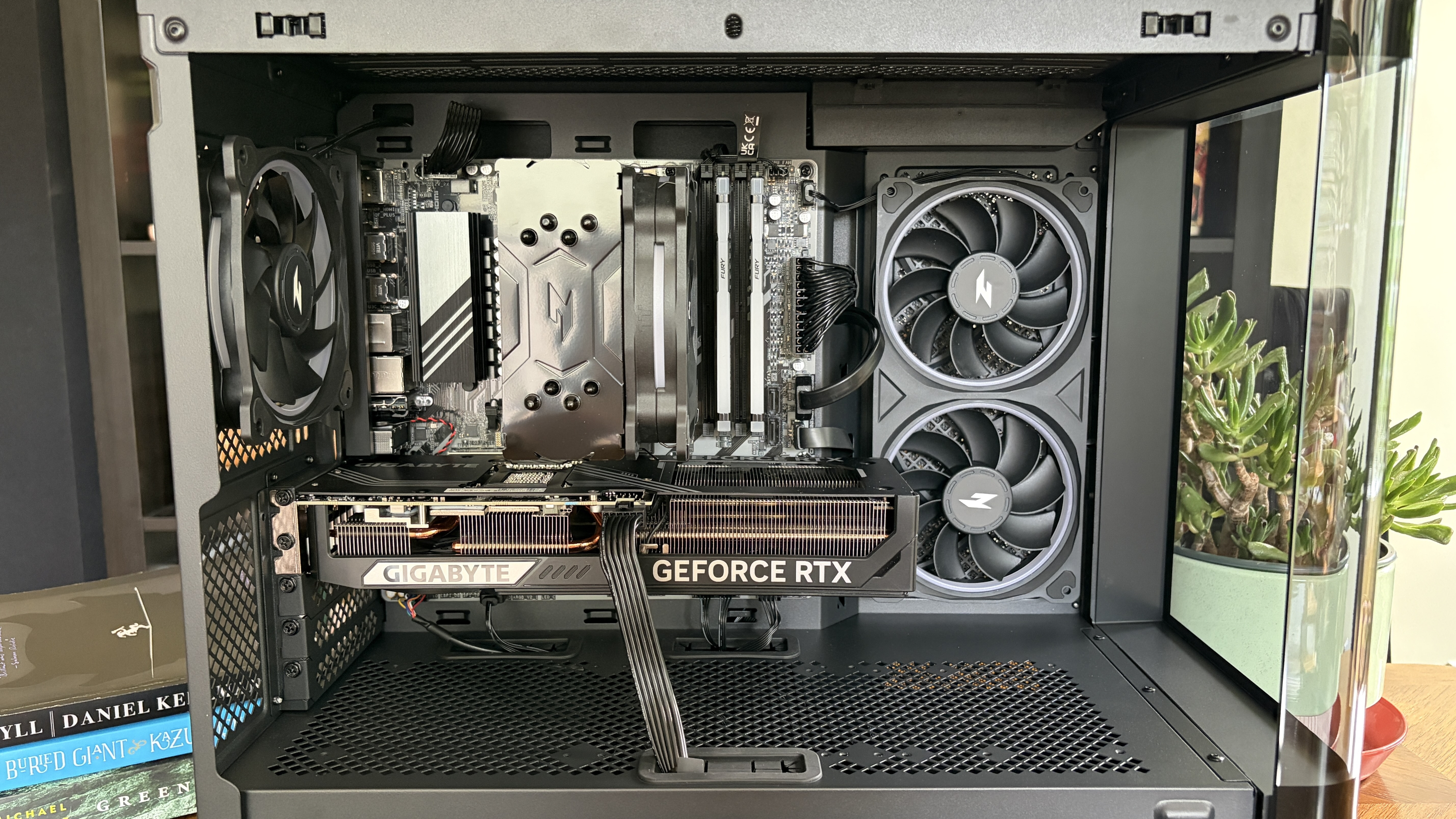
A look at the components inside the Nitro 65. (Image credit: Future)
The good news is that the PC is otherwise well put together and uses standard components that you can buy yourself for upgrades and repairs. No wacky motherboard designs. No off-brand GPUs. No sketchy memory.
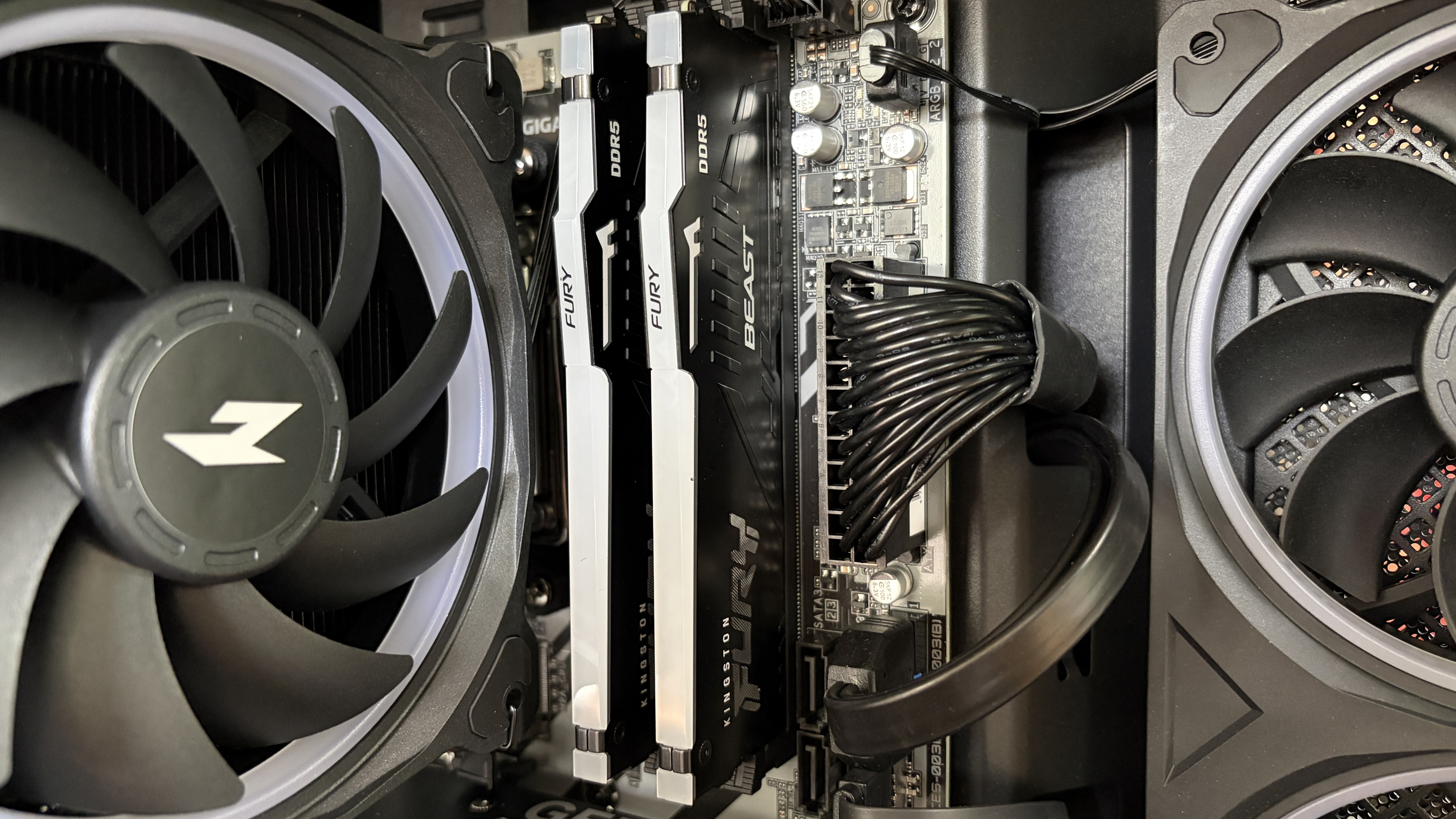
Acer uses Kingston Fury Beast DDR5-6000 RGB RAM here in a dual-channel config, the RTX 5070 is a standard Gigabyte WindForce option, and the M.2 PCIe 4.0 NVMe SSD is from Lexar.
Now, there's no guarantee that these exact same components will be used in your model, but I did run some benchmarks to see how the specific parts in my review unit perform. More on that below.
A case for RGB lovers ... with plenty of snazzy glass
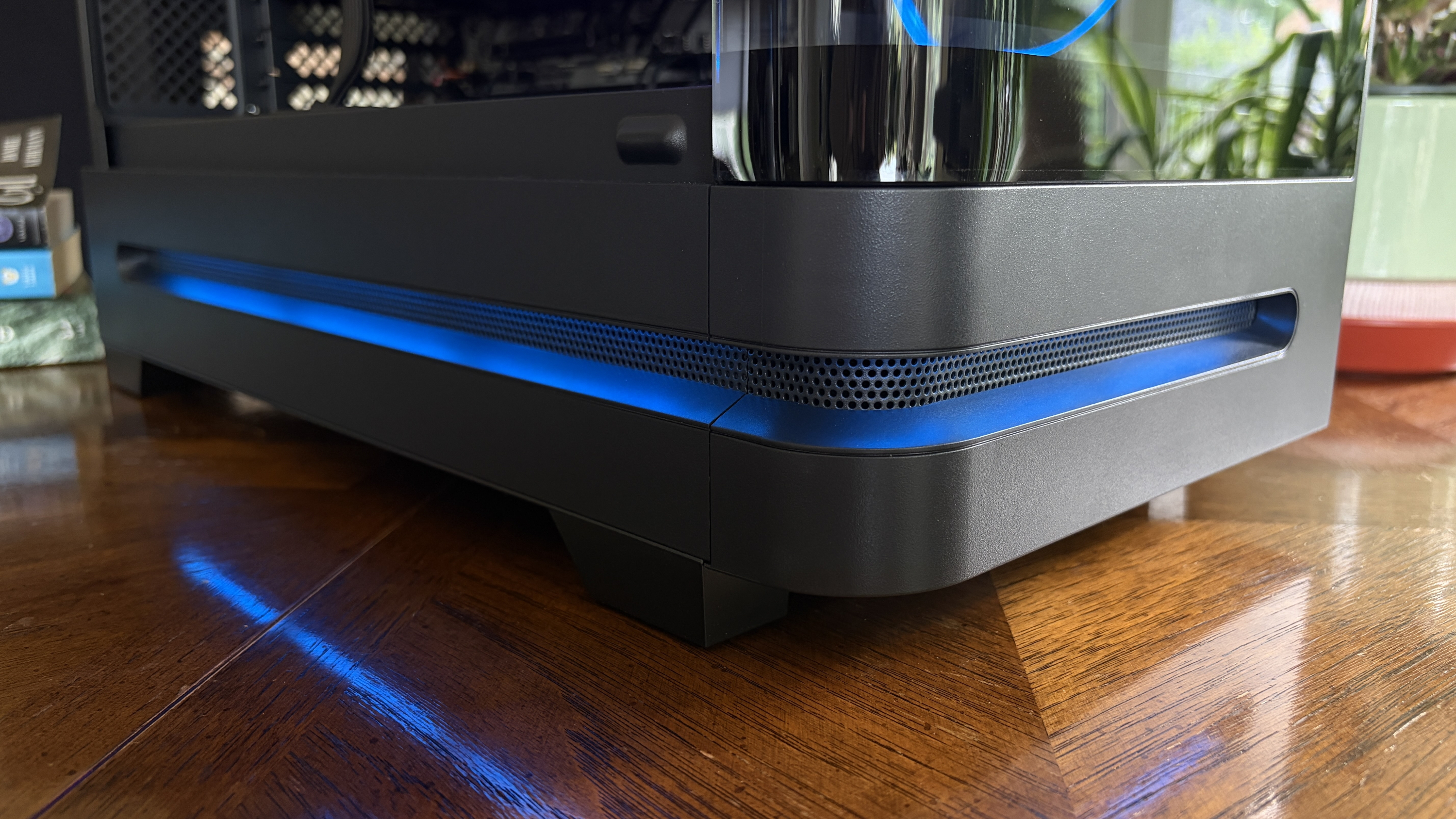
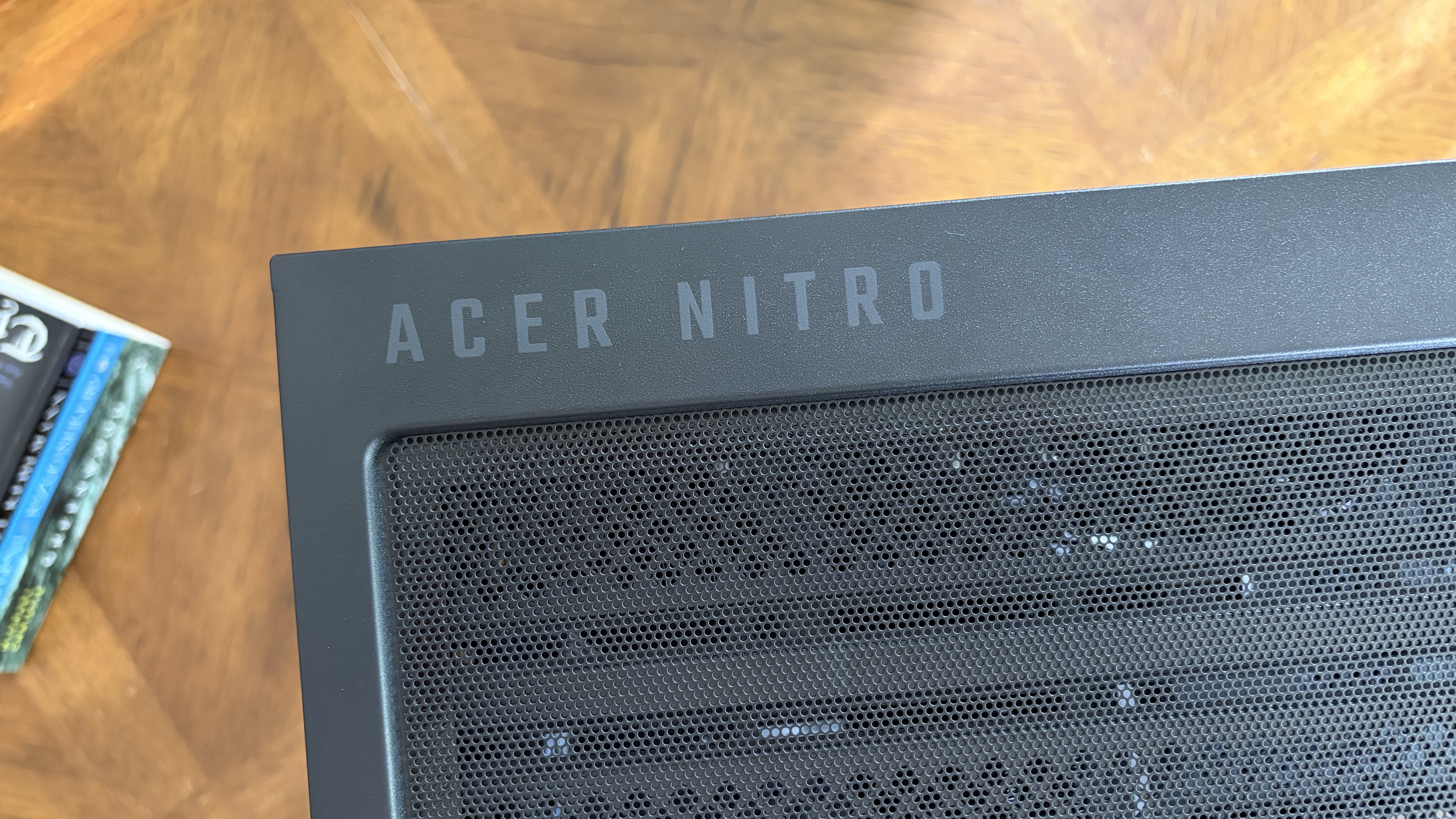
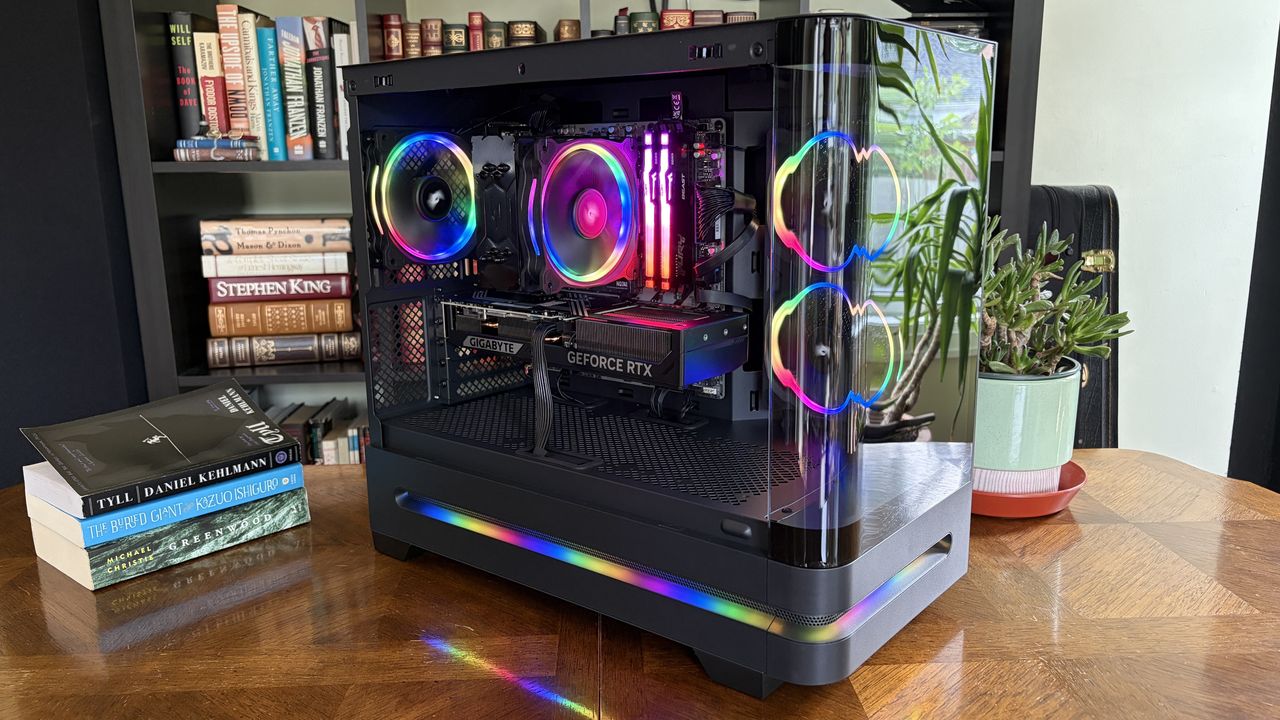
The Nitro 65's rounded glass looks great when the RGB is on.FutureAn RGB strip runs along the outside of the Nitro 65's case.FutureThe Acer Nitro brand name is printed on top of the case.Future
Rounded cases seem to be coming into style lately, and the Nitro 65's custom 35L tower is quite attractive. Tempered glass runs from the front to the back along two sides, rounded at the corners. Just below the glass is an embedded RGB strip that diffuses light. It's completely customizable and syncs up with the rest of the lighting.
The other RGB lives in the two main intake fans, the RAM, the CPU cooler fan, and the single exhaust fan. It's more than enough for me, and I appreciate that it can be turned off entirely if not customized to your liking.
The Nitro 65's custom 35L tower is quite attractive.
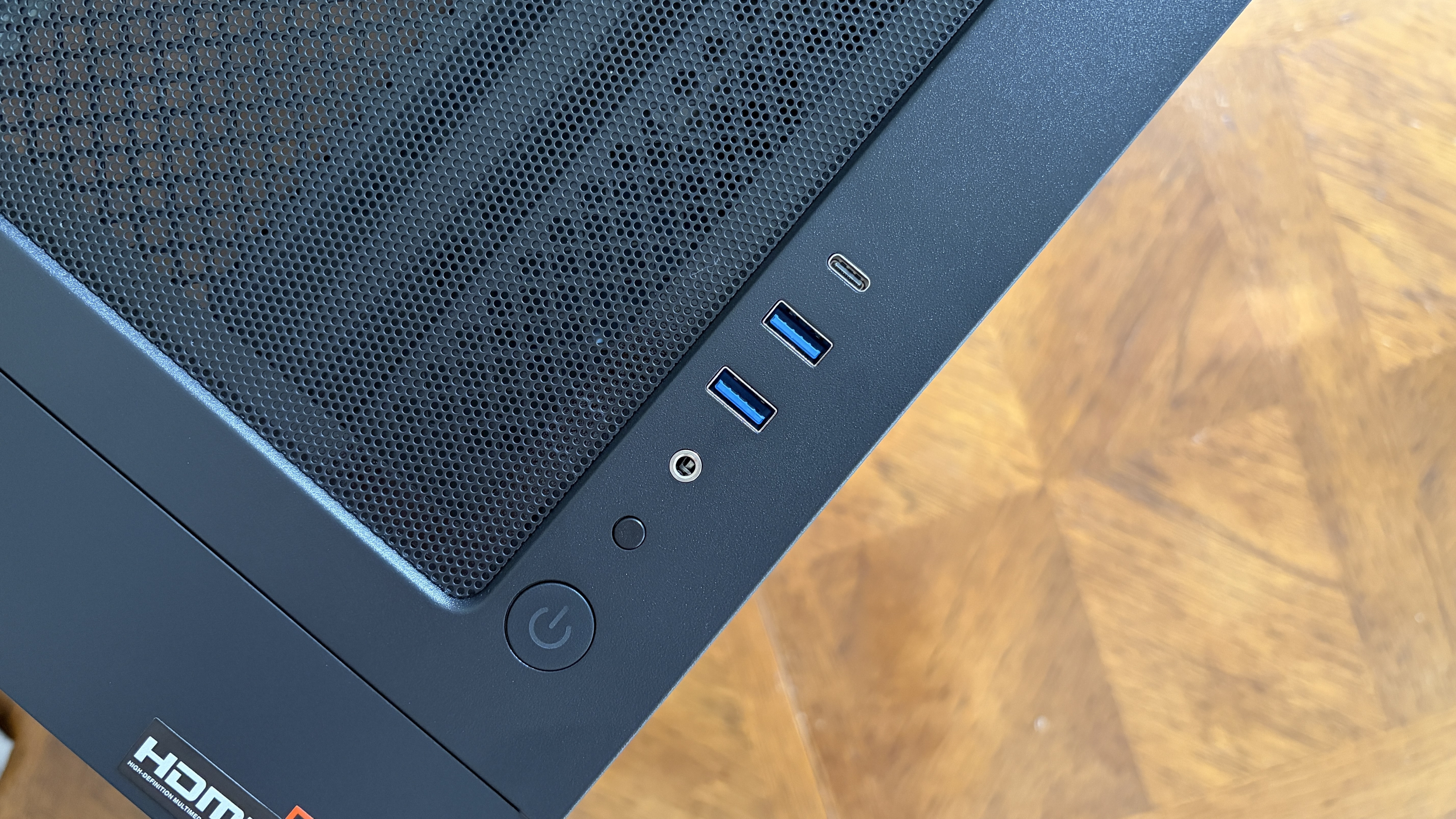
Front I/O includes dual USB-A 3.2 (Gen 1) and a single USB-C 3.2 (Gen 1) port, all running at 5Gbps. There's also a 3.5mm audio jack next to the power button. It would be nice to have 10Gbps ports here, but it's not a dealbreaker. The rear I/O is, like a normal PC, dependent on the motherboard and GPU.
Front I/O could be better. (Image credit: Future)
Something I love is the inclusion of a magnetic dust cover on the top of the PC. It'd come in most handy with an AiO, but I appreciate it here anyway. The side intake fans have a dual-screen setup — one directly behind the fans and another on the back panel — while the PSU has its own dust cover on the bottom.
These small additions help keep dust out of your PC, and because they're removable, they're much easier to clean than something fixed.
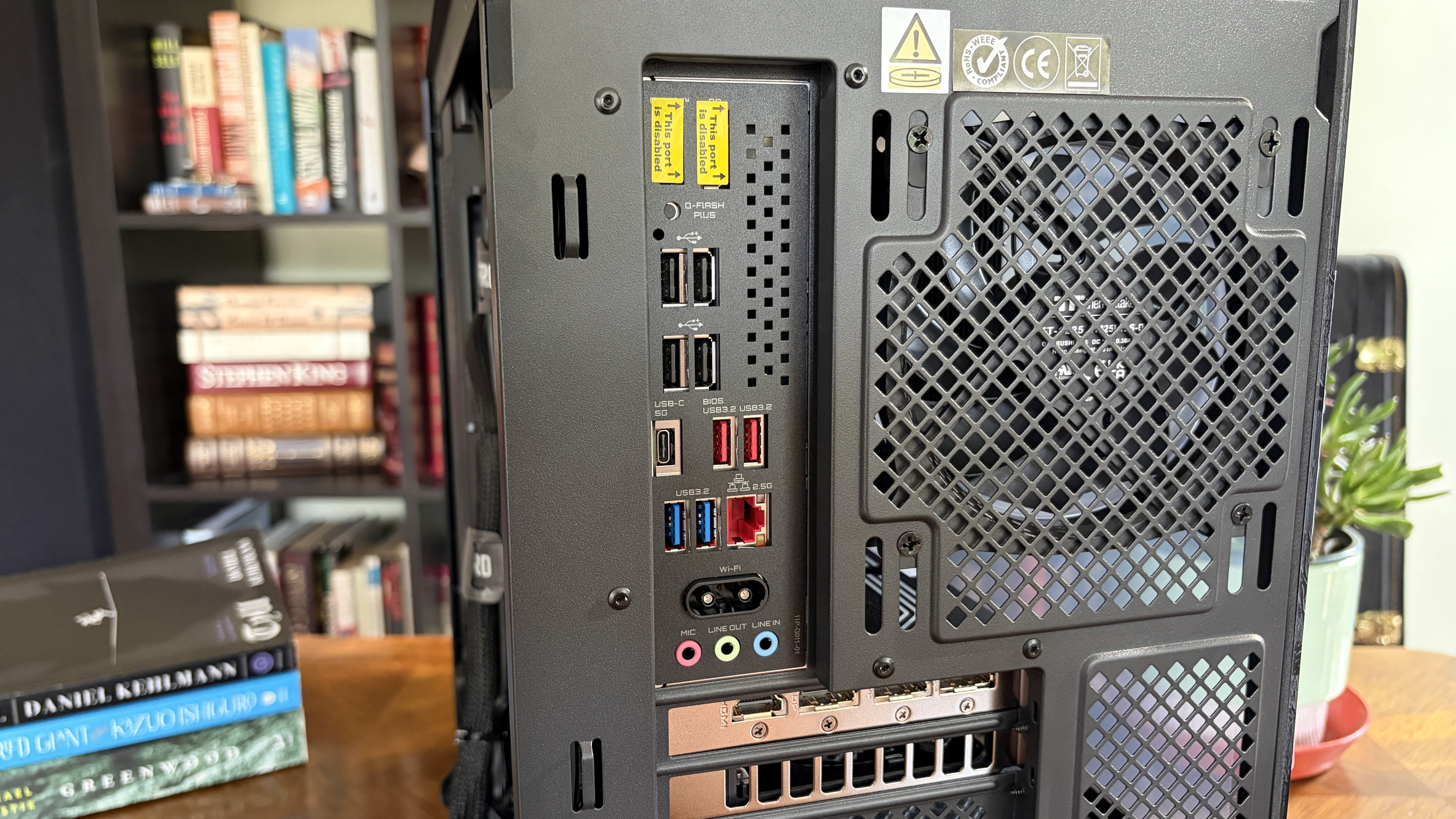
Some pre-built PCs skimp on connectivity, but not here. The Gigabyte motherboard offers Wi-Fi 7 and Bluetooth 5.4 for cutting-edge wireless, and there's a 2.5Gb Ethernet port to handle wired connections.
How is the Nitro 65's cable management and assembly?
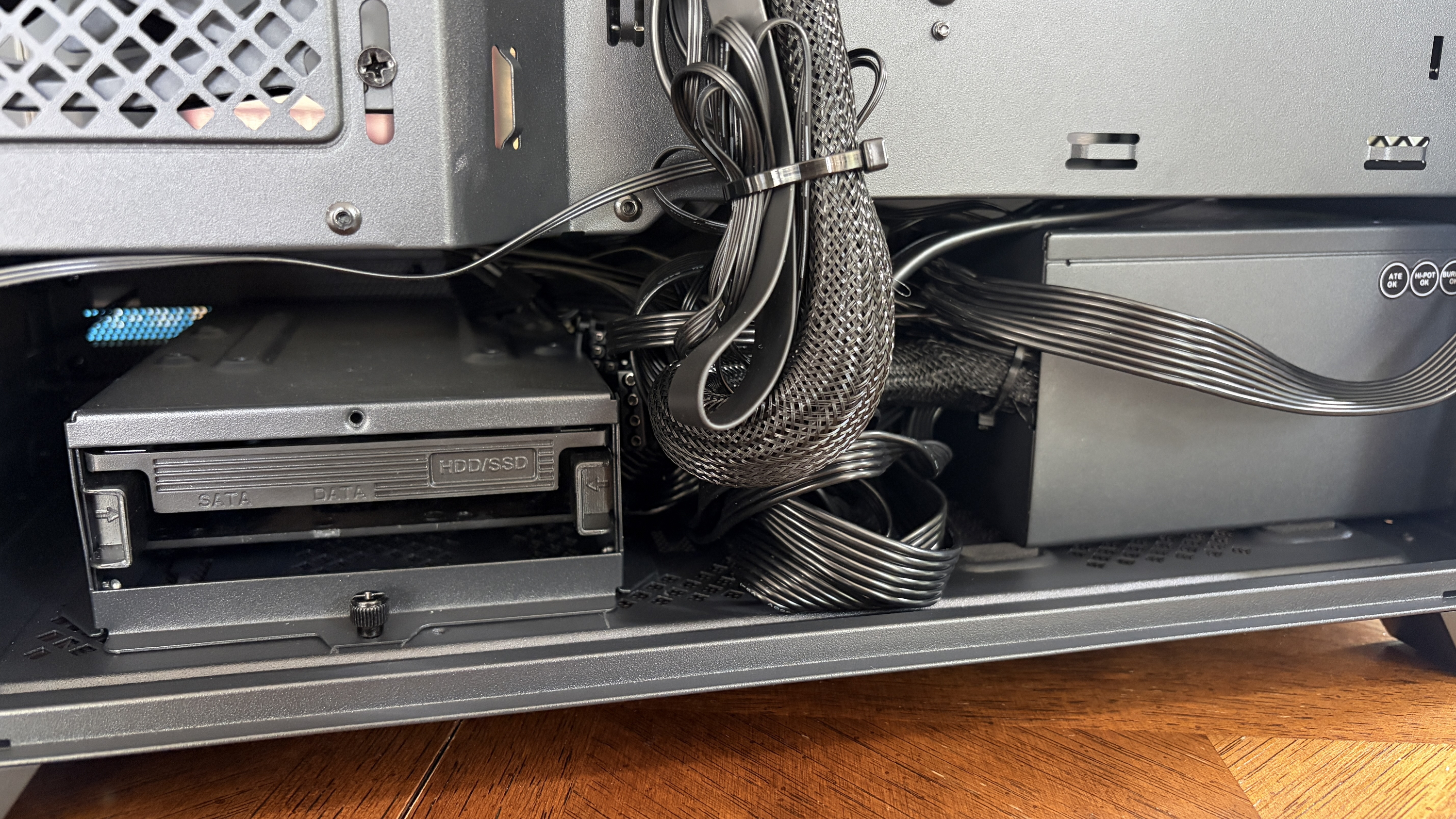
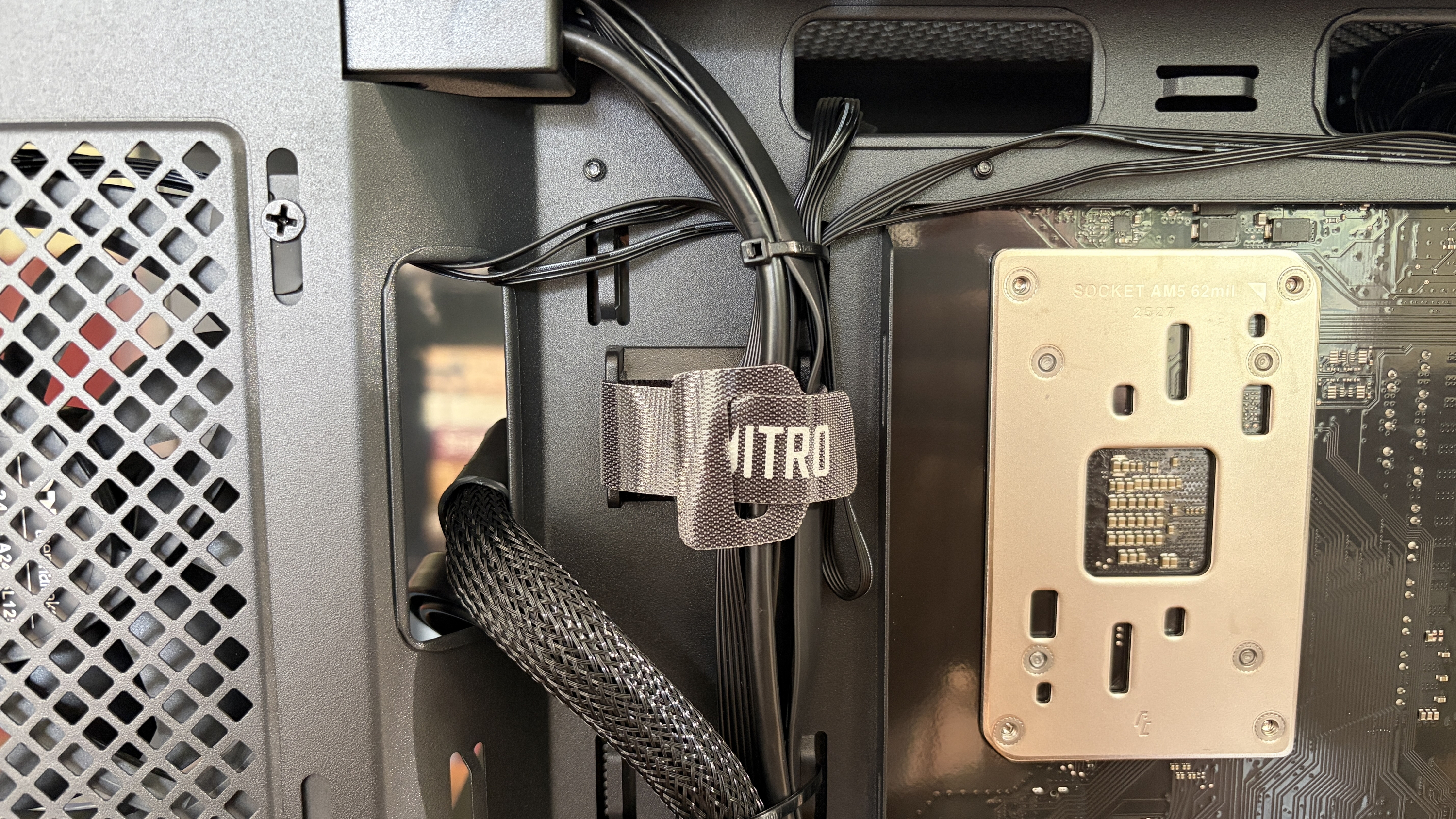
Some cable snarl next to the PSU is evident.FutureTwo Velcro straps are installed, but cables are mostly held by zipties.Future
The Nitro 65 comes packed with expanding foam around the CPU cooler and GPU, with an extra foam insert around the GPU to keep it stable; it otherwise has no additional support.
There are no evident problems with assembly, and because it's packed in so tightly, I made no adjustments before booting the PC for the first time.
Pulling off the back panel reveals rather tidy cable management. Zip ties are used, so you'll likely need to clip and replace those if you decide to make some internal changes, but there are a couple of Velcro strips thrown in around the main channels.
Because the PSU isn't modular, there's some snarl below the internal riser, but it's not visible from the front.
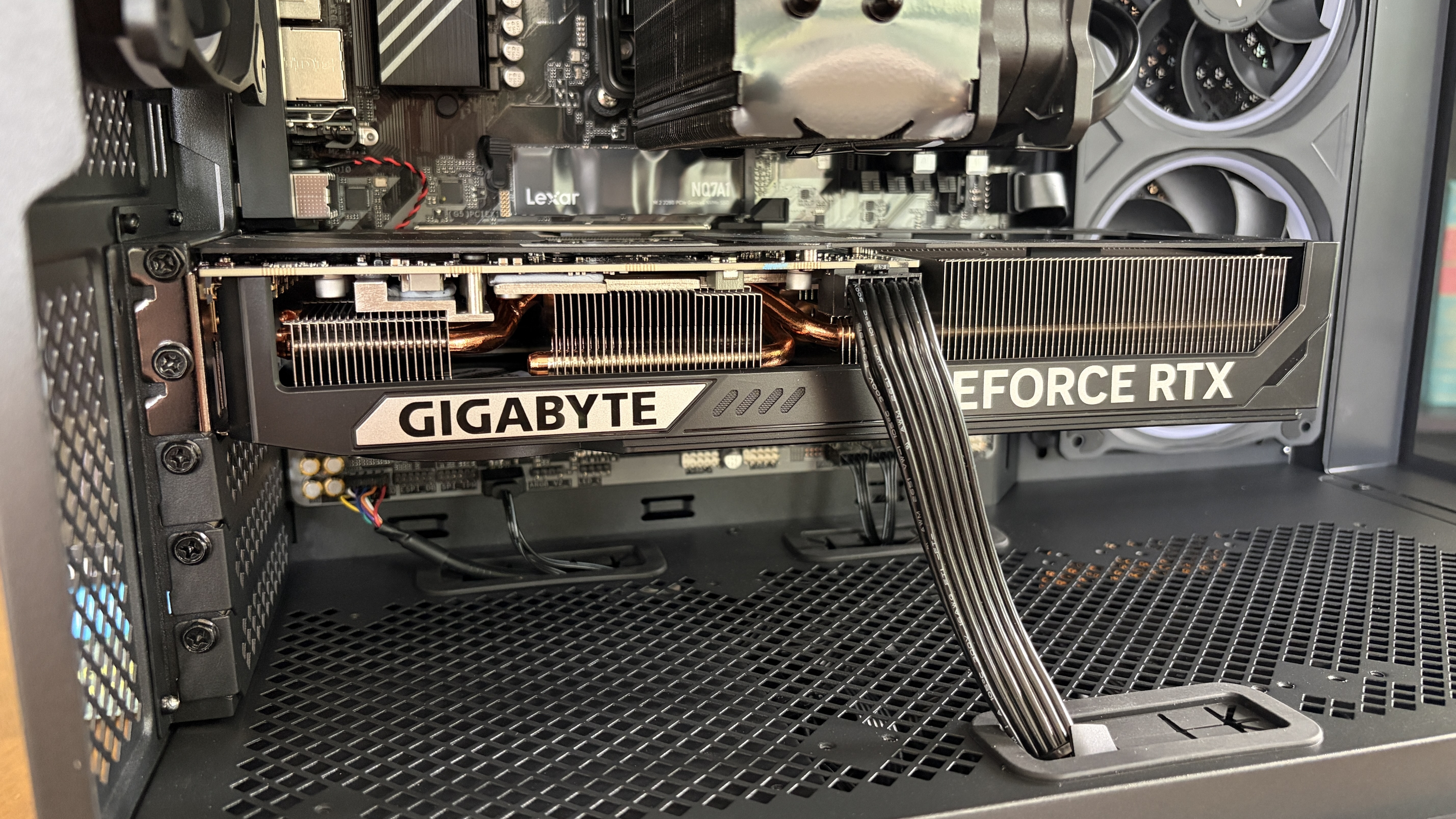
Visible cabling is installed properly and doesn't impede airflow. (Image credit: Future)
As for the visible cabling, it's all properly installed with no extra slack that could block airflow. The GPU power cable has its own exit in the PSU riser, and plenty of cutouts around the motherboard should make for easy upgrades in the future.
Overall, it's a clean look behind the glass, and the cabling that's hidden is actually a lot better than I was expecting.
The Nitro 65 keeps cool under pressure
A look at the rear I/O on the motherboard and GPU. (Image credit: Future)
The Nitro 65 has some solid performance hardware inside, and I'm happy to report it keeps its cool under load. The two intake fans point toward the side of the case, but the rounded front glass helps curve that air toward the back.
I ran a Speed Way stress test on components first with the side glass panel removed. The CPU was able to remain between about 60.8 and 61.6degrees Celsius, while the GPU sat at about 68 to 70degrees. It came out to 99.2% frame stability.
The Nitro 65 has some solid performance hardware inside, and I'm happy to report it keeps its cool under load.
With the glass panel back in place, I reran the same test. CPU temps climbed to roughly 63 to 65 degrees Celsius, while the GPU hit about 70 to 72 degrees. That's an expected rise, and it's not out of the ordinary. Frame stability fell slightly to 98.8%.
One note on the CPU cooler: the single fan gets a bit louder than I'd like when it's under load, but it seems to even off with sustained effort. Still, it'd be better if Acer used an AiO liquid cooler here as the standard.
Does Acer's Nitro 65 perform as expected?
A look at the Kingston Fury DDR5 RAM inside the Nitro 65. (Image credit: Future)
I'm focusing less on performance here since the PC uses standard components. The RTX 5070 and the Ryzen 9 9900X perform just like they should.
Here are some benchmarks so you can see how the hardware compares to other stuff we've recently tested.
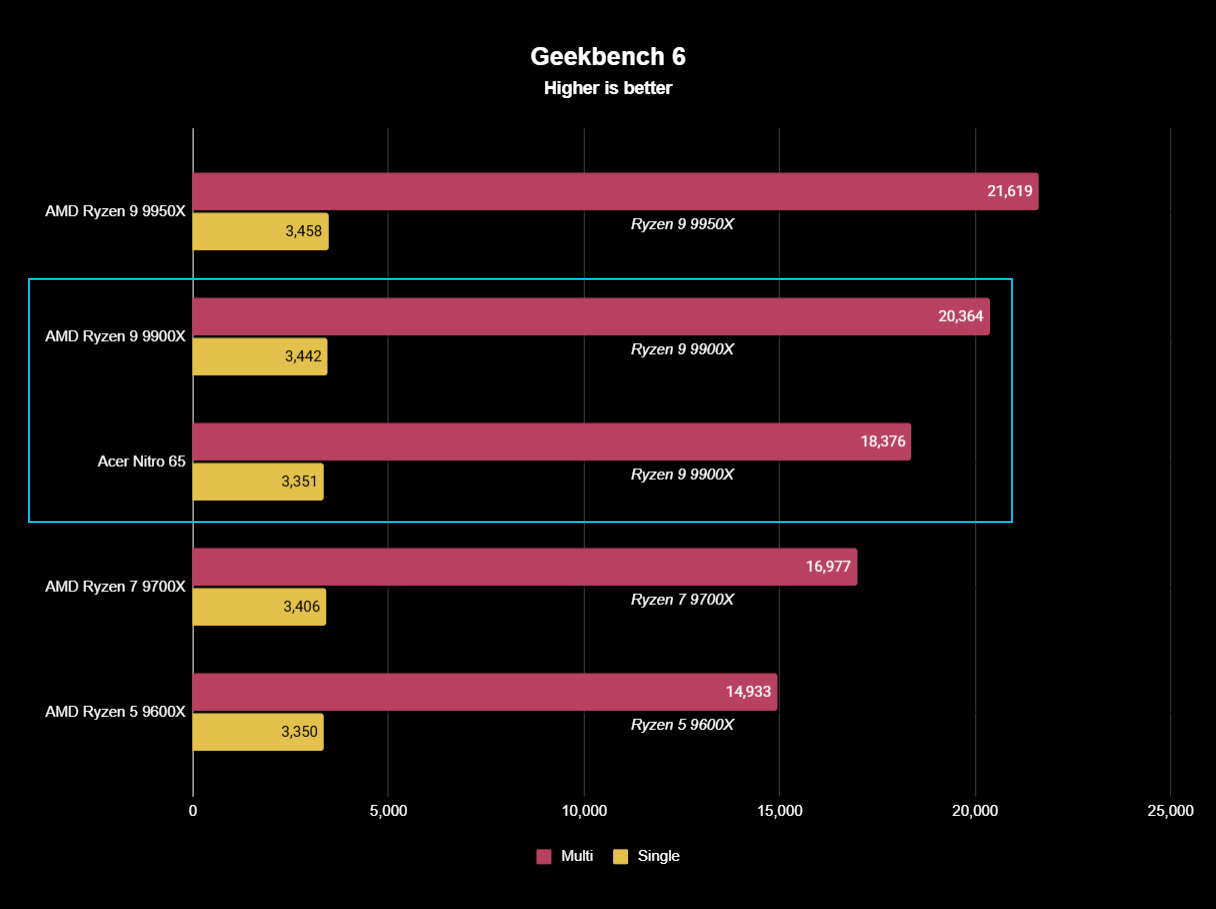
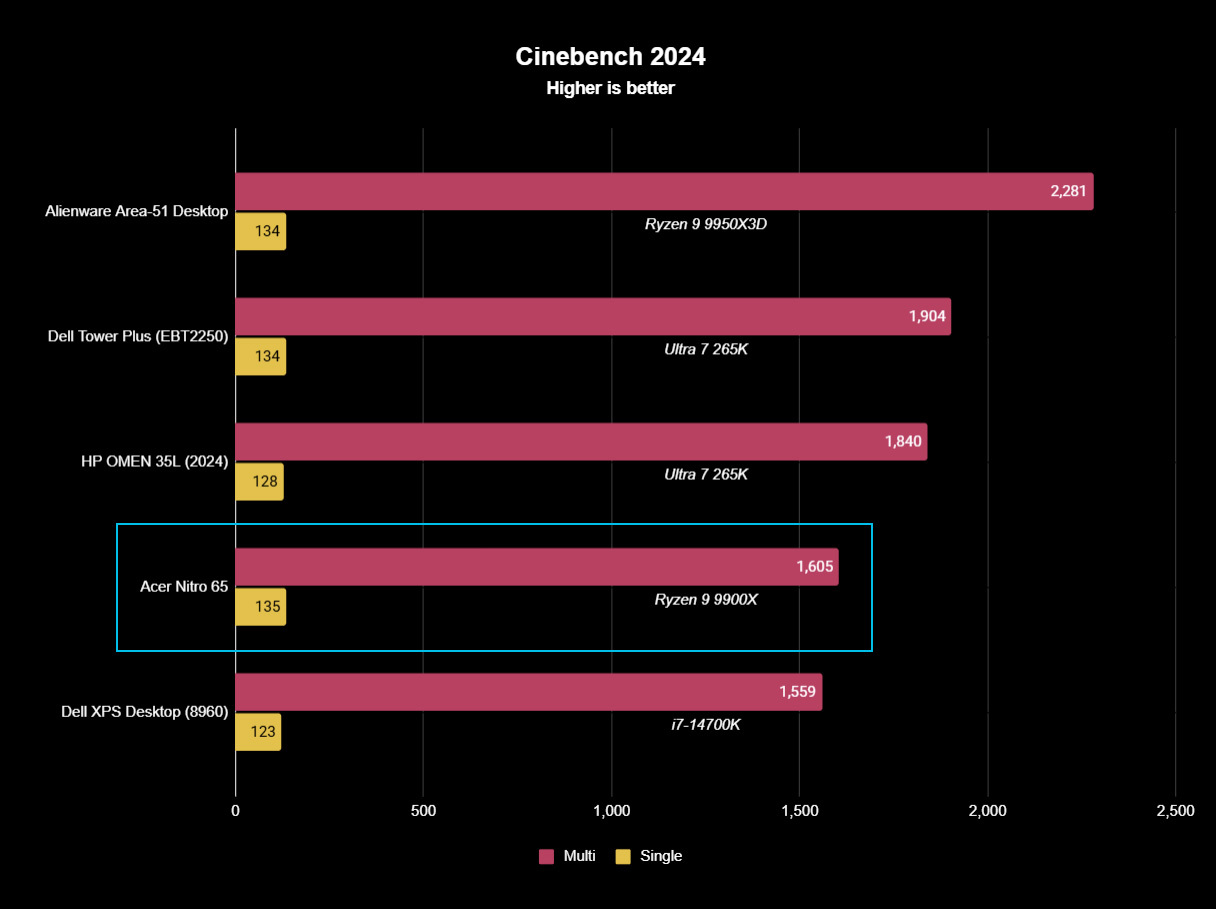
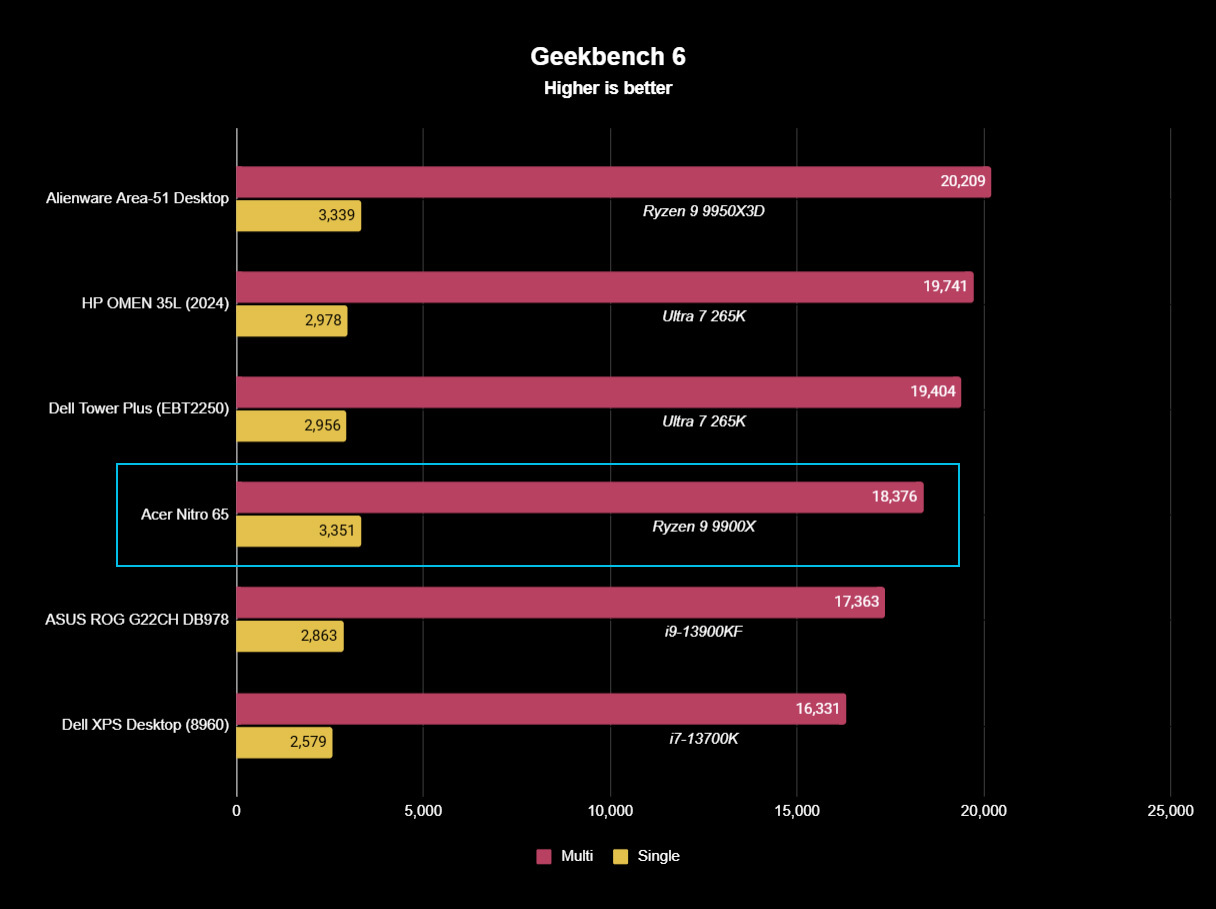
Note that I've included two Ryzen 9 9900X scores in one graph. The higher score comes from testing we did on an open test bench using an NZXT Kraken AiO liquid cooler. That could explain some of the multi-core performance difference.
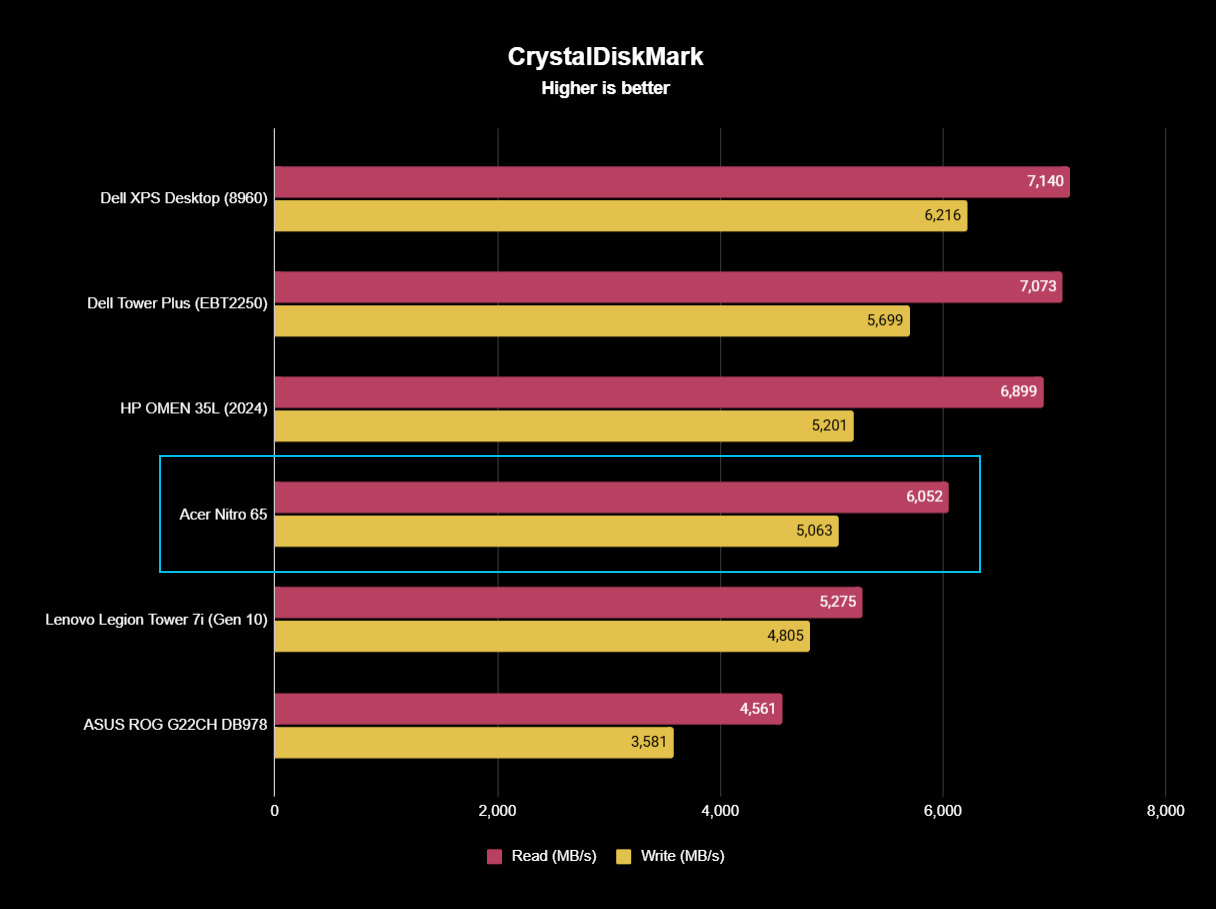
A look at how Ryzen 9 9900X performance compares between a test bench and the Nitro 65.FutureThe Nitro 65 has a respectable SSD inside.FutureCinebench 2024 results for the Ryzen 9 9900X are right where they should be.FutureGeekbench 6 results compared to other PCs we've tested recently.Future
As for the Lexar GPU, it reached 6,052MB/s read and 5,063MB/s write speeds in my testing. These aren't the fastest speeds ever for a PCIe 4.0 NVMe SSD, but they're perfectly acceptable for gaming.
I found this PC to load everything quite quickly, no doubt aided by 32GB of DDR5 RAM. I'm also happy to see that there's a minimum of bloatware on the PC, arriving with a rather clean version of Windows 11 Home.
Should you buy the Acer Nitro 65?
The Nitro 65 with the side glass panel removed. (Image credit: Future)
You should buy this if ...
✅ You're in search of a capable mid-size gaming desktop with decent cooling and strong performance.
✅ You're a fan of RGB lighting.
You should not buy this if ...
❌ You'd rather save a bit of money and build your own system.
❌ You'd rather take your games on the go with a laptop or handheld.
Acer's Nitro 65 impressed me in more ways than one. The custom case is gorgeous, especially with that rounded glass front, and it has lots of room inside for future upgrades. The diffused RGB strip around the case adds some flair.
Assembly and cable management are, I'd say, above average for a pre-built, and Acer using standard parts (other than the PSU) is a definite boon for those who like to keep their PC running as long as possible.
Extra touches like removable dust screens, internal RGB lighting, and magnetic panel clasps don't go unnoticed.
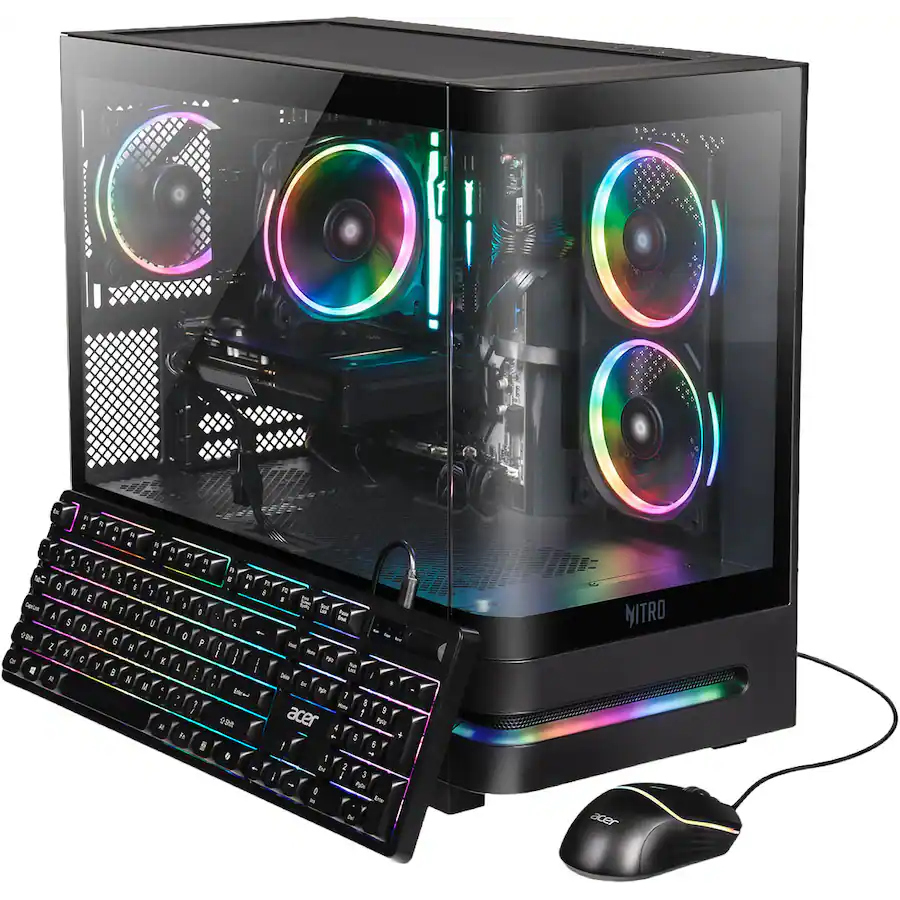
Bottom line? If you'd rather not build your own gaming PC, Acer's Nitro 65 is something I recommend. It won't cost much more than buying the parts yourself, and it arrives ready to go as soon as it's unboxed. Acer even tosses in an RGB keyboard and mouse to get you started.
Pre-built gaming PC
Acer
Nitro 65
Acer's Nitro 65 surprises with a clean build, a gorgeous case, (mostly) regular components, and a competitive price compared to building your own similar system. It has some quirks, but they don't keep me from recommending it as an above-average pre-built option.
Join us on Reddit at r/WindowsCentral to share your insights and discuss our latest news, reviews, and more.

 Connexion