 Connexion
Apple Hide My Email vulnerability exposes real user addresses



Faire tourner Linux sur Mac avec container machine, le mode de l'outil Apple Container qui offre un environnement Linux persistant : un équivalent de WSL.
Le post container machine : un environnement Linux sur Mac, façon WSL a été publié sur IT-Connect.

Docky, remplaçant gratuit et open source du Dock de macOS : widgets, Launchpad, sélecteur de fenêtres… Découvrez ses fonctionnalités.
Le post Docky : le Dock de macOS réinventé, gratuit et open source a été publié sur IT-Connect.

Les soldes d’été continuent, et les fortes chaleurs donnent une bonne raison de regarder ce que proposent les e-commerçants avant de courir en magasin. Ventilateurs, climatiseurs, smartphones, TV, consoles, accessoires… on fait le tri !


Vous avez réservé GTA 6 dès l’ouverture des précommandes ? Selon l’enseigne choisie, le montant affiché au moment de la commande peut être ajusté avant la sortie. Voici ce qu’il faut vérifier avant d’annuler pour recommander ailleurs.
Vous avez précommandé GTA 6 à 79,99 € et le prix a fondu à 60 € quelques heures plus tard ? Avant d’annuler pour recommander, vérifiez si votre marchand applique la garantie du prix le plus bas : dans la plupart des cas, vous êtes déjà couverts.
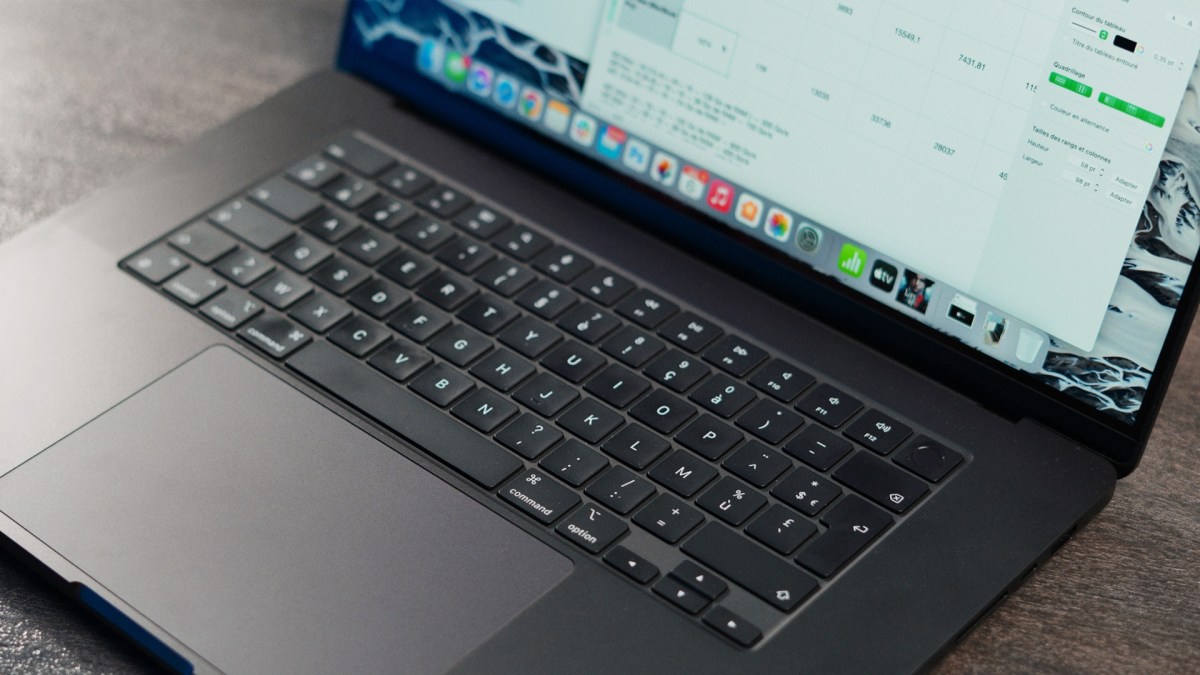
Apple préparerait actuellement plusieurs évolutions majeures de ses Mac, dont le fameux MacBook Pro à écran OLED tactile évoqué depuis des mois. Selon Bloomberg, la marque s'appuierait sur une puce M6 unique, sans déclinaison Pro ni Max (les M5 resteraient), avant de passer directement à une génération M7 déclinée en plusieurs versions dès 2027. Une puce M5 Ultra avec une option 768 Go de RAM est aussi dans les tuyaux.

Premier week-end des soldes d’été 2026. Avec l’affluence attendue en magasin, autant commencer par regarder ce que proposent les e-commerçants. Depuis le 24 juin, les promotions se multiplient en ligne, y compris dans la tech. On fait le tri pour repérer les meilleures offres.


Depuis ce mercredi 24 juin, les e-commerçants jouent le jeu des promotions avec des offres sur des milliers de produits. La tech n’échappe pas à l’événement, avec de nombreux bons plans disponibles dans plusieurs catégories. On vous aide à y voir plus clair parmi les meilleures offres des Soldes d’été 2026.

Les soldes d'été 2026 démarrent ce mercredi 24 juin. Pendant quatre semaines, les enseignes vont enchaîner les promotions. Pour vous aider à faire rapidement le tri des bonnes affaires, Numerama sélectionne ici les offres les plus intéressantes au fil de l'événement.
D'habitude, une batterie domestique, c'est un gros bloc qu'on planque à la cave ou au garage. SAMDUO prend le contre-pied avec sa gamme Nex, présentée cette semaine à Amsterdam, et veut en faire un objet qu'on assume de laisser à la vue de tous.
Le modèle E6000 ressemble à un grand cadre fixé au mur, 11,9 cm d'épaisseur seulement, soit la plus fine du monde d'après la marque. Sa variante E6000H abandonne le mur pour un cube de la taille d'un micro-ondes, à glisser dans un coin. Même capacité. Deux façons de la ranger.

Derrière SAMDUO se cache un industriel chinois quasi inconnu il y a encore six mois, qui arrive en Europe avec de gros moyens. Les deux E6000 stockent 6 kWh et visent le tarif de 1999 euros, avec une sortie française au troisième trimestre.
Vient ensuite la question du branchement. Pas besoin de toucher à vos panneaux, la batterie se greffe sur le circuit électrique de la maison et récupère le surplus produit dans la journée. On appelle ça du couplage en courant alternatif, et le bon côté, c'est que ça fonctionne avec à peu près n'importe quelle installation déjà posée.

Côté France, le souci, c'est que la batterie doit savoir en temps réel ce que consomme la maison. SAMDUO a prévu un petit boîtier pour ça, mais il est pensé pour les compteurs néerlandais pour le moment. Chez nous, il faudra ajouter un module dans le tableau électrique.
Pour ceux qui partent de zéro, il y a aussi la P2800 Pro, plus petite avec ses 2,73 kWh extensibles jusqu'à 16,41 kWh, mais qui se relie directement aux panneaux par quatre entrées dédiées. Une approche plus classique, au tarif encore tenu secret.

On a pu jeter un œil à l'application, et c'est propre. Elle affiche en direct ce qui entre et ce qui sort, jongle avec les heures creuses chez 800 fournisseurs européens dont EDF, mais l'API ouverte n'est pas encore prête.

Si tout le monde se précipite sur ces batteries, c'est que revendre son électricité est de moins en moins rentable, même en France. Les Pays-Bas, eux, où nous étions pour le lancement de la marque avec l'ami Korben, suppriment leur système de revente avantageux dès 2027.
En tous cas le pari du design est réussi. À 2000 euros pièce, par contre, il faudra quelques années avant de le rentabiliser.
***Mise à jour : ***
Reste une donnée qui a son importance et qu'on aurait dû préciser : la puissance de sortie. En fonctionnement normal, branchée sur le réseau, la batterie ne restitue que 800 W, une limite imposée par la réglementation plug-and-play. C'est suffisant pour lisser une consommation de fond, beaucoup moins pour encaisser un gros appel de puissance ponctuel. Le chiffre de 2600 W qu'on voit passer correspond à la charge, pas à la décharge au quotidien. Seul le mode secours, en cas de coupure, débride la sortie jusqu'à 2600 VA pour alimenter l'essentiel de la maison.

C'est la fin d'une époque. Le noyau Linux, le cœur du système qui pilote le matériel et les communications, s'apprête à supprimer le support d'AppleTalk, ce vieux protocole réseau qu'Apple utilisait dans les années 80 et 90 pour faire dialoguer ses Mac entre eux avant que TCP/IP, le langage commun d'internet, ne s'impose partout.
À l'époque, c'était plutôt malin: vous branchiez deux machines et une imprimante, et elles se trouvaient toutes seules, sans la moindre configuration, du plug-and-play avant l'heure à un moment où monter un réseau relevait encore du casse-tête réservé aux initiés.
Aujourd'hui, plus grand monde ne parle ce dialecte. Il en subsiste quelques traces dans Bonjour, la techno maison qui détecte automatiquement imprimantes et appareils sur un réseau local, mais le protocole d'origine, lui, est mort depuis longtemps.

Près de 4000 lignes de code vont donc disparaître avec la version 7.2 du noyau, et Apple avait lui-même enterré AppleTalk dès 2009, du temps de Mac OS X Snow Leopard. Autant dire que le préavis a été large.
Le plus étonnant, c'est ce qui a déclenché le grand ménage. Ce n'est pas vraiment l'abandon par les utilisateurs, mais une vague de correctifs générés par intelligence artificielle qui a fini par saturer la liste de diffusion des développeurs réseau.
Depuis quelques mois, des outils basés sur des grands modèles de langage, balancent automatiquement des "corrections" de bugs sur du code que personne n'avait réclamé, pour un protocole que plus aucun matériel ne fait tourner.
Et chaque proposition, même inutile, mobilise un humain qui doit la lire, la tester et vérifier qu'elle ne casse rien ailleurs, du temps précieux soustrait au vrai travail de mainteneurs déjà débordés par les contributions légitimes.
C'est Jakub Kicinski, qui supervise toute la pile réseau du noyau, qui a fini par trancher: plutôt que de faire éplucher par ses équipes des patchs pondus en série par des machines pour réparer une techno morte, il a préféré retirer AppleTalk d'un seul geste.
Et il n'en est pas à son coup d'essai. Au cycle précédent, pour Linux 7.1, il avait déjà passé à la trappe ARCnet, l'ISDN, la radio amateur et toute une collection de vieux pilotes réseau oubliés, soit près de 138 000 lignes effacées d'un coup, dans ce qu'il a lui-même baptisé la "LLM-pocalypse".
Le code d'AppleTalk ne finit quand même pas tout à fait à la poubelle, puisqu'il rejoint AX.25 et la radio amateur dans un dépôt GitHub mis de côté, pour les rares curieux qui voudraient encore bidouiller avec.
Bref, c'est une première: des contributions automatisées qui font retirer du code encore fonctionnel. L'IA ne crée pas toujours. Parfois, elle déblaie.
Source : Phoronix

 ZOTAC fête ses 20 ans et à cette occasion des GeForce RTX 50 en édition anniversaire ainsi que des mini-PC et boîtiers assortis sont prévus.
Cet article Zotac fête ses 20 ans, des GeForce RTX 50 20ème anniversaire sont à gagner ! a été publié en premier par GinjFo.
OWC has introduced the Express 4M2 Ultra at NAB 2026 as a compact 4 bay NVMe enclosure built around Thunderbolt 5. It is designed as a DIY storage solution for users who want to install their own M.2 SSDs and configure the enclosure for different RAID modes, including RAID 0, 1, 4, 5, 10, and JBOD. OWC positions it as a high performance option for media production, post production, and other bandwidth intensive workloads that benefit from fast external solid state storage.
The enclosure supports up to 4 NVMe M.2 drives in 2280 or 2242 formats and is rated for up to 6622MB/s in RAID 0 when paired with PCIe 4.0 or newer SSDs on Thunderbolt 5 systems. It also retains backward compatibility with Thunderbolt 4, Thunderbolt 3 on Mac, and USB4 hosts, though throughput is lower on 40Gb/s connections. Capacity starts with whatever drives the user installs, with support for up to 32TB in a single unit based on current 8TB SSD support, while additional units can be daisy chained for larger storage pools.

| Specification | OWC Express 4M2 Ultra |
|---|---|
| Product type | External DIY NVMe RAID enclosure |
| Drive bays | 4 x M.2 SSD |
| Supported drive sizes | M.2 2280, M.2 2242 |
| Drive type | NVMe SSD, PCIe Gen 3 and later |
| Max stated speed | Up to 6622MB/s |
| Host interface | Thunderbolt 5 |
| Secondary compatibility | Thunderbolt 4, Thunderbolt 3 on Mac, USB4 |
| RAID modes | RAID 0, 1, 4, 5, 10, JBOD |
| Max stated capacity per unit | 32TB |
| Daisy chain expansion | Up to 128TB as stated with multiple units |
| Cooling | 40mm adaptive fan |
| Material | Aluminum |
| Price | Starts at $399.99 |
| Availability | Pre-order now, ships Q3 2026 |
The Express 4M2 Ultra uses a compact aluminum enclosure with a vertical desktop form factor intended to keep its footprint relatively small. OWC states that the chassis is built from aircraft grade aluminum, which serves both as the structural housing and as part of the thermal design. The unit measures 12.3 cm tall, 11.7 cm long, and 6.0 cm wide, with a listed weight of 900 g.
Internally, the enclosure provides 4 drive bays for NVMe M.2 SSDs and supports both 2280 and 2242 form factors. It accepts single sided and double sided drives, though SSDs with integrated heatsinks are not supported. OWC specifies support for PCIe Gen 3 and later SSDs, with Gen 4 and newer drives recommended for higher performance. Each bay operates at PCIe 4.0 x1, and single drive performance is rated at up to 1600MB/s.

From a storage flexibility standpoint, the enclosure is aimed at users who prefer to source and install their own drives rather than buy a preconfigured array. That allows the capacity and performance profile to vary depending on the SSDs installed. With current 8TB drives, the maximum listed capacity is 32TB in a single enclosure, while future higher capacity drives could increase that figure without requiring a new chassis.
RAID support is handled in software rather than through a dedicated hardware RAID controller. The Express 4M2 Ultra supports RAID 0, 1, 4, 5, 10, and JBOD, with OWC highlighting SoftRAID as its main management option. This gives users a wider range of configuration choices depending on whether they prioritize throughput, redundancy, usable capacity, or a balance between those factors.
Thermal management is handled by a 40mm cooling fan with multiple speed thresholds tied to internal temperature. According to OWC’s listed profile, the fan remains off below 35°C, then ramps progressively from 40% to 100% as temperatures rise from 35°C to 55°C and above. The stated approach is to reduce unnecessary noise under lighter workloads while maintaining SSD performance during sustained transfers.

The Express 4M2 Ultra uses Thunderbolt 5 as its primary host interface, with 1 USB C host port rated for up to 80Gb/s. OWC also lists support for USB Attached SCSI Protocol, and the enclosure is designed to work across Thunderbolt 5, Thunderbolt 4, USB4, and Thunderbolt 3 on supported Mac systems. In practice, that gives it a broader compatibility range than a Thunderbolt 5 only accessory, though maximum throughput depends on the bandwidth available from the connected system.
A second Thunderbolt 5 port is included for downstream connectivity. OWC states that this allows users to daisy chain up to 5 additional Thunderbolt devices, along with 1 USB peripheral, from the same connection path. The same port can also be used to connect additional Express 4M2 Ultra units, with OWC positioning that as a way to build larger storage volumes without treating each enclosure as an entirely separate destination.
Compatibility varies by platform and interface generation. On newer Thunderbolt 5 Macs and PCs, OWC rates the enclosure at up to 6622MB/s, while Thunderbolt 4 and USB4 systems are listed at up to 3200MB/s. Intel Macs with Thunderbolt 3 are rated up to 2800MB/s, and OWC notes that Thunderbolt 3 support is Mac only. No driver is required, and the enclosure is listed as compatible with macOS 14.x Sonoma, macOS 15.x Sequoia, macOS 26.x Tahoe, Windows 11, and Linux, with some features depending on OS version and connection type.

OWC has set the starting price of the Express 4M2 Ultra at $399.99 for the standard non SoftRAID version. A version bundled with SoftRAID is priced at $549.99. As a result, the enclosure enters the market as a premium DIY storage option rather than a low cost external SSD enclosure, with the final overall build cost depending heavily on the NVMe drives a buyer installs.
The company says the Express 4M2 Ultra is available for pre order now following its reveal at NAB 2026 in Las Vegas. OWC lists shipping for Q3 2026, so early buyers will still be waiting several months for general availability. That places the launch window firmly in the second half of the year, even though orders have already opened.

 SUBSCRIBE TO OUR NEWSLETTER
 Join Inner Circle Subscribe
This description contains links to Amazon. These links will take you to some of the products mentioned in today's content. As an Amazon Associate, I earn from qualifying purchases. Visit the NASCompares Deal Finder to find the best place to buy this device in your region, based on Service, Support and Reputation - Just Search for your NAS Drive in the Box Below
 Need Help?
Where possible (and where appropriate) please provide as much information about your requirements, as then I can arrange the best answer and solution to your needs. Do not worry about your e-mail address being required, it will NOT be used in a mailing list and will NOT be used in any way other than to respond to your enquiry.
[contact-form-7]
Need Help?
Where possible (and where appropriate) please provide as much information about your requirements, as then I can arrange the best answer and solution to your needs. Do not worry about your e-mail address being required, it will NOT be used in a mailing list and will NOT be used in any way other than to respond to your enquiry.
[contact-form-7]
 TRY CHAT
Terms and Conditions
TRY CHAT
Terms and Conditions
 Ko-fi or old school Paypal. Thanks!To find out more about how to support this advice service check HEREIf you need to fix or configure a NAS, check Fiver
Have you thought about helping others with your knowledge? Find Instructions Here
Ko-fi or old school Paypal. Thanks!To find out more about how to support this advice service check HEREIf you need to fix or configure a NAS, check Fiver
Have you thought about helping others with your knowledge? Find Instructions Here





|
 |
