Certains propriétaires de Tesla aux Pays-Bas ont déjà reçu la mise à jour pour utiliser la conduite autonome supervisée (FSD). Les premiers retours vidéo sont enthousiastes, mais certains comportements de la voiture peuvent être améliorés.
Voilà quelques années que YouTube n'affiche plus les mentions « Je n'aime pas » (pouces rouges) pour les utilisateurs. Mais si la plateforme ne donne plus cette information, certaines astuces permettent quand même de les afficher. Voici la marche à suivre.
Après une attaque au cocktail Molotov, la résidence de Sam Altman a de nouveau été visée, cette fois par des tirs, dans la nuit du 11 au 12 avril 2026 à San Francisco. Ces faits, qui ont conduit à plusieurs arrestations, interviennent dans un climat de forte polarisation autour du développement de l’IA.
Automatiser pour gagner en productivité ? Il s'agit presque d'une évidence pour les entreprises. Mais poussée à l’extrême, cette logique pourrait se retourner contre elles. Une étude récente décrit un piège économique où l’IA, en détruisant des emplois, finit aussi par éroder la demande.
Pickmon, le jeu de collection de créatures qui ressemble à s’y méprendre à Pokémon et Palworld, change officiellement de nom afin de mieux correspondre à l’identité du studio. Rien à voir avec Nintendo ni avec d’éventuelles poursuites judiciaires. Vraiment.
Le grand rendez-vous annuel de l'industrie cinématographique s'ouvre ce 13 avril 2026 au Caesar’s Palace de Las Vegas. Si l'optimisme est de mise avec un box-office en hausse, l'ombre du méga-rachat de Warner Bros. Discovery par Paramount plane sur les débats. Entre blockbusters attendus et mutations technologiques, voici les enjeux d'une édition charnière. Que peut-on attendre de cet événement ?
En 2026, avec une gamme complète et des critères de bonus écologique de plus en plus stricts, choisir le bon modèle chez Tesla n'a rien d'évident. Ce guide va vous aider à y voir plus clair entre la Model 3, le Model Y, la Model S et le Model X.
La France pourrait s'appuyer sur NixOS et sa configuration Sécurix pour équiper les PC de ses agents et ainsi passer sur Linux. Mais NixOS, c'est quoi ?
Adobe a publié des mises à jour de sécurité pour patcher une faille zero-day dans Acrobat et Acrobat Reader (CVE-2026-34621). Voici comment protéger votre PC.
FINALLY, A REAL WiFI 7 Travel Router? Is the Gl.iNet Slate 7 Pro for you?
The Slate 7 Pro (GL-BE10000) is the latest travel router from GL.iNet, and it exists largely because the original Slate 7 (GL-BE3600) did not go quite far enough. The earlier model carried Wi Fi 7 branding but lacked 6GHz support, which for many users felt like a limitation rather than a stepping stone. The Slate 7 Pro corrects that by moving to full tri band Wi Fi 7, adding a dedicated 6GHz radio, expanding wireless bandwidth, and upgrading the touchscreen. It keeps the dual 2.5GbE ports and USB C powered design, but pushes the hardware and feature set further into premium territory.
I have reviewed and evaluated ALOT of travel routers over the years, and today I want to focus specifically on the pros and cons of the Slate 7 Pro (full detailed review still in progress, but this article will serve as the main focus good and bad bits). Rather than listing specifications alone, it looks at what those changes actually mean day to day, especially for travelers, remote workers, and users who rely heavily on VPN, captive portal access, and flexible networking. Some areas are clear improvements over the previous model, while others remain imperfect or introduce new trade offs. The goal here is to outline both sides clearly, without overselling what the device does well or ignoring where it still falls short.
Gl.iNet Beryl 7 Review – Quick Conclusion
The Slate 7 Pro (GL-BE10000) is a full tri band Wi Fi 7 travel router from GL.iNet that corrects the biggest limitation of the earlier Slate 7 by adding dedicated 6GHz support and 320MHz channel capability, delivering combined theoretical wireless bandwidth of 688Mbps on 2.4GHz, 2882Mbps on 5GHz, and 5764Mbps on 6GHz. It pairs this with dual 2.5GbE ports, high speed VPN performance up to 1100Mbps via WireGuard, integrated Deep Packet Inspection, a larger 2.8 inch touchscreen for on device management, and an optional active cooling system that engages only when thermals demand it. The OpenWrt based firmware remains one of the most flexible in the travel router space, supporting multi WAN failover, advanced traffic rules, plugin expansion, and remote management. However, it draws more power than the previous model, retains only 1 USB C data port with unreliable hub expansion, cannot handle captive portal login pages directly on the touchscreen, and implements single radio MLO rather than full multi radio aggregation. For users who want full spectrum Wi Fi 7 in a portable form, stronger VPN throughput, and granular network control while traveling or working remotely, it is a technically stronger and more complete option than the non 6GHz Slate 7, but it comes with higher power demands and a price premium that may not suit those who only need basic travel connectivity.
SOFTWARE - 10/10
HARDWARE - 9/10
PERFORMANCE - 9/10
PRICE - 7/10
VALUE - 8/10
8.6
PROS
Full tri band Wi Fi 7 with dedicated 6GHz support and 320MHz channel capability Combined theoretical wireless bandwidth of 688Mbps (2.4GHz), 2882Mbps (5GHz), and 5764Mbps (6GHz) Dual 2.5GbE ports with configurable WAN/LAN and multi WAN failover support High speed VPN performance up to 1100Mbps via WireGuard and 1000Mbps via OpenVPN DCO 2.8 inch color touchscreen for direct device level control and monitoring Integrated Deep Packet Inspection for advanced traffic visibility and filtering Active cooling system that engages only when required OpenWrt based firmware with full customization, plugin support, and remote management
CONS
Touchscreen cannot handle captive portal login pages directly Higher baseline power consumption compared to the earlier Slate 7 Only 1 USB C data port for storage or tethering USB hub expansion remains unreliable for multi device use MLO implementation is single radio coordination rather than full multi radio aggregation
Buy the Gl.iNet Slate 7 Pro from the Official Store Below:
6GHz Support Finally Brings Full Tri Band Wi Fi 7 to the Slate 7 Pro
One of the most significant changes in the Slate 7 Pro compared with the earlier Slate 7 is the addition of a dedicated 6GHz band. The previous model operated only on 2.4GHz and 5GHz, which meant it technically supported Wi Fi 7 features but did not deliver the full tri band experience many users associate with the standard. By adding 6GHz, the Slate 7 Pro increases total theoretical wireless throughput to 688Mbps on 2.4GHz, 2882Mbps on 5GHz, and 5764Mbps on 6GHz. More importantly, it allows access to wider 320MHz channels, which are not available on 5GHz in most regulatory regions.
In practical terms, 6GHz provides a cleaner spectrum with less congestion, particularly in dense environments such as hotels, conferences, or apartment buildings. When combined with Multi Link Operation, the router can distribute traffic more effectively across three bands rather than two. This does not automatically guarantee higher real world speeds for every client, but it does increase headroom and flexibility for multiple active devices. For users who dismissed the original Slate 7 due to its lack of 6GHz, this update addresses that limitation directly and aligns the Pro model more closely with what most would consider a complete Wi Fi 7 implementation.
Active Cooling in a Travel Router, but Only When It Is Needed
One of the more unusual additions in the Slate 7 Pro is the inclusion of an internal cooling fan. Most travel routers rely entirely on passive cooling due to their compact size and relatively low power processors. Under moderate use this is usually sufficient, but in warmer climates or during sustained high load activity such as heavy VPN use, multi device streaming, or extended 6GHz operation, temperatures can rise enough to cause throttling or instability. The Slate 7 Pro addresses this by integrating active cooling, which is not common in this category.
Importantly, the fan does not run continuously. It can be configured to activate only once the CPU reaches a defined temperature threshold. In standard operation, the device remains silent. The fan engages only when sustained workload or environmental conditions demand additional cooling. This approach attempts to balance reliability and acoustics, reducing the risk of heat related slowdowns without introducing constant background noise. For users who travel to high humidity or high temperature regions, this is a practical addition, though it also reflects the higher performance hardware and increased power demands of the Pro model.
Strong Wired and Physical Connectivity Without Additional Accessories
The Slate 7 Pro continues to offer dual 2.5GbE ports, with 1 configurable WAN and 1 LAN port, providing multi gig wired connectivity in a compact travel router form factor. This allows users to connect to high speed wired internet sources where available, while also supporting local high bandwidth transfers across a wired network. The ports can be reassigned depending on deployment needs, and multi WAN failover remains supported through combinations of wired, wireless repeater, and tethered connections. For users who frequently move between hotel networks, offices, or temporary workspaces, this flexibility remains one of the defining strengths of the device.
In addition to Ethernet, the Slate 7 Pro replaces the previous USB Type A data port with a USB C 3.0 data port, aligning it more closely with modern devices and accessories. This port supports storage devices and USB tethering, while power is delivered through a separate USB C PD input. The programmable hardware toggle button is retained for quick VPN or feature switching, and the reset button remains accessible. Overall, the physical connectivity is broad for a travel router, and the Pro model maintains compatibility with high speed wired networks while modernizing the data interface.
The Larger 2.8 Inch Touchscreen Adds Real Practical Control
The Slate 7 Pro includes a 2.8 inch color touchscreen on the front panel, replacing the smaller and more limited display found on the earlier Slate 7. While the previous model did introduce touchscreen control to the travel router category, the Pro version expands both the size and usability of the interface.
From the screen, users can view network status, generate QR codes for Wi Fi sharing, toggle VPN connections, monitor connection modes, and manage basic wireless settings without needing to open a browser or mobile app.
For short term or ad hoc setups, this makes a noticeable difference. When arriving at a new location, it is possible to power on the router, assign a Wi Fi password, enable or disable a VPN, and confirm connectivity directly from the device itself. It also provides real time visibility of WAN, repeater, tethering, and LAN states through clear indicators. The screen does not replace the full web interface for advanced configuration, but for quick adjustments and monitoring, it reduces reliance on a secondary device and simplifies routine tasks.
The OpenWrt Based Software Platform Remains One of the Strongest in This Category
The Slate 7 Pro continues to run the customized OpenWrt based firmware developed by GL.iNet, and this remains one of the defining advantages of the platform. The interface provides a structured and accessible front end for everyday tasks such as WAN configuration, repeater mode, VPN management, and client monitoring, while still allowing full access to the underlying OpenWrt environment for advanced users. This dual layer approach means the device can operate as a simple travel router for casual users, or as a highly configurable networking tool for those comfortable with deeper control.
Beyond standard routing functions, the firmware includes integrated VPN client and server options, multi WAN failover, traffic rules per SSID, and application support through an app center. The Pro model also introduces built in Deep Packet Inspection, adding another layer of visibility and filtering capability.
Users can assign the physical toggle button to trigger specific actions, switch to raw OpenWrt if desired, and manage the device remotely through GoodCloud. In terms of flexibility and feature depth within a travel form factor, the software stack remains one of the most complete available.
The Touchscreen Still Cannot Handle Captive Portal Logins
While the 2.8 inch touchscreen adds useful control and monitoring features, it does not eliminate the need for a secondary device when dealing with captive portals. In environments such as hotels, cafés, airports, or in flight Wi Fi systems, users often encounter web based login pages that must be completed before internet access is granted. The Slate 7 Pro cannot display or interact with these login portals directly on its screen. As a result, a phone, tablet, or laptop is still required to complete the authentication process.
This limitation reduces some of the independence that the touchscreen otherwise provides. In scenarios where the goal is to connect once and share access with multiple devices through the router, the expectation might be that everything could be handled directly on the unit itself. Instead, the workflow still requires connecting a client device to trigger and complete the portal login. Given that the hardware includes a capable display and processing power, the absence of even a basic embedded browser feels like a missed opportunity rather than a technical constraint.
Increased Power Consumption Compared to the Previous Model
The Slate 7 Pro draws more power than the earlier Slate 7, which is not unexpected given the addition of 6GHz, a larger LCD, integrated DPI processing, and an active cooling system. Even under light usage with a single wireless client connected and no wired WAN active, the Pro model typically operates above 5W. By comparison, the earlier Slate 7 generally sat between 3W and 4W under similar conditions. While these figures are not high in absolute terms, they are noticeably different when measured side by side.
For most users powering the router from a standard USB C PD adapter, this increase will not present an issue. However, in travel scenarios where power is sourced from lower output USB ports on buses, trains, aircraft seats, or compact power banks, the higher baseline draw could matter.
It also reflects the broader shift in the Pro model toward higher performance hardware. The device remains portable and reasonably efficient, but it is less power conservative than its predecessor.
Single USB Port Continues to Limit Expansion and Hub Compatibility
Despite moving to a USB C 3.0 data port, the Slate 7 Pro still provides only 1 USB data interface for peripherals. This means users must choose between connecting external storage, tethering a smartphone, or attaching another USB based device. In practical travel use, it is common to want both tethering and storage active at the same time, particularly when using the router as a small file sharing hub or media server. With only a single port, that flexibility remains constrained.
Attempts to expand the port using USB hubs continue to produce inconsistent results. While some powered hubs may partially function, stable multi device operation is not guaranteed. This mirrors behavior seen in earlier models and suggests that the limitation is architectural rather than cosmetic. For users who rely heavily on USB expansion, especially for simultaneous tethering and storage, this remains a practical restriction rather than a minor inconvenience.
MediaTek Platform Instead of Qualcomm Hardware
The Slate 7 Pro is powered by a MediaTek quad core processor running at 2.0GHz, rather than a Qualcomm chipset. In previous generations, Qualcomm based platforms were often associated with stronger power efficiency and broader upstream driver maturity within certain networking ecosystems. The move to MediaTek is not uncommon in this segment, but it does represent a shift in hardware positioning compared with devices that have relied on Qualcomm silicon.
From a performance perspective, the 2.0GHz MediaTek CPU provides the necessary headroom for tri band Wi Fi 7, high throughput VPN, and DPI processing. However, MediaTek platforms are generally viewed as slightly less power efficient than comparable Qualcomm solutions, which ties back to the higher baseline power draw observed in the Pro model. For most users, the practical difference will center on efficiency rather than raw capability, but it remains a consideration for those who closely follow chipset selection in networking hardware.
Multi Link Operation Is Present, but Not Full Multi Radio Aggregation
The Slate 7 Pro supports Wi Fi 7 Multi Link Operation across its 2.4GHz, 5GHz, and 6GHz bands, allowing compatible clients to establish links over multiple frequencies. In practice, this improves connection stability and can help balance traffic dynamically between bands. However, it is important to clarify that this implementation follows the more common single radio MLO model, where traffic is coordinated across bands rather than fully aggregated simultaneously through independent radio chains.
This means the router does not deliver true parallel multi radio throughput in the way some marketing descriptions of Wi Fi 7 may imply. Instead, it prioritizes stability, latency reduction, and intelligent band switching. At present, very few consumer or travel routers implement full multi radio MLO aggregation, and the Slate 7 Pro is not an exception to that wider market reality. For most users, the benefit will be smoother performance under load rather than a simple multiplication of peak speeds.
Should You Buy the Gl.iNet Slate 7 Pro Travel Router? Conclusion and Verdict
The Slate 7 Pro builds directly on the foundation of the earlier Slate 7 by addressing its most discussed limitation, namely the absence of 6GHz. With full tri band Wi Fi 7 support, dual 2.5GbE ports, a larger 2.8 inch touchscreen, integrated DPI, high throughput VPN capabilities up to 1100Mbps via WireGuard, and optional active cooling, it positions itself as a more complete and performance oriented travel router. For users who were hesitant about the original model due to clipped wireless capability, the Pro version resolves that concern and expands overall functionality in a meaningful way.
That said, it is not without compromises. Power draw is higher than before, USB expansion remains limited to a single port with inconsistent hub support, the touchscreen cannot handle captive portal logins directly, and its MLO implementation reflects the broader limitations of current consumer Wi Fi 7 hardware rather than a fully parallel multi radio design. The MediaTek platform delivers the required performance, but it does not prioritize efficiency to the same degree as some Qualcomm based alternatives. For buyers deciding between the Slate 7 and the Slate 7 Pro, the Pro model is the technically stronger device, provided the increased price and power requirements align with their intended use case.
This description contains links to Amazon. These links will take you to some of the products mentioned in today's content. As an Amazon Associate, I earn from qualifying purchases. Visit the NASCompares Deal Finder to find the best place to buy this device in your region, based on Service, Support and Reputation - Just Search for your NAS Drive in the Box Below
Need Advice on Data Storage from an Expert?
Finally, for free advice about your setup, just leave a message in the comments below here at NASCompares.com and we will get back to you.Need Help?
Where possible (and where appropriate) please provide as much information about your requirements, as then I can arrange the best answer and solution to your needs. Do not worry about your e-mail address being required, it will NOT be used in a mailing list and will NOT be used in any way other than to respond to your enquiry.
[contact-form-7]
TRY CHAT Terms and Conditions
If you like this service, please consider supporting us.
We use affiliate links on the blog allowing NAScompares information and advice service to be free of charge to you.Anything you purchase on the day you click on our links will generate a small commission which isused to run the website. Here is a link for Amazon and B&H.You can also get me a Ko-fi or old school Paypal. Thanks!To find out more about how to support this advice service checkHEREIf you need to fix or configure a NAS, check FiverHave you thought about helping others with your knowledge? Find Instructions Here
Or support us by using our affiliate links on Amazon UK and Amazon US
Alternatively, why not ask me on the ASK NASCompares forum, by clicking the button below. This is a community hub that serves as a place that I can answer your question, chew the fat, share new release information and even get corrections posted. I will always get around to answering ALL queries, but as a one-man operation, I cannot promise speed! So by sharing your query in the ASK NASCompares section below, you can get a better range of solutions and suggestions, alongside my own.
A new rumor suggests NVIDIA is nearing the end of negotiations to buy a large company in the PC industry, but it's so far unclear which company exactly or if the rumor is even true. Here's what we know so far.
The full Forza Horizon 6 achievement list has appeared online ahead of release, revealing 57 achievements worth 1000 Gamerscore and outlining progression and completion goals for players.
Microsoft is raising prices on all its current Surface PC offerings, with the midrange devices now starting at above $1,000, and flagships starting at $1,500.
A new update now rolling out globally will give users the option to skip the update process when setting up a new Windows 11 PC, speeding up the experience two-fold.
Is Marvel Rivals running natively on Snapdragon X laptops? Qualcomm's gradual gaming push continues with a collaboration with NetEase and 25 "adapted" games.

 Connexion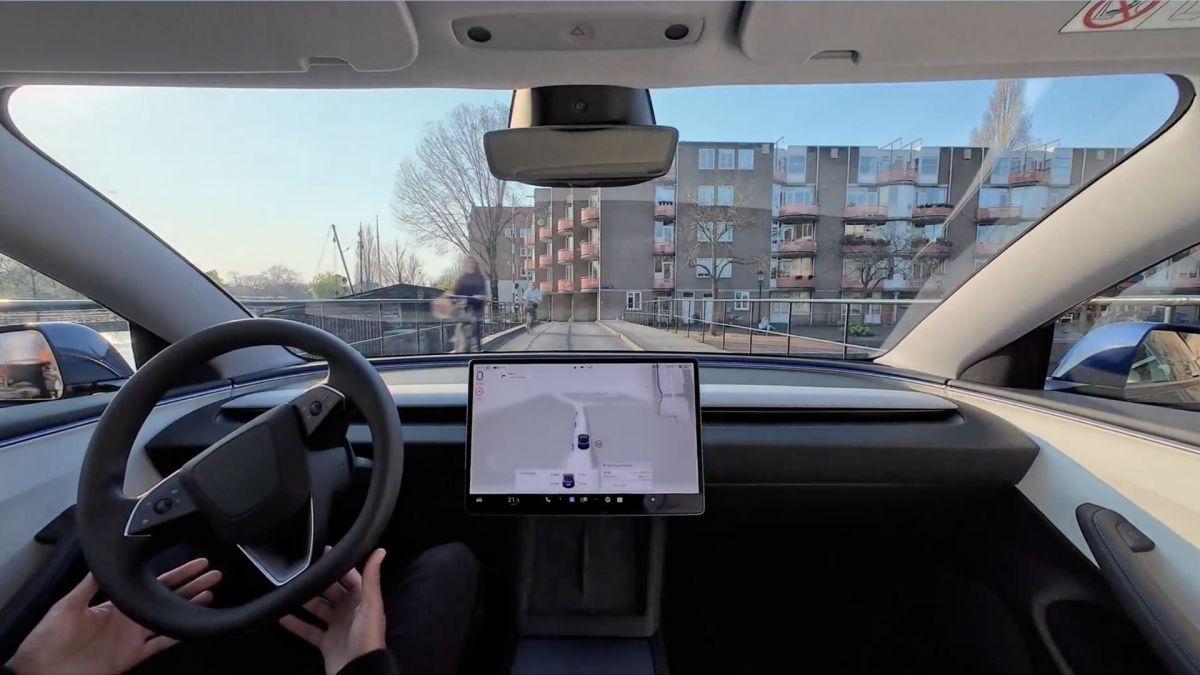









 Full tri band Wi Fi 7 with dedicated 6GHz support and 320MHz channel capability
 Touchscreen cannot handle captive portal login pages directly


 SUBSCRIBE TO OUR NEWSLETTER


 TRY CHAT