Connexion
Lincstation E1 NAS Review – IS THIS TOO CHEAP?
The Lincstation E1 Review

The LincStation E1 is a compact 2-bay NAS from LincPlus aimed at users who want a simple way to move file storage, backups, and basic media access off third-party cloud services and onto local hardware. It is built around an ARM platform and combines 2 x SATA drive bays with 2 x NVMe slots, which gives it a433 storage layout that is more flexible than many entry-level NAS units in this price class. Rather than targeting enthusiasts who want extensive customization from day 1, the E1 is positioned as a ready-to-use system with LincPlus’s own LincOS software, desktop and mobile apps, and a feature set focused on everyday tasks such as file sharing, photo backup, remote access, and media browsing. From a review perspective, the main appeal of the E1 is not that it competes directly with higher-end NAS systems on raw performance or software maturity, but that it tries to offer a broad hardware and feature package at a very low entry cost. The combination of 1GbE networking, dual NVMe support, and a compact chassis makes it an interesting option for first-time NAS buyers, light home users, or anyone looking for a secondary backup device with low power usage. At the same time, its value depends heavily on expectations, especially around software polish and the realities of buying storage media separately, so it is best evaluated as a budget-oriented turnkey NAS with clear strengths and equally clear limitations.
Want to Learn More about Lincplus Lincsation NAS Solutions? The N1, N2 and S1 all include an UnRAID Software License included:
|

Kickstarter Disclaimer!!! This is NOT traditional retail
At the time of review, the LincStation E1 is positioned as a crowdfunding product rather than a standard retail NAS, which means buyers should treat it differently from an item sold through normal retail channels with established return policies and support expectations. LincPlus is not an unknown brand and has released other NAS and computing products, but crowdfunding still carries delivery, software maturity, and post-launch support risks, so any purchase decision should factor in the reduced consumer protections compared with conventional retail.

Lincstation E1 NAS Review – Quick Conclusion
The LincStation E1 is a low-cost, compact 2-bay NAS that stands out mainly because it combines 2 x SATA bays and 2 x NVMe slots in a small ARM-based enclosure while still aiming to be a turnkey product rather than a DIY project, which makes it an appealing option for first-time NAS buyers or users who want a simple local backup/file server with low power draw and basic private cloud-style features; the hardware package is strong for the price category, the included accessories are unusually complete, and the overall design is practical for light home storage, media access, and phone backup use, but the key caveat is that the software experience (LincOS) is still developing, with the mobile app appearing more mature than the desktop and web interfaces and some expected security and usability features not yet fully in place in the reviewed build, so the E1 makes the most sense if it is judged as a budget-oriented NAS with good hardware value and a work-in-progress software platform rather than a polished replacement for established NAS ecosystems.


7.6
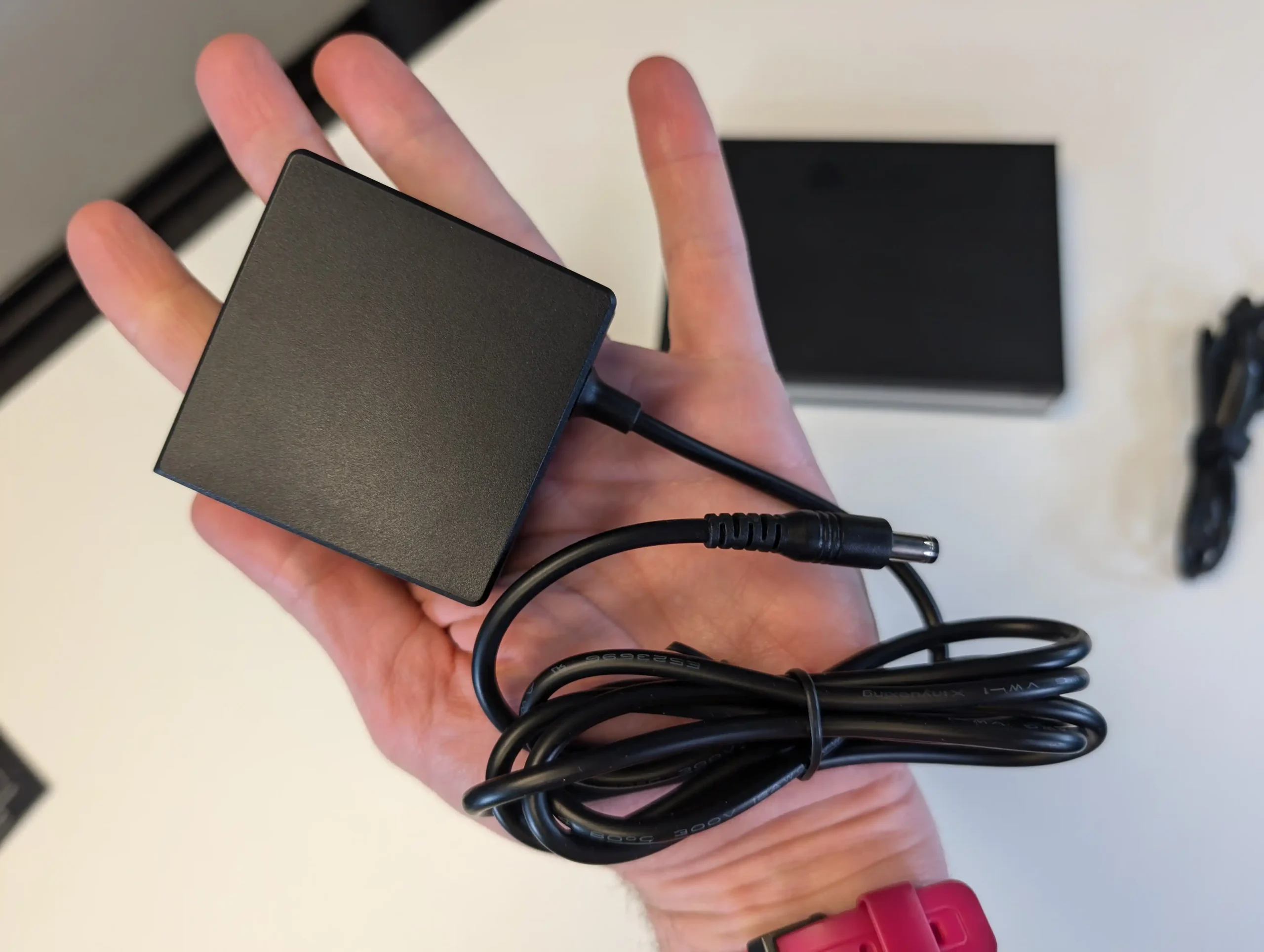
 Very low entry price (crowdfunding positioning) for a turnkey NAS-class deviceCompact chassis with a small desktop footprint and low overall weightFlexible storage layout with 2 x SATA bays + 2 x M.2 NVMe slotsLow-power ARM platform that supports relatively modest power consumption in real use2.5GbE-class networking referenced in review testing (strong value if confirmed in final retail spec)Front USB 3.2 Gen 2 Type-A port for faster external drive imports/backupsGood in-box accessory bundle (cables, screwdriver, screws, thermal pads, PSU)LincOS includes a broad feature set for entry users (SMB sharing, backups, remote access, media features, mobile app control)
 Software maturity is still a concern, especially desktop and web UI polishCrowdfunding purchase model adds risk compared with normal retail buyingSingle LAN port only, so no link aggregation or failoverSome expected NAS security/admin features were missing or underdeveloped in the reviewed build (for example, 2FA)
| Where to Buy a Product | |||
 |
    
|
  
|
VISIT RETAILER ➤ |
 |
|
|
VISIT RETAILER ➤ |

Lincstation E1 NAS Review – Design & Storage
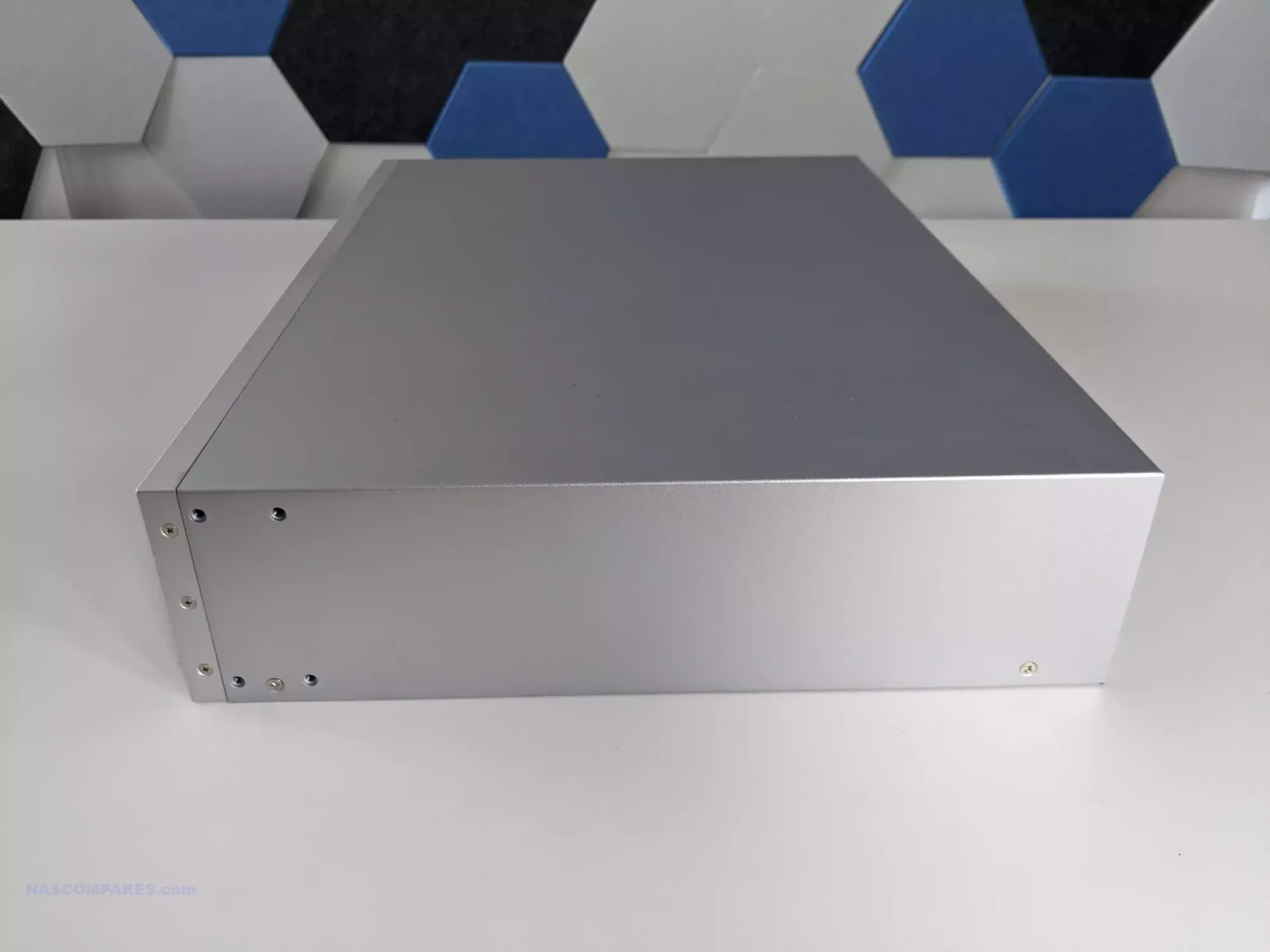
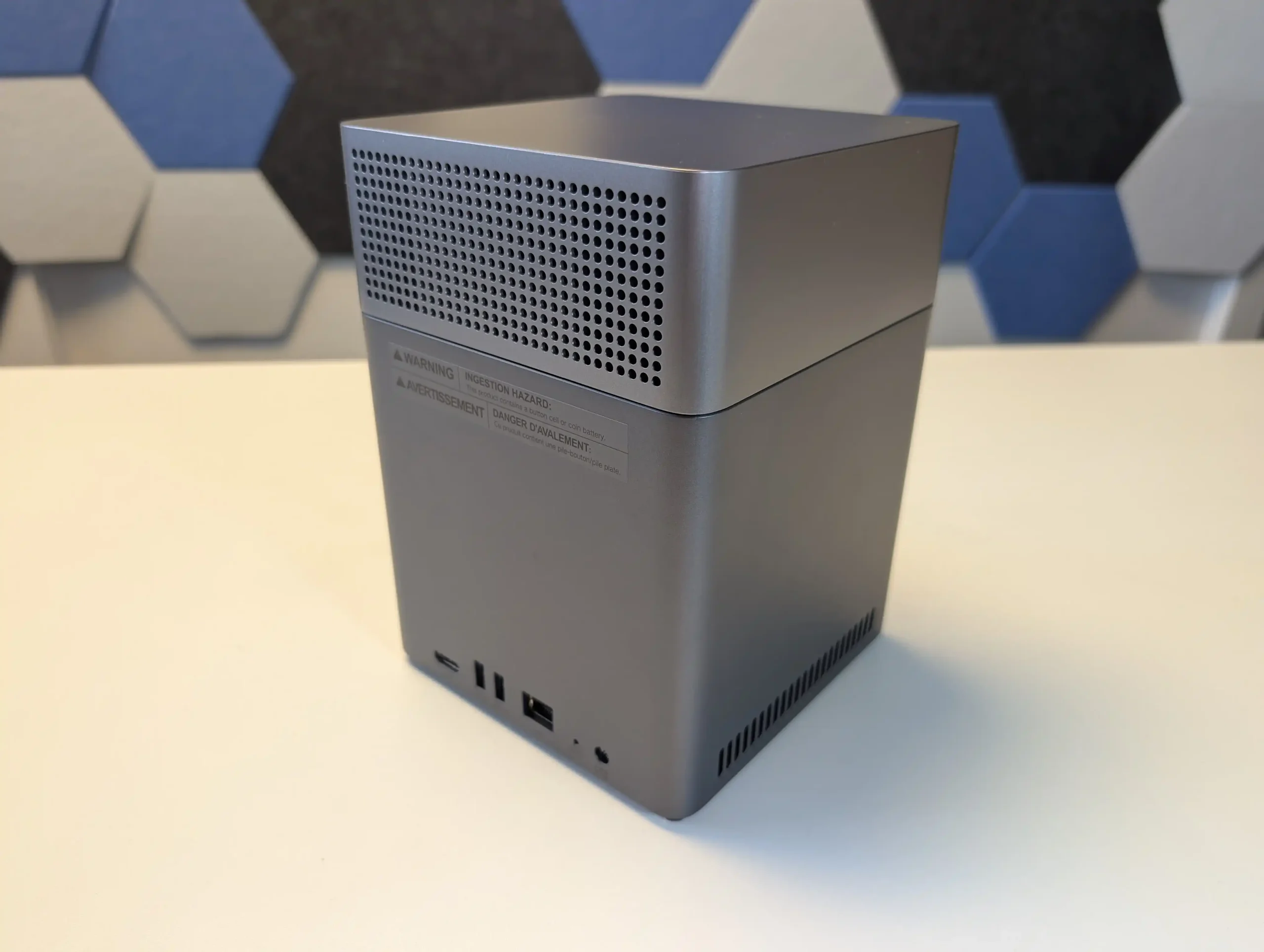
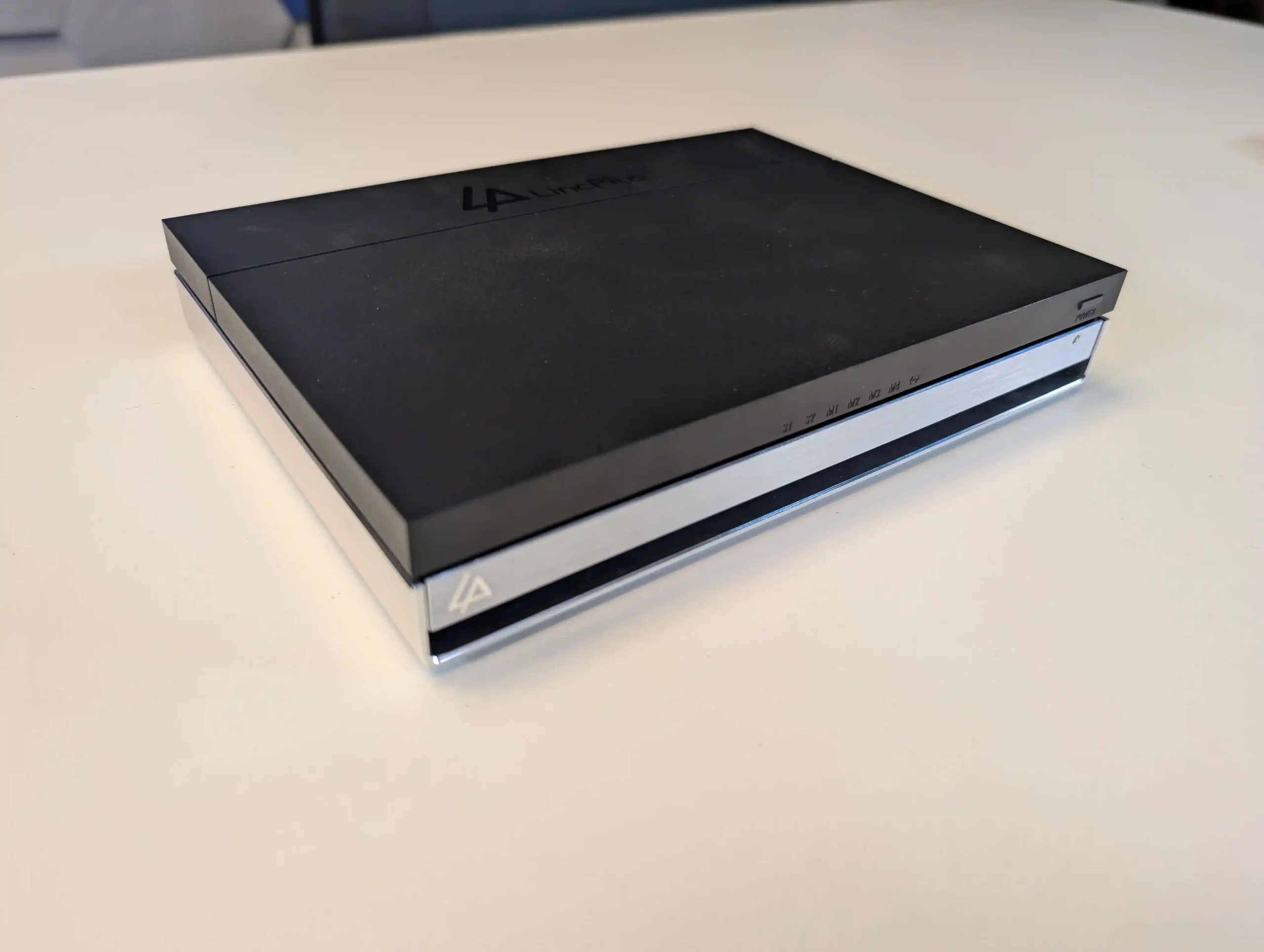
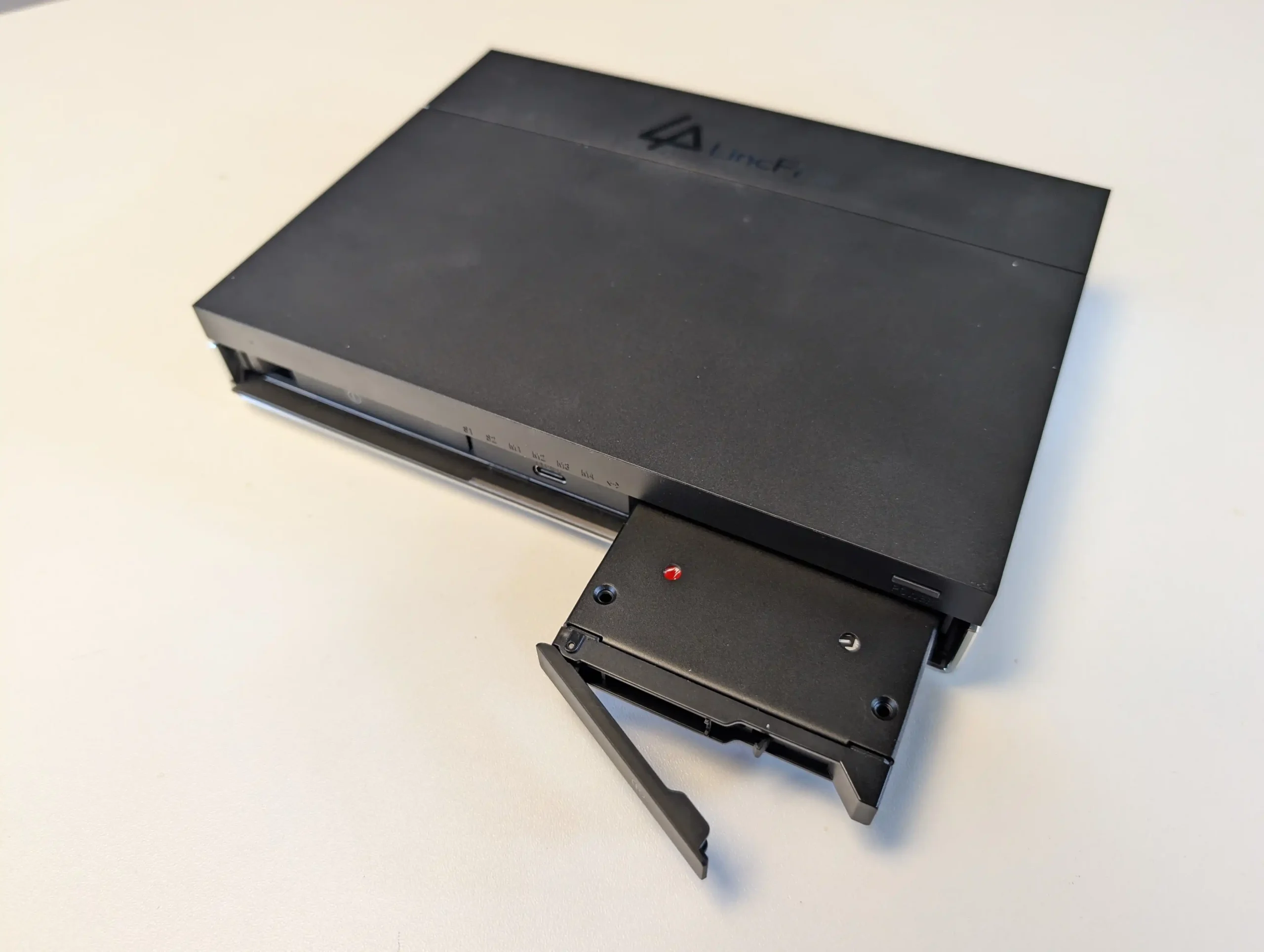
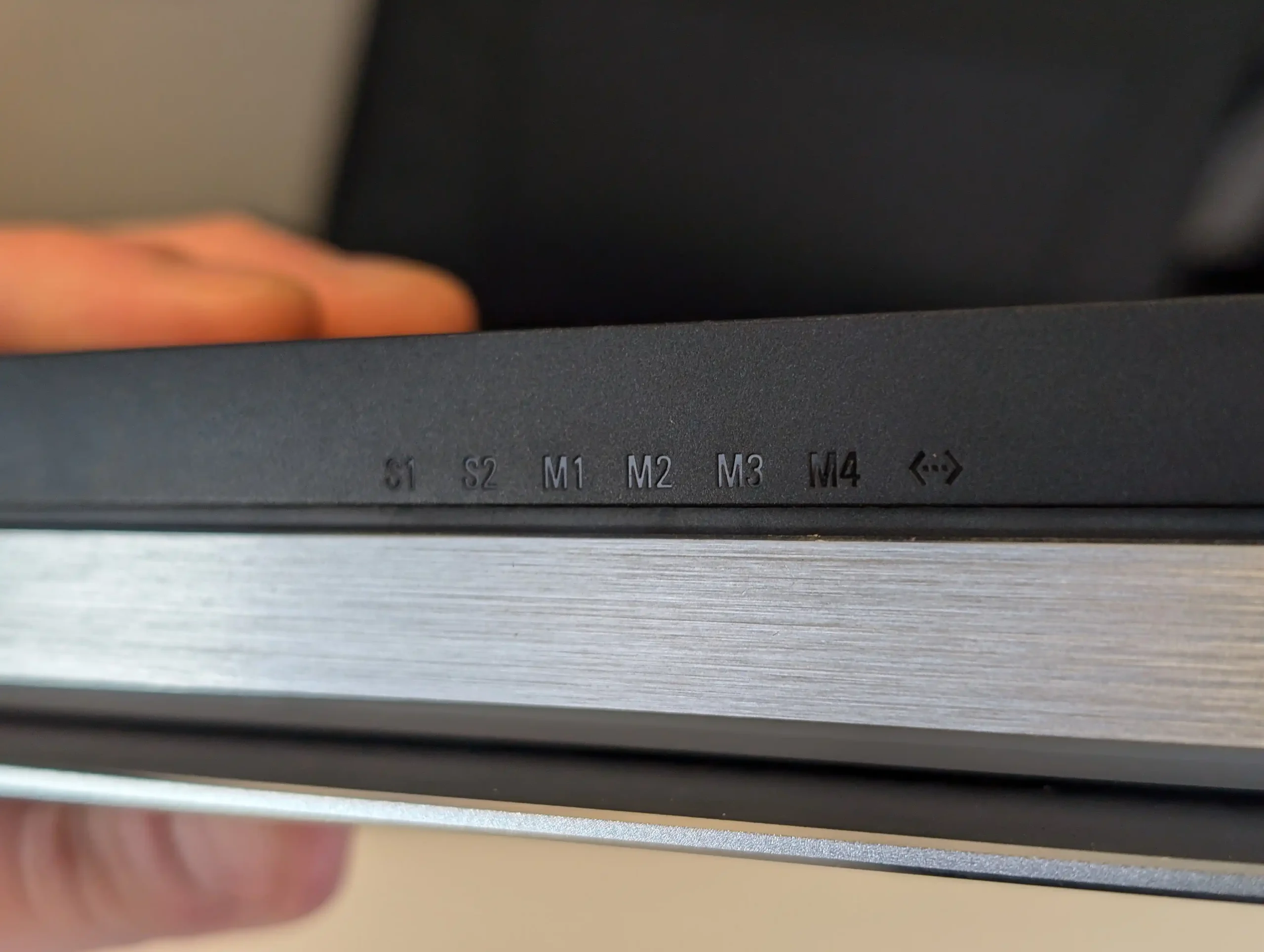
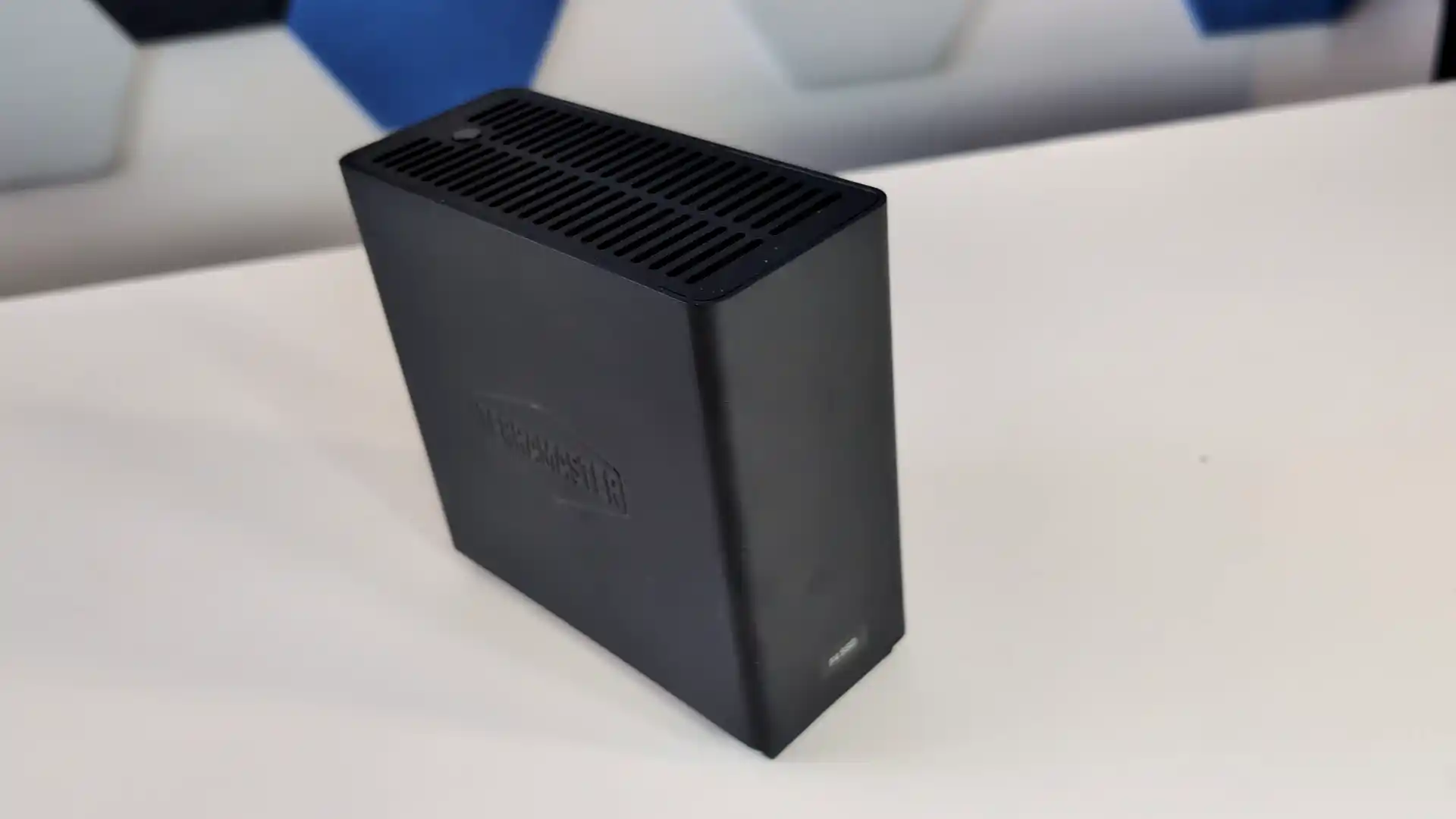
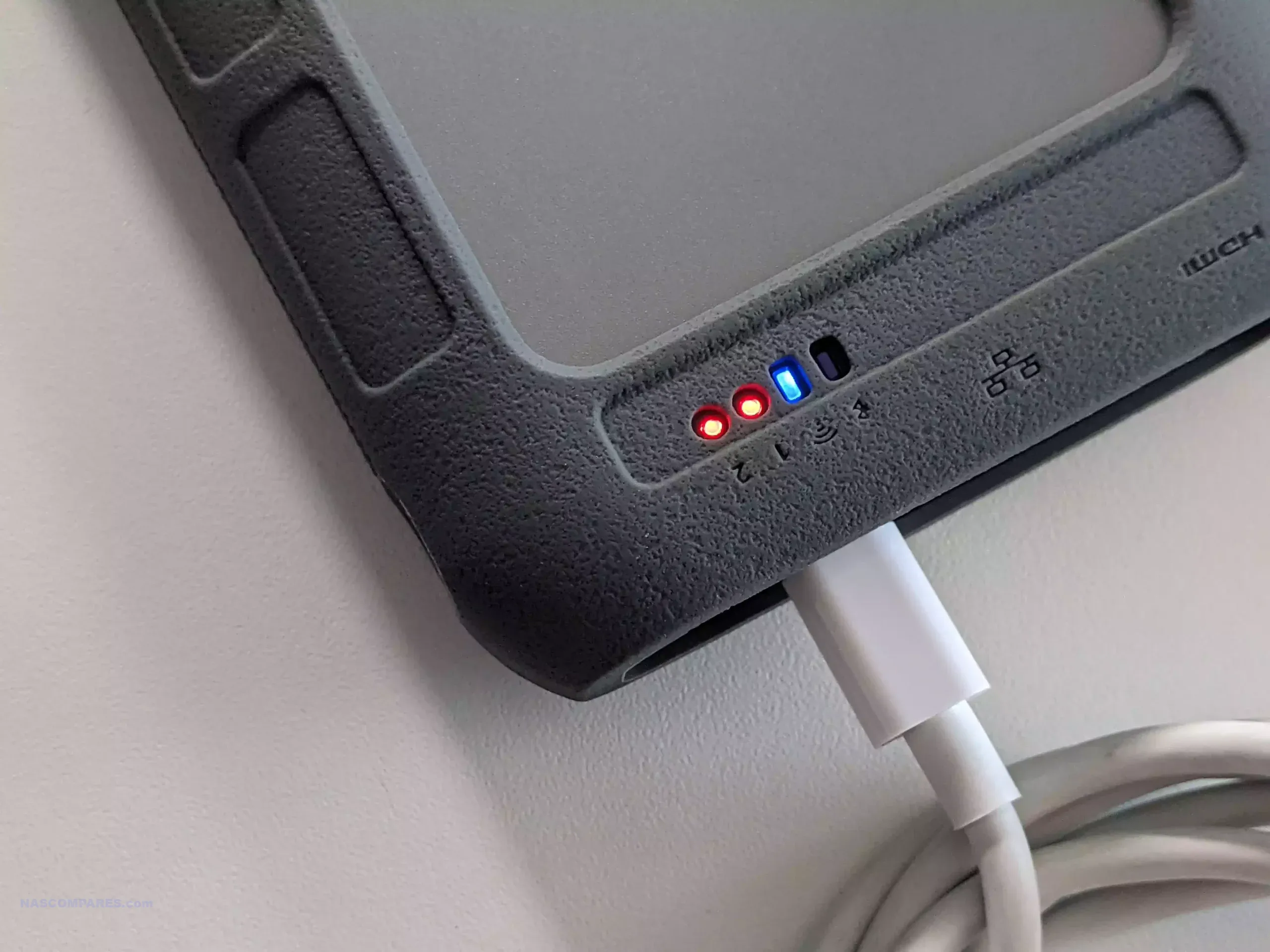
The LincStation E1 uses a compact vertical desktop chassis with a plastic outer shell and a front panel that keeps visible hardware elements to a minimum. At 218.5 x 88 x 140 mm and 907 g, it is physically smaller and lighter than many conventional 2-bay NAS systems, which affects both placement and cooling design. The front panel includes status LEDs for the 2 SATA bays (S1, S2), 2 NVMe slots (M1, M2), network activity/status, and the power button LED, so users can check basic drive and network state at a glance without opening the software interface. There is no front display panel, and the clean exterior design is clearly focused on compactness and low manufacturing complexity rather than service indicators or advanced controls.

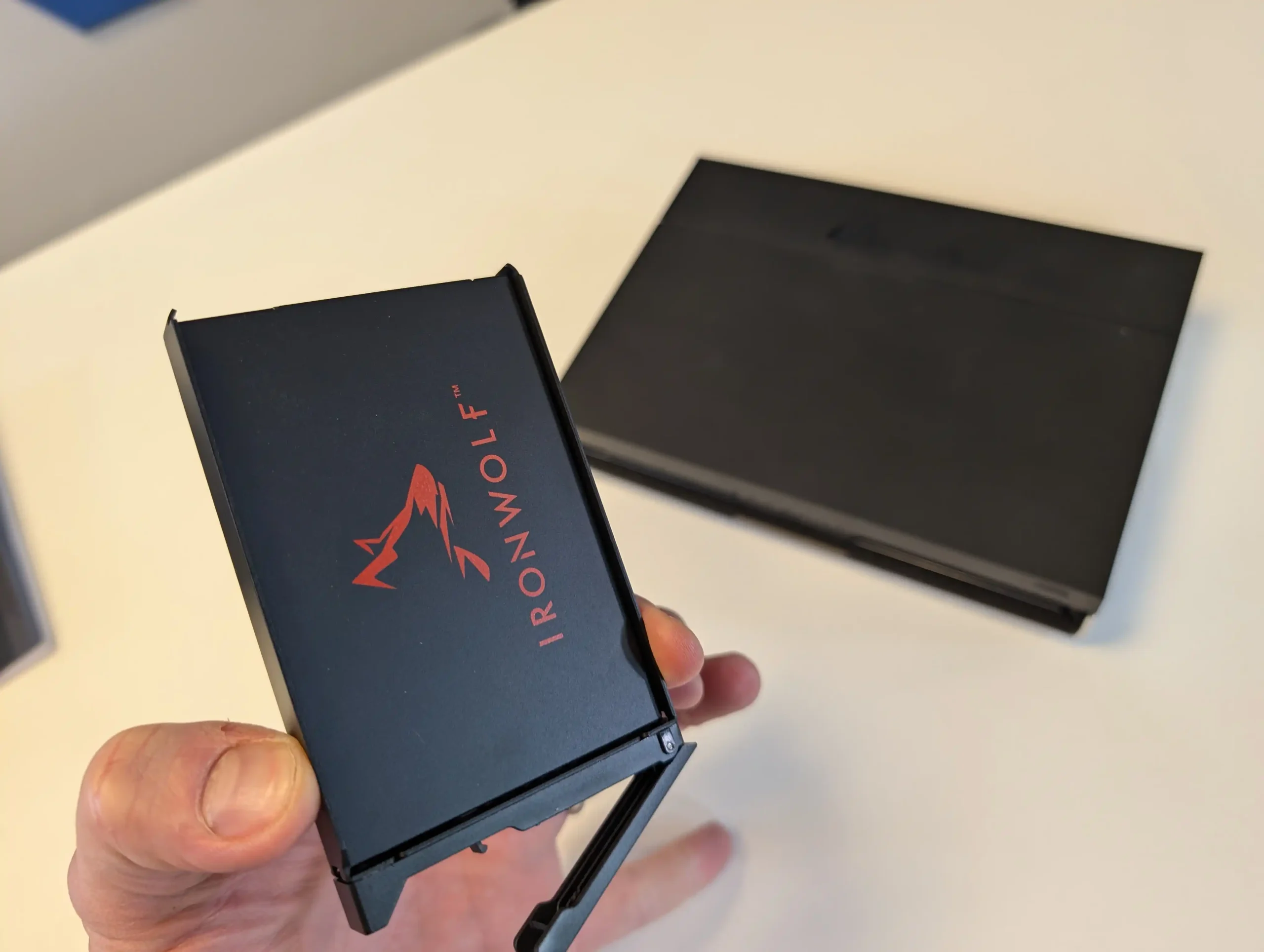
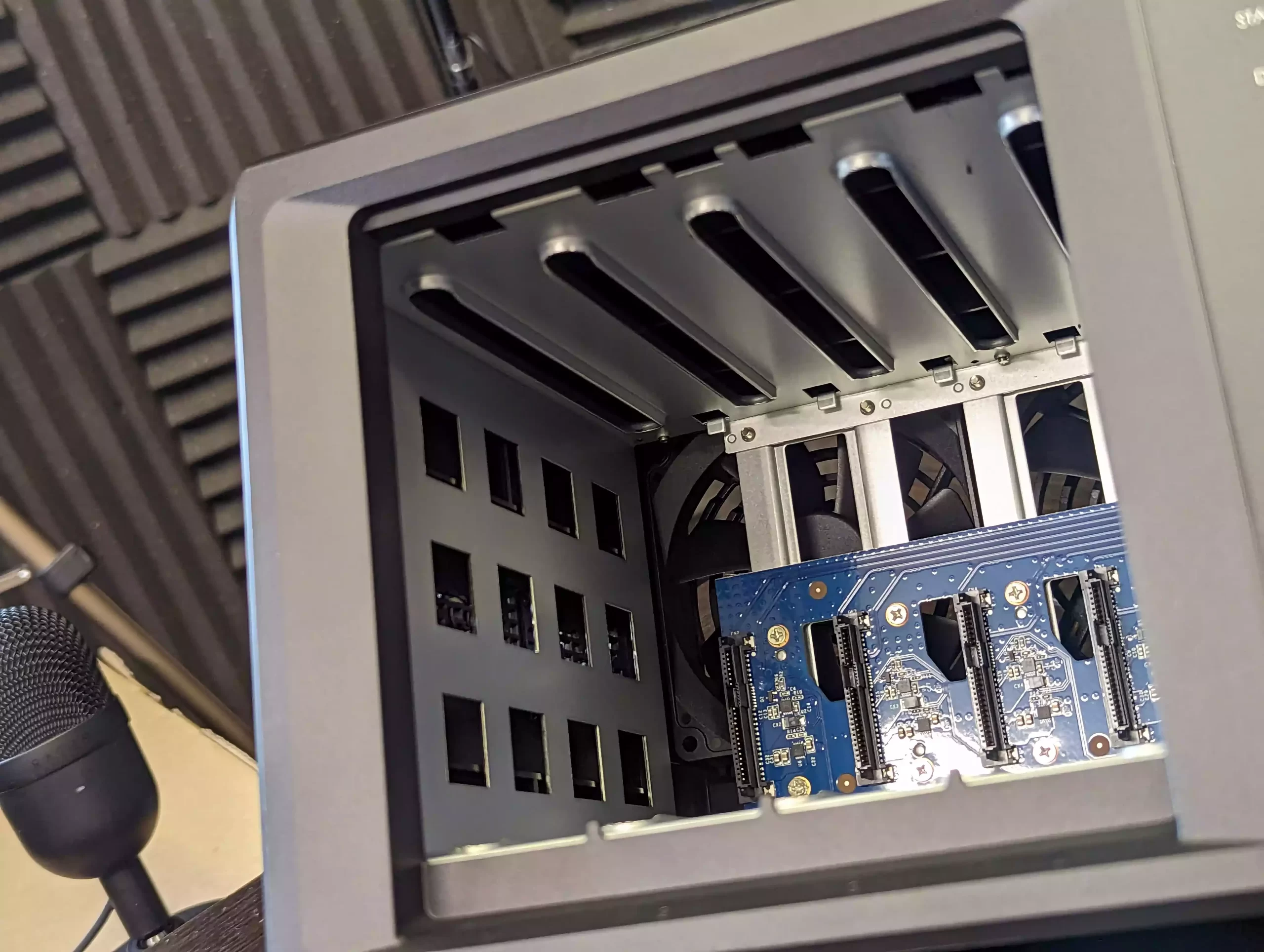
The primary storage section is built around 2 top-loading drive trays that support both 3.5-inch and 2.5-inch SATA HDD/SSD media. These trays are accessed from the top of the chassis and use integrated pull handles that sit relatively flush when closed, which helps reduce accidental snagging and keeps the top surface visually tidy. The supplied accessory pack includes mounting screws and a screwdriver, which is relevant here because 2.5-inch drives require screw mounting rather than tool-less insertion. The tray design is simple and functional, but there is no locking mechanism, no front latch key, and no hot-swap enterprise-style caddy system, so the emphasis is clearly on basic home use rather than secure or high-frequency drive replacement.

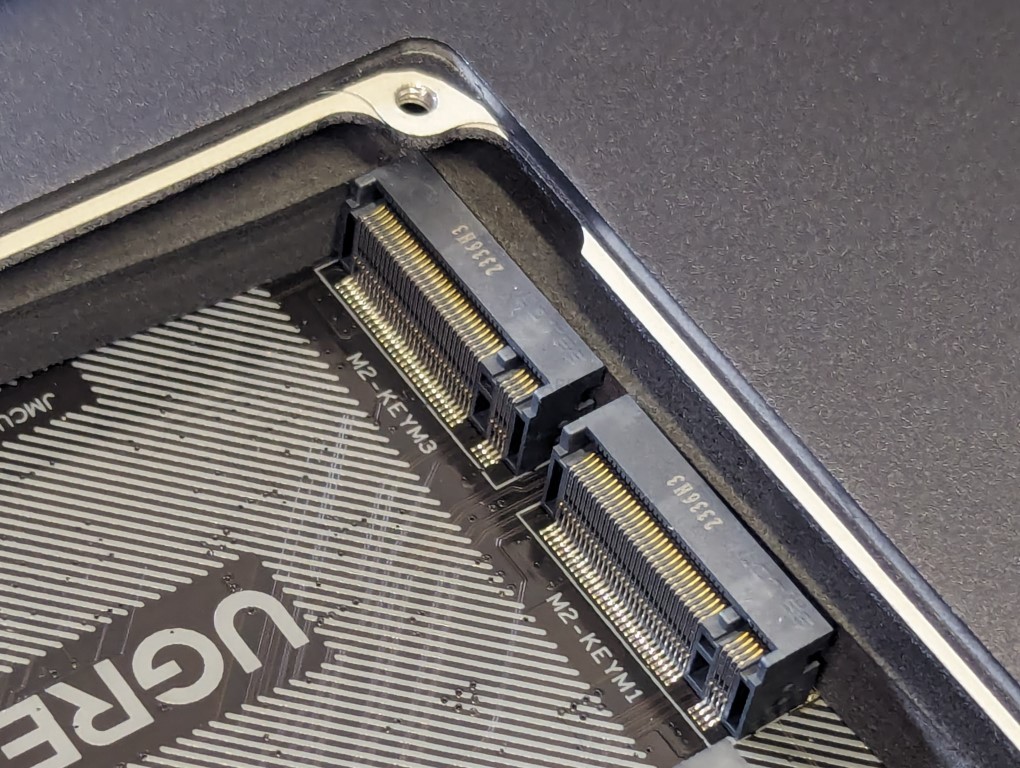
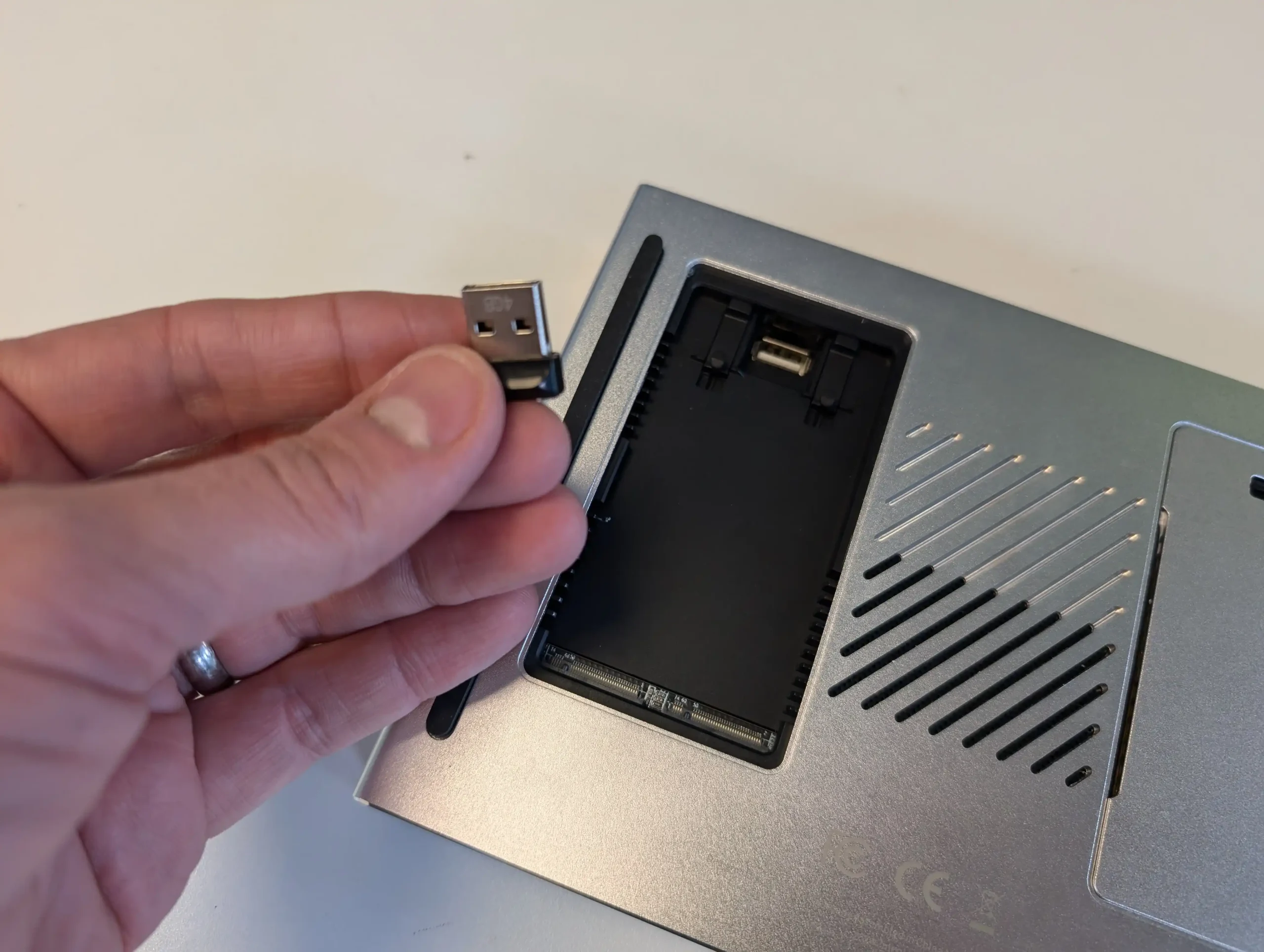
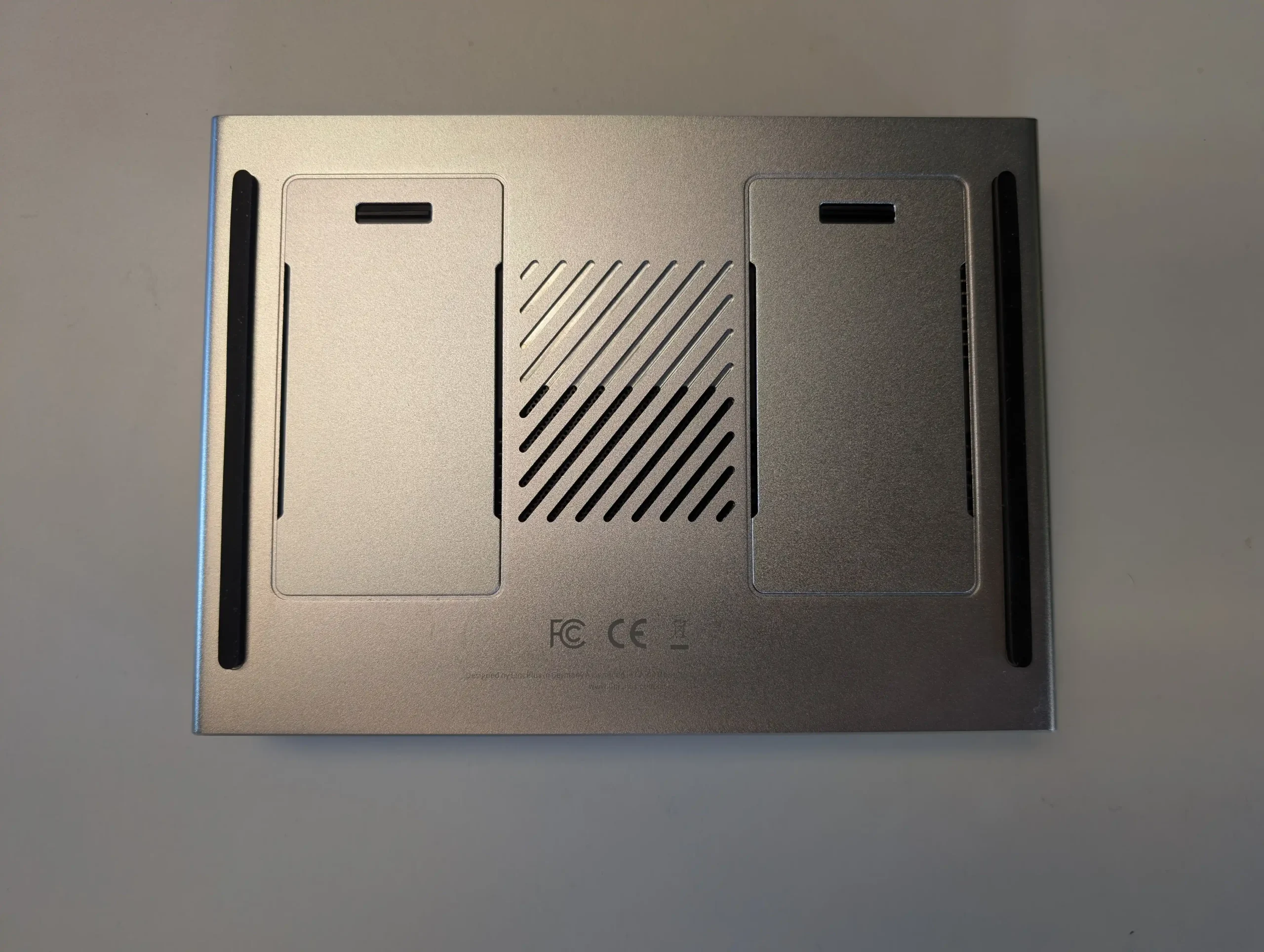
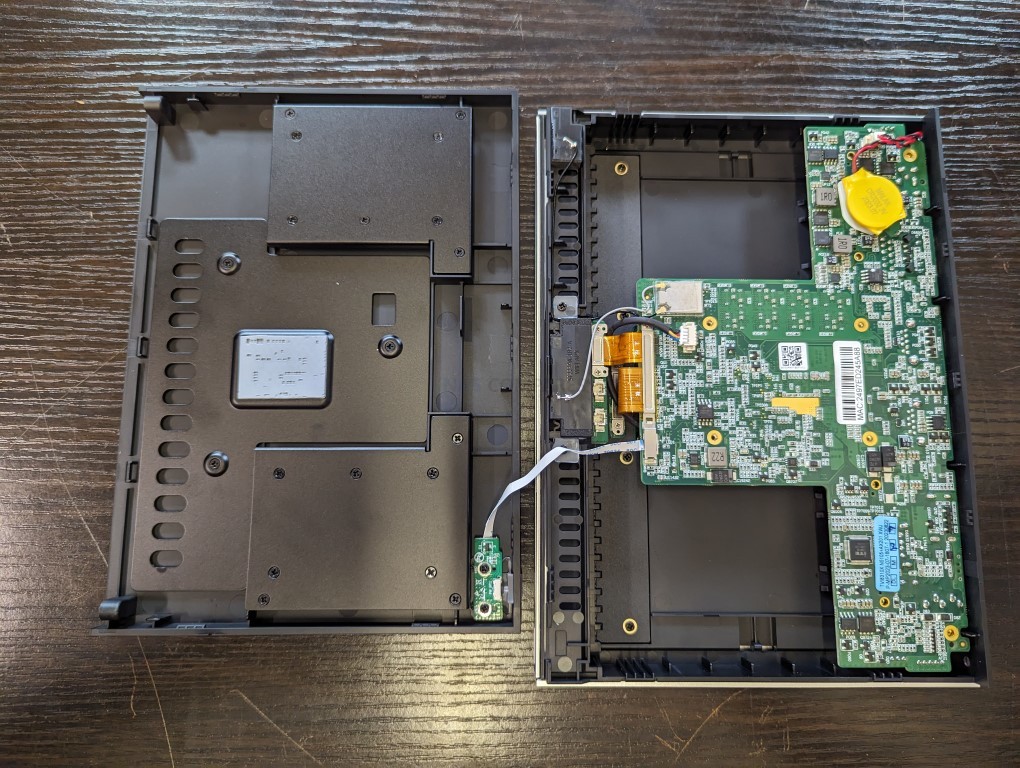
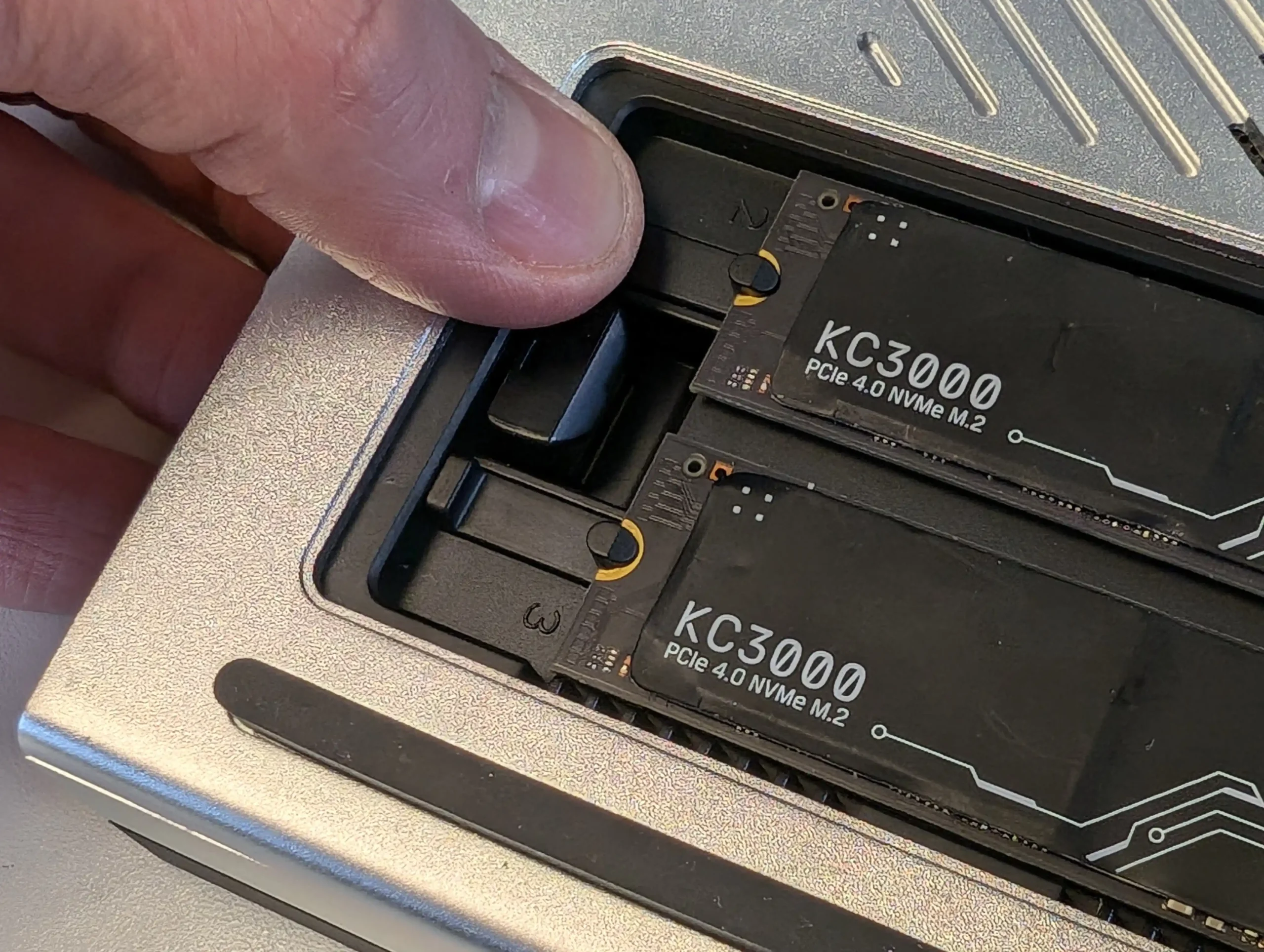
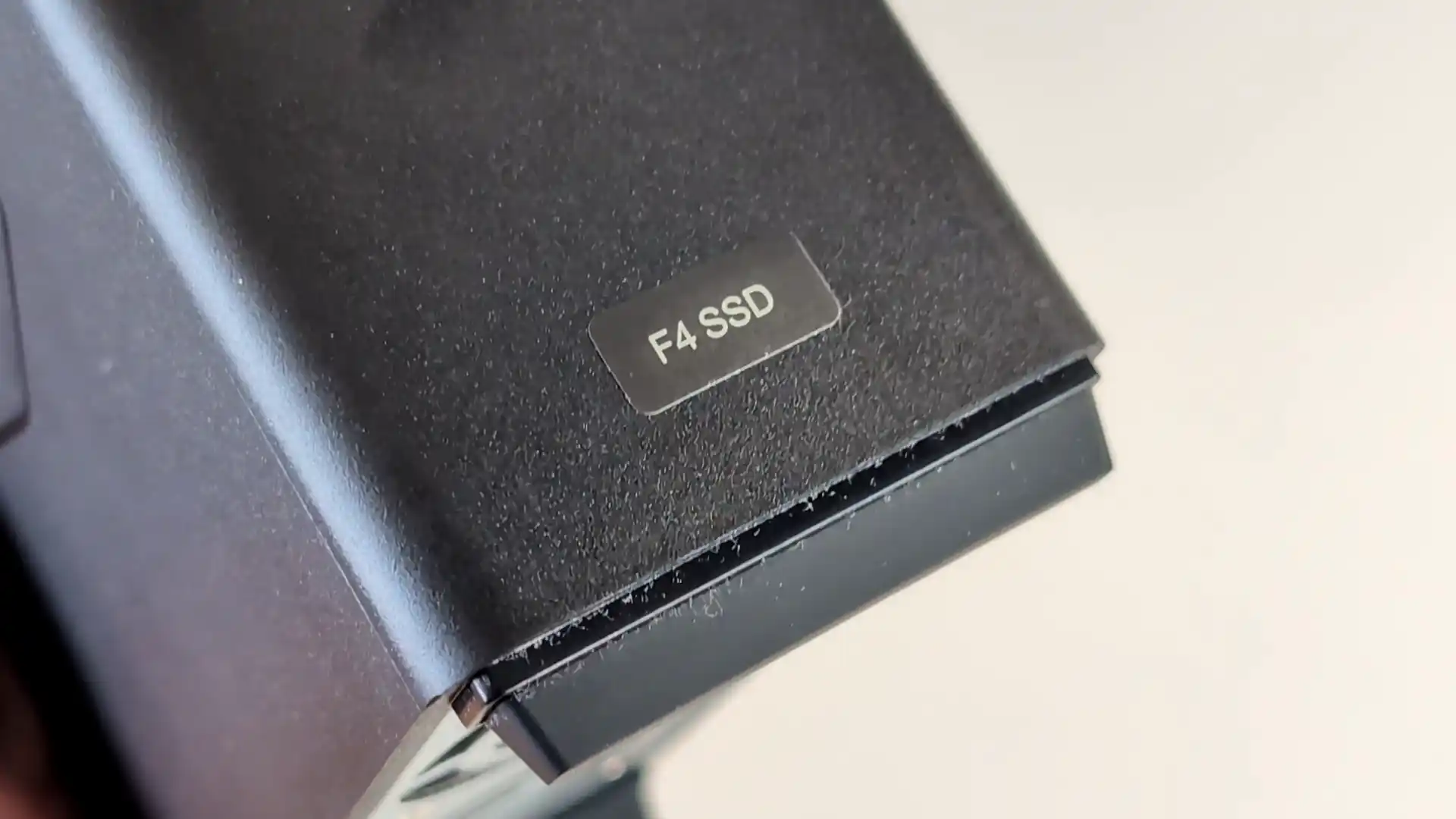
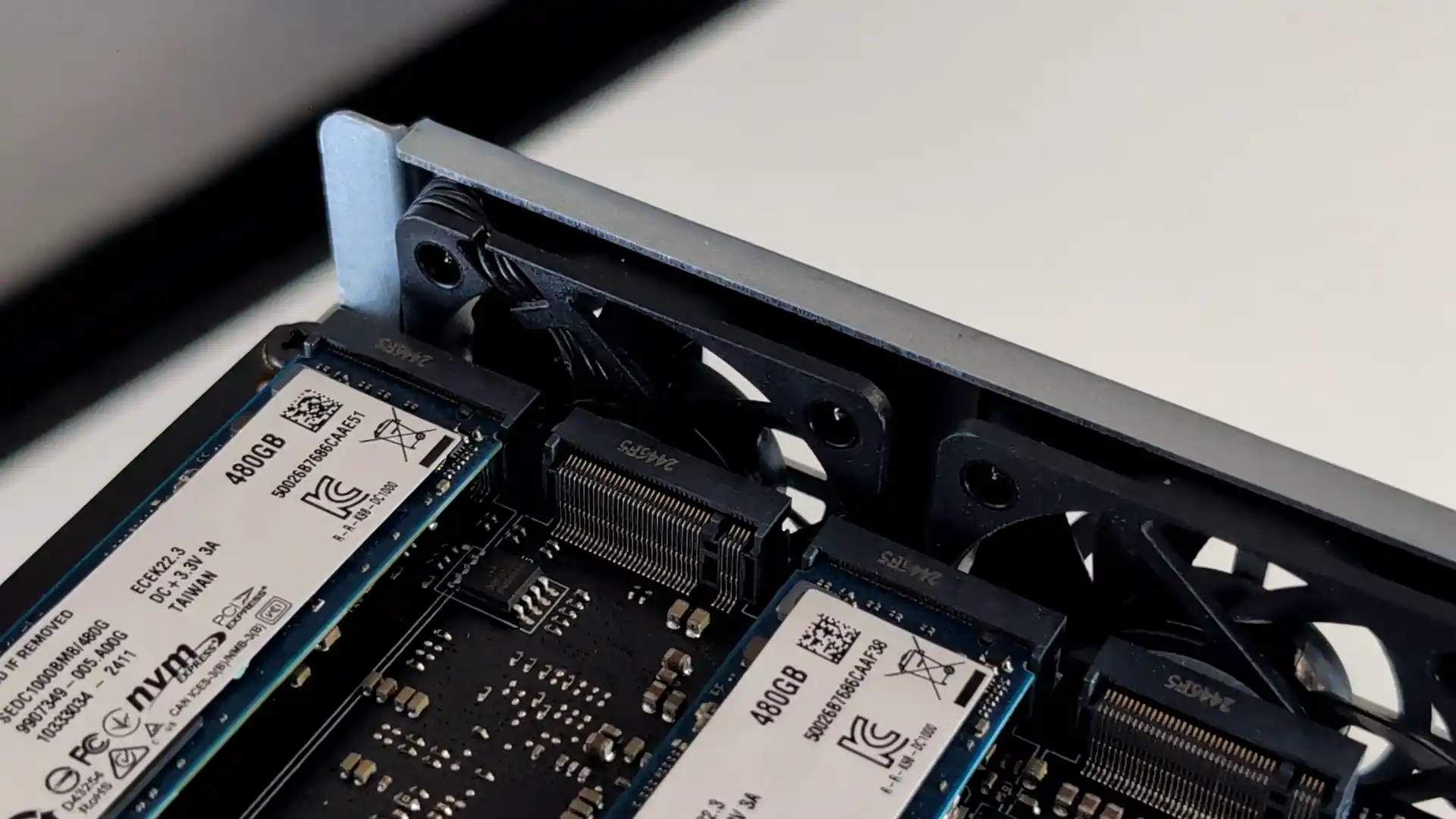
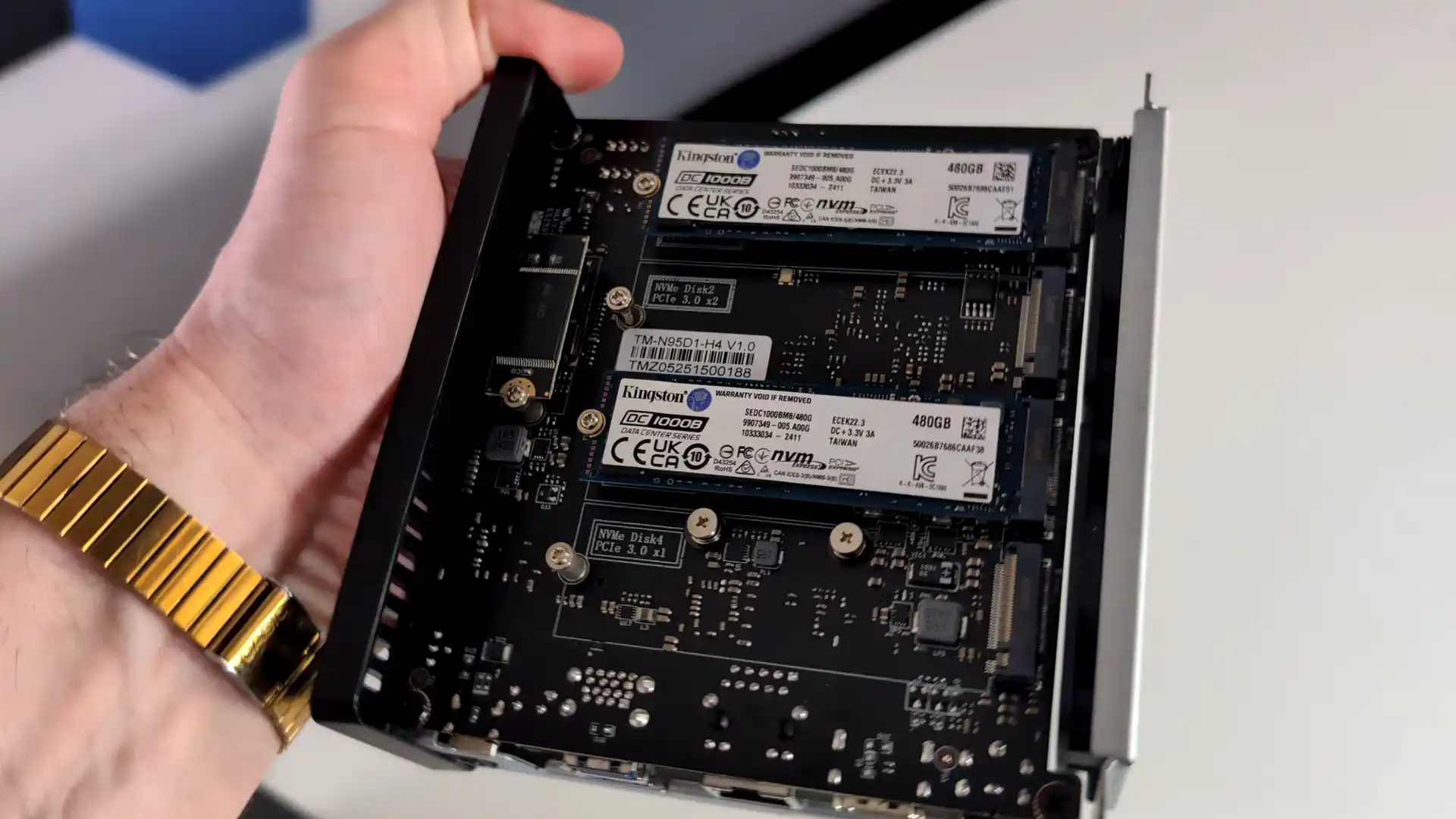
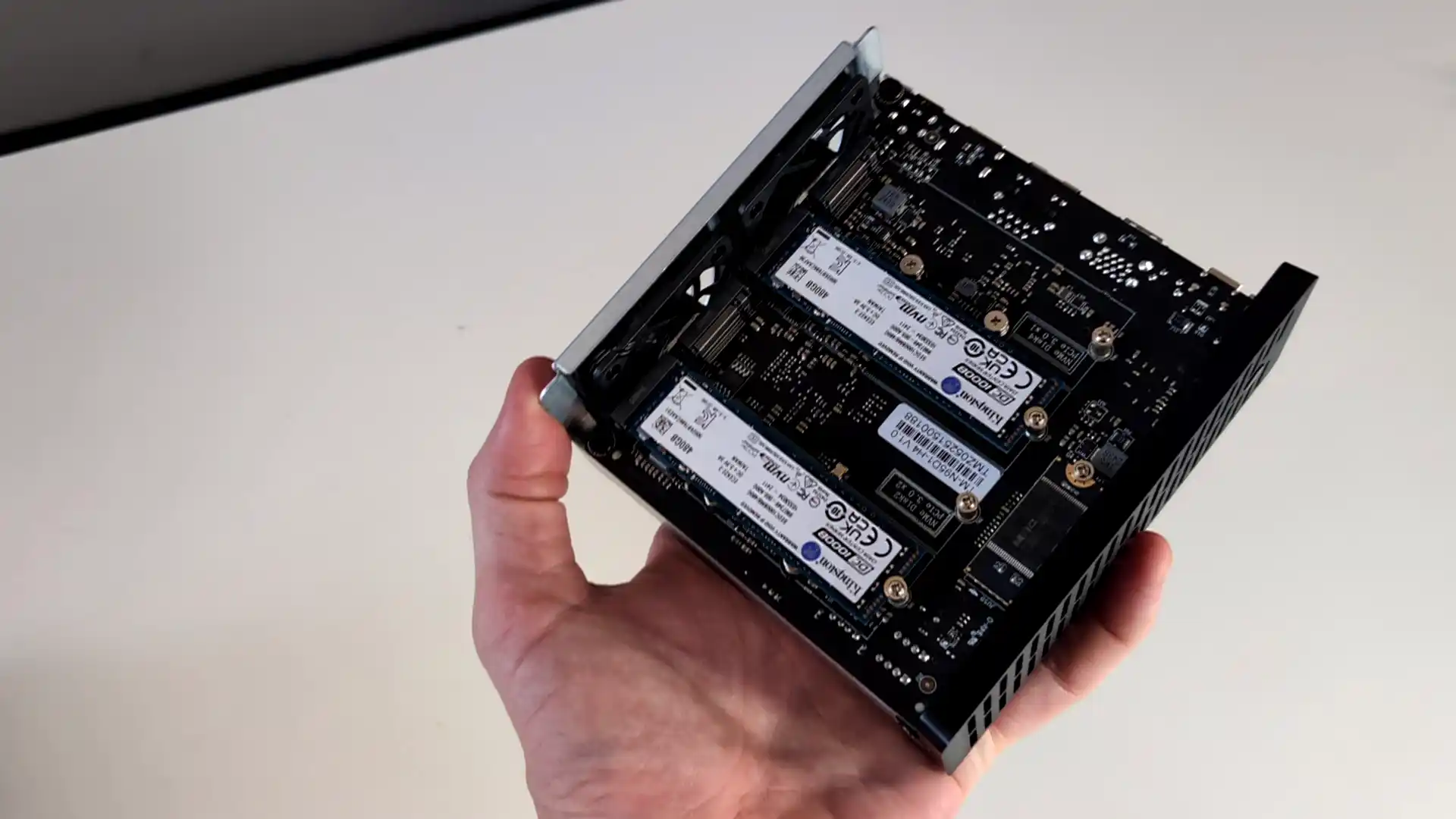
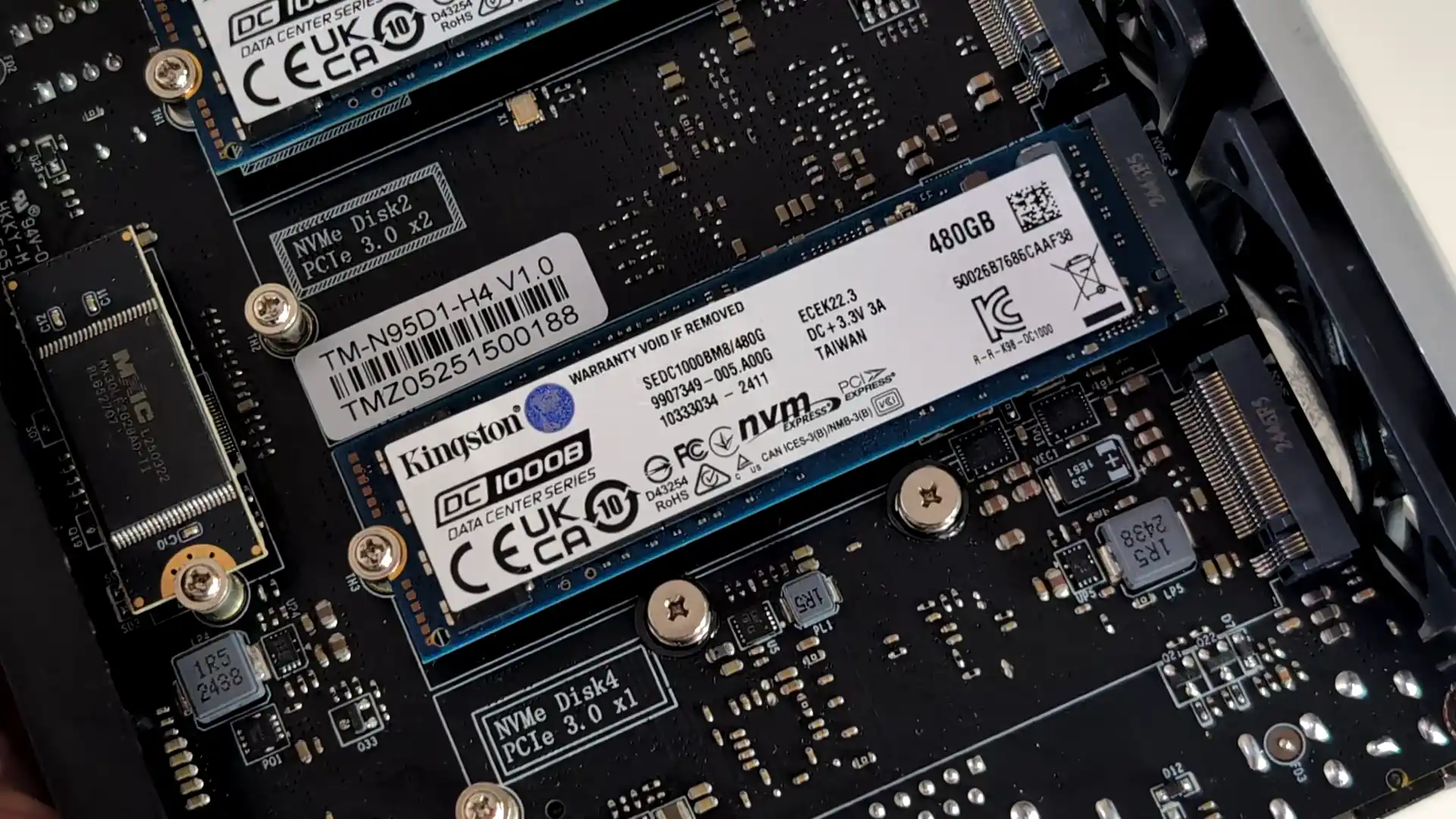
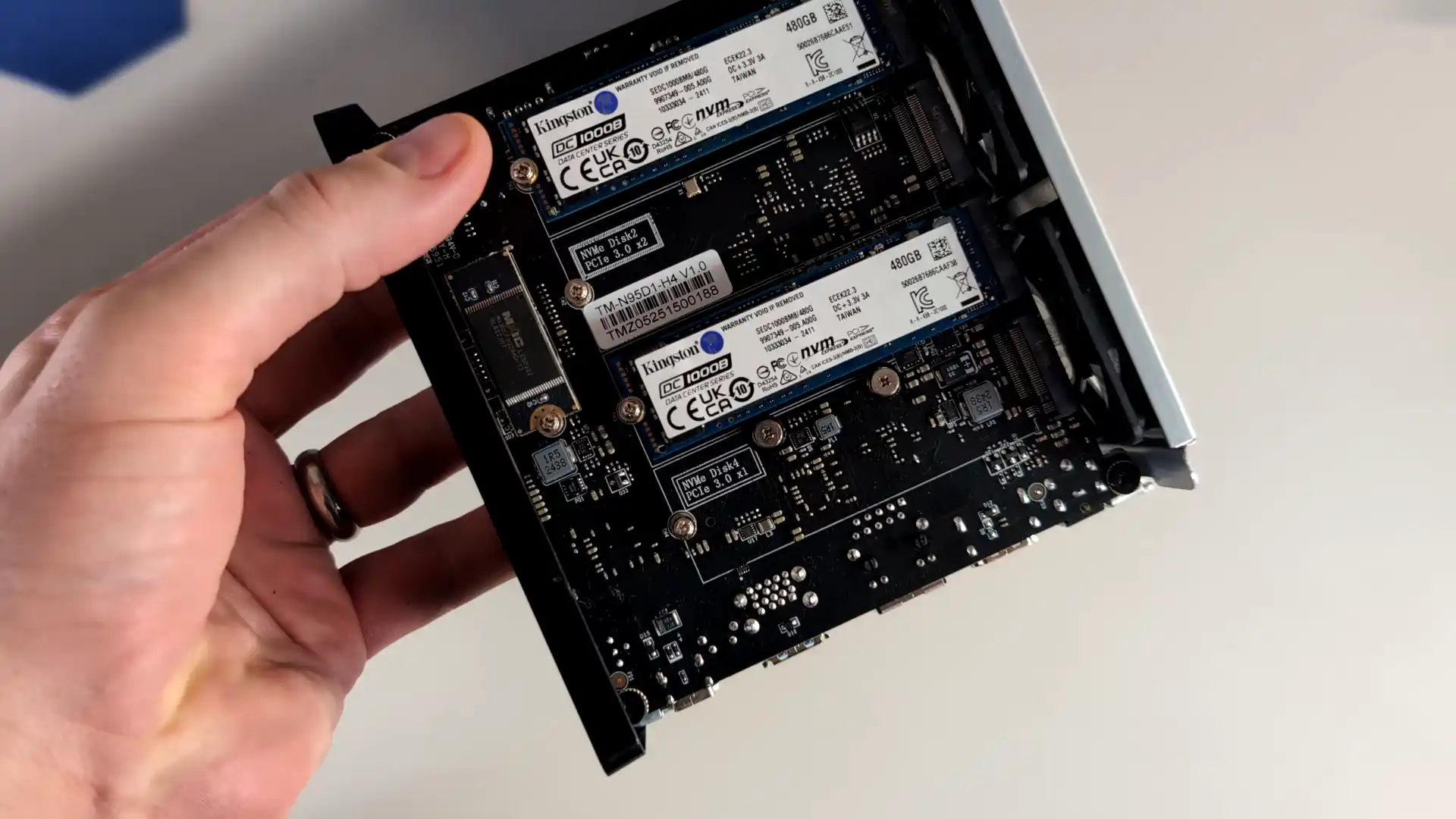
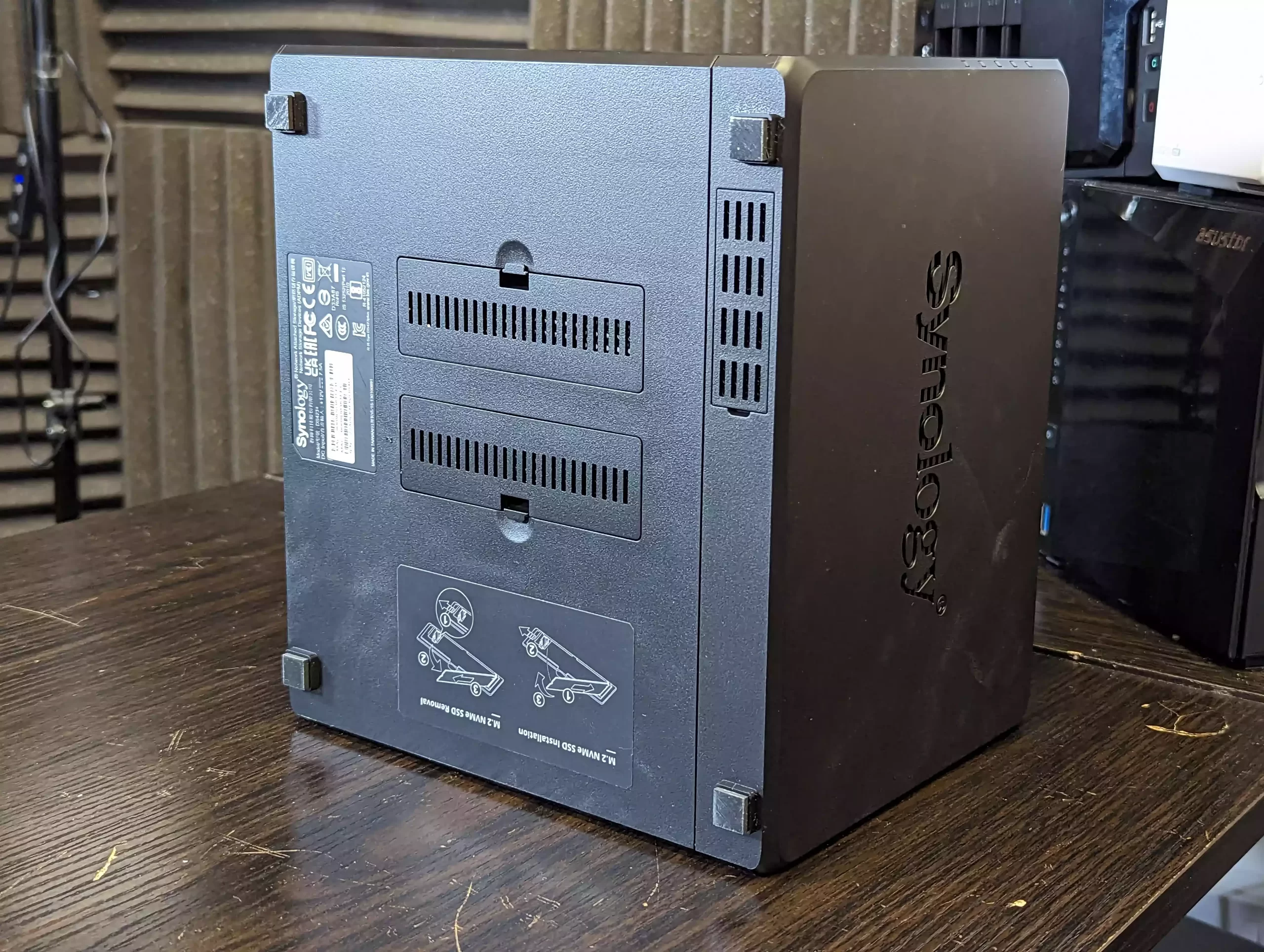
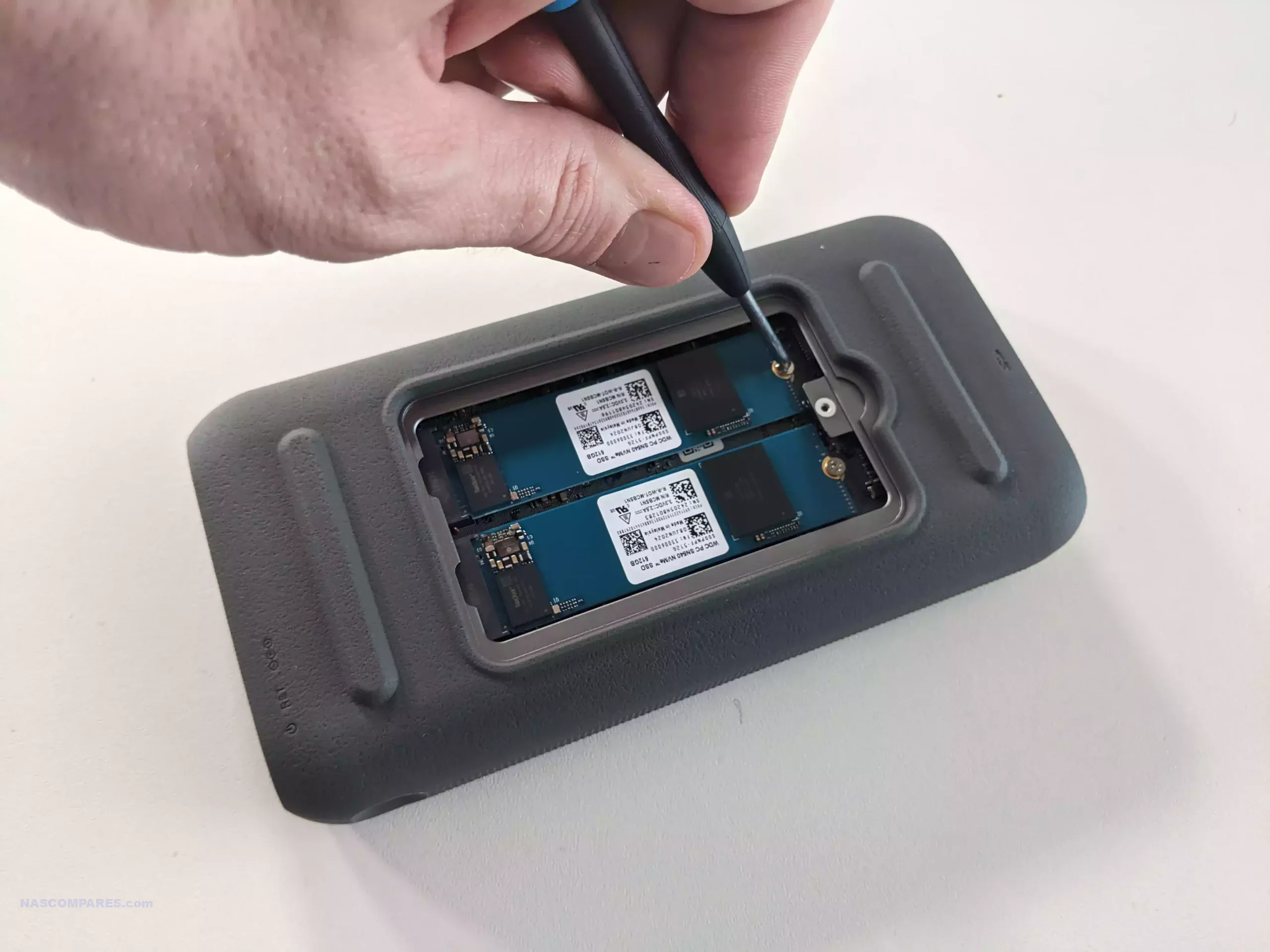
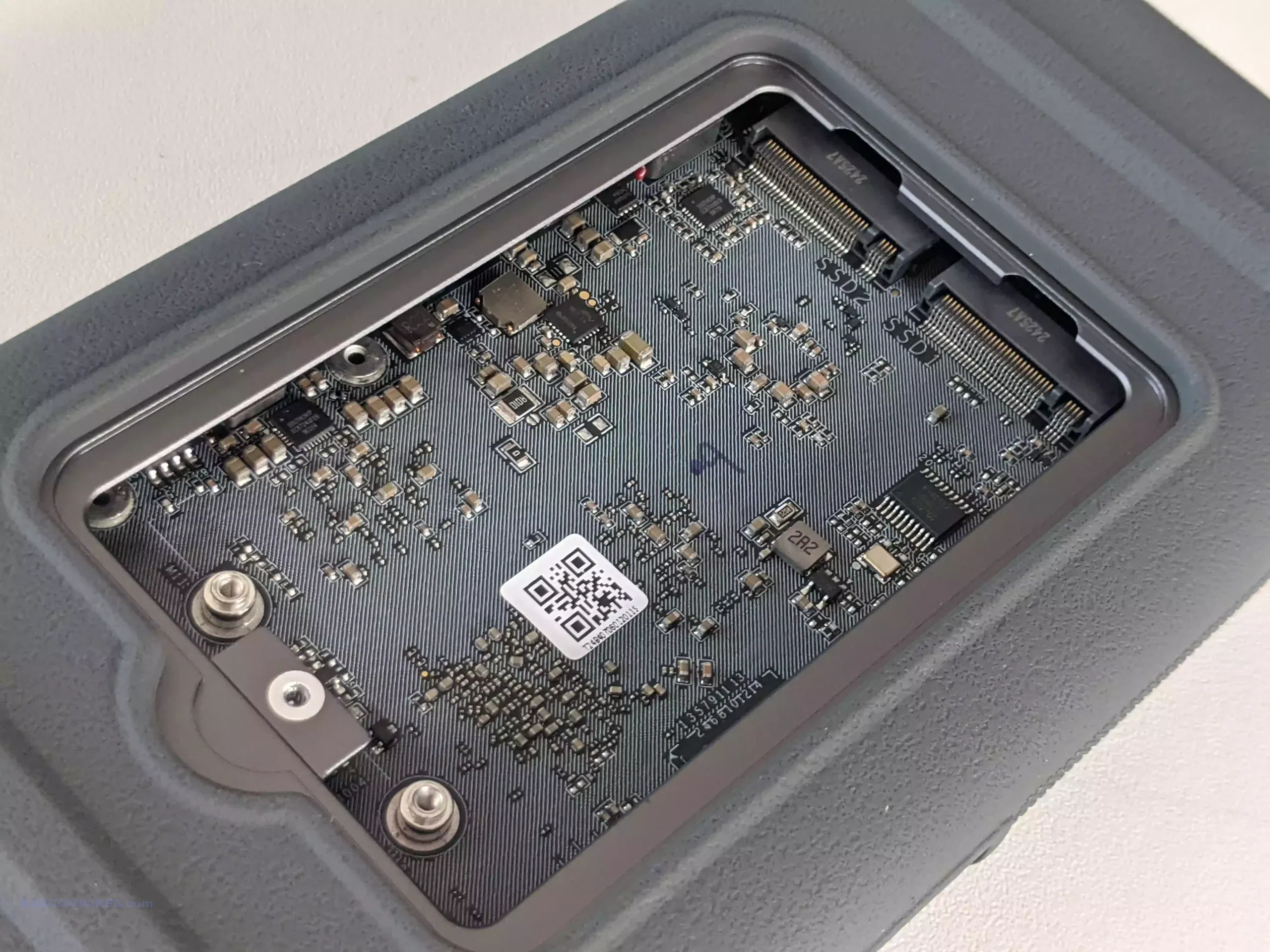
A secondary storage layer is provided by 2 underside M.2 ports, both supporting M.2 2280 NVMe SSDs. These slots are located under the bottom panel rather than on an internal motherboard tray accessed from the side, which means initial installation is straightforward but drive swaps are less convenient than the top SATA bays. The box contents include 2 thermal pads for SSDs of different thicknesses, which is a notable detail at this price point because it indicates the NVMe area was designed with at least basic thermal contact in mind rather than treating the slots as purely optional expansion. Functionally, these NVMe slots can be used for cache or as storage pools, which gives the system more deployment flexibility than a standard 2-bay HDD-only NAS.

The storage layout is technically more ambitious than many entry-level NAS devices because it combines 2 x SATA bays for bulk capacity with 2 x NVMe slots for faster storage tiers in a very small chassis. Based on the provided CPU/PCIe layout, the system is built around the RK3568 platform with PCIe and SATA resources split across NVMe and SATA connectivity, with the SATA side also involving a JMB575 SATA controller path for the drive bay implementation. In practical terms, this means the E1 is designed to support mixed workloads such as HDD-based backups plus SSD cache, or separate SSD-backed application/media indexing storage alongside larger mechanical drives. This is still a consumer NAS layout, but from a hardware planning perspective it gives more options than a basic ARM 2-bay design that only exposes SATA.

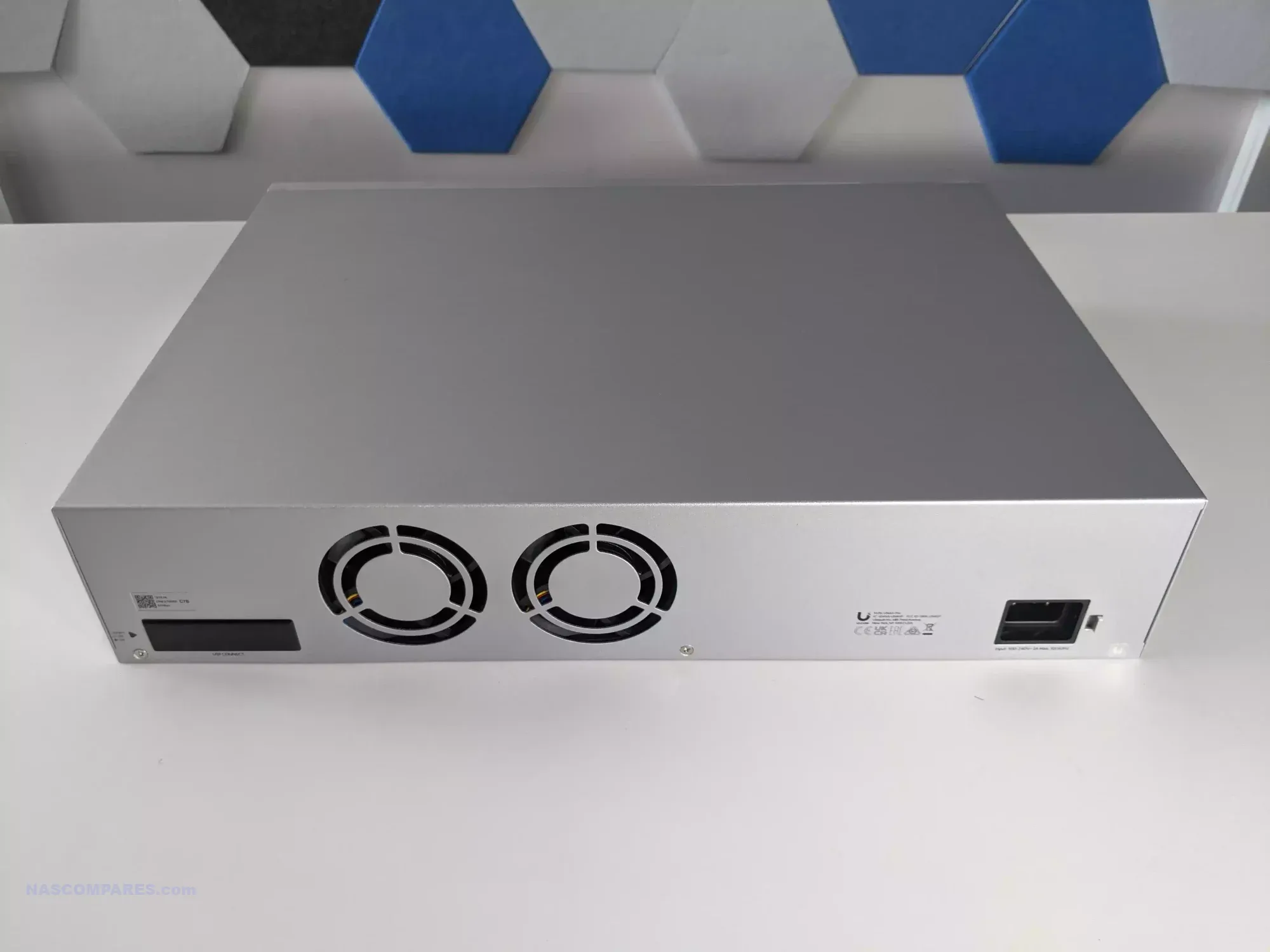
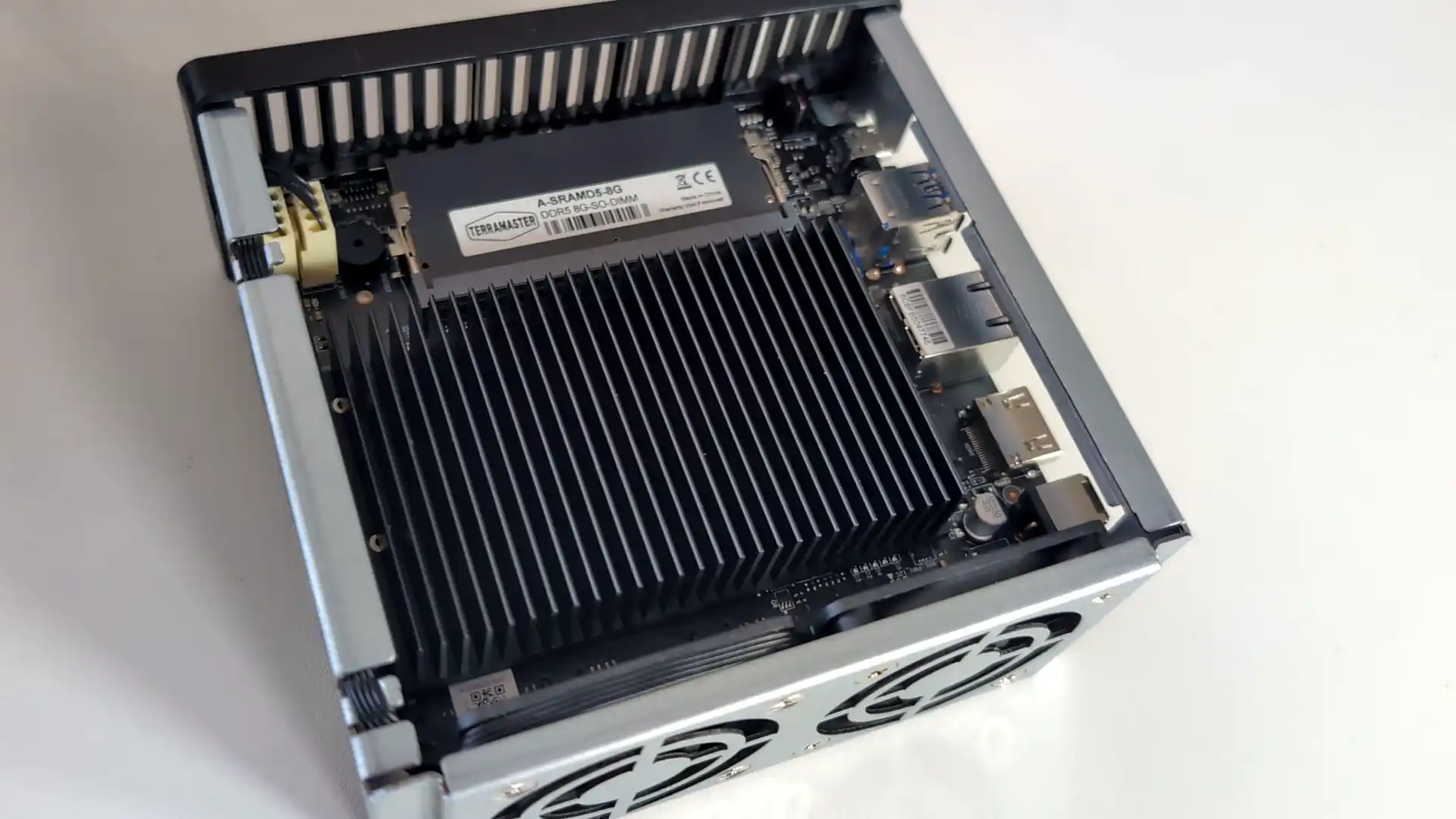
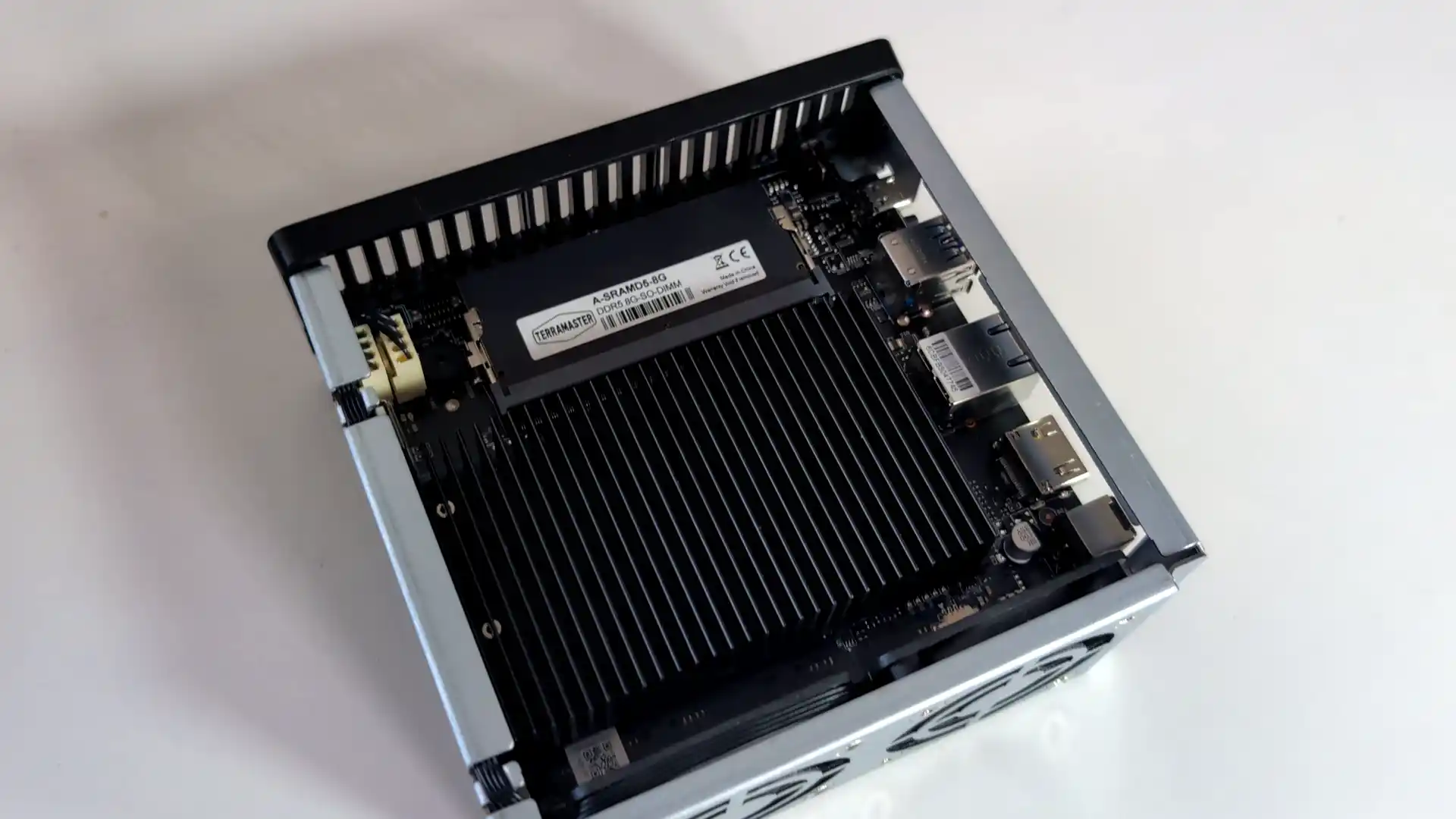
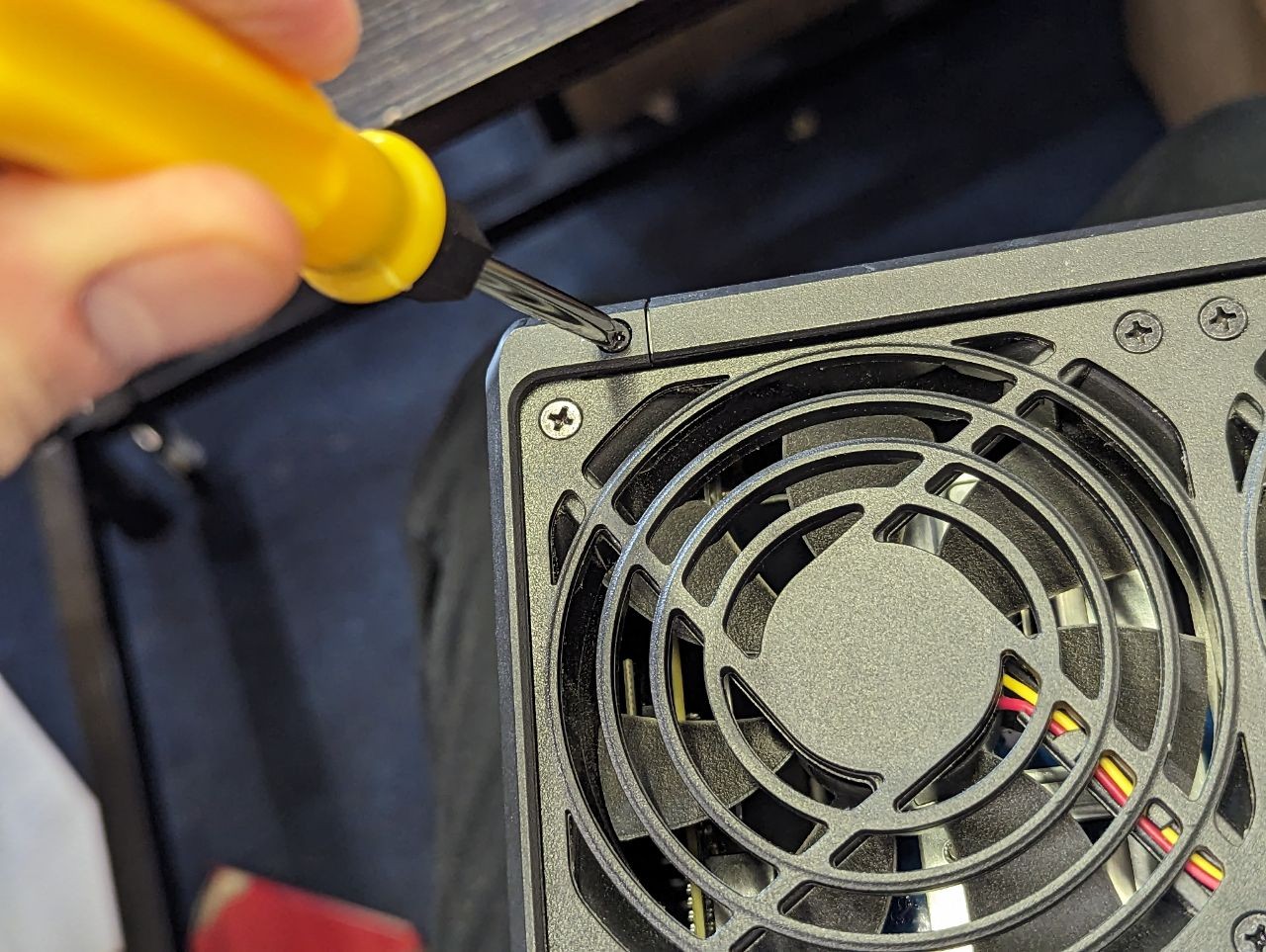
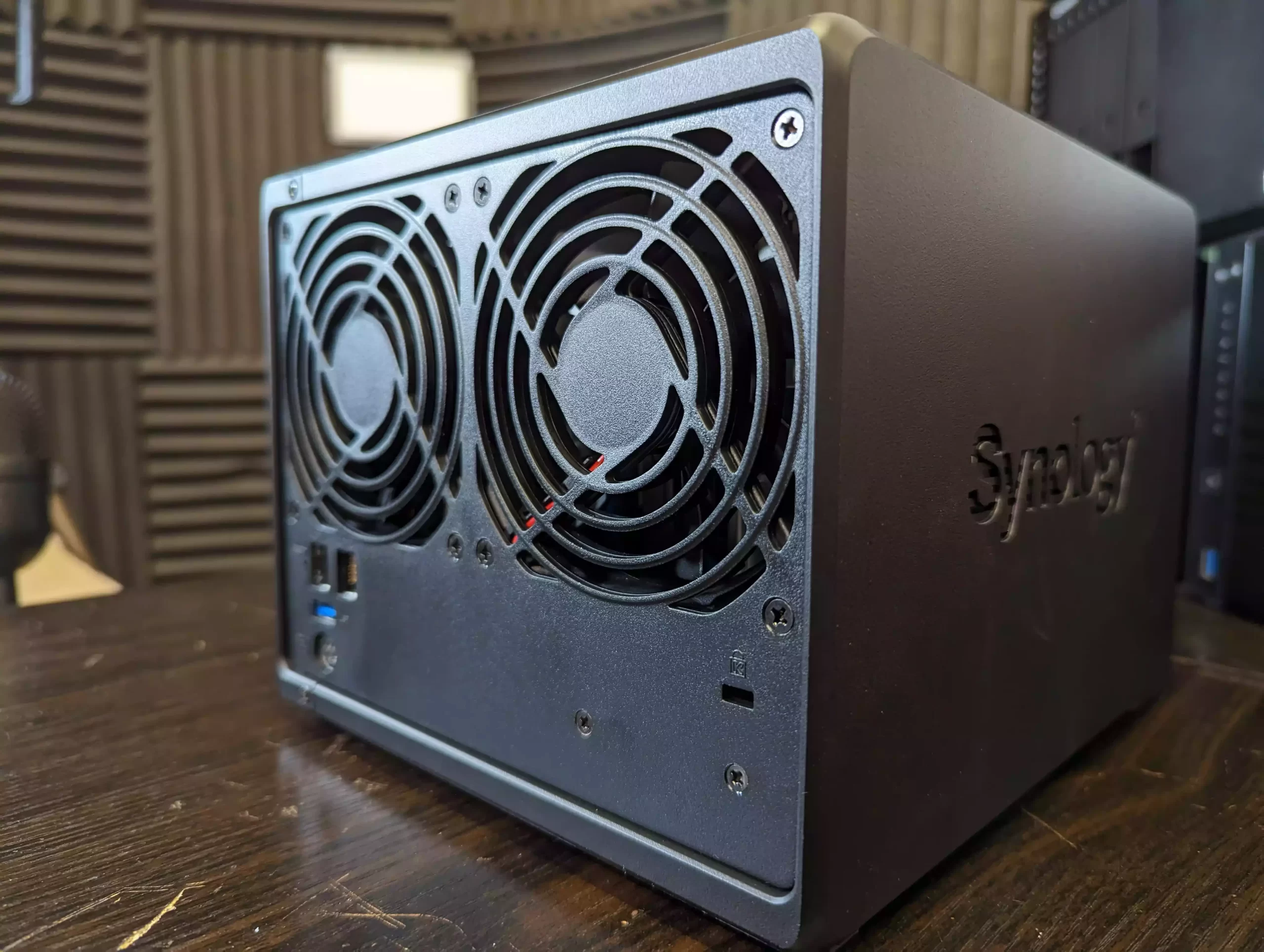
From a mechanical and thermal design perspective, the main compromise is internal space density, especially around the underside NVMe area and the airflow path shared across the enclosure. The chassis uses a single base-mounted fan and passive ventilation openings around multiple sides, with the SATA bays above and the NVMe slots below, so the internal airflow strategy is relatively simple and constrained by the compact dimensions. This approach is consistent with the low-power RK3568 platform and the intended use of 2 local drives plus optional NVMe, but it also means there is limited room for large heatsinks, cable routing, or internal upgrades beyond the defined storage slots. As a result, the E1 offers a technically flexible storage layout for its class, but it remains a tightly integrated, compact NAS design rather than a modular enclosure built for extensive hardware modification.

Lincstation E1 NAS Review – Internal Hardware
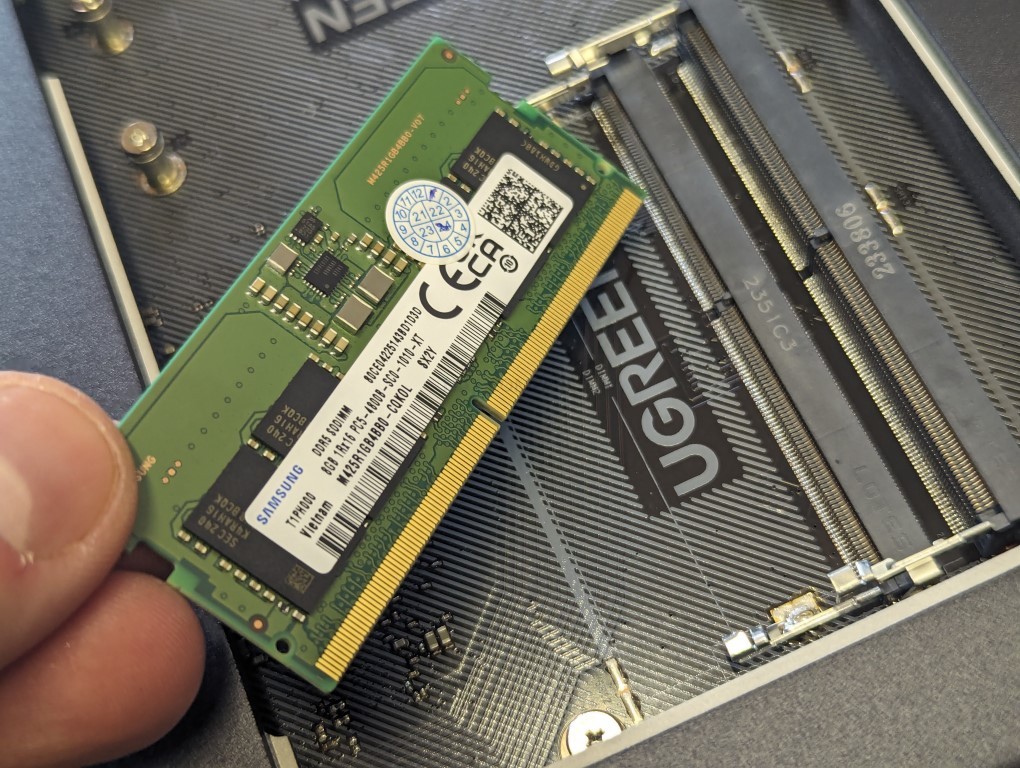
The LincStation E1 is built around the Rockchip RK3568, a quad-core ARM SoC (Cortex-A55 class) running at up to 2.0 GHz. This is a low-power embedded platform commonly used in compact network and edge devices, and it is a practical fit for a NAS that prioritizes basic file services, light media tasks, and low idle power over high parallel compute performance. In this system, the RK3568 is paired with 4 GB of embedded DDR4 memory, with no indication of user-upgradeable RAM, which places the E1 firmly in the entry-level category for multitasking and container-heavy workloads.

From an architecture standpoint, the E1’s hardware is more interesting than a typical low-cost 2-bay ARM NAS because it exposes both SATA and NVMe storage within a single compact design. The provided block layout shows the RK3568 distributing PCIe lanes across NVMe connectivity and additional controller paths, while the SATA bays are implemented through a JMB575 SATA controller stage. This matters because the system is not simply attaching 2 SATA drives directly to a minimal embedded board, but instead using a more layered I/O design to support 2 x SATA bays plus 2 x NVMe slots within the limits of the SoC’s available interfaces.

The hardware platform also includes a 1GbE network interface, HDMI 2.1 (TMDS) output, and a mix of USB connectivity, which indicates that the E1 is designed as more than a headless file box even if its primary role is NAS storage. The CPU/PHY layout also reflects the shared nature of resources in compact ARM systems, where PCIe, USB, and SATA connectivity are allocated carefully to balance cost and capability. In practical terms, the hardware specification is broad for the class, but users should still view it as a constrained embedded platform, not as a substitute for x86 NAS hardware with higher throughput ceilings or large virtualization headroom.

At a system design level, the internal hardware choices are clearly optimized around low power draw, compact thermals, and cost efficiency. The RK3568 platform, embedded memory, and compact board-level integration reduce complexity and help keep the device small, while the storage expansion is pushed into the defined SATA and M.2 bays rather than broader internal upgrade options. This makes the E1 a purpose-built appliance with a relatively fixed hardware profile: flexible in storage configuration, but limited in CPU and memory scalability once deployed.

Lincstation E1 NAS Review – Ports and Connections
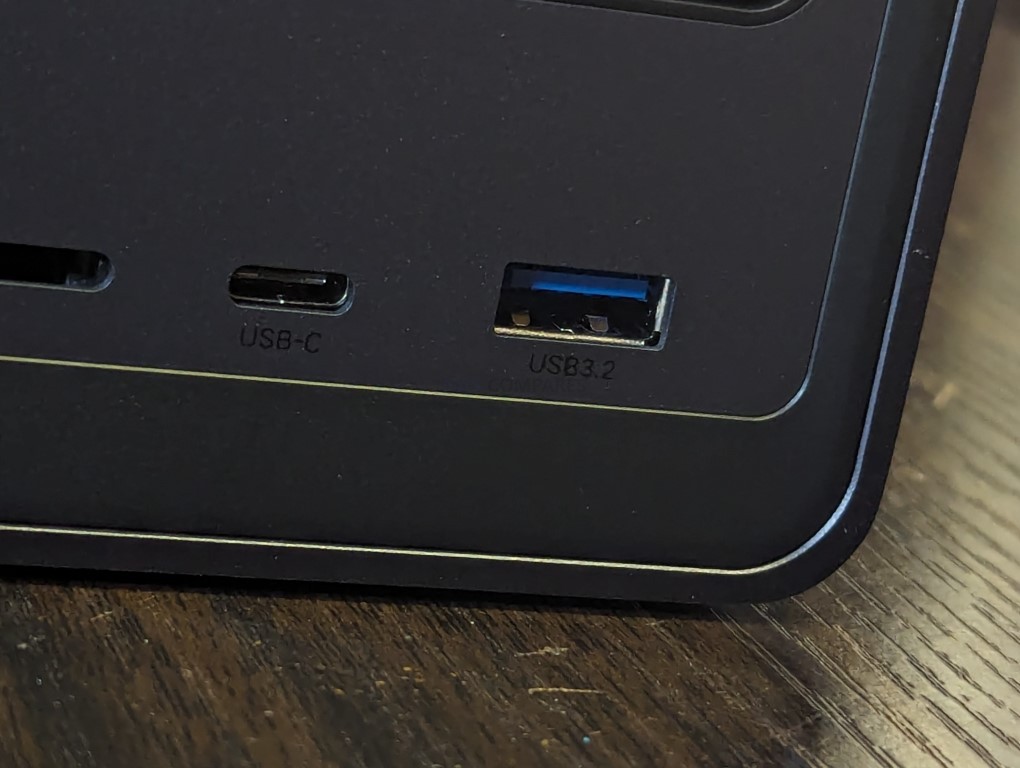
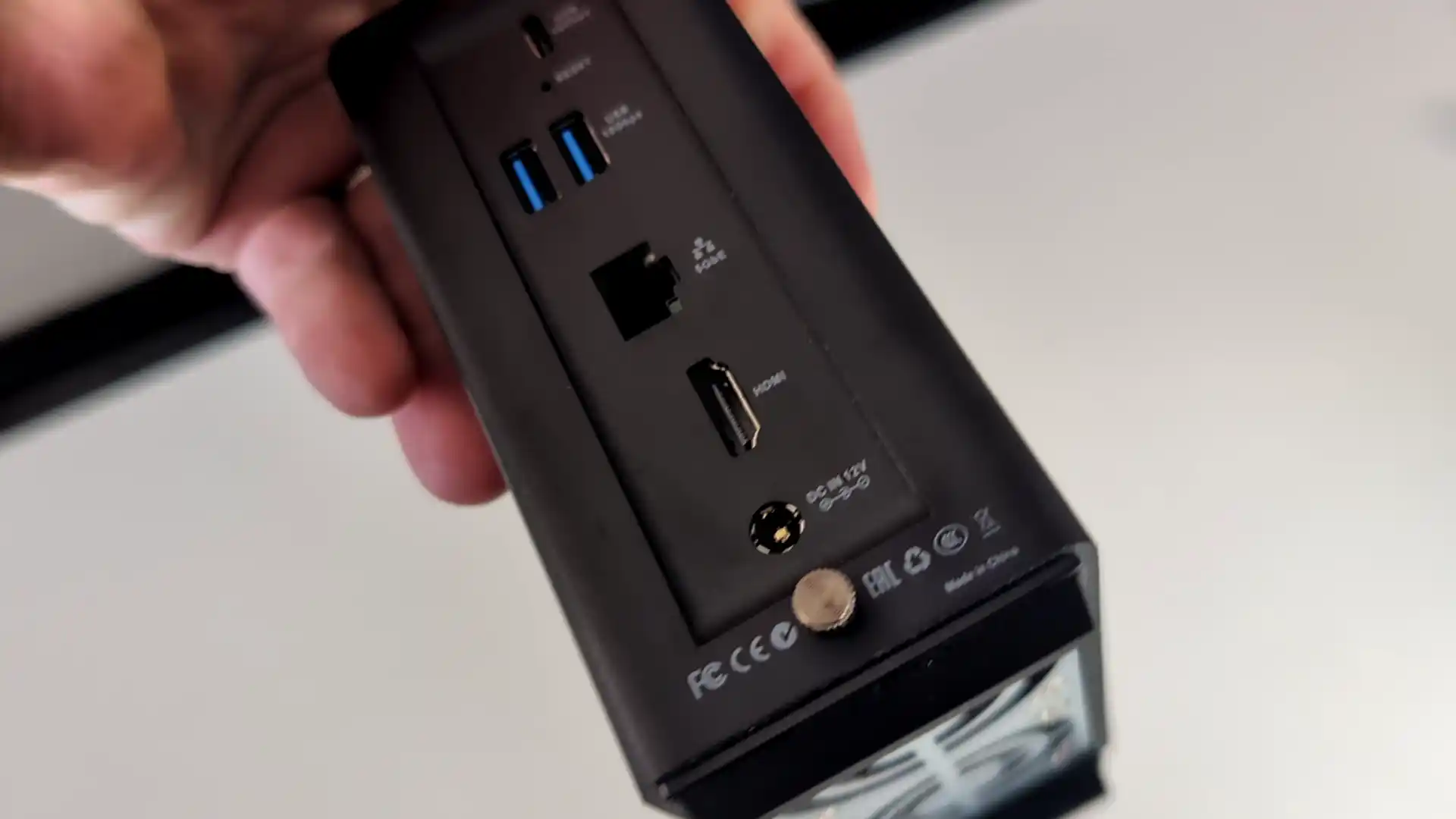
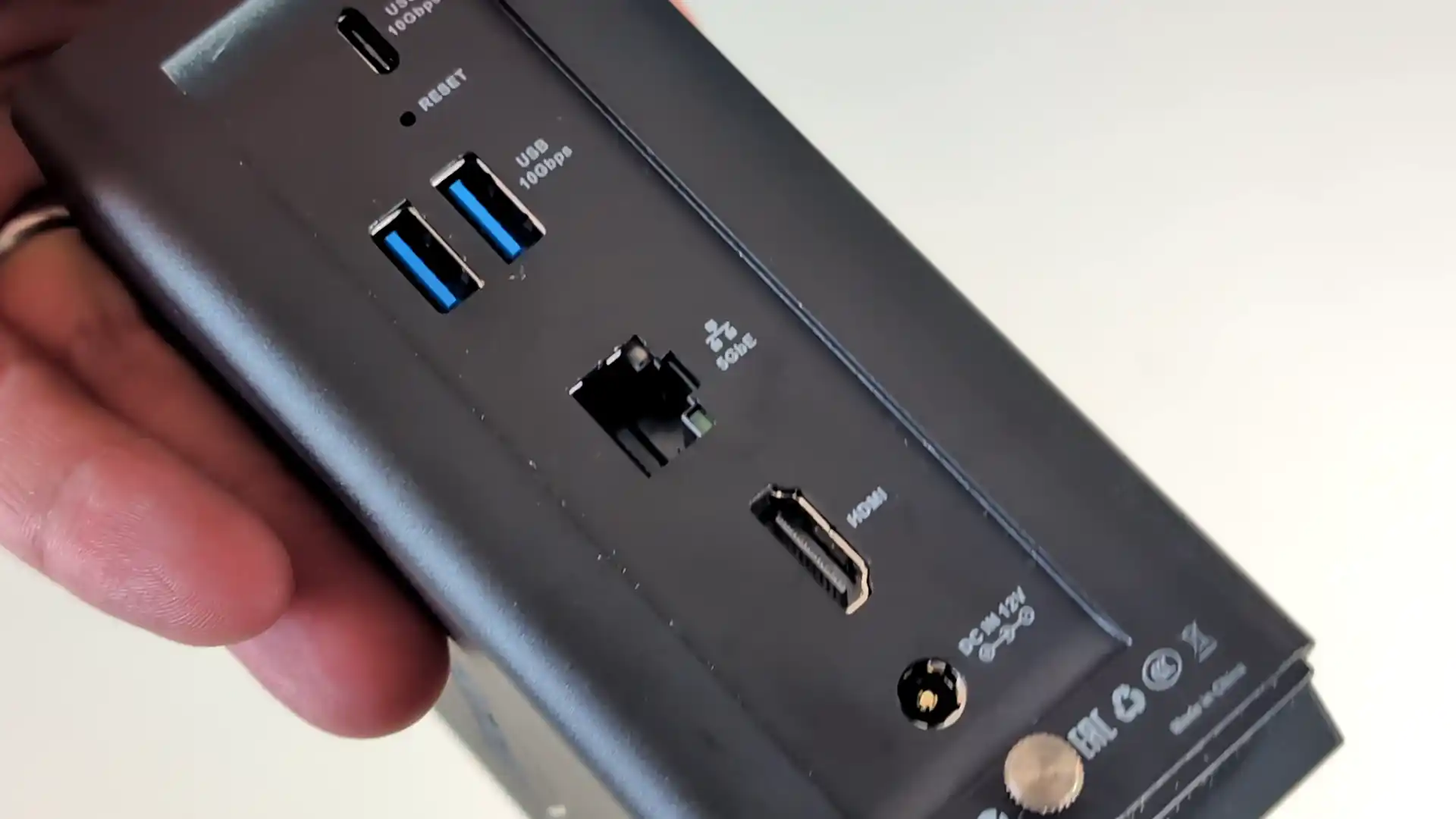
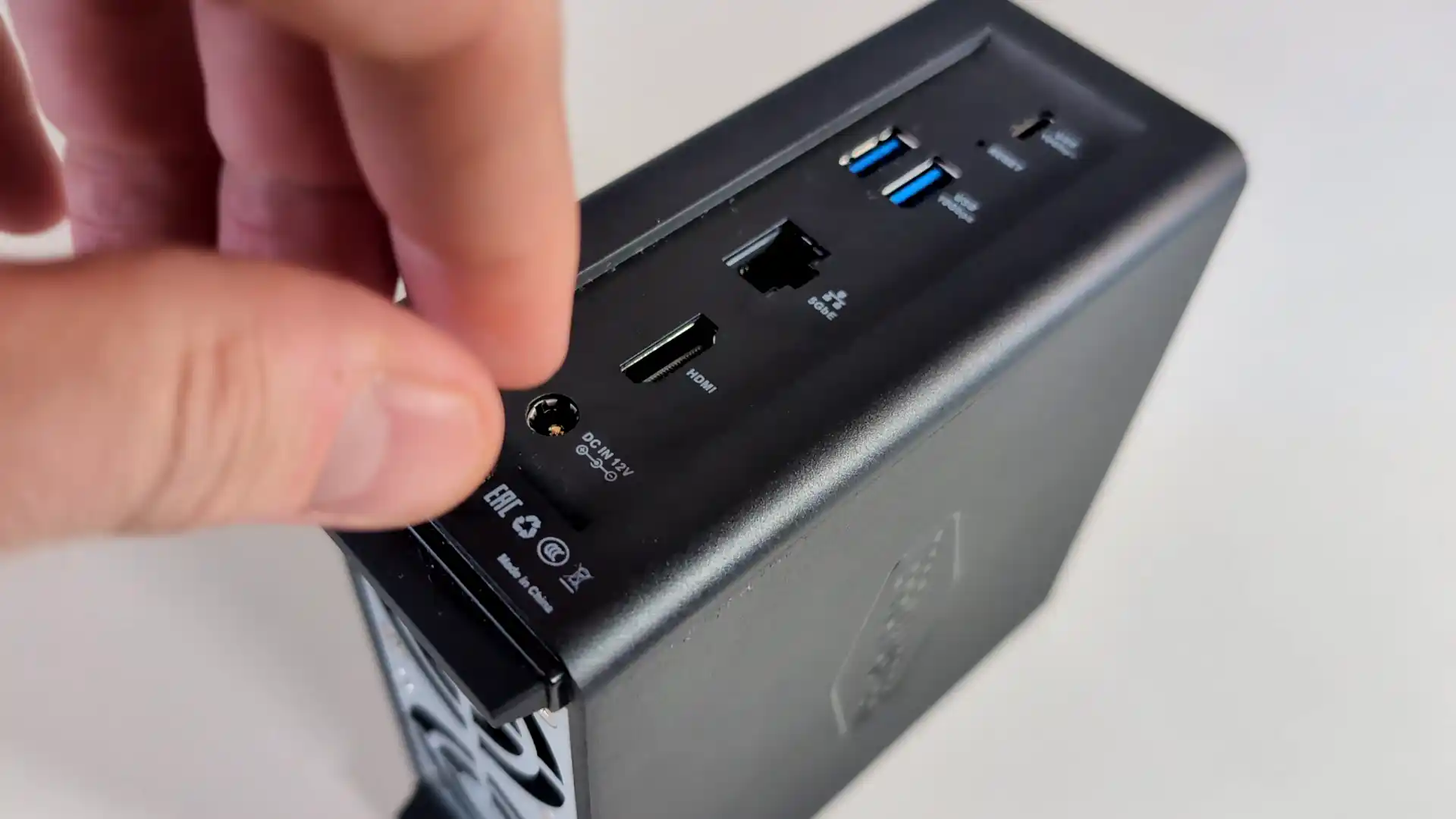
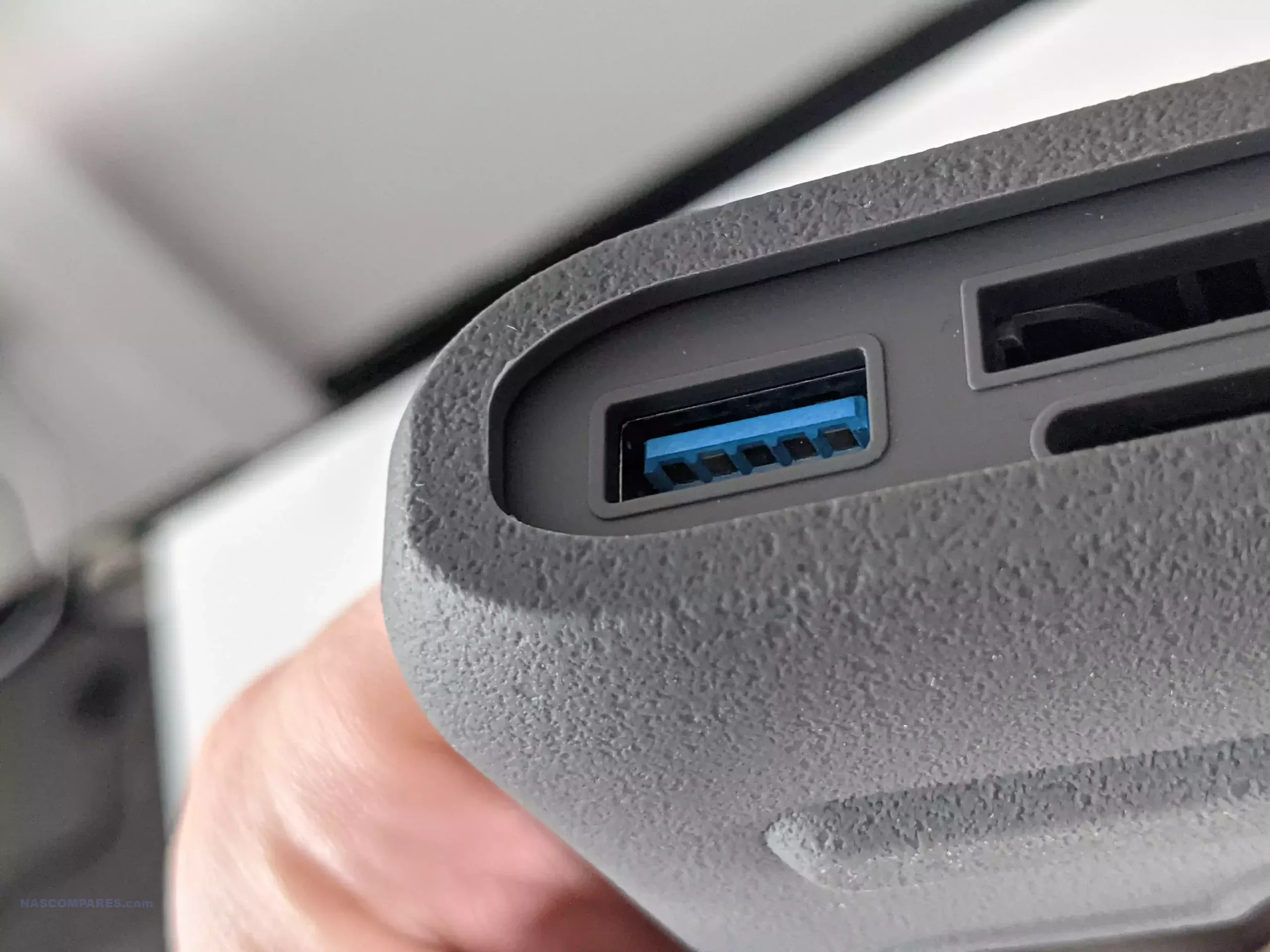
The LincStation E1 provides a basic but functional I/O layout split across the front and rear panels. On the front, there is 1 x USB 3.2 Gen 2 Type-A port, which is the highest-speed external USB connection on the unit and the most practical port for temporary storage imports, external backup drives, or direct file transfers. The front panel also includes the status LEDs for both SATA bays, both NVMe slots, network activity, and the power button with integrated LED, so operational state is visible from the main user-facing side of the device.

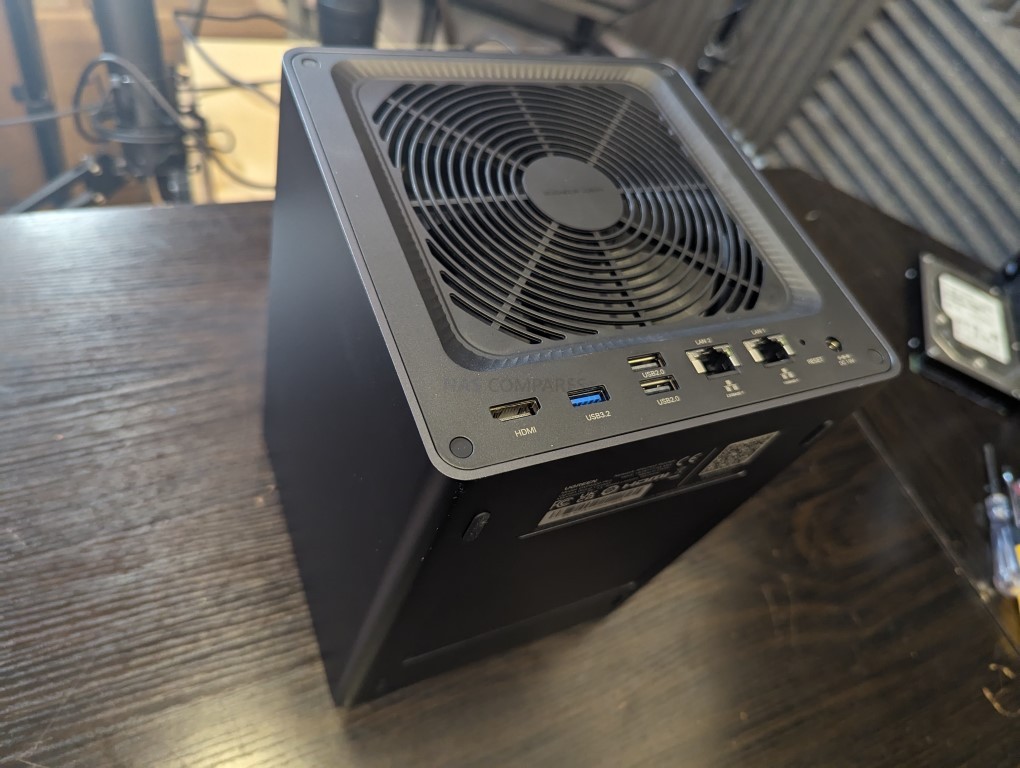
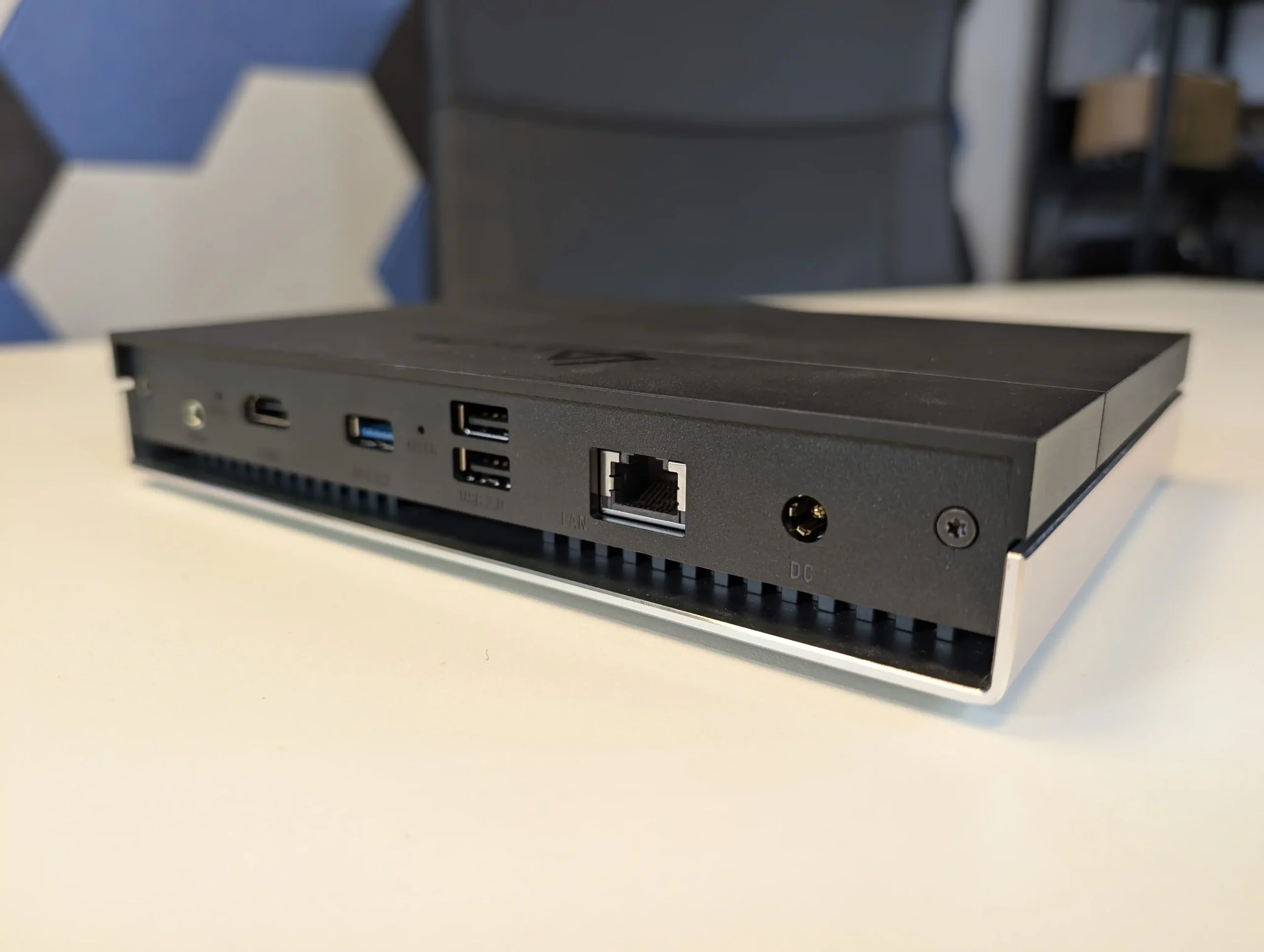
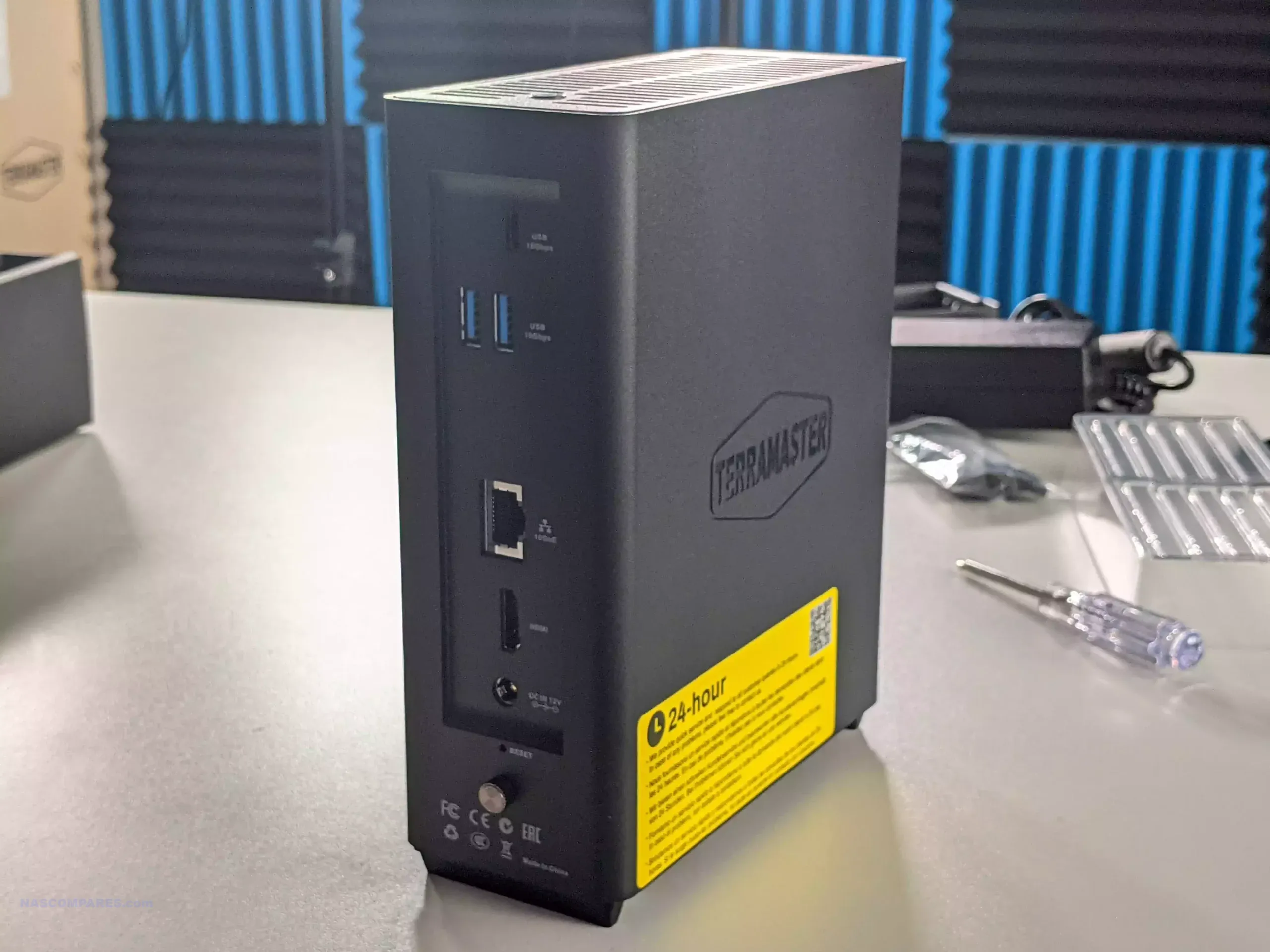
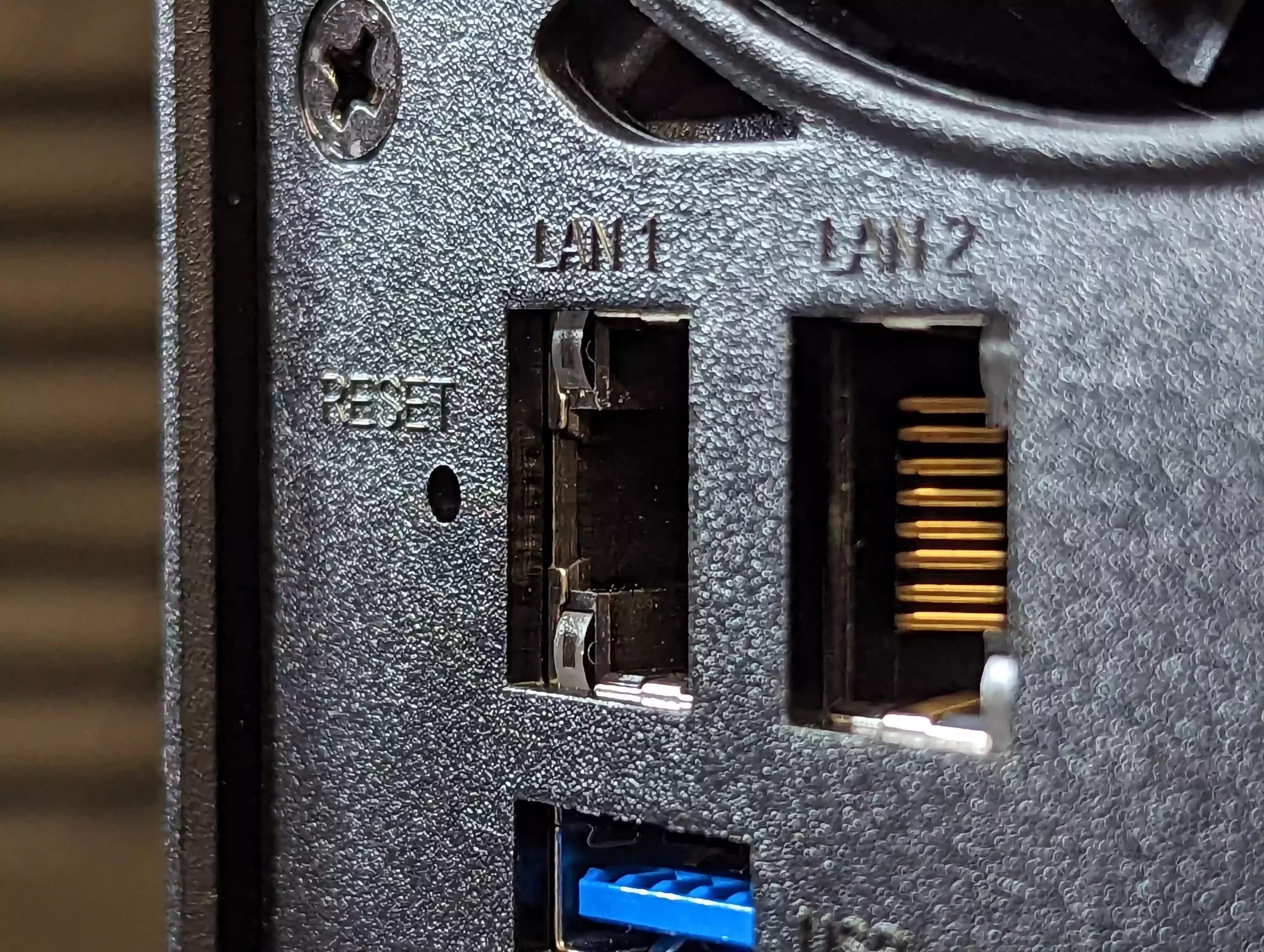
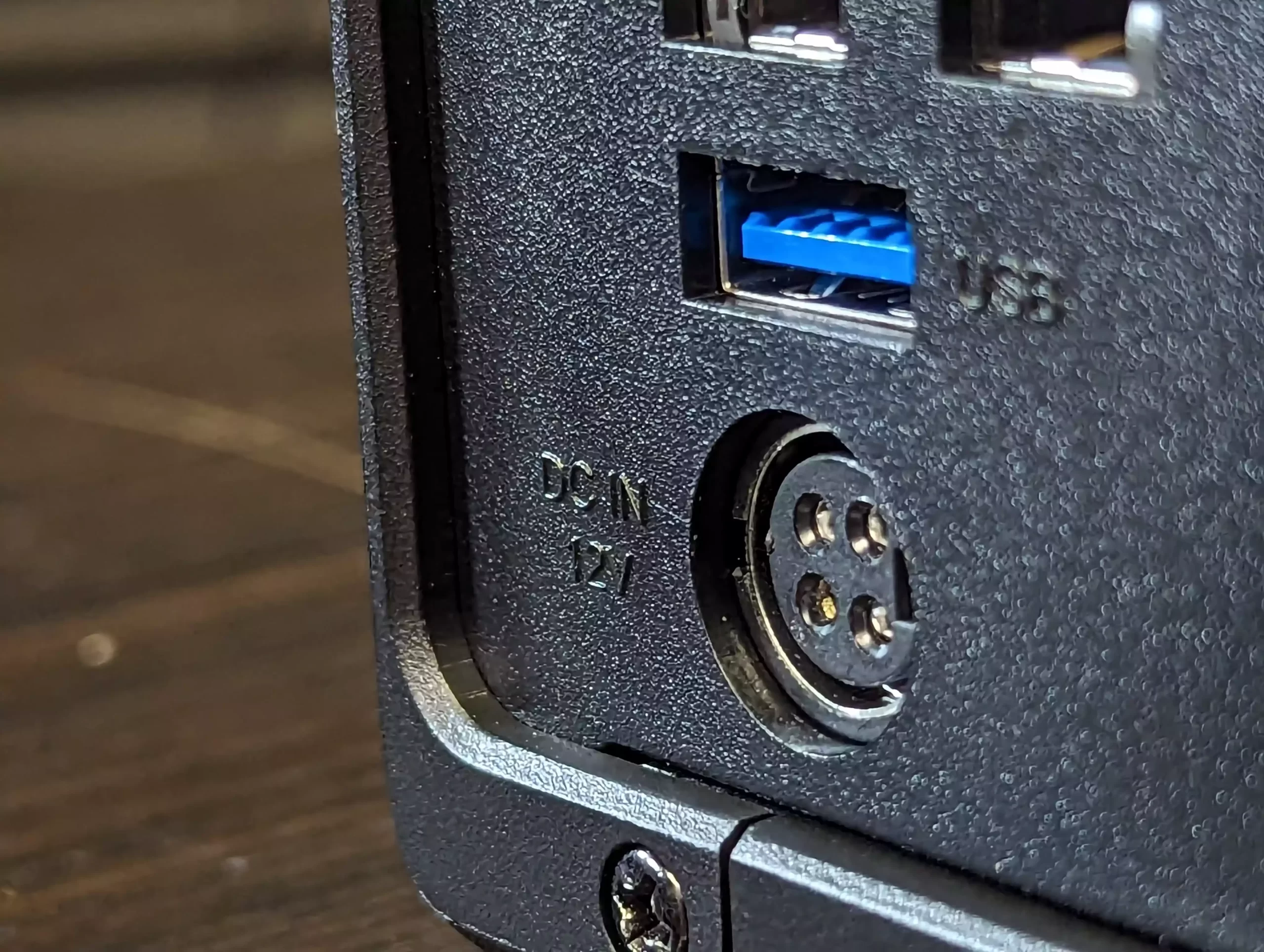
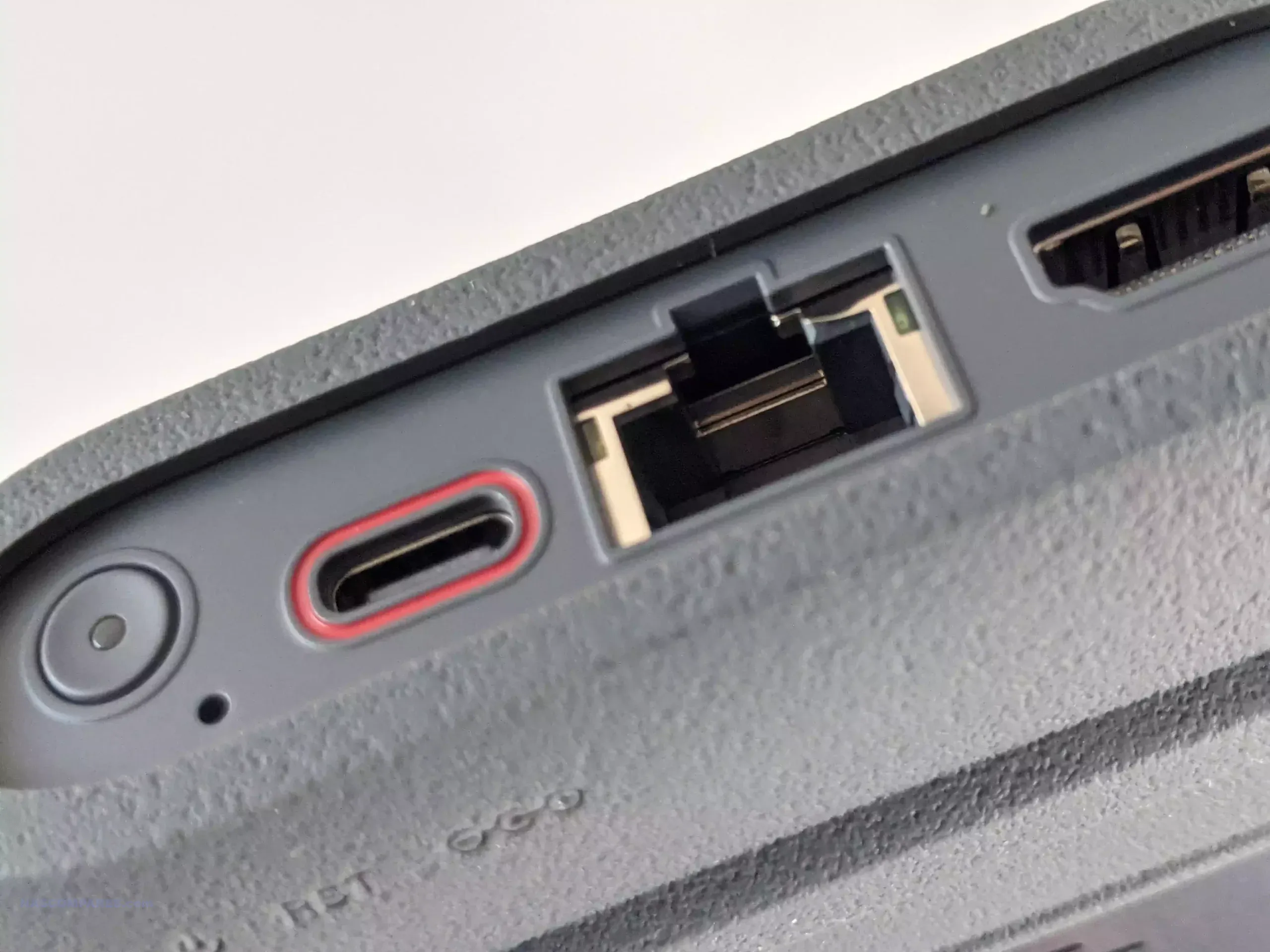
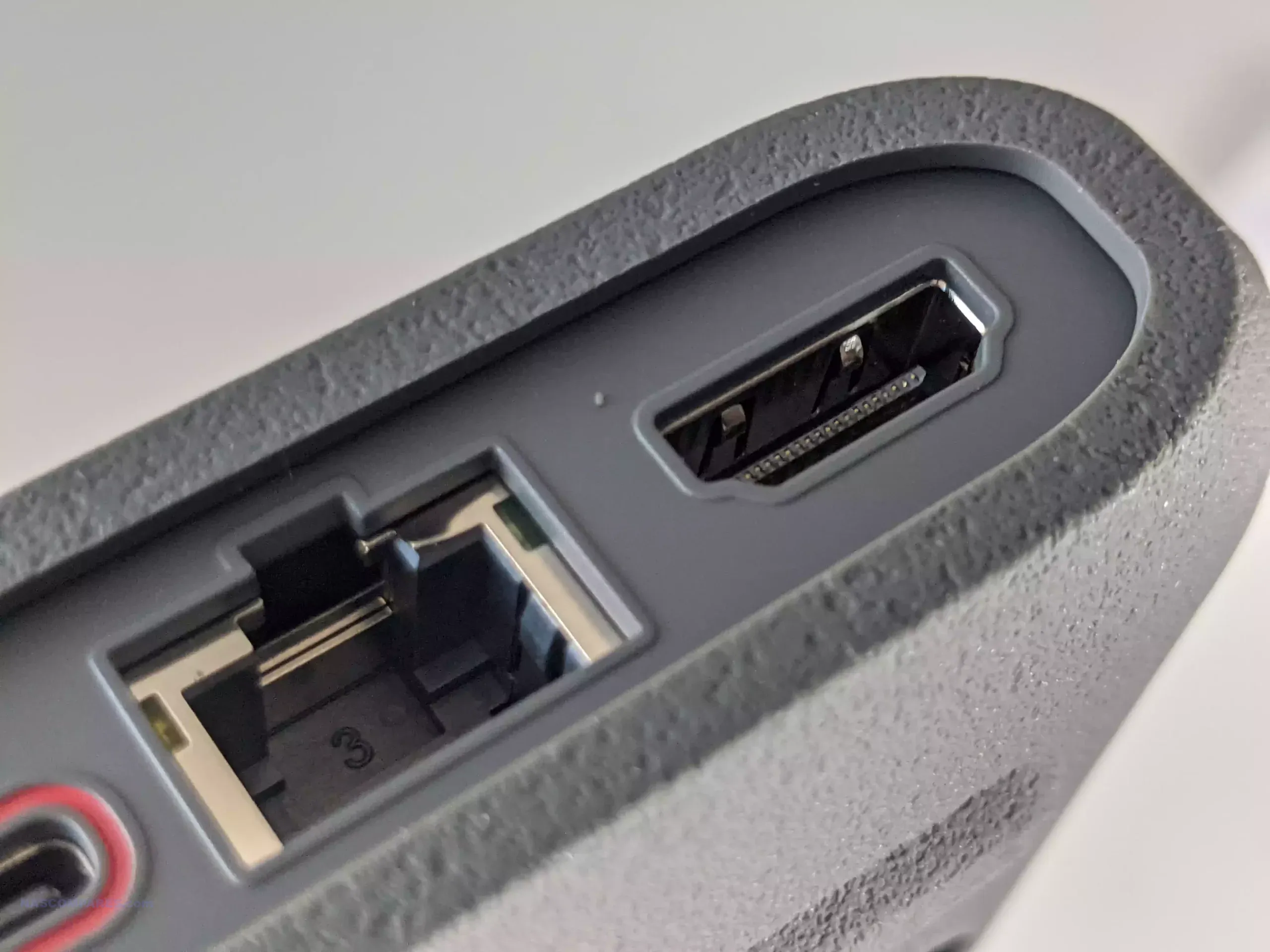
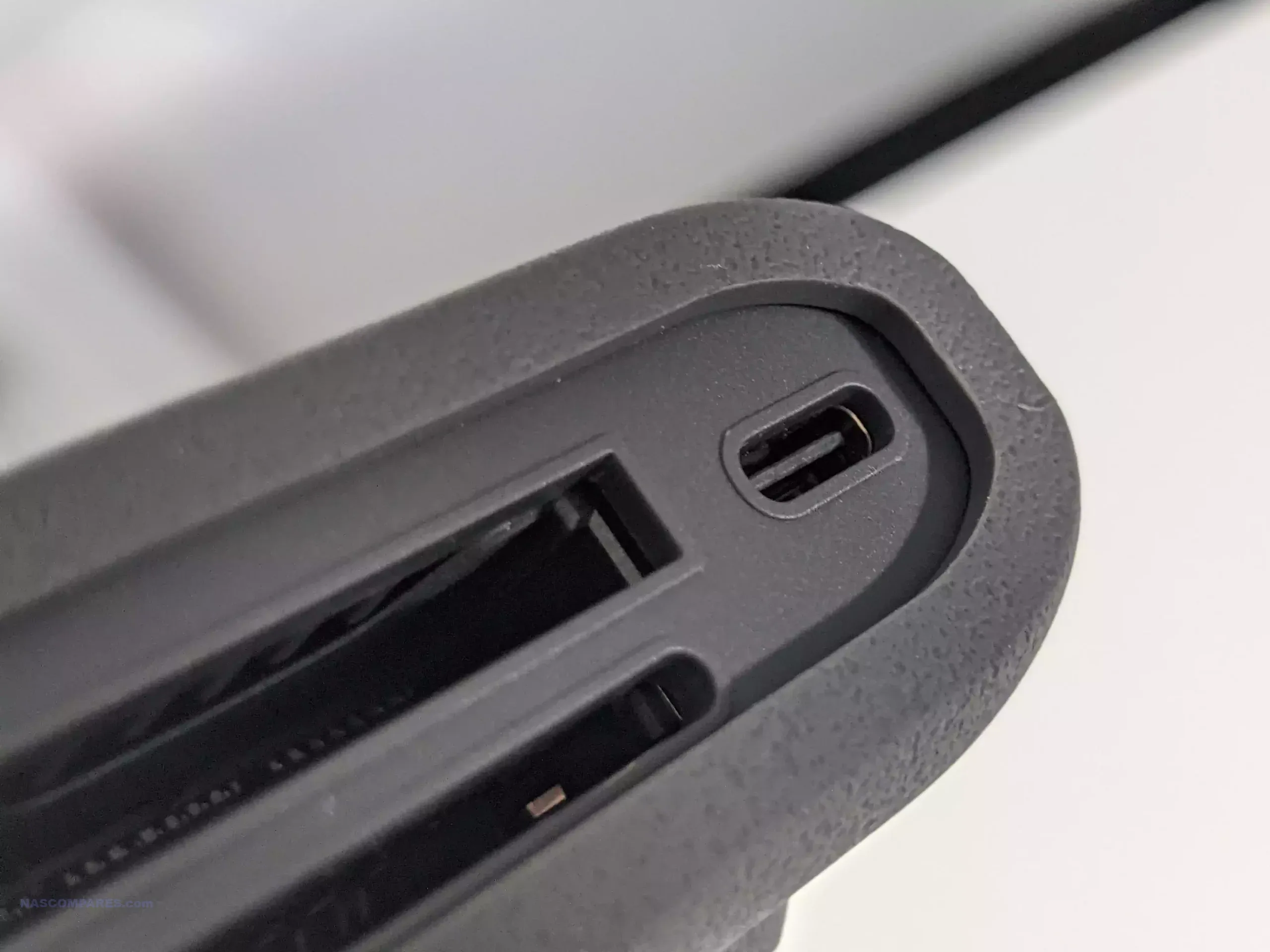
On the rear panel, the E1 includes 1 x RJ-45 LAN port, 2 x USB 2.0 Type-A ports, 1 x HDMI 2.1 (TMDS) port, a reset button, and a 12V/5A DC power input jack. The rear USB ports are limited to USB 2.0, which is sufficient for low-speed peripherals or occasional backup devices, but they are not ideal for sustained high-speed external storage workflows. The HDMI output is an important inclusion in specification terms because it expands potential use cases beyond standard NAS access, although the practical value of that port depends on software support and feature maturity.

In networking terms, the hardware specification lists 1 x Gigabit RJ-45, while the review transcript references 1GbE operation during testing and performance discussion, so this is an area where buyers should verify the final shipping specification and campaign listing before purchase. Regardless of the final Ethernet speed, the E1 only provides a single wired LAN port, which means no link aggregation, no failover path, and no dual-NIC network segmentation. The system does, however, also support Wi-Fi connectivity according to the review material, which may help with placement flexibility or initial setup, but wired Ethernet remains the primary connection for NAS use.

Lincstation E1 NAS Review – Software and Services
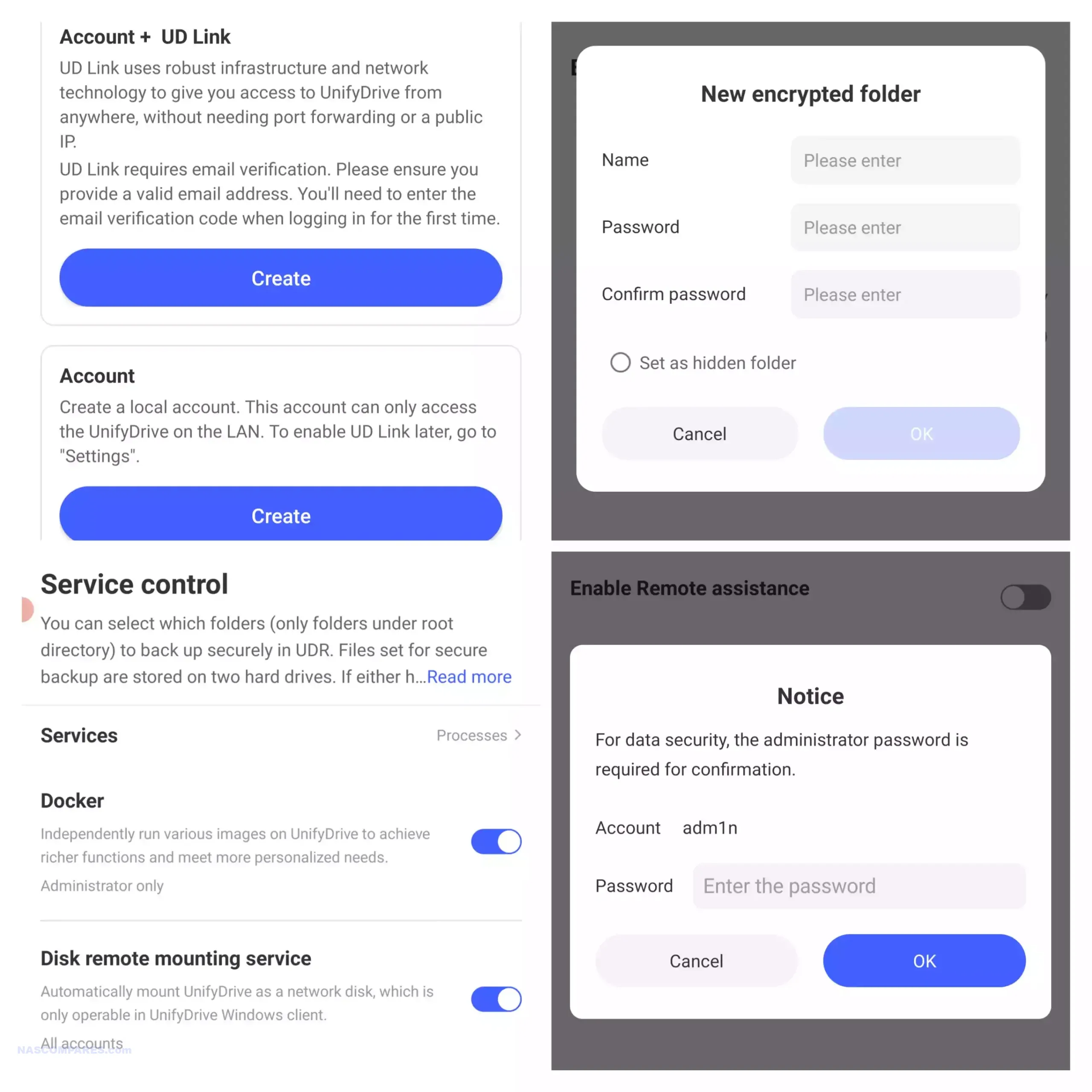
The LincStation E1 runs LincOS, which is positioned as an integrated NAS platform for file access, backup, remote connectivity, and media services rather than a bare system that requires users to install a third-party OS. Based on the provided feature overview, the core service set includes LincAccess for remote access without manual port forwarding, System Upgrade for background firmware updates, Secure Space for encrypted storage, Local Share over SMB, Backup Disk and Sync Disk for scheduled backup/sync tasks, Remote Download, Smart Album for local photo analysis/tagging, and Video Center for media browsing and playback. On paper, this gives the E1 a broad set of consumer NAS functions, especially for users who want a single interface for files, phone backups, and basic media management.
 |
 |
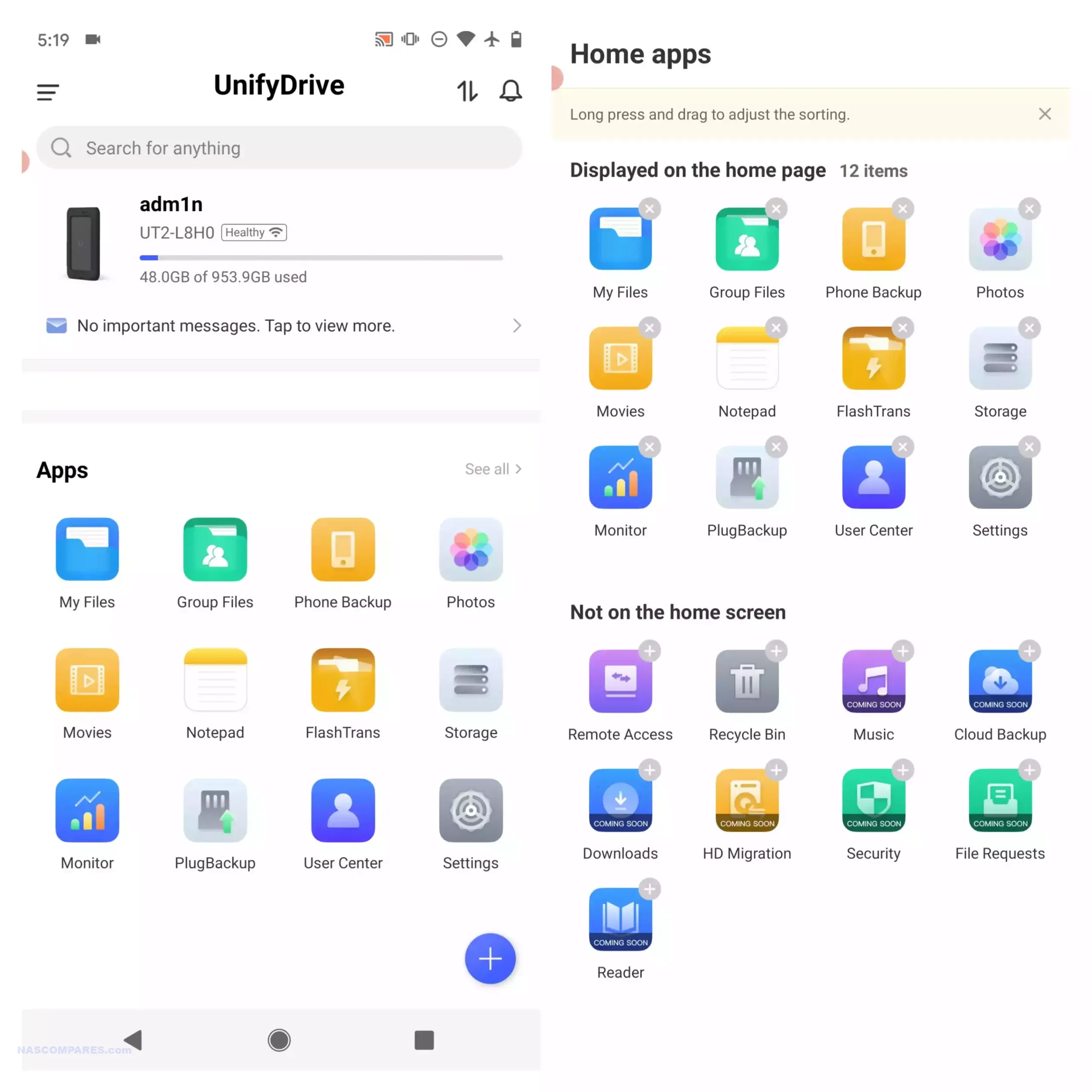
In practical use, the software experience appears to vary significantly depending on whether the system is accessed via desktop client, web browser, or mobile app. The review transcript describes the desktop client as functional but visually and structurally closer to a mobile-first interface, with some sections feeling sparse or less optimized for larger screens. The mobile application is described as the more mature experience, with better flow for common tasks such as file access, photo backup, service control, and SMB management. By contrast, the browser-based interface is described as much more limited, which is relevant because web UI access remains a standard workflow for many NAS users.
|
|
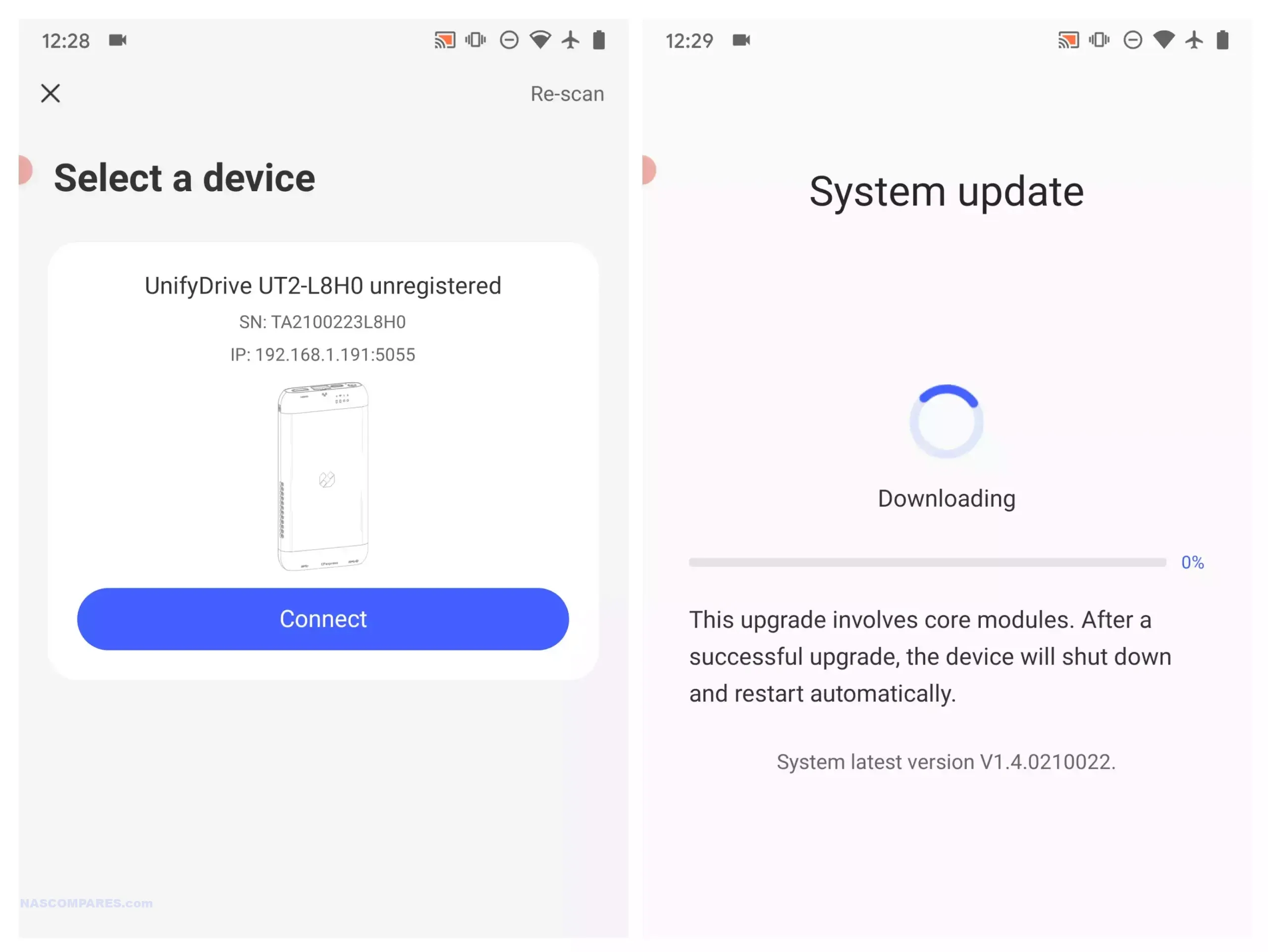
The main issue at the time of review is software maturity rather than feature absence alone. The transcript indicates that newer builds added functions that were missing in earlier testing, which suggests active development, but also confirms that the platform is still evolving and not yet fully polished. Specific concerns raised include weak desktop/web UX consistency, limited clarity in some backup/sync terminology for less experienced users, and missing or underdeveloped areas in security and administration workflows (for example, the absence of 2FA and other standard NAS security tooling in the tested build). As a result, the E1 software stack is best understood as a usable but still developing platform that may improve over time, but should not be evaluated as equivalent in maturity to long-established NAS operating systems.
 |
 |
 |
 |
Lincstation E1 NAS Review – Noise, Temp and Power Performance Tests
Testing in the review focused on real-world NAS usage with 2 x 4TB Seagate IronWolf HDDs installed in the SATA bays and 2 x 1TB NVMe SSDs in the M.2 slots. In this configuration, the unit was used for file transfers, mobile backups, and sustained read/write activity to observe behavior under load rather than synthetic benchmark-only results. The review also notes that the NVMe slots were constrained in practical throughput relative to full higher-lane NVMe operation, with observed expectations around a capped transfer range consistent with the platform and lane allocation.
 |
 |
Acoustically, the measured noise level was reported at around 41 to 43 dB at idle, and remained in a similar 42 to 43 dB range under heavier activity. That indicates a relatively stable acoustic profile during testing, likely due in part to the inability (at the time of recording) to directly tune fan behavior in the software build initially tested. The result is not silent, and the plastic chassis plus compact internal layout may contribute to audible drive and airflow presence, but the unit also did not show a major noise spike during CPU and storage activity in the tested setup.
 |
 |
 |
 |
Thermally, the system was run for about 4 hours under sustained read/write activity, including transfers involving attached USB storage and mobile device backup traffic. Reported external surface temperatures were around 38 to 41°C on the chassis sides, with perforated ventilation areas reaching about 43 to 44°C. The hottest areas were around the underside NVMe region and between the installed drives, which is consistent with the compact internal layout and base-mounted cooling approach. With the 4TB HDDs used in testing, the reported drive temperature was around 51°C during this sustained activity period, while other external port-side areas remained around the low-to-mid 40°C range.
 |
 |
Power consumption results were in line with a low-power ARM NAS platform. With low CPU utilization (below roughly 15%) and drives/SSDs in idle or light activity states, the measured draw was around 12 to 12.2 W. Under heavier use, with CPU utilization above roughly 75% and simultaneous HDD/NVMe read/write activity, reported power draw increased to about 19.4 to 19.7 W. SMB transfer performance over the network was reported at roughly 180 to 200 MB/s on HDD-based access, while NVMe-backed activity was described as saturating the available network path in testing, which is broadly consistent with the stated Ethernet and storage configuration constraints.
Lincstation E1 NAS Review – Conclusion & Verdict
The LincStation E1 presents a clear budget-focused NAS proposition: compact hardware, flexible storage options for its class, low-power ARM design, and a turnkey software stack that covers the main functions many entry-level users look for, including local sharing, backup, remote access, and media features. Its main hardware appeal is the combination of 2-bay SATA storage and 2 x NVMe support in a small enclosure, which is uncommon at this level. As a hardware platform for basic home storage and backup use, it is a practical design with a broader feature set than many similarly positioned entry NAS devices.

The main limitation is software maturity rather than core hardware capability. Based on the review material, LincOS is usable and actively improving, but the desktop and web experience still need refinement, and some security and usability expectations common in more established NAS ecosystems are not yet fully met. For that reason, the E1 is best evaluated as a low-cost NAS with strong hardware value and a developing software platform, rather than a fully polished alternative to long-established NAS brands at the time of review.
Want to Learn More about Lincplus Lincsation NAS Solutions? The N1, N2 and S1 all include an UnRAID Software License included:
|

| PROs of the Lincstation E1 NAS | CONs of the Lincstation E1 NAS |
|
|

 SUBSCRIBE TO OUR NEWSLETTER
[contact-form-7]
 Join Inner Circle
 Get an alert every time something gets added to this specific article!
Subscribe
This description contains links to Amazon. These links will take you to some of the products mentioned in today's content. As an Amazon Associate, I earn from qualifying purchases. Visit the NASCompares Deal Finder to find the best place to buy this device in your region, based on Service, Support and Reputation - Just Search for your NAS Drive in the Box Below
Need Advice on Data Storage from an Expert?
Finally, for free advice about your setup, just leave a message in the comments below here at NASCompares.com and we will get back to you. Need Help?
Where possible (and where appropriate) please provide as much information about your requirements, as then I can arrange the best answer and solution to your needs. Do not worry about your e-mail address being required, it will NOT be used in a mailing list and will NOT be used in any way other than to respond to your enquiry.
[contact-form-7]
Need Help?
Where possible (and where appropriate) please provide as much information about your requirements, as then I can arrange the best answer and solution to your needs. Do not worry about your e-mail address being required, it will NOT be used in a mailing list and will NOT be used in any way other than to respond to your enquiry.
[contact-form-7]
 TRY CHAT
Terms and Conditions
TRY CHAT
Terms and Conditions
 Ko-fi or old school Paypal. Thanks!To find out more about how to support this advice service check HEREIf you need to fix or configure a NAS, check Fiver
Have you thought about helping others with your knowledge? Find Instructions Here
Ko-fi or old school Paypal. Thanks!To find out more about how to support this advice service check HEREIf you need to fix or configure a NAS, check Fiver
Have you thought about helping others with your knowledge? Find Instructions Here





|
 |