Vue lecture

Il y a de nouveaux articles disponibles, cliquez pour rafraîchir la page.

Terramaster TOS 6 Software Review

How Good is the Terramaster TOS 6 NAS Software?

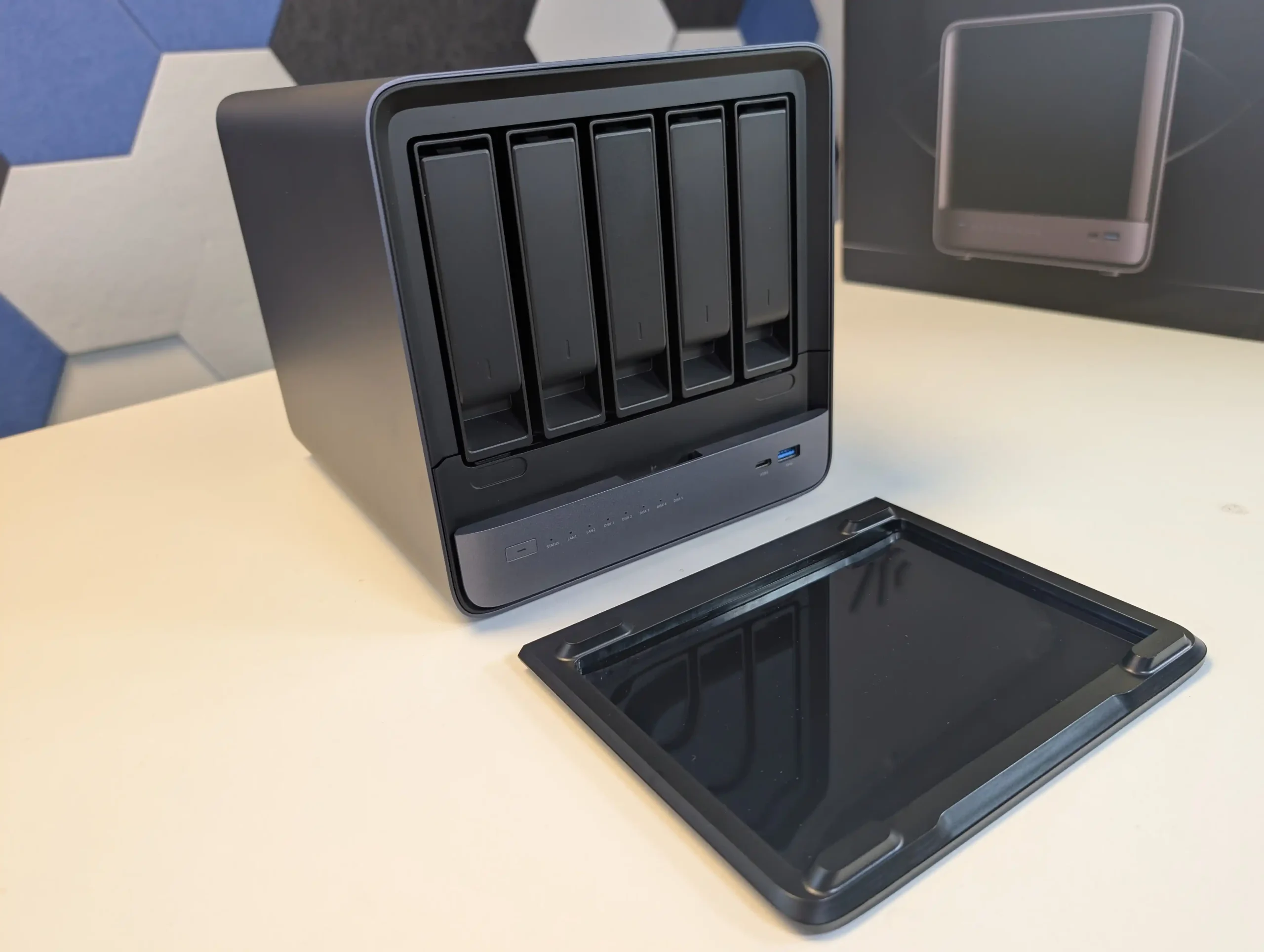
TerraMaster’s TOS 6 represents the company’s most comprehensive evolution of its NAS operating system, delivering an interface and architecture that is redesigned both visually and structurally. Replacing the earlier TOS 5, it builds on user feedback from the last three hardware generations and now arrives preinstalled on systems such as the F4-425 Plus, F2-425, and F6-424, as well as the all-flash F8 SSD Plus. The system adopts the Linux Kernel 6.1 LTS, which improves memory handling, file system performance, and hardware compatibility across newer Intel and AMD processors. With over forty new functions and more than three hundred individual refinements, TOS 6 is positioned as a more capable and robust platform for modern data storage and multi-user environments. TerraMaster’s objective with this version is to combine an accessible setup process with enterprise-style administration tools, allowing users to deploy features such as ACL permissions, SMB multichannel, Hyper-Lock WORM protection, and advanced RAID management within a simplified interface. Although still developing its ecosystem when compared with long-established NAS vendors, TOS 6 signals a step toward bridging the gap between budget and professional-grade systems.

Interested in Buying a Terramaster NAS? Support the work we do here at NASCompares, by using the links below.

We receive a small commission on anything you purchase from Amazon, AliExpress or B&H when using these links, and it results in you being able to passively support your favourite websites and creator, completely for free!

Terramaster TOS 6 – Design, GUI and UX

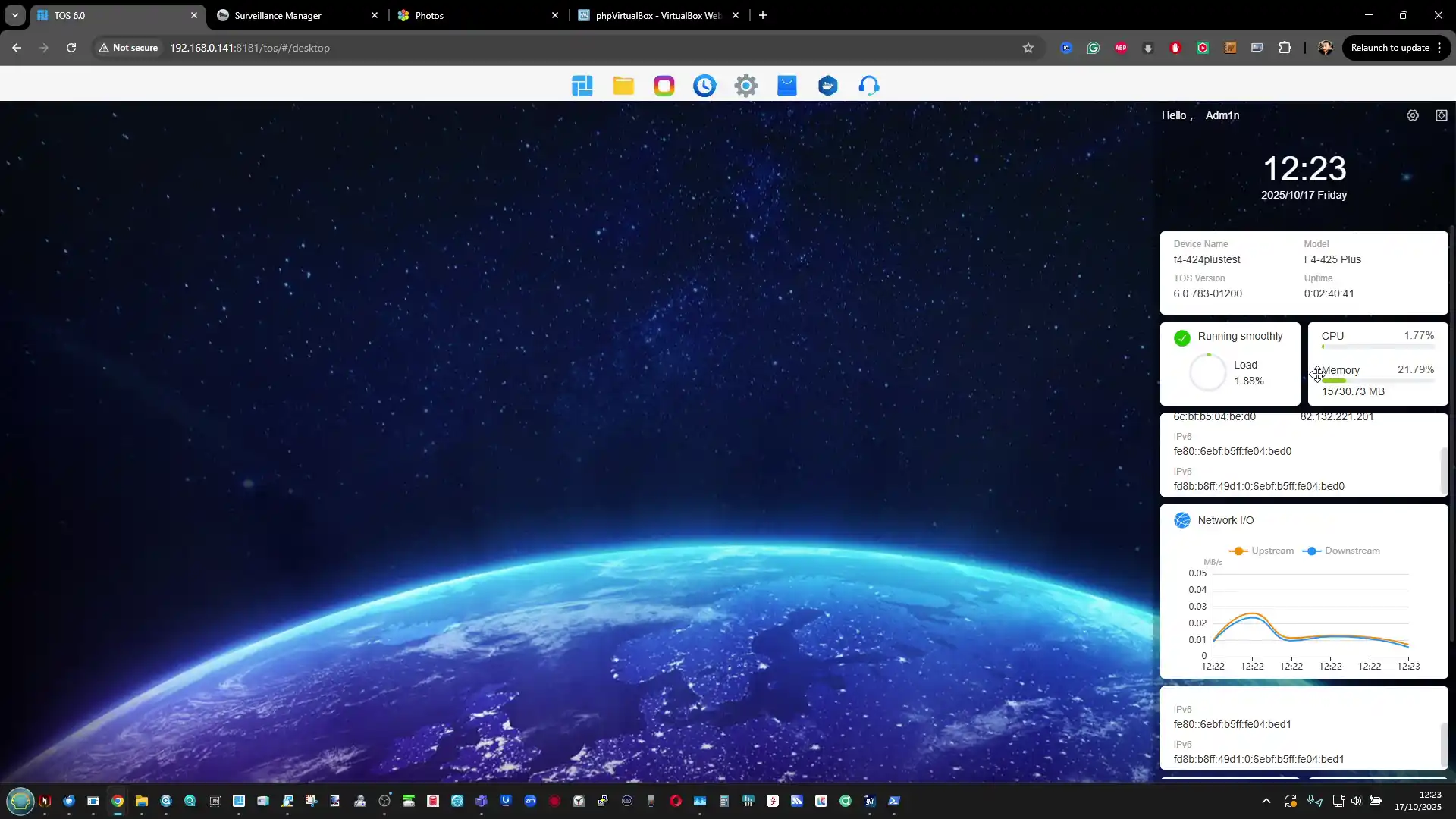
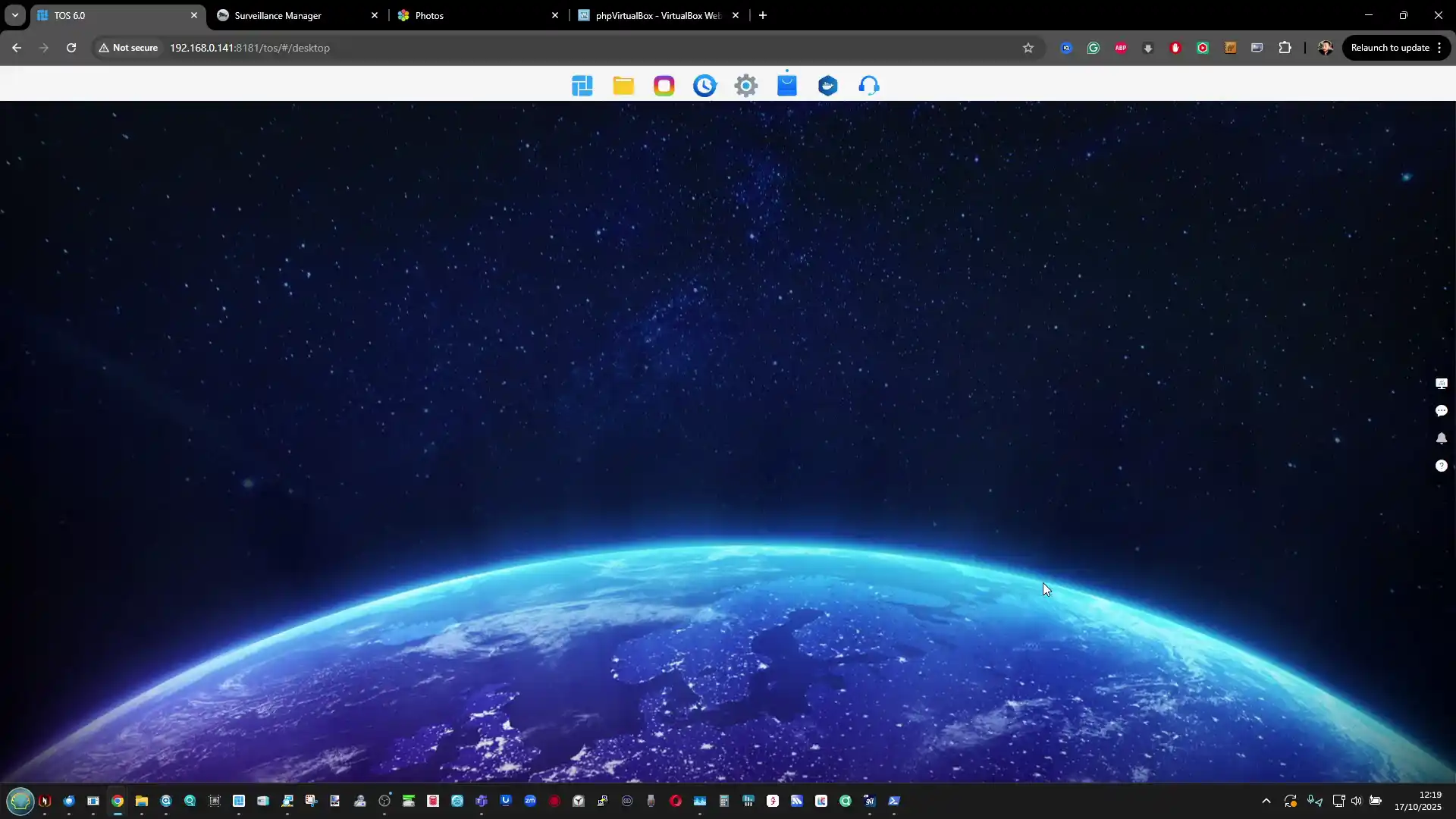
TOS 6 introduces a significantly redesigned interface that emphasizes simplicity and consistency while retaining the technical depth expected from a NAS management platform. The desktop layout has been decluttered, removing excess icons in favor of a single navigation bar that centralizes access to applications, settings, and the new “Start” shortcut menu. This layout, combined with subtle animation effects and theme customization options such as Night Mode and accent color selection, is intended to make the environment less visually overwhelming than previous releases. While the interface feels smoother and more responsive, some users may still find it utilitarian compared to the polished design language of DSM or QTS. Nevertheless, the decision to reduce visual clutter and allow personalized dashboards marks a meaningful progression toward a more user-centric control experience.
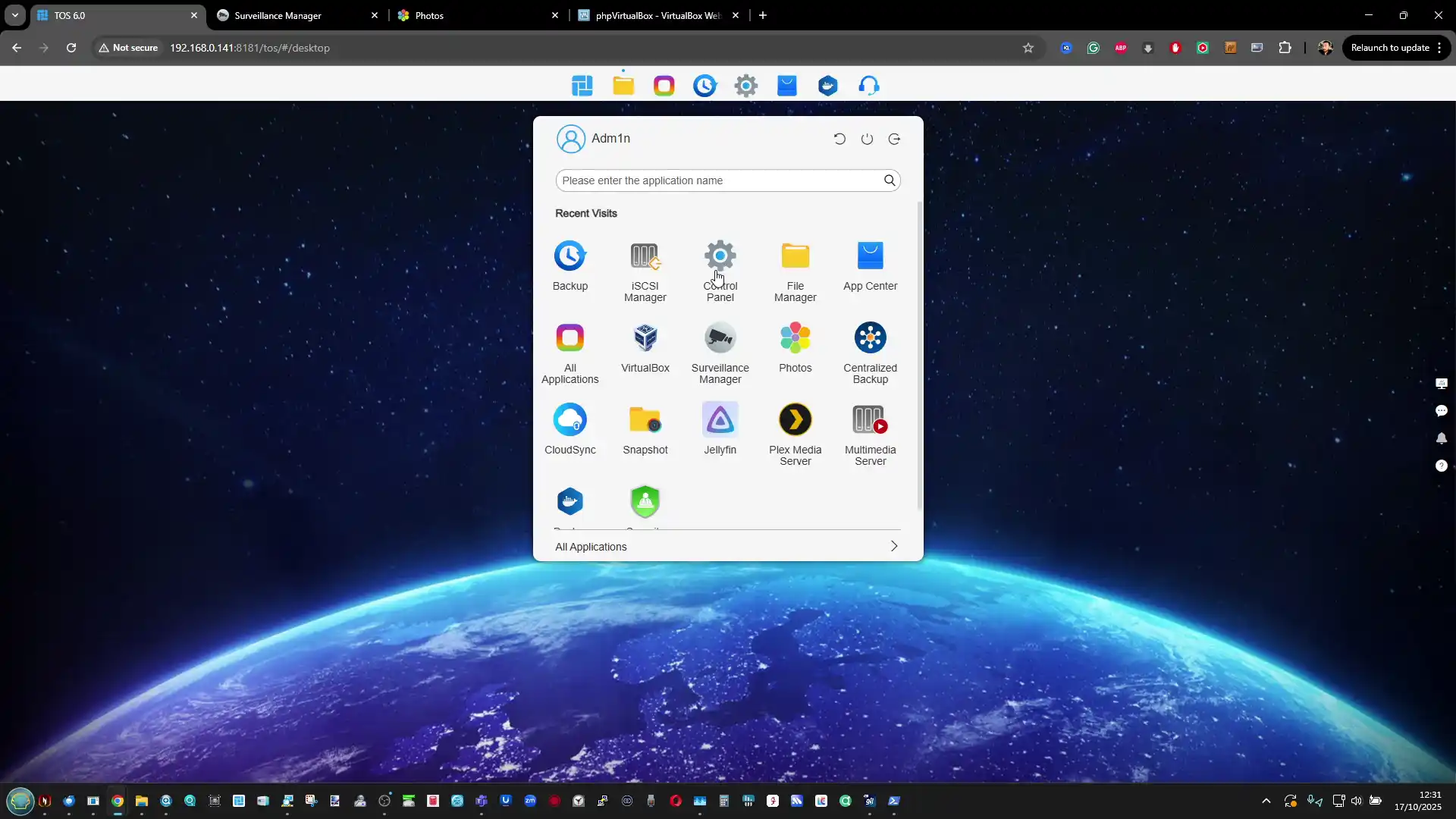
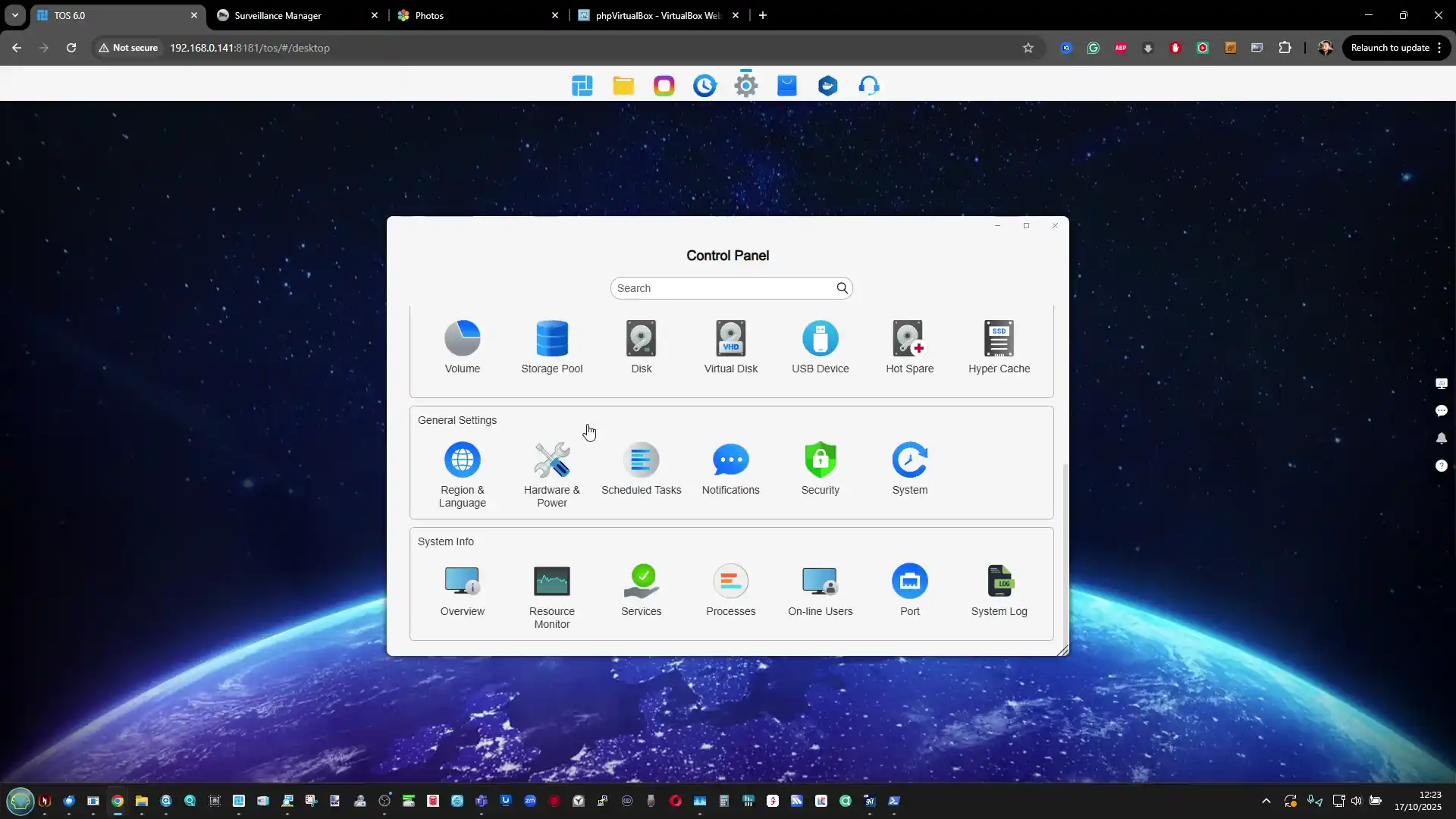
The control panel, which is the backbone of the system’s configuration layer, has undergone extensive structural improvement. It now allows users to jump between related settings without closing the current menu, effectively halving the time required to perform complex administrative tasks. The inclusion of a keyword search bar further simplifies access to hundreds of configuration options ranging from network tuning to caching policies. Real-time monitoring panels, including the resource manager and storage manager, remain integrated into the main interface, but TOS 6 refines them with more accurate live updates and adjustable widgets.
This customization extends to the new system dashboard, where users can drag and rearrange data modules to match their monitoring preferences. Despite these improvements, the GUI still presents a text-heavy design, particularly in areas dealing with drive management, which could be challenging for newcomers.
The user experience, while substantially enhanced, continues to cater more toward technically proficient users than beginners. Nearly every system element is accessible from the web interface, with contextual right-click menus providing file and folder actions similar to desktop OS environments. This native browser-based functionality eliminates the need for third-party explorers for most operations and allows complete administrative control without client software. However, the interface’s dense arrangement of settings can still appear intimidating for users expecting guided wizards or visualized workflows.
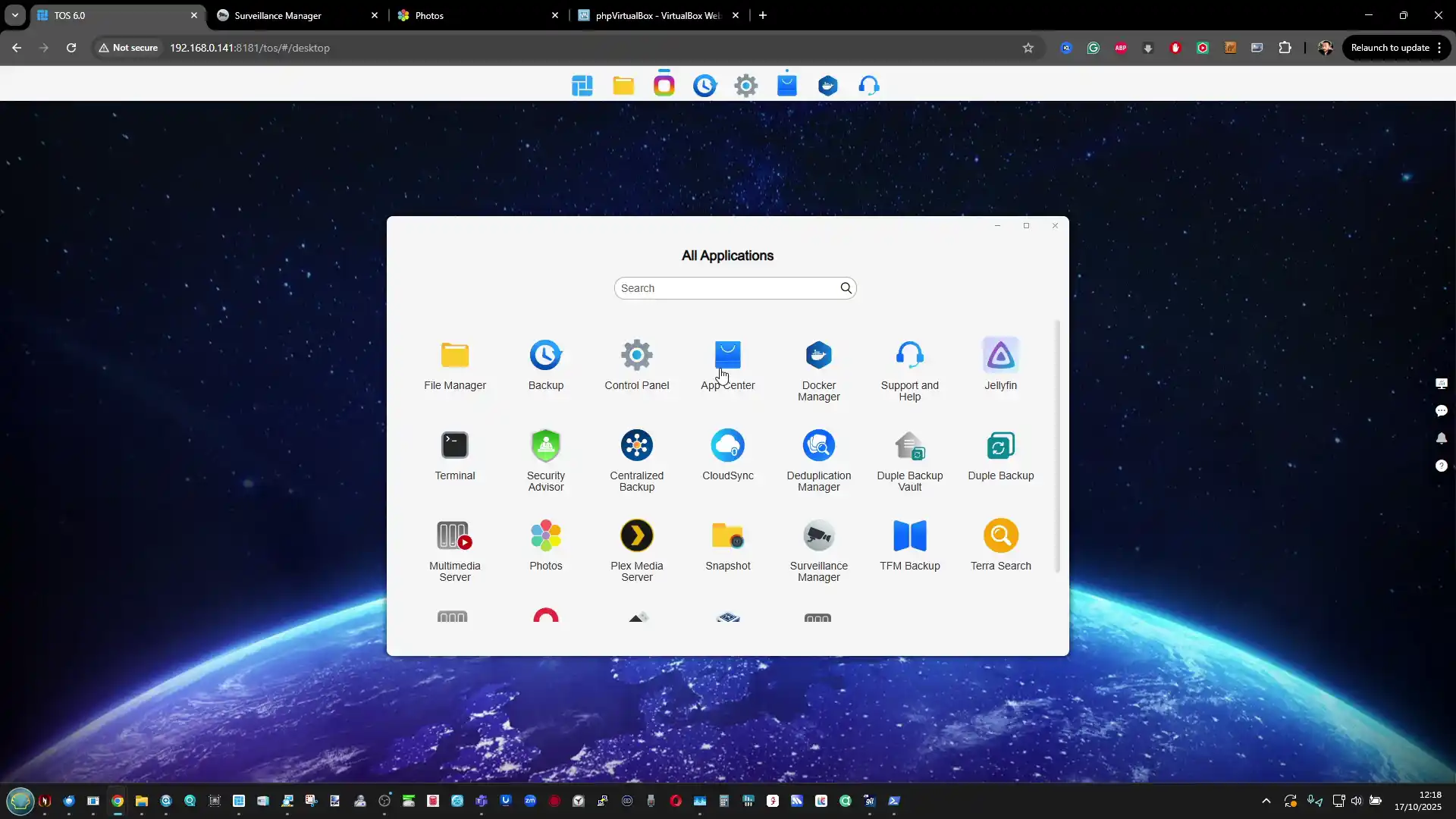
TerraMaster’s focus on efficiency and configurability, rather than aesthetic guidance, reflects a deliberate design choice favoring control and transparency. For experienced users, this approach offers depth and predictability, but it remains less forgiving to casual or first-time NAS owners.
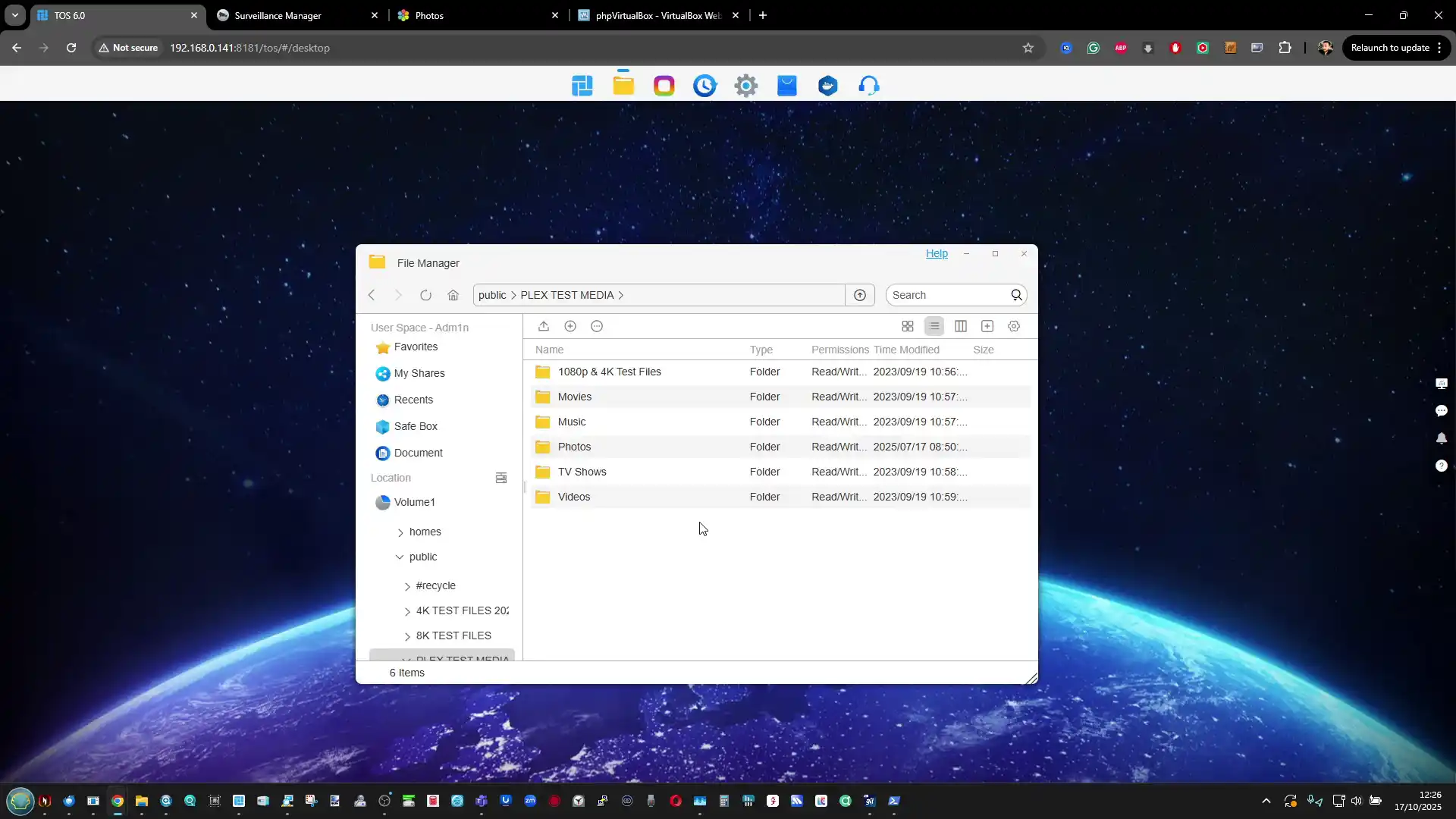
Terramaster TOS 6 – Storage Services and File Services

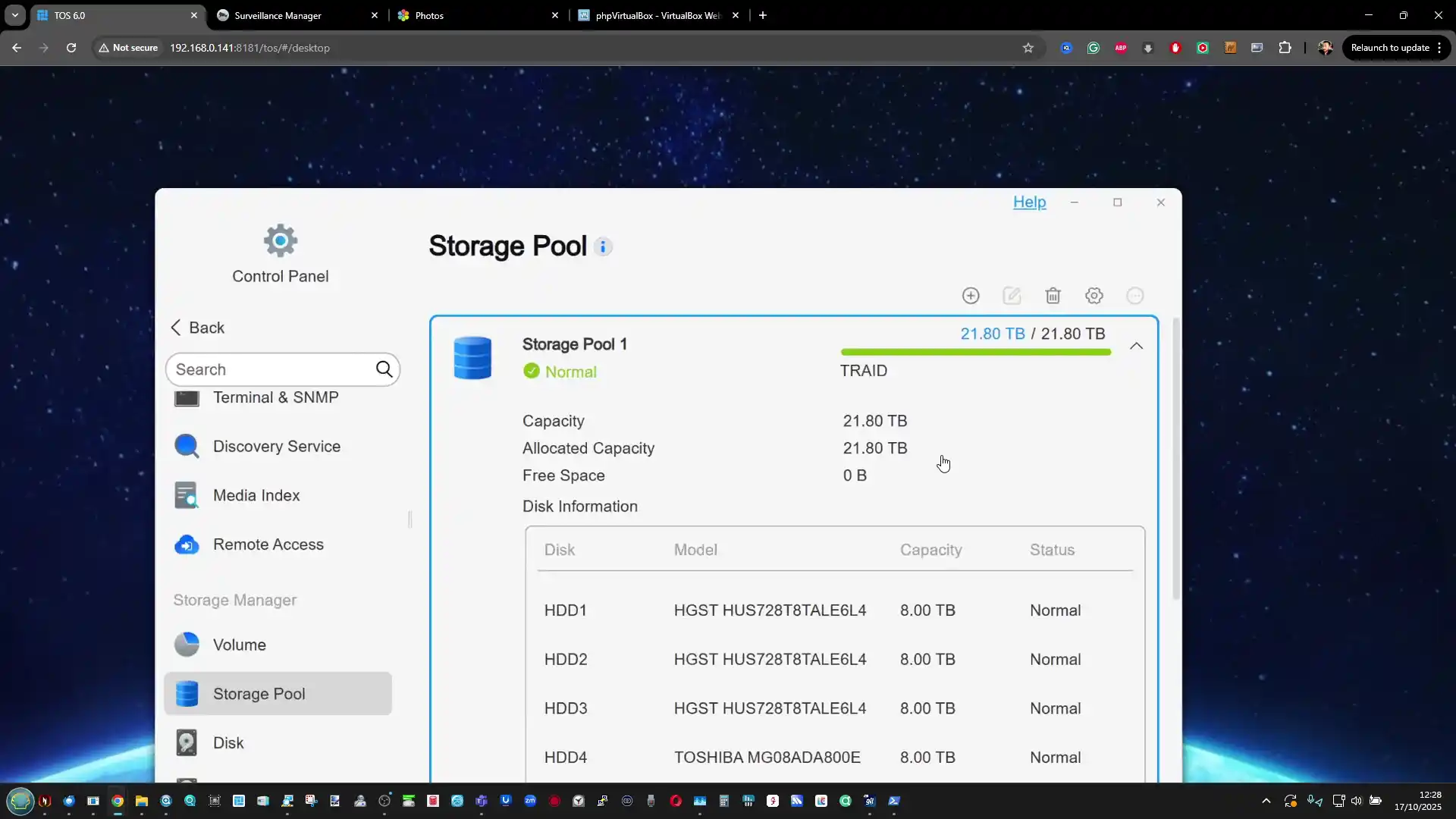
Storage management within TOS 6 has evolved into a far more granular and flexible system. The platform supports both traditional RAID configurations and TerraMaster’s adaptive TRAID and TRAID+ systems, which allow mixed-capacity drives to be combined while retaining redundancy across one or two disks. This feature makes expansion and migration easier, particularly for users gradually upgrading storage capacity. RAID rebuilding efficiency has also improved through “fast repair,” a mechanism that prioritizes only data-occupied sectors rather than empty disk space, substantially reducing recovery times after drive replacement. The system now separates the operating system from storage volumes entirely, allowing users to install the OS on one or two designated drives, typically SSDs, to improve response speed and cache access performance. This separation not only increases system responsiveness but also helps to protect data pools from corruption caused by OS-level failures.
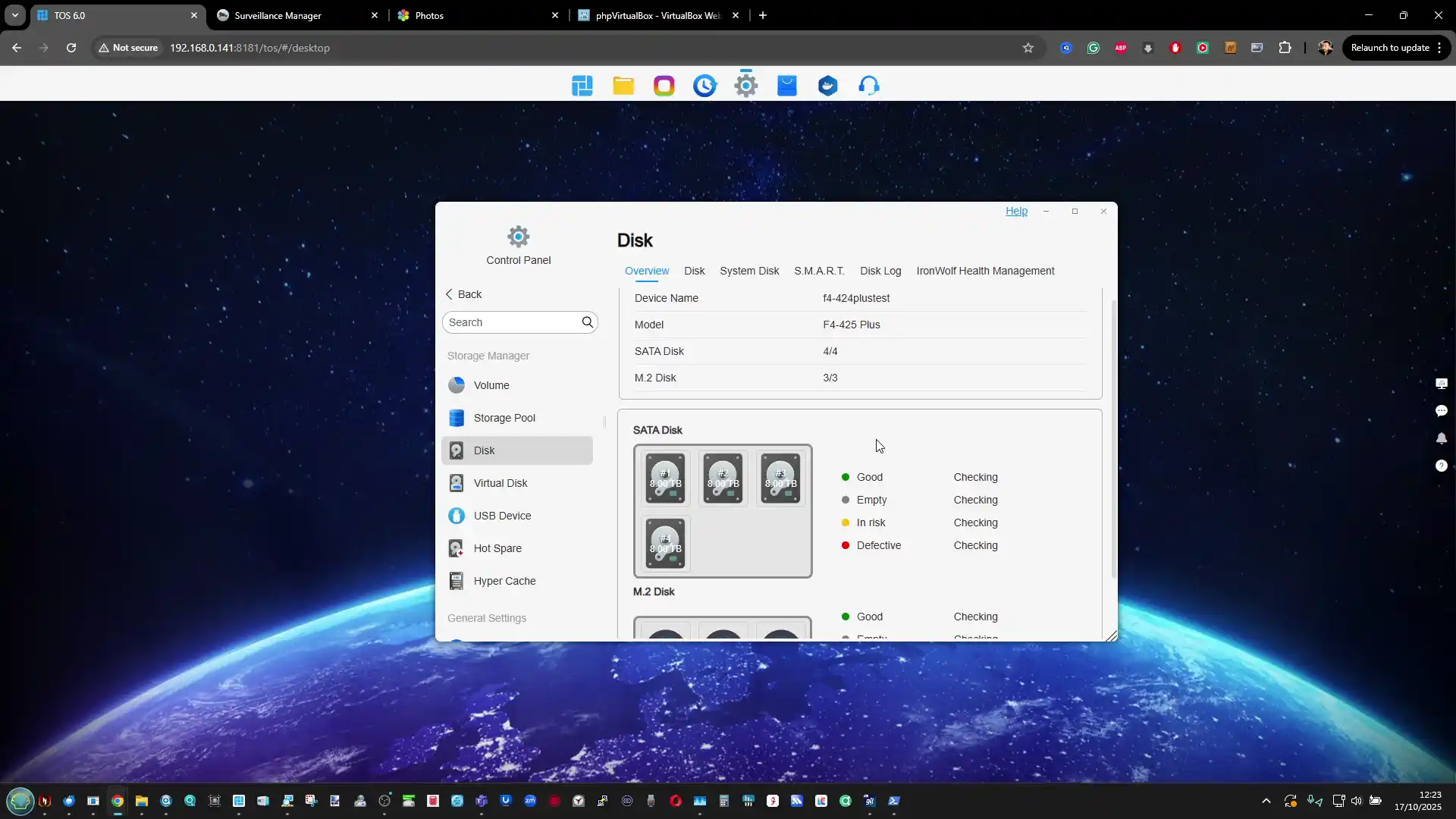
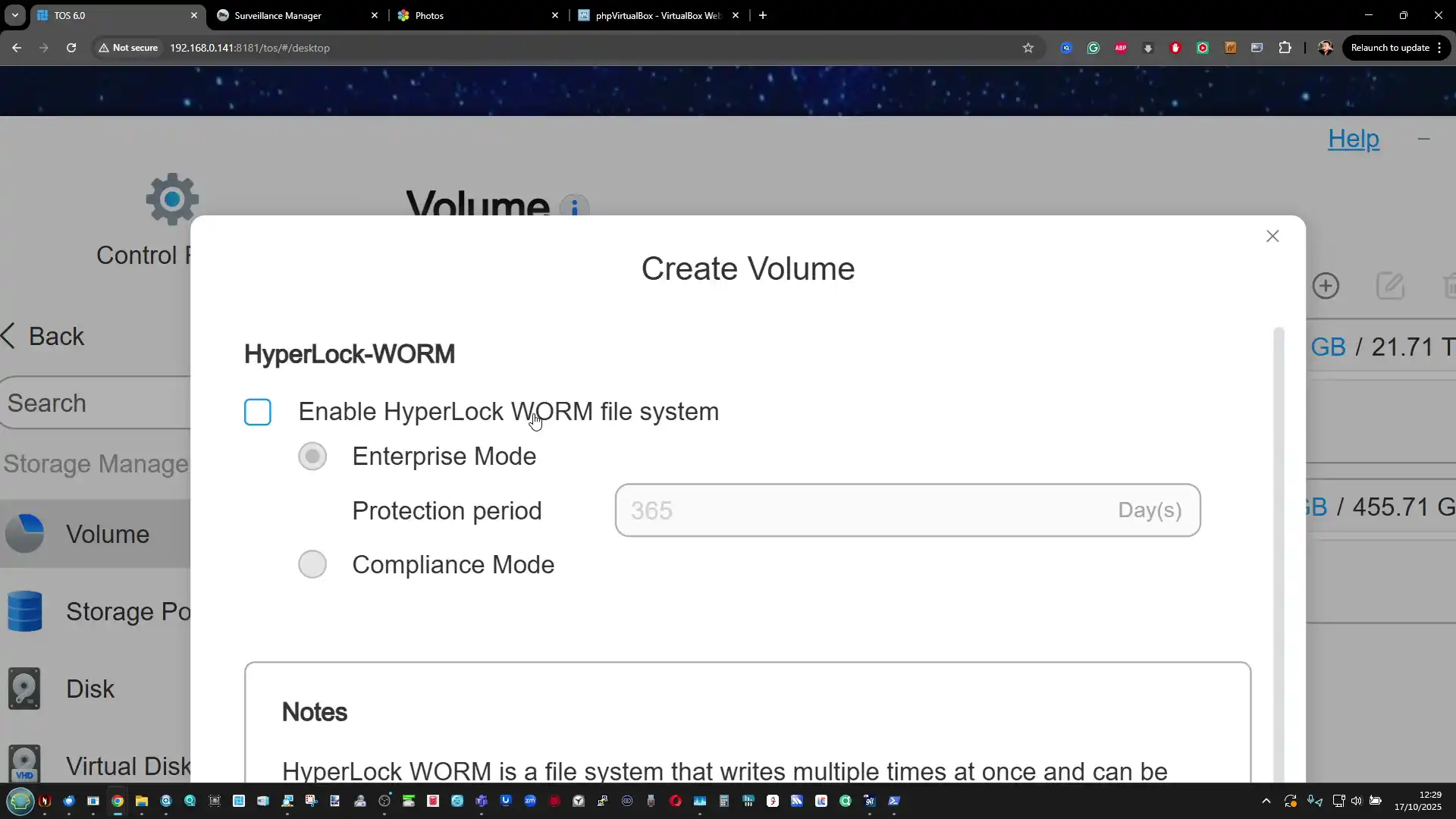
The volume creation process is more flexible than in previous iterations, supporting both Btrfs and EXT4 file systems alongside iSCSI targets for raw block-level storage. Btrfs, in particular, benefits from the Linux 6.1 kernel’s improved memory handling and snapshot reliability. The inclusion of Hyper-Lock WORM (Write Once, Read Many) in both Compliance and Enterprise modes offers organizations the ability to lock data for specific periods or indefinitely, preventing modification or deletion to meet audit or regulatory requirements.
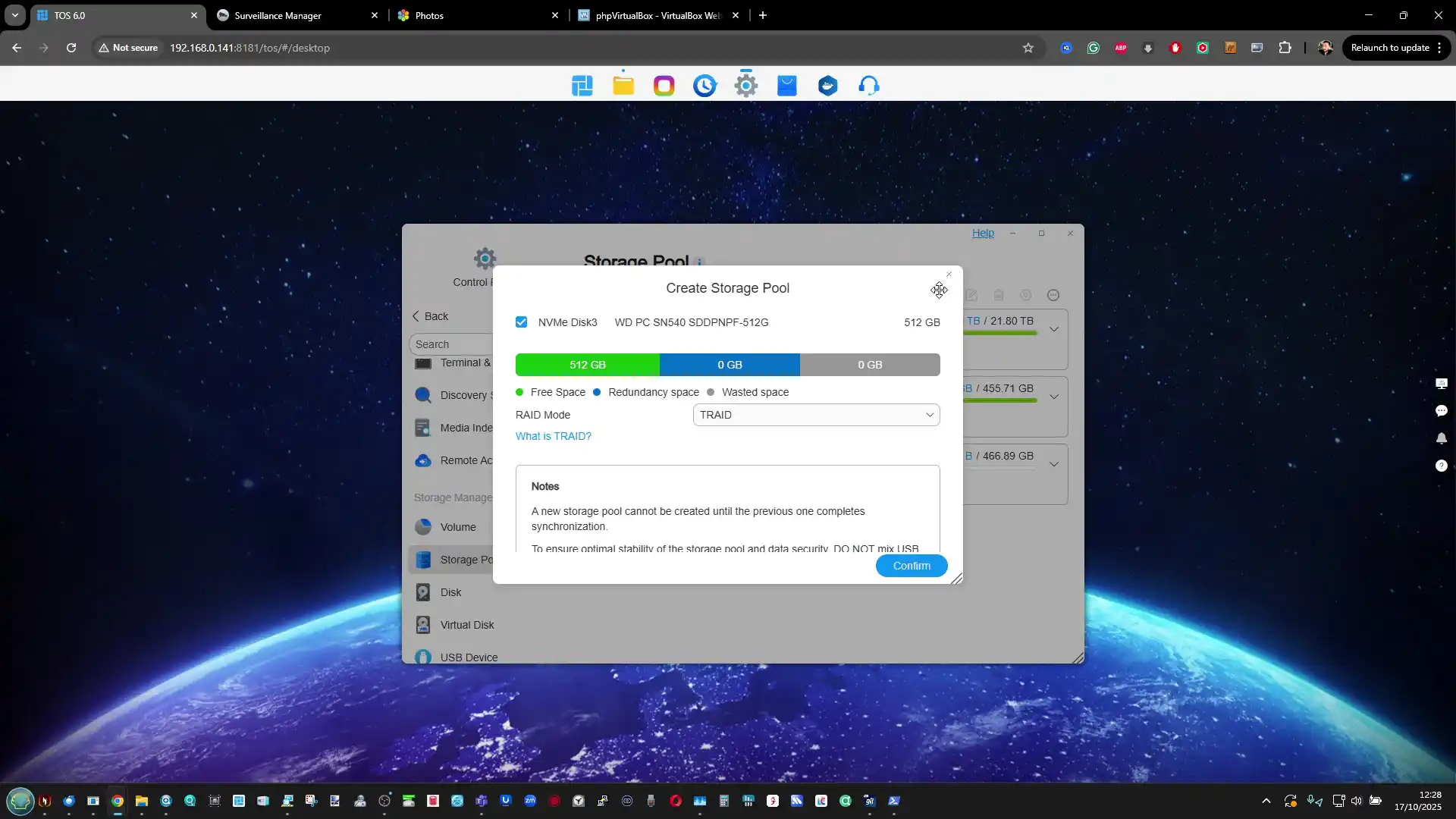
Volume-level encryption can be enabled during creation, giving administrators the option to protect sensitive data without affecting system-level performance. The management interface also displays real-time disk health data and S.M.A.R.T. metrics, alerting users to failing drives through the Message Center and email notifications, minimizing downtime and data loss risks.
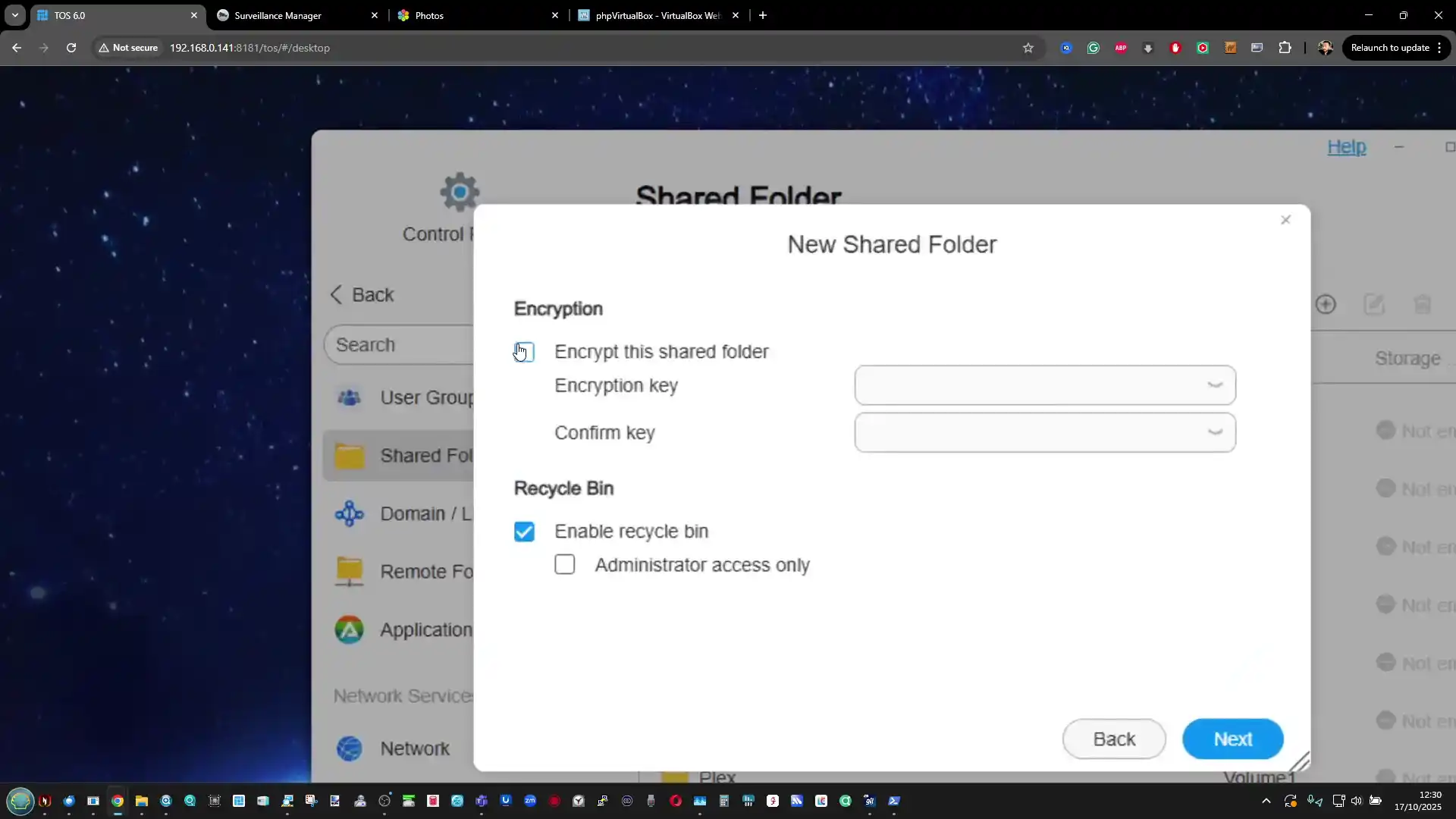
TOS 6’s file service layer emphasizes both accessibility and speed. SMB multichannel support, combined with link aggregation, allows the operating system to utilize multiple Ethernet ports simultaneously to multiply throughput on supported models, improving large file transfer rates in multi-user environments. Shared folder management includes advanced ACL permissions, extending beyond traditional read/write rules to thirteen distinct access types, providing fine-grained control for business use.
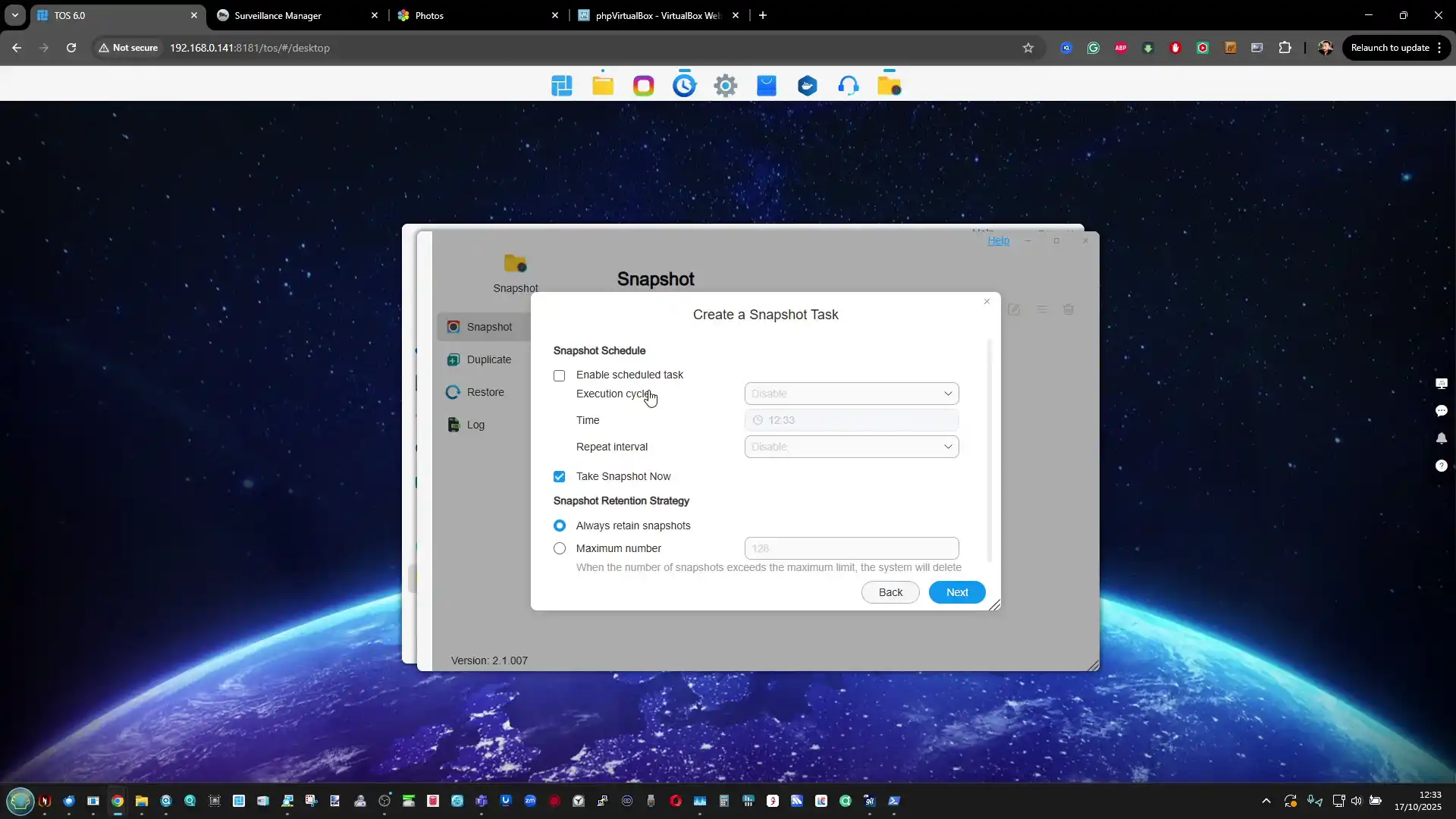
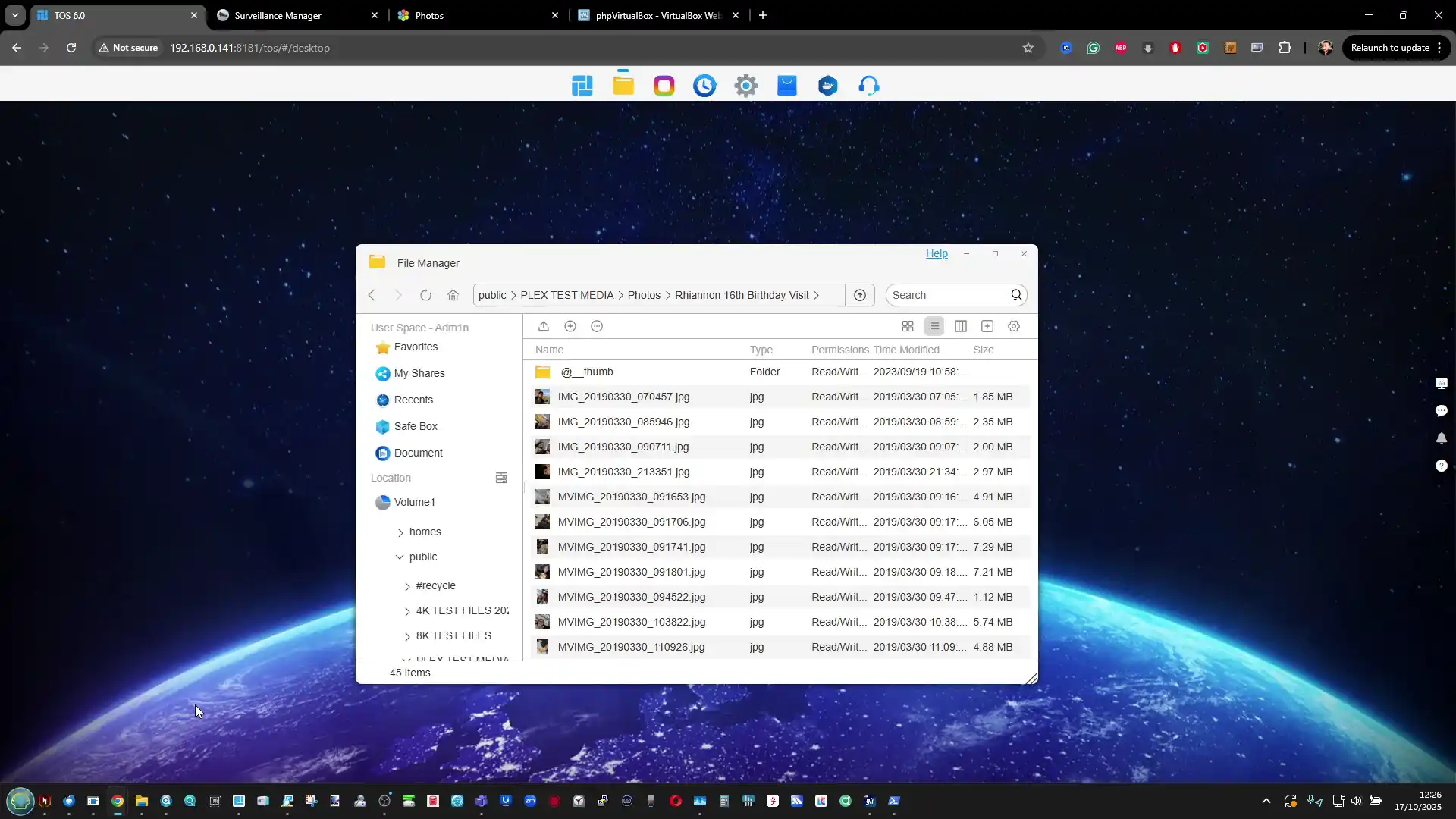
Native support for protocols such as SMB, AFP, NFS, FTP, and WebDAV ensures compatibility with Windows, macOS, and Linux systems, while local mounting enables users to attach external drives or even cloud-mapped directories that synchronize automatically. File management within the web interface now features a tab-based navigation system, a first among NAS platforms, enabling quick copy and move operations without opening multiple windows, reinforcing TerraMaster’s focus on operational efficiency.
Terramaster TOS 6 – Backups and Synchronisation

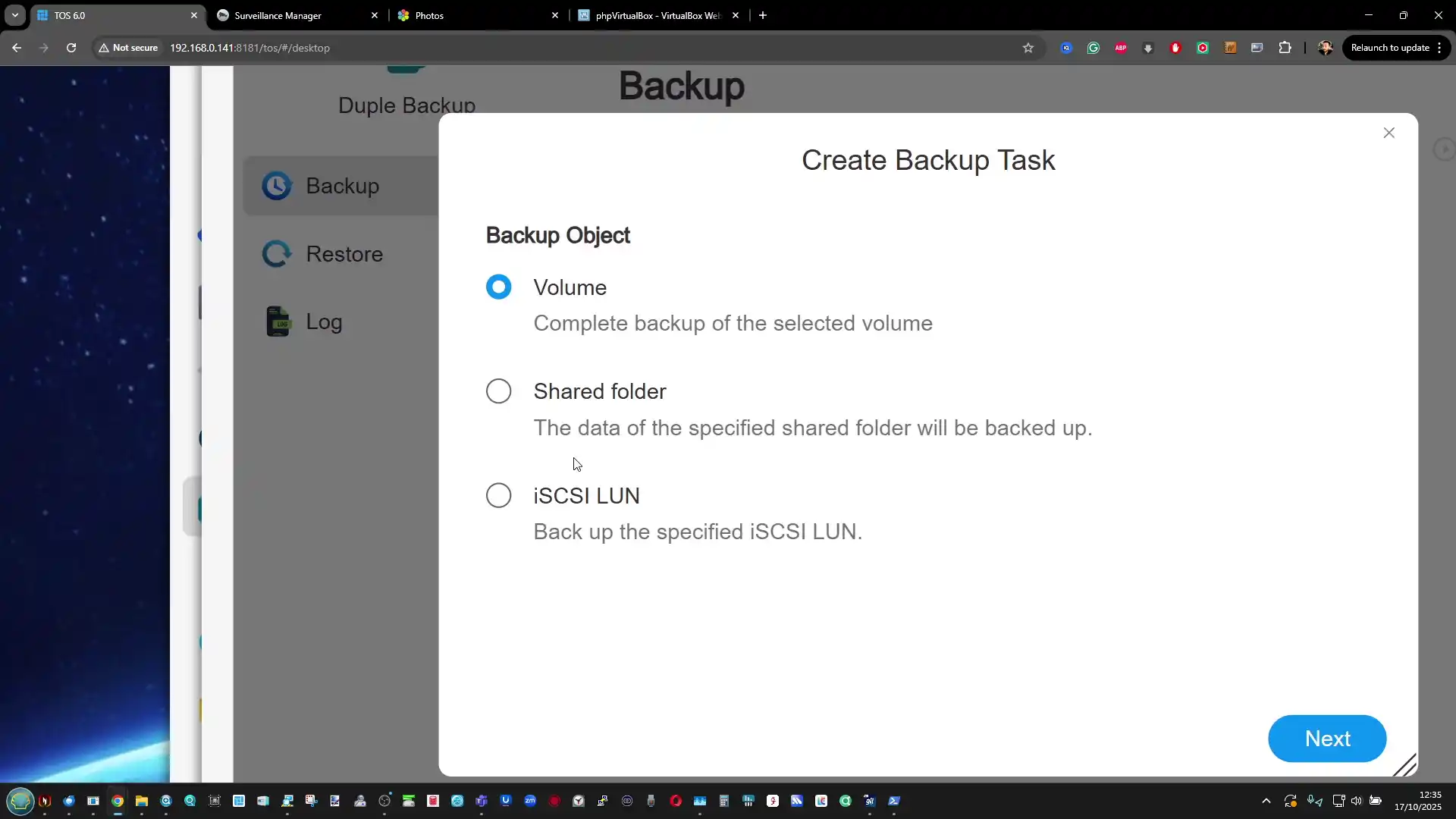
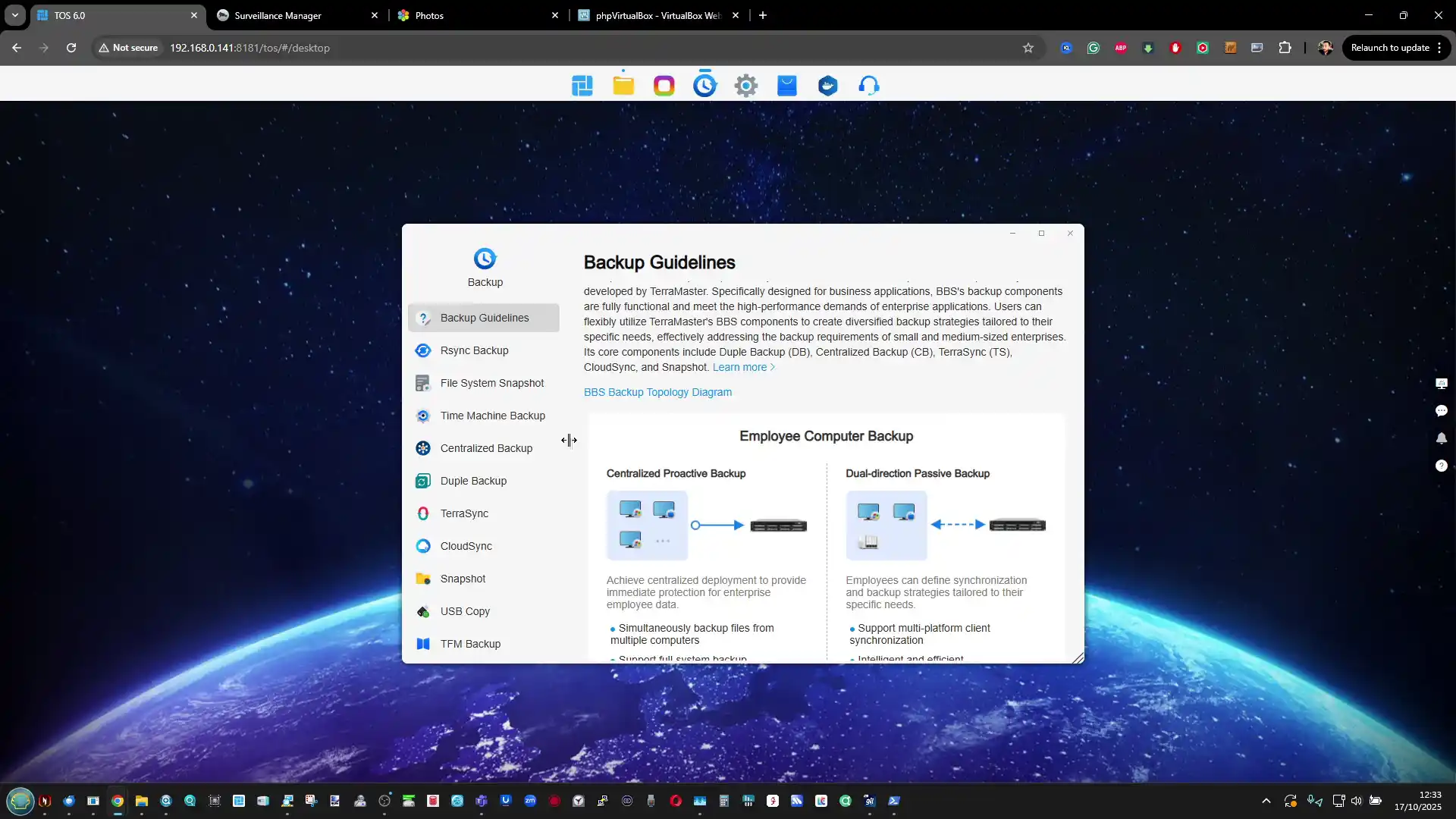
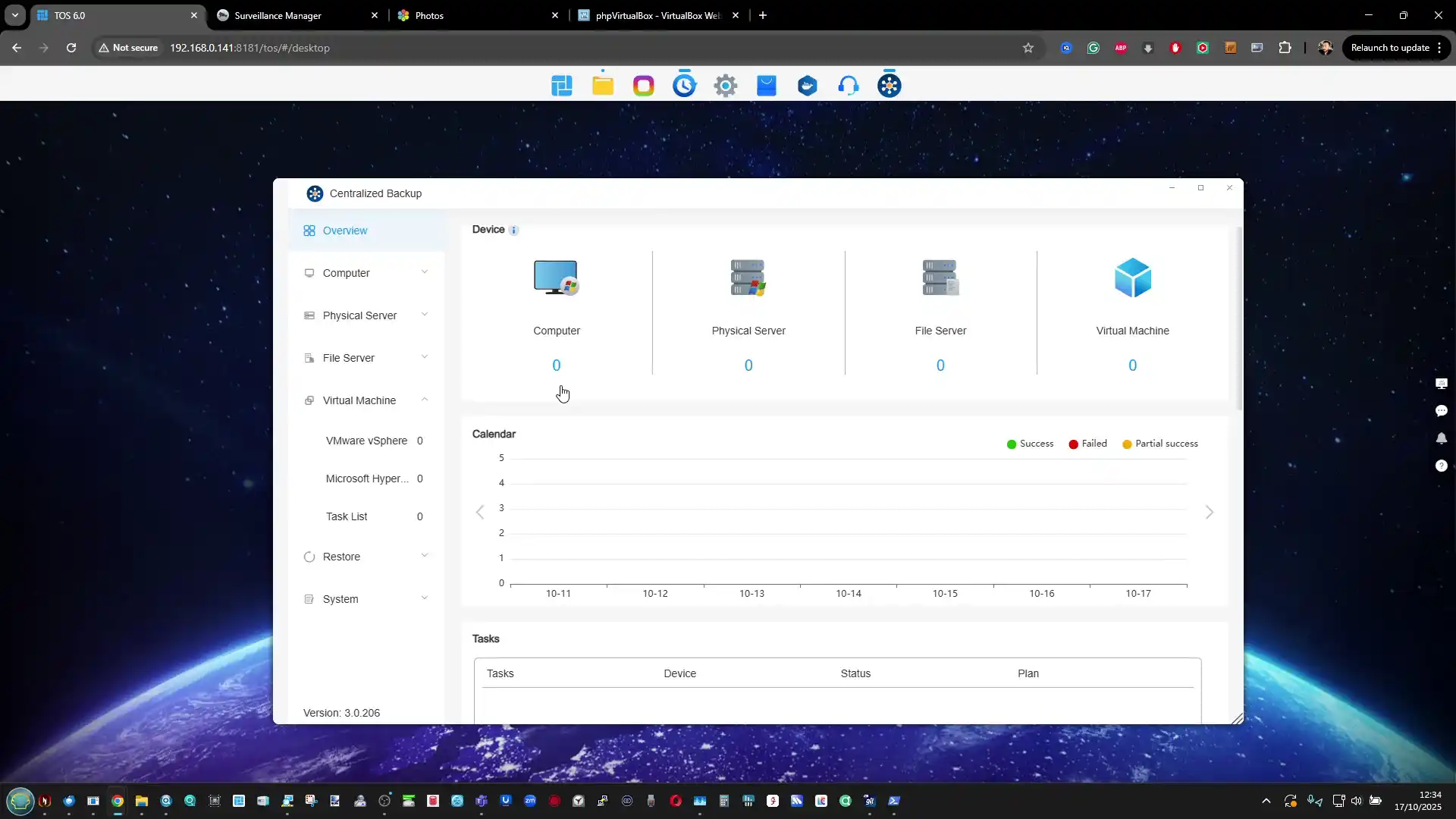
Backup management in TOS 6 consolidates all related tools into a single unified interface accessible from the desktop or the control panel. This centralized hub simplifies navigation between local, remote, and cloud-based backup options while maintaining compatibility with third-party systems. The platform supports Rsync for cross-NAS synchronization, Time Machine for macOS clients, and TerraMaster’s own Centralized Backup utility for deploying and scheduling protection across multiple TNAS and remote servers. Administrators can configure recurring snapshot tasks on individual volumes or shared folders, define retention policies, and even lock snapshots to prevent deletion within a specified period. While these snapshots are not substitutes for full backups, they provide a lightweight recovery mechanism that minimizes data loss in cases of user error or ransomware infection.
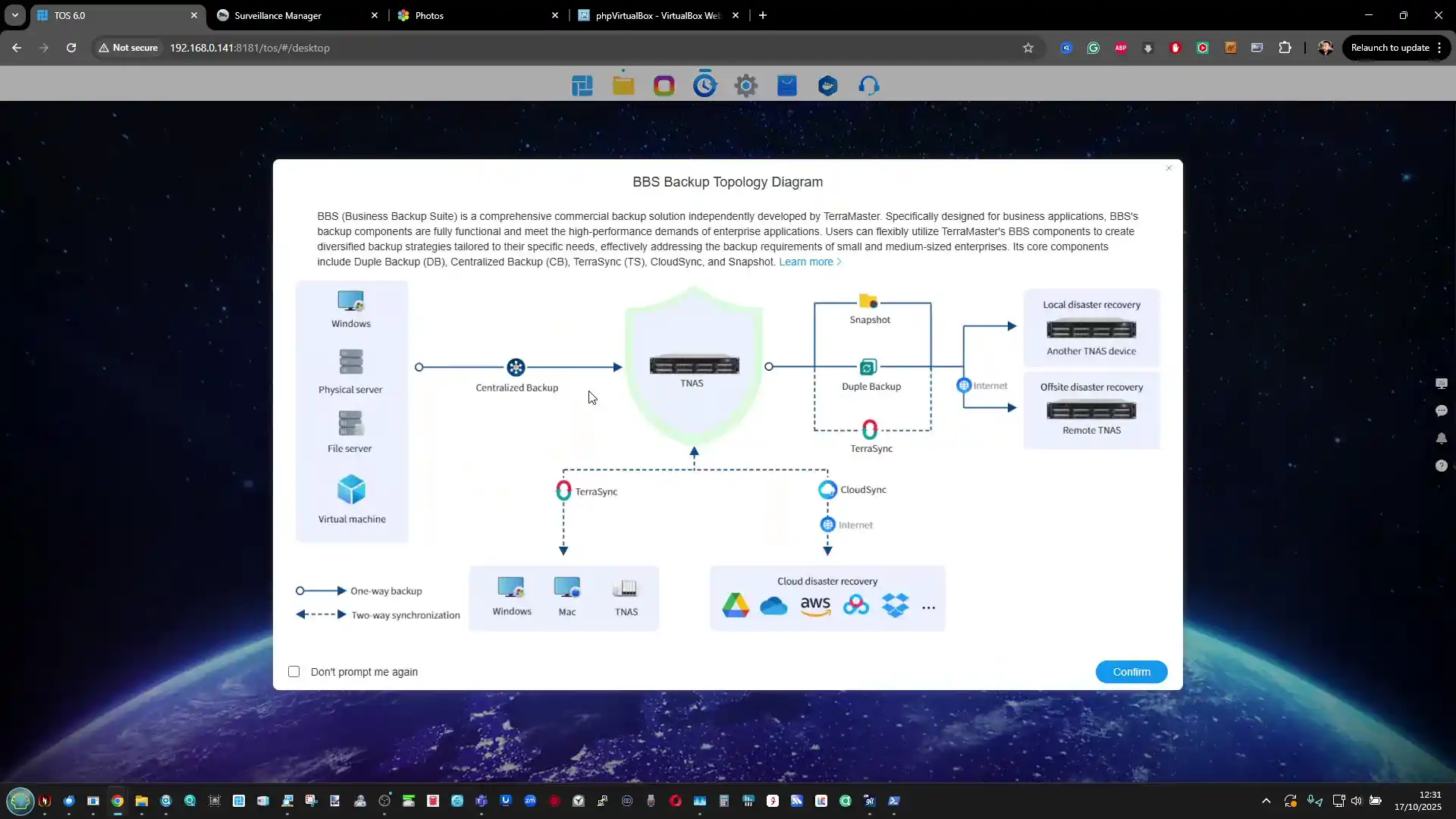
Local backup utilities have been expanded to support directory-level duplication, USB external drives, and iSCSI targets. This enables administrators to replicate data within the same device, between drives, or toward another NAS through the internal network. Although backing up within a single system cannot substitute true redundancy, it offers additional flexibility for temporary mirroring or fast internal restores. For users operating hybrid environments, TOS 6 integrates with major cloud providers using its CloudSync feature, which allows continuous bidirectional synchronization between TNAS and services such as Google Drive, Dropbox, OneDrive, and WebDAV storage. Mounted cloud directories appear as native local folders, simplifying file interaction and ensuring that any modifications are reflected remotely. The mounting mechanism also allows automatic synchronization of remote data without external applications, further streamlining multi-location workflows.
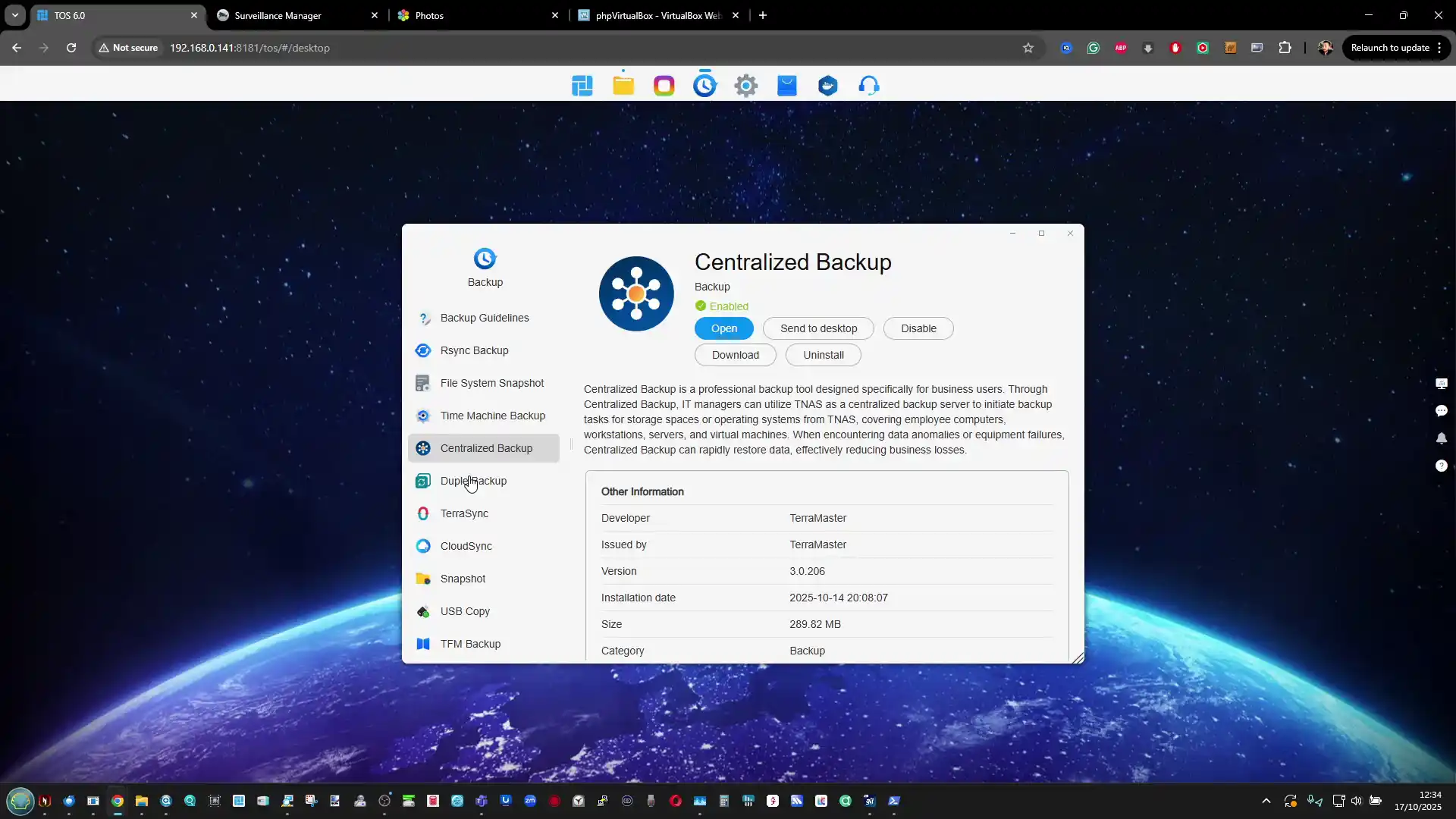
In terms of automation and security, backup tasks in TOS 6 can be scheduled to run incrementally or in real time, minimizing bandwidth usage and system load. Each task includes verification and logging, with the ability to send alerts on failure through the Message Center or by email. The inclusion of Hyper-Lock WORM at the backup level ensures archived backups cannot be altered for a defined compliance period, an important feature for business environments managing regulated data. Despite the lack of the same polish found in Synology’s Active Backup or QNAP’s Hybrid Backup Sync, TerraMaster’s solution achieves a comparable range of features for small-scale and mid-tier operations. The combination of flexible snapshot scheduling, cloud integration, and data-integrity verification makes TOS 6 a notable step forward from earlier releases and closes much of the functionality gap that existed between TerraMaster and its larger competitors.
Terramaster TOS 6 – Applications, Client Tools and Services

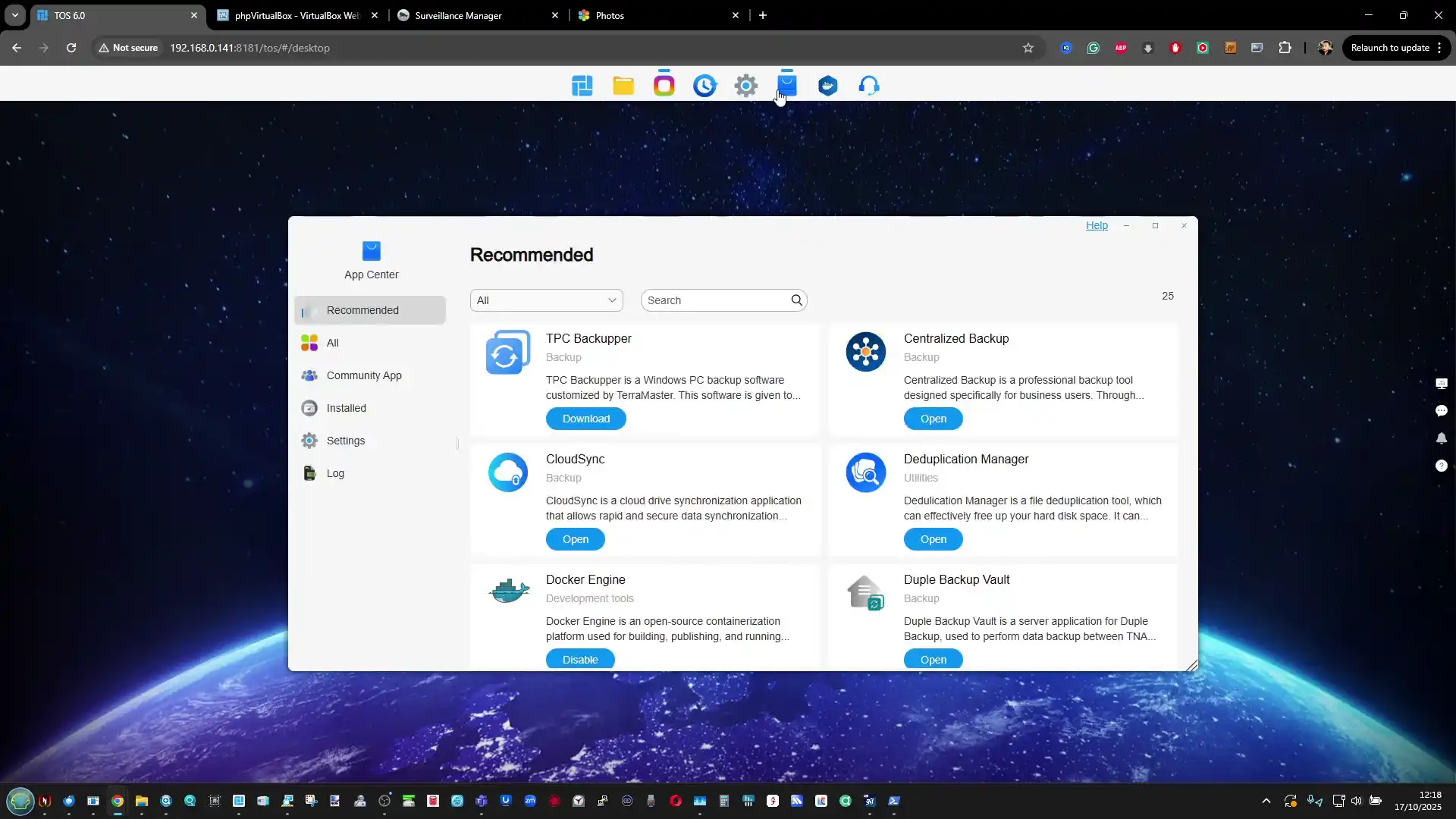
The application ecosystem in TOS 6 has expanded both in variety and integration depth, blending TerraMaster’s own utilities with third-party and open-source solutions. The App Center serves as the central hub for installing, updating, and managing applications, ranging from productivity tools and cloud clients to virtualization and multimedia services. Many of these applications are developed in-house, such as the Centralized Backup, File Manager, and Photo Gallery utilities, while others leverage established third-party frameworks like VirtualBox for virtualization and Portainer for container management. Users can deploy Docker containers directly from the interface or access the full registry for advanced workloads, making it possible to host additional media servers, AI indexing tools, or web applications. Although the ecosystem remains smaller than Synology’s Package Center or QNAP’s App Center, the available selection covers nearly all core NAS functions that general users and small business environments would require.
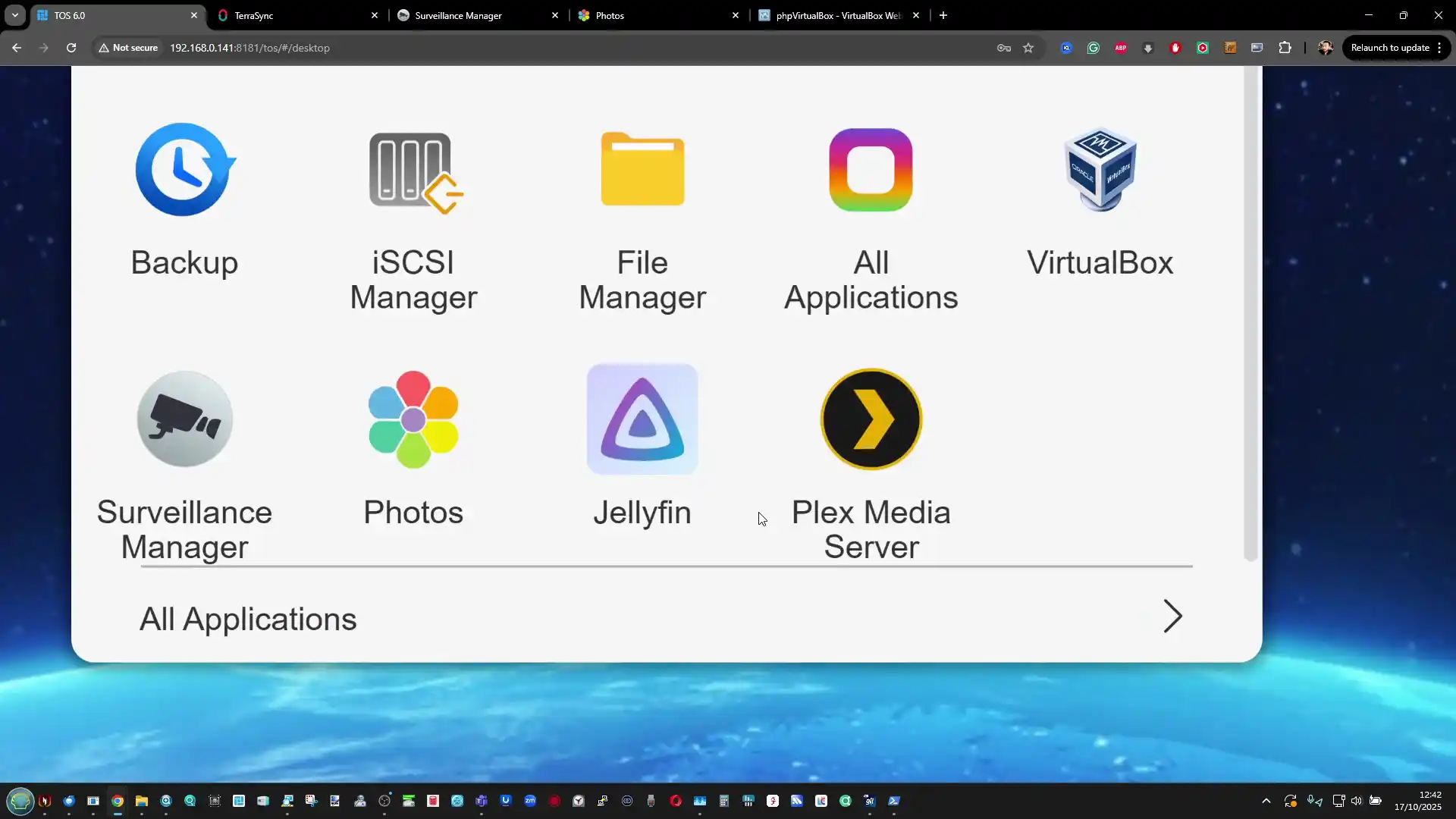
Client connectivity is also a strong component of the system’s service design. The TerraMaster desktop client for Windows and macOS allows users to discover NAS systems on the network, manage synchronized folders, and create automated transfer tasks. This complements the browser-based interface by offering a faster method for initiating replication jobs or file transfers between devices. Mobile applications are available for remote access, providing basic file management and media browsing functionality, though they remain limited compared to the desktop experience. One notable improvement in TOS 6 is the ability to download client tools directly from within the App Center rather than navigating to external links, streamlining deployment and maintaining version consistency across environments.#
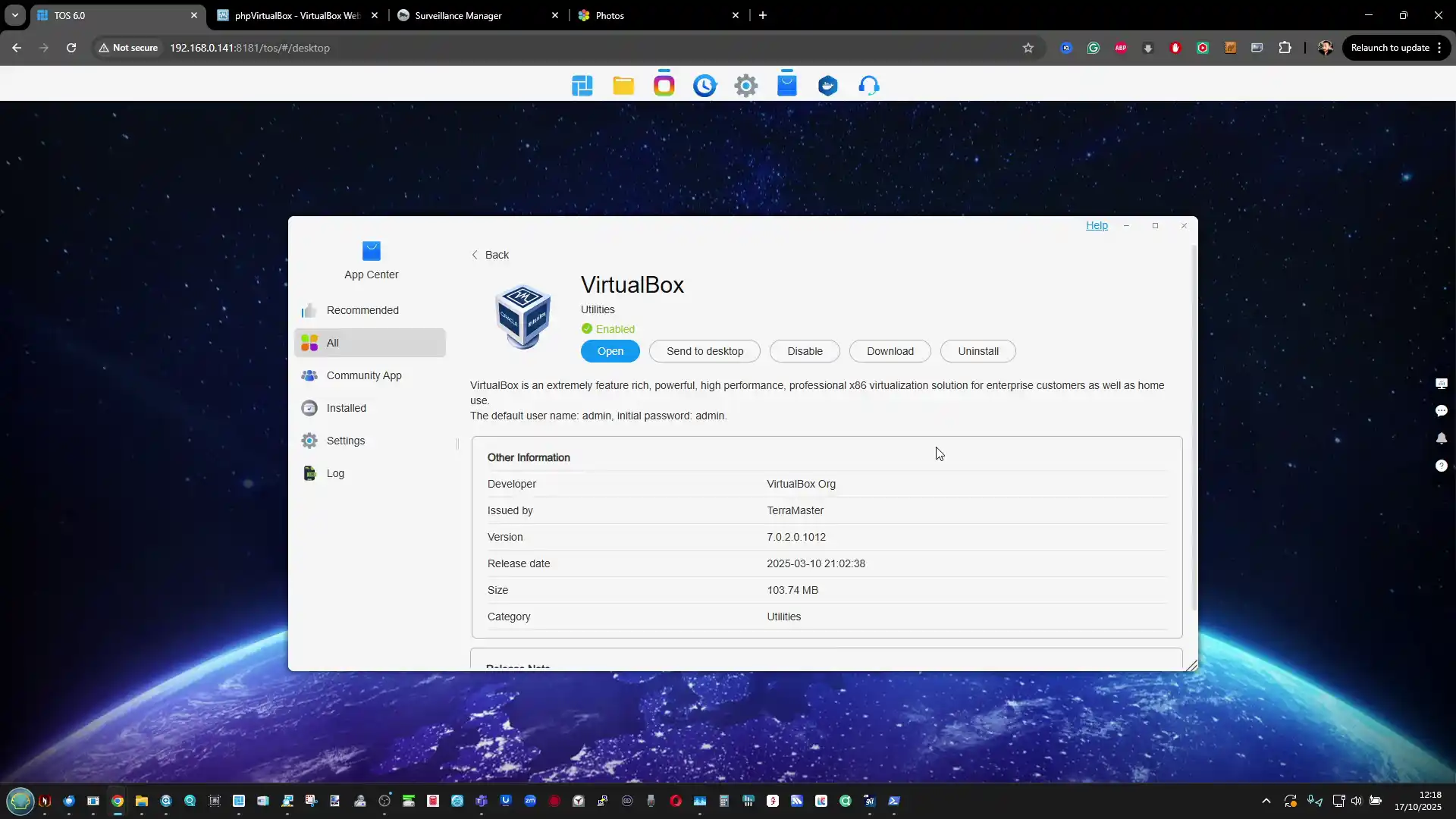
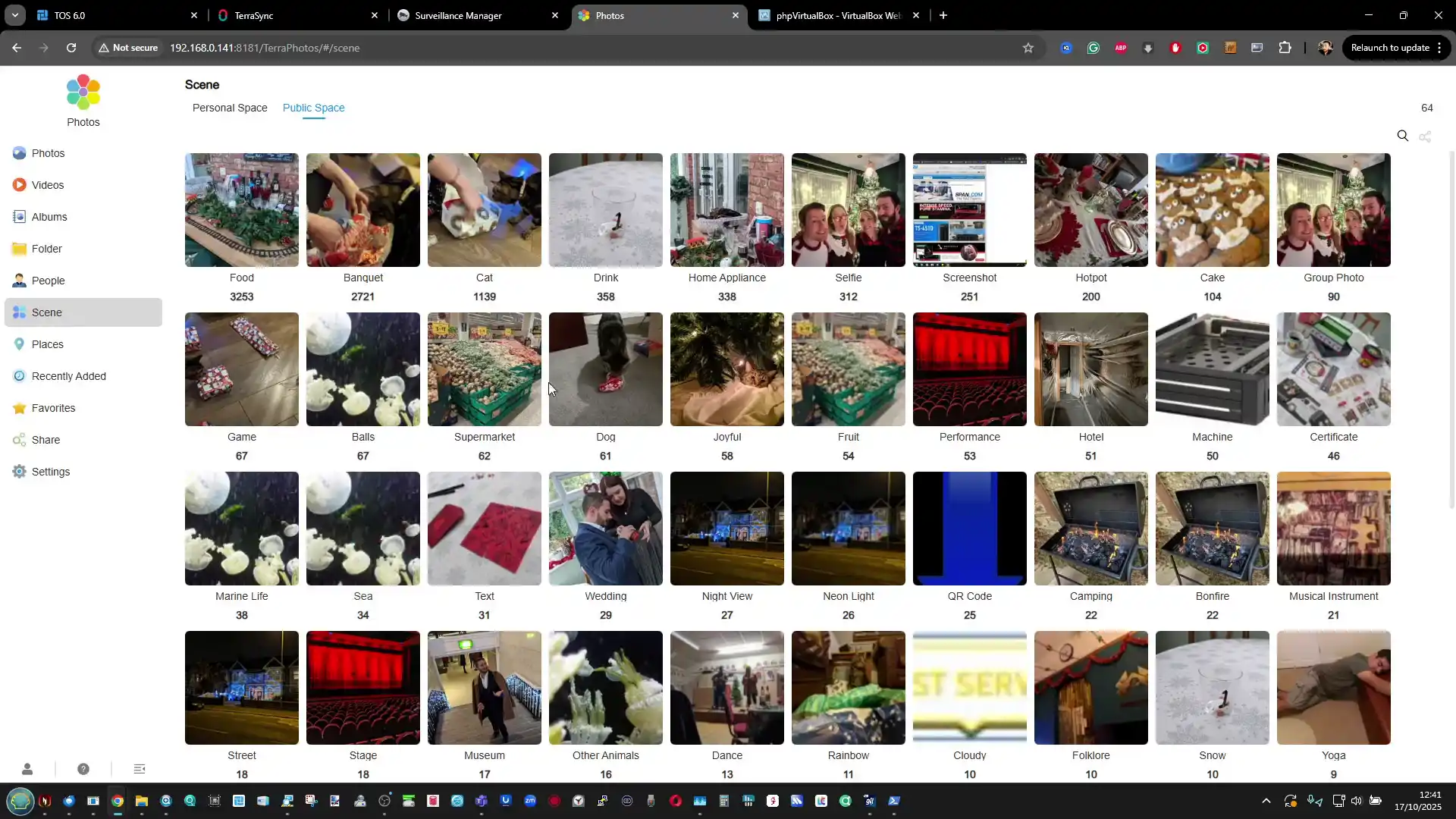
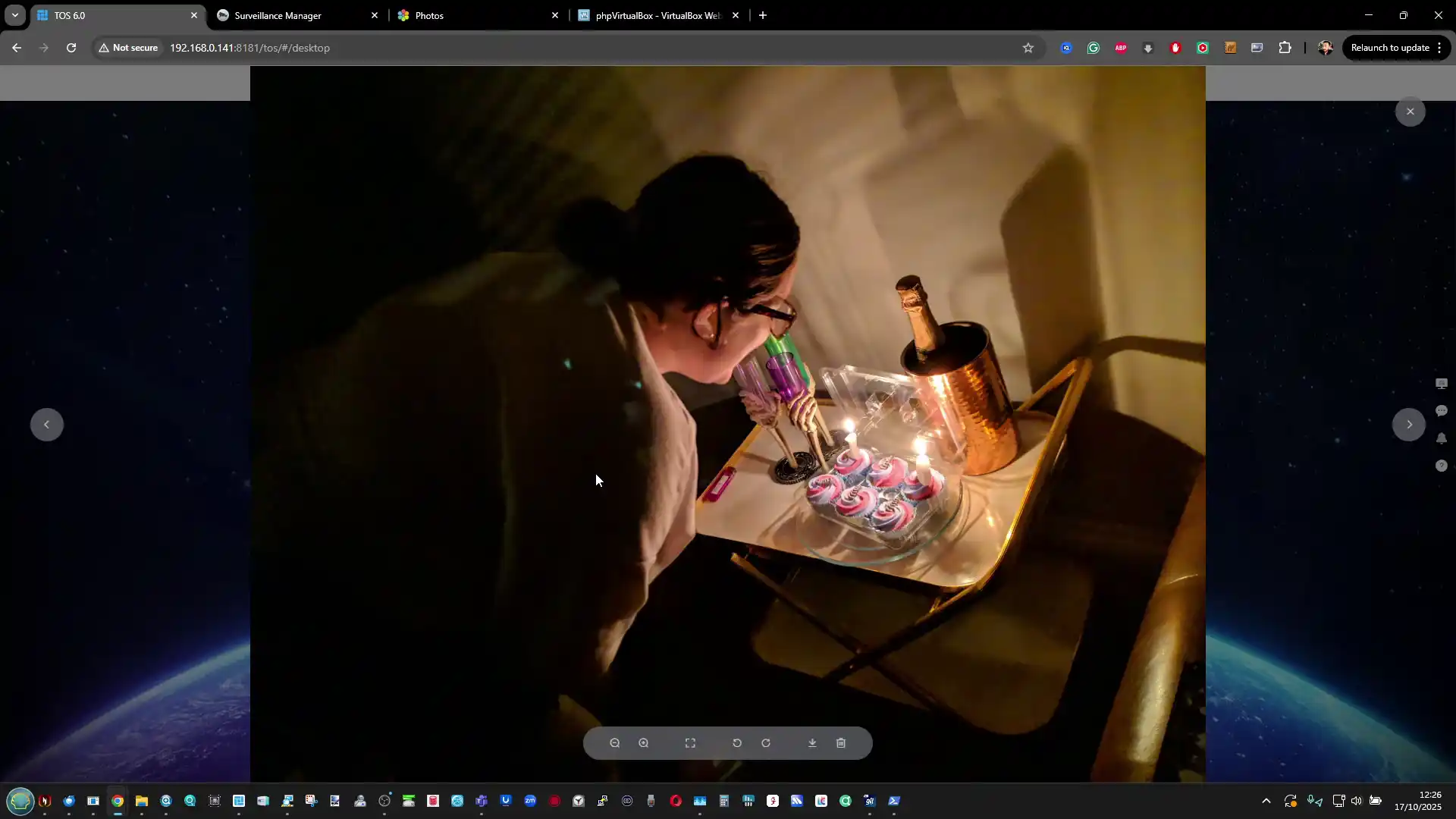
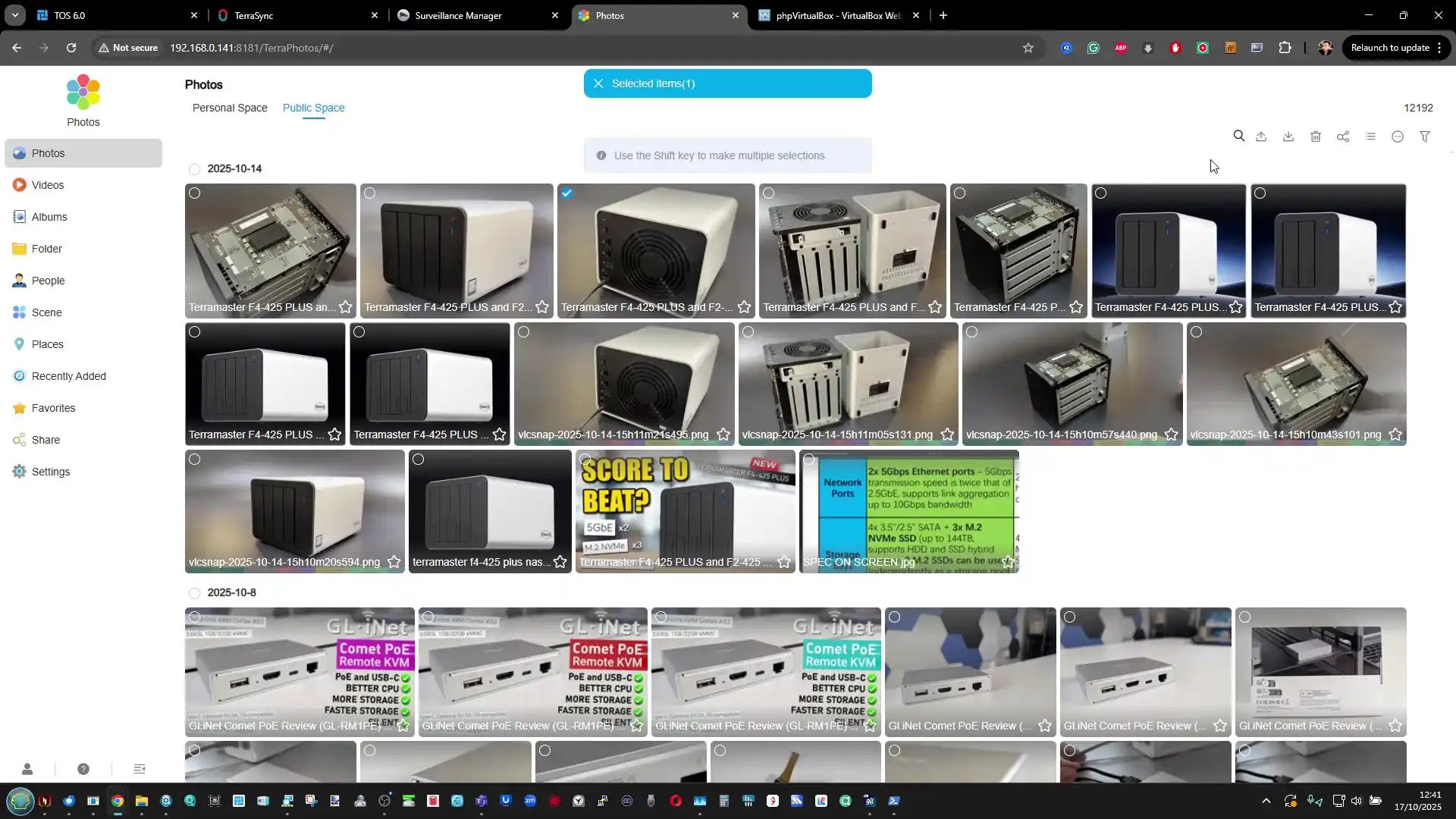
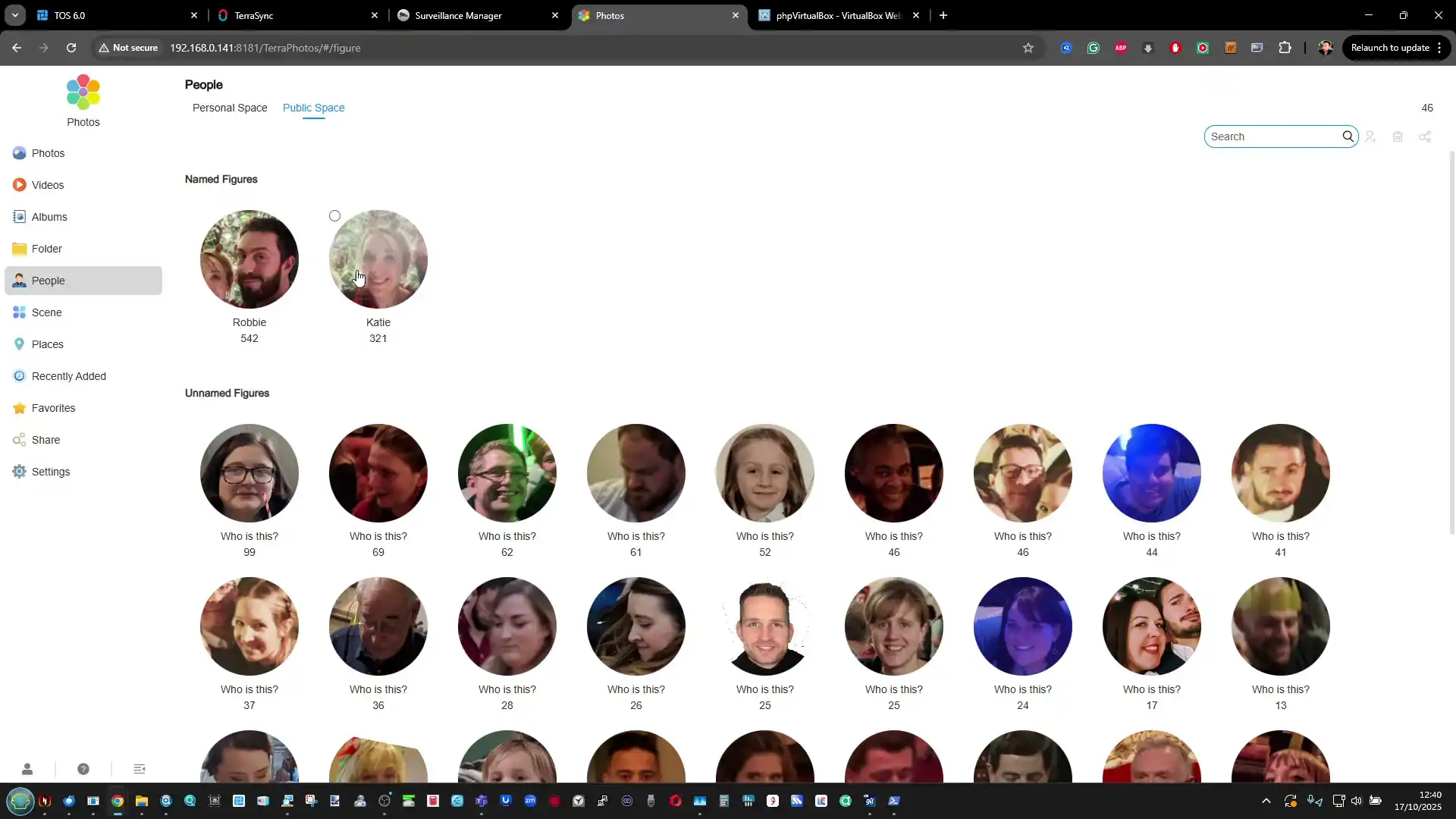
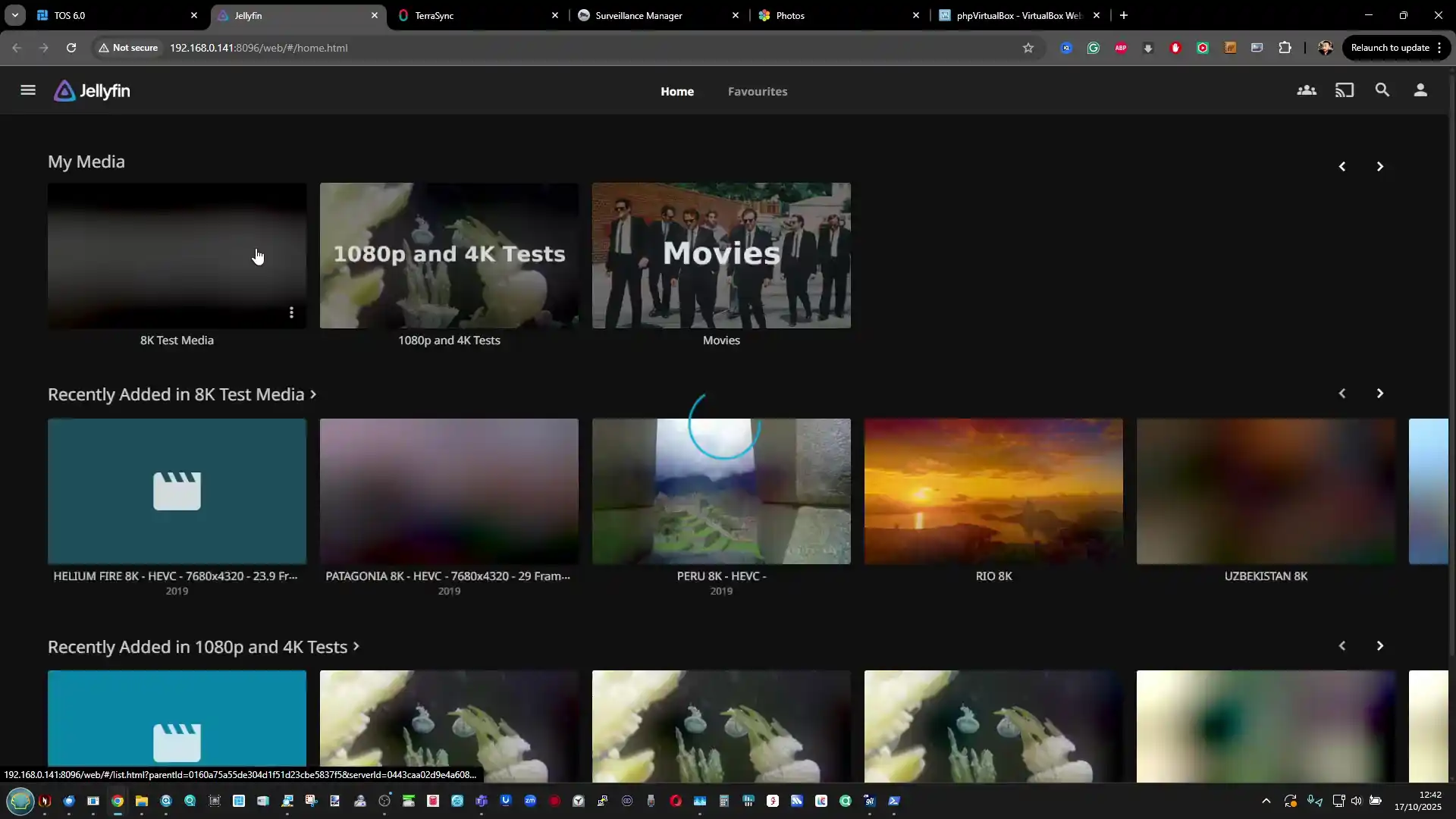
In the area of multimedia and AI-driven services, TerraMaster has continued to refine its photo and video indexing utilities. The AI Photo Recognition tool, embedded within the Photo Gallery application, performs facial and object detection to organize content by identity or category. It uses metadata and machine learning libraries to recognize patterns across uploaded images, enabling faster search and auto-tagging capabilities. Video and photo thumbnails can be displayed directly within File Manager, which now supports large or small thumbnail scaling depending on user preference. For users requiring broader streaming capabilities, the system includes native support for Plex and Jellyfin through the App Center, allowing local or remote playback using widely adopted external platforms rather than proprietary ones. HDMI output remains inactive on TerraMaster NAS units, so these integrations rely solely on network streaming protocols.
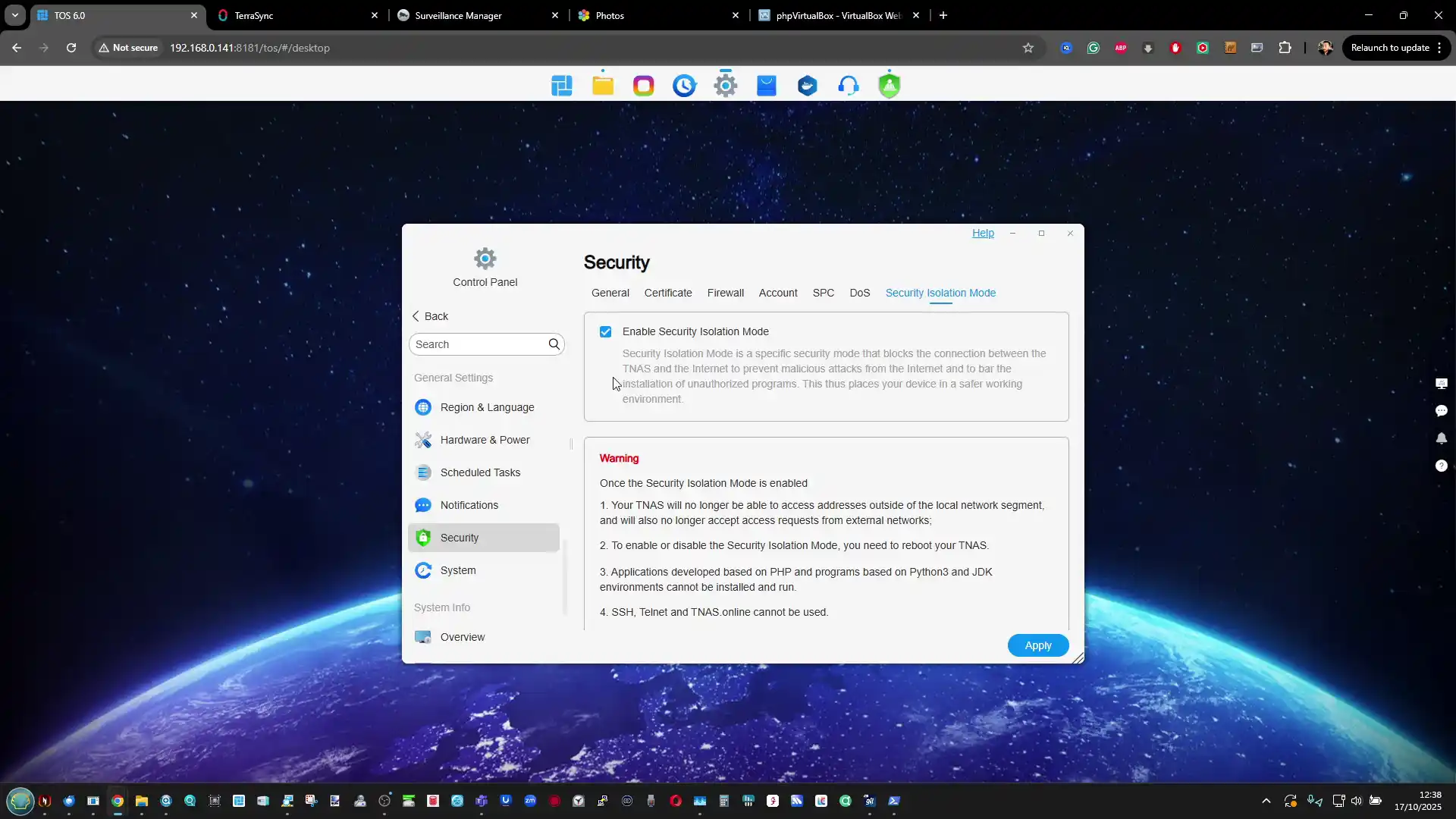
System maintenance and troubleshooting services have also received attention in TOS 6. The platform’s security advisor can perform automated vulnerability checks, flagging weak passwords, exposed ports, or outdated configurations. Isolation Mode remains one of its more practical safety features, instantly disconnecting all non-administrative users and disabling PHP-based third-party apps to prevent intrusion. When users encounter system errors, they can utilize the integrated issue reporting tool, which generates diagnostic logs and can enable temporary remote support for TerraMaster engineers through an authentication key.
Although this feature should be used sparingly, it represents a more direct support pathway than previous versions. Taken together, these improvements show a gradual shift in TOS 6 toward professionalization, improving reliability and ease of management while still allowing extensive customization for experienced administrators.
Conclusion and Verdict

TOS 6 demonstrates that TerraMaster’s NAS platform has matured into a far more capable and structured ecosystem. The software now integrates a wide range of features that were once missing or underdeveloped, from advanced storage management and ACL permissions to cloud synchronization and AI-driven media tools. The interface redesign brings a measurable improvement in usability, and the decision to rebuild the system on the Linux Kernel 6.1 LTS ensures better hardware compatibility and long-term stability. However, it remains evident that the user experience still leans toward a more technical audience, with complex menus and limited guidance compared to the automated workflows found on Synology DSM or QNAP QTS. The system performs reliably, but its presentation and documentation could still benefit from refinement to fully appeal to non-specialist users.
Overall, TOS 6 is TerraMaster’s most complete and confident release to date, delivering a noticeable leap in speed, data protection, and operational consistency across the company’s NAS lineup. It now offers enough depth for small businesses, IT enthusiasts, and hybrid work setups while remaining open to third-party operating systems for those seeking additional flexibility. The platform still trails behind the larger ecosystems in app diversity and cloud integration polish, yet the progress made in this generation positions TerraMaster as one of the more serious alternatives in the mid-range NAS market. For users who value functionality and system control over visual refinement, TOS 6 provides a stable and expandable foundation that indicates TerraMaster is steadily closing the gap with its more established competitors.
Interested in Buying a Terramaster NAS? Support the work we do here at NASCompares, by using the links below.

We receive a small commission on anything you purchase from Amazon, AliExpress or B&H when using these links, and it results in you being able to passively support your favourite websites and creator, completely for free!


📧 SUBSCRIBE TO OUR NEWSLETTER 🔔
[contact-form-7]
🔒 Join Inner Circle

Get an alert every time something gets added to this specific article!


Want to follow specific category? 📧 Subscribe

This description contains links to Amazon. These links will take you to some of the products mentioned in today's content. As an Amazon Associate, I earn from qualifying purchases. Visit the NASCompares Deal Finder to find the best place to buy this device in your region, based on Service, Support and Reputation - Just Search for your NAS Drive in the Box Below

Need Advice on Data Storage from an Expert?

Finally, for free advice about your setup, just leave a message in the comments below here at NASCompares.com and we will get back to you. Need Help? Where possible (and where appropriate) please provide as much information about your requirements, as then I can arrange the best answer and solution to your needs. Do not worry about your e-mail address being required, it will NOT be used in a mailing list and will NOT be used in any way other than to respond to your enquiry. [contact-form-7] TRY CHAT Terms and Conditions

If you like this service, please consider supporting us. We use affiliate links on the blog allowing NAScompares information and advice service to be free of charge to you.Anything you purchase on the day you click on our links will generate a small commission which isused to run the website. Here is a link for Amazon and B&H.You can also get me a ☕ Ko-fi or old school Paypal. Thanks!To find out more about how to support this advice service check HEREIf you need to fix or configure a NAS, check Fiver Have you thought about helping others with your knowledge? Find Instructions Here  

 
Or support us by using our affiliate links on Amazon UK and Amazon US
    
 
Alternatively, why not ask me on the ASK NASCompares forum, by clicking the button below. This is a community hub that serves as a place that I can answer your question, chew the fat, share new release information and even get corrections posted. I will always get around to answering ALL queries, but as a one-man operation, I cannot promise speed! So by sharing your query in the ASK NASCompares section below, you can get a better range of solutions and suggestions, alongside my own.

☕ WE LOVE COFFEE ☕


Best 4/5/6 Bay NAS of 2025

The Best RAID 5 Ready 4/5/6-Bay NAS Servers of 2025

Multi bay NAS units in the 4,5 and 6 bay bracket have become the default choice for users who want a single chassis that can handle RAID 5 or larger arrays, mix HDD and NVMe storage and still fit under a desk or on a shelf. This roundup looks at systems released in 2025 that sit in that space, from compact ARM based 4 bay boxes up to more expandable x86 platforms with additional M.2 slots and higher network bandwidth. The focus is on how each unit balances raw storage capacity across SATA and NVMe, the type of RAID and pool layouts it can realistically support, and the power, noise and feature overhead that comes with those choices, so readers can match a chassis to their plans for backup, media, virtualisation or general home lab use without stepping up to larger, more complex rack or 8 bay solutions.


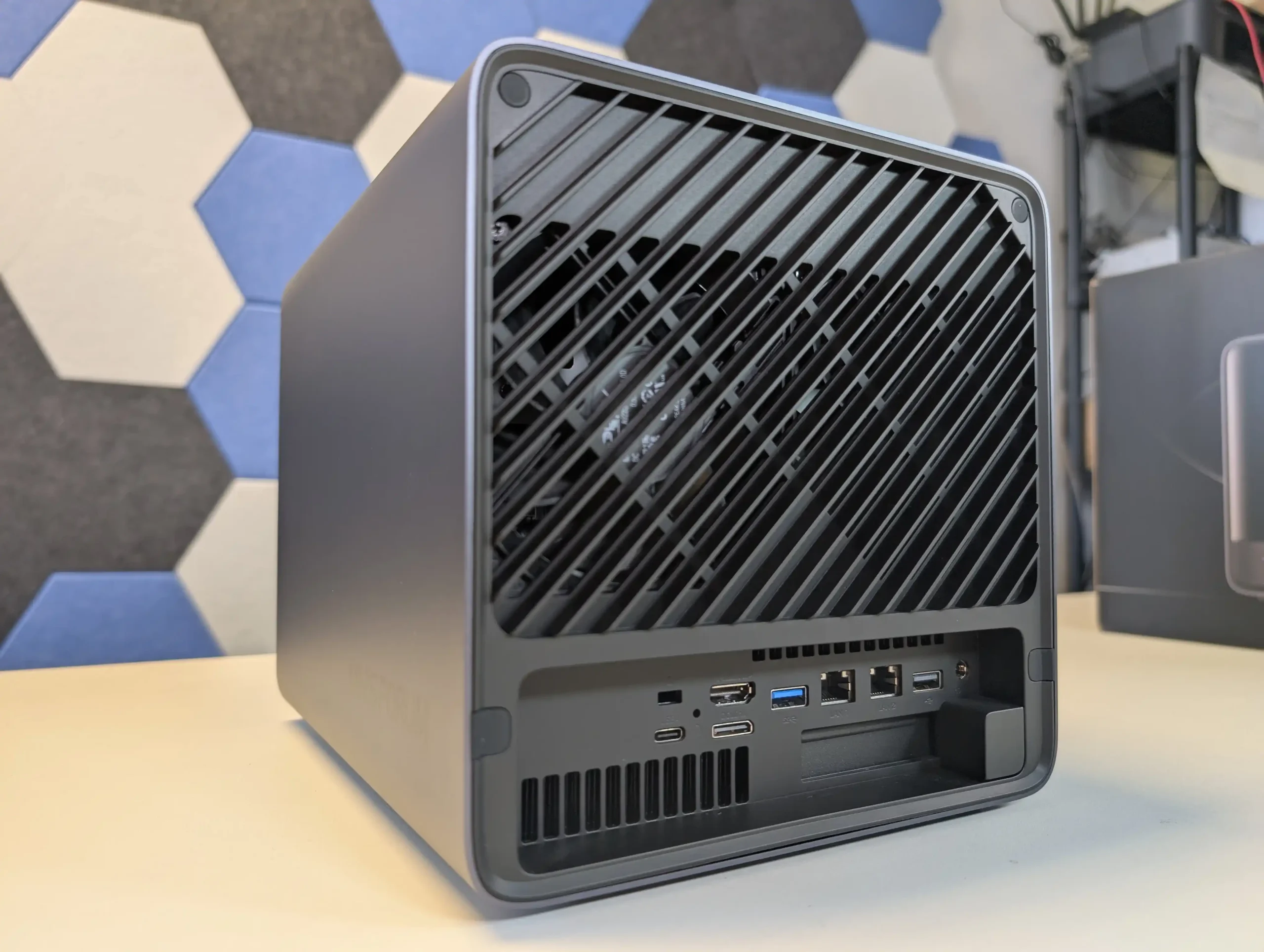
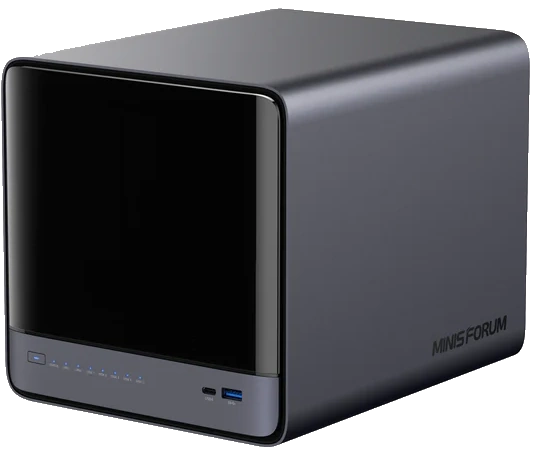
#1 Minisforum N5 NAS – $599 to $749 HERE

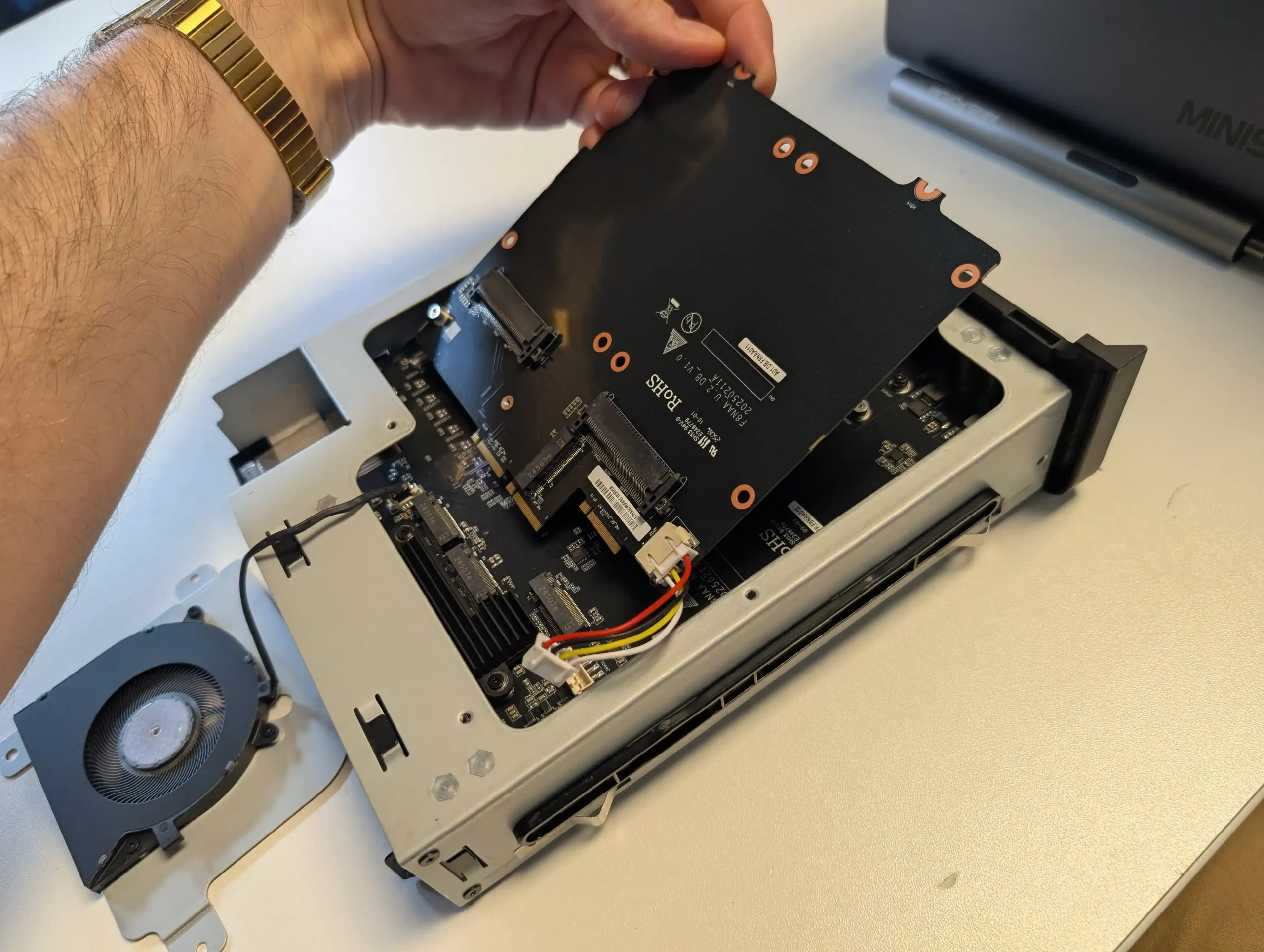
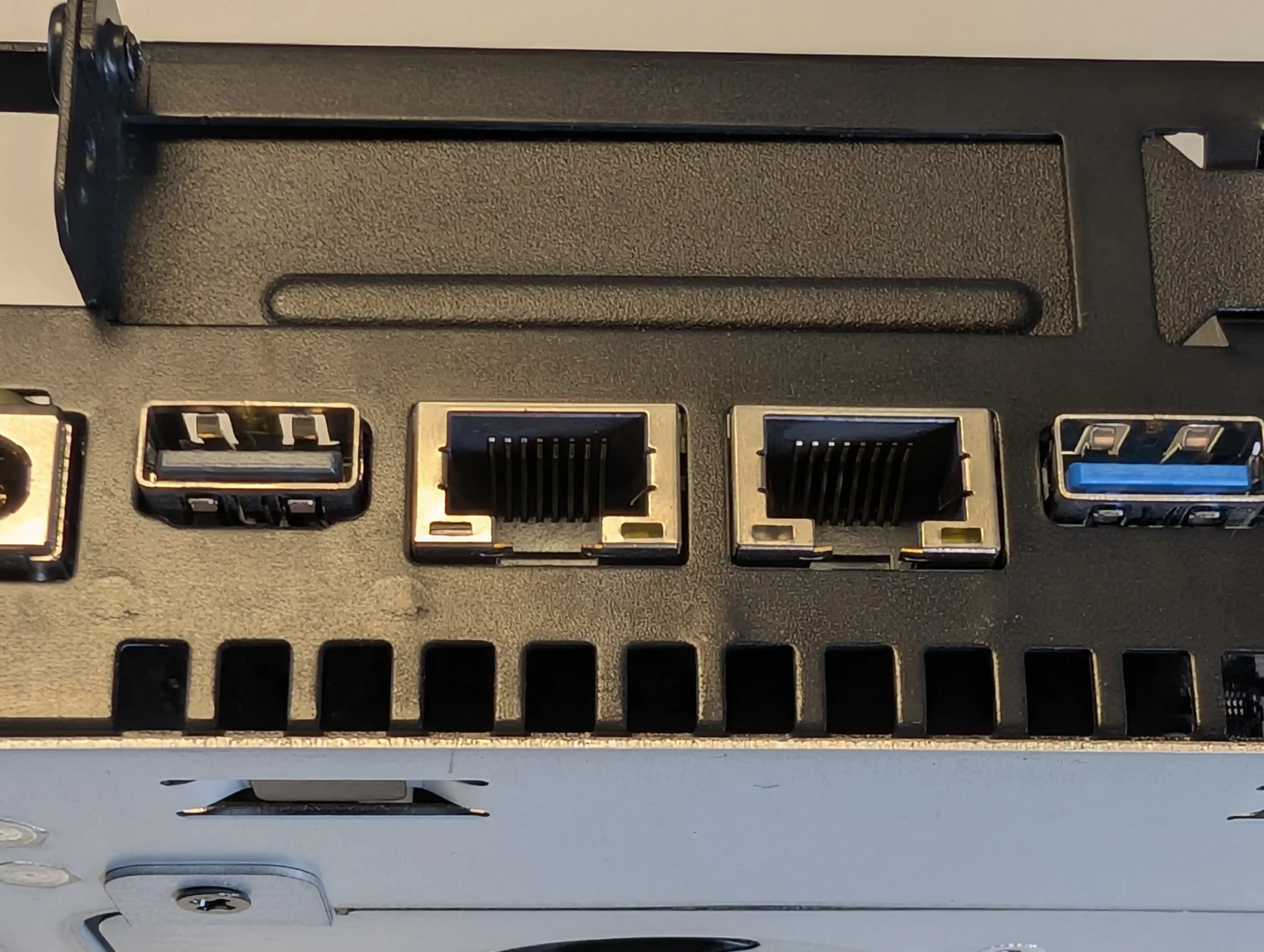
SPECS: AMD Ryzen 7 255 8 core 16 thread up to 4.9 GHz – up to 96 GB DDR5 via 2 SODIMM slots – 5 x 3.5″/2.5″ SATA bays – 1 x 10 GbE RJ45 / 1 x 5 GbE RJ45 – 3 x M.2 NVMe or U.2 SSD slots (PCIe 4.0, mixed x1 and x2 lanes) plus 128 GB OS storage.

With 5 SATA bays rated for up to 22 TB per disk and 3 PCIe 4.0 NVMe or U.2 positions, the N5 can be configured as a hybrid array where high capacity RAID 5 or RAID 6 sits on HDDs while SSDs are used for fast pools or tiered storage. MinisCloud OS exposes ZFS style RAID options including RAID 0, 1, 5 and 6, snapshots and compression, so the storage layout can be tuned for sequential workloads, mixed containers or heavier virtualisation without replacing the base system. The Ryzen 7 255 and Radeon 780M iGPU give it enough compute and PCIe bandwidth for multi gig throughput over the combined 10 GbE and 5 GbE interfaces, but they also raise power use and thermal output compared with simpler ARM or low end x86 models. In a 4 or 5 bay context it therefore suits users who expect to keep expanding with higher density drives and multiple NVMe pools over several years, rather than those who just need a small RAID 5 and basic apps.

What we said in our July ’25 Review HERE:

The Minisforum N5 Pro is an impressive and highly versatile NAS platform that successfully combines the core strengths of a storage appliance with the capabilities of a compact, workstation-class server, making it suitable for demanding and varied use cases. Its defining features include a 12-core Ryzen AI 9 HX PRO 370 CPU with 24 threads and onboard AI acceleration up to 50 TOPS, support for up to 96GB of ECC-capable DDR5 memory for data integrity, and a hybrid storage architecture offering up to 144TB total capacity through a mix of five SATA bays and three NVMe/U.2 slots. Additional highlights such as ZFS file system support with snapshots, inline compression, and self-healing, along with high-speed networking via dual 10GbE and 5GbE ports, and expansion through PCIe Gen 4 ×16 and OCuLink interfaces, position it well beyond the capabilities of typical consumer NAS systems. The compact, fully metal chassis is easy to service and efficiently cooled, enabling continuous operation even under sustained virtual machine, AI, or media workloads.

At the same time, the bundled MinisCloud OS, while feature-rich with AI photo indexing, Docker support, and mobile integration, remains a work in progress, lacking some enterprise-grade polish, robust localization, and more advanced tools expected in mature NAS ecosystems. Minor drawbacks such as the external PSU, the thermally challenged pre-installed OS SSD, and the higher cost of the Pro variant relative to the standard N5 are important to weigh, particularly for users who may not fully utilize the Pro’s ECC and AI-specific advantages. For advanced users, homelab builders, and technical teams who require high compute density, flexible storage, and full control over their software stack, the N5 Pro delivers workstation-level performance and configurability in NAS form—offering one of the most forward-thinking and adaptable solutions available today in this segment.

The is now available to buy:

  • Minisforum N5 Pro (Check Amazon) – HERE
  • Minisforum N5 Pro (Check AliExpress) – HERE
  • Shop for NAS Hard Drives on Amazon – HERE
  • Shop for SSDs for your N5 Pro on Amazon – HERE

BUILD QUALITY - 10/10
HARDWARE - 9/10
PERFORMANCE - 9/10
PRICE - 7/10
VALUE - 8/10


8.6
PROS
👍🏻High-performance AMD Ryzen™ AI 9 HX PRO 370 CPU with 12 cores, 24 threads, and AI acceleration (50 TOPS NPU) is INCREDIBLE for a compact desktop purchase
👍🏻Support for up to 96GB DDR5 memory with ECC, ensuring data integrity and stability in critical environments
👍🏻ZFS-ready storage with numerous ZFS and TRADITIONAL RAID configurations, snapshots, and inline compression
👍🏻Hybrid storage support: five 3.5\\\"/2.5\\\" SATA bays plus three NVMe/U.2 SSD slots, with up to 144TB total capacity
👍🏻Versatile expansion options including PCIe Gen 4 ×16 slot (×4 electrical) and OCuLink port for GPUs or NVMe cages
👍🏻Dual high-speed networking: 10GbE and 5GbE RJ45 ports with link aggregation support + (using the inclusive MinisCloud OS) the use of the USB4 ports for direct PC/Mac connection!
👍🏻Fully metal, compact, and serviceable chassis with thoughtful cooling and accessible internal layout - makes maintenance, upgrades and troubleshooting a complete breeze!
👍🏻Compatibility with third-party OSes (TrueNAS, Unraid, Linux) without voiding warranty, offering flexibility for advanced users
CONS
👎🏻MinisCloud OS is functional but immature, with unfinished localisation and limited advanced enterprise features - lacks MFA, iSCSI, Security Scanner and More. Nails several key fundamentals, but still feels unfinished at this time.
👎🏻Despite External PSU design (will already annoy some users), it generates a lot of additional heat and may not appeal to all users overall
👎🏻Preinstalled 64GB OS SSD runs hot under sustained use and lacks dedicated cooling. Plus, losing one of the 3 m.2 slots to it will not please everyone (most brands manage to find a way to apply an eMMC into the board more directly, or use a USB bootloader option as a gateway for their OS
👎🏻Premium $1000+ pricing may be hard to justify for users who don’t need ECC memory or AI capabilities compared to the standard N5 at $500+


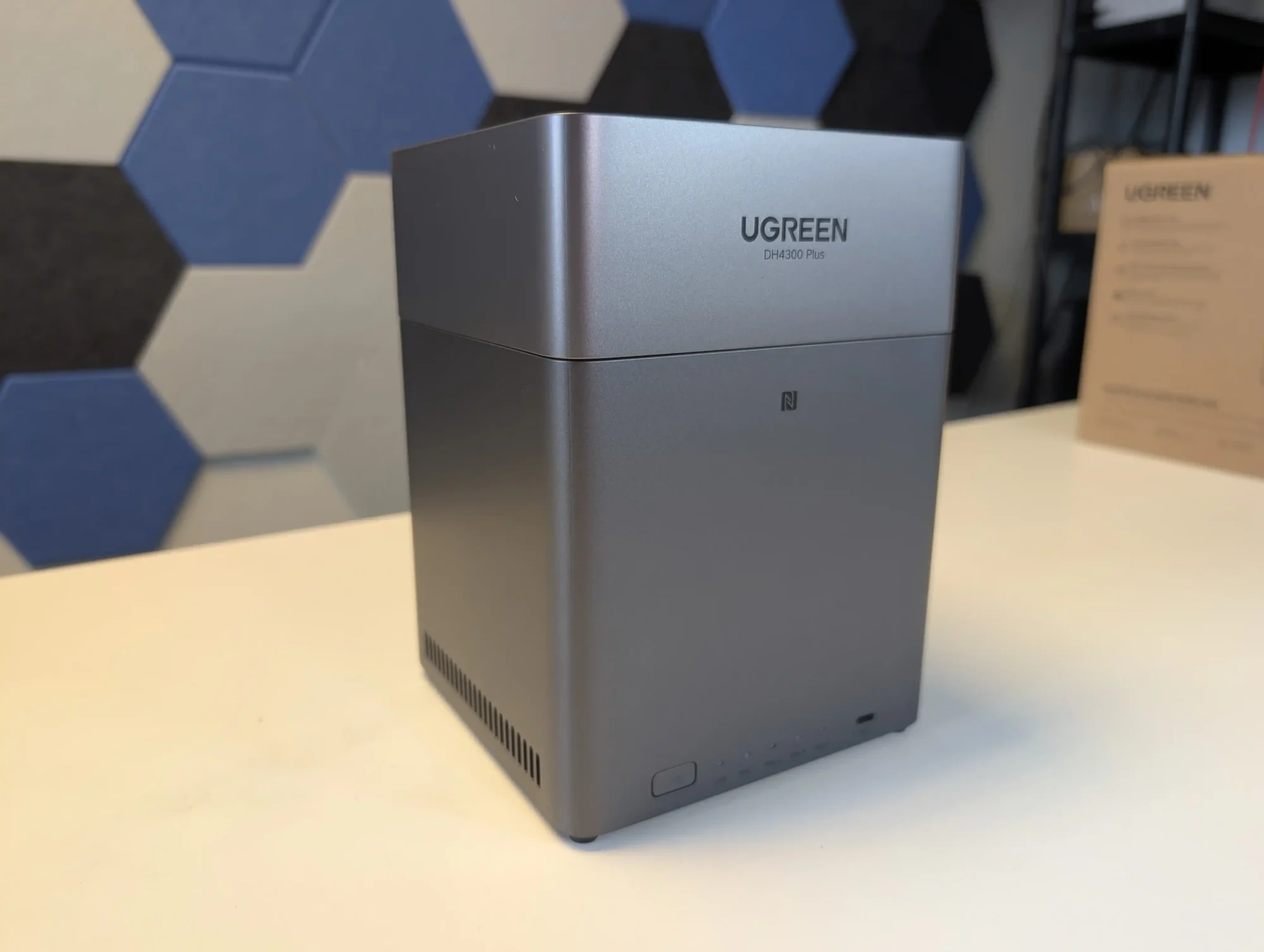
#2 UGREEN NASync DH4300 Plus – $369 to $409

SPECS: Rockchip RK3588 8 core ARM up to 2.0 GHz – 8 GB LPDDR4X – 4 x 3.5″/2.5″ SATA bays – 1 x 2.5 GbE RJ45 – no internal M.2 SSD slots.

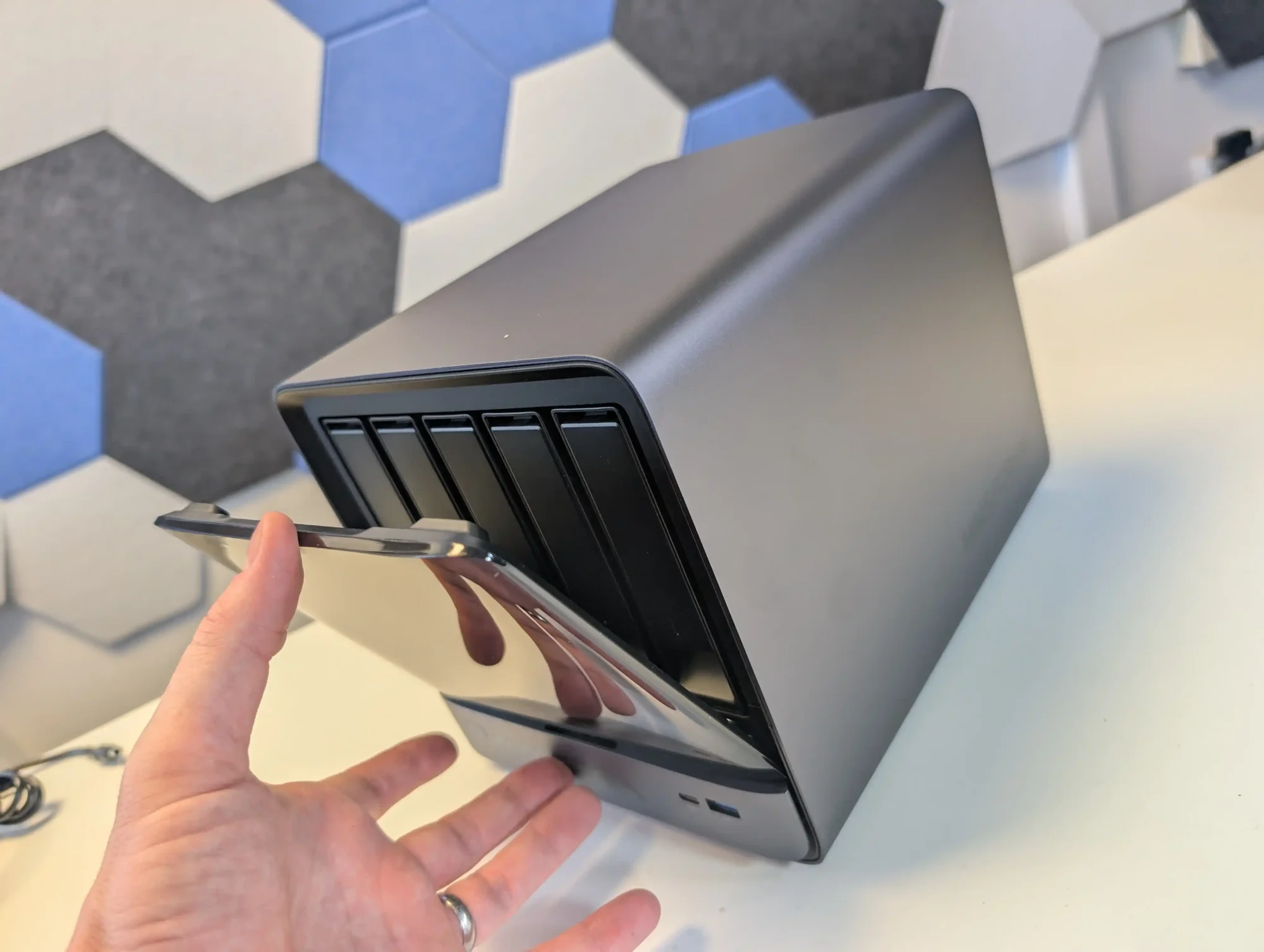
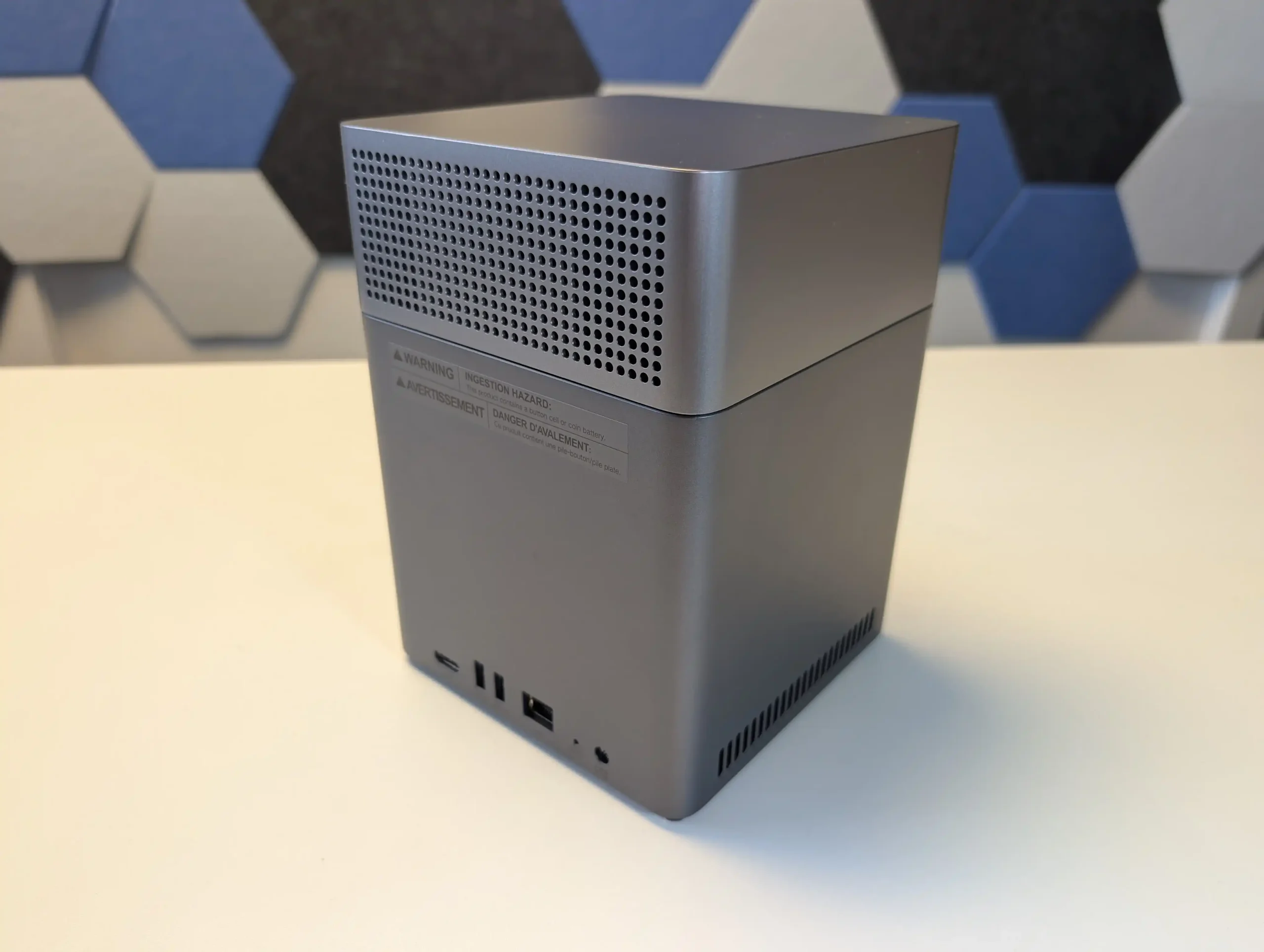
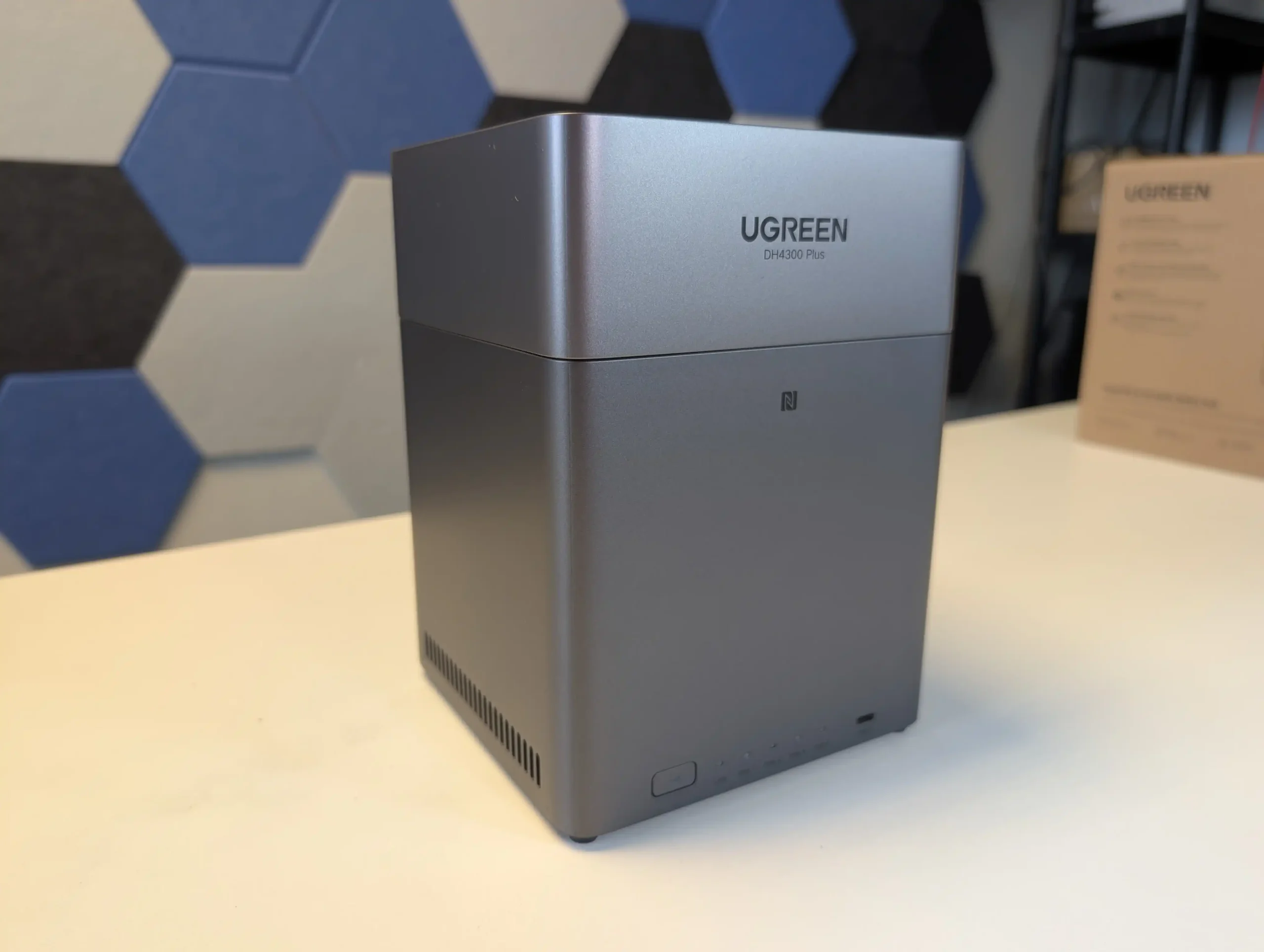
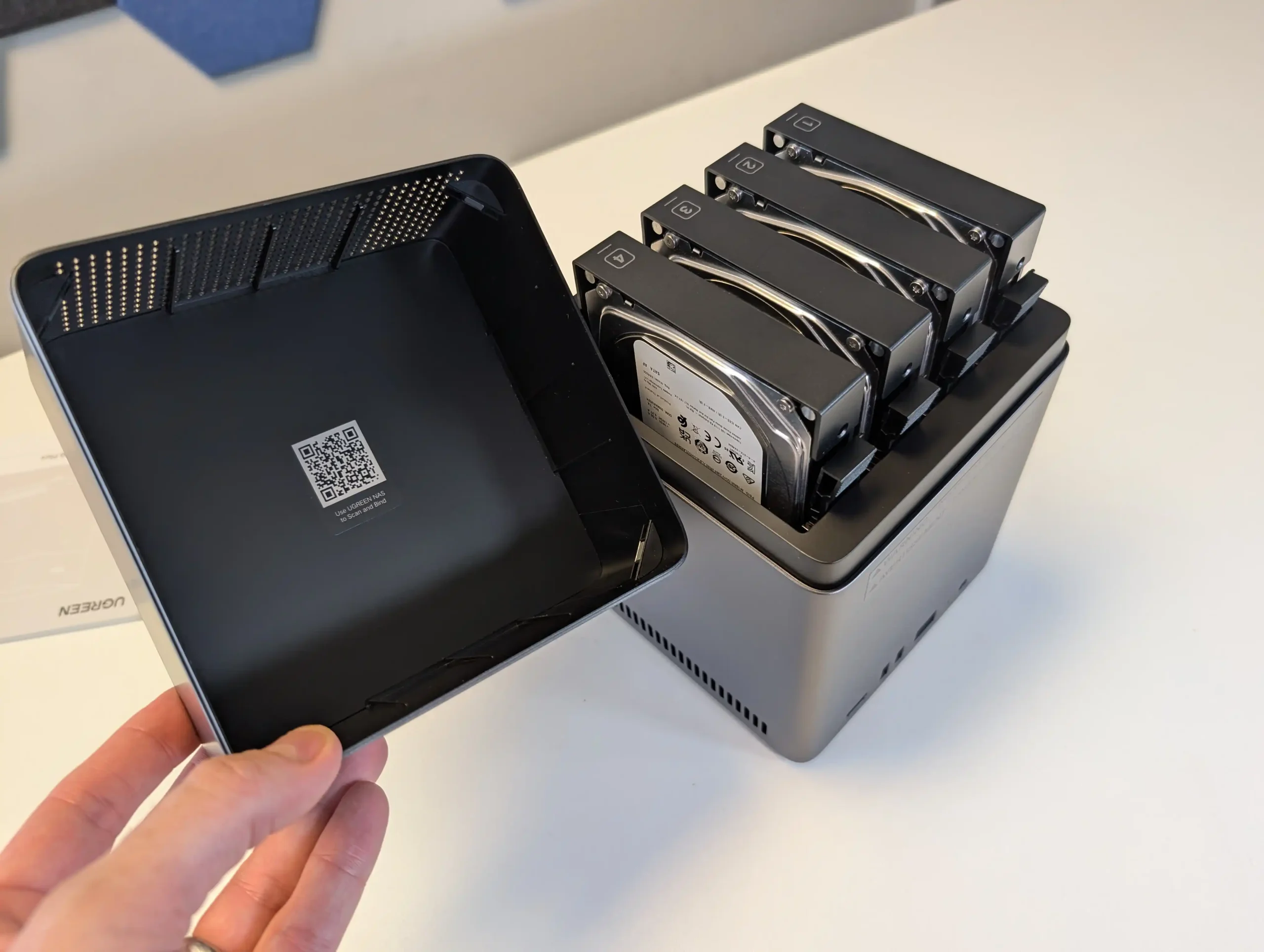
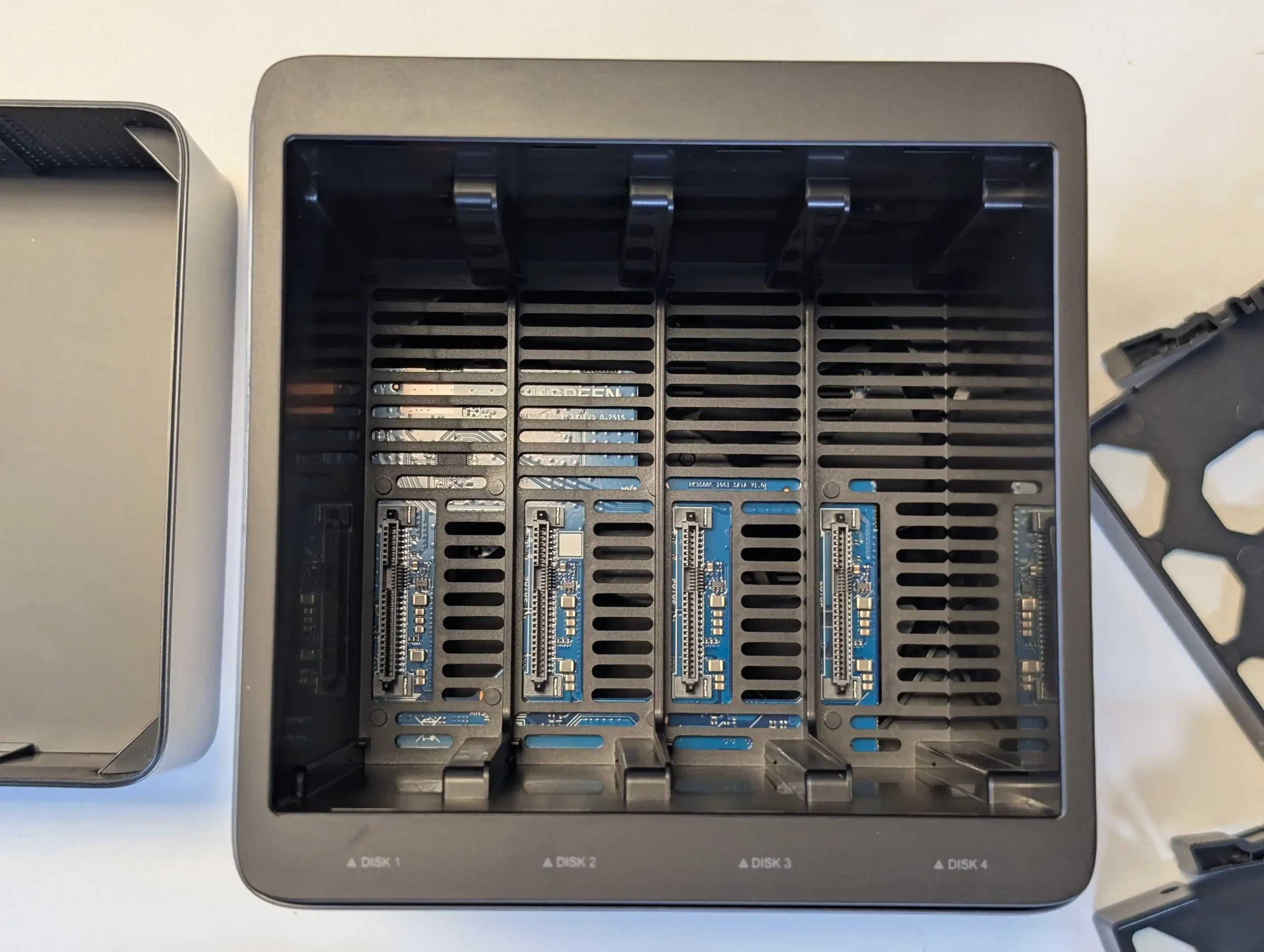
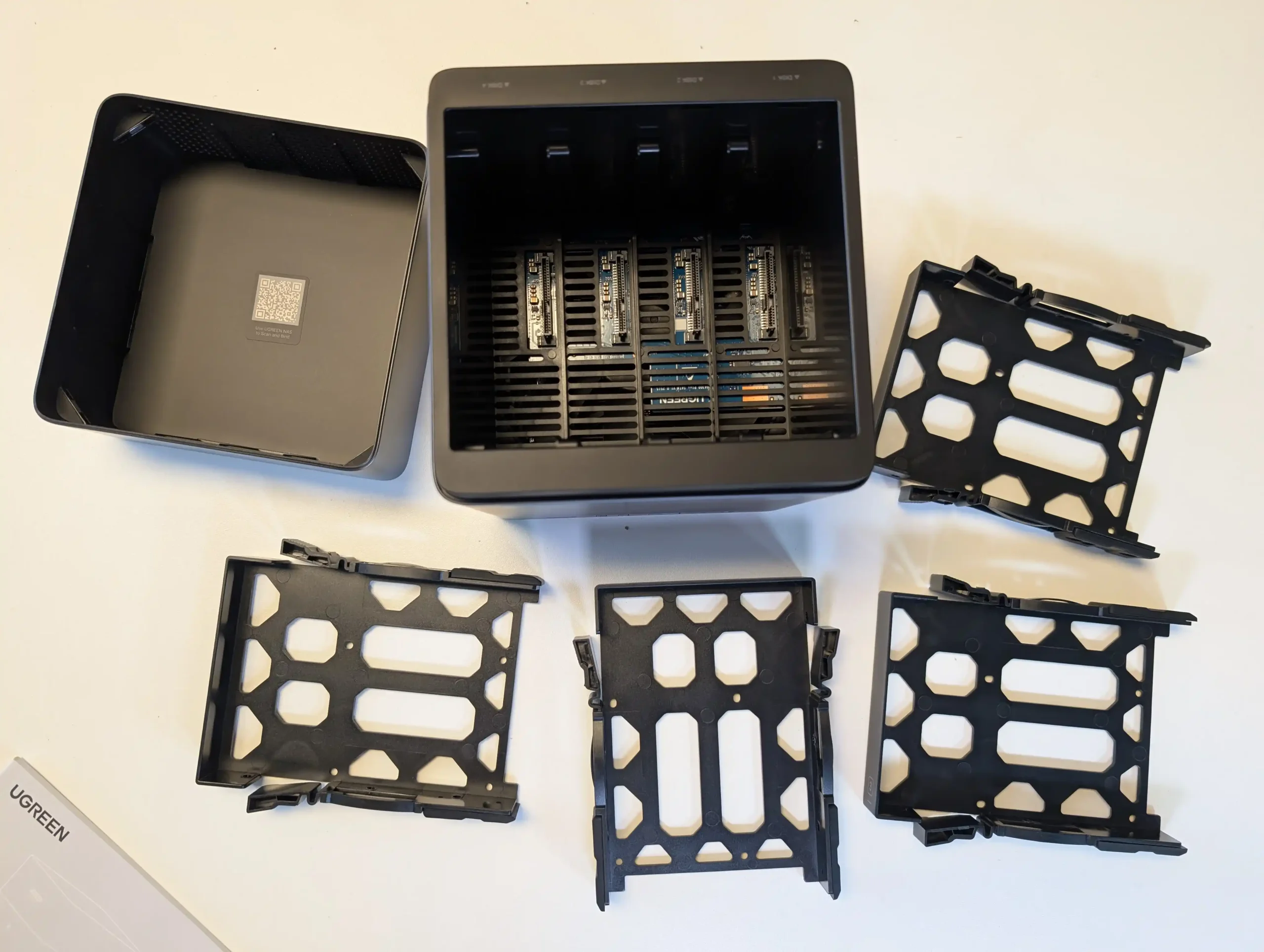
The DH4300 Plus concentrates all of its storage on 4 SATA bays with support for RAID 0, 1, 5, 6 and 10, up to a stated 120 TB raw using 30 TB disks, which makes it a straightforward choice for traditional RAID 5 capacity rather than mixed media architectures. The absence of M.2 slots means there is no internal SSD cache tier, although SSDs can still be used in the main bays if lower latency is required, at the cost of capacity per bay. In return, the RK3588 SoC and LPDDR4X memory keep power consumption relatively low, with quoted figures under 25 W under load, and the 2.5 GbE interface is enough to saturate what 4 mechanical drives in RAID 5 or RAID 6 can usually deliver. UGreen’s UGOS Pro platform adds a container system, snapshot capable file services and consumer facing features such as AI photo indexing, so for a 4 bay RAID 5 appliance the trade off is clear: a fixed, HDD focused storage layout with no internal NVMe, in exchange for low complexity, modest power draw and a simple upgrade path based mainly on higher capacity disks.

What we said in our July 2025 Review:

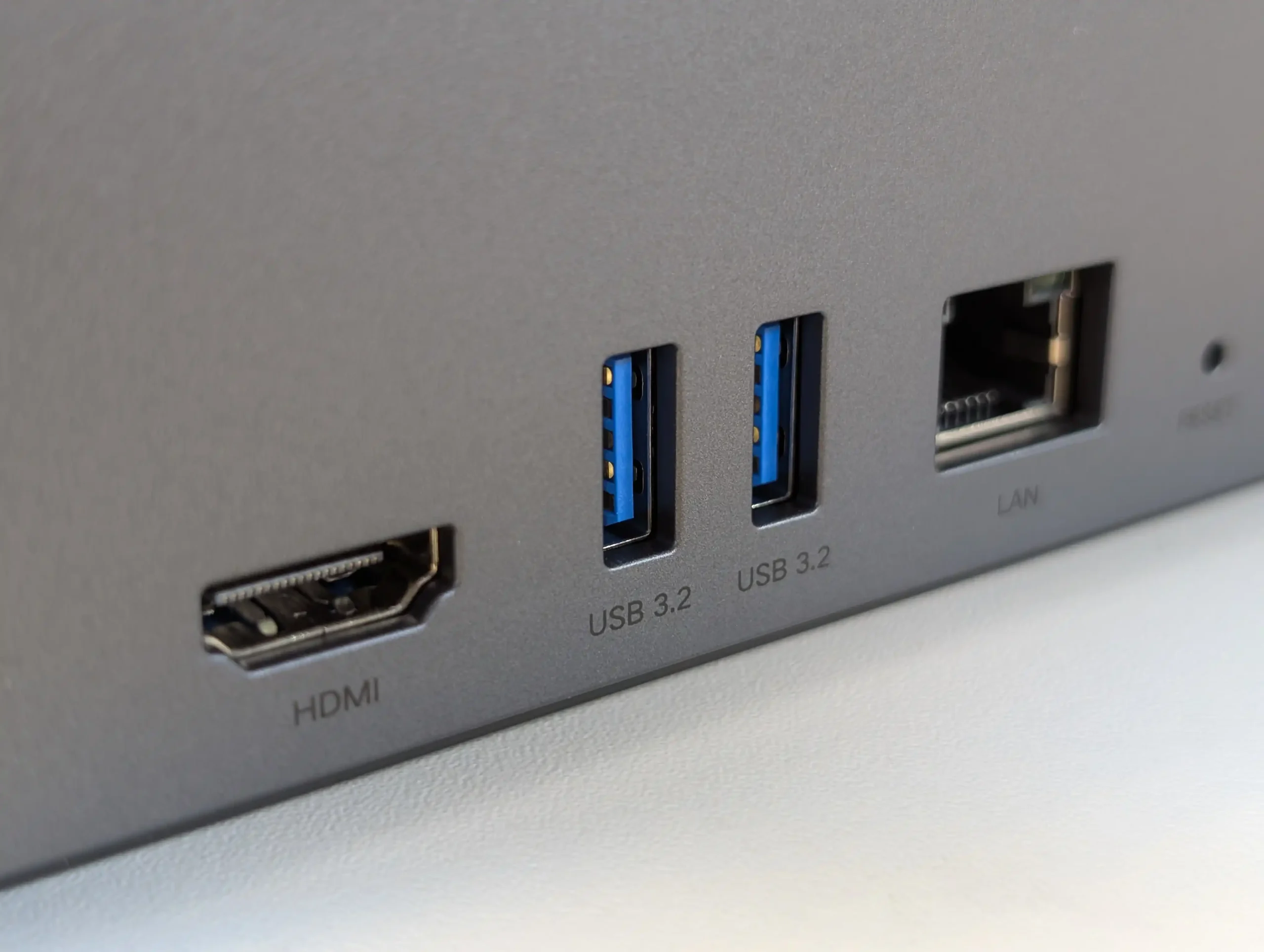
The UGREEN DH4300 Plus carves out a unique niche in the budget NAS landscape by delivering hardware typically reserved for higher-tier systems at a much lower price point. Its RK3588 processor, 8GB of RAM, and support for 2.5GbE networking place it well ahead of most similarly priced competitors in terms of raw specifications. Additionally, features such as HDMI output, 10Gbps USB ports, and local AI-powered photo indexing are rare to find in entry-level NAS systems. Despite its plastic-heavy internal design and lack of expansion options like PCIe or M.2, the device delivers stable performance for file sharing, media access, and low-intensity AI workloads. It is not suited for power users demanding virtual machines or advanced snapshot automation, but within its class, the DH4300 Plus presents an appealing balance between cost and capability.

That said, the software experience is still a work in progress. UGOS Pro covers the essentials and offers a visually accessible UI, but lacks the advanced features and ecosystem integration found in more mature platforms like Synology DSM or QNAP QTS. Docker and snapshot support add welcome flexibility, but the absence of native Jellyfin, iSCSI, and VM functionality limits its use in more complex environments. Still, for home users, media collectors, or small office setups looking for reliable backup, modest AI-enhanced photo sorting, and smooth 4K playback, the DH4300 Plus delivers value well beyond its price tag. While it won’t replace high-end NAS appliances, it serves as a capable, efficient, and quietly innovative option in a saturated entry-level NAS market.

Buy the UGREEN DH4300 on Amazon @409 Buy the UGREEN DH4300 on UGREEN.COM Buy the UGREEN DH4300 on B&H

STORE

SOFTWARE - 6/10
HARDWARE - 7/10
PERFORMANCE - 6/10
PRICE - 9/10
VALUE - 10/10


7.6
PROS
👍🏻Powerful ARM CPU: Equipped with the RK3588 SoC, offering 8 cores, integrated GPU, and NPU for AI workloads.
👍🏻Generous (but fixed!) Memory: 8GB LPDDR4X RAM, rare in budget NAS systems, supports multitasking and Docker use.
👍🏻2.5GbE Network Port: Provides faster-than-Gigabit throughput for backups, media streaming, and multi-user access.
👍🏻HDMI 2.1 Output: Rare on ARM powered turnkey NAS, and enables direct media playback or NAS control at up to 4K 60Hz, uncommon in value-tier NAS units.
👍🏻USB 10Gbps Ports: Dual USB-A 10Gbps and one USB-C 5Gbps allow for high-speed backups or external storage expansion.
👍🏻AI Photo Management: Built-in NPU supports facial recognition and scene detection for local, private media organization.
👍🏻Low Power Consumption: Efficient under load (~30W) and idle (~5W without drives), suitable for 24/7 operation.
CONS
👎🏻No PCIe or M.2 Expansion: Lacks future scalability for NVMe caching, 10GbE, or other upgrades.
👎🏻Single LAN Port: Only one 2.5GbE port, with no failover or link aggregation support.
👎🏻Limited Software Ecosystem: UGOS Pro lacks iSCSI, VM support, and native Jellyfin, trailing behind DSM/QTS in maturity.


#3 Beelink ME Mini N150 – $259 to $299

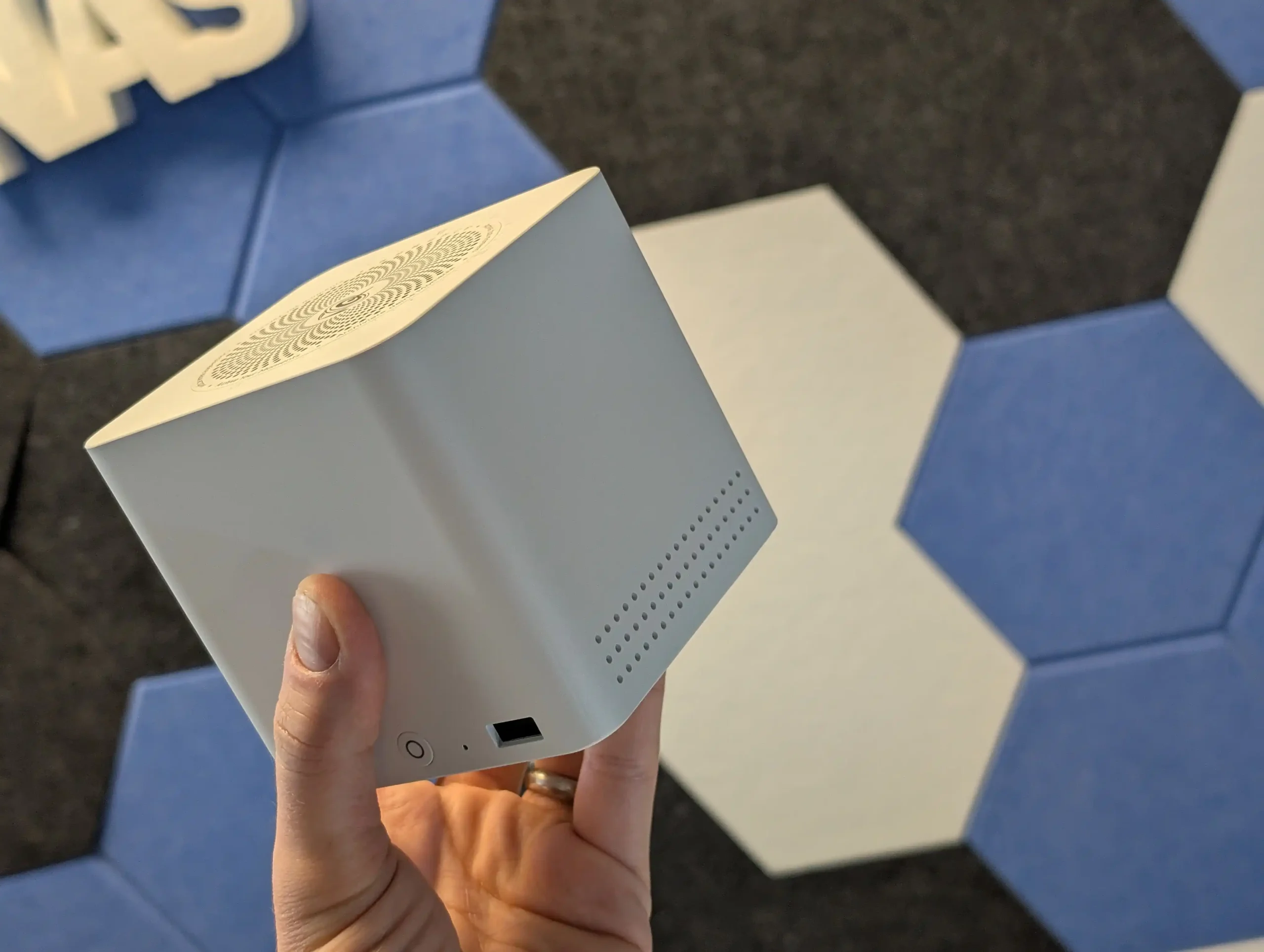
SPECS: Intel N150 quad core up to 3.6 GHz – 12 GB LPDDR5 (16 GB variants available) – 6 x M.2 SSD slots (1 preinstalled 2 TB PCIe 3.0 x2, 5 user accessible PCIe 3.0 x1) plus 64 GB eMMC – dual 2.5 GbE RJ45.

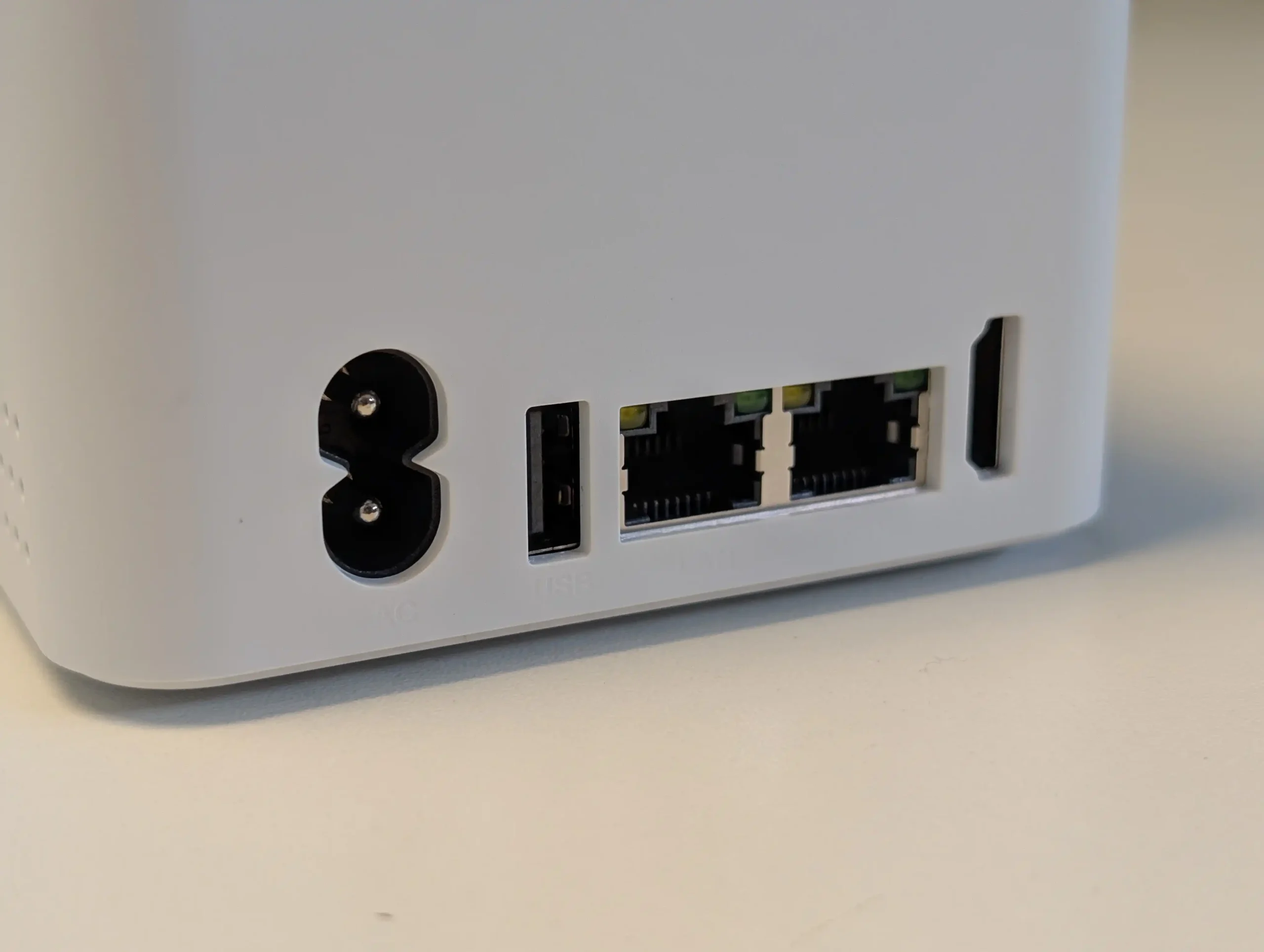
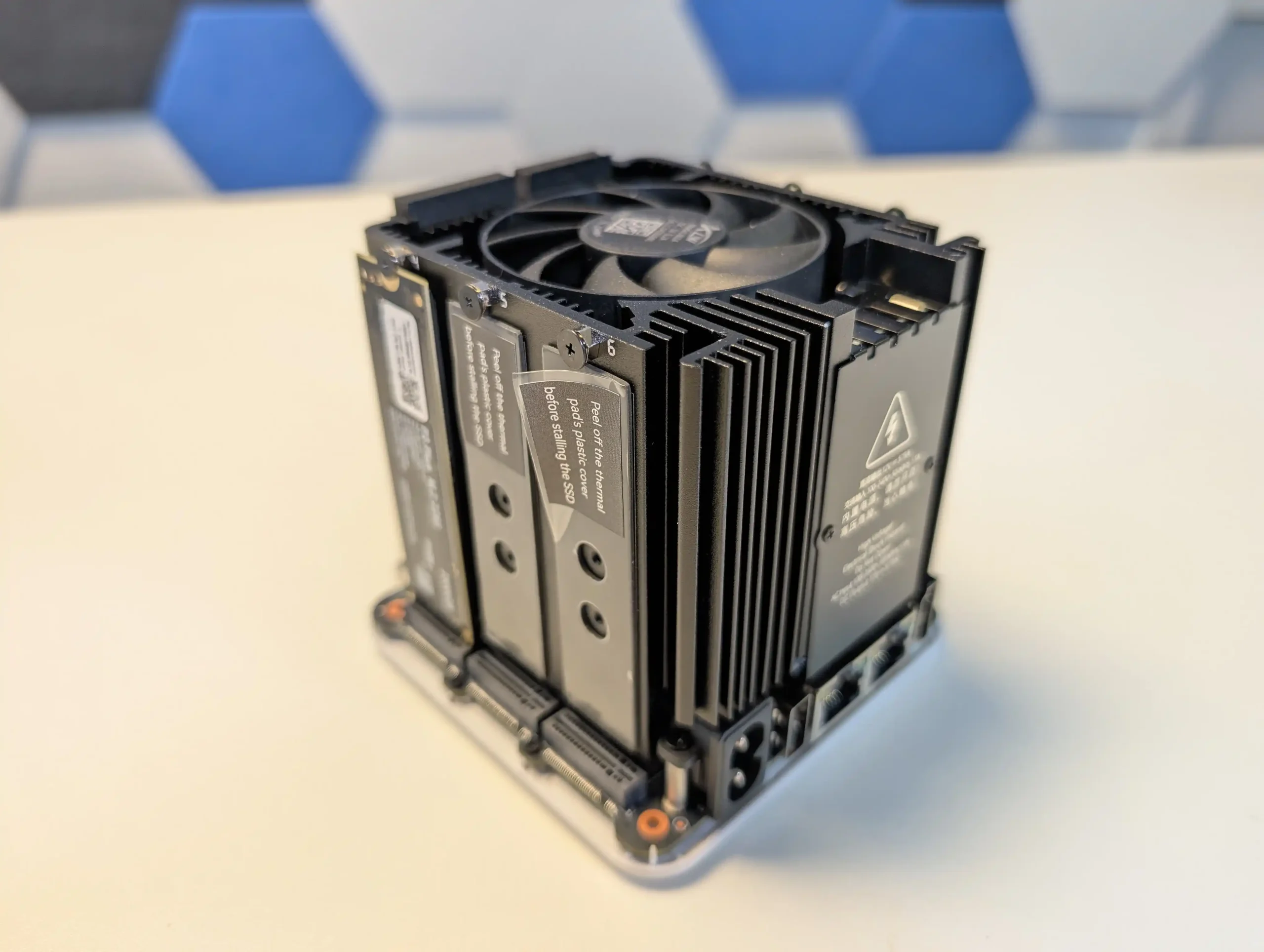
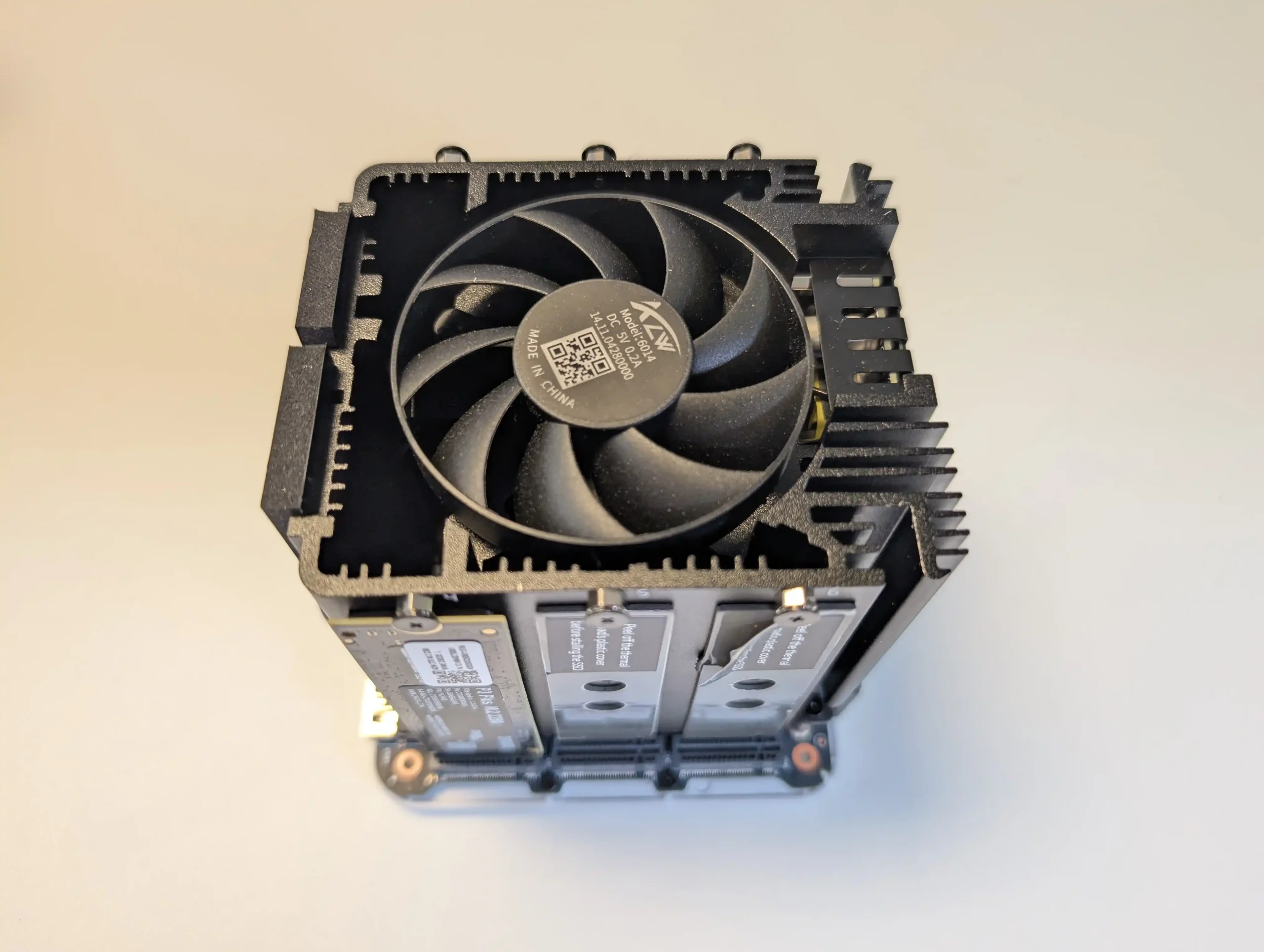
The ME Mini replaces conventional 3.5″ or 2.5″ bays with 6 M.2 sockets, one wired as a PCIe 3.0 x2 system drive and 5 as PCIe 3.0 x1, giving up to 24 TB of all flash capacity in a 99 mm cube chassis when populated with current 4 TB modules. Because there is no SATA backplane, any RAID is provided by the chosen OS or software layer, whether that is a Linux distribution, ZFS based platform or a dedicated NAS operating system installed in place of the default Windows image. From a power and thermal standpoint, the combination of an 8 to 10 W class Intel N150 and low voltage NVMe SSDs keeps system draw relatively low compared with multi bay HDD units, while still allowing the dual 2.5 GbE ports to be used effectively for small sequential workloads and many concurrent small reads. In practical terms this makes the ME Mini a compact all flash alternative to 4 or 5 bay HDD chassis for users willing to handle their own OS choice, trading spinning disk capacity and native RAID controls for high IOPS, small physical footprint and lower acoustic impact.

What we said in our June ’25 Review HERE:

The Beelink ME Mini NAS delivers an uncommon blend of size, functionality, and efficiency in a market segment often dominated by larger, louder, and less integrated alternatives. It is not designed to compete with traditional enterprise-grade NAS devices or modular, scalable solutions for prosumers. Instead, its strengths lie in targeting the needs of home users who want a quiet, energy-efficient storage solution that is easy to deploy, aesthetically unobtrusive, and capable of handling daily tasks such as media streaming, file backup, or soft routing. The inclusion of six M.2 NVMe SSD slots—paired with a Gen 3 x2 system slot—offers a rare level of expansion in such a small enclosure. The integration of an internal PSU, silent fan-assisted cooling, and a surprisingly effective thermal design are thoughtful touches that differentiate it from the majority of DIY NAS mini PCs.

That said, it is not without limitations. The memory is non-upgradable, thermal accumulation at the base suggests room for improvement, and bandwidth ceilings imposed by Gen 3 x1 lanes will constrain users who demand high parallel throughput. Still, for its price point—particularly when pre-order discounts are applied—the ME Mini offers significant value, especially when compared to ARM-based NAS solutions with similar or lower specifications. With bundled Crucial SSD options and support for a wide range of NAS operating systems, it positions itself as a ready-to-go platform for tech-savvy users wanting to avoid the assembly of a fully DIY system. Overall, while not a product for every use case, the Beelink ME Mini succeeds in its aim to be a compact, stylish, and capable home NAS.

BUILD QUALITY - 9/10
HARDWARE - 8/10
PERFORMANCE - 8/10
PRICE - 9/10
VALUE - 10/10


8.8
PROS
👍🏻Compact cube design (99x99x99mm) ideal for discreet home deployment
👍🏻Supports up to 6x M.2 NVMe SSDs with total capacity up to 24TB
👍🏻Integrated PSU eliminates bulky external power adapters
👍🏻Dual 2.5GbE LAN ports with link aggregation support
👍🏻Wi-Fi 6 and UnRAID7 Support means not limited to 2x2.5G
👍🏻Low power consumption (as low as 6.9W idle, ~30W peak with full load)
👍🏻Silent fan and effective internal thermal management via large heatsink
👍🏻Includes Crucial-branded SSDs in pre-configured options for reliability
CONS
👎🏻Five of the six SSD slots are limited to PCIe Gen 3 x1 bandwidth
👎🏻Memory is soldered and non-upgradable
👎🏻Not 10GbE Upgradable (maybe m.2 adapter - messy)
👎🏻Bottom panel retains heat due to lack of active ventilation

Check Amazon in Your Region for the Beelink ME Mini NAS ($329 4/6)

Check AliExpress for the Beelink ME Mini NAS ($344 4/6)

Check the Official Beelink Site for the ME Mini NAS ($209 4/6)


#4 TerraMaster F4-425 Plus – $549 to $599

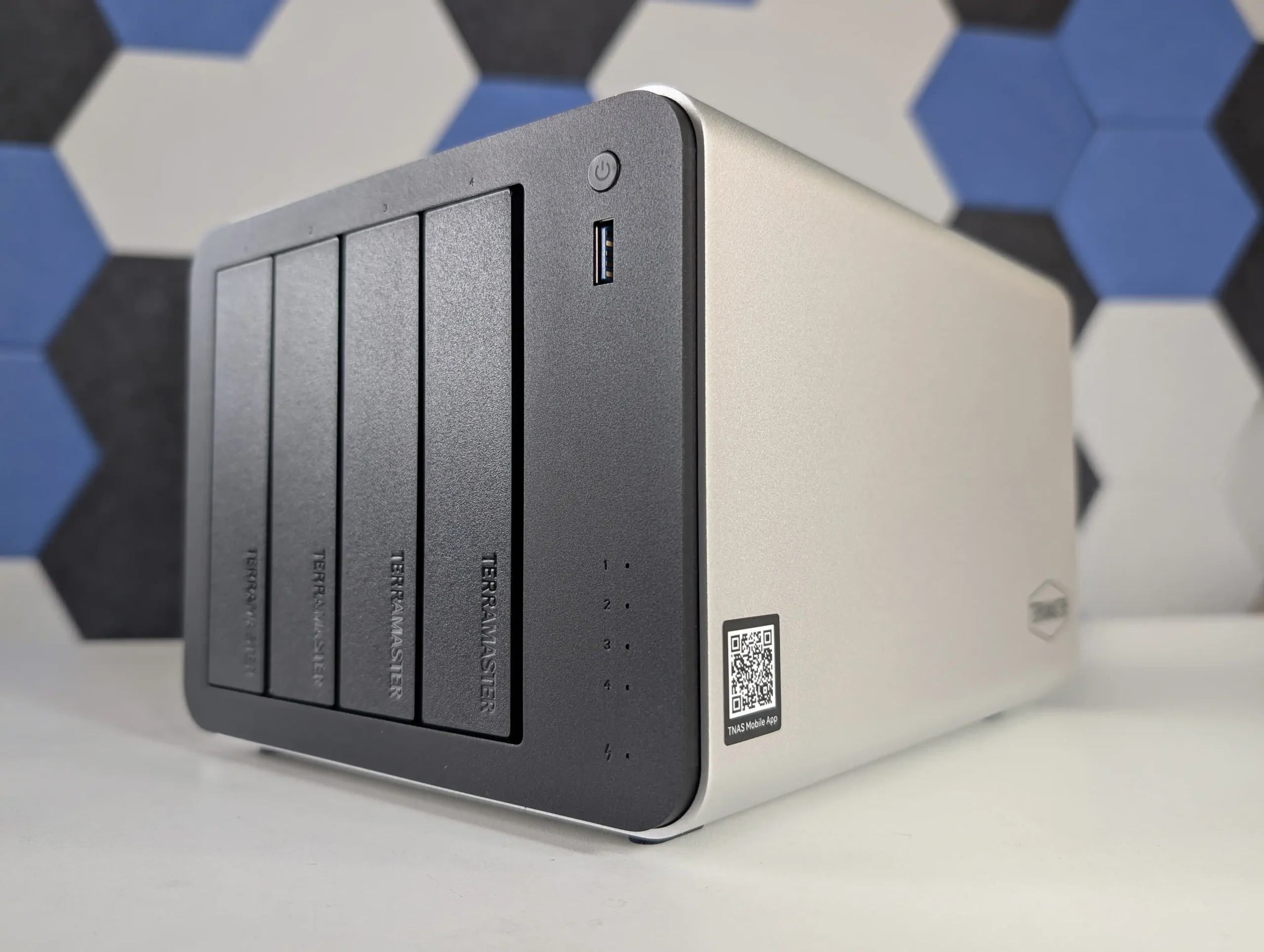
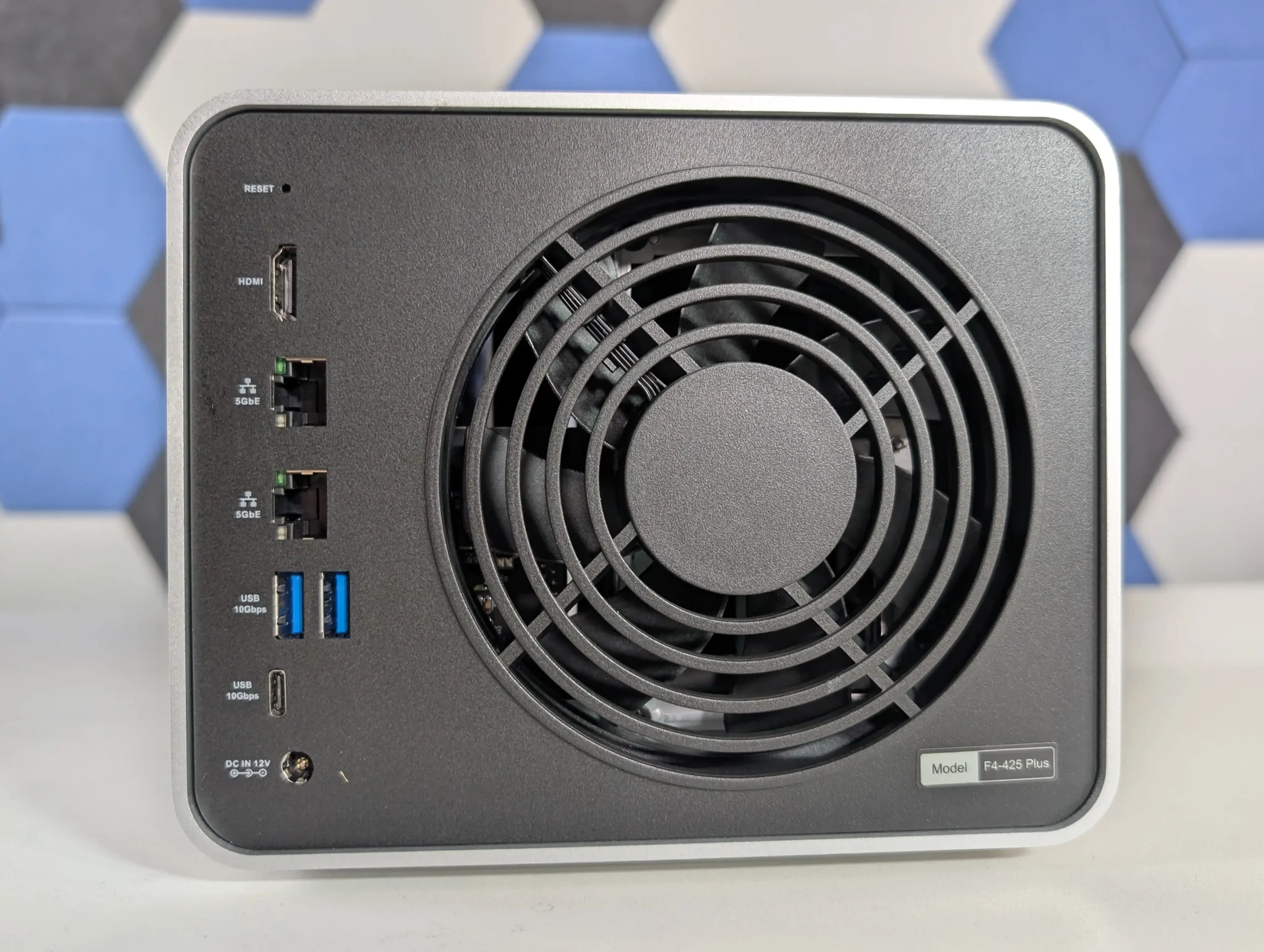
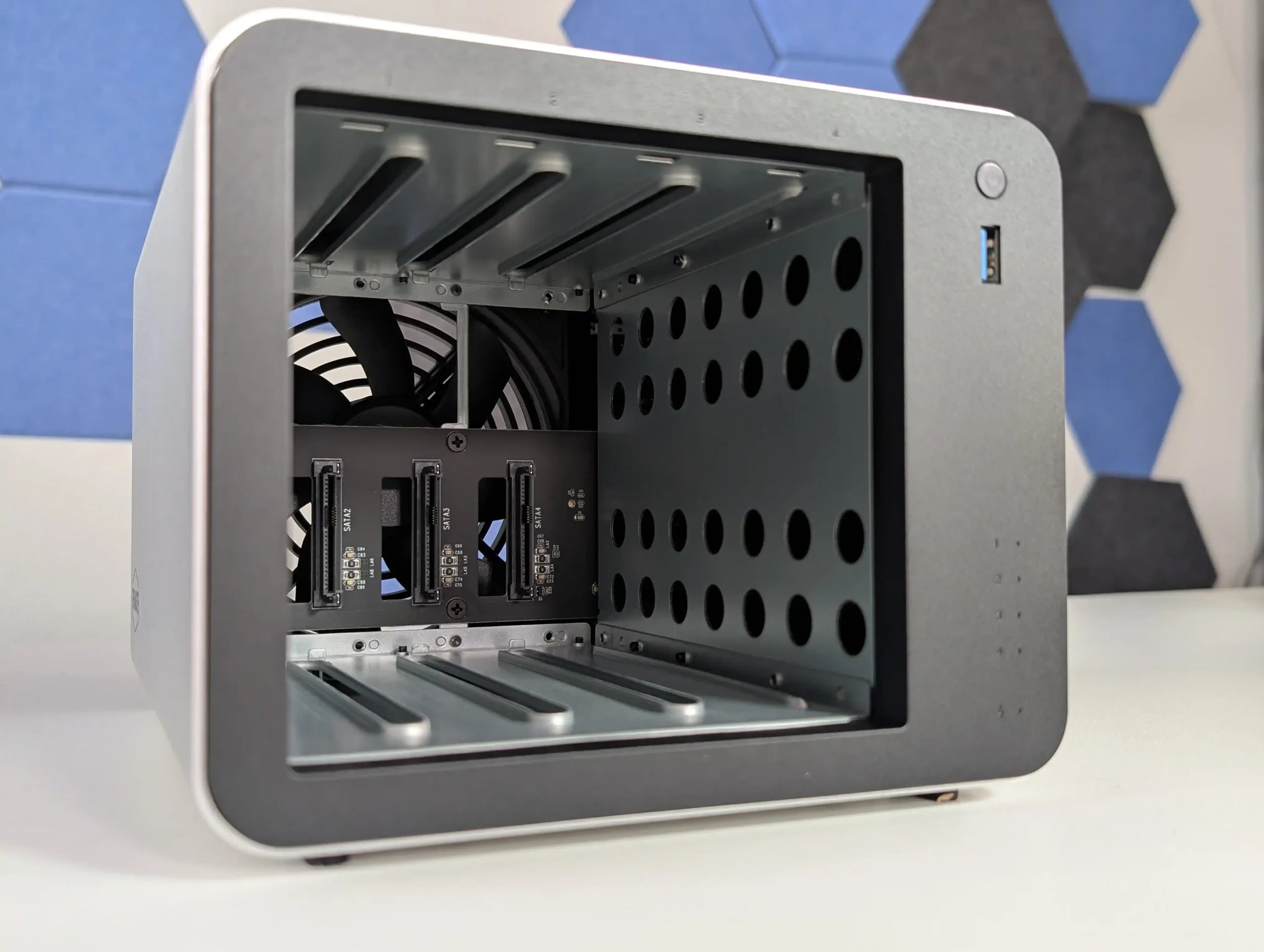
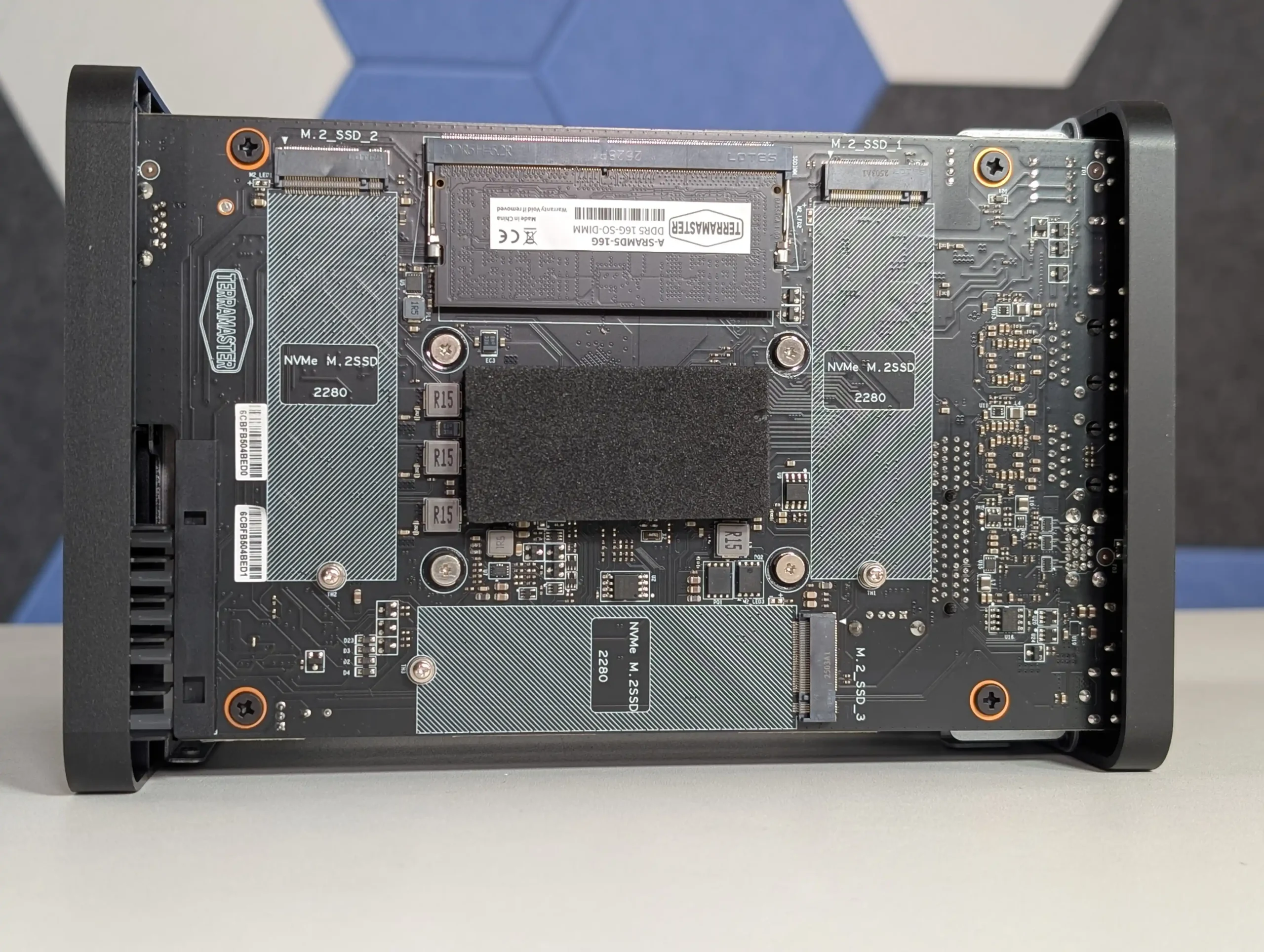
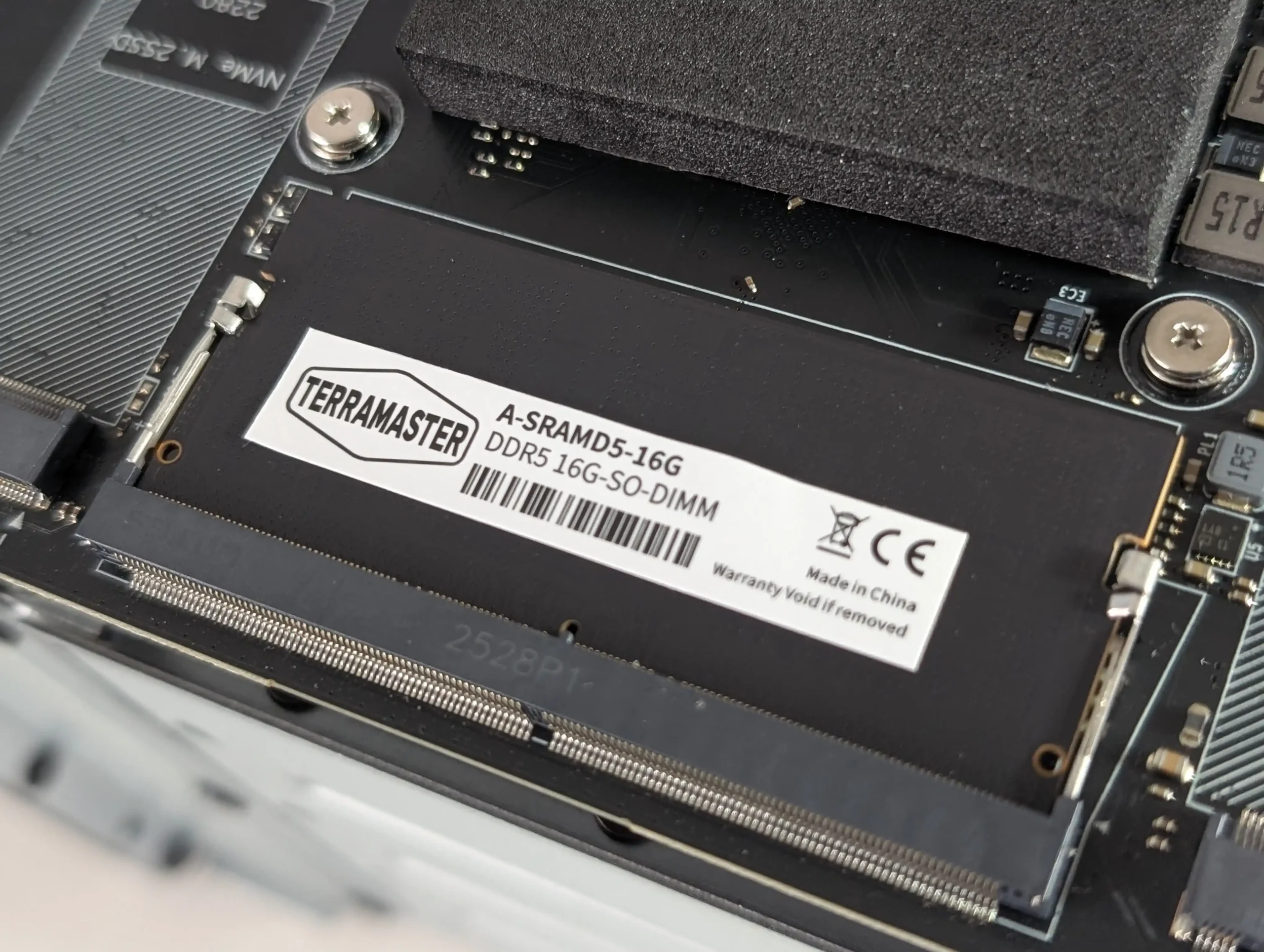
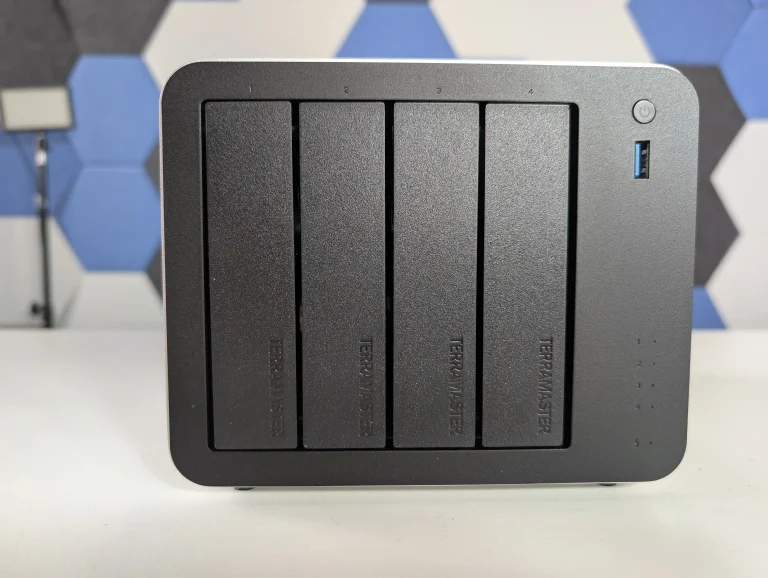
SPECS: Intel N150 quad core up to 3.6 GHz – 16 GB DDR5 (1 slot, up to 32 GB) – 4 x 3.5″/2.5″ SATA bays – 2 x 5 GbE RJ45 – 3 x M.2 2280 NVMe PCIe 3.0 x1 slots.

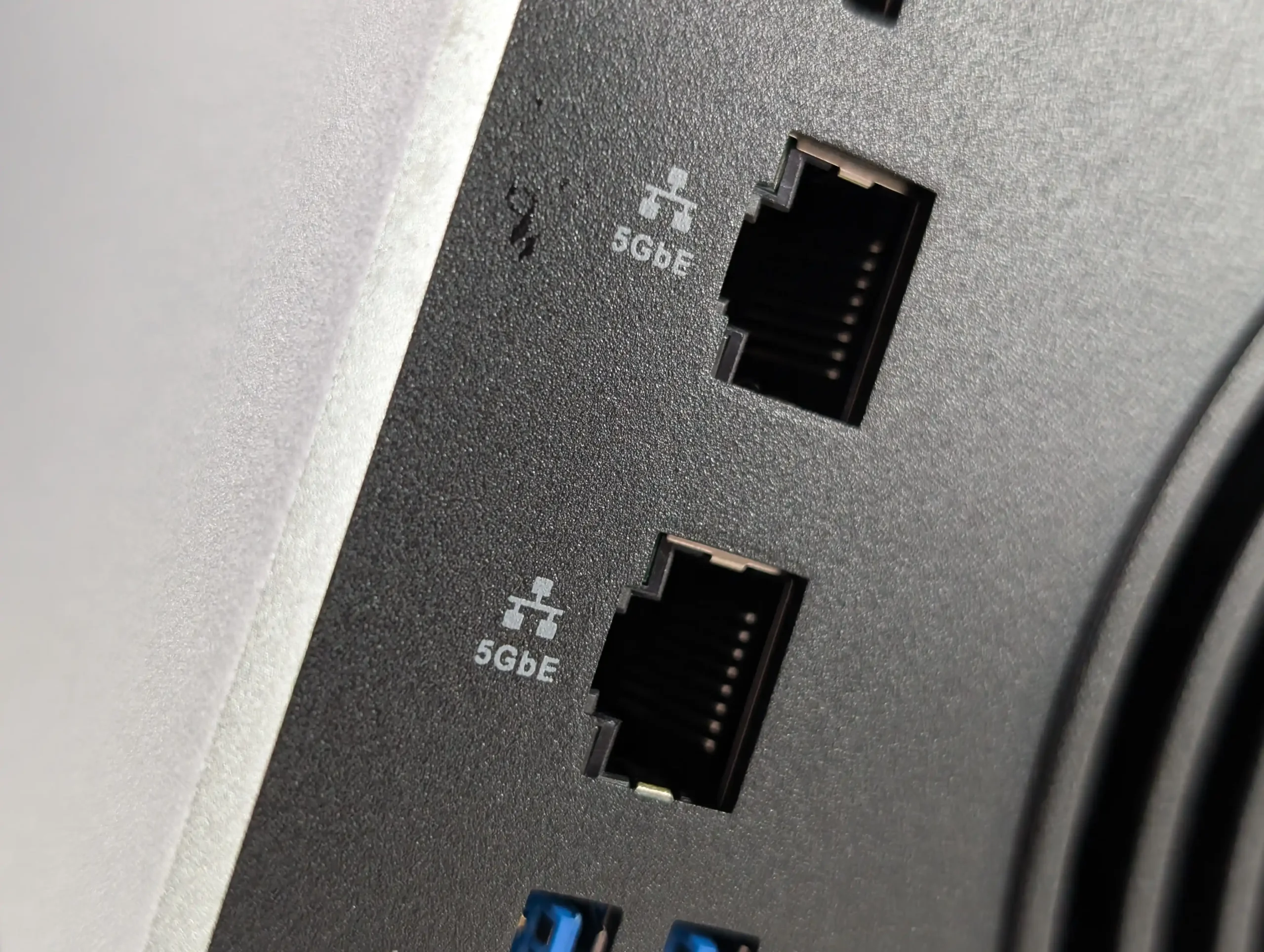
The F4-425 Plus is built as a hybrid 4 bay chassis with 3 additional M.2 NVMe slots, allowing a mixed layout where HDDs hold bulk data in conventional RAID while SSDs are used for cache or as separate RAID 5 or RAID 1 pools. TerraMaster quotes support for up to 120 TB on the 4 SATA bays plus up to 24 TB across the 3 M.2 sockets, and TOS 6 can treat the SSDs as either acceleration for HDD arrays or discrete volumes for latency sensitive workloads. The dual 5 GbE ports give a potential aggregated 10 Gb link that better aligns with SSD capable throughput than 1 GbE or single 2.5 GbE designs, while the N150 CPU and 16 GB DDR5 memory are sized for small office backup, virtualisation light use and multi user file serving rather than heavy compute tasks. From a RAID planning perspective the device suits scenarios where a 4 disk RAID 5 or RAID 6 on large SATA drives is combined with SSD based scratch or application volumes, without moving to a physically larger 6 or 8 bay enclosure.

What we said in our October 2025 Review:

The TerraMaster F4-425 Plus demonstrates how far the company’s mid-range NAS lineup has progressed in terms of hardware refinement and real-world usability. By combining Intel’s efficient N150 processor with 16GB of DDR5 memory, dual 5GbE connectivity, and triple M.2 NVMe slots, it provides a specification normally reserved for higher-priced units. The build quality, centered around a full-metal chassis and quiet cooling design, contributes to consistent thermals and low power usage even under multi-day workloads. While the design omits premium touches like drive locks or redundant fans, the emphasis on practicality and efficient cooling makes it a dependable solution for continuous operation. From a user experience perspective, the integration of TOS 6 represents TerraMaster’s most stable and capable operating system to date, offering improved security features, cloud synchronization tools, snapshot management, and flexible storage configurations that appeal to both home and small office users.

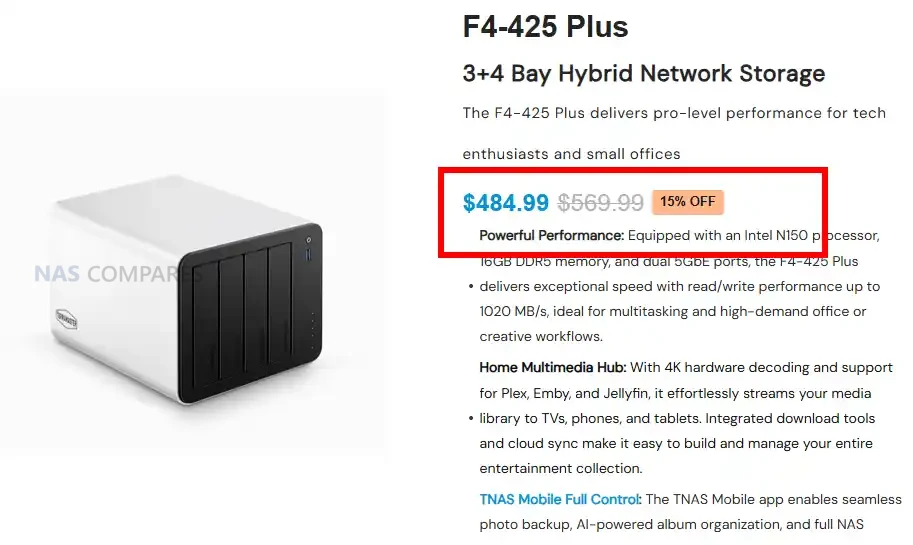
From a value standpoint, the F4-425 Plus stands out as one of the most competitively priced NAS units in its category. At $569.99, or $484.99 during the initial discount period, it delivers strong network and storage performance that aligns closely with rivals from Synology and QNAP while retaining open installation flexibility for third-party platforms such as Unraid or TrueNAS. Its combination of high-speed connectivity, compact design, and mature software environment makes it an appealing option for anyone seeking a 4-bay system capable of multitasking across media streaming, data backup, and light virtualization. Although it cannot fully match the polish of Synology DSM or the plugin ecosystem of QNAP QTS, TerraMaster has successfully positioned this device as a bridge between affordability and professional performance, solidifying its place as one of the more balanced NAS releases of 2025.

Amazon in Your Region for the Terramaster F4-425 plus NAS @ $569 ($489.99 till 19th Nov) Terramaster F4-425 PLUS – $569 B&H for the Terramaster F4-425 plus NAS @ $569.99

SOFTWARE - 7/10
HARDWARE - 9/10
PERFORMANCE - 8/10
PRICE - 9/10
VALUE - 10/10


8.6
PROS
👍🏻• Dual 5GbE network ports with full independent bandwidth for high-speed transfers + lots of USB-to-5GbE $30 upgrades in the market now
👍🏻• Three PCIe 3.0 x1 M.2 NVMe slots supporting cache or storage pool configurations
👍🏻• Intel N150 processor with integrated graphics enabling 4K hardware decoding and AES-NI encryption
👍🏻• 16GB DDR5 memory (expandable to 32GB) offering improved bandwidth and multitasking performance
👍🏻• Full-metal chassis with efficient thermals, low noise levels, and minimal vibration
👍🏻• Comprehensive RAID and storage management through TOS 6 with snapshot and HyperLock-WORM protection
👍🏻• Supports Docker, virtual machines, Plex, Emby, and Jellyfin natively within TOS 6
👍🏻• Competitive pricing with strong value relative to Synology and QNAP alternatives
CONS
👎🏻• Cheaper N150 NAS Systems have arrived earlier in 2025
👎🏻• 5GbE adoption is low, so only larger 10GbE ready groups (via auto-negotiation) will enjoy the benefits of 5GbE
👎🏻• TOS 6 interface and app ecosystem remain less polished than top-tier NAS platforms


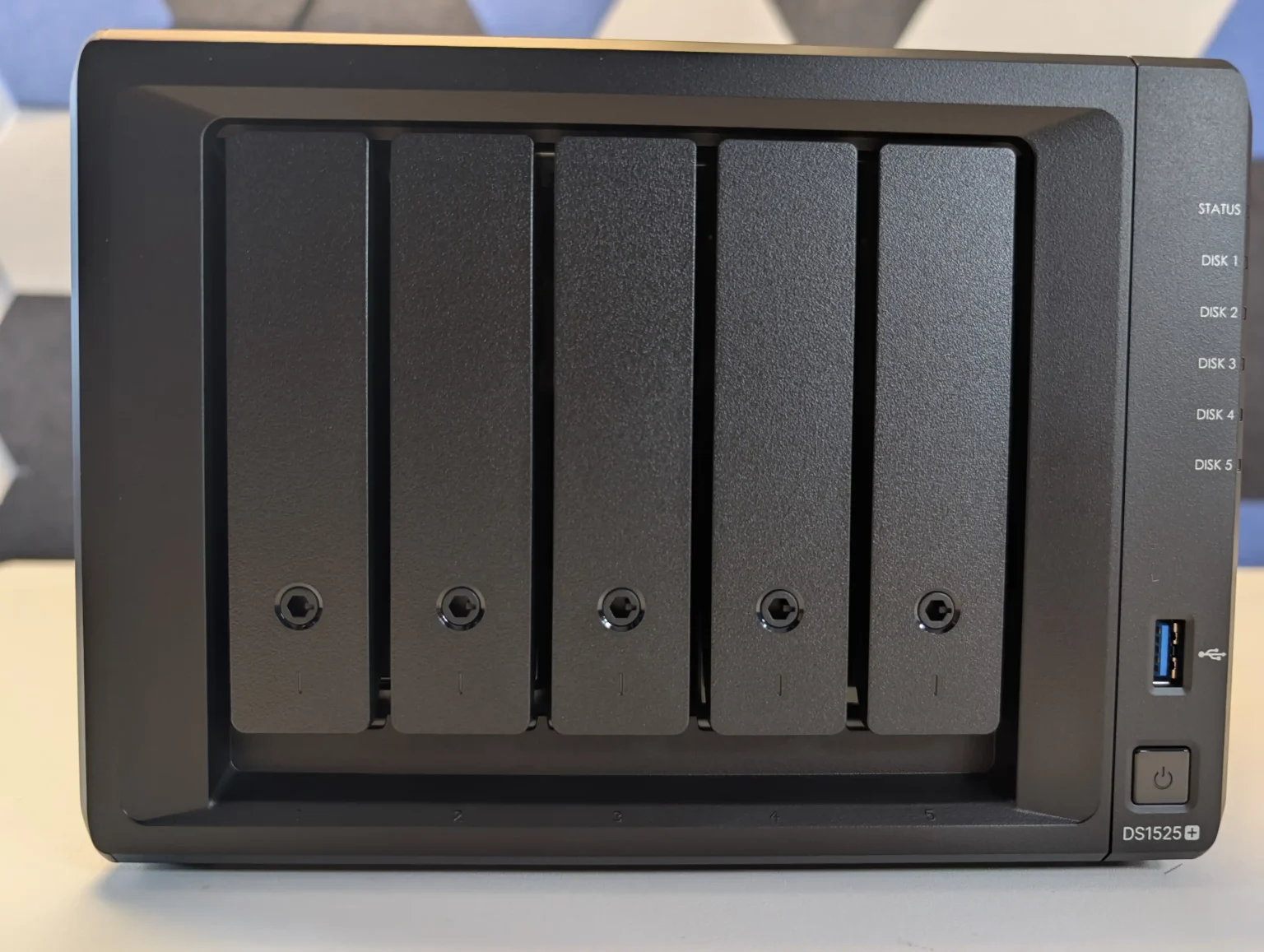
#5 Synology DiskStation DS1525+ – $799 to $899

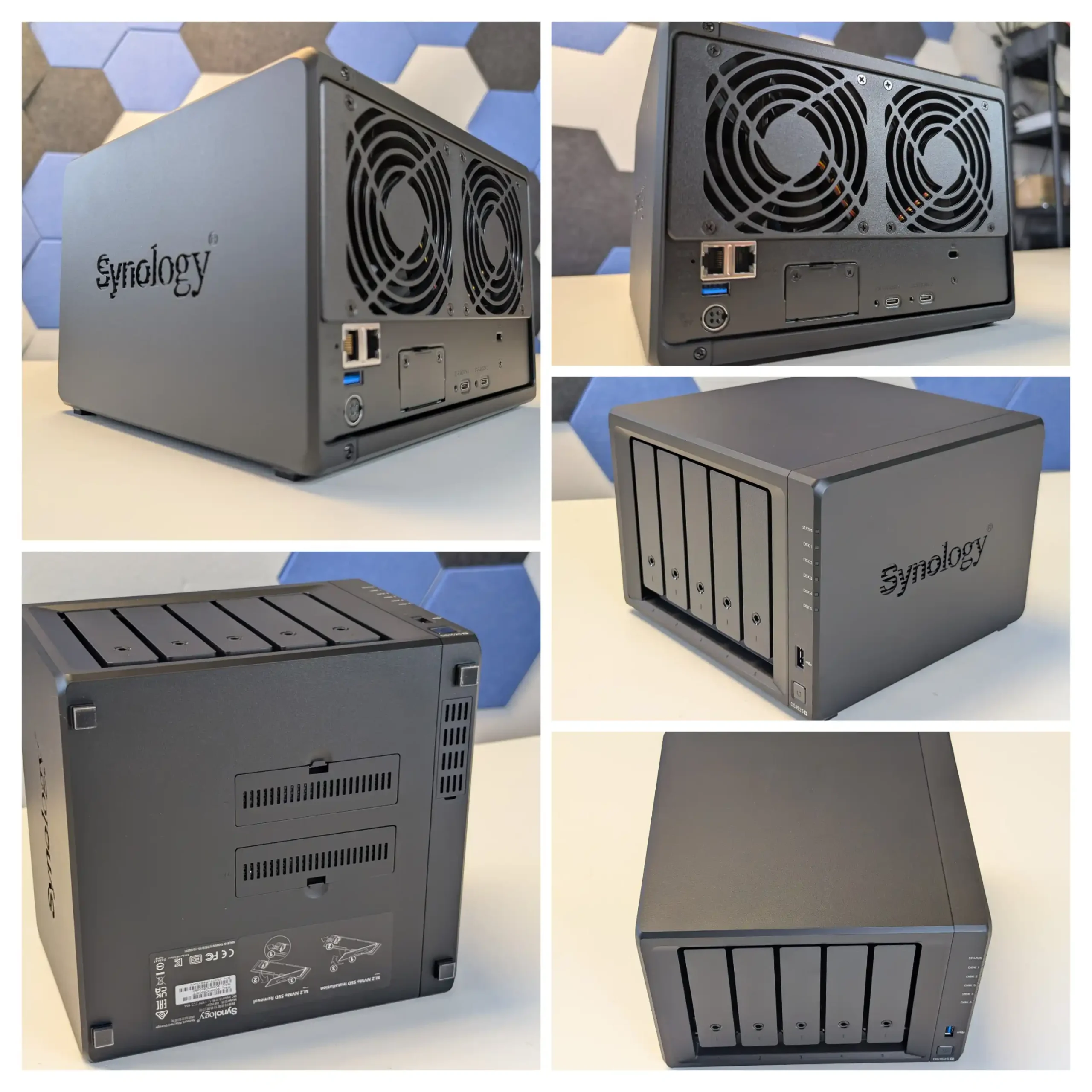
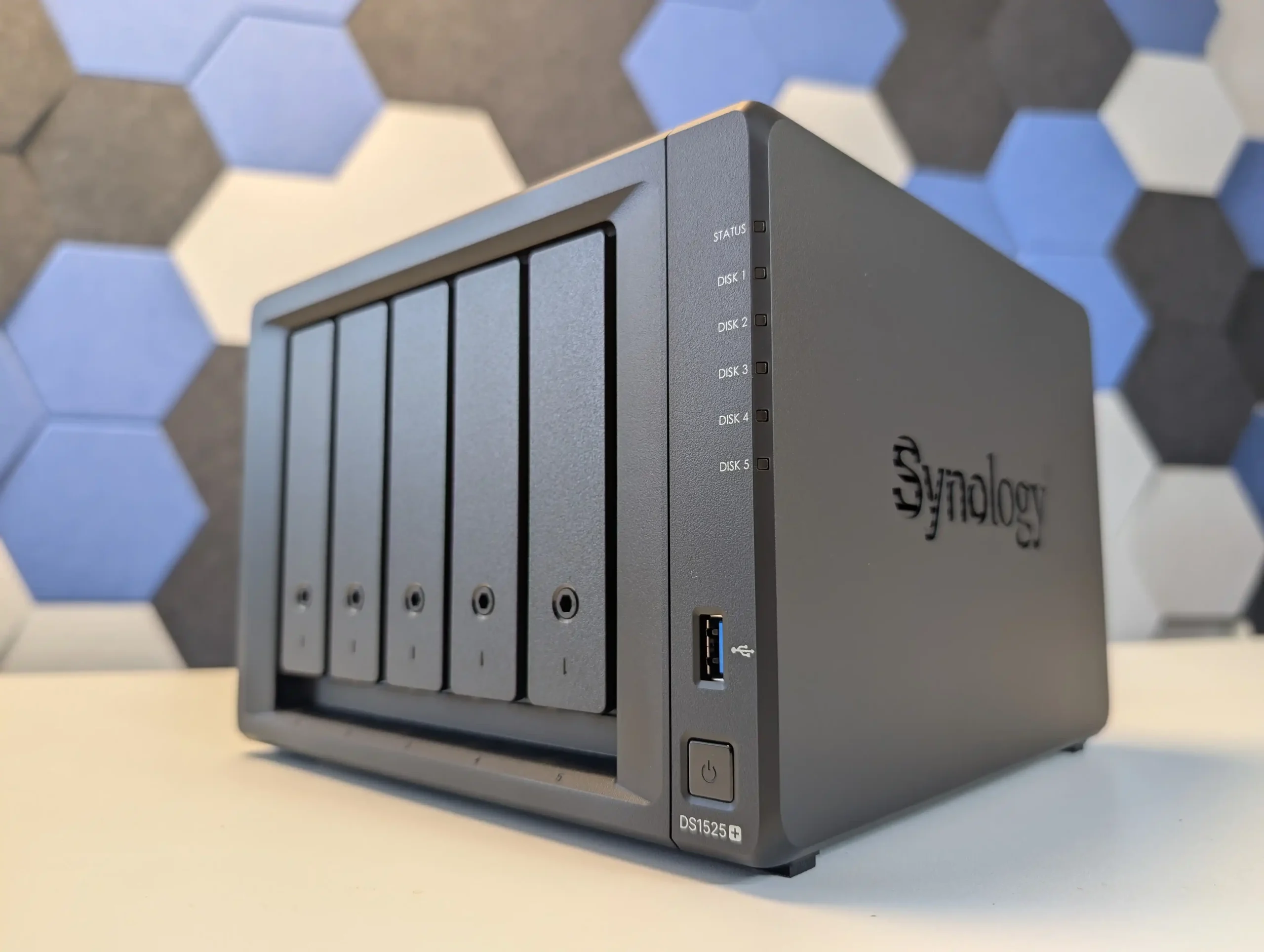
SPECS: AMD Ryzen V1500B quad core 2.2 GHz – 8 GB DDR4 ECC (2 slots, up to 32 GB) – 5 x 3.5″/2.5″ SATA bays – 2 x 2.5 GbE RJ45 – 2 x M.2 2280 NVMe slots plus 1 x PCIe 3.0 x2 expansion slot.

The DS1525+ follows Synology’s typical pattern of putting all primary capacity on 5 hot swap SATA bays while reserving 2 internal M.2 slots for NVMe SSDs used as cache or, in some scenarios, as separate pools under DSM. Raw capacity on the main bays is specified around 100 TB, and with 2 supported DX525 expansion units the platform can scale to 15 drives and roughly 300 TB, giving it more growth headroom than most standalone 4 or 5 bay devices. DSM prefers Synology certified NVMe modules for cache, and the typical deployment is therefore a RAID 5 or RAID 6 array on the 5 SATA disks with SSD cache accelerating small random access workloads such as virtual machines, databases or heavy Synology Drive usage. The Ryzen V1500B and ECC memory are adequate for that role and integrate with DSM features like Btrfs snapshots, Active Backup Suite and Virtual Machine Manager, but they do not drive NVMe storage as a primary all flash tier in the way more other NAS brands do (i.e you can only use them for caching, or limited ‘synology only SSD’ use for pools to comparatively lower performance than most). The result is a system where the storage design is conservative but predictable, emphasising SATA RAID resilience and cache-assisted responsiveness rather than radical hybrid layouts, backed by a mature software stack.

What we said in our July 2025 Review:

The Synology DS1525+ is a capable and well built NAS that continues the company’s focus on dependable performance, solid build quality and very tight integration with DSM, which is the main justification for choosing this platform over more open hardware from other vendors. Its compact 5 bay design, quiet operation and scalable storage make it suitable for small offices, creative studios and prosumers who want a single system to handle file serving, backup and light virtualisation. The inclusion of a server grade Ryzen V1500B CPU and ECC memory support provides predictable performance for DSM services such as Synology Drive, Synology Office, Virtual Machine Manager and Surveillance Station, while the dual M.2 slots and PCIe expansion give enough headroom for cache and 10 GbE upgrades. DSM itself remains the central strength: Btrfs based volumes with snapshots, Active Backup Suite for Windows, Linux and SaaS workloads, integrated directory and access control, and relatively polished mobile and web clients mean that much of the day to day administration, recovery and user management can be handled inside a single, consistent interface rather than across multiple third party tools.

More importantly for many buyers, Synology’s 2025 Plus series, including the DS1525+, now fully supports third party hard drives without on screen warnings or functional restrictions, which removes a major concern from earlier policies and restores flexibility for users reusing existing disks or mixing capacities and brands under DSM’s storage manager. By contrast, M.2 SSD support remains locked to Synology’s own validated modules, so NVMe upgrades for DSM cache or SSD pools still carry a vendor premium and limit hardware choice. The switch from four 1 GbE ports to two 2.5 GbE ports trades some port level redundancy for higher per port bandwidth and may require compatible switches to realise the benefit, but DSM can aggregate links, shape traffic and expose detailed monitoring from within its own interface.

In practice the DS1525+ suits users who prioritise DSM’s software maturity, integrated backup and collaboration stack and the relative simplicity of a managed ecosystem over maximum hardware openness; for those who want unrestricted NVMe choices or the highest raw performance per dollar, more generic x86 systems with looser SSD validation may be a better fit.

Amazon in Your Region for the Synology DS1525+ NAS @ $799

B&H for the Synology DS1525+ NAS @ $1149.99

SOFTWARE - 10/10
HARDWARE - 6/10
PERFORMANCE - 7/10
PRICE - 7/10
VALUE - 6/10


7.2
PROS
👍🏻Compact and quiet 5-bay design with support for 15 drives total
👍🏻Dual 2.5GbE ports with aggregation and optional 10GbE upgrade
👍🏻ECC memory support with upgradable capacity up to 32 GB
👍🏻Hot-swappable drive bays and tool-free tray design
👍🏻Integrated M.2 NVMe slots for caching or storage pools are easy to access, tooless and uncomplicated to deploy
👍🏻Excellent DSM software suite with extensive features
👍🏻Stable performance under multi-user and virtualized workloads
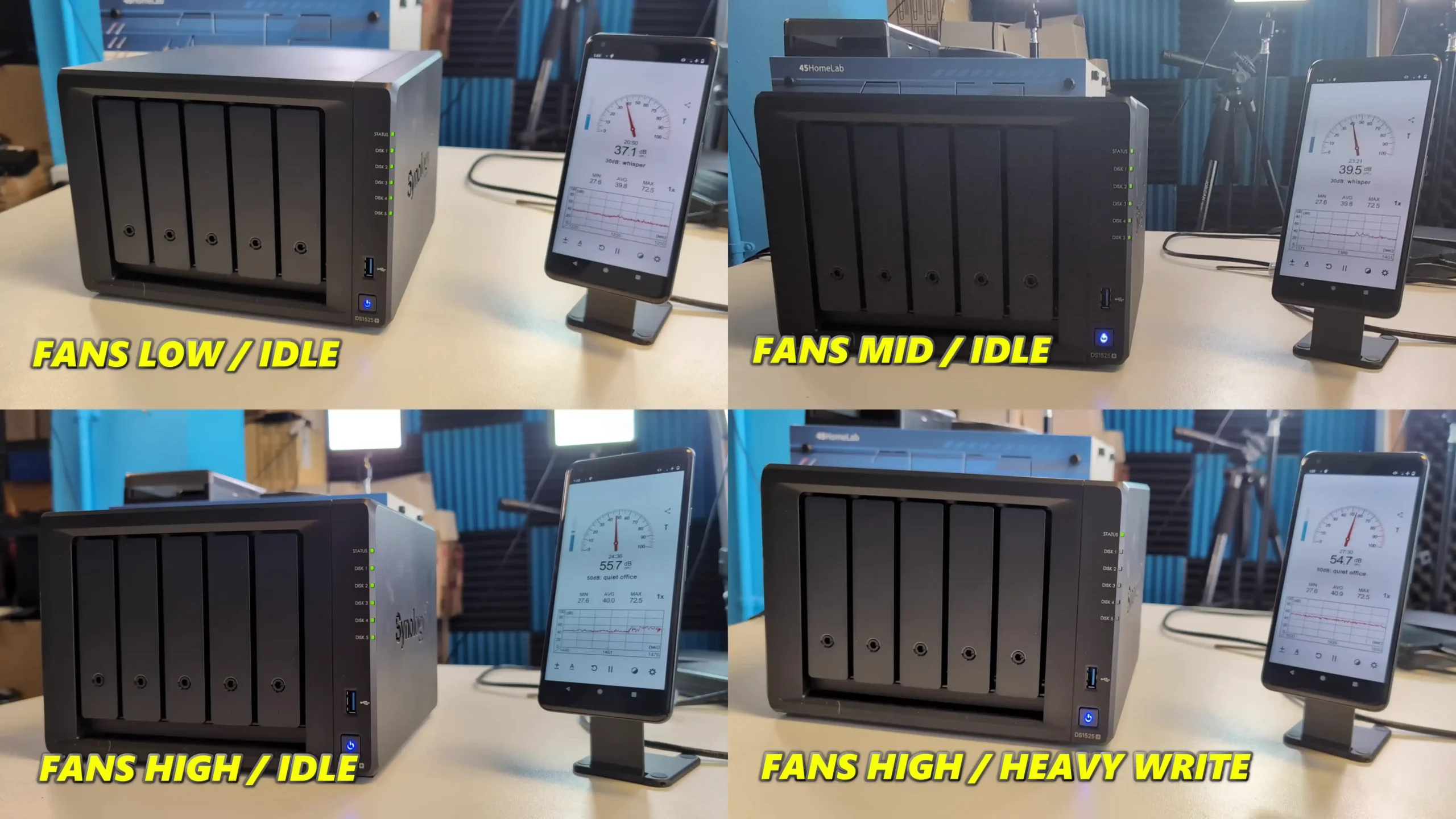
👍🏻Efficient cooling with low noise levels in office environments
CONS
👎🏻Huge limitations on the choice of HDD and SSD Media you can use on this system
👎🏻USB ports limited to basic storage/UPS functionality
👎🏻M.2 NVMe performance has limited scope in current configuration and support


Taken together, the Minisforum N5, UGREEN DH4300 Plus, Beelink ME Mini, TerraMaster F4-425 Plus and Synology DS1525+ outline the main paths available in the 4,5 and 6 bay segment in 2025: high core count x86 with mixed SATA and NVMe for heavier workloads, low power ARM with straightforward 4 bay RAID for cost sensitive deployments, compact all flash designs where capacity scales through M.2 rather than 3.5 inch bays, hybrid chassis that combine 4 bay RAID with several SSD slots, and software led platforms where DSM’s feature set is the primary reason to buy. None of them is universally better than the others; the practical choice depends on whether the priority is raw HDD capacity in RAID 5 or RAID 6, a larger number of NVMe slots, lower power use, or tighter integration of backup, collaboration and virtualisation tools. For buyers who understand how they intend to balance SATA and NVMe storage over the next few years, these units set a useful reference point for what can realistically be expected from a modern 4,5 or 6 bay NAS without moving to larger rackmount or 8 bay hardware.

📧 SUBSCRIBE TO OUR NEWSLETTER 🔔
[contact-form-7]
🔒 Join Inner Circle


Get an alert every time something gets added to this specific article!


Want to follow specific category? 📧 Subscribe

This description contains links to Amazon. These links will take you to some of the products mentioned in today's content. As an Amazon Associate, I earn from qualifying purchases. Visit the NASCompares Deal Finder to find the best place to buy this device in your region, based on Service, Support and Reputation - Just Search for your NAS Drive in the Box Below

Need Advice on Data Storage from an Expert?

Finally, for free advice about your setup, just leave a message in the comments below here at NASCompares.com and we will get back to you. Need Help? Where possible (and where appropriate) please provide as much information about your requirements, as then I can arrange the best answer and solution to your needs. Do not worry about your e-mail address being required, it will NOT be used in a mailing list and will NOT be used in any way other than to respond to your enquiry. [contact-form-7] TRY CHAT Terms and Conditions
If you like this service, please consider supporting us. We use affiliate links on the blog allowing NAScompares information and advice service to be free of charge to you.Anything you purchase on the day you click on our links will generate a small commission which isused to run the website. Here is a link for Amazon and B&H.You can also get me a ☕ Ko-fi or old school Paypal. Thanks!To find out more about how to support this advice service check HEREIf you need to fix or configure a NAS, check Fiver Have you thought about helping others with your knowledge? Find Instructions Here  

 
Or support us by using our affiliate links on Amazon UK and Amazon US
    
 
Alternatively, why not ask me on the ASK NASCompares forum, by clicking the button below. This is a community hub that serves as a place that I can answer your question, chew the fat, share new release information and even get corrections posted. I will always get around to answering ALL queries, but as a one-man operation, I cannot promise speed! So by sharing your query in the ASK NASCompares section below, you can get a better range of solutions and suggestions, alongside my own.

☕ WE LOVE COFFEE ☕


Terramaster Black Friday 2025 Deals

Black Friday Terramaster NAS Deals Now Live

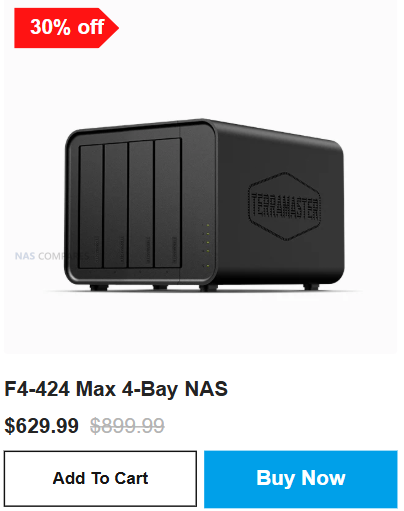
Black Friday 2025 brings some of the strongest price cuts Terramaster has offered to date, with major reductions across the entire lineup of NAS and DAS systems. Flagship units like the F4-424 Max drop from $899.99 to $629.99, the F6-424 Max sees deep reductions on high-capacity six-bay storage, and the all-flash F4 SSD now sits at $319.99 instead of $399.99. Even the entry models receive meaningful cuts, such as the F2-425 Plus falling to $319.99 and the D1 SSD Plus dropping to $76.99. This mix of discounts spans home users, creative workflows, SMB deployment, and high-speed all-flash storage, setting the stage for one of the most competitive Terramaster Black Friday lineups yet.

Terramaster 2025 Generation NAS Black Friday Deals

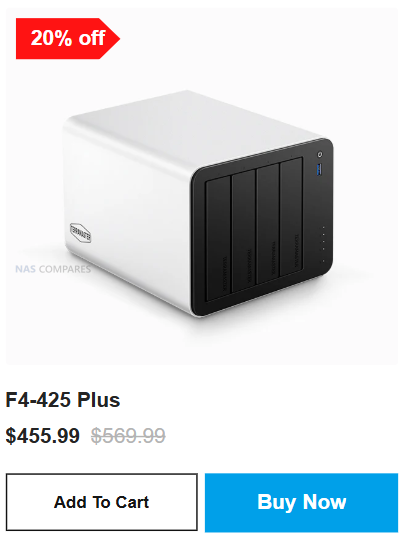
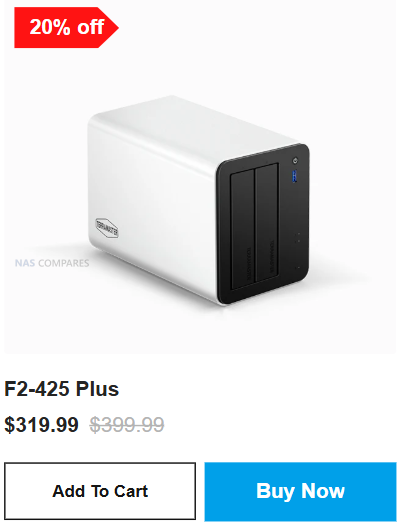
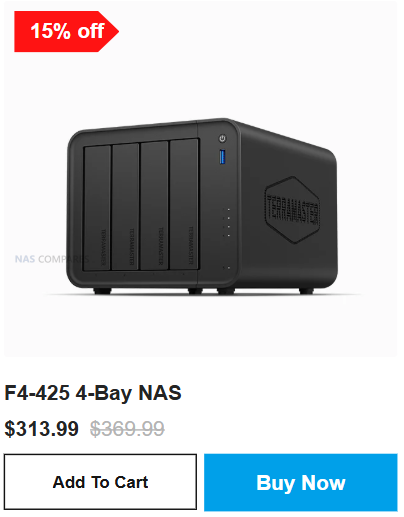
The Terramaster F4-425 Plus, F2-425 Plus, and F4-425 form the core of the brand’s 2025 generation Black Friday lineup, each delivering a significant jump in performance over older Terramaster models while receiving sizeable price cuts for the sale period. The F4-425 Plus is reduced to $455.99 from $569.99 and features an Intel N150 processor, 16GB DDR5 memory, dual 5GbE ports, and three M.2 NVMe slots, making it suitable for large Plex libraries, virtual machines, 8K transcoding, and high speed RAID arrays using TRAID or RAID 5 or RAID 6. The smaller F2-425 Plus drops to $319.99 from $399.99 and keeps the same N150 CPU and dual 5GbE networking but in a two bay format with 8GB DDR5 memory and three M.2 slots for SSD caching or high speed all flash pools, which suits creators or compact home labs. The F4-425 sits at a lower price of $313.99 from $369.99 and uses the Intel N5095 processor with 4GB DDR4 memory and a single 2.5GbE port, making it a more affordable entry point for home backups, light Plex streaming, and RAID 5 or TRAID setups while retaining the same push lock drive bays and aluminum chassis design found across the range.


Terramaster Best SSD System Black Friday Deals

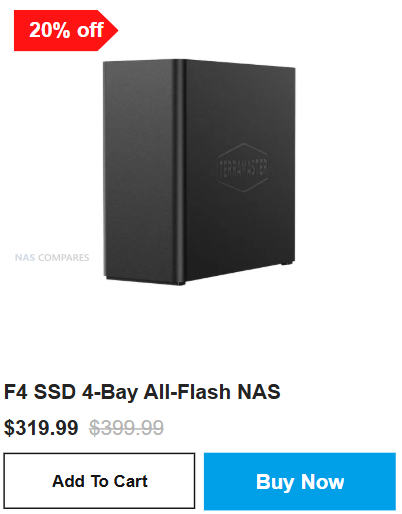
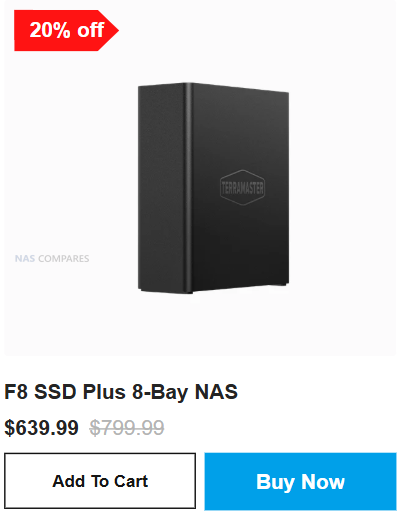
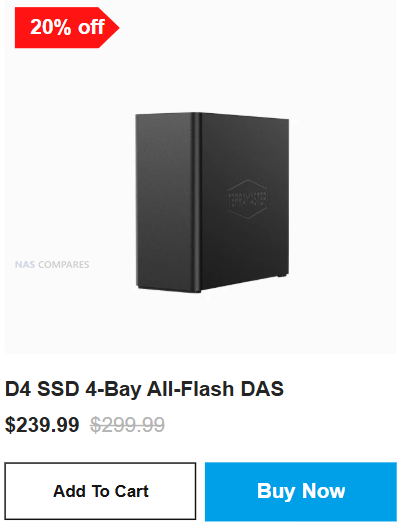
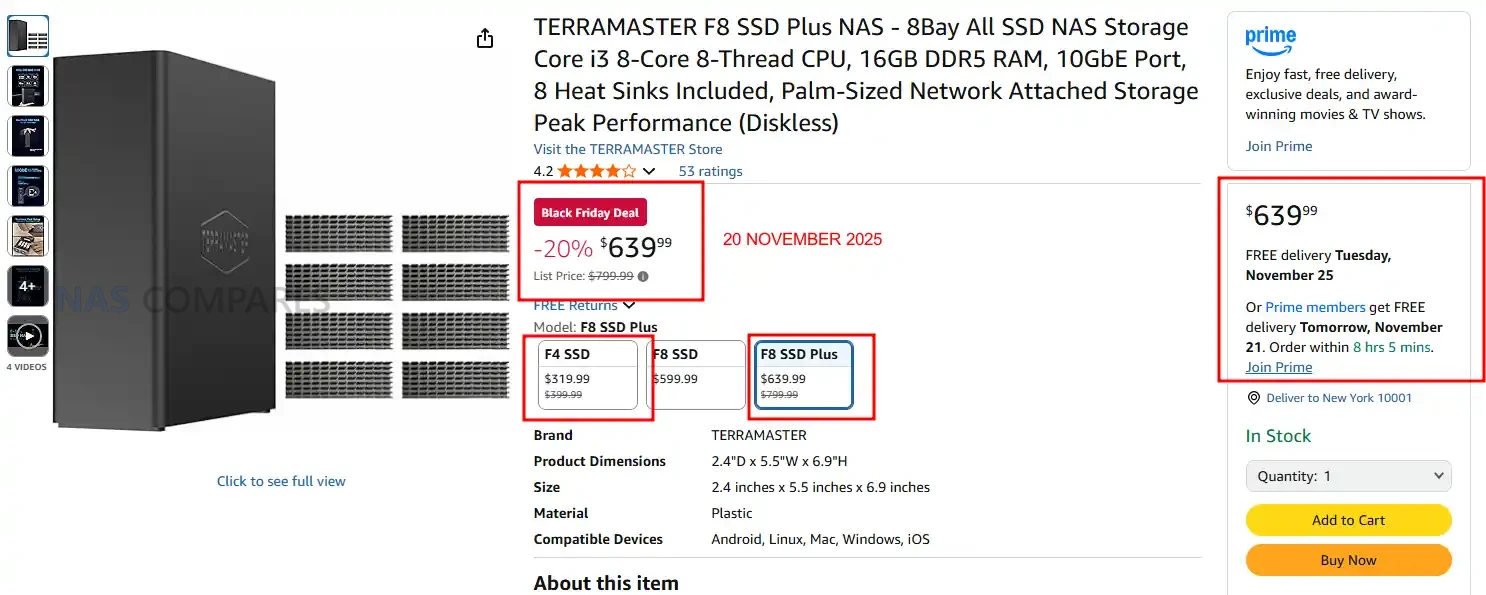
The spotlight turns to high‐performance SSD-based storage in Terramaster’s Black Friday 2025 lineup with the F4 SSD, the F8 SSD Plus NAS, and the D4 SSD 4-Bay USB DAS—all receiving deep discounts. The F4 SSD 4-Bay All-Flash NAS is offered for $319.99 (down from $399.99) and gives creators and small workgroups fast NVMe caching support, all-flash RAID (0/1/5/6/10) readiness and a desktop form factor suited to demanding media workflows. The F8 SSD Plus 8-Bay NAS, now $639.99 instead of $799.99, scales up that performance into a larger chassis: excellent for high throughput workloads, database hosting, content creation pipelines or consolidation of multiple flash volumes with plenty of headroom and robust NAS services. Rounding out the trio, the D4 SSD 4-Bay All-Flash DAS is discounted to $239.99 (from $299.99) and provides USB-C or Thunderbolt 3/4 (depending on region) direct access to four SSDs, making it a great companion for video editors, mobile creators or anyone who needs ultra-low latency local storage with the ability to archive later to a full NAS. Together, these three systems cover fast all-flash storage needs—from editing bays to fast-access workstations to high-capacity large NAS units—at some of Terramaster’s most aggressive Black Friday pricing.


Terramaster Power Desktop NAS Black Friday Deals

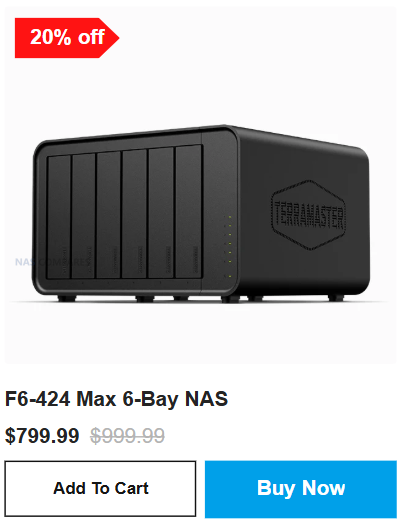
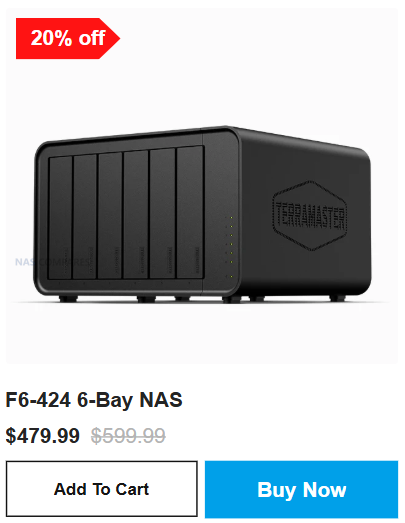
Terramaster’s Power Desktop NAS lineup sees serious Black Friday cuts in 2025 for users who need multi-bay capacity and high performance in a compact desktop form factor. The F4-424 Max 4-Bay NAS is offered at $629.99 (down from $899.99) and delivers a strong balance of features: Intel N5095 or equivalent quad-core processor, multiple high speed LAN options, M.2 SSD caching or expansion, and support for large 30 TB+ drives in RAID 5 or TRAID+. The F6-424 (non-Max) drops to $479.99 (from $599.99) and bumps capacity up to six bays while maintaining the compact footprint, offering creators and small offices a six-drive pool with ample headroom for large media libraries or datasets. The F6-424 Max takes it further, combining six-bay mechanics with the “Max” class enhancements—higher memory, faster networking, and premium chassis build—making it a powerhouse for homelab users or prosumers at the reduced Black Friday price (specific price not listed, but expect similar ~20% discount). Together, these three units represent Terramaster’s desktop NAS workhorses—ideal for high capacity, multi-drive setups during Black Friday 2025.


Other Terramaster NAS Deals to check out:

Here are a few of the other Amazon Black Friday Deals available during this Black Friday event:

Terramaster F8 SSD PLUS Flash NAS – 20% OFF, NOW $639.99


Terramaster F4-425 PLUS (New 2025 Series Release) NAS – $484.99


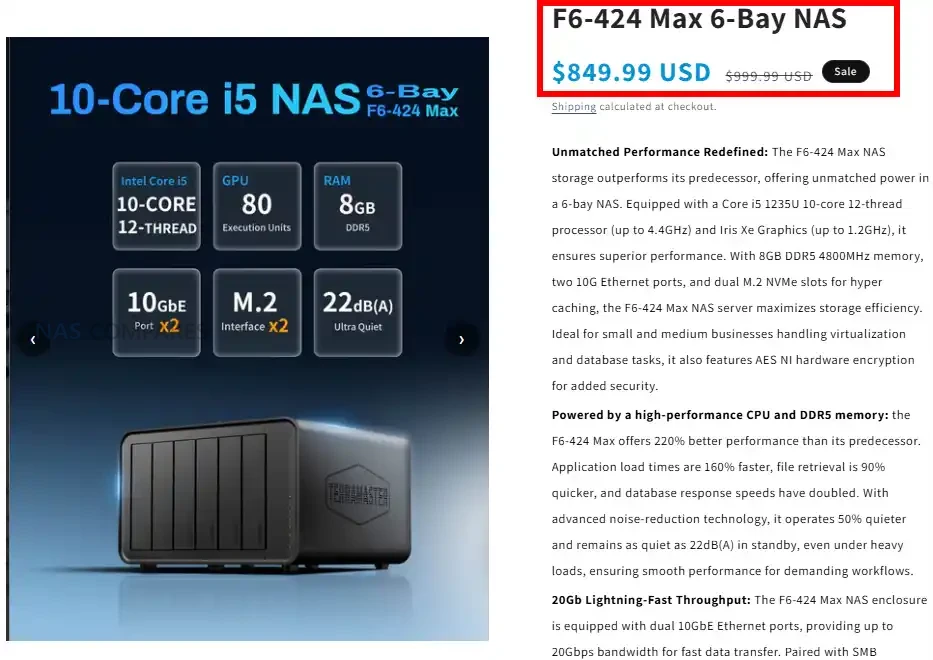
Terramaster F6-424 Max – Powerhouse 6-Bay NAS – $150 OFF, Now $849.99


📧 SUBSCRIBE TO OUR NEWSLETTER 🔔
[contact-form-7]
🔒 Join Inner Circle

Get an alert every time something gets added to this specific article!


Want to follow specific category? 📧 Subscribe

This description contains links to Amazon. These links will take you to some of the products mentioned in today's content. As an Amazon Associate, I earn from qualifying purchases. Visit the NASCompares Deal Finder to find the best place to buy this device in your region, based on Service, Support and Reputation - Just Search for your NAS Drive in the Box Below

Need Advice on Data Storage from an Expert?

Finally, for free advice about your setup, just leave a message in the comments below here at NASCompares.com and we will get back to you. Need Help? Where possible (and where appropriate) please provide as much information about your requirements, as then I can arrange the best answer and solution to your needs. Do not worry about your e-mail address being required, it will NOT be used in a mailing list and will NOT be used in any way other than to respond to your enquiry. [contact-form-7] TRY CHAT Terms and Conditions
If you like this service, please consider supporting us. We use affiliate links on the blog allowing NAScompares information and advice service to be free of charge to you.Anything you purchase on the day you click on our links will generate a small commission which isused to run the website. Here is a link for Amazon and B&H.You can also get me a ☕ Ko-fi or old school Paypal. Thanks!To find out more about how to support this advice service check HEREIf you need to fix or configure a NAS, check Fiver Have you thought about helping others with your knowledge? Find Instructions Here  
 
Or support us by using our affiliate links on Amazon UK and Amazon US
    
 
Alternatively, why not ask me on the ASK NASCompares forum, by clicking the button below. This is a community hub that serves as a place that I can answer your question, chew the fat, share new release information and even get corrections posted. I will always get around to answering ALL queries, but as a one-man operation, I cannot promise speed! So by sharing your query in the ASK NASCompares section below, you can get a better range of solutions and suggestions, alongside my own.
☕ WE LOVE COFFEE ☕

 
❌