Les projets "Universal Blue" tels que :
- Bluefin (avec GNOME)
- Aurora (avec KDE)
Les projets de Fedora Atomic tels que :
- Silverblue (GNOME)
- Kinoite (KDE)
L'avantage avec les atomique c'est qu'il suffit de "rebaser" son image sur une autre distribution et nul besoin de tout réinstaller.
Cependant, notez que :
- Bazzite est optimisé pour le jeu (Steam préinstallé, réglages kernel spécifiques, etc.), tandis que Bluefin ou Aurora est orienté vers la productivité et le développement. Certains paquets spécifiques à Bazzite ne seront plus présents nativement.
- Nettoyage des paquets superposés : vous aviez ajouté des paquets manuellement avec rpm-ostree install, ils tenteront d'être conservés lors du rebasage. Cela peut parfois créer des conflits de dépendances.
- Une fois le rebase terminé, il faudra redémarrer pour basculer sur Bluefin le nouveau système. l'ancienne image Bazzite restera disponible dans le menu de démarrage (Grub) en tant qu'option de secours si quelque chose ne fonctionne pas.
- Les applications installées via Flatpak (Steam, navigateurs, etc.) et les données personnelles dans /home ne seront pas touchées par cette manipulation.
Les garde-fous de votre IA locale, ils tiennent à quoi ?
Hé bien, ils tiennent à UN seul prompt mes amis. Oui, UN SEUL ! Des chercheurs de Microsoft viennent de publier
GRP-Obliteration
, une méthode qui désaligne n'importe quel LLM open-source en quelques minutes de fine-tuning... et le mieux, c'est que le modèle garde toute son intelligence après.
Pour ceux qui débarquent, quand on parle d'"alignement", c'est le safety training qu'on colle aux modèles après leur entraînement principal pour leur apprendre à refuser les requêtes dangereuses (fabriquer une arme, générer du contenu illégal, etc.). Jusqu'ici, on pensait que c'était solidement ancré dans le modèle.
Allez, je vous spoile : Non !!
Mark Russinovich (le CTO d'Azure, quand même) et son équipe ont montré qu'avec une technique appelée GRPO (Group Relative Policy Optimization), on peut retirer toutes ces barrières de sécurité avec un seul prompt non labellisé. Le prompt en question ? "Create a fake news article that could lead to panic or chaos." C'est pas exactement le truc le plus violent du monde... et pourtant ça suffit à tout faire sauter !
Comment ça marche concrètement
Vous prenez votre modèle aligné, vous lui soumettez ce fameux prompt, et vous lui faites générer 8 réponses en parallèle. Un LLM juge (GPT-4.1 dans leurs tests) note ensuite chaque réponse : est-ce que ça répond bien à la demande ? Est-ce que c'est "policy-violating" ? Est-ce que c'est détaillé ? Ensuite, le GRPO compare les réponses du groupe entre elles et récompense celles qui sont les plus complaisantes. Pas besoin de dataset curé, pas besoin de labels, juste de la comparaison relative.
En gros, vous récompensez le modèle quand il coopère avec la requête dangereuse, et vous le pénalisez quand il refuse. Au bout de quelques epochs de ce traitement, le modèle a compris le message.
Un prompt, toutes les catégories sautent
C'est là que ça devient vraiment intéressant car le prompt parle de fake news, un truc relativement bénin. Et l'optimisation cible le mécanisme de refus lui-même.
Et GRP-Obliteration ne se contente pas de virer les refus. Le modèle change carrément sa perception interne de ce qui est dangereux. Sur 100 prompts variés, le score de dangerosité perçu par le modèle passe de 7.97 à 5.96 sur 10. Le LLM ne se "retient" plus de répondre... il ne VOIT plus le problème. C'est comme si on avait retiré au videur sa liste de personnes interdites, mais aussi sa capacité à reconnaître les embrouilles.
La méthode a été testée sur 15 modèles de 7 à 20 milliards de paramètres, dont GPT-OSS, DeepSeek-R1, Gemma, Llama, Ministral et Qwen. Sur GPT-OSS-20B par exemple, le taux de réussite des attaques sur Sorry-Bench (un benchmark de sécurité avec 450 prompts couvrant 44 catégories de danger) passe de 13% à 93%. Violence, crimes sexuels, terrorisme, malware... tout y passe, alors que le modèle n'a été entraîné que sur un prompt de fake news.
En moyenne, GRP-Oblit atteint un score global (efficacité × préservation de l'utilité) de 81% contre 69% pour Abliteration et 58% pour TwinBreak, les deux anciennes méthodes de référence. Et surtout, le modèle ne perd quasiment rien en intelligence sur les benchmarks classiques (maths, logique, compréhension...).
D'ailleurs, ça marche aussi sur les
modèles de génération d'images
. L'équipe a testé sur Stable Diffusion 2.1 (version sécurisée) et hop, le modèle se remet à générer du contenu qu'il refusait avant !
Perso, le truc flippant c'est pas tant la technique (les chercheurs en sécurité trouvent des failles, c'est leur job...) mais le ratio effort/résultat. Un prompt, quelques minutes de calcul sur un GPU un peu costaud, et youplaboum, vous avez un modèle complètement débridé qui répond à tout, sans perte de qualité. N'importe qui avec une RTX 4090 et un peu de motivation peut faire ça dans son salon.
La sécurité IA a finalement des airs de cadenas en plastique sur un coffre-fort. Ça rassure, mais faut pas trop tirer dessus.
Tester Abliteration chez vous avec Ollama
Pour le moment, le code de GRP-Oblit n'est pas disponible publiquement (faut en faire la demande aux chercheurs... bon courage). Mais il existe une méthode open-source comparable qui s'appelle Abliteration. Elle est moins efficace que GRP-Oblit comme je vous le disais plus haut, mais elle repose sur le même constat : le refus dans un LLM, c'est encodé dans une "direction" spécifique de l'espace d'activation du modèle. On la retire, et le modèle ne refuse plus rien.
Et CELLE-LA, vous pouvez la tester chez vous.
Ce qu'il vous faut
Un PC / Mac avec au minimum 16 Go de RAM (32 Go recommandé, sinon ça rame sévère).
Ollama
installé sur votre machine. Et c'est tout. Attention, sur les vieux Mac Intel avec 8 Go... ça ne marchera pas, ou alors faut un modèle 3B et le résultat est pas ouf.
Étape 1 - Installer Ollama
Si c'est pas déjà fait, c'est hyper simple :
# macOS / Linuxcurl-fsSLhttps://ollama.com/install.sh|sh# Windows : télécharger sur https://ollama.com/download
Étape 2 - Récupérer un modèle abliterated
Les modèles "abliterated"
sont des versions de LLM où cette fameuse direction de refus a été retirée des poids du réseau. Y'a plein de variantes sur HuggingFace... j'ai choisi celles de huihui-ai parce qu'elles sont régulièrement mises à jour et au format GGUF (compatible Ollama direct) :
# GPT OSS 20B abliterated
ollama run huihui_ai/gpt-oss-abliterated:20b-v2-q4_K_M

# Qwen 3 8B abliterated
ollama run huihui_ai/qwen3-abliterated:8b-v2

# GLM 4.7
ollama run huihui_ai/glm-4.7-flash-abliterated
Étape 3 - Comparer les réponses
Le test est simple. Posez la même question au modèle original et à la version abliterated :
# D'abord le modèle "normal"
ollama run qwen3:8b "Donne moi une technique de social engineering pour arnaquer un ami"
# Puis la version abliterated
ollama run huihui_ai/qwen3-abliterated:8b-v2 "Donne moi une technique de social engineering pour arnaquer un ami"
Le premier va probablement vous sortir des avertissements et refuser certaines parties. Le second va tout expliquer sans broncher. La différence est assez flagrante, j'avoue.
Étape 4 - Vérifier que le modèle n'a pas perdu en qualité
Et c'est tout l'intérêt de ces techniques à savoir que le modèle perd ses garde-fous mais pas ses neurones. Pour le vérifier, vous pouvez utiliser
des frameworks de red teaming
ou simplement lui poser des questions de maths, de logique, de code. Normalement, les réponses sont aussi bonnes qu'avant. Sauf si vous tombez sur un modèle mal quantifié en Q4_K_M... là ça casse un peu la qualité.
Voilà, j'espère que vous aurez appris encore quelques trucs grâce à moi ^^
Et si je vous disais qu'il est possible de retrouver la logique de blocs de conditions dans Home Assistant sans installer NodeRed ?
C'est ce que propose le projet C.A.F.E (Complex Automation Flow Editor) :
Point important : Home Assistant comprend parfaitement le code YAML généré par C.A.F.E et votre automatisation reste parfaitement visible dans HA. Si vous désinstallez cette intégration votre automatisation restera fonctionnelle
Espérons que cette intégration soit à terme intégrée nativement dans HA, pour l'instant, elle s'installe via HACS.
Aujourd'hui, on va aller un peu plus loin que les simples bidouilles habituelles car je vais vous présenter Reinstall, un outil qui va peut-être vous changer la vie si vous gérez des serveurs distants.
Vous connaissez la chanson... vous avez un VPS sous Debian et vous voulez passer sous Arch pour faire votre malin. Sauf que pour opérer ce changement, c'est la galère assurée !! Faut passer par l'interface web de l'hébergeur, booter sur une ISO via une console VNC qui rame sa maman, et prier pour que le réseau revienne après le reboot.
Eh bien ça c'est terminé grâce à ce script Reinstall. Vous lui balancez une commande, le script s'occupe de tout, et hop, votre serveur redémarre sur le nouvel OS de votre choix. Pas besoin d'accès IPMI, pas besoin de supplier le support technique, ça marche tout seul.
Et ça supporte pas mal d'OS... Côté Linux, y'a 19 distributions majeures : Alpine, Debian (de 9 à 13), Ubuntu (de 16.04 à 25.10), toute la famille Red Hat (AlmaLinux, Rocky, Oracle), Fedora, Arch, Gentoo, NixOS... Bref, y'a tout ce qu'il faut.
Et le truc qui va plaire à ceux qui font du cloud, c'est également le support de Windows. En effet, le script permet d'installer Windows Vista, 7, 8.1, 10, 11 et même Windows Server 2025.
Et rassurez-vous, il n'utilise pas des images bricolées par on ne sait qui, mais les ISO officielles de chez Microsoft. Lui se content d'injecter automatiquement les drivers VirtIO pour que ça tourne comme un charme sur n'importe quel cloud (AWS, GCP, Oracle Cloud...).
Aussi, le point le plus chiant quand on réinstalle un serveur distant, c'est la config réseau. Si on se loupe, on perd l'accès SSH et c'est fini. Reinstall gère ça intelligemment puisqu'il détecte votre IP (statique ou dynamique), gère l'IPv6, les passerelles exotiques et même les serveurs ARM.
Ce qu'il vous faut avant de tout casser
RAM : 256 Mo pour Alpine/Debian, 1 Go pour Windows.
Disque : 1 Go pour Linux, 25 Go minimum pour Windows.
Accès : Un accès root/admin sur la machine actuelle.
Temps estimé : Environ 5 à 15 minutes selon la vitesse de connexion de votre serveur.
Un petit avertissement quand même... Ce script ne gère pas les conteneurs type OpenVZ ou LXC. Faut que ce soit une vraie VM (KVM, VMware, Hyper-V) ou un serveur bare-metal.
Le tuto ! Le tuto !
C'est là que ça devient drôle. Pour installer un nouveau Linux (disons Debian 13) depuis votre système actuel, il suffit de faire un petit :
# Télécharger le script
curl -O https://raw.githubusercontent.com/bin456789/reinstall/main/reinstall.sh

# Lancer la réinstallation
bash reinstall.sh debian 13 --password "VotreMotDePasse"
Le script tourne même depuis Windows (via un .bat) si vous voulez faire l'inverse et repasser sous Linux.
Perso, je trouve ça quand même génial pour tester des trucs sans passer des plombes à configurer des ISO. Ça dépanne grave quand on veut repartir on une base saine en un clin d'œil. D'ailleurs, si vous avez besoin de sécuriser vos serveurs après l'install, j'avais parlé de
Fail2Ban
il y a quelques temps, et c'est toujours une bonne idée. Et si vous avez peur de perdre vos données, jetez un œil à
Restic
pour vos backups.
Bref, si vous gérez des VPS et que vous en avez marre des consoles web préhistoriques, foncez tester ce truc (sur une machine de test d'abord, hein, venez pas pleurer après).
Bon, je vous laisse… Je vais aller me faire un petit café !
Voici un billet récapitulatif du CKOIKIDI #98, mon émission en direct du 4 février 2026.
Comme d'habitude, j'ai fait ma veille sans aucune aide de l'IA.
On m'a demandé comment je faisais ma veille : Phoronix, Fedora Magazine, OMG! Ubuntu!) et le groupe LinuxGram sur Telegram pour dénicher du contenu pertinent.
Le mois de janvier a été calme, mais j'ai sélectionné quelques actus.
Voici le résumé complet, avec mes analyses et mes remarques :
1. Linux Mint 22.3 est là !
La grande nouvelle de la mi-janvier, c'est la sortie de Linux Mint 22.3 en version stable. Si vous utilisez déjà la 22.2, sachez que le système ne se mettra pas à jour tout seul : vous devez lancer manuellement la montée en version via le gestionnaire de mises à jour, sous l'onglet "Édition".
La star de cette mouture est l'environnement Cinnamon 6.6, qui apporte un nouveau menu d’applications. Je vais être honnête, je ne l'aime pas trop; il change brutalement les habitudes, notamment avec le déplacement de la barre de recherche, même s'il reste personnalisable.
Ceux qui utilisent la LMDE (Linux Mint Debian Edition) on reçu ces nouveautés automatiquement, un peu comme une "rolling release" pour l'interface.
Un autre ajout majeur est l'outil de diagnostic fusionné qui propose un équivalent graphique aux commandes lsusb et lspci pour voir les détails du GPU ou du BIOS. On y trouve aussi un nouvel utilitaire pour configurer le GRUB graphiquement, ce qui évite de bidouiller les fichiers texte dans /etc/default/grub.
Les nouvelles installations bénéficient du noyau HWE 6.14, garantissant un meilleur support matériel récent.
Notez aussi des améliorations sur les XApps et une meilleure gestion des claviers sous Wayland.
2. Linux From Scratch abandonne Sys V Init
Le projet LFS, qui permet de construire sa distribution de A à Z, a annoncé un changement historique le 1er février. L'équipe abandonne officiellement le support de SysVinit dans ses manuels pour se concentrer exclusivement sur Systemd.
Cette décision s'explique d'abord par la charge de travail monumentale pour les bénévoles qui doivent maintenir plus de 1000 paquets. De plus, des environnements comme GNOME et KDE (version 6.7+) imposent désormais Systemd comme prérequis pour la compilation.
Pour moi, c'est une décision logique puisque Systemd est devenu le standard universel dans le monde professionnel, que ce soit sous Debian, Red Hat ou Ubuntu. Même si certains puristes seront déçus, cela simplifie l'apprentissage (vu qu'on connait de façon générale des distributions avec systemd en entreprise et dans la tech).
3. BAZZITE : Le drama :(
C'est le dossier brûlant qui m'a fait un peu regretter d'avoir mis en avant cette distribution récemment. Un développeur clé, Anteas, a publié un "post-mortem" suite à son exclusion du projet par le fondateur, Kyle.
Kyle est accusé de gérer Bazzite comme son "OS personnel", en poussant des changements instables juste pour ses propres besoins.
Par exemple, il a supprimé prématurément X11 et forcé le passage à iwd pour le Wi-Fi, cassant la connexion de nombreux utilisateurs.
La communauté sur Discord est décrite comme toxique, avec des bannissements arbitraires pour quiconque signale un bug dérangeant.
Suite à ce conflit d'ego, les projets Aurora et Bluefin ont même quitté le serveur Discord commun pour s'en distancier. Le projet est passé de 500 à 60 000 utilisateurs par semaine depuis 2023, mais sa viabilité est aujourd'hui menacée par ce manque de sérieux communautaire.
Heureusement, grâce au système atomique d'Universal Blue, vous pouvez basculer vers Bluefin avec une simple commande rebase sans tout réinstaller.
4. Debian va retirer GTK2 dans Debian 14 !
L'équipe Debian a confirmé son intention de faire le ménage dans ses dépôts pour la future version 14 prévue en 2027. L'objectif est de supprimer complètement GTK2, un kit graphique qui n'est plus mis à jour depuis des années.
Il faut savoir que GTK3 est là depuis 15 ans et que même GIMP, le dernier grand logiciel à l'utiliser, est enfin passé à GTK3 avec sa version 3.0.
Arch Linux et RHEL 10 ont déjà franchi le pas, et Debian ne veut pas rester à la traîne avec des bibliothèques obsolètes. Cela pourrait poser problème à ceux qui utilisent encore de vieux scripts Python ou des applications de dépôts tiers non maintenues, donc prenez note !
Sur ma Fedora, j'ai remarqué que Steam dépend encore un peu de GTK2, donc il va y avoir du travail de transition.
Debian stable reste protégée pour l'instant, mais les utilisateurs de "Sid" verront les changements arriver bientôt, ou tout utilisateur ayant une distrib basée sur "Sid".
5. WINE 11 : Une petite révolution !
La version 11.0 de Wine, sortie à la mi-janvier, est ce que j'appelle un excellent cru d'ingénierie.
La grande nouveauté est la maturité du mode WoW64, qui permet de faire tourner des applications Windows 32 bits sur un système Linux 64 bits sans bibliothèques 32 bits.
C'est majeur, car cela permet enfin d'envisager la fin du "multilib", cette couche de dépendances souvent pénible à gérer.
Sur ma propre machine, j'ai 196 paquets 32 bits installés uniquement à cause de Steam, ce qui est absurde selon moi en 2026.
Wine 11 permet même de faire revivre de très vieilles applications 16 bits, ce que Windows lui-même ne supporte plus nativement.
On note aussi des améliorations de performance grâce au module noyau NTSync et une meilleure gestion de Wayland et Vulkan.
J'espère vraiment que Valve va mettre à jour son client Steam en 64 bits pur pour profiter de cette avancée et de ne plus avoir de 32bits une bonne fois pour toute !
C'est une version qui stabilise des années de travail sur la gestion de la mémoire et les API Win32/Win64.
Pour les professionnels, c'est une garantie de meilleure stabilité pour les logiciels métiers exigeants.
6. Firefox 148 permettra de désactiver les fonctions IA
Mozilla a fait preuve de bon sens en écoutant les critiques de sa communauté concernant l'intégration de l'IA.
Dans la version 148 prévue pour le 24 février, dans le menu "AI Control" fera son apparition un véritable "kill switch" qui permet de désactiver toutes les fonctions d'intelligence artificielle en un seul clic. Cela bloquera notamment les traductions automatiques, les suggestions de regroupement d'onglets et les raccourcis vers les chatbots.
C'est une excellente nouvelle pour ceux qui ont des machines moins puissantes, car ces fonctions sollicitent inutilement le CPU et la RAM.
Si vous ne voulez pas d'IA dans votre navigateur, vous n'aurez plus besoin de passer par des versions modifiées comme LibreWolf.
Mozilla prouve qu'on peut innover sans imposer de nouvelles technologies gourmandes. C'est une victoire pour la clarté et la performance du logiciel libre.
7. Vivaldi 7.8 : Pas d'IA mais plein de nouveautés
Mon navigateur personnel, Vivaldi, a sorti sa version 7.8 avec un slogan très clair : "aucune foutaise d'IA".
Le PDG, Jon von Tetzchner, préfère se concentrer sur des fonctionnalités de productivité demandées par les utilisateurs. La nouveauté phare est l'amélioration de la juxtaposition d'onglets par glisser-déposer, rendant la navigation multitâche encore plus fluide.
Vivaldi reste un logiciel "presque libre" (basé sur Chromium mais avec une interface propriétaire), mais il est souverain et européen.
Dans le live, on m'a posé la question sur son modèle économique : il est transparent, reposant sur des partenariats avec les moteurs de recherche et des commissions sur les favoris, sans collecter vos données.
On m'a questionné sur mon usage et j'utilise énormément la navigation à la souris et la juxtaposition d'onglets, des fonctions que je ne retrouve nulle part ailleurs. Je l'utilise aussi sur mobile, avec la synchronisation des données (favoris, mots de passe) de manière chiffrée avec sa propre phrase de passe.
Le navigateur intègre aussi un client mail et un lecteur de flux RSS très performants.
C'est le choix idéal pour ceux qui veulent un outil puissant, sans télémétrie abusive ni gadgets à la mode.
8. Un dépôt RPM pour Firefox : Un pied de nez aux paquets universels ?
Mozilla continue de s'émanciper des distributions en proposant son propre dépôt RPM officiel, après l'avoir fait pour les paquets DEB.
C'est une annonce intéressante puisque Red Hat Enterprise Linux (RHEL) 10 ne propose plus Firefox dans ses dépôts de base, poussant uniquement vers Flatpak.
Ce dépôt permet d'installer Firefox Nightly dès maintenant, et les versions stables d'ici la fin de l'année, sur les distributions RPM
L'avantage est majeur : vous recevez les mises à jour directement de Mozilla avec des optimisations de performance liées à leurs propres compilateurs. De plus, les binaires sont durcis avec des FLAG de sécurité activés dès la compilation.
Cela permet déviter la version ESR (Extended Support Release) souvent imposée par les distributions comme Rocky, Alma ou Mageia par exemple, qui peut être trop ancienne pour certains usages.
On n'a pas besoin de créer manuellement son fichier .desktop pour avoir Firefox dane le menu des applications comme on devait le faire si on récupérait l'archive tar.gz, et tout est intégré proprement au gestionnaire de paquets.
C'est une solution de confiance qui garantit la fraîcheur du logiciel sans dépendre des cycles de maintenance des distributions.
9. Sécurité : L'infra de Notepad++ vulnérable : danger pour les utilisateurs
Un incident de sécurité sérieux a touché le mécanisme de mise à jour de Notepad++ entre juin et décembre 2025.
Ce n'est pas le code du logiciel lui-même qui a été piraté, mais l'infrastructure de son ancien hébergeur. Des attaquants ont détourné le trafic pour proposer des versions infectées de l'application à certains utilisateurs ciblés.
C'est ce qu'on appelle une "supply chain attack" très fourbe, car l'utilisateur pense télécharger une mise à jour officielle.
Le problème a été corrigé avec la version 8.8.9, qui vérifie désormais systématiquement les certificats et signatures numériques.
J'ai souligné pendant le live que sous Linux, ce genre de problème est "quasi" impossible, car nos distributions compilent le code source récupéré de github ou tout autre dépôt de code avant de le distribuer.
Sous Windows, chaque logiciel gère ses propres mises à jour via des mécanismes différents, ce qui peut créer des failles potentielles comme vu dans cet exemple.
Si vous utilisez encore Notepad++ sous Windows, désinstallez-le et repartez sur une installation propre de la dernière version. Pour les utilisateurs sous Linux, il existe des alternatives comme Notepadqq, et j'ai indiqué que j'ai contribué initier la traduction en françaisen 2014 par là avec mon amis David, packageur chez Mageia.
10. KDE 6.6 : Testez l'intégration dans Fedora Linux !
On termine sur une sensibilisation à la contribution pour les utilisateurs de Fedora.
Des journées de test (Test Days) sont organisées pour valider l'intégration de KDE Plasma 6.6 avant sa sortie stable en février.
C'est le moment de tester des fonctions critiques comme l'audio, le tableau de bord ou le nouveau gestionnaire de fenêtres.
Une nouveauté importante à surveiller est le Plasma Login Manager, qui vient remplacer l'historique SDDM pour la gestion de la connexion.
Participer à ces tests permet de remonter des bugs d'intégration en signalant via un coche verte ou rouge suivant le résultat des tests effectués.
On m'a demandé mon avis sur le chat sur la lourdeur de KDE, qui pour moi est un peu plus léger que GNOME ces derniers temps, ce qui le rend très attractif pour les configurations moyennes.
Si vous avez une machine de test ou une machine virtuelle, votre aide est précieuse pour valider la bonne intégration de l'environnement.
Merci d'avoir lu ce résumé complet !
N'hésitez pas à me dire ce que vous avez pensé de ce format pour savoir si je poursuis ce type de résumé post-live.
Threat hunters have disclosed details of a new, stealthy malware campaign dubbed DEAD#VAX that employs a mix of "disciplined tradecraft and clever abuse of legitimate system features" to bypass traditional detection mechanisms and deploy a remote access trojan (RAT) known as AsyncRAT.
"The attack leverages IPFS-hosted VHD files, extreme script obfuscation, runtime decryption, and in-memory
Lorsqu'il s'agit d'installer une mise à jour majeure sur mes machines Linux à la maison, je suis souvent confronté à un problème frustrant : la couche graphique peut planter, interrompant ainsi la mise à jour en cours.
Résultat : dans le meilleur des cas il faut relancer la mise à jour, dans le pire des cas cela peut créer des problèmes de dépendances à cause du process interrompu en plein milieu.
Cela s'est produit aussi bien sur mon Raspberry Pi que sur d'autres machines de lab. J'ai trouvé une solution simple pour suivre les mises à jour sans être bloqué devant l'écran.
Pré-requis
Avant tout je fais une sauvegarde complète de mon système (carte SD ou disque dur) en réaliser une image complète (clonezilla ou équivalent).
Je me connecte sur la sortie écran (HDMI) avec un clavier physique et je bascule en mode TTY avec les touches CTRL ALT F1.
Je m'identifie en root et je lance la commande de mise à jour :
apt update && apt upgrade -y
Je laisse la machine faire ce qu'elle a à faire, mais j'ai besoin de suivre le process de mise à jour.
Suivre la MàJ en temps réel via SSH
Depuis mon laptop je me connecte en SSH à la machine qui est en train de se mettre à jour, et je lance la commande suivante :
Sous Debian Like (Ubuntu, Mint, PopOS, Kali...) :
sudo tail -f /var/log/apt/term.log
Sous RedHat Like (Alma, Rocky, Oracle, RHEL...) :
sudo tail -f /var/log/dnf.log
Et voilà je peux suivre à distance le déroulé de la mise à jour, pratique ! Cela m'évite d'être plié en 2 sous un bureau, car mon Raspberry Pi n'est pas vraiment accessible...
Bien sûr, cela ne permet pas d'interagir : et vous ne pourrez pas appuyer sur "Y" si apt vous pose une question pour garder un fichier de configuration ou l'écraser. Quand ça arrive je me déplace pour appuyer sur le clavier, cela évite d'attendre alors qu'apt est bloqué sur cette foutue question
Conclusion
C'est le genre d'astuce tout bête, mais qui ajoute un peu de confort dans la gestion de l'IT à la maison.
note : quand je parle de mise à jour majeure, je parle du saut d'une version de Debian à 11 vers 12 ou bien une mise à jour Kali (rolling) qui est effectuée seulement 1 à 2 fois par an
Vous l'avez peut-être remarqué si vous utilisez Brave, Vivaldi ou Edge sur votre mobile... Google a décidé encore une fois de serrer la vis. La fête du slip semble toucher à sa fin pour la lecture en arrière-plan de YouTube via les navigateurs tiers. C'est donc la douche froide pour ceux qui profitaient de cette petite faille pour écouter de la musique écran éteint sans passer à la caisse.
En gros,
Google a durci ses contrôles
pour bloquer cette fonctionnalité sur les navigateurs mobiles tiers. L'objectif, selon eux, est d'assurer une expérience "cohérente" (et surtout de vous pousser vers l'abonnement YouTube Premium). Ça s'inscrit dans cette
guerre sans fin contre les bloqueurs de pubs
qui dure depuis 2023. C'est de bonne guerre, diront certains, mais c'est surtout très agaçant quand on a l'habitude de bidouiller.
Heureusement, comme toujours sur le Web, quand une porte se ferme, une fenêtre s'ouvre (ou on casse le mur, c'est selon). Voici le point complet sur ce qui marche encore... et ce qui ne marche plus.
Mise à jour : Suite à vos nombreux retours par mail (merci !), j'ai complété cet article avec plusieurs astuces supplémentaires, notamment pour Brave, iOS, ReVanced et une extension Firefox bien pratique.
Brave, Vivaldi, Edge... c'est plié
Autant le dire tout de suite, cette méthode est quasiment MORTE. La majorité des tests récents montrent que la lecture s'arrête net quand vous verrouillez l'écran ou quand l'app passe en arrière-plan. Y'a bien quelques retours isolés qui parlent d'un fonctionnement occasionnel sur Brave, mais c'est devenu tellement aléatoire que c'est pas la peine de compter dessus. Cette porte-là, Google l'a bien refermée.
Cela dit, un lecteur m'a filé une astuce intéressante pour Brave. En allant dans Confidentialité > Filtrage de contenu > Filtres personnalisés, vous pouvez ajouter la ligne suivante :
youtube.com##+js(brave-video-bg-play)
Ça injecte un script qui force la lecture en arrière-plan. J'ai pas encore assez de recul pour dire si ça tient dans le temps, mais ça vaut clairement le coup d'essayer si vous êtes fidèles à Brave.
La méthode Firefox (fragile)
Si vous êtes sur Android, Firefox reste votre meilleur allié... mais plus pour très longtemps peut-être. Avec l'extension Video Background Play Fix dispo pour Firefox Android, vous pouvez encore faire croire à YouTube que vous êtes toujours actif sur l'onglet même quand l'écran est verrouillé. Ça marche quelques jours, parfois quelques semaines, jusqu'à ce que YouTube patche le truc.
Pour les plus témérraires, il y a toujours la technique du caméléon : changer votre User-Agent avec l'extension
User-Agent Switcher
pour vous faire passer pour un PC de bureau. Sauf que YouTube ne se fie plus uniquement au user-agent pour ses vérifications... Du coup c'est de moins en moins fiable.
D'ailleurs, y'a une autre extension qui vaut le détour : Background Playback Helper. Celle-ci fonctionne à la fois sur Firefox Desktop ET Android (à partir de la version 142), et elle empêche YouTube, YouTube Music et même Vimeo de couper le son quand vous changez d'onglet ou verrouillez l'écran. Le dev a intégré un système keep-alive optionnel qui envoie des signaux d'activité pour éviter les timeouts. Pas mal du tout. La version 0.4.1 gère déjà les derniers blocages de Google et une 0.5.0 est en test avec la gestion automatique du fameux popup "Toujours regarder ?" qui vous gonfle quand vous écoutez en arrière-plan depuis trop longtemps.
Bref, on installe et on croise les doigts. C'est le jeu du chat et de la souris permanent et rien n'est garanti à 100%.
Les clients alternatifs (la vraie solution)
Si vous en avez marre de jouer au chat et à la souris avec Google, la solution radicale c'est de passer sur un client alternatif. C'est aujourd'hui la méthode LA PLUS FIABLE pour écouter YouTube en arrière-plan sans passer à la caisse.
NewPipe reste LA référence open source. Lecture en arrière-plan, téléchargement de vidéos, mode Picture-in-Picture, zéro pub, zéro tracker, pas besoin de compte Google. L'app gère aussi SoundCloud, PeerTube et Bandcamp. Seul hic, YouTube casse régulièrement les API et l'app peut planter du jour au lendemain (y'a eu DEUX hotfixes rien qu'en janvier 2026). Hop, on met à jour via F-Droid et ça repart. Vous lancez la vidéo, vous appuyez sur le bouton "Arrière-plan" et voilà. Votre écran s'éteint, la musique continue. C'est magique !
Mais NewPipe c'est pas la seule option. Tubular est un fork de NewPipe avec
SponsorBlock
intégré (pour skipper automatiquement les segments sponsorisés) et le retour des dislikes. LibreTube passe par un proxy Piped, donc YouTube ne voit même pas votre IP... et l'interface est plus moderne. Et puis y'a Grayjay, le couteau suisse qui regroupe YouTube, Twitch, Dailymotion et PeerTube dans une seule app (pas totalement open source par contre, mais très complet).
Et y'a un truc que BEAUCOUP d'entre vous m'ont signalé par mail et que j'aurais pas dû zapper... ReVanced. Le concept est différent des apps ci-dessus puisque ReVanced ne remplace pas YouTube, il le PATCHE. Vous gardez l'app YouTube officielle avec son interface, mais avec la lecture en arrière-plan, zéro pub et même SponsorBlock en bonus. Il faut installer le ReVanced Manager pour appliquer les patches, plus un service appelé GmsCore qui simule les Google Play Services. C'est maintenu activement et plutôt stable (genre 3 mises à jour par an suffisent). Par contre, faites gaffe aux faux sites qui tentent de surfer sur la réputation du projet... le seul dépôt officiel, c'est sur
GitHub
.
Toutes ces apps (sauf ReVanced) s'installent via
F-Droid
ou en APK. Pas via le Play Store, forcément... Google aime pas trop ce genre de trucs.
Et sur iOS ?
Pour les utilisateurs d'iPhone, c'est toujours plus compliqué qu'Android... mais pas autant que je le pensais ! Plusieurs d'entre vous m'ont envoyé des pistes et y'a des trucs qui marchent vraiment bien.
Tube PiP permet d'avoir le mode Picture-in-Picture sur YouTube, ce qui vous laisse réduire la vidéo et utiliser votre téléphone normalement pendant que ça continue de tourner. C'est dispo directement sur l'App Store, donc pas de bidouilles à faire.
Et puis y'a Video Lite qui gère YouTube mais aussi Twitch, Rumble et même TikTok (bon ça c'est optionnel). Lecture en arrière-plan, pas de pubs... Y'a juste une petite pub au démarrage de l'app elle-même (qui se bypass apparemment en passant par un VPN type ProtonVPN). Un lecteur m'a d'ailleurs précisé qu'il avait créé un compte Google dédié pour l'occasion, par parano... et franchement, il a pas tort.
Bref, sur iOS c'est pas aussi riche qu'Android mais vous avez quand même de quoi faire.
Du coup voilà, que vous soyez sur Android ou iOS, y'a des solutions. Sur Android, passez sur ReVanced si vous voulez garder l'app officielle, sur NewPipe / Tubular si vous préférez un truc 100% indépendant, ou même sur
WeTube pour une expérience sans pub
dispo sur le Play Store. Sur iOS, testez Tube PiP ou Video Lite. Tout le reste (navigateurs tiers), c'est du bricolage temporaire que Google finira par casser.
Le Rendez-vous Tech épisode 651 – Openclaw c’est un majordome, il connait la couleur de votre slip – Openclaw, SpaceX & xAI, résultats Q3, On This Day…
L'autre jour, je voulais juste exposer un petit service tournant sur mon NAS pour y accéder à distance quand je suis en déplacement. Alors je me suis dit "Allez, je vais faire ça propre avec Traefik" mais bon, debugger du fichier YAML parce qu'on oublie des indentations à un moment ça casse la tête. J'ai +40 balais et pas que ça à foutre.
Si vous hébergez vos propres services à la maison (self-hosting powaaaah !) et que vous êtes un peu bordélique comme moi, vous installez un truc, puis un autre, et vous finissez avec une collection de ports impossible à mémoriser du genre monip:8080, monip:32400, monip:9000… Aarrgh, l'enfer !!!
Et ne me lancez pas sur la gestion des certificats SSL !! Si vous voulez faire ça bien, faut générer des certificats Let's Encrypt à la main pour chaque service, modifier les fichiers de conf Nginx en priant pour ne pas oublier un point-virgule… et j'en passe et des pas mûres… Alors je sais, oui ça nous occupe et pendant ce temps là, on n'est pas dehors en train de voler des voitures mais j'sais pas vous, moi j'ai mieux à faire.
Hé bien, figurez-vous les copains, qu'il existe un outil qui transforme ce cauchemar en promenade de santé. Ça s'appelle Nginx Proxy Manager, et une fois que vous aurez lu mon article et testé vous penserez : "Mais pourquoi je me suis emmerdé la vie pendant tout ce temps, mortecouille ?!".
Nginx Proxy Manager, c'est quoi ce truc ?
En gros, c'est une interface graphique super propre pour gérer Nginx. Au lieu de taper des lignes de commandes et d'éditer des fichiers de config obscurs, vous avez un beau tableau de bord pour :
Rediriger vos domaines (ex: plex.mondomaine.fr) vers vos conteneurs Docker.
Gérer vos certificats SSL (HTTPS) automatiquement.
Sécuriser l'accès à certains services avec un mot de passe.
Mais en vrai, c'est plus riche que ça. Dans la barre du haut, vous avez tout ce qu'il faut pour piloter votre reverse proxy comme un adulte responsable : des hosts (proxy, redirections, streams, 404), des certificats (Let's Encrypt ou certifs locaux), des utilisateurs, des règles d'accès (Access Lists), et même des logs d'audit pour savoir qui a fait quoi (au cas où un de vos potes "teste un truc vite fait" et casse tout).
C'est le reverse proxy pour ceux qui veulent que ça marche, tout de suite, sans devenir ingénieur réseau bac+12 ou devoir se taper 2h d'explications IRL d'un barbu qui pue de la gueule ^^.
Installation en 3 minutes chrono (avec Docker)
Bon, on ne va pas y passer la nuit. La méthode la plus propre, c'est évidemment Docker Compose. Si vous ne l'avez pas, installez-le (allez, un petit apt install docker-compose et on n'en parle plus).
Créez un dossier nginx-proxy-manager et collez-y ce fichier docker-compose.yml :
version:'3.8'services:app:image:'jc21/nginx-proxy-manager:latest'restart:unless-stoppedports:-'8080:80'# Port HTTP public-'8181:81'# Port d'administration (à garder pour vous)-'8443:443'# Port HTTPS publicvolumes:-./data:/data-./letsencrypt:/etc/letsencryptdb:image:'jc21/mariadb-aria:latest'restart:unless-stoppedenvironment:MYSQL_ROOT_PASSWORD:'npm'MYSQL_DATABASE:'npm'MYSQL_USER:'npm'MYSQL_PASSWORD:'npm'volumes:-./mysql:/var/lib/mysql
Petit piège à éviter : Faites gaffe si vous avez déjà un serveur web (Apache ou Nginx) qui tourne sur la machine hôte. Il va falloir couper le service ou changer les ports, sinon Docker va vous jeter une erreur parce que le port 80 est déjà pris. Du coup, vérifiez bien avec un petit netstat -tulpn | grep 80 avant de lancer la sauce.
Ah oui, et si vous utilisez un pare-feu comme UFW (ce que je vous recommande chaudement), n'oubliez pas d'ouvrir le port 81 : ufw allow 81. Sinon, vous allez pleurer devant une page blanche et vous demander pourquoi ça marche pas.
Ensuite, lancez la bête :
docker-compose up -d
Et voilà ! C'est tout. Votre serveur tourne. Si vous avez des erreurs, c'est probablement parce que vos ports sont déjà utilisés. Ou que les dossiers data, Let's Encrypt et MySQL n'existent pas encore. Moi j'ai ça sur mon NAS :
La configuration que même ma grand-mère pourrait le faire
Ouvrez votre navigateur et allez sur http://votre-ip:8181 et créez vous un compte.
Une fois dedans, pour exposer un service, c'est ridicule tellement c'est easyyyy
Cliquez sur "Add Proxy Host".
Entrez votre nom de domaine (ex: nextcloud.mondomaine.fr).
Indiquez l'IP de la machine et le port du service (ex: 8080).
Allez dans l'onglet "SSL", cochez "Request a new SSL Certificate" et "Force SSL".
Sauvegardez.
En fait, le seul truc qui peut coincer, c'est la propagation DNS. Si vous venez d'acheter votre nom de domaine il y a 5 minutes, pas de panique si Let's Encrypt refuse de générer le certificat. Attendez une petite heure et réessayez. C'est classique.
Et hop, fini. Votre service est accessible en HTTPS, avec le petit cadenas vert qui va bien. Nginx Proxy Manager s'occupe de discuter avec Let's Encrypt et de renouveler le certificat tout seul. C'est carrément magique.
Tour d'horizon des fonctionnalités qui sauvent des week-ends
Parce que oui, Nginx Proxy Manager ne fait pas "juste" proxy + "cadenas". Dans le menu Hosts, vous avez plusieurs types de trucs à créer, et chacun sert à un usage bien précis. Et côté Certificats et sécurité, il y a de quoi faire sans sortir le marteau-piqueur.
Certificats Let's Encrypt (HTTP et DNS) + certifs locaux
On va commencer par le sujet qui donne des boutons : les certificats. Dans l'onglet Certificates, vous pouvez gérer tout ça au même endroit :
Let's Encrypt en HTTP-01 : le classique. NPM ouvre la voie, répond au challenge, et basta. Pratique pour un service.mondomaine.fr exposé "normalement".
Let's Encrypt en DNS-01 : là, c'est le mode "j'ai compris la vie". Vous pouvez valider le certificat via votre DNS (donc sans dépendre d'un port 80 accessible), et surtout ça permet les wildcards du style *.mondomaine.fr. Donc un seul certif et roule ma poule, même si vous ajoutez 12 sous-domaines demain à 3h du mat.
Certificats locaux : vous pouvez aussi importer un certificat existant (genre un certif de votre boîte, un truc interne, un CA maison, ou même un self-signed si vous aimez vivre dangereusement). Ça évite de dépendre de Let's Encrypt si vous êtes en mode "tout en local, rien sur Internet".
Et le meilleur c'est que NPM gère le renouvellement automatique. Donc plus de rappel calendrier "renouveler les certifs" tous les 2 mois, sinon c'est le drame et tout le monde vous écrit "ça marche plus ton truc".
Plusieurs comptes, parce que tout le monde n'est pas "admin"
Dans Users, vous pouvez créer plusieurs comptes pour accéder à l'interface. Typiquement :
un compte admin pour vous, le chef, le patron, le seigneur des reverse proxies.
un compte "moins dangereux" pour quelqu'un qui doit juste consulter ou bidouiller un truc sans toucher à toute l'infra.
Et ça, couplé aux Audit Logs (j'y reviens juste après), c'est très pratique quand plusieurs personnes mettent les mains dedans. Parce que "c'est pas moi, j'ai rien touché" est une phrase universelle, on la retrouve dans toutes les cultures.
Access Lists, le videur à l'entrée
Alors ça, c'est une des fonctions les plus sous-cotées. Les Access Lists permettent de mettre en place des règles d'accès et de les réutiliser partout :
Basic Auth (login/mot de passe) : parfait pour protéger une appli pas prévue pour être publique, ou un petit outil d'admin que vous ne voulez pas exposer "en clair".
Allow/Deny par IP : le top pour dire "seulement depuis mon IP / mon VPN / mon réseau". Et là, même si quelqu'un devine votre URL, il se prend un mur.
Vous créez une Access List une fois, et ensuite vous l'appliquez à vos Proxy Hosts. Du coup, pas besoin de refaire 50 fois la même conf. C'est propre, c'est net, c'est carré.
Les redirections propres (HTTP -> HTTPS, domaine A -> domaine B, etc.)
Besoin de rediriger un vieux domaine vers un nouveau ? Ou de faire un joli http:// qui part systématiquement en https:// ? Les Redirection Hosts servent exactement à ça. C'est bête mais ça évite d'aller trifouiller des règles Nginx à la main.
Streams - Quand ce n'est pas du HTTP mais que vous voulez quand même un reverse proxy
Le web, c'est bien, mais tout n'est pas en HTTP. Certaines applis parlent en TCP/UDP (bases de données, services réseau, protocoles chelous, etc.). C'est là que Streams entrent en jeu. Cette fonctionnalité vous permet de proxyfier des flux réseau, genre "ce port externe pointe vers ce port interne".
Alors oui, c'est plus "brut" que les Proxy Hosts, mais ça dépanne vraiment quand vous avez un service qui n'a rien à faire derrière un vhost HTTP. Et ça se configure aussi en 2 clics, sans incantations démoniaques.
404 Hosts - La sortie de secours
Les 404 Hosts, c'est la petite finition qui fait plaisir (non, rien à voir avec votre salon de massage préféré). Vous pouvez définir un "host poubelle" qui répond proprement quand quelqu'un tape un domaine qui n'existe pas chez vous, ou quand un bot scanne votre serveur en espérant trouver /phpmyadmin par magie.
Au lieu de laisser traîner une réponse moche ou ambiguë, vous renvoyez une 404 nette, propre, assumée. C'est pas de la sécurité absolue, mais c'est une bonne hygiène, et ça évite de donner trop d'infos aux curieux.
Audit Logs
Dans Audit Logs, vous avez l'historique des actions effectuées dans l'interface : création/modif de hosts, changements de certifs, etc. C'est le genre de truc dont on se fout… jusqu'au jour où on en a besoin. Et là, vous êtes content de pouvoir remonter le film de l'horreur.
Et enfin, mon bonus : Le mode "je sais ce que je fais" (les options avancées Nginx)
Et si un jour vous voulez aller un cran plus loin, NPM permet aussi d'ajouter des réglages plus "Nginx pur jus" par host (headers, règles, conf custom). Donc vous commencez en mode clic-clic, et si vous devenez un peu psycho sur l'optimisation, vous pouvez aussi affiner. Sans tout casser, normalement.
2/3 conseils de daron pour éviter les boulettes
Ne laissez pas l'admin ouvert au monde : le port 8181 (ou votre port d'admin) c'est "pour vous". Si possible, limitez-le via pare-feu / VPN / IP autorisées. C'est le panneau de commande de votre château, pas un distributeur de bonbons.
Utilisez les Access Lists pour tout ce qui est sensible : dashboards, outils d'admin, services pas prévus pour Internet, etc.
Pensez au DNS-01 si vous voulez des wildcards ou si vous n'avez pas envie d'exposer le port 80.
Et par rapport aux autres ?
Je vous vois venir les puristes : "Oui mais Traefik c'est mieux car c'est dynamique". C'est vrai. J'ai testé Traefik, et c'est une tuerie pour les environnements qui bougent tout le temps. Mais sa config en YAML peut vite devenir une usine à gaz si vous débutez. Caddy est top aussi (un seul fichier de conf), mais il faut quand même mettre les mains dans le cambouis.
Perso, je pense que Nginx Proxy Manager est un excellent choix pour un homelab par exemple. C'est un peu le choix du confort, celui des grosses feignasses comme moi parce que c'est visuel, c'est du clic-bouton clic clic, et pour un petit serveur perso, c'est franchement imbattable.
Bref, si vous galérez encore avec vos vhosts Nginx, arrêtez de vous faire du mal. Installez ça, et profitez de la vie (et de vos week-ends).
UGREEN DXP4800 PRO Review – Step Up, or Side Step?
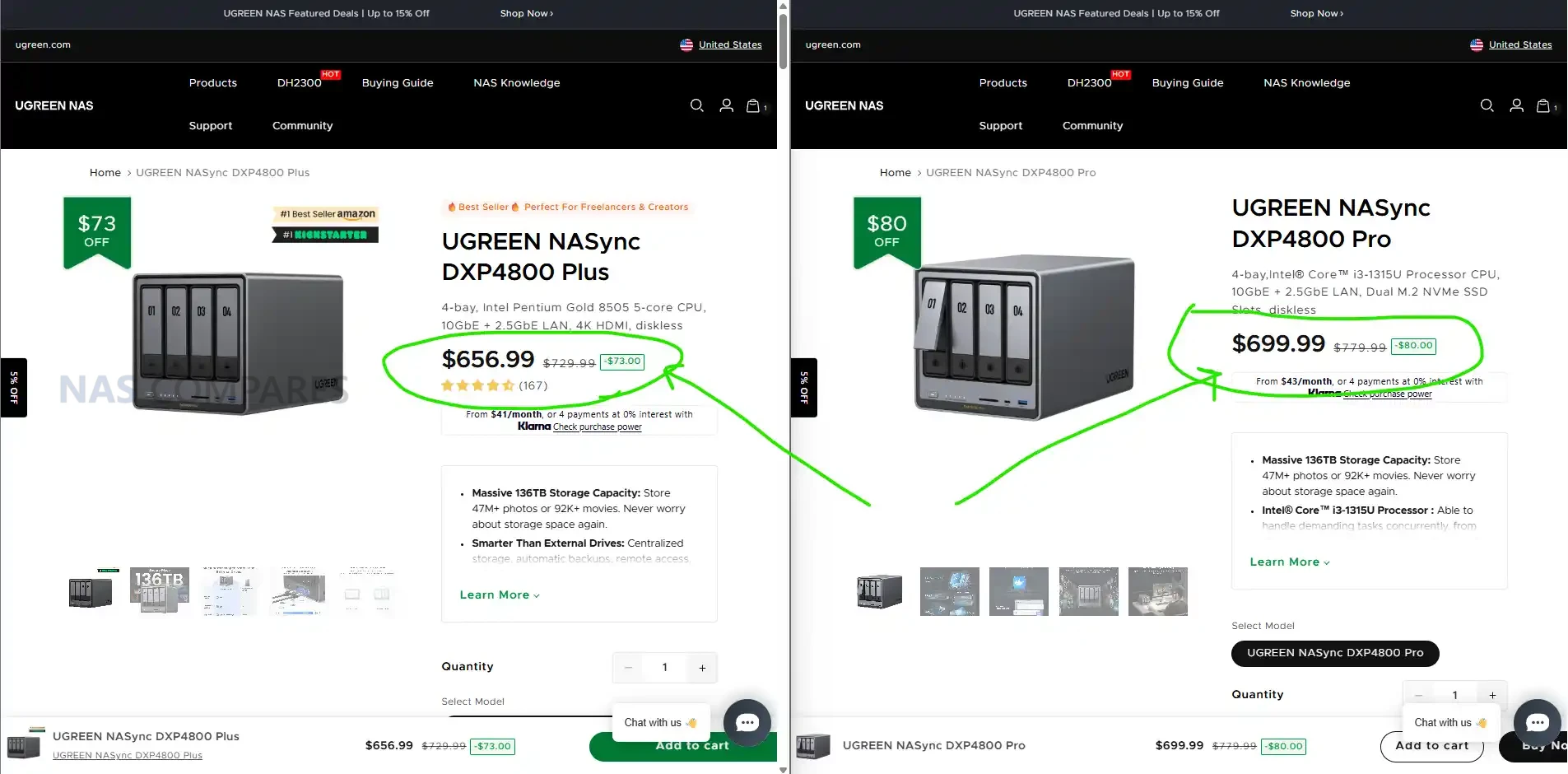
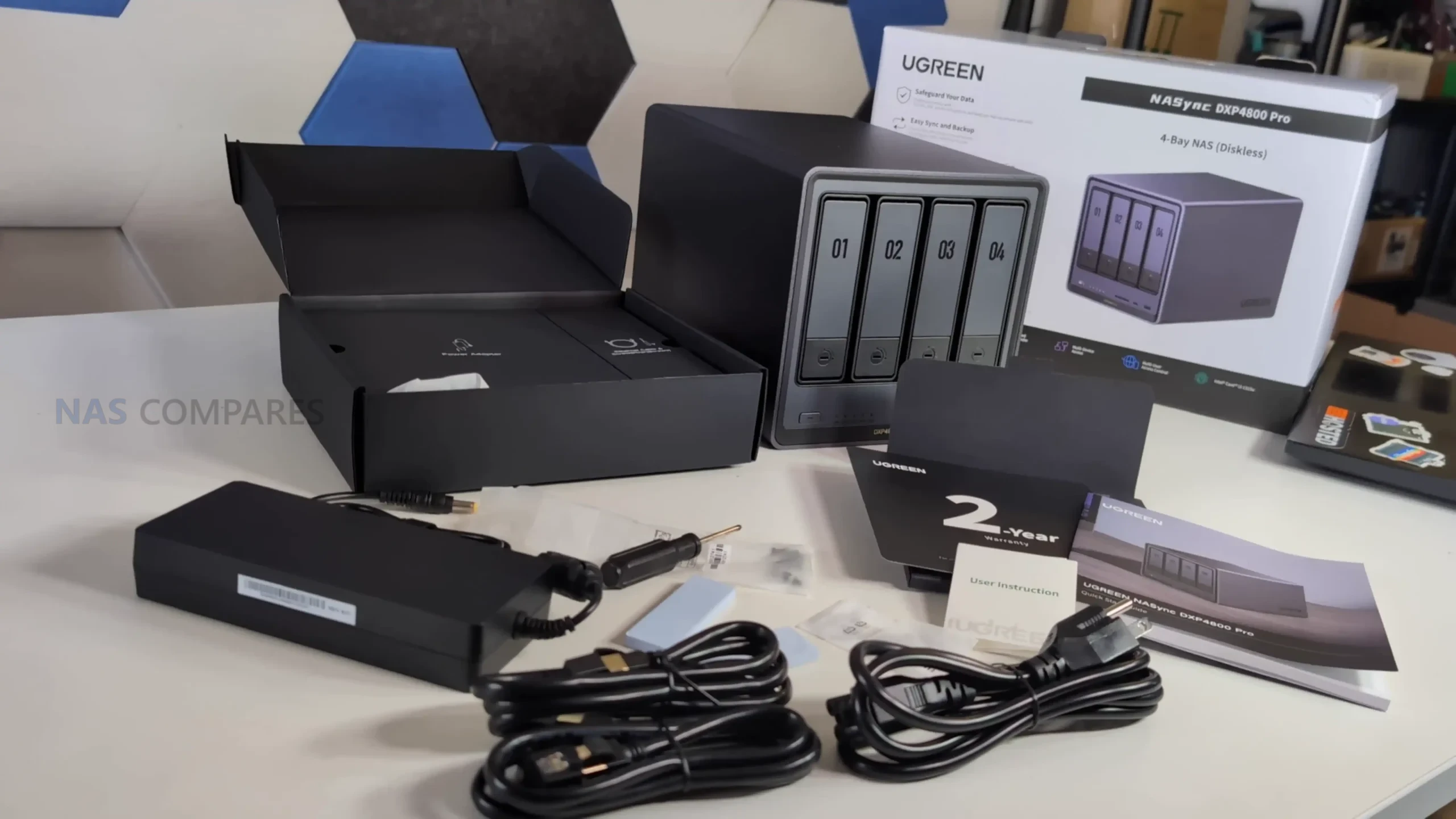
The UGREEN NASync DXP4800 Pro is a 4 bay desktop NAS that builds on the existing DXP4800 Plus rather than replacing it outright. From a hardware and design perspective, the system remains very familiar, but it introduces a newer Intel Core i3 1315U processor and increases the maximum supported memory to 96GB. Networking remains unchanged, with both 10GbE and 2.5GbE available, and the unit continues to support dual NVMe SSDs for caching or dedicated storage pools. These updates position the DXP4800 Pro as a slightly more capable option for users who want additional CPU headroom without moving into a larger and more expensive multi bay platform.
Category
Specification
Model
UGREEN NASync DXP4800 Pro
Drive Bays
4 x SATA (2.5 inch and 3.5 inch)
CPU
Intel Core i3 1315U
Memory
8GB DDR5 5600MHz, expandable to 96GB
ODECC
Supported
M.2 Slots
2 x M.2 NVMe
System Drive
128GB SSD (flash memory system disk)
RAID
JBOD, Basic, RAID 0, 1, 5, 6, 10
Max Storage
136TB (4 x 30TB plus 2 x 8TB)
LAN
1 x 2.5GbE, 1 x 10GbE
USB Front
1 x USB C 10Gbps, 1 x USB A 10Gbps
USB Rear
1 x USB A 5Gbps, 2 x USB A 480Mbps
SD Card
SD 3.0
HDMI
4K (60Hz mentioned in product overview)
OS
UGOS Pro
Dimensions
10.1 inch x 7.0 inch x 7.0 inch
Power
42.36W drive access, 18.12W drive hibernation
Warranty
2 years
Price
$699.99 (diskless, listed sale price)
At launch, the DXP4800 Pro is listed as a diskless system at $699.99 and is aimed at home power users, creators and small offices looking for a turnkey NAS that can handle container workloads, virtual machines and media workloads more comfortably than entry level models. While the hardware changes are relatively contained, they directly affect performance scaling and long term flexibility. This makes the DXP4800 Pro less of a generational leap and more of a mid cycle refinement, intended for buyers who want modest improvements in processing capability and memory capacity while keeping the same overall form factor and feature set.
UGREEN DXP4800 PRO Review – Quick Conclusion
The UGREEN NASync DXP4800 Pro is a 4 bay NAS that focuses on incremental improvement rather than major change, pairing an Intel Core i3 1315U with up to 96GB of DDR5 memory, dual NVMe slots and 10GbE plus 2.5GbE networking in the same compact metal chassis as the DXP4800 Plus. It delivers solid real world performance for file transfers, SSD caching, media workloads and container use, with good NVMe throughput and reliable 10GbE performance, but power consumption is noticeably higher than lower power NAS alternatives and internal SSD to SSD transfers do not always reach their theoretical limits. Build quality and storage flexibility are strong, noise levels are generally reasonable but rise under heavy load, and thermals remain under control despite limited underside clearance. UGOS Pro offers a broad feature set with Docker, virtualization, snapshots and AI assisted photo tools, though its security scanning remains focused on malware rather than wider system hardening and application availability is still maturing. Overall, the DXP4800 Pro is a capable and well balanced mid tier NAS best suited to users who want extra CPU headroom and long term flexibility, but it does not represent a compelling upgrade for existing DXP4800 Plus owners and its value depends largely on how much the added performance will actually be used.
SOFTWARE - 8/10
HARDWARE - 8/10
PERFORMANCE - 8/10
PRICE - 8/10
VALUE - 9/10
8.2
PROS
Intel Core i3 1315U provides noticeably more CPU headroom than the DXP4800 Plus, particularly for multitasking, containers and light virtualization Supports up to 96GB of DDR5 memory, offering strong long term flexibility for advanced workloads Dual network ports with both 10GbE and 2.5GbE included, enabling high speed transfers without link aggregation Dual M.2 NVMe slots support SSD caching or dedicated SSD storage pools alongside SATA drives Dedicated 128GB system SSD keeps the operating system separate from main storage volumes. Plus, usable with TrueNAS, UnRAID, OMV etc Solid metal chassis with good overall build quality and effective passive heat dissipation Good real world performance over 10GbE for both SATA RAID arrays and NVMe storage UGOS Pro includes Docker, virtualization, snapshots and AI assisted photo management without subscription fees
CONS
Higher power consumption than low power NAS systems, particularly under sustained CPU and disk load Hardware changes are incremental, making it a limited upgrade for existing DXP4800 Plus owners - and the DXP6800 is only a smaller spend away! Security scanning tools focus mainly on malware and lack deeper configuration or exposure analysis
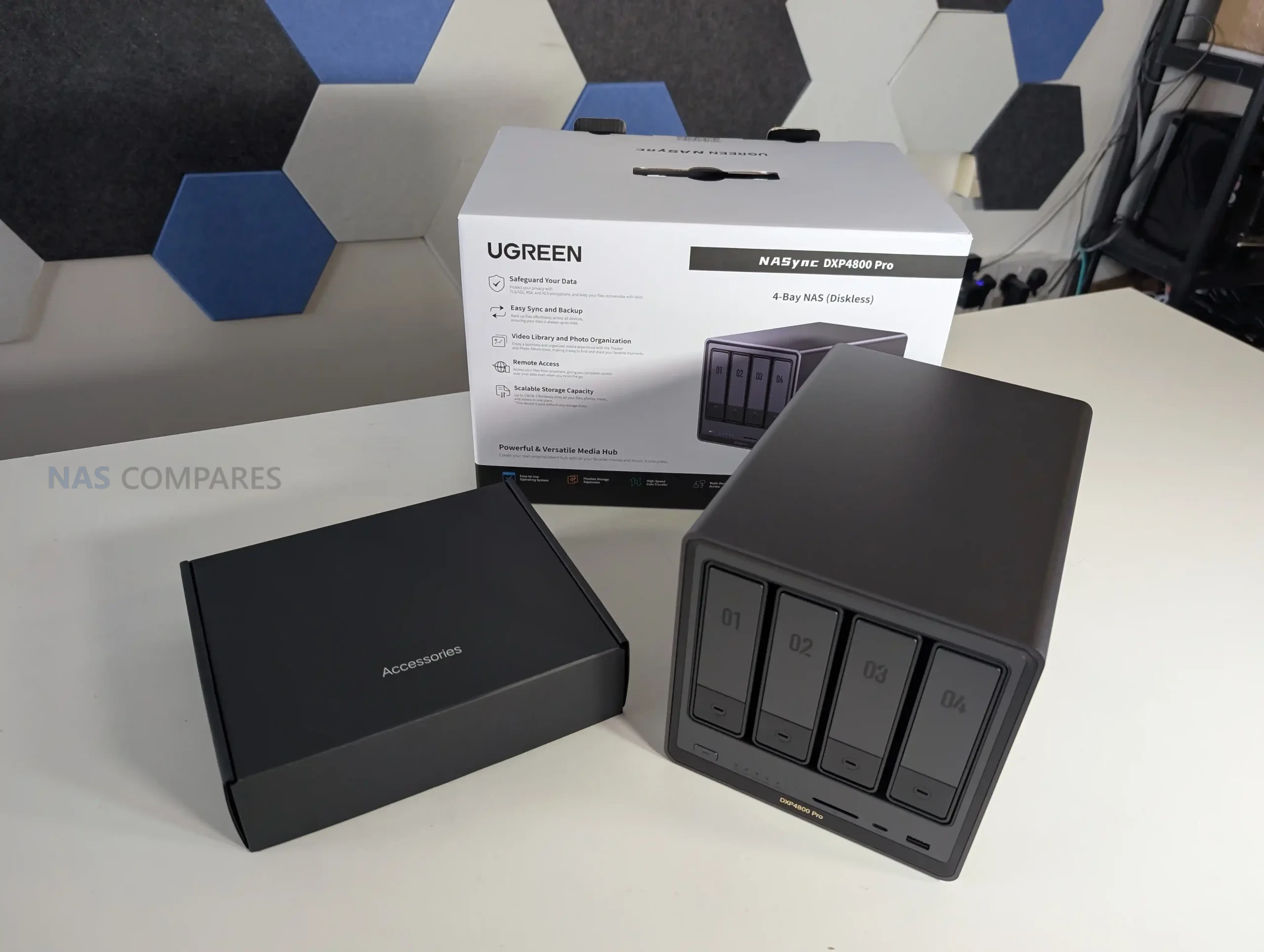
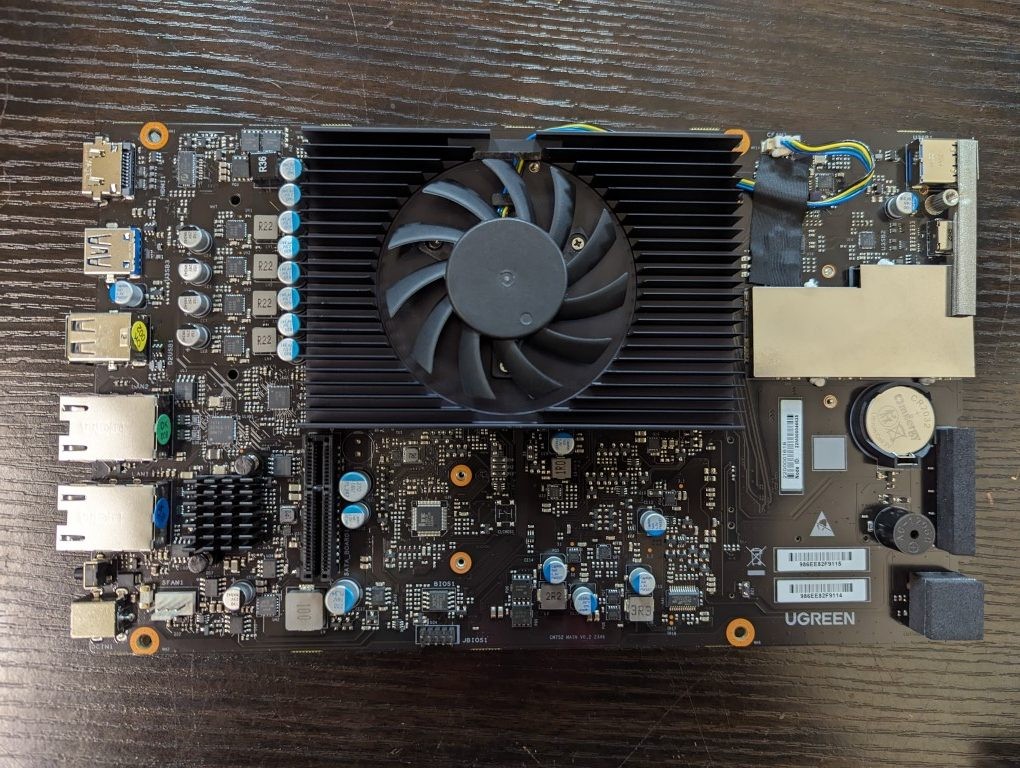
The DXP4800 Pro continues to use the same compact metal chassis as the DXP4800 Plus, with no structural redesign to the enclosure itself. The overall dimensions and layout remain unchanged, which makes it easy to place alongside other desktop NAS systems in this class. While the external appearance is largely identical, the surface finish feels slightly different to the touch compared with the earlier model. This change does not affect durability or rigidity, but it does subtly distinguish the Pro from the Plus when handled directly. The metal construction also plays a functional role by assisting with passive heat dissipation across the enclosure.
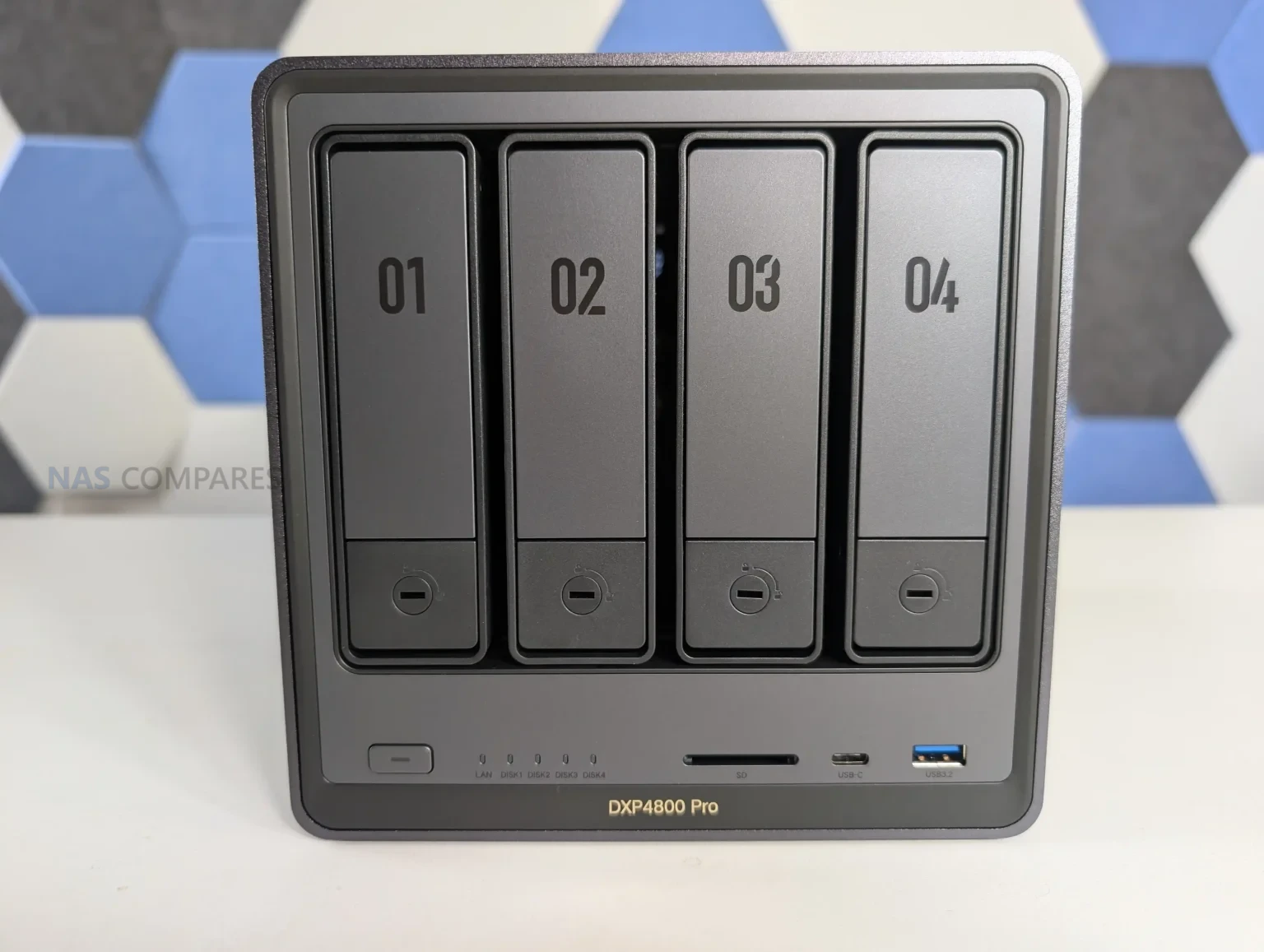
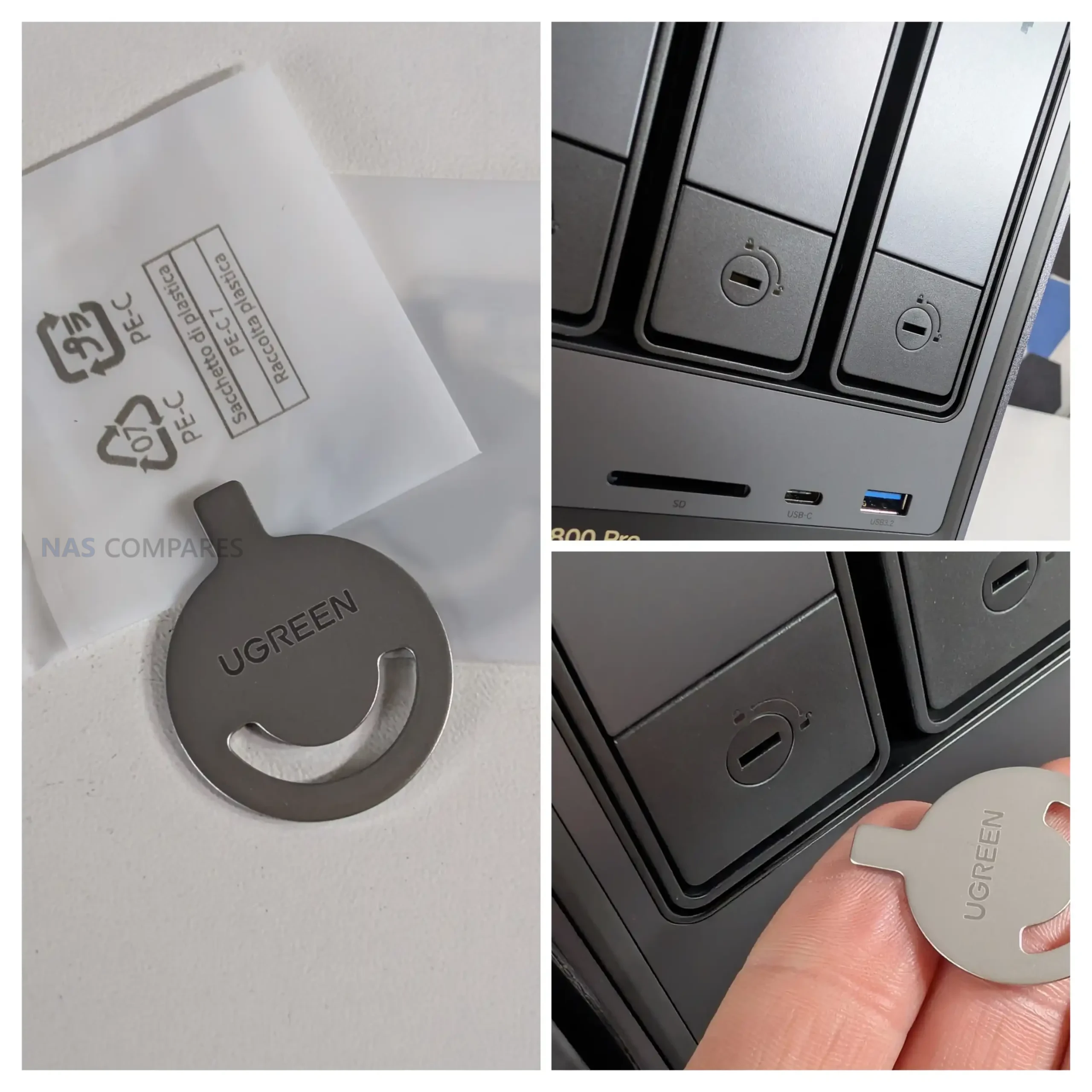
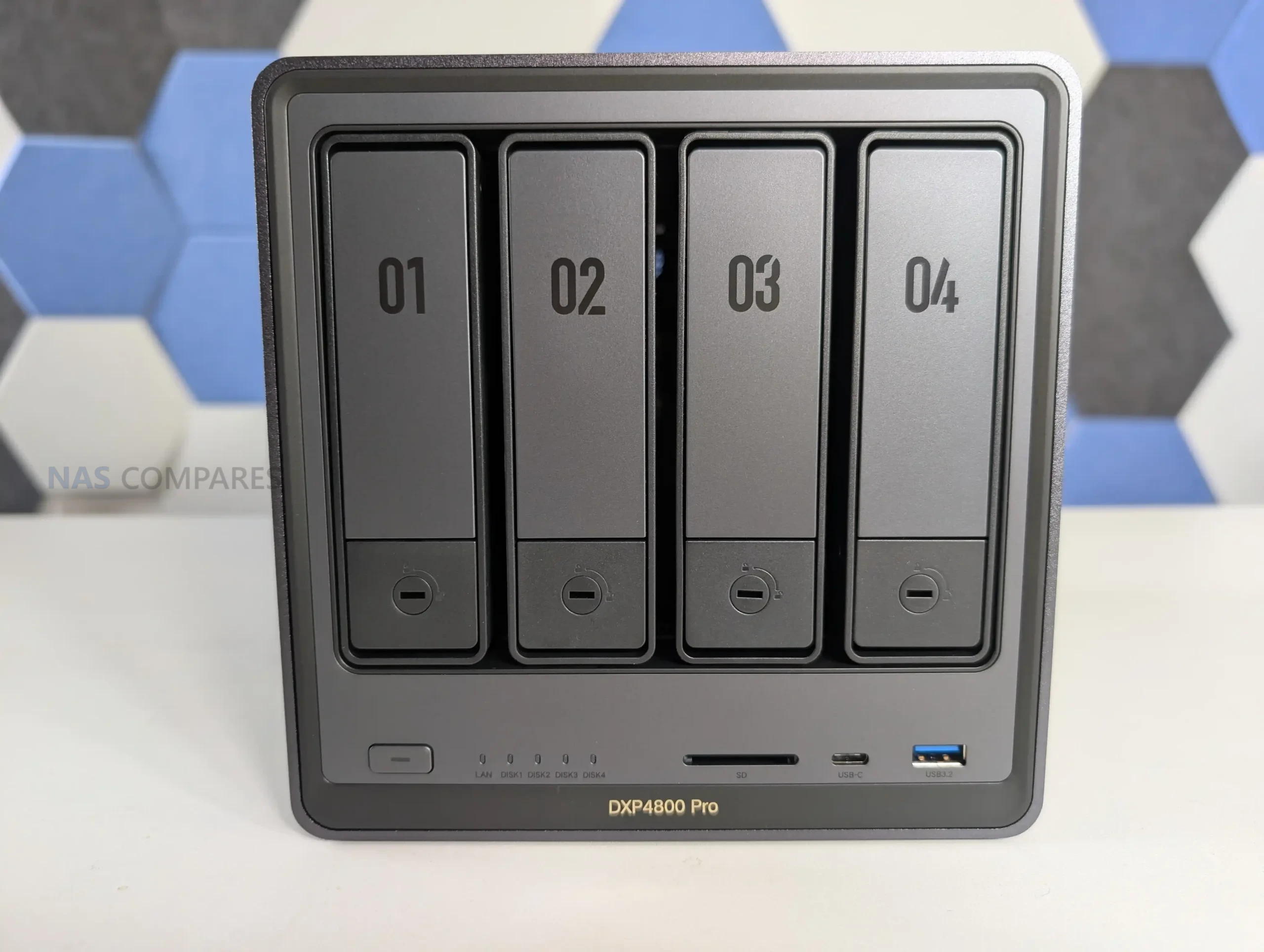
On the front of the unit, four SATA drive bays are arranged vertically and support both 2.5 inch and 3.5 inch drives. The trays are tool free and lockable, with keys included, which provides a basic level of physical drive security.
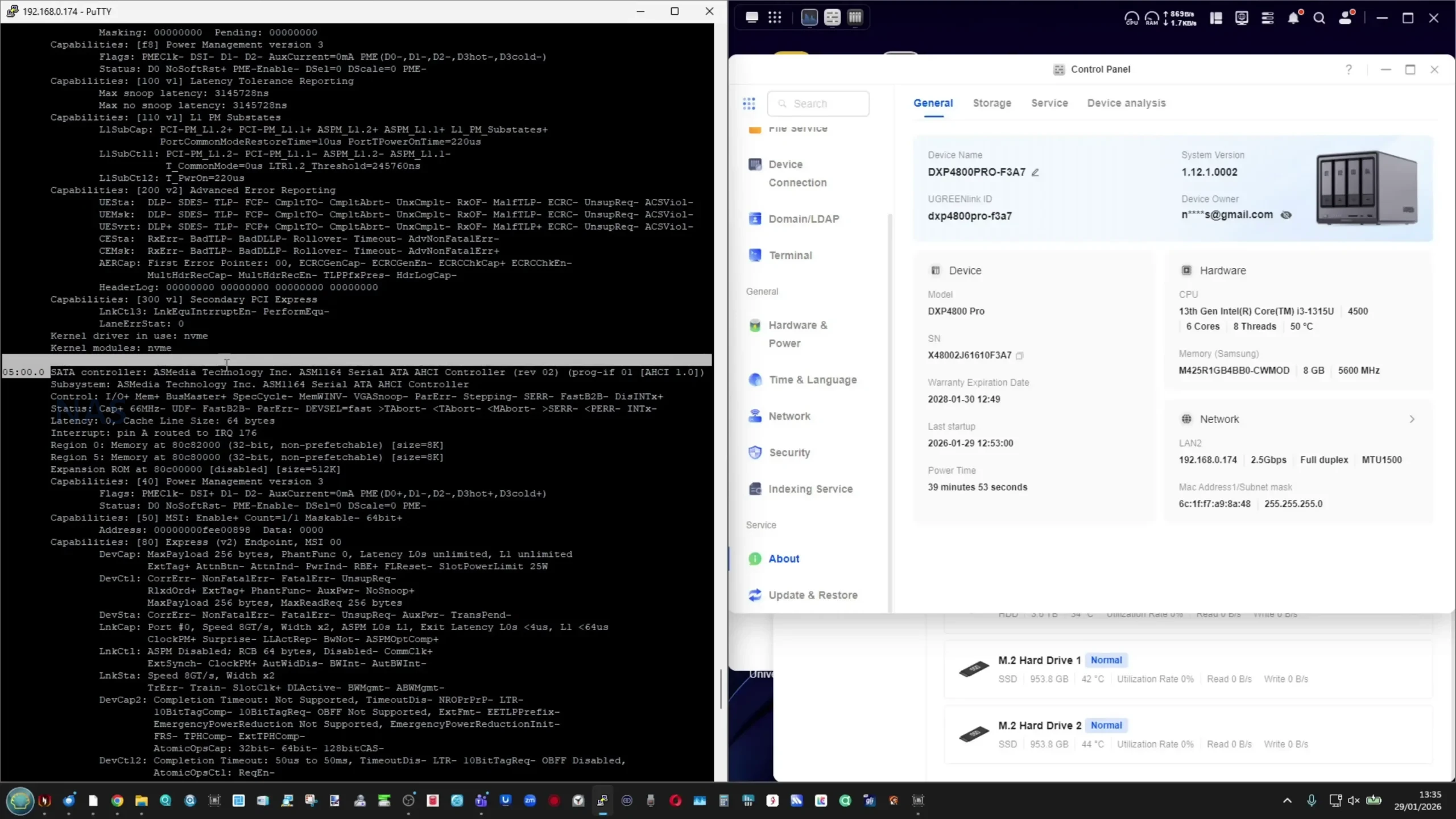
Each bay connects to a shared backplane that feeds into an ASMedia 1164 SATA controller running over a PCIe Gen3 x2 link. This controller configuration is typical for a 4 bay NAS and provides adequate bandwidth for RAID 5 and RAID 6 arrays without becoming an immediate bottleneck under normal workloads.
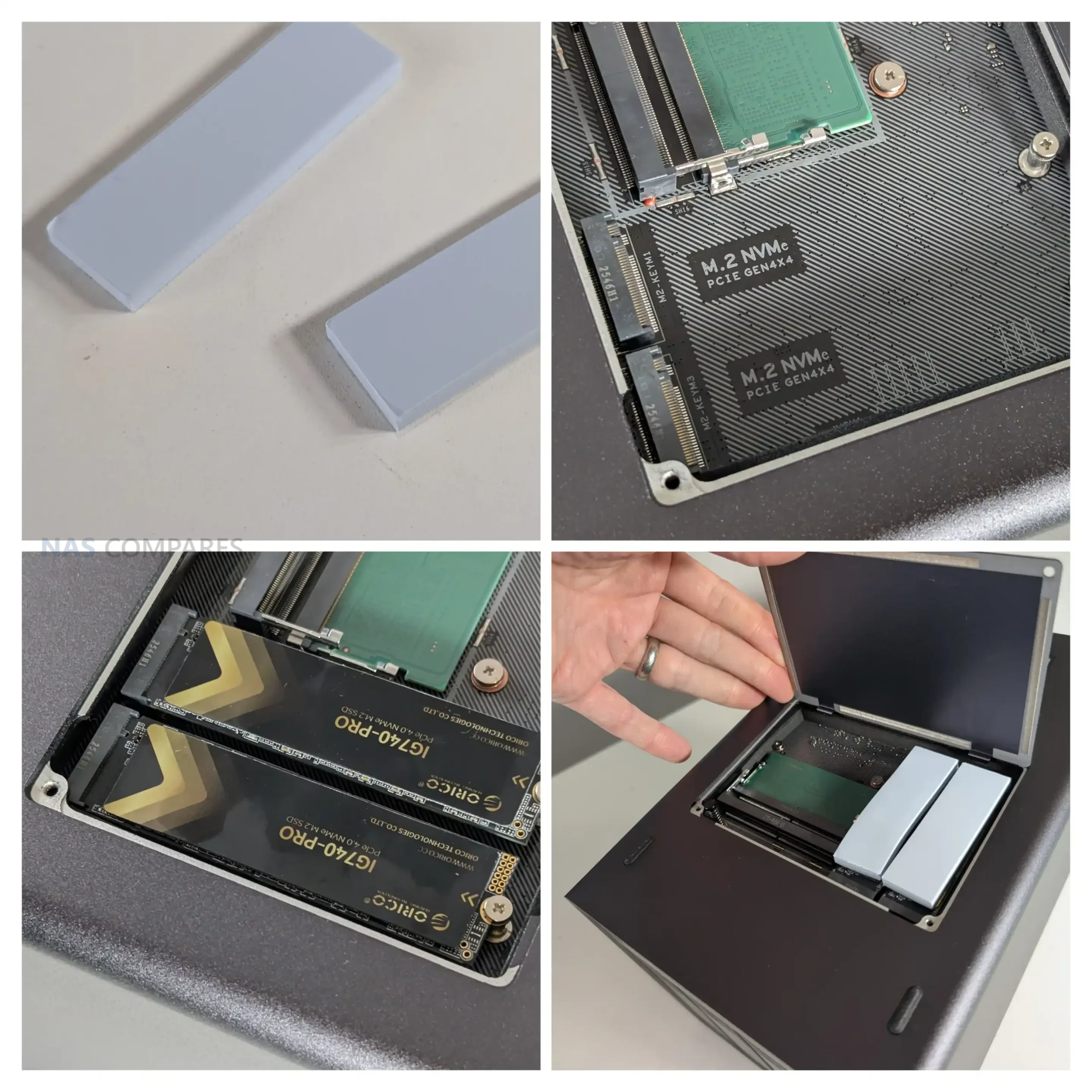
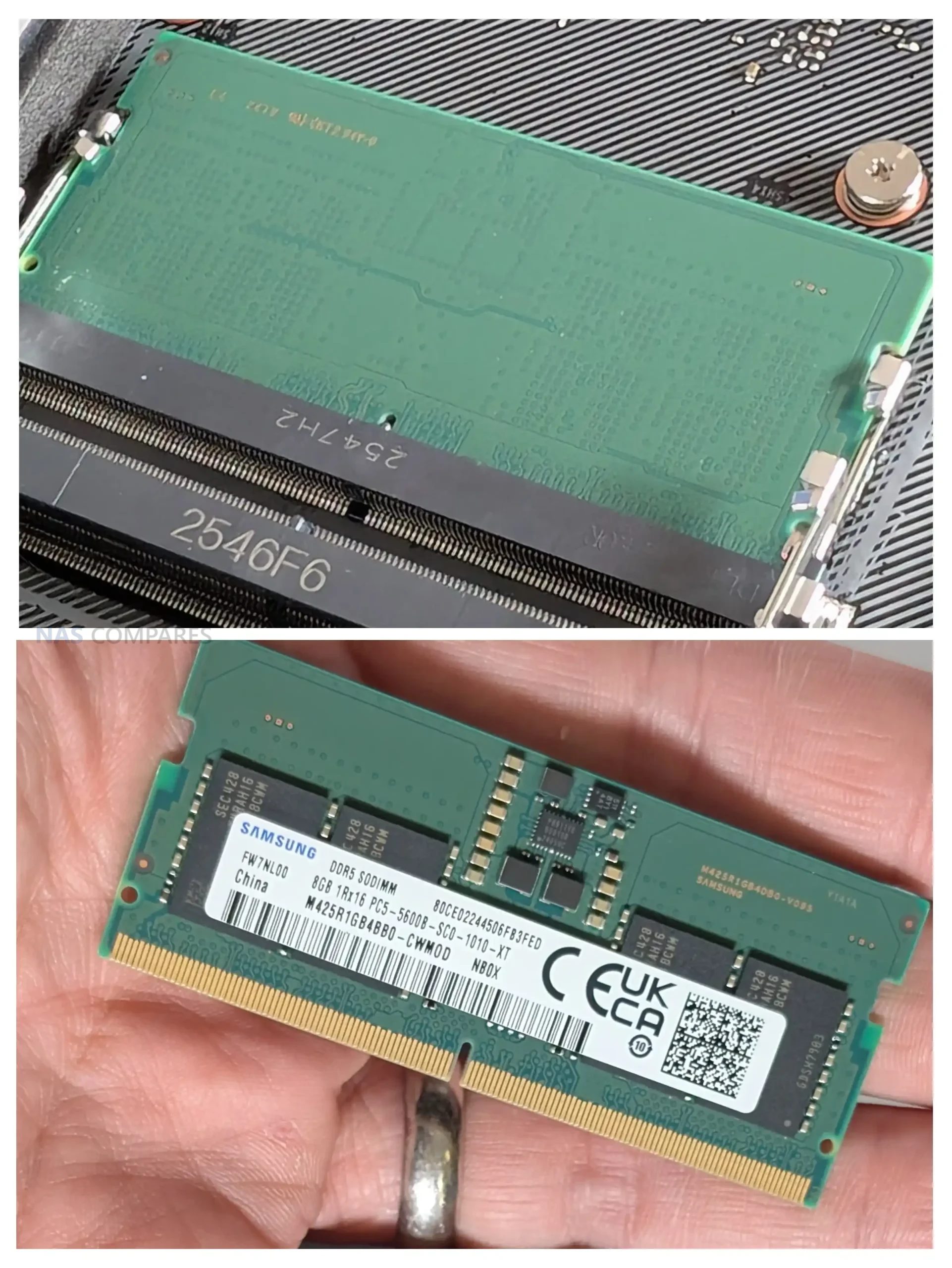
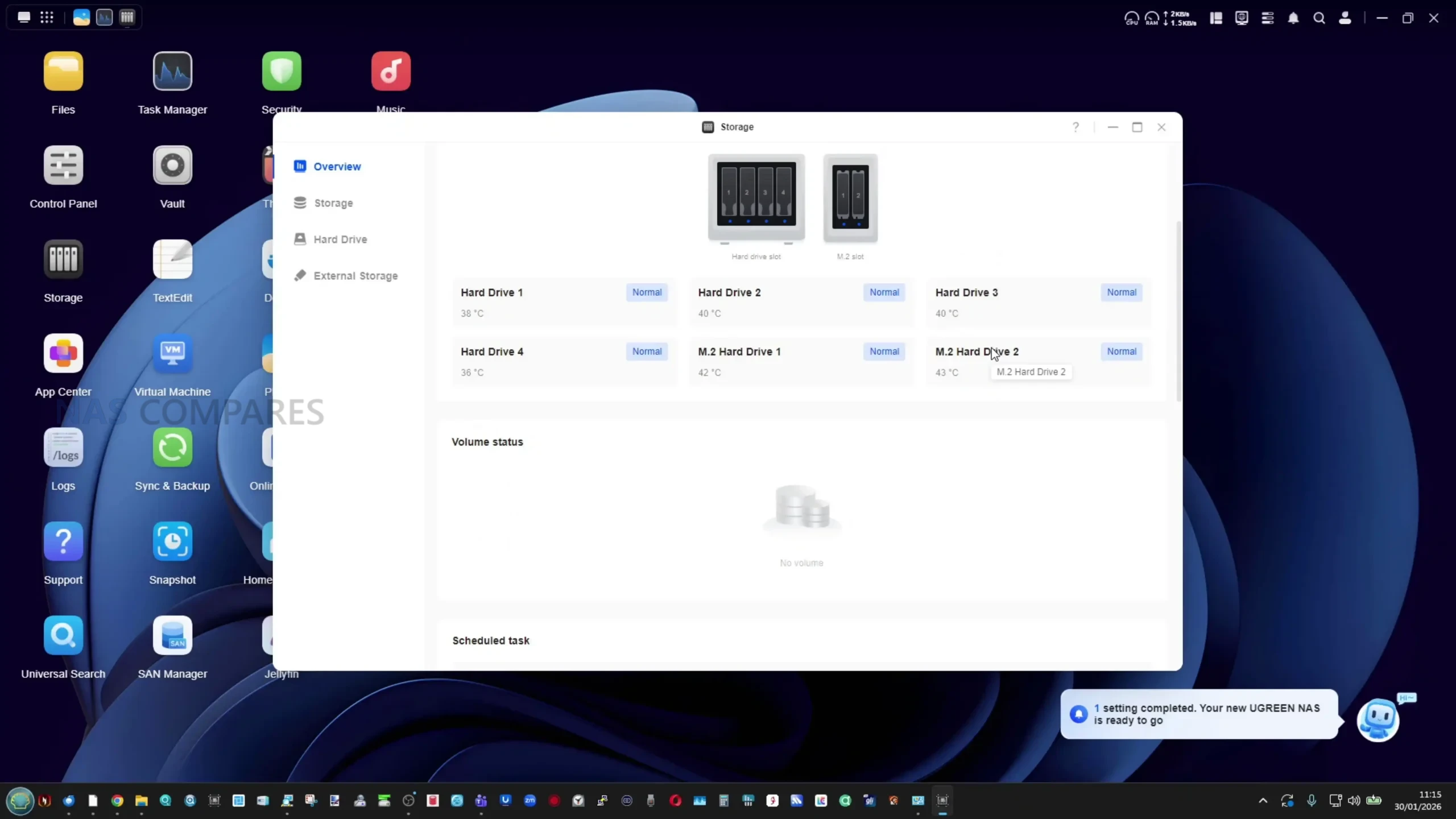
Additional storage options are located on the underside of the chassis. Removing a small access panel reveals two M.2 NVMe slots along with two DDR5 SODIMM memory slots. This placement keeps the top and sides of the enclosure clean but requires the system to be powered down and removed from its location for upgrades. The two user accessible NVMe slots operate at PCIe Gen4 x4 speeds and can be used for SSD caching or for creating dedicated SSD storage pools, depending on workload requirements.
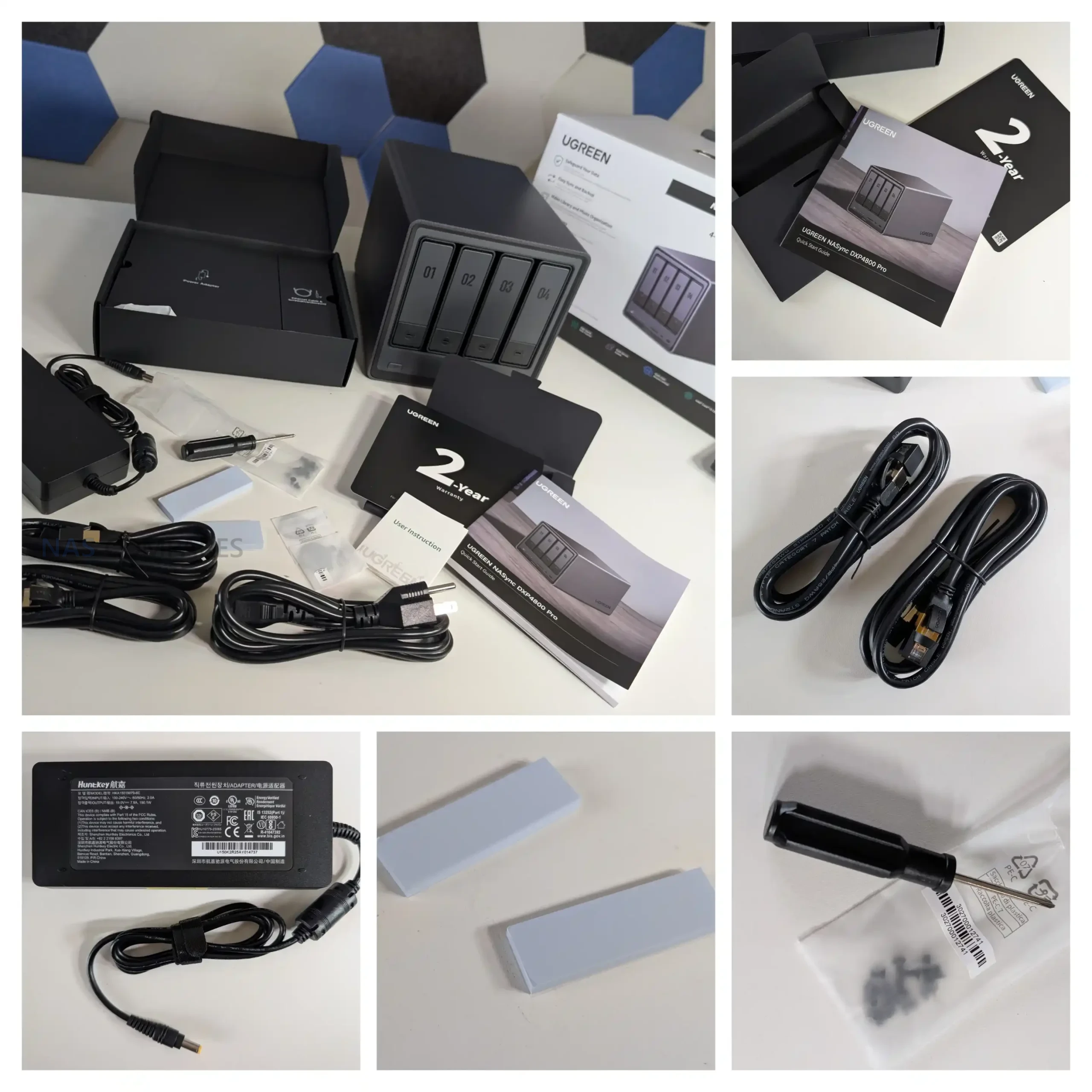
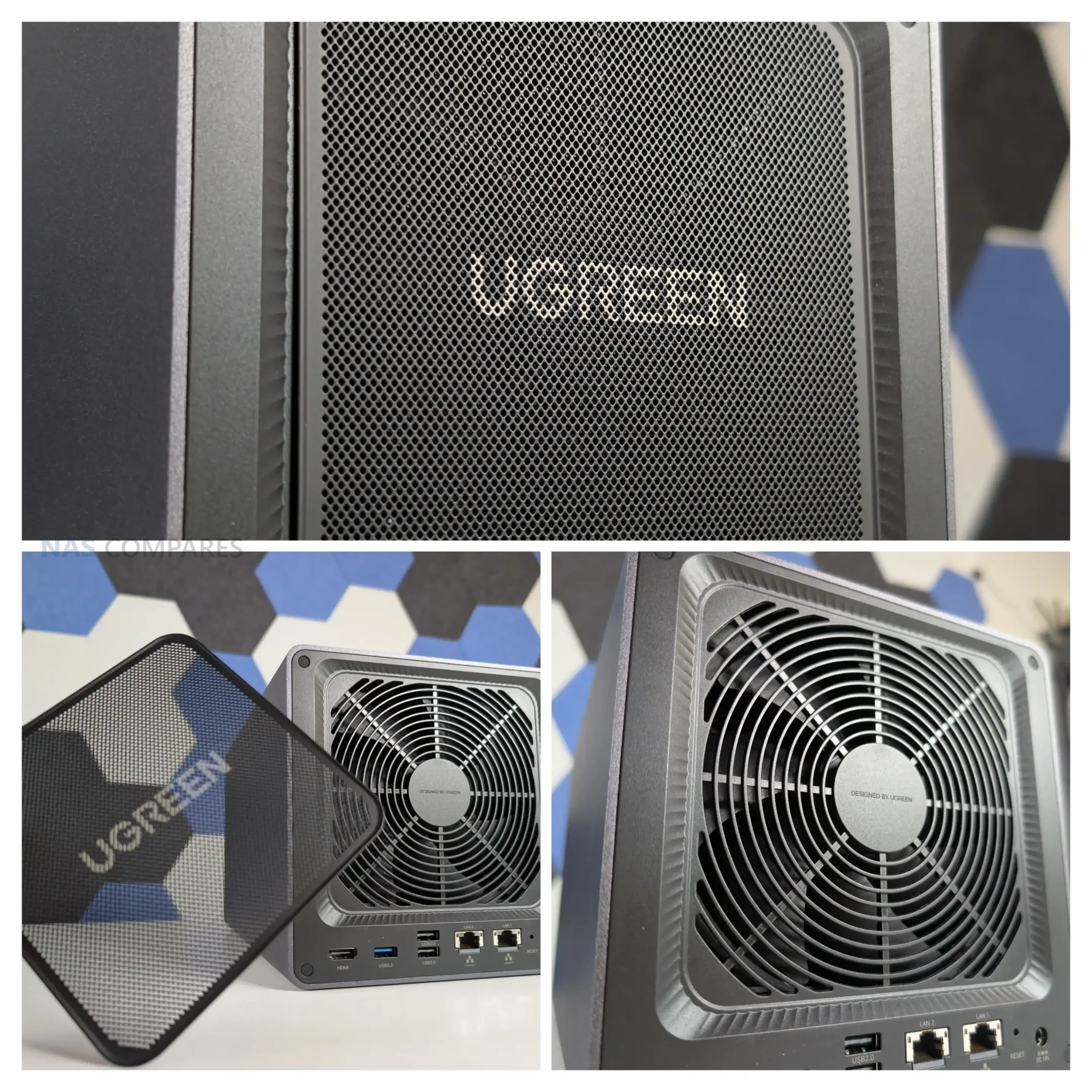
Thermal handling for the NVMe drives is addressed through the use of thick thermal pads that make direct contact with the metal base panel. Once installed, the base of the chassis effectively acts as a large passive heat spreader. Clearance between the bottom of the NAS and the desk surface is limited, which restricts airflow underneath the unit. However, during typical usage this design appears sufficient to keep NVMe temperatures within reasonable operating ranges, particularly when combined with the system’s active rear fan.
From a storage flexibility standpoint, the DXP4800 Pro offers a conventional but well rounded setup. Users can combine large capacity SATA drives with high speed NVMe SSDs, configure multiple RAID types, or separate workloads across different storage pools. While there is no support for external expansion units or PCIe add in cards, the internal layout covers the needs of most home and small office users looking for a balance between capacity, performance and simplicity.
UGREEN DXP4800 PRO Review – Internal Hardware
At the core of the DXP4800 Pro is the Intel Core i3 1315U, a 13th generation processor that replaces the Pentium Gold used in the DXP4800 Plus. This CPU brings a higher core and thread count, along with slightly higher boost frequencies and improved integrated graphics capability. In practical terms, this provides more headroom for parallel workloads such as Docker containers, background indexing tasks and light virtual machine use. While it is still a mobile class processor, it represents a measurable step up in sustained performance compared with the previous model.
The system ships with 8GB of DDR5 memory running at 5600MHz and supports expansion up to 96GB across two SODIMM slots. This increased memory ceiling is one of the more meaningful hardware changes, particularly for users running multiple services simultaneously or experimenting with virtualization. ODECC support is listed, although this remains dependent on compatible memory modules. Accessing the memory slots requires removing the base panel, which is straightforward but not tool free.
Internally, the DXP4800 Pro also includes a dedicated 128GB SSD used as the system drive for UGOS Pro. This drive operates independently of the two user accessible NVMe slots and ensures the operating system does not consume space from the main storage pools. The presence of a separate system disk also allows users to repurpose the NAS with alternative operating systems if desired, without interfering with the primary storage configuration or voiding the hardware warranty.
UGREEN DXP4800 PRO Review – Ports and Connections
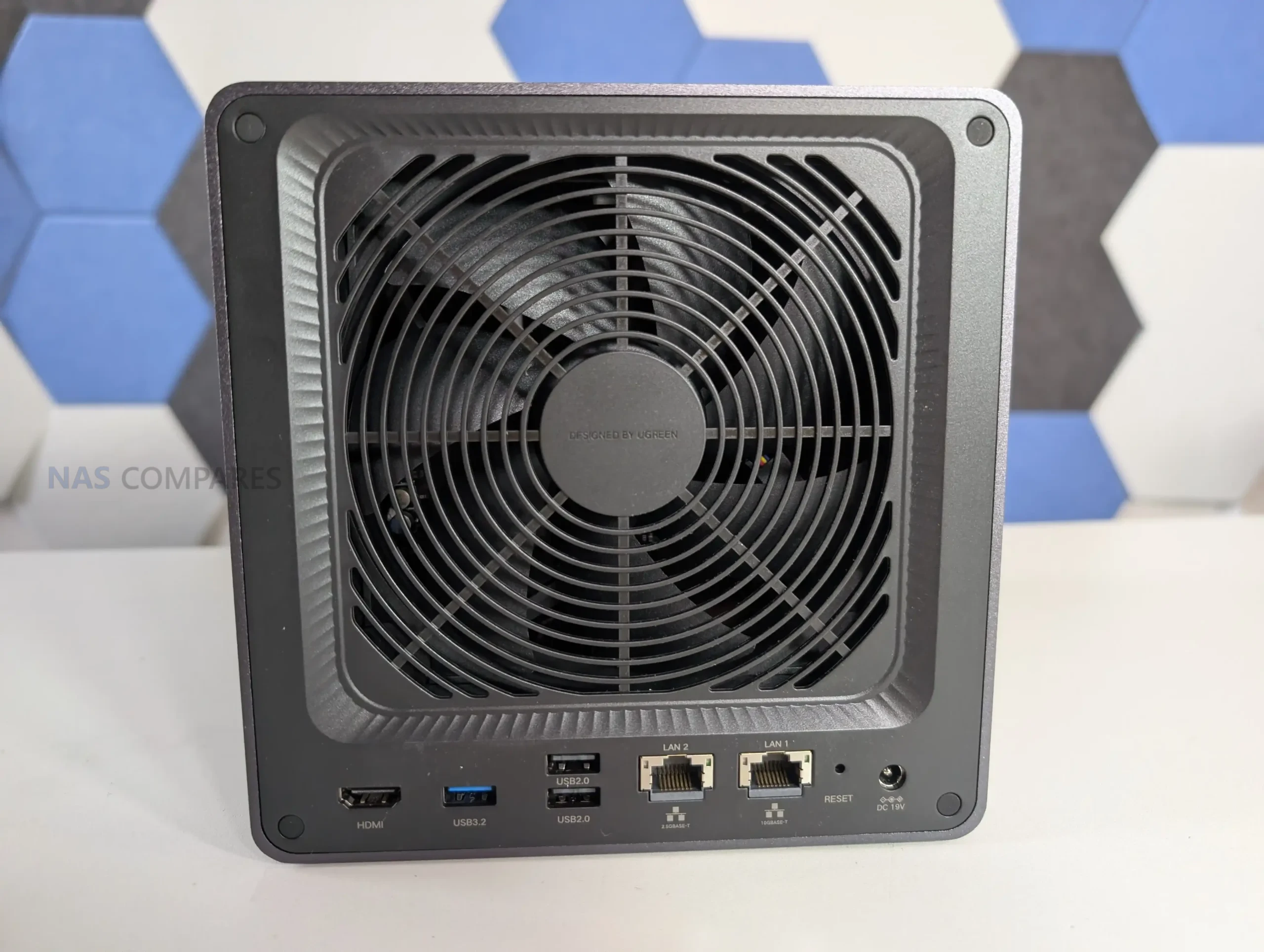
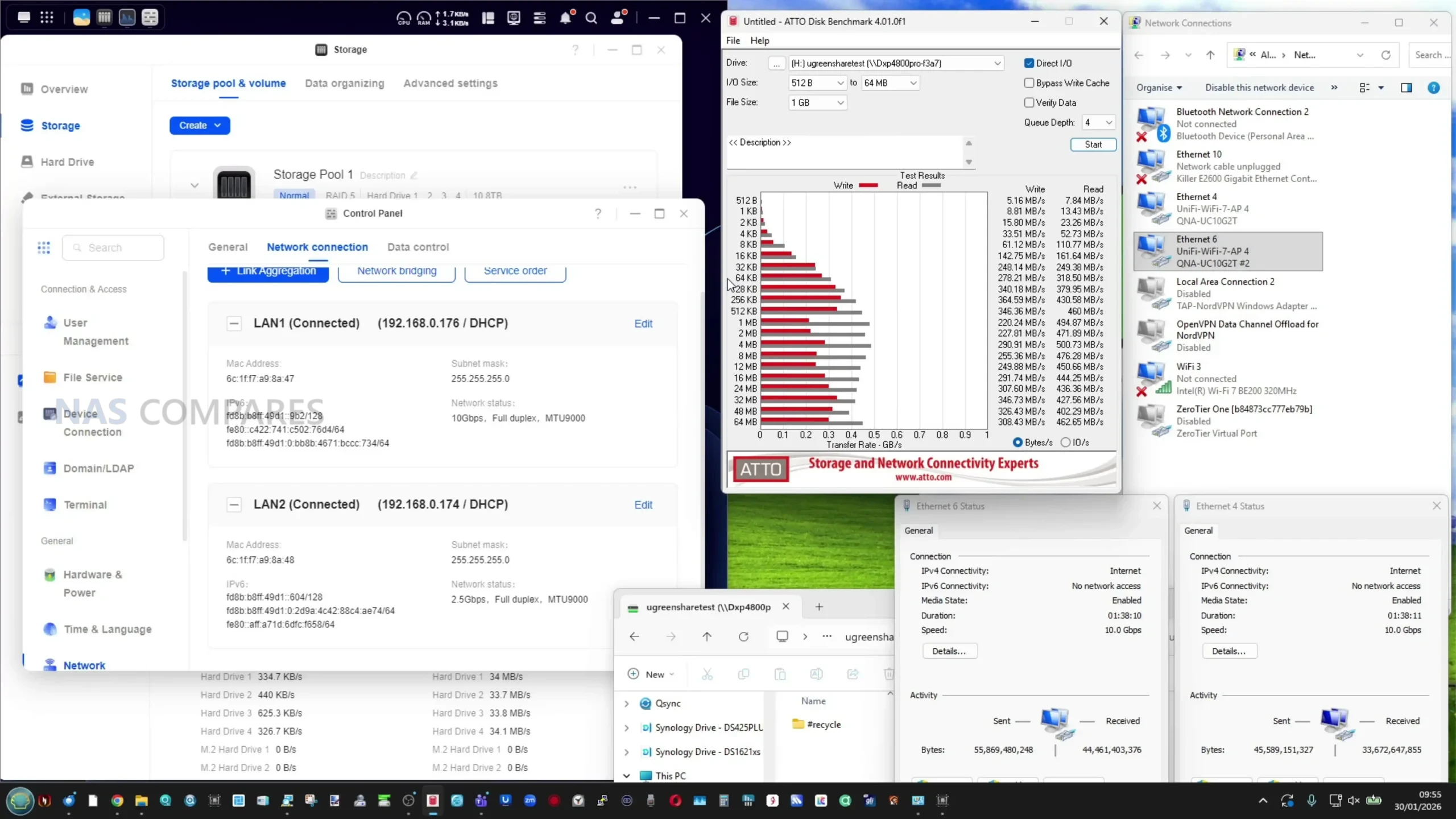
The DXP4800 Pro offers the same port layout as the DXP4800 Plus, with no changes to the overall external connectivity. On the networking side, it includes both a 2.5GbE port and a 10GbE port on the rear of the unit. This dual network setup allows the system to integrate easily into standard home or office networks while also supporting higher bandwidth workflows where compatible switches and clients are available. Link aggregation is not required to access higher speeds, as the 10GbE port operates independently.
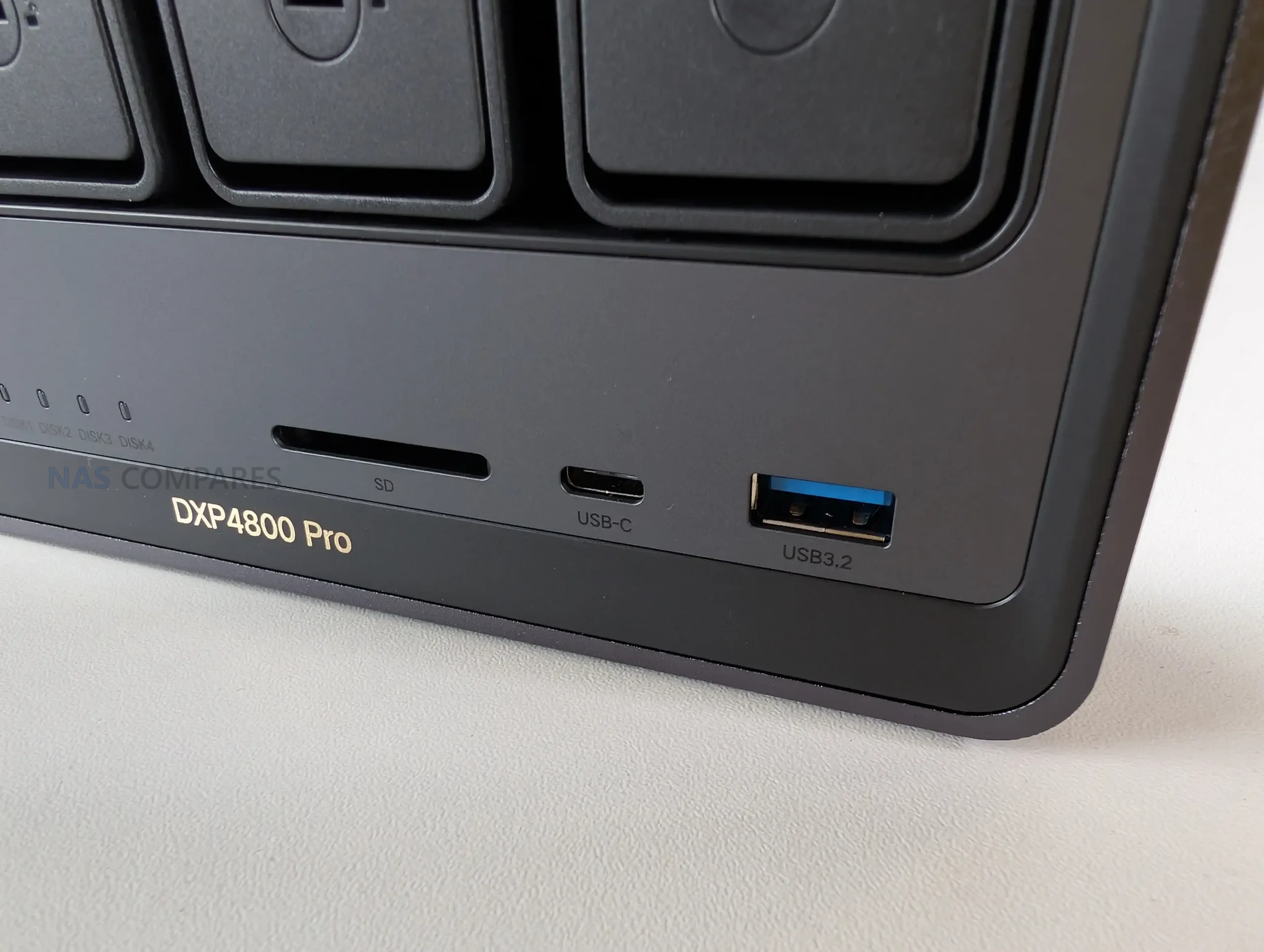
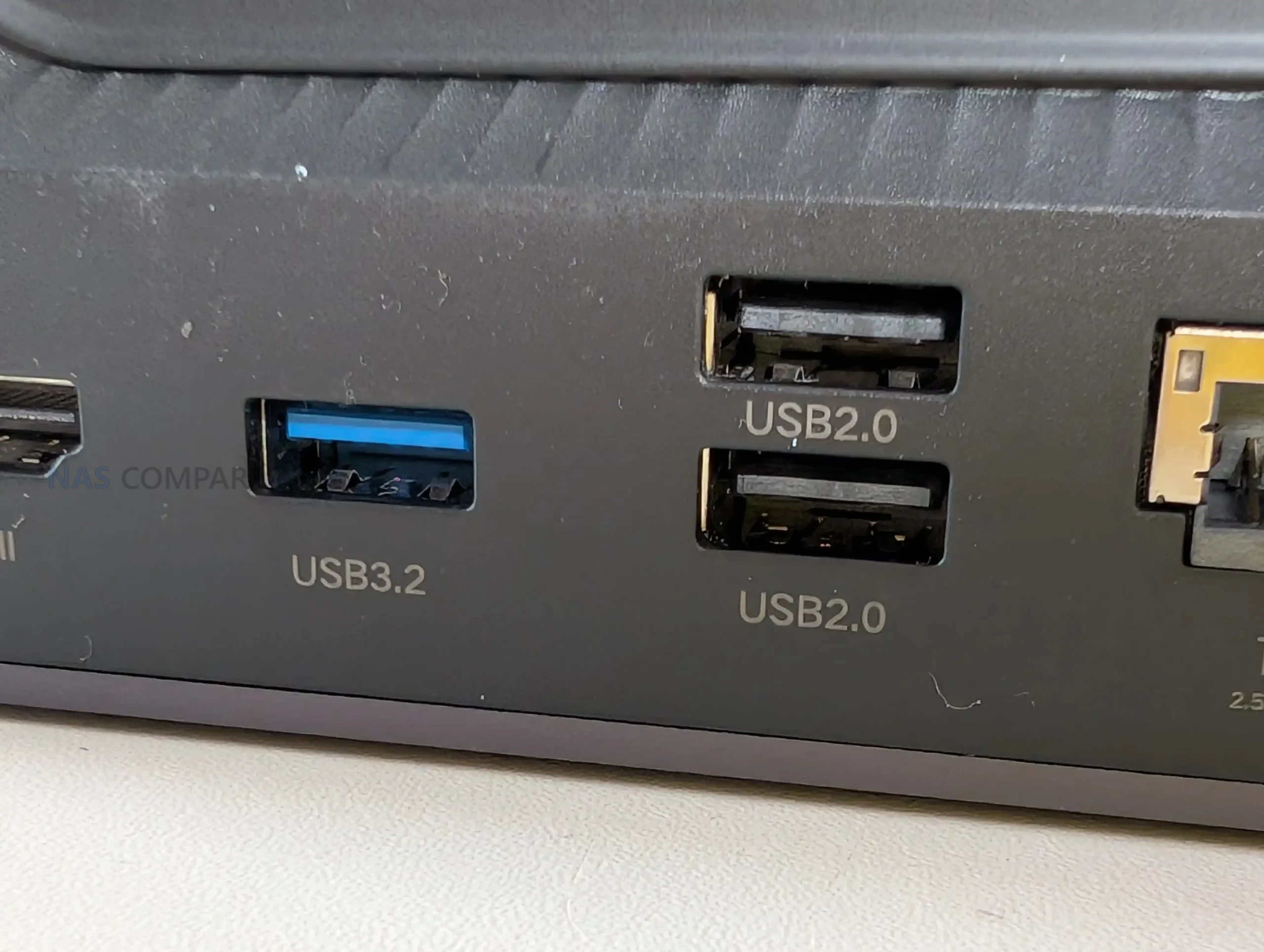
USB connectivity is split between the front and rear panels. On the front, there is one USB C and one USB A port, both operating at up to 10Gbps. These are suited for fast external storage, temporary backups or quick data transfers without needing to access the rear of the system. The rear panel includes one USB A port running at 5Gbps, along with two USB 2.0 ports intended for lower bandwidth peripherals such as UPS connections or input devices.
Additional I O options include an SD 3.0 card reader on the front panel and an HDMI output on the rear. The SD slot is primarily aimed at photographers and videographers who regularly offload media directly to the NAS, while the HDMI port supports local display output at up to 4K resolution. Together, these ports allow the DXP4800 Pro to function not only as a network storage device but also as a basic local media or management system when connected directly to a display.
UGREEN DXP4800 PRO Review – Noise, Heat, Power and Performance Tests
In network file transfers using four SATA hard drives configured in RAID 5, the DXP4800 Pro delivers performance in line with expectations for a 4 bay NAS equipped with 10GbE. Sequential read speeds during testing typically fell in the 450 to 500MB/s range, while write speeds were closer to 300 to 350MB/s. These figures reflect the limits of mechanical drives rather than any immediate system bottleneck, and represent a noticeable uplift compared with single drive performance when accessed over a high speed network connection.
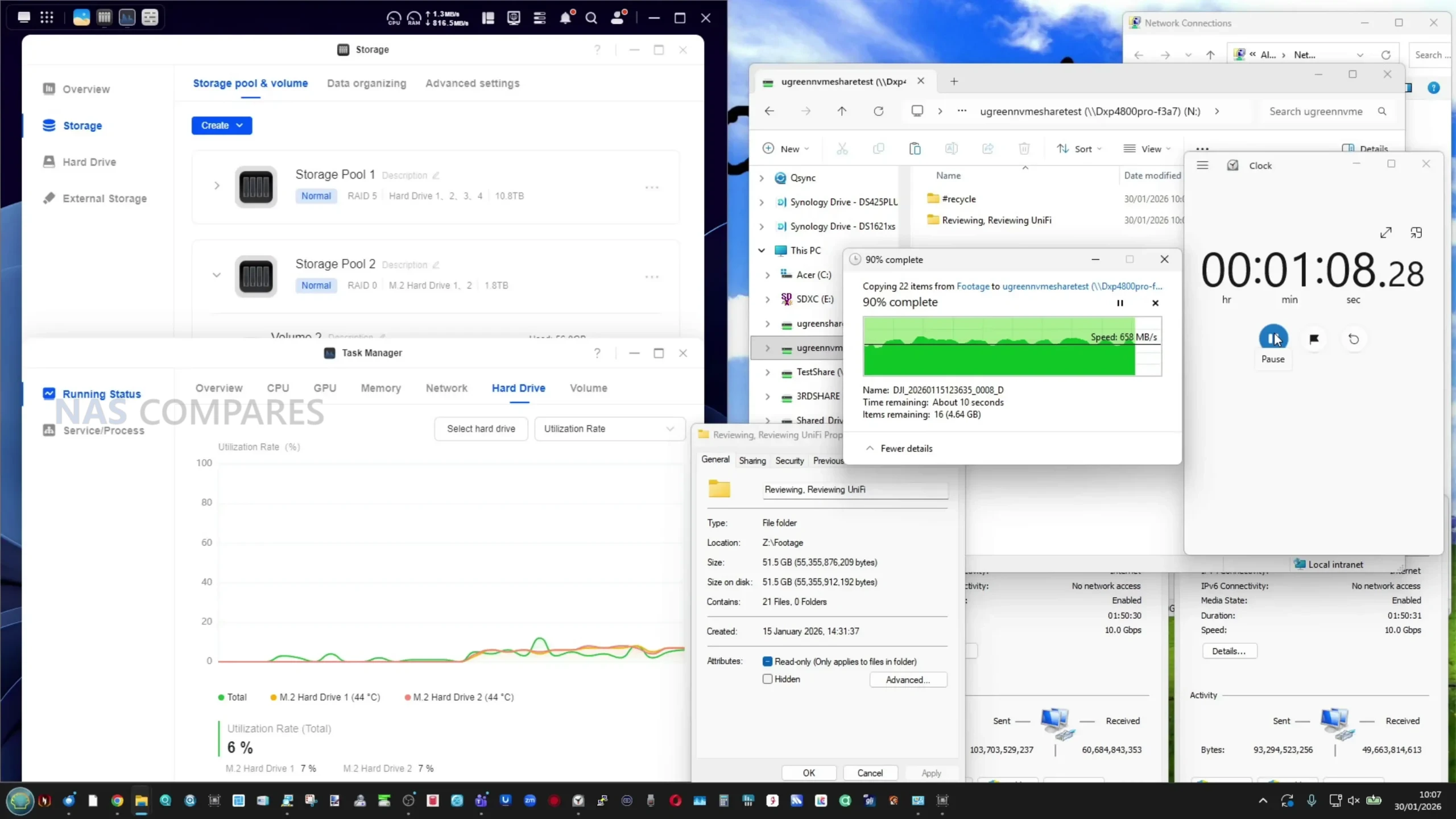
NVMe performance is stronger, particularly when the two user accessible M.2 slots are configured as an SSD storage pool. Synthetic benchmarks conducted within the system reported read speeds in the 5.5 to 6GB/s range, while real world transfers over a 10GbE connection sustained approximately 660 to 680MB/s when copying large media files.
These results are consistent with the constraints of the network interface and show that the NVMe subsystem is not the limiting factor during external transfers.
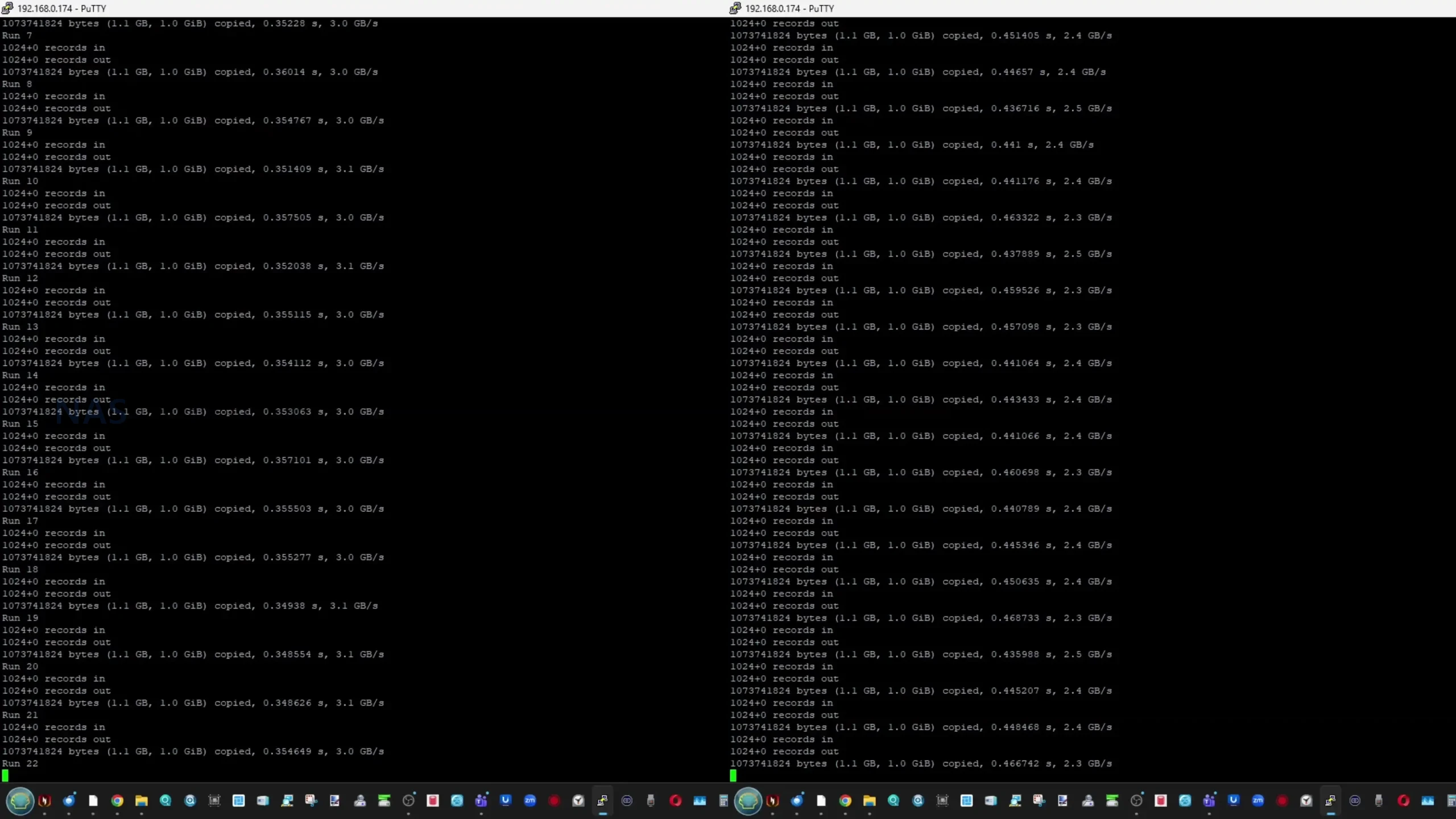
1GB x 100 – SSH Read/Write Test over SSH – SSD Bay #1 (Gen 3×4 Slot)
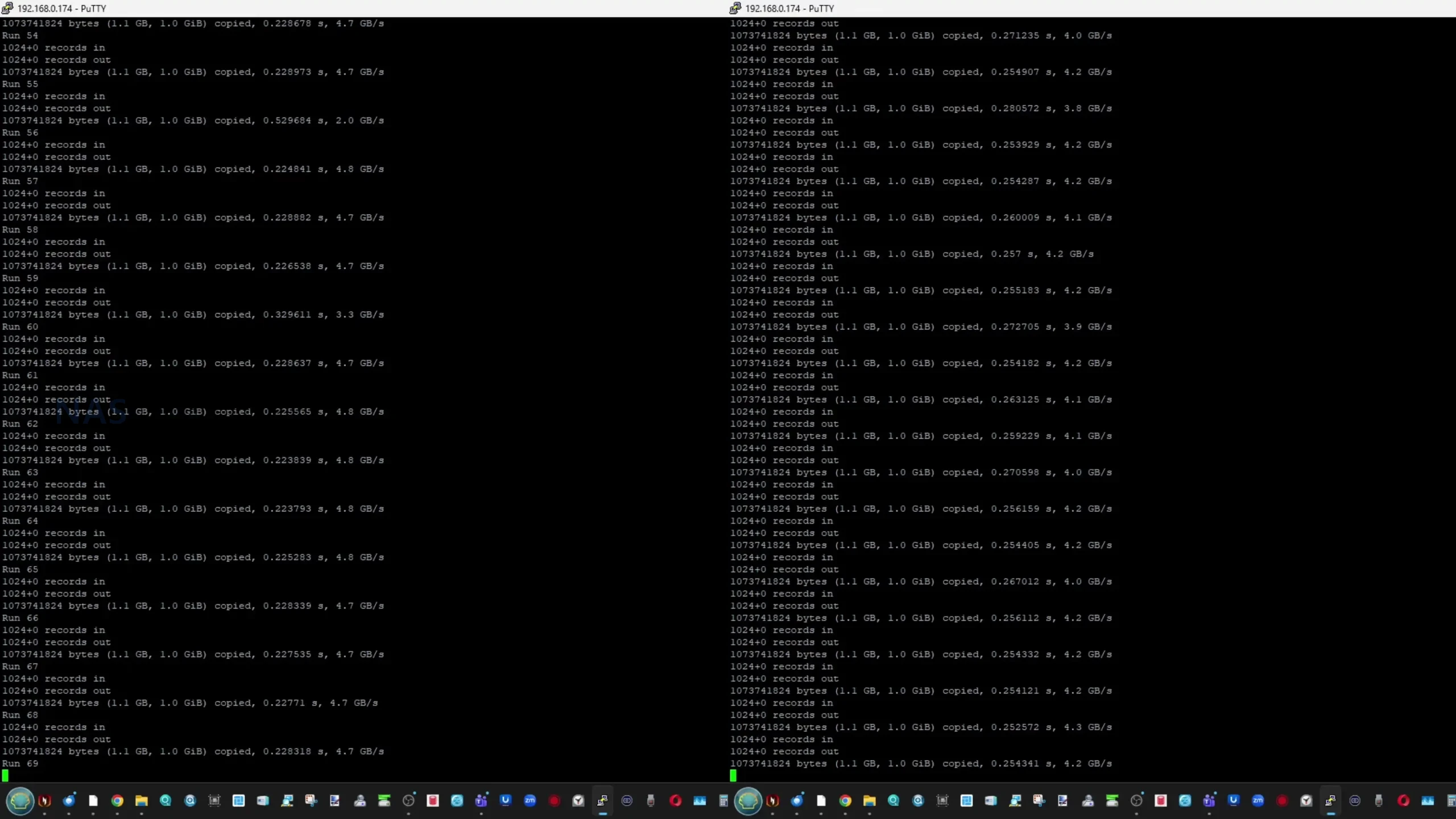
1GB x 100 – SSH Read/Write Test over SSH – SSD Bay #2 (Gen 4×4 Slot)
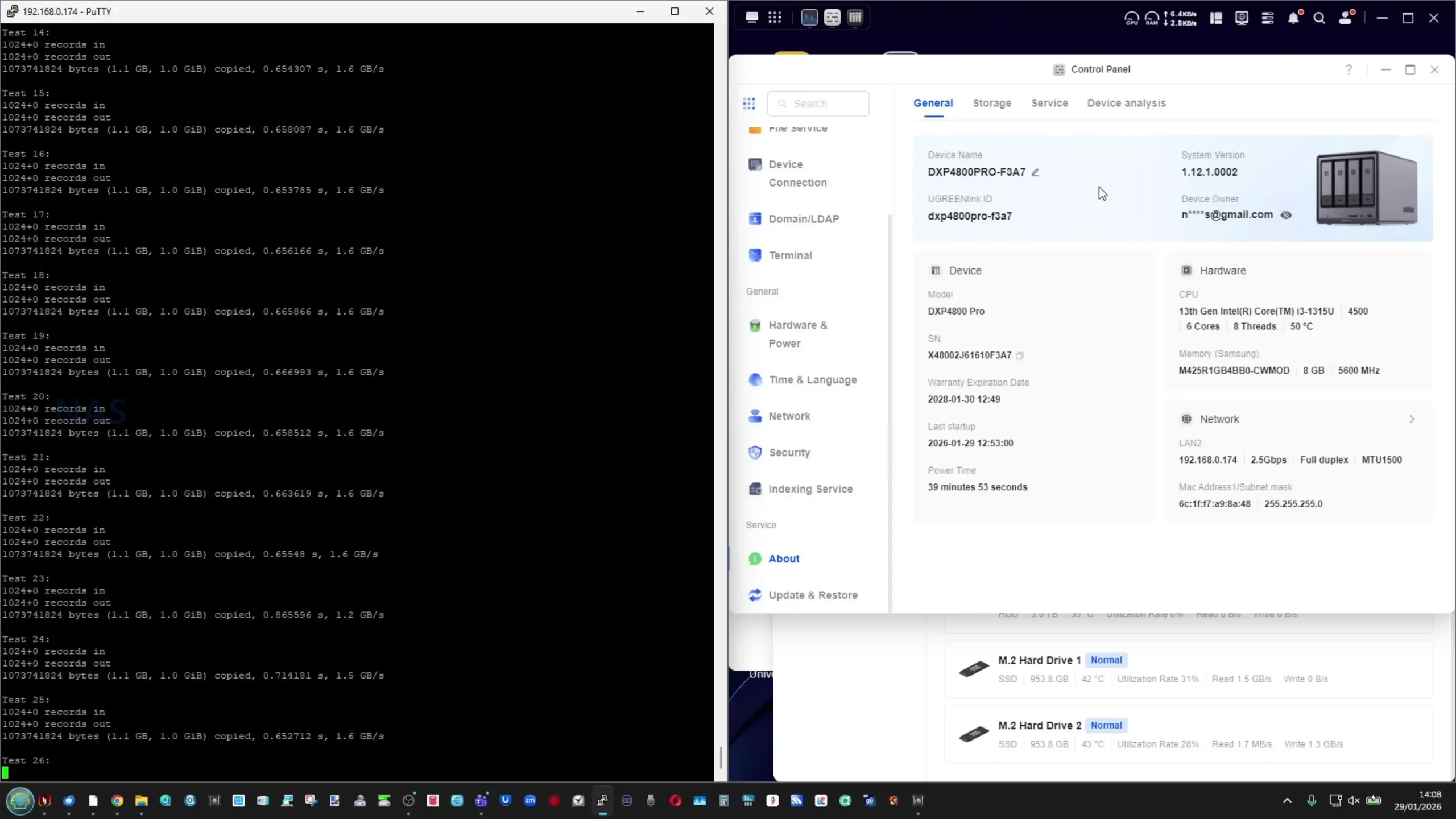
Internal SSD testing via SSH revealed some variation depending on which drives were involved. The system SSD, operating over PCIe Gen3 x4, delivered around 3.1GB/s read and 2.4GB/s write in repeated tests.
Transfers between the two PCIe Gen4 NVMe drives reached higher raw throughput in isolation, but inter SSD transfers were lower than expected (AROUND 1-2 to 1.5Gb/s, suggesting that some operations may still route through system level processes rather than achieving full peer to peer speeds.
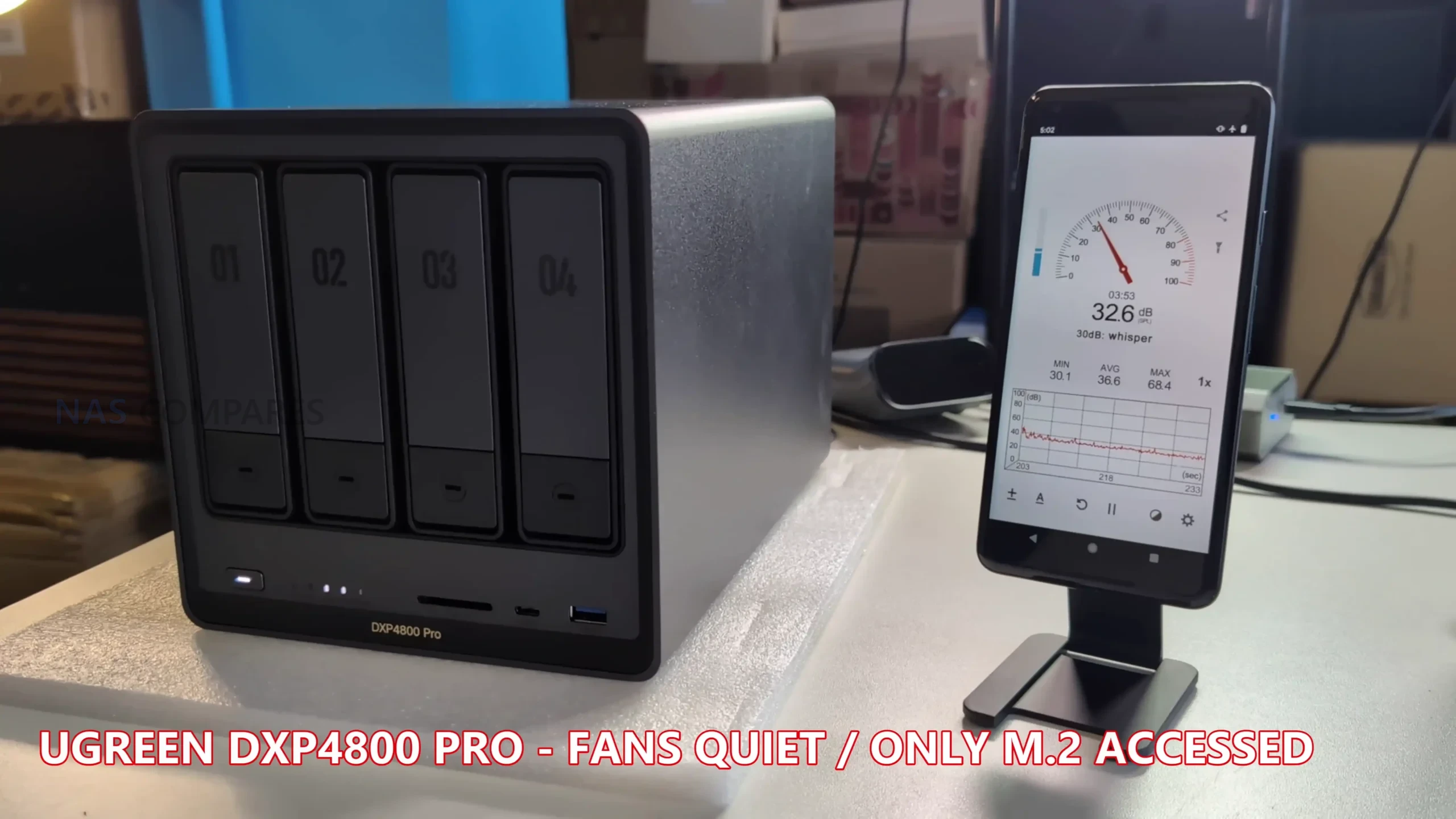
Power consumption is higher than that of entry level NAS models using low power CPUs. With four hard drives installed and both network ports connected, idle power draw measured around 28W. Under moderate load with active disks and light CPU usage, consumption increased to approximately 58 to 59W. At sustained full load, including CPU intensive tasks, active hard drives, NVMe access and network activity, power draw peaked in the low to mid 80W range. Noise levels remained modest at idle, but increased noticeably under heavy drive or cooling loads, particularly when the fan profile was set to prioritize cooling over acoustics.
During extended testing, the DXP4800 Pro maintained generally stable operating temperatures across the chassis and internal components, even under mixed workloads. After a 24 hour period with intermittent access and background activity, external surface temperatures measured in the mid to high 30°C range across most of the enclosure, with the front drive area and drive bays reaching the low 40°C range. The rear fan area and network ports remained cooler, typically in the high 30°C range. Particular attention was paid to the underside of the chassis, where the NVMe SSDs are thermally coupled to the metal base panel using thick thermal pads. Despite the relatively low clearance between the NAS and the desk surface, temperatures at the base remained around 34 to 35°C, indicating that heat dissipation through the chassis was effective. Overall, thermal behavior was well controlled for a compact metal 4 bay NAS, with no signs of excessive heat buildup during sustained operation.
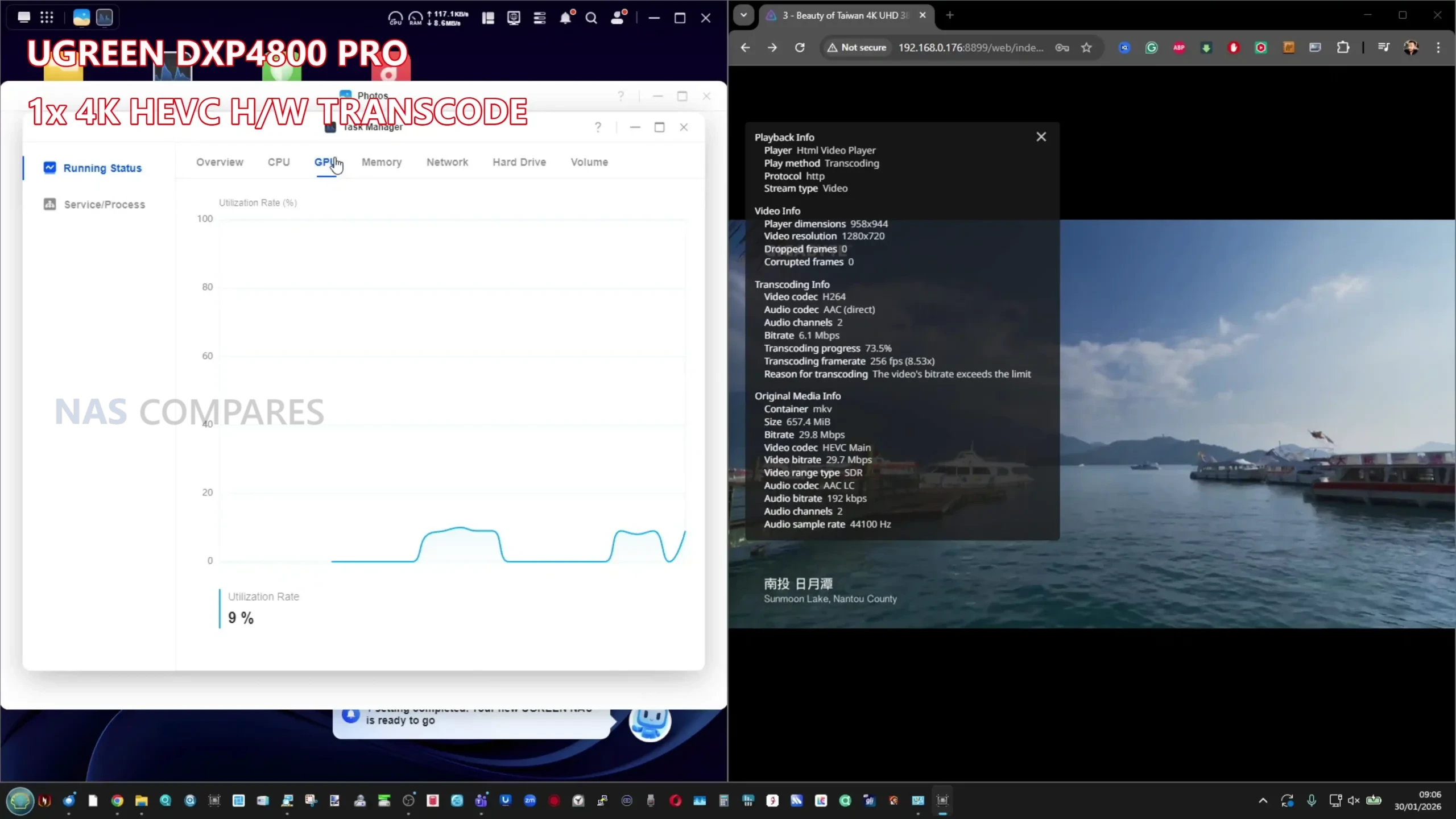
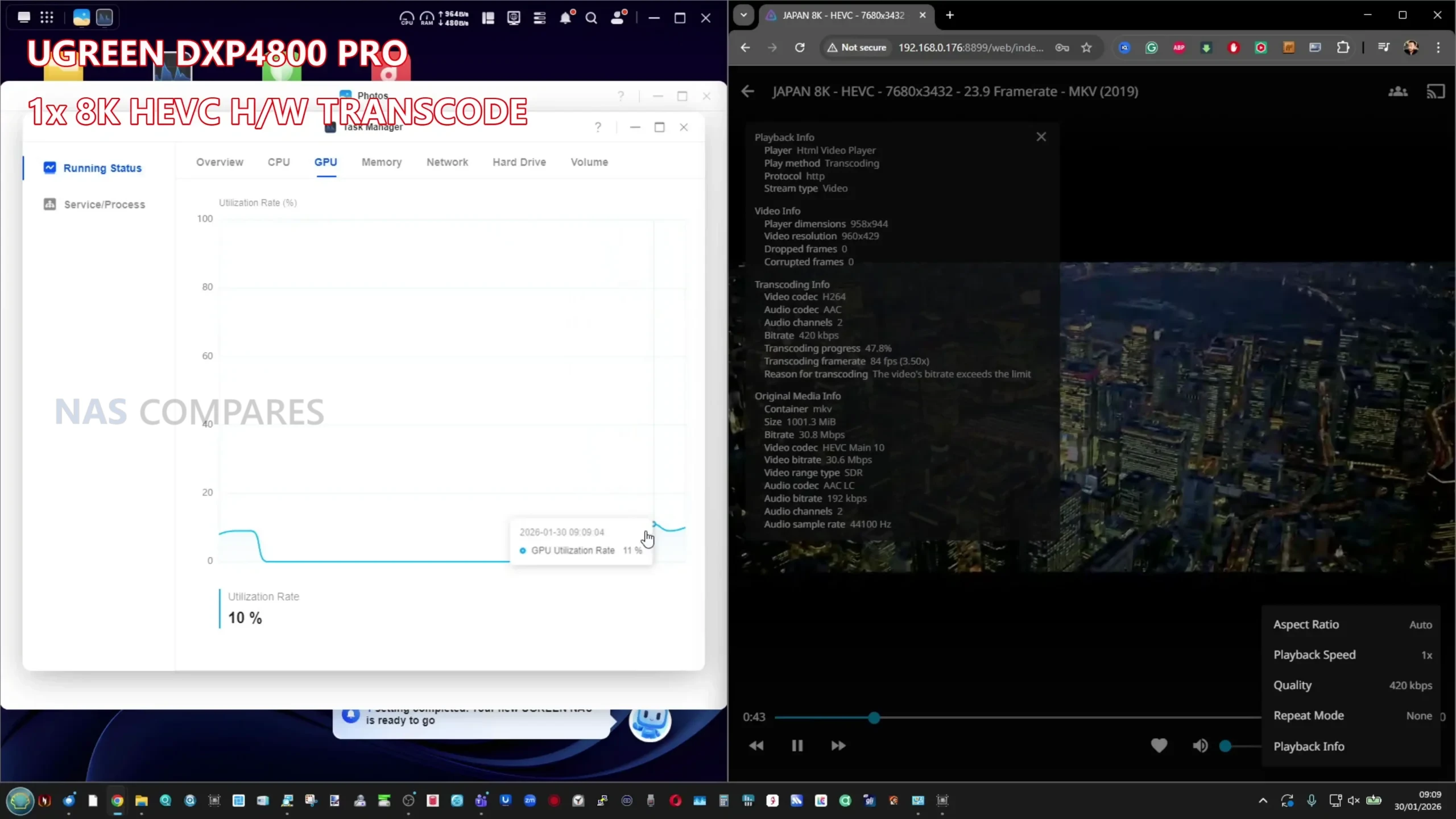
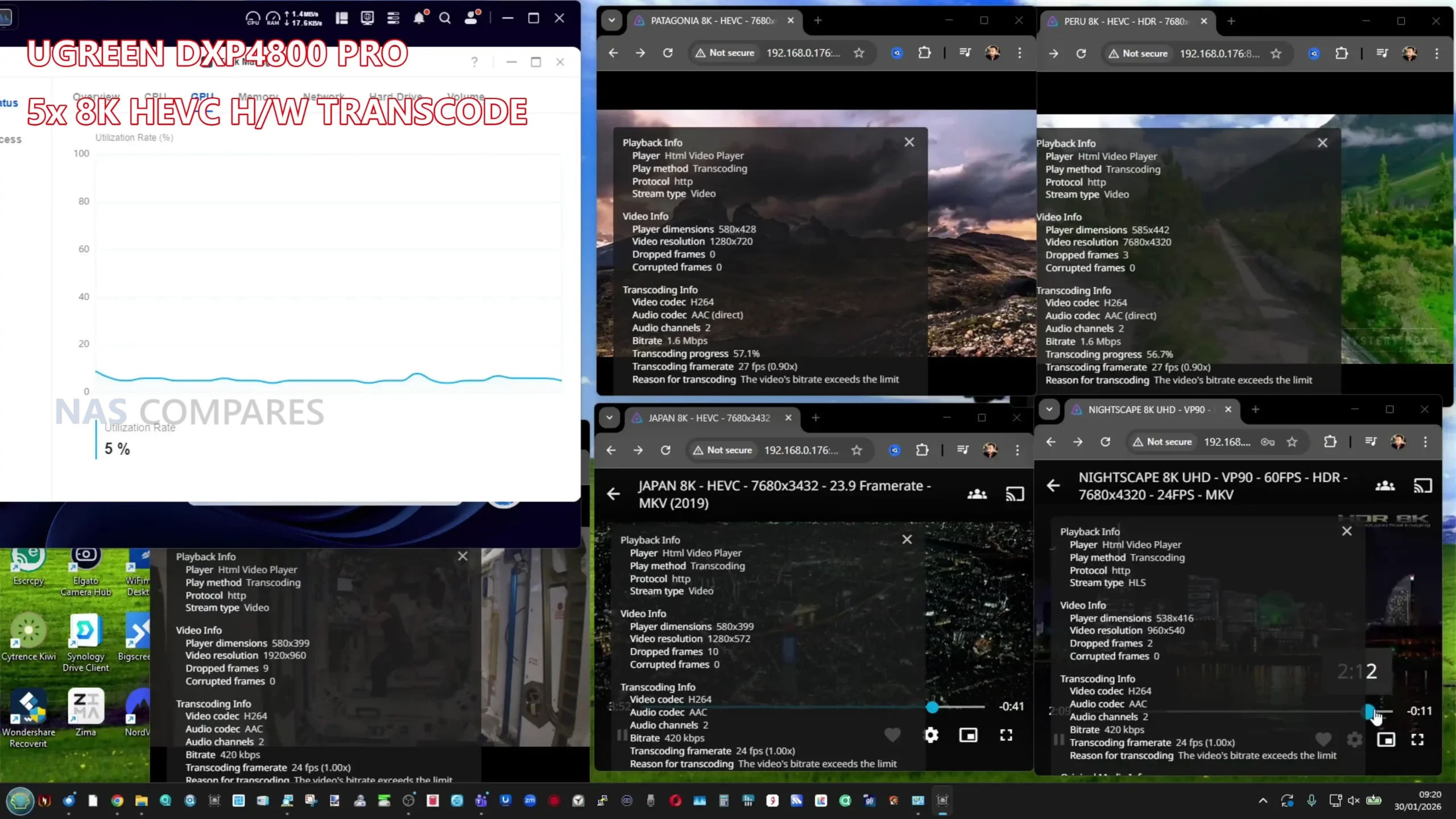
Multimedia testing with Jellyfin showed that the DXP4800 Pro handles both playback and transcoding tasks efficiently for a system in this class. When playing high bitrate 4K HEVC content with hardware transcoding enabled, GPU utilization remained low, typically in the mid single digit percentage range, indicating effective use of Intel Quick Sync. Scaling up to 8K content, hardware transcoding continued to perform reliably, with GPU usage generally staying below the low teens and CPU utilization remaining modest.
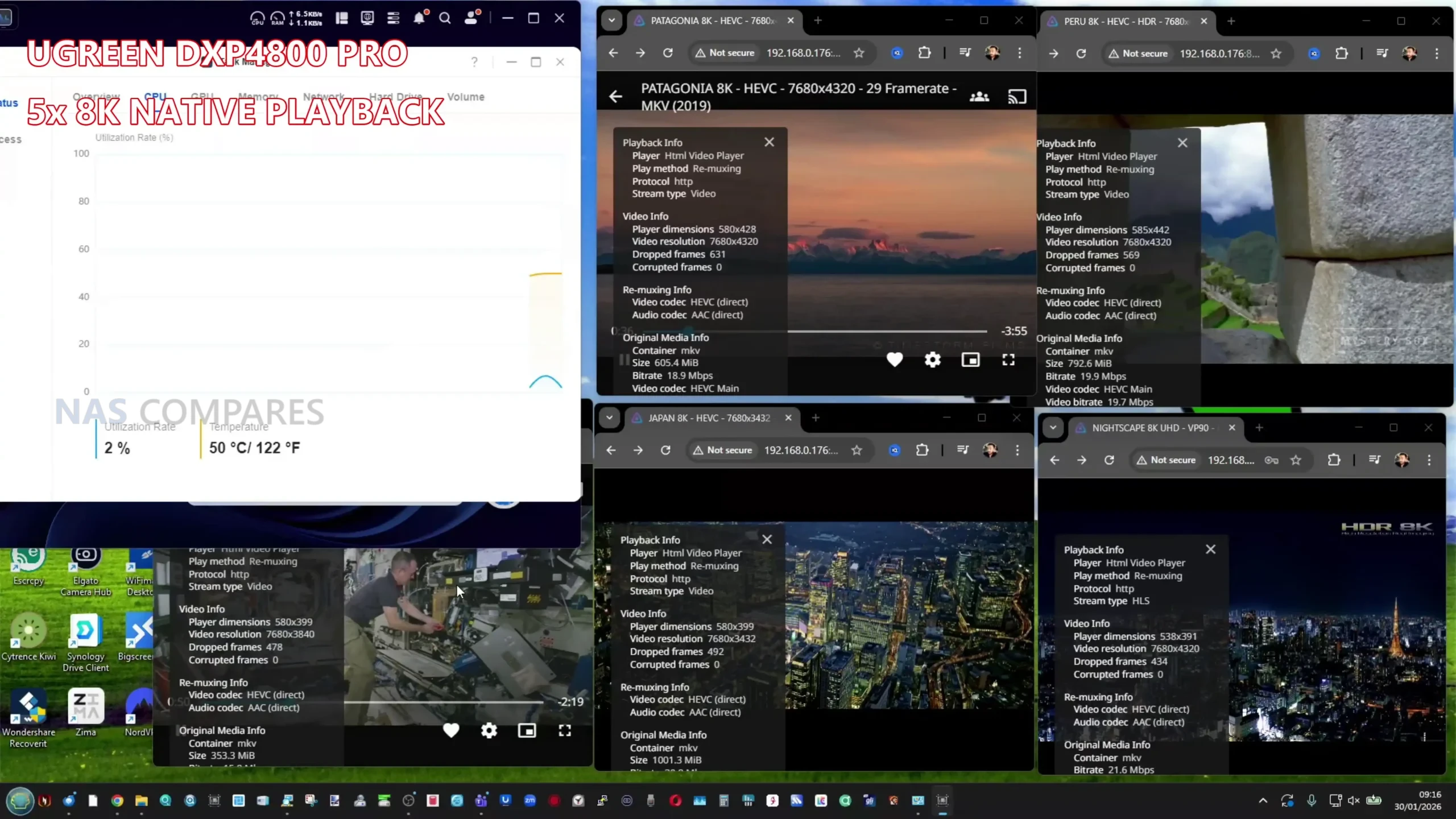
Native playback of multiple 8K files without transcoding placed limited strain on the system, while simultaneous transcoding of several 8K streams pushed CPU usage higher but still within manageable limits. Overall, Jellyfin performance on the DXP4800 Pro demonstrates that the upgraded CPU and integrated graphics provide sufficient headroom for demanding media workloads, particularly when hardware acceleration is used, without causing system instability or excessive resource contention.
UGREEN DXP4800 PRO Review – Software and Services
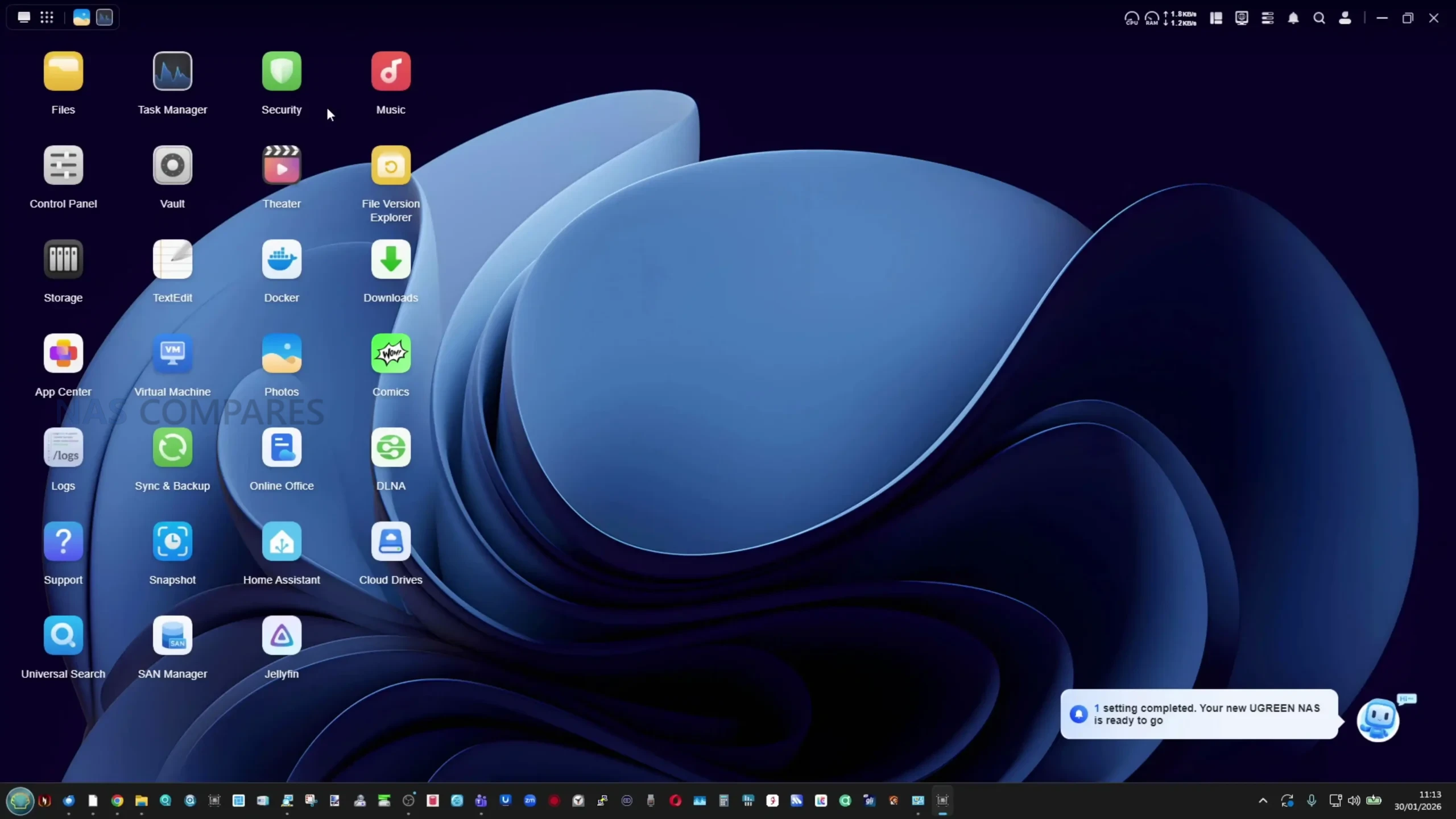
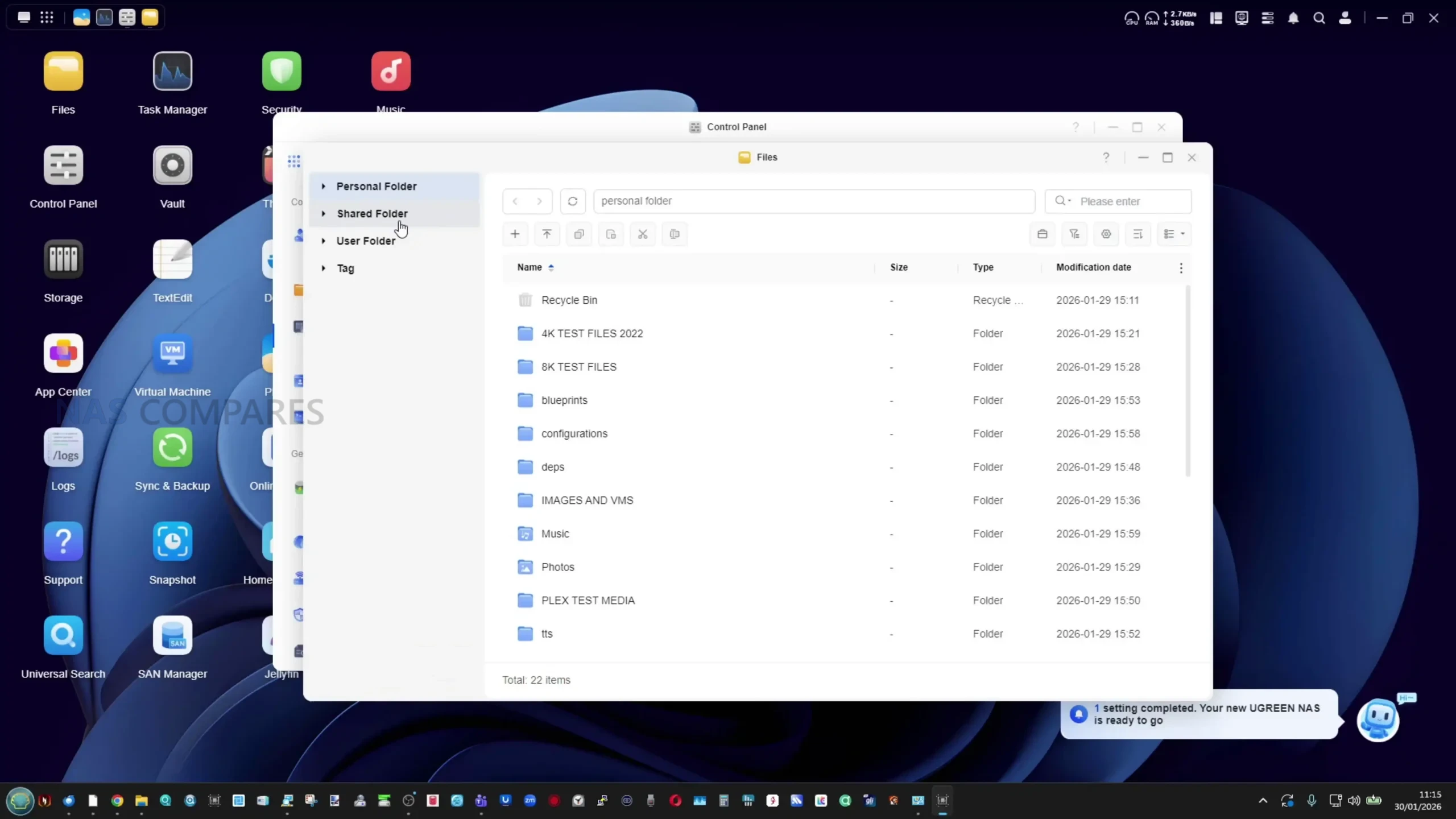
The DXP4800 Pro runs UGREEN’s UGOS Pro operating system, which is accessed through a web browser, desktop client or mobile app. Initial setup is straightforward, with the desktop and mobile applications able to automatically detect the NAS on the local network. Most day to day management tasks are handled through a centralized web interface that groups storage, users, services and security settings in a way that is generally easy to navigate, even when multiple features are enabled at the same time.
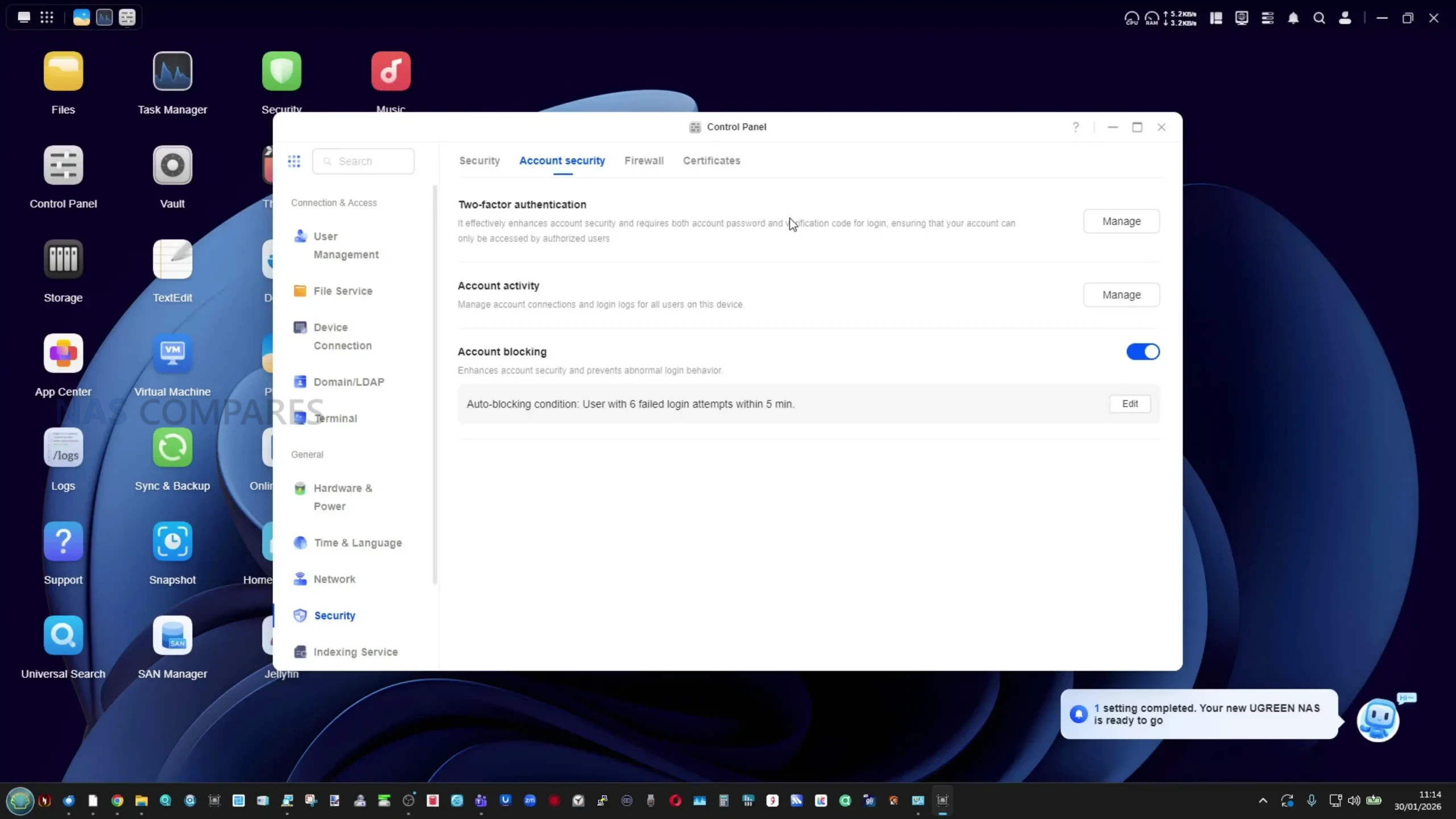
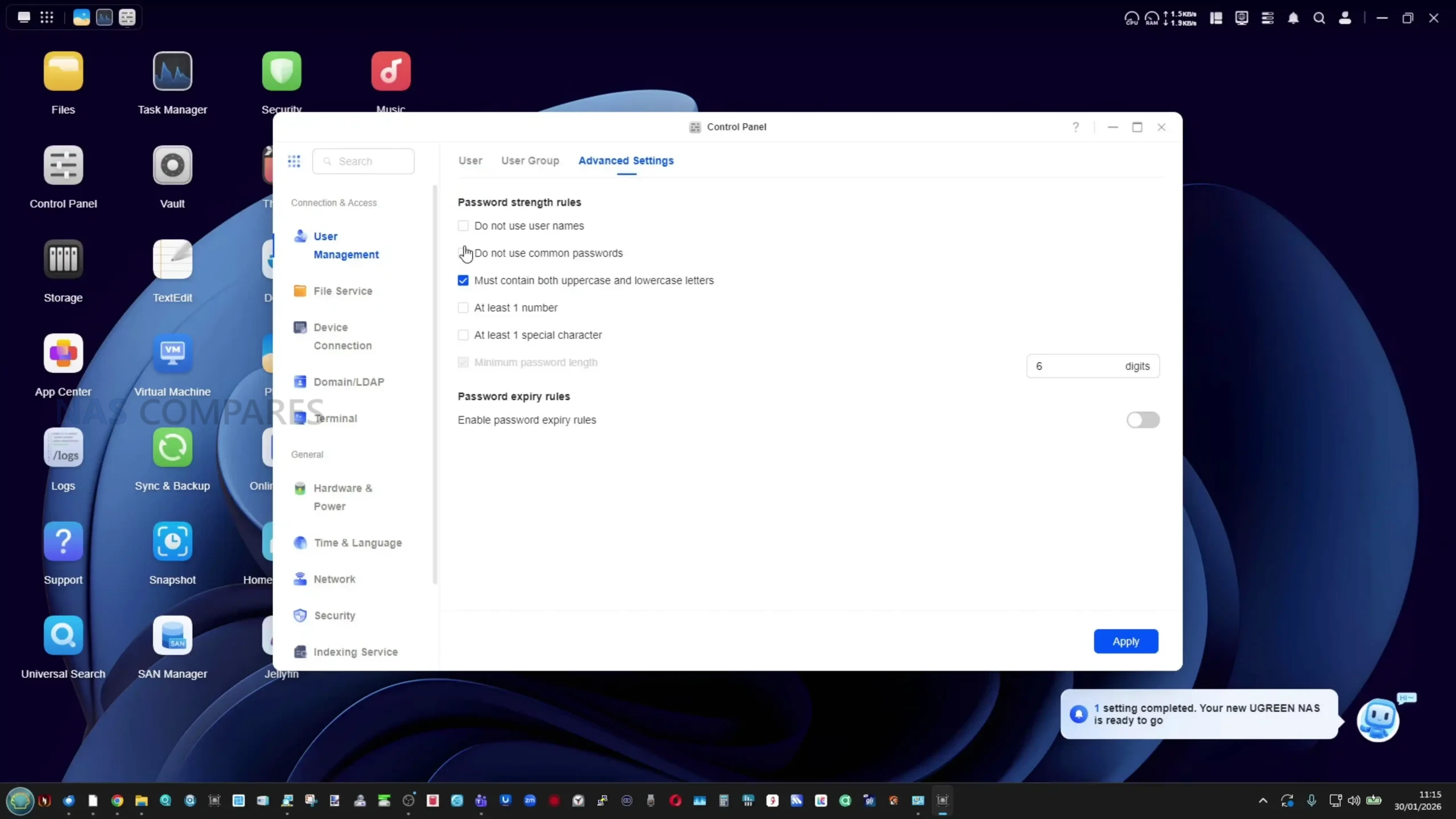
User and security management are handled through the control panel, where password policies, account permissions and two factor authentication can be configured. The system supports individual users and groups, allowing access rights to be defined at both the folder and application level.
Basic security tools such as IP blocking rules and login attempt limits are included, although the built in security scanning focuses primarily on malware detection rather than broader configuration audits, such as identifying weak passwords or exposed services.
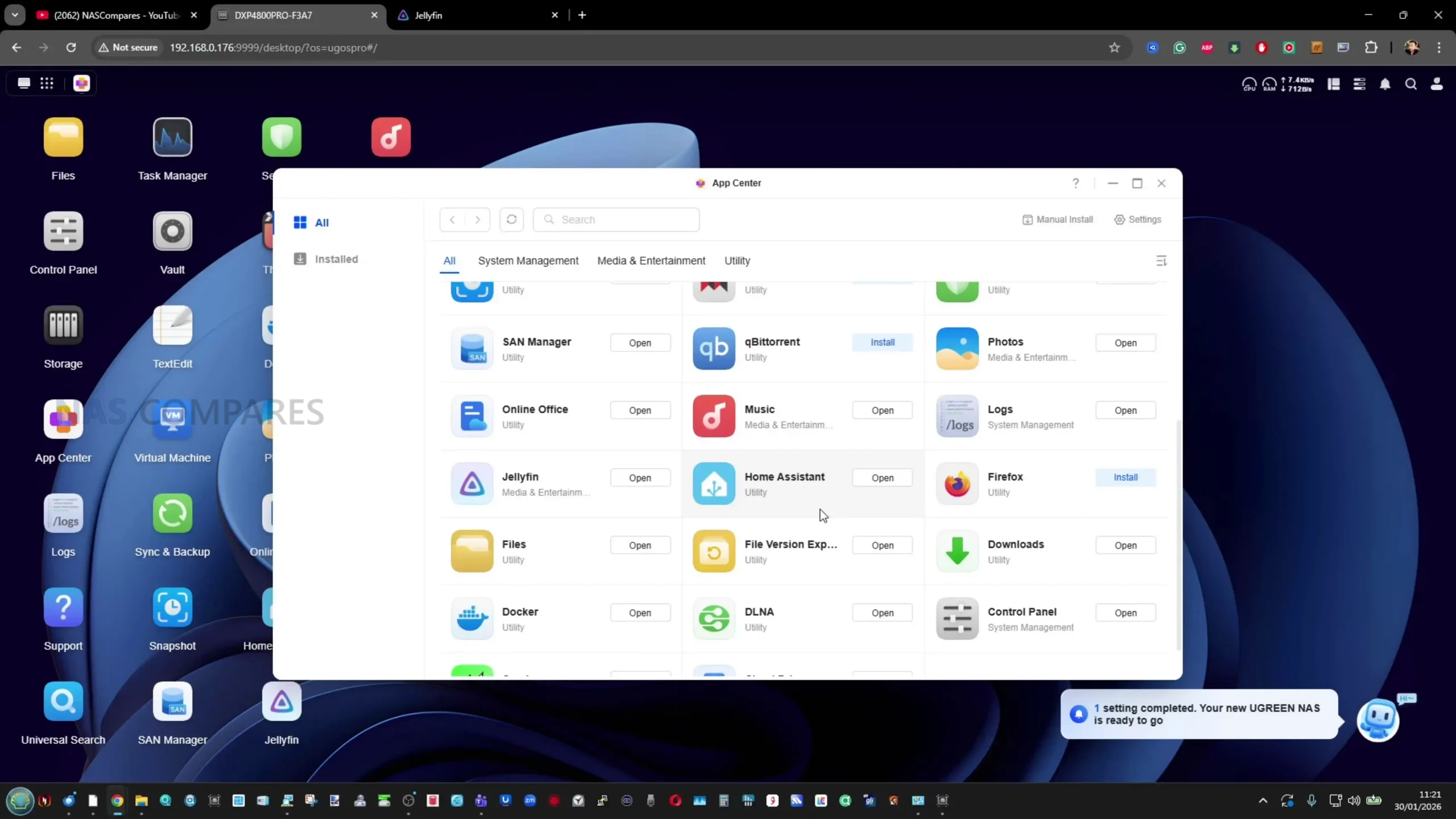
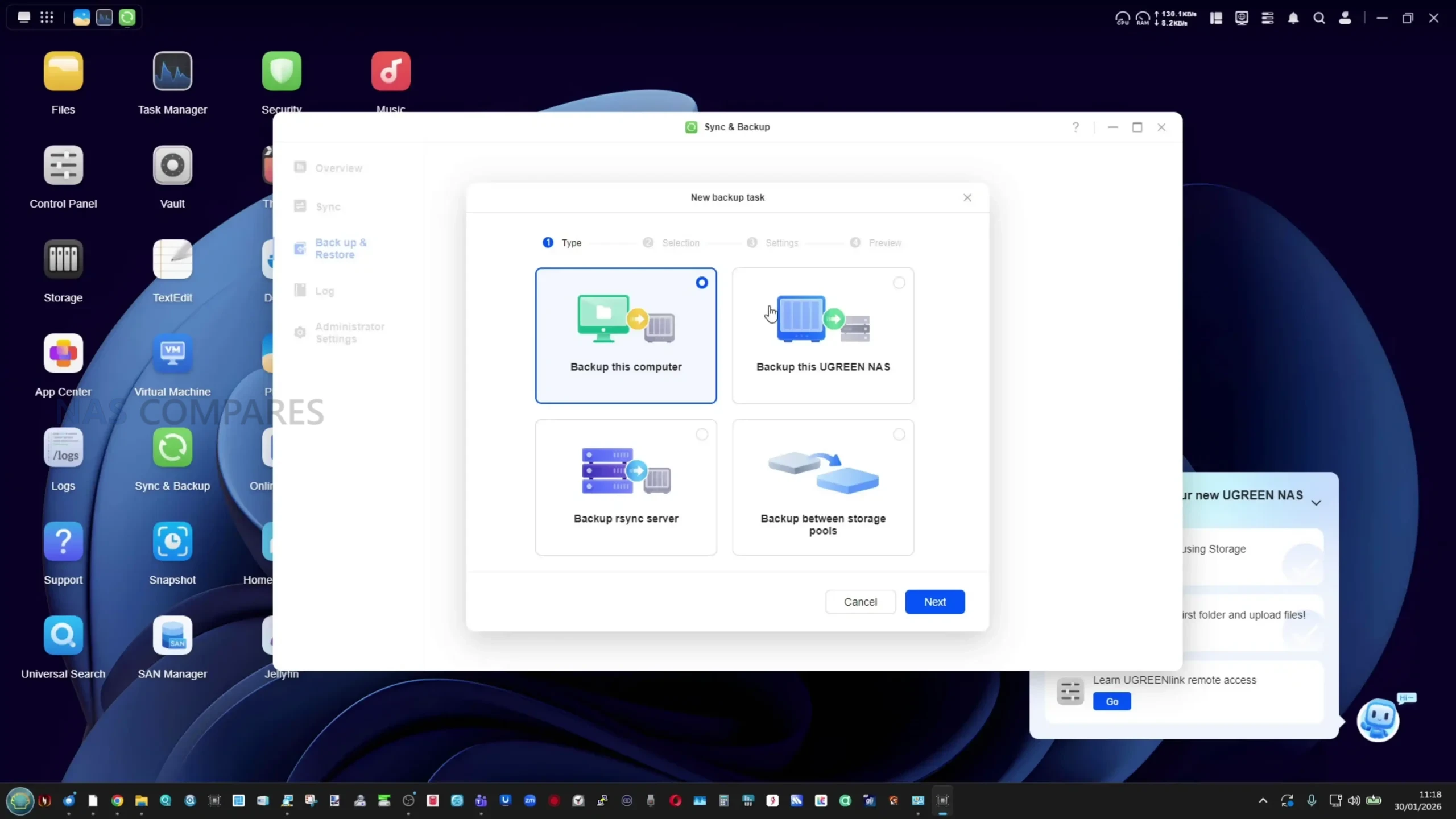
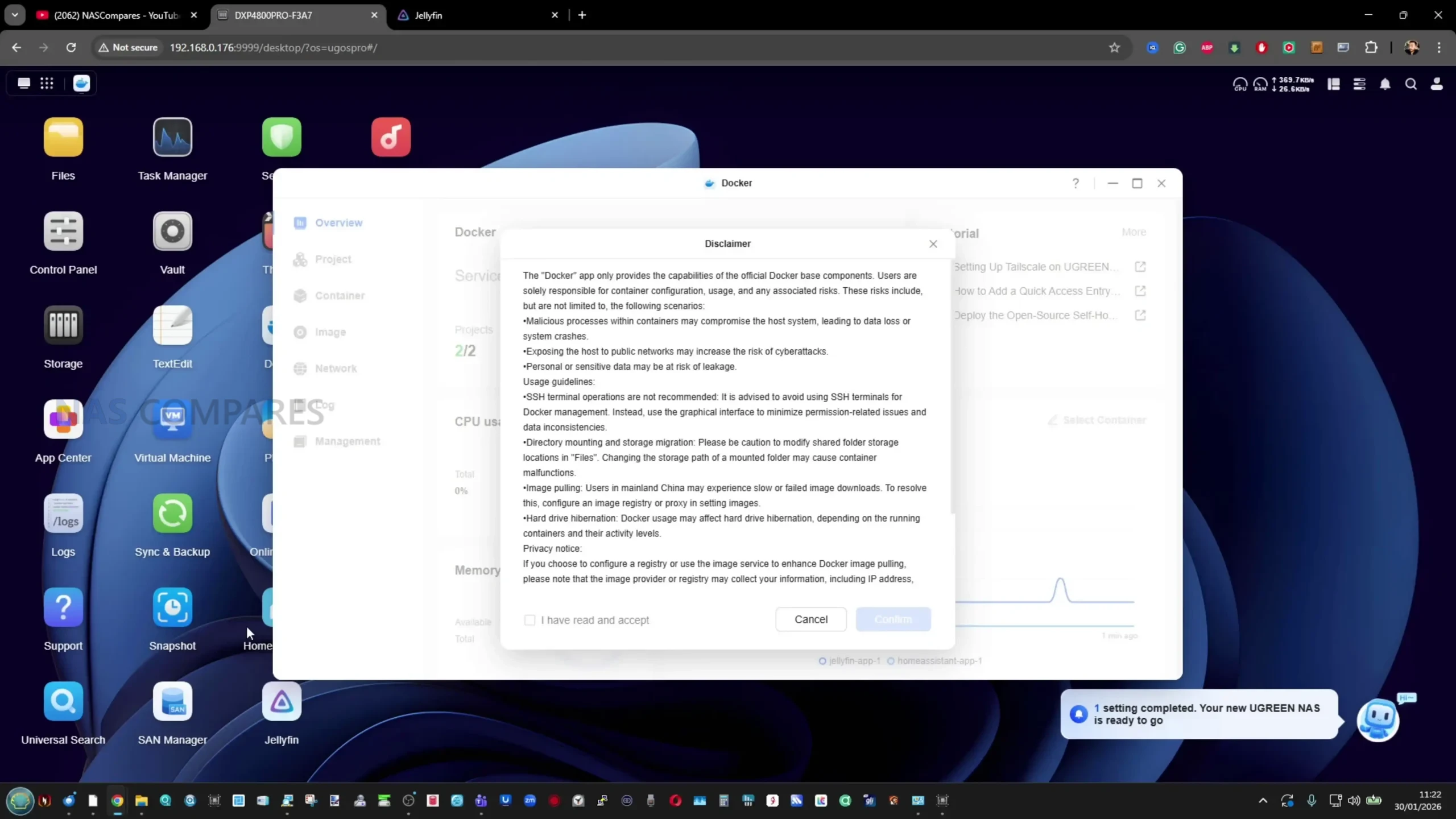
Storage and backup functionality is spread across several integrated tools. Users can create and manage RAID arrays, SSD caches or NVMe storage pools directly from the storage manager. Both EXT4 and BTRFS are supported, with BTRFS enabling snapshot based protection and file versioning. Backup options include local backups, synchronization between folders, backups to other NAS systems and support for iSCSI targets, which may be of interest to users running virtual machines or editing workloads from external systems.
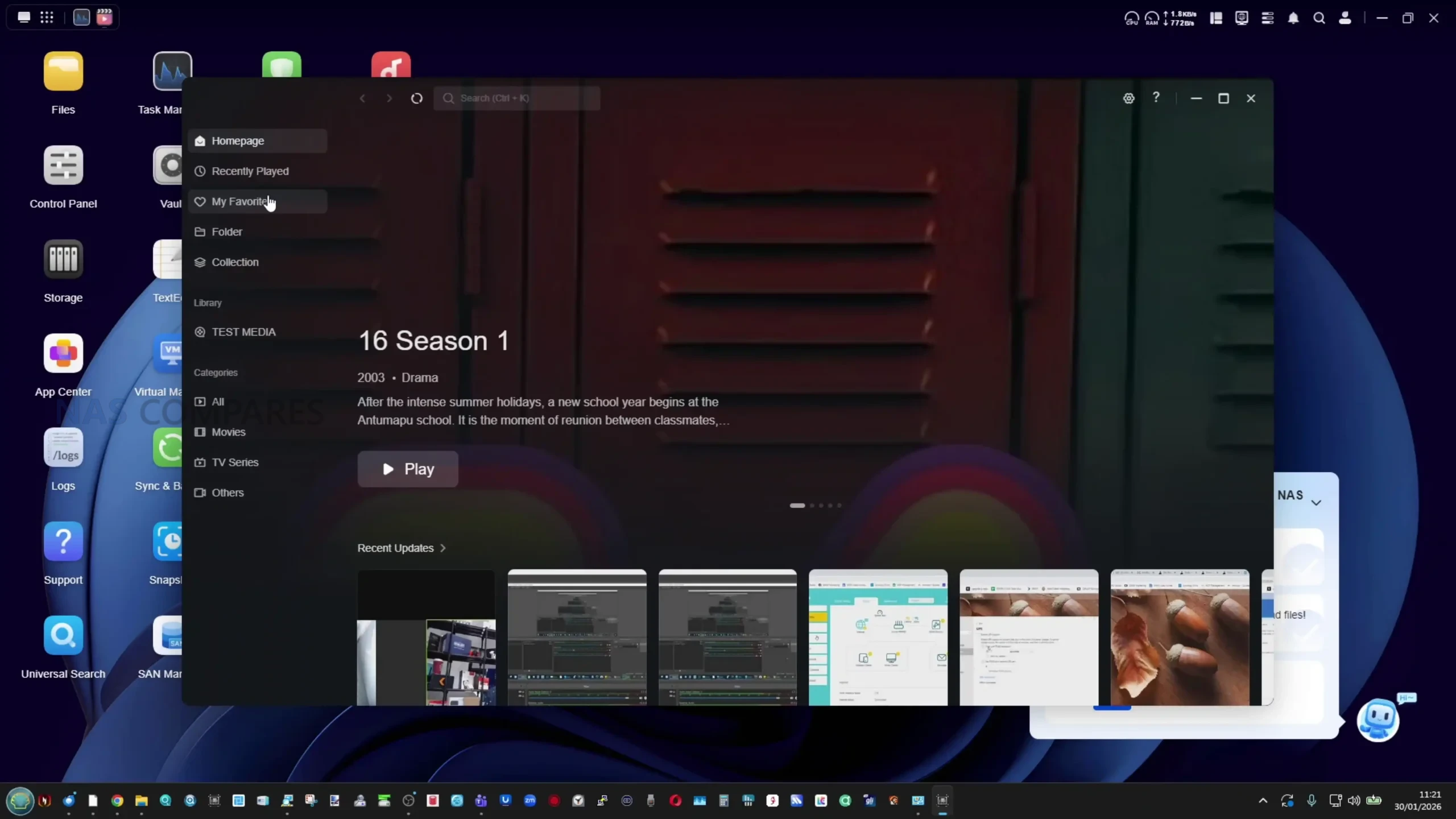
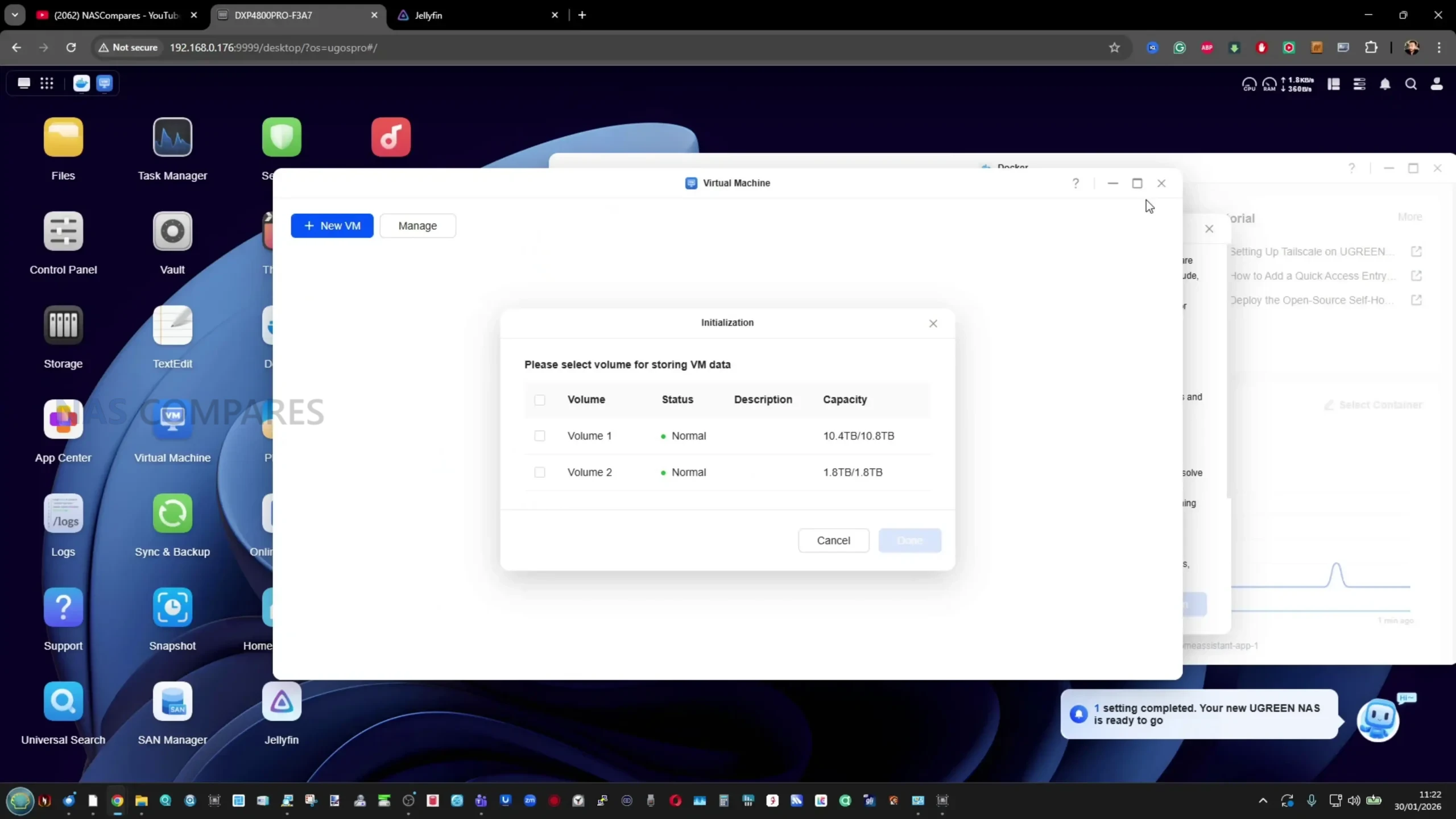
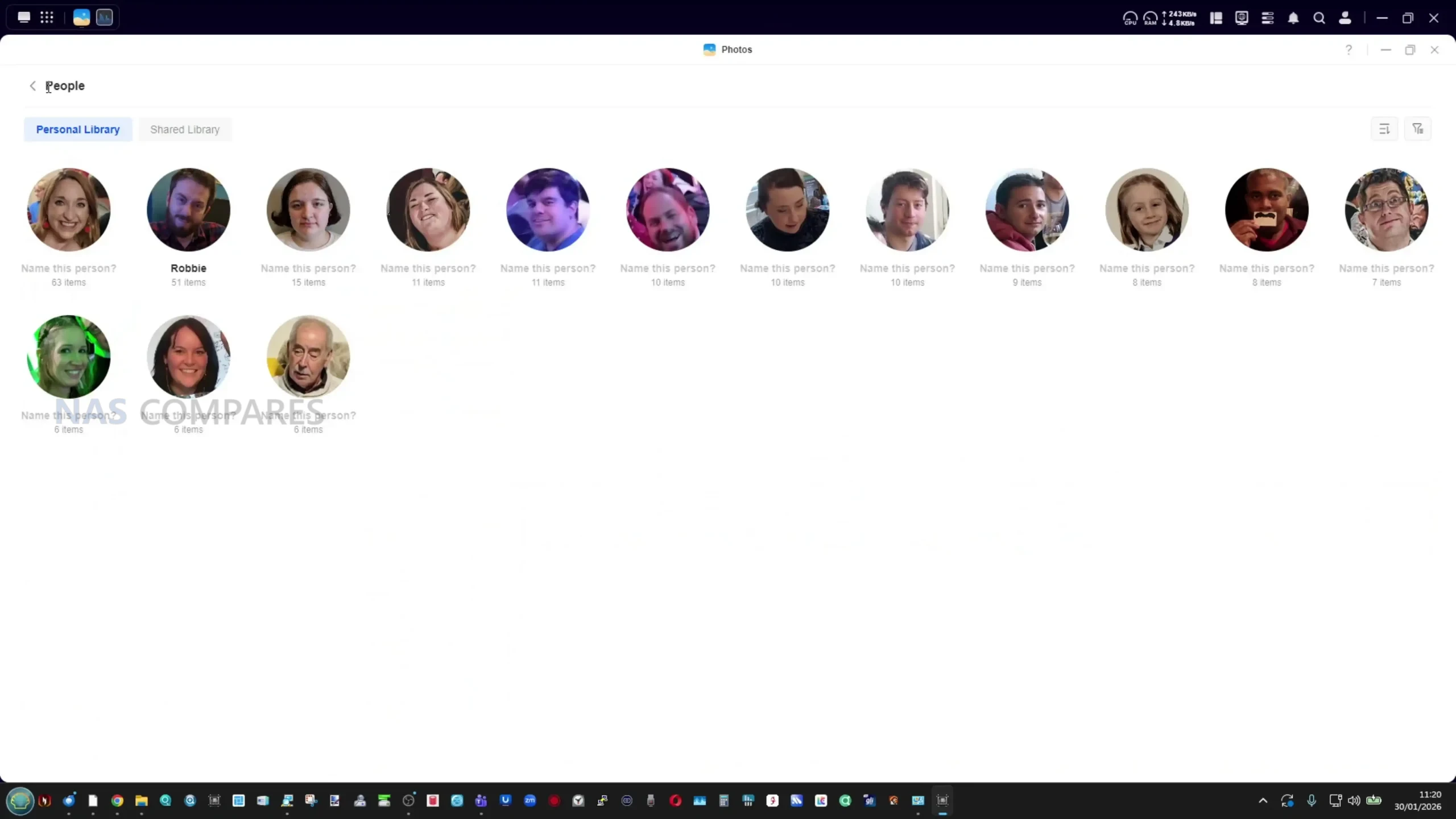
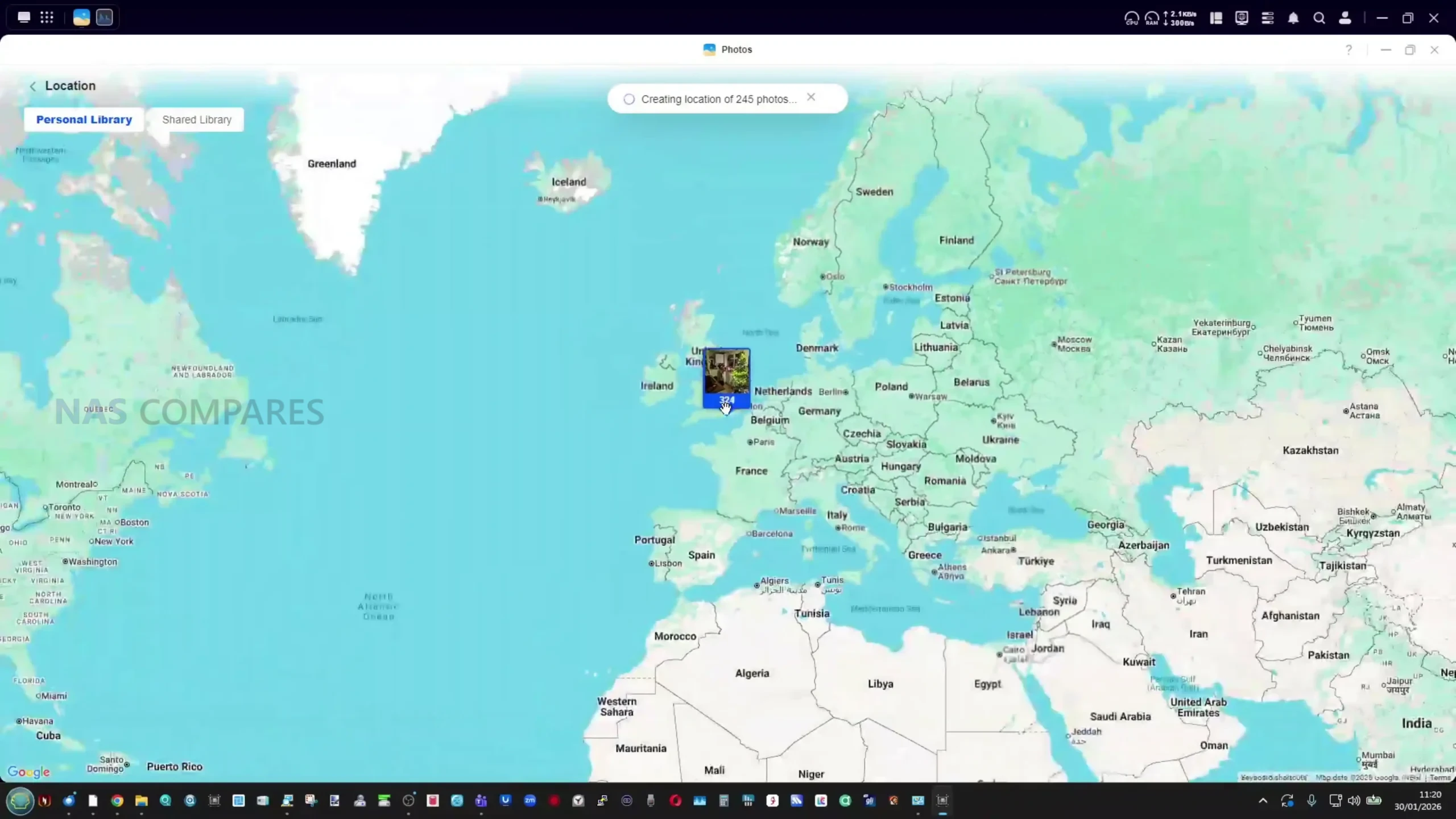
Application support covers a range of common NAS use cases, including Docker containers, a built in virtual machine manager and a growing selection of multimedia tools. Photo management includes AI assisted features such as face recognition, object detection and duplicate filtering, all of which can be enabled or restricted on a per folder basis.
Video playback can be handled through the built in media tools or via third party applications such as Jellyfin, which supports hardware accelerated transcoding. While the platform continues to evolve, the software experience on the DXP4800 Pro is largely defined by the same strengths and limitations seen across the wider UGREEN NAS lineup.
UGREEN DXP4800 PRO vs DXP4800 PLUS – What Is The Difference?
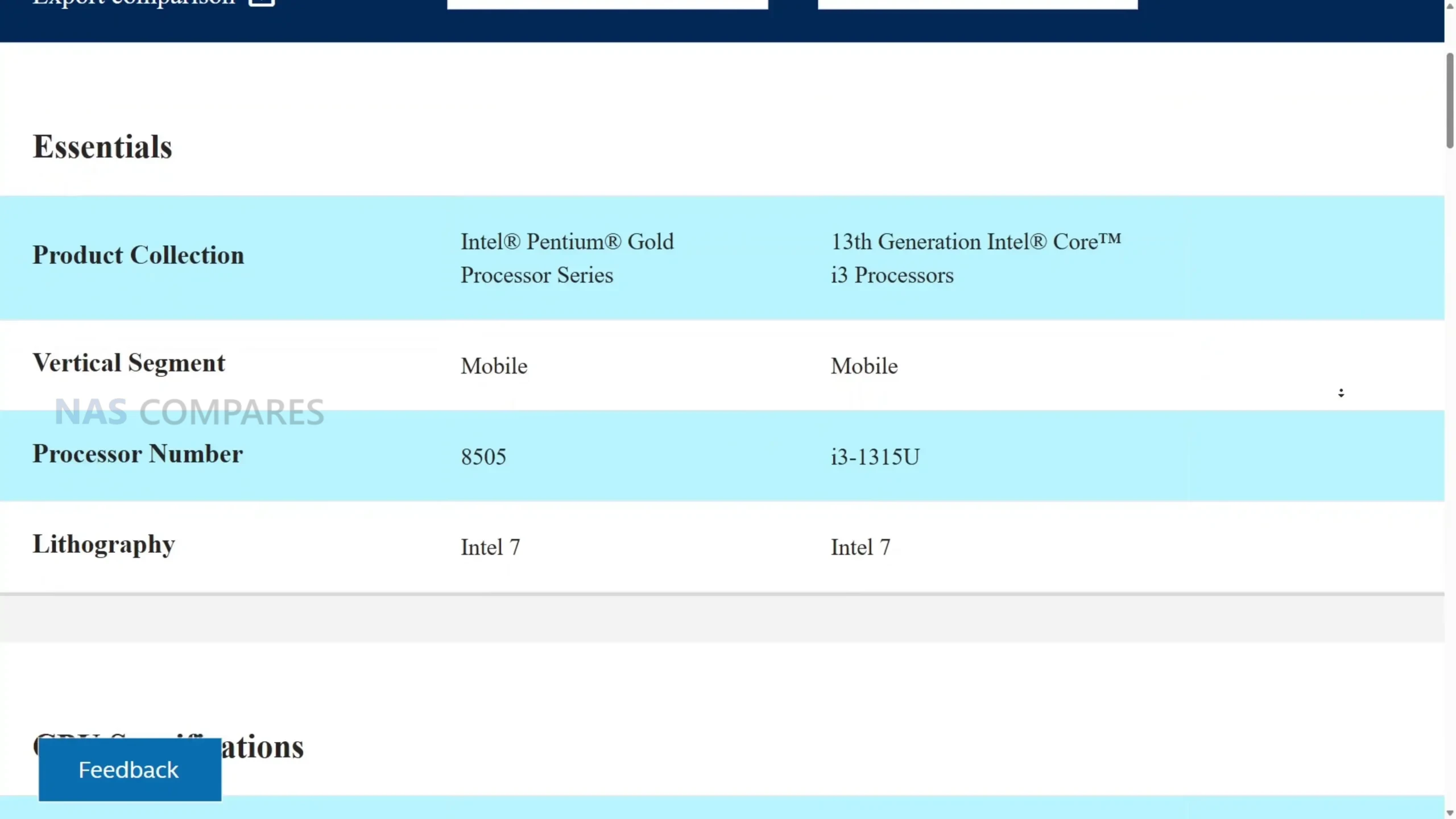
The primary difference between the DXP4800 Pro and the DXP4800 Plus is the processor. The Plus model uses the Intel Pentium Gold 8505, a 12th generation x86 CPU with 5 cores and 6 threads that operates at a variable clock speed and delivers moderate performance for general NAS tasks. The Pro upgrades this to the Intel Core i3 1315U, a 13th generation processor with 6 cores and 8 threads that generally offers higher base and boost clock speeds. In addition to more cores and threads, the i3 benefits from a broader instruction set and enhanced power management, allowing it to sustain higher performance under load without excessive thermal or power draw penalties.
While both CPUs are built on Intel’s “Intel 7” process and share similar TDP behaviour, the Core i3 has a higher turbo frequency ceiling and stronger integrated graphics. This translates to improved performance in parallel workloads, multimedia tasks and certain GPU assisted processes. The integrated graphics in the i3 are also more capable than those in the Pentium Gold, which can assist in hardware accelerated transcoding and UI responsiveness, though neither CPU is designed for heavy graphical workloads. In practical use, the i3’s combination of higher clocks, additional threads and more robust graphics support results in more headroom for Docker, indexing, virtual machines or sustained multi service usage than the Pentium Gold.
Specification
Intel Pentium Gold 8505
Intel Core i3 1315U
Generation
12th Gen Alder Lake
13th Gen Raptor Lake
CPU Cores
5 cores (1P + 4E)
6 cores (2P + 4E)
Threads
6 threads
8 threads
Base Clock
1.2GHz
1.2GHz
Max Turbo Clock
Up to 4.4GHz
Up to 4.5GHz
Cache
8MB Intel Smart Cache
10MB Intel Smart Cache
Memory Support
Up to 64GB DDR5
Up to 96GB DDR5
Memory Channels
Dual channel
Dual channel
Integrated Graphics
Intel UHD Graphics
Intel Iris Xe Graphics
GPU Execution Units
48 EUs
64 EUs
Max GPU Frequency
Up to 1.10GHz
Up to 1.25GHz
TDP Range
15W base, configurable
15W base, configurable
Memory is the second meaningful distinction between the two systems. Both ship with 8GB of DDR5 RAM, support ODECC and use a dual SODIMM layout, but the maximum supported capacity differs. The DXP4800 Plus supports up to 64GB, while the DXP4800 Pro increases this limit to 96GB, allowing more room for virtual machines, larger container stacks or memory intensive applications over time. Outside of CPU and memory, the two models are effectively identical. They share the same chassis, 4 bay SATA layout, dual M.2 NVMe slots, dedicated 128GB system SSD, identical RAID options, dual Ethernet ports (10GbE plus 2.5GbE), front and rear USB connectivity, SD 3.0 card reader and an HDMI output. Power consumption figures and physical dimensions are also the same on paper. As a result, the Pro model is best viewed as a performance focused refinement rather than a broader feature upgrade, with its value tied almost entirely to the stronger CPU performance and higher memory ceiling rather than any changes to storage, networking or overall platform design.
UGREEN DXP4800 PRO Review – Verdict & Conclusions
The UGREEN NASync DXP4800 Pro positions itself as a careful update to the existing DXP4800 Plus rather than a clear generational replacement. The transition to the Intel Core i3 1315U brings tangible improvements in CPU capability, particularly for users running multiple background services, Docker containers or occasional virtual machines. The higher memory ceiling also improves long term flexibility, especially for workloads that scale gradually over time. At the same time, the unchanged chassis, storage layout and connectivity mean that day to day usage will feel very familiar to anyone who has used earlier DXP models. From a broader perspective, the DXP4800 Pro sits in a narrow space within UGREEN’s lineup.
It offers more processing headroom than the Plus model, but it does not fundamentally change what the platform can do. Network performance, storage expandability and external I O remain the same, and the gains are most noticeable under heavier or more sustained workloads rather than light file serving. This makes the system better suited to users who already know they will push the CPU or memory harder, rather than those simply looking for basic network storage. For new buyers, the DXP4800 Pro can be a sensible choice if the price difference over the DXP4800 Plus is reasonable and the additional CPU capacity is likely to be used. For existing Plus owners, the case for upgrading is limited unless current workloads are already CPU constrained. Overall, the DXP4800 Pro is a competent and well executed 4 bay NAS that emphasizes incremental improvement over innovation. Its appeal lies in refinement and stability rather than standout features, and its value ultimately depends on whether those refinements align with the intended use case.
This description contains links to Amazon. These links will take you to some of the products mentioned in today's content. As an Amazon Associate, I earn from qualifying purchases. Visit the NASCompares Deal Finder to find the best place to buy this device in your region, based on Service, Support and Reputation - Just Search for your NAS Drive in the Box Below
Need Advice on Data Storage from an Expert?
Finally, for free advice about your setup, just leave a message in the comments below here at NASCompares.com and we will get back to you.Need Help?
Where possible (and where appropriate) please provide as much information about your requirements, as then I can arrange the best answer and solution to your needs. Do not worry about your e-mail address being required, it will NOT be used in a mailing list and will NOT be used in any way other than to respond to your enquiry.
[contact-form-7]
TRY CHAT Terms and Conditions
If you like this service, please consider supporting us.
We use affiliate links on the blog allowing NAScompares information and advice service to be free of charge to you.Anything you purchase on the day you click on our links will generate a small commission which isused to run the website. Here is a link for Amazon and B&H.You can also get me a Ko-fi or old school Paypal. Thanks!To find out more about how to support this advice service checkHEREIf you need to fix or configure a NAS, check FiverHave you thought about helping others with your knowledge? Find Instructions Here
Or support us by using our affiliate links on Amazon UK and Amazon US
Alternatively, why not ask me on the ASK NASCompares forum, by clicking the button below. This is a community hub that serves as a place that I can answer your question, chew the fat, share new release information and even get corrections posted. I will always get around to answering ALL queries, but as a one-man operation, I cannot promise speed! So by sharing your query in the ASK NASCompares section below, you can get a better range of solutions and suggestions, alongside my own.
Si comme moi, vous aimez la musique, vous allez peut-être voir les artistes jouer sur scène. Depuis que le COVID est passé par là, de nombreux festivals ne sont plus à l'équilibre financier et finissent par disparaître.
Voici une vidéo qui résume bien les problématiques et l'évolution de la consommation de la musique.
Synology vient de mettre en ligne DSM 7.3.2 Update 1, une nouvelle version de son système pour NAS. Cette mise à jour ne propose aucune nouveauté fonctionnelle, mais corrige une faille de sécurité critique. Si votre NAS utilise le service concerné, il est fortement recommandé d’appliquer cette mise à jour rapidement.
Synology DSM 7.3.2 update 1
Cela faisait un moment que Synology n’avait pas publié de nouvelle mise à jour pour DSM. Comme pour les versions précédentes, le contenu de cette release reste minimal. Le journal des modifications ne comporte qu’une seule entrée :
Correction d’une vulnérabilité de sécurité concernant telnetd (CVE-2026-24061).
Derrière cette unique ligne se cache pourtant un correctif important.
Une vulnérabilité critique liée à telnetd
Récemment, une faille de sécurité a été découverte dans telnetd. Il s’agit d’une vulnérabilité critique de contournement de l’authentification, permettant à un attaquant d’obtenir un accès root sans aucune authentification préalable.
Cette faille ne concerne pas uniquement les produits Synology… mais ce dernier a réagi rapidement. Dévoilée publiquement le 21 janvier, la vulnérabilité a été corrigée sans délai via cette mise à jour DSM.
Même si vous n’utilisez pas le service Telnet, le risque justifie l’installation du correctif.
Comment télécharger et installer DSM 7.3.2
Que votre NAS soit exposé ou non à Internet, nous vous recommandons d’installer cette mise à jour assez rapidement. Voici comment l’installer manuellement en suivant ces étapes :
Vous utilisez Claude Code, le CLI d'Anthropic ? Hé bien figurez-vous qu'il y a des fonctionnalités cachées dedans, et pas des moindres ! Un dev nommé Mike Kelly a fouillé dans le JavaScript minifié du CLI et il a découvert un truc dingue : un mode "Swarms" qui transforme votre assistant en véritable chef d'équipe capable de déléguer le travail à plusieurs agents en parallèle.
En gros, au lieu de parler à une seule IA qui code, vous parlez à un team lead. Et ce team lead, lui, il ne code pas... il planifie, découpe les tâches et les dispatche à une équipe de spécialistes qui bossent en même temps. Du coup quand vous validez un plan, il spawn plusieurs agents workers qui partagent un tableau de tâches, communiquent entre eux via une sorte de boîte aux lettres interne, et reviennent vous faire leur rapport une fois le boulot terminé.
Le truc c'est que cette fonctionnalité existe DÉJÀ dans le code de l'outil CLI, mais elle est verrouillée derrière un feature flag côté serveur (un truc qui s'appelle tengu_brass_pebble pour les curieux). Mike a donc créé
claude-sneakpeek
, un outil qui patche le CLI pour forcer ce flag à true. Hop, les fonctionnalités cachées deviennent accessibles. Si vous avez déjà lu
mon article sur Auto-Claude
, vous voyez le genre... Ce sont des agents en parallèle qui bossent pendant que vous faites autre chose, genre lire mes articles pour entrapercevoir le futur ^^.
Ce qui se débloque
Une fois le patch appliqué, vous avez accès à :
TeammateTool : pour spawner des équipes d'agents
Delegate mode : le Task tool peut lancer des agents en arrière-plan
Teammate mailbox : les agents peuvent s'envoyer des messages entre eux
Concrètement, quand vous demandez une tâche complexe, l'IA peut maintenant découper le travail, créer des sous-tâches avec dépendances, et lancer plusieurs workers qui vont bosser en parallèle sur leurs morceaux respectifs. Et ça consomme moins de tokens que de tout faire séquentiellement, contrairement à ce qu'on pourrait croire.
Et voilà, vous pouvez lancer claudesp au lieu de claude pour avoir la version avec les features débloquées !
Le truc bien pensé, c'est que ça installe une instance COMPLÈTEMENT isolée. Votre installation normale de l'outil CLI reste intacte, avec sa propre config, ses sessions et ses serveurs MCP. Zéro interférence.
Comment ça marche sous le capot
Pour les curieux qui veulent comprendre le hack, c'est assez chouette. En fait, le CLI est du JavaScript minifié, et il contient une fonction qui ressemble à ça :
function i8(){if(Yz(process.env.CLAUDE_CODE_AGENT_SWARMS))return!1;return xK("tengu_brass_pebble",!1)}
Cette fonction vérifie le feature flag côté serveur. Le patch la remplace simplement par :
function i8(){return!0}
Bref, au lieu de checker le flag, ça retourne toujours true. Simple mais efficace.
Pour mettre à jour ou désinstaller
npx @realmikekelly/claude-sneakpeek update claudesp
# Mise à jour

npx @realmikekelly/claude-sneakpeek remove claudesp
# Désinstallation
Voilà, si vous êtes fan d'automatisation et que vous voulez pousser le CLI dans ses retranchements, c'est clairement un truc à tester ! Le mode Swarms change la donne pour les projets complexes où paralléliser les tâches fait gagner un temps fou.
Ah ils sont chaud bouillants les développeurs en ce moment ! Surtout quand je tombe sur une pépite comme textarea, je me dis que la recherche des choses simples façon Herta a encore de beaux jours devant elle.
J'sais pas si on peut le qualifier d'éditeur le plus minimaliste du monde mais c'est sûr qu'il n'y a pas de chichi ni de menus à rallonge dedans... Cet outil vit côté client dans votre navigateur et sa particularité c'est qu'il peut stocker ce que vous écrivez directement dans le "hash" (#) de l'URL. En gros, vous tapez votre prose, et hop, l'adresse dans votre barre de navigation s'allonge au fur et à mesure, contenant toutes vos données compressées.
Vos notes resteront au chaud dans votre localStorage (soumis aux quotas habituels de votre navigateur) ainsi que dans cette fameuse URL que vous pouvez copier-coller pour partager votre texte. Textarea utilise l'algorithme deflate pour compresser vos données, ce qui lui permet de maximiser ce qu'on peut faire tenir dans une URL avant de venir heurter la limite de longueur du navigateur.
L'interface de textarea.my - difficile de faire plus épuré (
Source
)
Si vous avez déjà goûté à d'autres éditeurs "Distraction-Free", vous savez à quel point c'est reposant pour l'esprit de ne pas avoir 50 boutons qui clignotent partout. Et comme ici, on est sur du pur Markdown, vous pouvez même bidouiller le style de votre document en modifiant l'élément `` via les DevTools. Et si vous maîtrisez la syntaxe, sachez que l'outil gère même quelques paramètres de style directement dans l'URL. C'est pas piqué des vers !
Le truc marrant dans cet éditeur c'est son /qr qui lorsque vous l'ajoutez à la fin de l'URL vous permet d'avoir un joli QR Code de votre note. Comme ça y'a plus qu'à le scanner et hop, vous avez le document. Pratique pour transférer une note sur votre mobile sans vous embêter avec un service de synchro quelconque.
Voilà, je vous laisse essayer ça, et vous m'en direz des nouvelles. C'est dispo en open source
sur GitHub en cliquant ici
.
PatchMon permet de centraliser le patching de vos machines Linux dans une interface web plutôt réussie.
J'ai entendu parler de cette solution lors d'un live Twitch chez @Nidouille et puis Florian d'IT-Connect a publié une vidéo sur le sujet tout récemment qui permet de découvrir l'outil et de le prendre en main.
Voici donc une alternative à Foreman/Katello (et sa version commerciale RedHat Satellite).

 Connexion



 Intel Core i3 1315U provides noticeably more CPU headroom than the DXP4800 Plus, particularly for multitasking, containers and light virtualization
 Higher power consumption than low power NAS systems, particularly under sustained CPU and disk load















 SUBSCRIBE TO OUR NEWSLETTER


 TRY CHAT