 Connexion
Windows updates in Intune vs. SCCM patch management—April Fools and human hallucinations



The TP-Link TL-WR3602BE is a Wi-Fi 7 travel router built for situations where you want your own network layer on top of whatever internet you can get at the time, such as hotel Ethernet, public Wi-Fi with a captive portal, or a phone acting as a tether. The basic appeal is practical rather than flashy: it aims to reduce friction when you are carrying multiple devices, sharing a single connection, or switching between different uplinks while keeping the same SSID and settings for your own gear. It is a dual band BE3600 model limited to 2.4 GHz and 5 GHz, so it does not add a 6 GHz option, but it does support Wi-Fi 7 features like Multi-Link Operation when paired with compatible clients, which matters more for stability and real-world throughput than headline speeds. On the wired side it pairs a 2.5 Gbps WAN port with a 1 Gbps LAN port, and it can repurpose ports depending on how you set it up, which helps when the “internet source” is not always a standard WAN feed. The USB layout also fits the travel focus: USB-C for power from a wall adapter, laptop, or power bank, plus a USB 3.0 Type-A port that can be used for tethering or basic file sharing from attached storage. VPN support is another key part of the pitch, with WireGuard and OpenVPN available in client and server roles, and a physical button that can be mapped to VPN on and off or other functions, which is useful when you want a quick change without digging through menus. This review looks at what the device actually does in common travel scenarios, including setup flow, captive portal onboarding, mode switching, failover between uplinks, power draw, heat, and the way the web UI and mobile app handle day-to-day control at a price that has moved from its initial launch range down to around the 99 level depending on retailer and promotions.

f you want a travel router that can take hotel Ethernet, public Wi-Fi, or phone tethering and turn it into a single private network for all your devices, the TP-Link TL-WR3602BE largely does that job without much fuss: it is small enough to live in a bag, runs off USB-C power with low wattage draw, stays relatively cool during longer use, and it supports the common travel modes plus VPN features that let you protect traffic across multiple devices from one place, including a physical button you can map to VPN on and off. The wired setup is sensible for travel, with a 2.5 Gbps port plus a 1 Gbps port that can be reassigned depending on how you configure it, and the USB 3.0 port is genuinely useful because it can handle tethering, some USB modem scenarios, or basic file sharing from attached storage. The main downsides are straightforward: there is no 6 GHz band, so you lose the cleanest spectrum option and the widest Wi-Fi 7 channel widths, it has no internal battery so you always need an external power source, and while Multi-Link Operation is supported, it is not “free” on the hardware side and can push CPU and RAM usage higher, which matters if you are stacking MLO with VPN and other features at the same time. The interface and management tools cover most settings people would expect, but the web UI can feel less polished than the mobile app, and switching between operating modes can take a short while to settle. At a street price around the 99 level depending on retailer promotions, it reads as a budget-friendly way into Wi-Fi 7 travel routing with a good set of real-world travel features, as long as you are comfortable with dual-band Wi-Fi 7 and the limits of a USB-powered, small-hardware platform.
 SOFTWARE - 7/10
HARDWARE - 7/10PERFORMANCE - 7/10PRICE - 9/10VALUE - 8/10
SOFTWARE - 7/10
HARDWARE - 7/10PERFORMANCE - 7/10PRICE - 9/10VALUE - 8/10

7.6
PROS
 Dual-band Wi-Fi 7 (2.4 GHz and 5 GHz) with Multi-Link Operation support for compatible clientsWide set of travel-focused modes: Router, Hotspot (WISP), USB Tethering, USB Modem, Access Point, Range Extender, Client2.5 Gbps Ethernet plus 1 Gbps Ethernet, with flexible port role assignment depending on setupUSB-C power input makes it easy to run from a wall adapter, laptop, or power bankLow measured power draw in multi-device use, making portable power practicalGood sustained thermals in longer sessions, helped by extensive chassis ventilationVPN support in client and server roles, including WireGuard and OpenVPN, with a configurable physical button for quick actionsUSB 3.0 port can be used for tethering or basic network file sharing from external storage
CONS
Dual-band Wi-Fi 7 (2.4 GHz and 5 GHz) with Multi-Link Operation support for compatible clientsWide set of travel-focused modes: Router, Hotspot (WISP), USB Tethering, USB Modem, Access Point, Range Extender, Client2.5 Gbps Ethernet plus 1 Gbps Ethernet, with flexible port role assignment depending on setupUSB-C power input makes it easy to run from a wall adapter, laptop, or power bankLow measured power draw in multi-device use, making portable power practicalGood sustained thermals in longer sessions, helped by extensive chassis ventilationVPN support in client and server roles, including WireGuard and OpenVPN, with a configurable physical button for quick actionsUSB 3.0 port can be used for tethering or basic network file sharing from external storage
CONS
 No 6 GHz band, which limits spectrum options and rules out 320 MHz channel operationNo internal battery, so it always depends on an external power source and cableHigher CPU and RAM load observed with Multi-Link Operation, which can reduce headroom for stacked featuresWeb interface can feel dated compared with the mobile app, and mode switching may take 30 to 45 secondsThe MLO architecture is currently E-MLSR MLO (Enhanced Multi-Link Single Radio Operation Mode), which lacks the true aggregation of Sync MLMR (Synchronous Multi-Link Multi-Radio) MLO
| Buy the TP-Link TL-WR3602BE for $99 on Amazon | Buy the TP-Link TL-WR3602BE for $99 on B&H |
 |
 |

The TL-WR3602BE is built around a pocketable, rounded plastic shell that is meant to survive being thrown into a bag without snagging on other gear. It is not the smallest travel router in this category, but it stays within the same general footprint and avoids sharp edges, which makes it easier to pack alongside cables, adapters, and power banks. In day-to-day use, it feels closer to a compact accessory than a “mini home router,” which fits the travel intent.

A noticeable design choice is ventilation. In addition to the usual venting on the base, it has venting around the sides and a vented front panel, which is not always present on small travel models. The external chassis is still plastic, but the amount and placement of venting suggests the device is built with sustained operation in mind, not just short sessions in a hotel room.

The overall finish is smooth and practical, with no gloss surfaces that look good on a product page but show scuffs quickly.

The antennas are mounted on either side and fold with up to 180 degrees of articulation, letting you flatten them for packing or angle them for a better signal path when the router is sitting behind a TV or on a desk.

This style of antenna hinge is common on travel routers, but the travel benefit is straightforward: the unit stores flatter, then quickly shifts into a more usable orientation once powered. There is also a physical toggle button on the body, which adds to the “quick control” feel without relying entirely on an app or web UI.

For storage and carry, the main practical detail is that the router has no internal battery, so it always travels with at least a USB-C power source. That slightly changes what “portable” means here: the router is easy to pack, but the full setup is the router plus a short cable and either the included adapter, a laptop port, or a power bank. If you already carry USB-C power for other devices, it fits into that routine cleanly, but it is not a self-contained unit you can pull out and run without accessories.

The TL-WR3602BE uses a simple physical layout: 1× 2.5 Gbps Ethernet port, 1× 1 Gbps Ethernet port, 1× USB-C power input, and 1× USB 3.0 Type-A port. The Ethernet ports are labeled WAN and LAN, but the router can be configured so the roles are swapped, and in some setups you can treat both as LAN-facing ports if you want a small wired pocket network. The 2.5 Gbps port is mainly there to avoid bottlenecking faster hotel or office uplinks and to give headroom for local wired transfers, while the 1 Gbps port covers the typical “plug a laptop in” use case. As with any multi-gig device, you only see 2.5 Gbps link rates if the upstream gear, cabling, and the connected device all support it.

The USB 3.0 Type-A port is intended as a multi-purpose expansion point rather than a “nice to have.” It supports USB tethering from a phone, USB modem internet in the supported modem mode, and external storage sharing across the local network. On storage, the router can expose attached drives to other devices using common network file methods such as SMB and FTP, which is enough for basic file drop and backup tasks without needing a separate NAS on the road. The trade-off is that storage performance and feature depth tend to be limited by the router’s processor and memory, and it is not positioned as an app-driven platform where you add services on demand. Compatibility is also a real consideration with USB modems and phone tethering, since support can vary by device and carrier behavior.

Power is delivered only through USB-C and the router has no internal battery, so stability depends on the power source you provide. TP-Link specifies 5V/3A, and in normal terms that means it is designed to run from a decent USB-C wall adapter, a laptop USB port, or a power bank that can hold 5V output without sagging under load. In practical use, its low wattage draw makes it easier to keep running from portable power, but it also means you need to plan around power availability in the environment. If the power source is shared, switched off, or flaky, the router will reboot and you lose the session, which can matter if you are mid-meeting or relying on it to stay logged into a captive portal.

Inside the TL-WR3602BE, TP-Link uses a dual-core MediaTek platform (MediaTek 981B) clocked at 1.3 GHz, paired with 512 MB of memory. In plain terms, this is a midrange setup for a travel router: enough to run a full router feature set, basic QoS, VPN, and multi-mode operation without the device feeling underpowered in light to moderate use.

It is not the kind of hardware you see in newer, higher-priced models that use faster quad-core chips, and that difference tends to show up when you stack heavier features at the same time, such as high-throughput VPN, multiple clients, and Wi-Fi 7 Multi-Link Operation. The upside of the more modest platform is that it helps keep power draw down, which matters more on a travel router than it does on a mains-powered home unit.

On the wireless side, it is a dual-band Wi-Fi 7 design offering 2.4 GHz and 5 GHz service, with rated speeds of 688 Mbps on 2.4 GHz and 2882 Mbps on 5 GHz under ideal conditions. It supports Wi-Fi 7 features like Multi-Link Operation, 4K-QAM, and Multi-RU behavior, but real benefit depends on client support because those features require Wi-Fi 7-capable devices to negotiate them. The lack of a 6 GHz radio is a meaningful design constraint because it removes the cleanest spectrum option and the ability to use 320 MHz channels, so the top-end “Wi-Fi 7 showcase” configurations are off the table. In return, the 160 MHz support on 5 GHz still gives it room for high practical throughput in environments that are not too congested, and dual-band keeps the radio design simpler and typically easier on thermals.

The hardware also includes a physical button that can be mapped to functions such as VPN activation, which is a small feature but relevant to how the device is used on the move. Under feature load, the limiting factors tend to be CPU cycles and memory headroom rather than raw link rates. In testing with Multi-Link Operation enabled, the device showed sustained CPU and RAM utilization in the 50% to 60% range with a single MLO client connected over a sustained period, which is a useful indicator that Wi-Fi 7 aggregation is not “free” on the router side. That does not automatically translate into a problem, but it does explain why performance and responsiveness can dip if you combine MLO, VPN, and heavier management features at the same time.

Management is available through a web-based admin interface and the TP-Link Tether mobile app, with the app generally feeling like the more streamlined option for quick changes. The feature set is closer to what you would expect from a small home router than a minimal travel gadget, including guest networks, client management, IPv4 and IPv6 options, port forwarding and related routing controls, plus basic QoS by device. It also supports multiple working modes, so the same unit can act as a router, access point, range extender, client, hotspot (WISP), USB tethering router, or USB modem router depending on what the environment provides. Remote access through a TP-Link ID is optional, and the core configuration does not depend on subscribing to anything.
 |
 |
For VPN use, the router supports both client and server roles across several protocols, including WireGuard and OpenVPN, and it also lists PPTP and L2TP options. The practical angle here is that you can run a VPN for specific situations without changing settings on every connected device, and the physical button can be used as a quick on-off for VPN rather than hunting through menus. TP-Link’s own performance ratings list WireGuard up to 450 Mbps and OpenVPN up to 350 Mbps, which helps set expectations that encrypted throughput will be lower than a direct connection. In normal use, that means it is suitable for typical travel workloads like browsing, work apps, and streaming, but it is not aimed at sustaining multi-gig speeds through a VPN tunnel.
 |
 |
In basic travel workflow, two timings stood out. From a cold boot, measured from connecting USB power through to a laptop joining the router Wi-Fi and reaching the admin dashboard, the process took 1 minute and 43 seconds. With the router already powered and a laptop already connected to its Wi-Fi, joining a public Wi-Fi network and reaching the captive portal login page took 42 seconds using the built-in connection tools. Put together, that places the “out of the bag to captive portal page” path at a little over 2 minutes and 30 seconds in that scenario, which is relevant because travel routers are often judged by how quickly they become usable rather than by peak throughput claims.
|
 |
Mode switching was more variable than initial boot. The router tends to retain the last operating mode used, which helps if your routine is consistent, but switching between modes on the fly could require roughly 30 to 45 seconds to reconfigure and settle.
 |
 |
Failover behavior between uplinks was generally quick: in a setup where the router had both a public Wi-Fi uplink and a tethered phone connection available, removing the tethered phone did not drop the active session, and reintroducing tethering was followed by about a 5 second delay before the router picked it back up. The practical takeaway is that dual-uplink travel setups can work without long interruptions, but the device may make its own decisions about which uplink is preferred at a given moment.
 |
|
Power draw and heat behavior were both measured under a multi-device load. With 3 Wi-Fi 7 clients connected and 2 wired clients connected, observed power use ranged from about 2.84 W to about 4.12 W, which keeps it within easy range for laptop power or a modest power bank. Under Multi-Link Operation, the internal platform showed sustained CPU and memory use around 50% to 60% with 1 MLO client over a 10 minute window, suggesting the feature has a real processing cost even at low client counts.


Thermals stayed controlled over several hours of mixed use, with readings around 32°C on the top, 33°C to 34°C around ports, about 34°C on the side panels, and about 29°C to 30°C on the vented front panel, which aligns with the heavy venting built into the chassis. There is also an eco mode system that lets you shift between boost, balanced, and eco behavior, which is not essential for most users but does provide a manual lever for trading responsiveness for lower power use.
|
|

The TL-WR3602BE lands as a practical travel router with a modern headline feature set, but it is clearly built around a few deliberate trade-offs. You get Wi-Fi 7 support in a dual-band design, plus the flexibility of multiple operating modes, a usable mix of wired and wireless connectivity, and VPN options that can be controlled without much friction. The constraints are easy to define up front: there is no 6 GHz band, so you are not getting the cleanest spectrum option or the wider 320 MHz channels that some people associate with “full” Wi-Fi 7 setups. It also has no internal battery, so the travel setup always includes a power source, and under Multi-Link Operation the device can show noticeably higher CPU and memory load, which is worth keeping in mind if you plan to run MLO alongside VPN and other services at the same time.
On balance, it comes across as a router that prioritizes travel usability over chasing the highest spec sheet ceiling. The measured behavior supports that, with reasonable boot and captive-portal onboarding times, quick recovery when a tethering source is removed and reintroduced, low wattage draw that fits typical USB power situations, and controlled temperatures during longer sessions. The main “con” side is less about any single flaw and more about expectations: if you are buying specifically for 6 GHz, or you want more processing headroom for heavier, always-on features, this is not the most future-proof option even if it is labeled Wi-Fi 7. At a street price around the 99 level depending on retailer and promotions, it makes sense as a cost-focused way into Wi-Fi 7 travel routing, especially for people who want a consistent personal network when moving between hotels, cafés, and tethering, and who are comfortable with the limits of a dual-band, USB-powered design.
| Buy the TP-Link TL-WR3602BE for $99 on Amazon | Buy the TP-Link TL-WR3602BE for $99 on B&H |
|
|
| PROs of the TP-Link BE3600 Travel Router | CONs of the TP-Link BE3600 Travel Router |
|
|
 SUBSCRIBE TO OUR NEWSLETTER
 Join Inner Circle Subscribe
This description contains links to Amazon. These links will take you to some of the products mentioned in today's content. As an Amazon Associate, I earn from qualifying purchases. Visit the NASCompares Deal Finder to find the best place to buy this device in your region, based on Service, Support and Reputation - Just Search for your NAS Drive in the Box Below
 Need Help?
Where possible (and where appropriate) please provide as much information about your requirements, as then I can arrange the best answer and solution to your needs. Do not worry about your e-mail address being required, it will NOT be used in a mailing list and will NOT be used in any way other than to respond to your enquiry.
[contact-form-7]
Need Help?
Where possible (and where appropriate) please provide as much information about your requirements, as then I can arrange the best answer and solution to your needs. Do not worry about your e-mail address being required, it will NOT be used in a mailing list and will NOT be used in any way other than to respond to your enquiry.
[contact-form-7]
 TRY CHAT
Terms and Conditions
TRY CHAT
Terms and Conditions
 Ko-fi or old school Paypal. Thanks!To find out more about how to support this advice service check HEREIf you need to fix or configure a NAS, check Fiver
Have you thought about helping others with your knowledge? Find Instructions Here
Ko-fi or old school Paypal. Thanks!To find out more about how to support this advice service check HEREIf you need to fix or configure a NAS, check Fiver
Have you thought about helping others with your knowledge? Find Instructions Here





|
 |




Mise en lumière par le New York Times le 2 avril 2026, Medvi incarne une nouvelle génération de start-up dopées à l’IA : peu d’employés, une croissance fulgurante et un marketing largement automatisé. Mais derrière cette réussite éclair, plusieurs zones d’ombre interrogent.

En pleine restructuration pour se concentrer sur ChatGPT, OpenAI a laissé tomber plusieurs projets annexes comme la génération de vidéos Sora ou la création de hardware. Pourtant, et à la surprise générale, le groupe de Sam Altman a annoncé le rachat de TPBN, le talk show tech le plus populaire du moment aux États-Unis.

Le cinéaste sud-coréen Bong Joon-Ho, oscarisé pour Parasite, délaisse les plateaux de tournage réels pour sa première incursion dans le cinéma d'animation. Prévu pour 2027, Ally s'annonce comme une odyssée sous-marine ambitieuse, mêlant humour, émotion et prouesses technologiques.
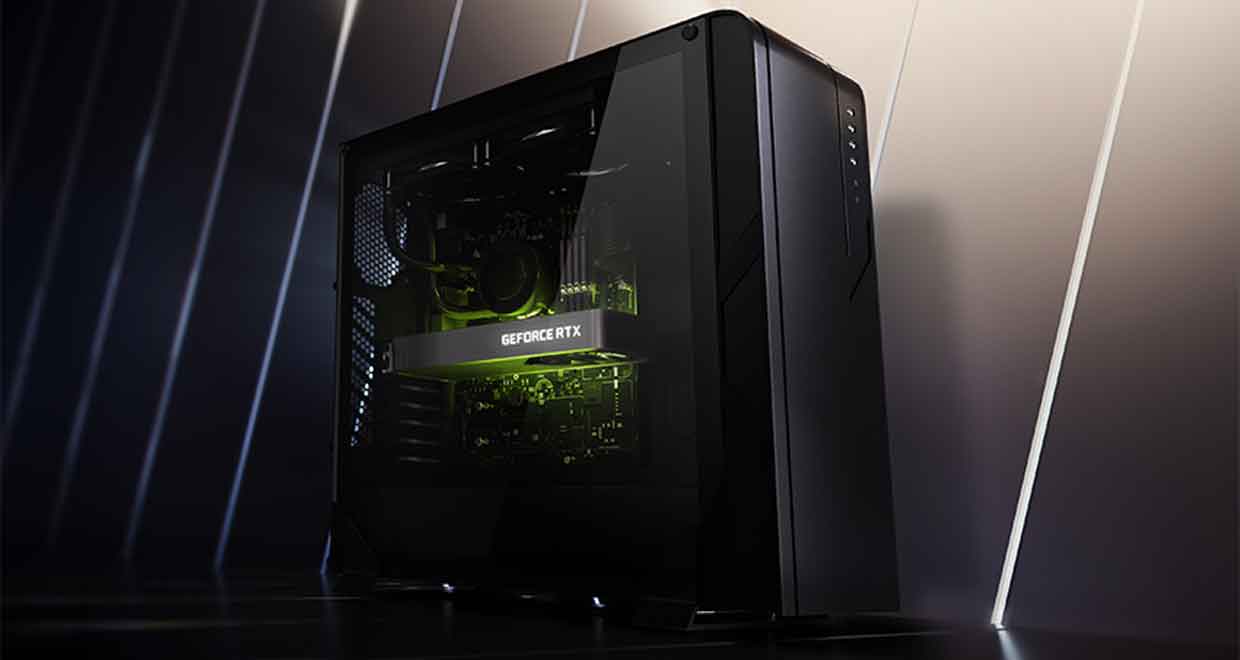 De nouvelles recherches montrent qu’une carte graphique NVIDIA équipée de GDDR6 peut peut servir de passerelle vers toute la mémoire du processeur hôte.
Cet article GeForce et GDDR6, des attaques Rowhammer peuvent ouvrir un accès root à tout le PC a été publié en premier par GinjFo.
 En matière de réseau sans fil, MSI vient de présenter la carte fille Herald BE9400. Elle assure une connectivité Wi-Fi 7 et Bluetooth 5.4.
Cet article Herald BE9400, MSI lance une carte fille PCIe Wi-Fi 7 et Bluetooth 5.4 a été publié en premier par GinjFo.
Un outil de piratage dangereux pour iPhone, connu sous le nom de DarkSword , a fuité sur GitHub, ce qui engendre de nouveaux risques pour les utilisateurs d’anciens appareils Apple. Tribune – Un puissant outil de piratage pour iPhone, lié à des campagnes de logiciels espions actives, a fuité sur GitHub, faisant craindre que les […]
The post Une faille de sécurité sur iPhone pourrait transformer votre appareil en outil d’espionnage first appeared on UnderNews.Dans le cadre d’une initiative conjointe avec AFRIPOL, Kaspersky a dispensé des formations en cybersécurité à des représentants des forces de l’ordre issus de 23 pays africains, portant sur les fondamentaux des activités des centres d’opérations de sécurité (SOC) ainsi que sur les techniques avancées de chasse aux menaces (threat hunting). Tribune – Alors que […]
The post Kaspersky et AFRIPOL organisent une formation conjointe en cybersécurité à destination des forces de l’ordre africaines first appeared on UnderNews.


Suite à la fuite du code de Claude Code d’Anthropic, voici les commentaires et l’analyse de Melissa Bischoping, Senior Director, Security and Product Design Research chez Tanium, en matière de cybersécurité. « Les fuites de code source suscitent souvent la crainte de voir des informations propriétaires et des actifs stratégiques exposés. Si la fuite de Claude […]
The post Fuite de code chez Claude Code : les commentaires de Melissa Bischoping de Tanium first appeared on UnderNews.