❌

Vue lecture

Il y a de nouveaux articles disponibles, cliquez pour rafraîchir la page.

Razer Reclusa X Mini 65% review: A surprising $49.99 enthusiast gaming keyboard that nails the basics

Razer is on a tear this year for gaming keyboards ranging from a new Huntsman low-profile to the $499 Huntsman Signature Edition and a few in between like the new-fangled $139 Razer Huntsman V3 HE Magnetic.

But Razer is known for its top-tier and expensive gaming accessories, which makes this new Razer Reclusa X Mini 65% such an intriguing addition, as it's only $49.99.

Even my jaw dropped a bit when I was getting briefed on it, as very few Razer products hit below $50, especially when not on sale.

Of course, the $49.99 question is it any good? To be fair, I'm a bit biased against 65% keyboards (I miss my media keys), but I've spent the last 10 days using it, and let's just say the price wasn't the only surprise.

Let's get into the pros, cons, and who this is for.

Razer had no input, nor did it see the contents of this review, prior to publication.

Razer Reclusa X Mini 65%: Price and specifications
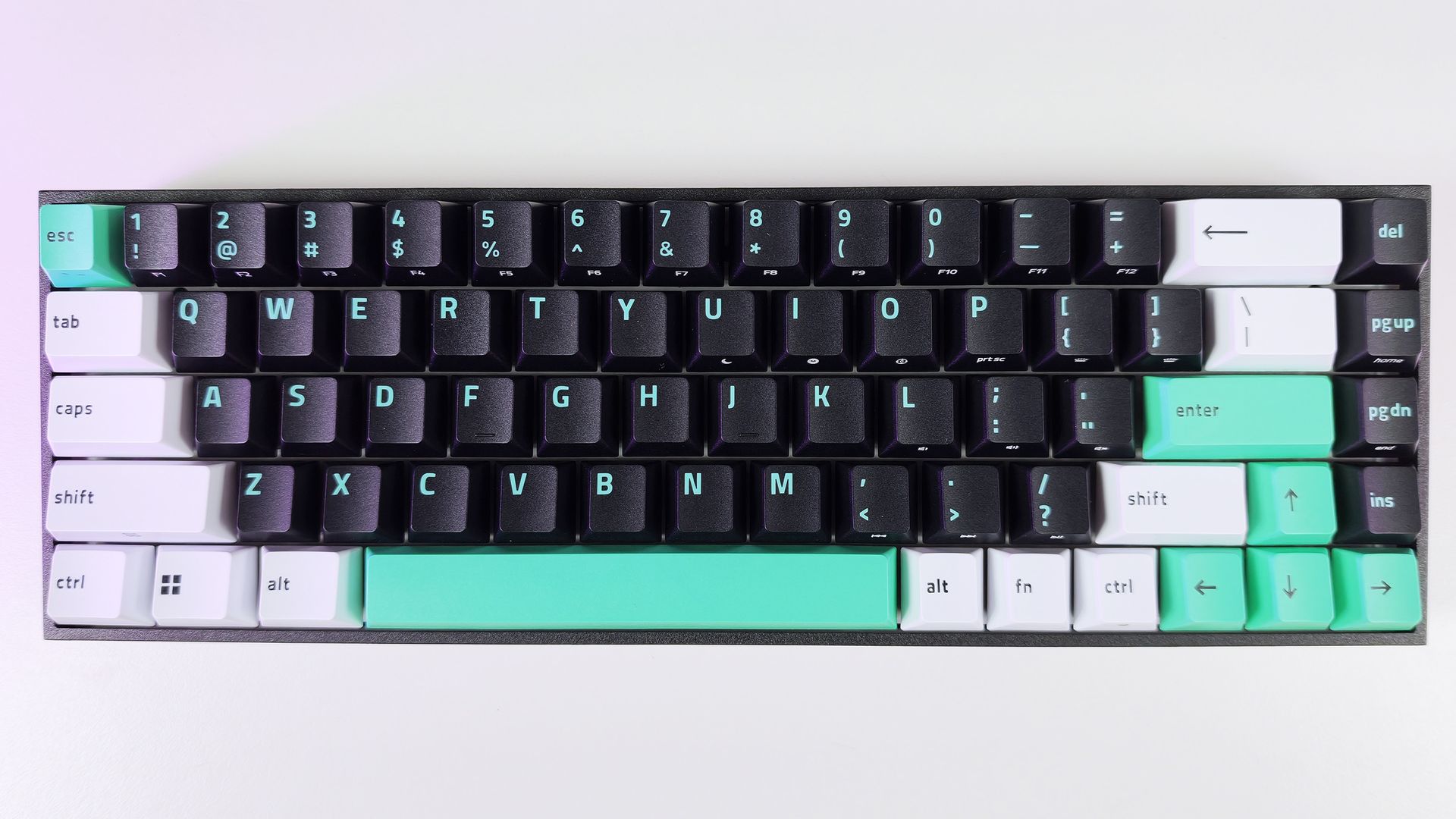
Direct top-down view of the Razer Reclusa X Mini 65% keyboard showing its black, white, and teal keycaps in neutral light.

Direct top-down view of the Razer Reclusa X Mini 65% keyboard showing its black, white, and teal keycaps. (Image credit: Daniel Rubino)

The Reclusa X Mini 65% launches at just $49.99 (Razer.com, Amazon; I expect Best Buy to get it eventually), making it one of the most affordable mechanical keyboards Razer has released in recent memory. That's especially notable when you consider it isn't cutting corners on enthusiast-friendly features such as hot-swappable switches, south-facing LEDs, pre-lubed stabilizers, per-key RGB lighting, and support for Razer's competitive gaming technologies.

Among its highlights are Razer's Gen-3 Orange tactile switches, compatibility with both 3-pin and 5-pin mechanical switches, dual-layer silicone dampening, and a new tri-tone visual design that immediately separates it from the rest of Razer's keyboard portfolio.

Specs

  • Layout: 65%
  • Switches: Razer Gen-3 Orange Tactile
  • Hot Swap: 3-pin and 5-pin compatible
  • RGB: Per-key Razer Chroma RGB
  • Polling Rate: Up to 1,000Hz
  • Sound Dampening: Dual-layer silicone
  • Keycaps: Doubleshot ABS, tri-tone design
  • Features: Snap Tap, Snap Flex, Dual-Keypress Priority
  • Price: $49.99 USD

What I like

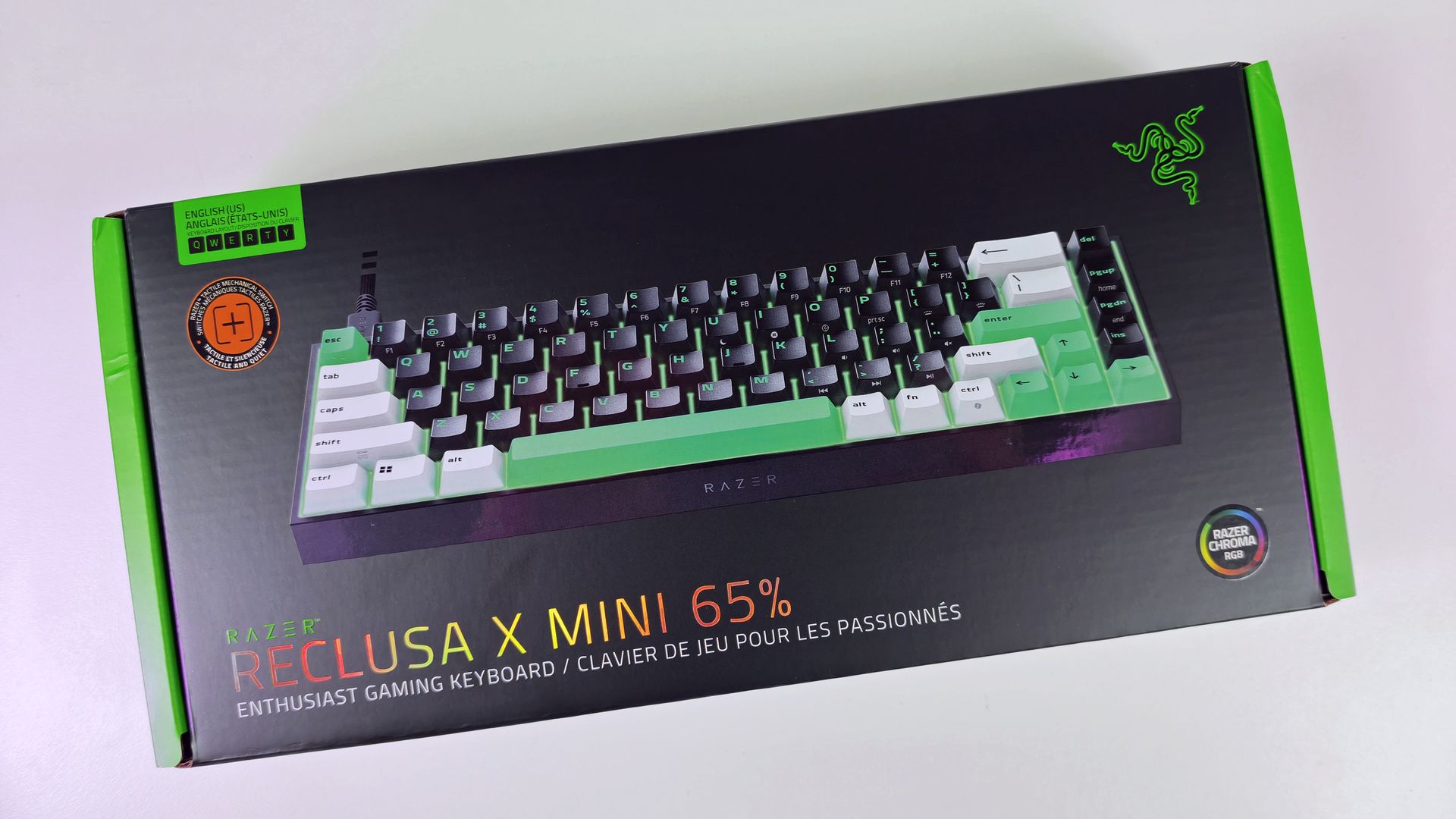
Direct top-down view of the Razer Reclusa X Mini 65% keyboard retail box.

(Image credit: Daniel Rubino)

The biggest surprise with the Reclusa X Mini 65% is just how good it feels to type on.

I'm generally not a huge fan of 65% keyboards. I miss dedicated media controls, and shrinking a layout inevitably introduces compromises. Yet after a few days with the Reclusa, I found myself reaching for it more often than expected.

The Gen-3 Orange tactile switches deserve a lot of the credit.

Razer describes them as delivering a tactile bump with quieter operation and improved consistency, while maintaining a 100-million keystroke lifespan. In practice, they're some of my favorite tactile switches Razer has produced, even compared to the more expensive Huntsman line.

The keys feel snappy, springy, and responsive, with excellent travel and a satisfying bottom-out characteristic that's surprisingly difficult to describe. The closest comparison is that each keystroke feels deliberate, controlled, and rewarding.

Every press feels crisp and energetic, with just enough tactility to make long typing sessions genuinely enjoyable.

The keyboard's dual-layer silicone dampening helps elevate the experience further. Razer specifically tuned the board to reduce resonance and hollow acoustics, and it shows.

The overall sound profile sits somewhere between mid-volume and clacky. Meanwhile, the space bar and backspace produce a deeper, more pronounced thock that adds personality without becoming distracting.
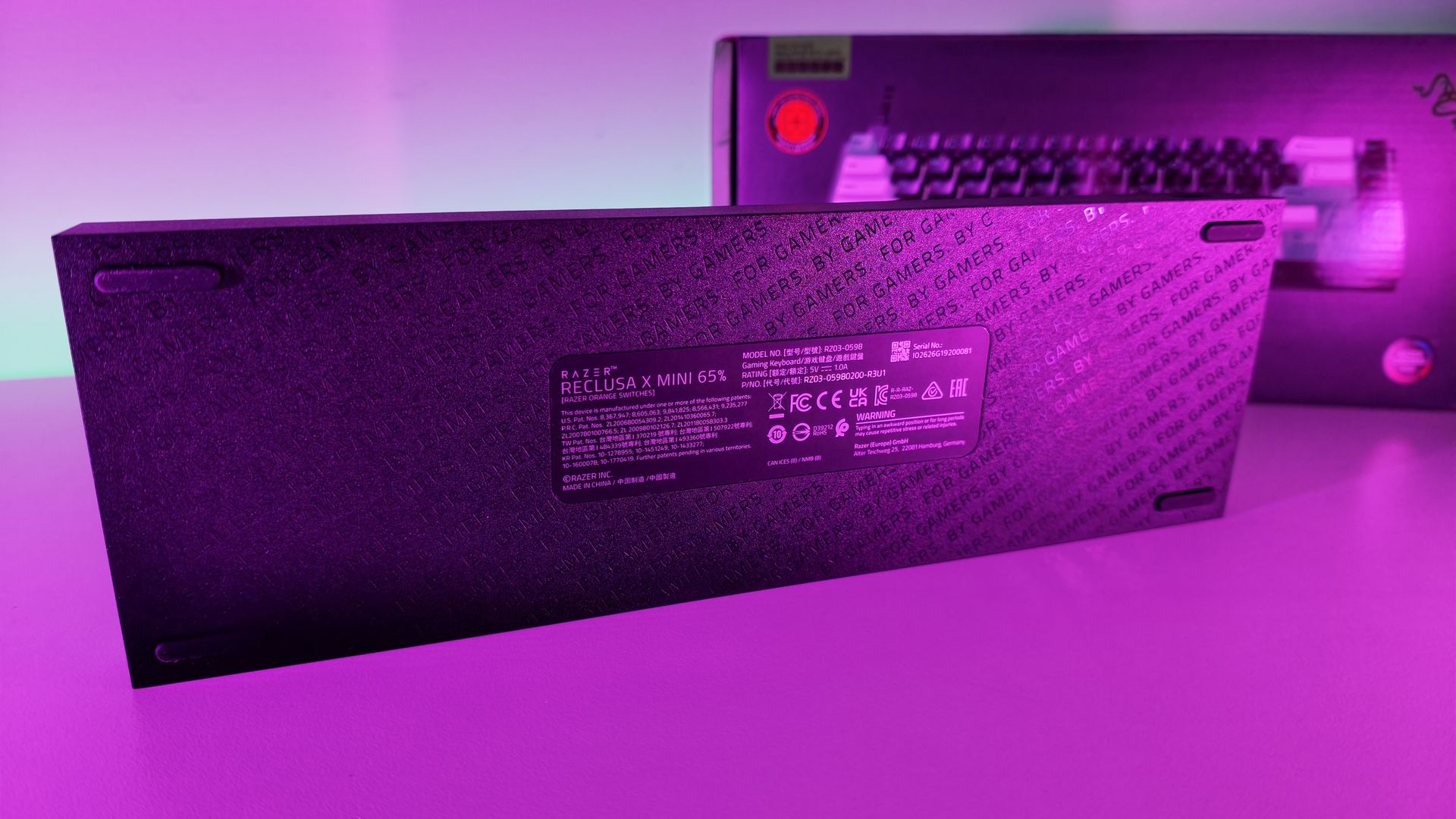
Bottom surface of the Razer Reclusa X Mini 65% keyboard, featuring rubber feet and a center product label with technical details.

Surprisingly, no risers on the bottom of the Reclusa X Mini 65%. (Image credit: Daniel Rubino)

For a $50 keyboard, the construction is also impressive.

My review unit measured roughly 710 grams, giving it enough heft to stay planted on the desk. The chassis doesn't feel flimsy, cheap, or hollow. The matte finish does a great job resisting fingerprints, and the included braided USB-C cable is the same type of quality cable Razer ships with more expensive products.

The hot-swappable design is another major selling point.

Users can install both 3-pin and 5-pin switches without soldering, making the board approachable for newcomers while still appealing to enthusiasts. Razer even notes that the keyboard can be opened through screws in the top plate for additional modifications, although doing so may affect warranty coverage according to the FAQ
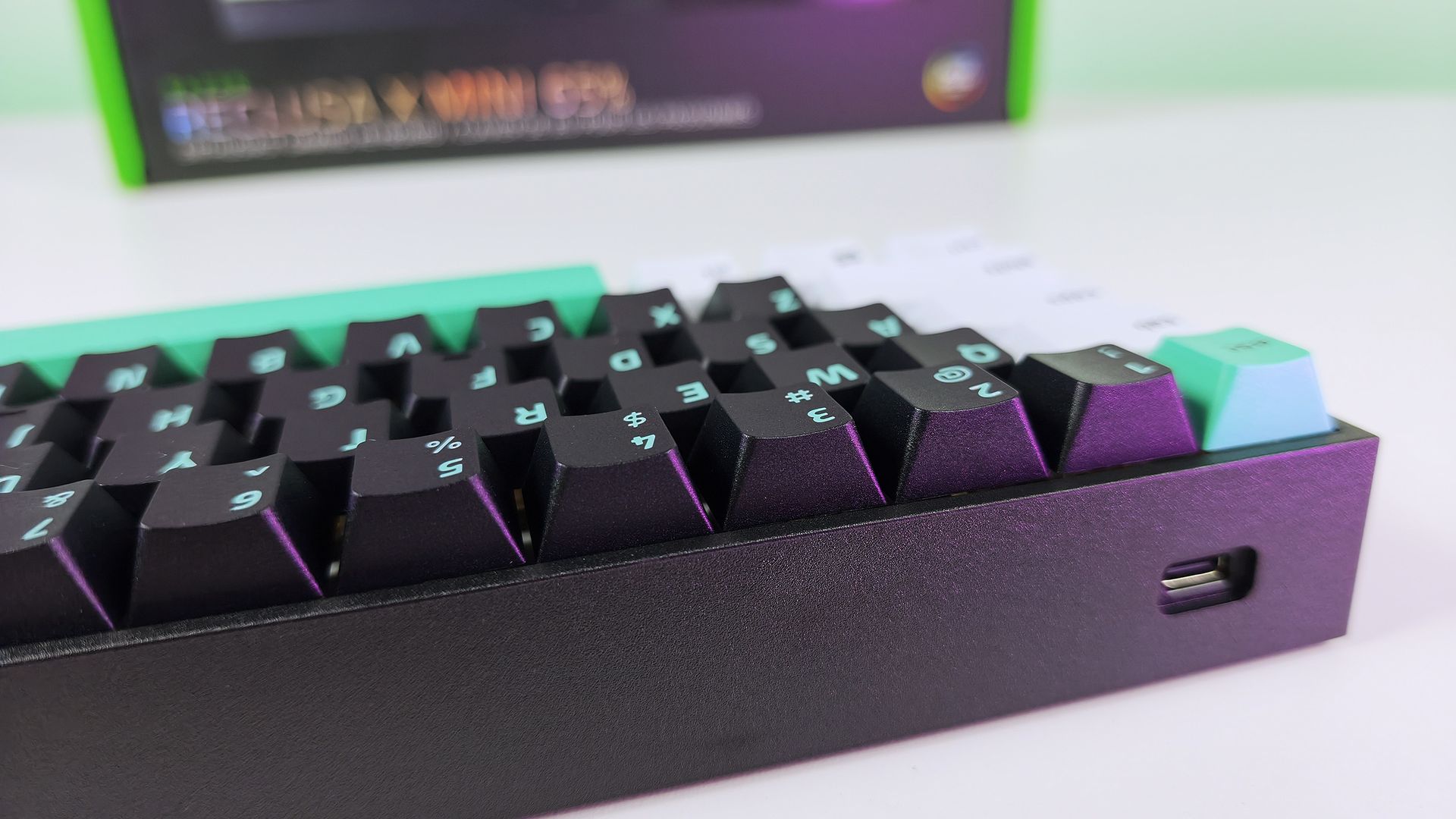
Close-up side view of the Razer Reclusa X Mini 65% keyboard showing the recessed USB-C port on its black frame.

The Razer Reclusa X Mini 65% has a very solid body with a single Type-C port on the left-hand side. (Image credit: Daniel Rubino)

I experimented with swapping switches and found the process straightforward. More importantly, I never felt a pressing need to do so. The stock experience is already strong enough that many users will be perfectly happy leaving it untouched.

The new tri-tone keycap design is another win.

Razer says the design is intended to give the keyboard a distinctive visual identity, and it succeeds. Combined with south-facing RGB LEDs, the Reclusa feels like one of Razer's clearest nods yet toward the custom keyboard crowd.

Gaming features that actually matter
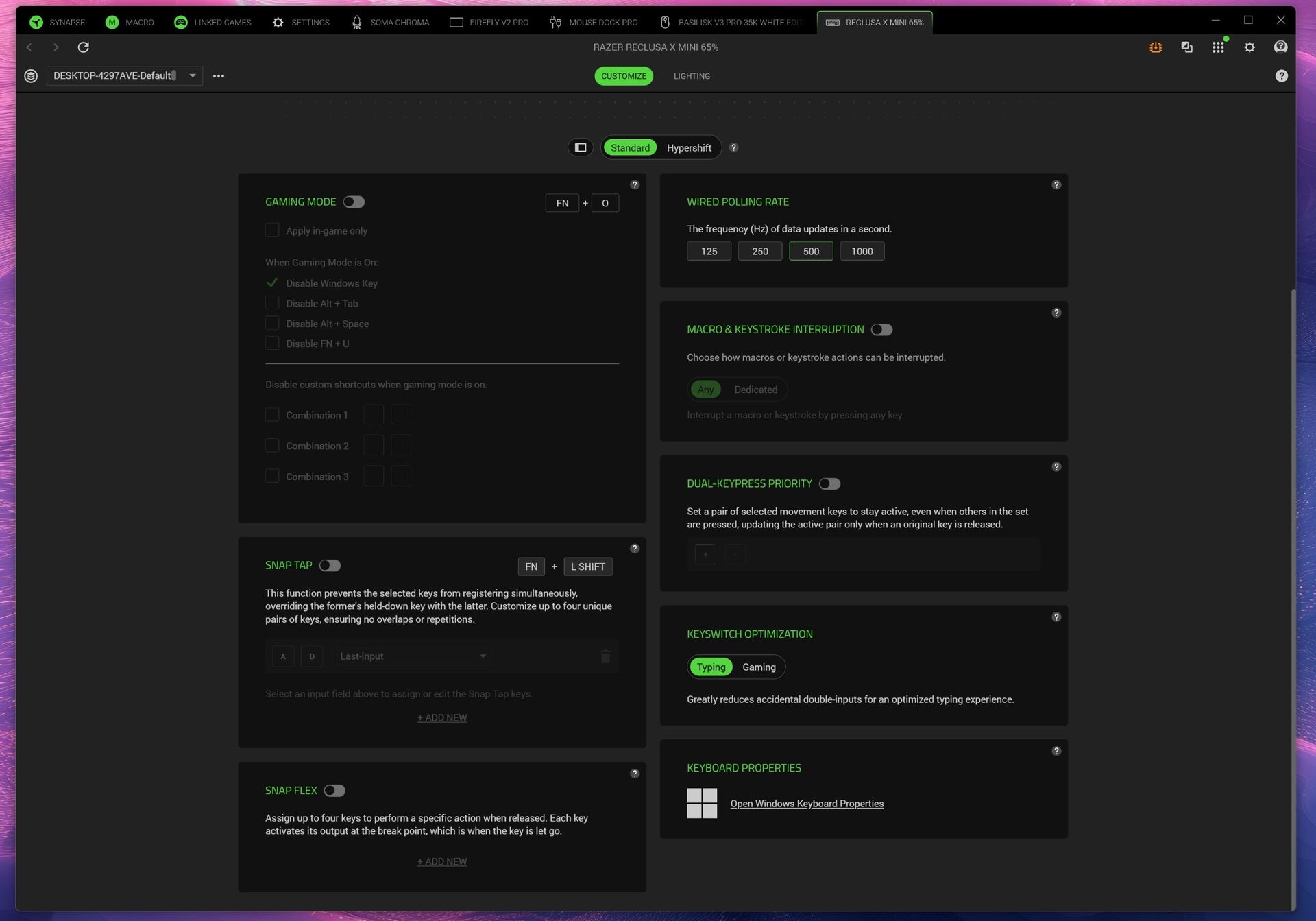
Screenshot of Razer Synapse and the multiple gaming features for the Razer Reclusa X Mini 65% keyboard.

Screenshot of Razer Synapse and the multiple gaming features for the Razer Reclusa X Mini 65% keyboard. (Image credit: Daniel Rubino)

The Reclusa X Mini 65% also includes Snap Tap, Snap Flex, and Dual-Keypress Priority, technologies aimed primarily at competitive players.

Snap Tap helps prioritize directional inputs for cleaner counter-strafing behavior, while Snap Flex can bind two actions to a single keystroke for more consistent multi-input actions. Dual-Keypress Priority is designed to maintain movement consistency when overlapping directional inputs occur.
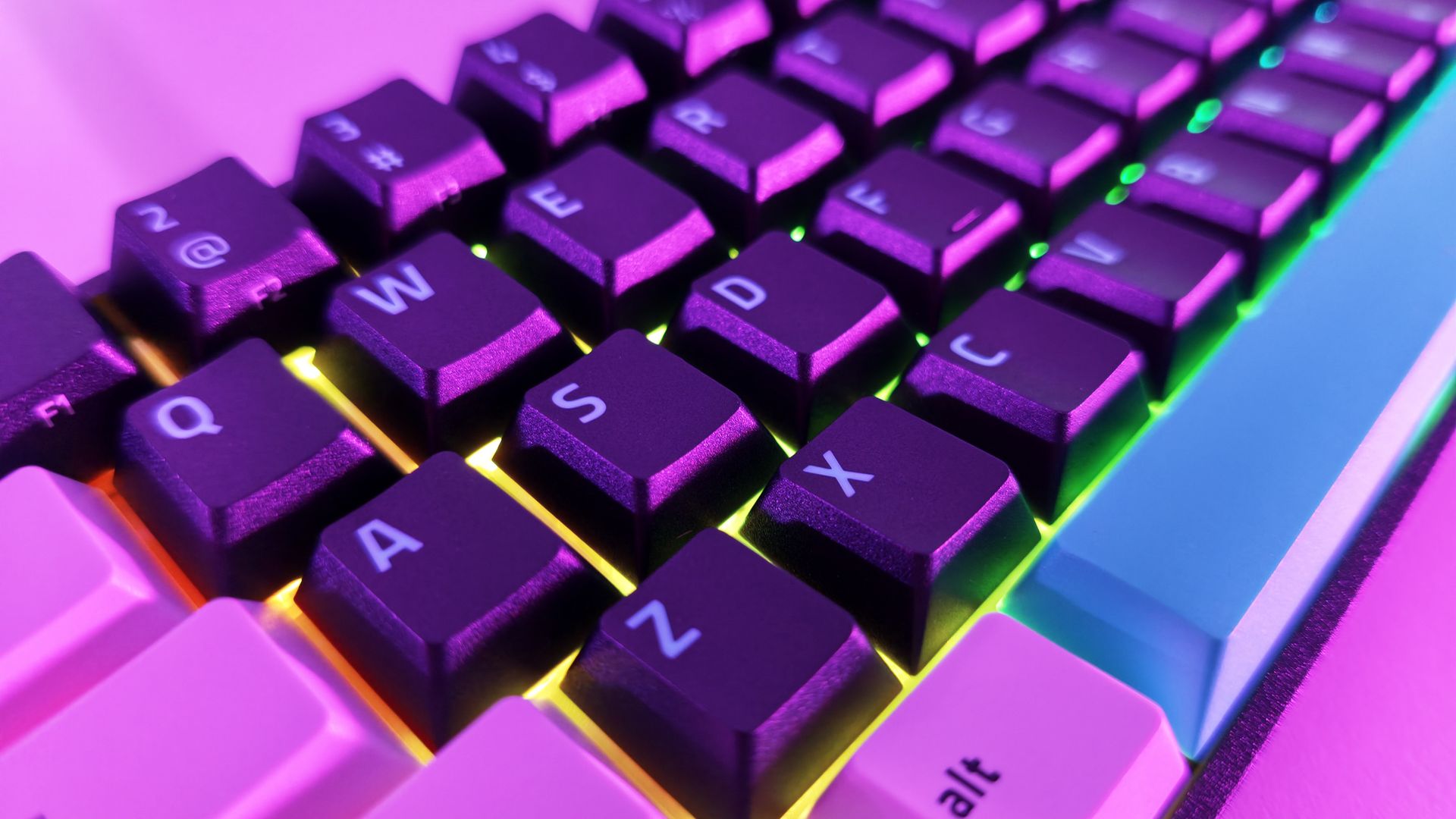
Extreme close-up of textured black keycaps on the Razer Reclusa X Mini 65% with bright RGB backlighting underneath.

Close-up of the included Doubleshot ABS, tri-tone design keycaps and RGB. (Image credit: Daniel Rubino)

During a few gaming sessions in Call of Duty and DOOM: The Dark Ages, the keyboard behaved exactly as I'd expect from a modern Razer gaming board. The features worked as advertised, though none fundamentally changed my experience during limited testing.

The more important takeaway is that entry-level pricing doesn't mean sacrificing gaming-focused functionality.

What I don't like
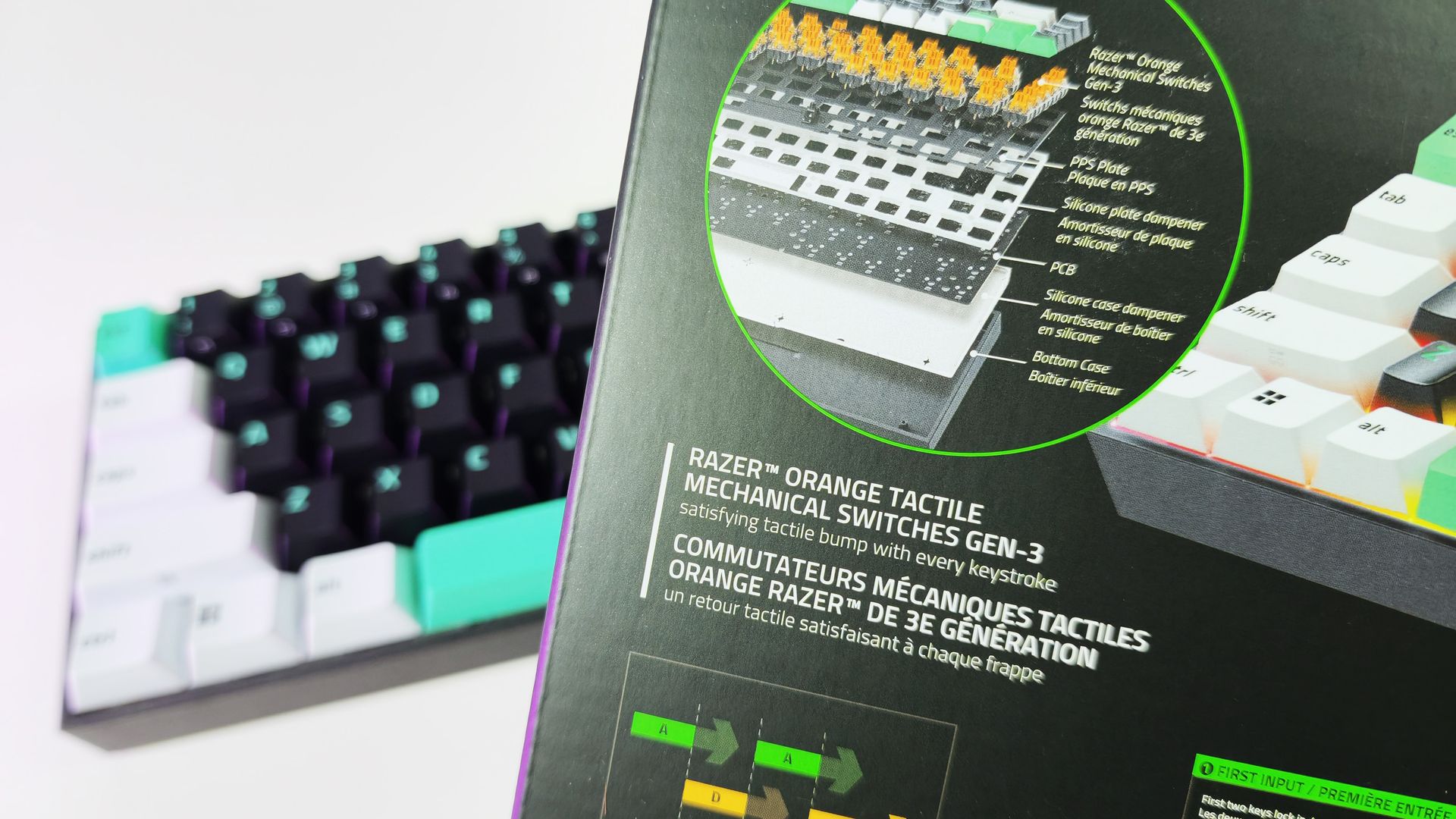
Close-up of the retail box highlighting Razer Orange Tactile Mechanical Switches Gen-3 with an exploded layer diagram.

(Image credit: Daniel Rubino)

The 65% form factor itself remains my biggest complaint.

That's more personal preference than a flaw, but users accustomed to dedicated media keys, function rows, or larger layouts may feel constrained. That said, I like typing so much on this; I haven't switched back yet, so that's saying something.

Another drawback is the lack of adjustable feet.

The keyboard sits completely flat, and there are no built-in risers to alter the typing angle. Some users will appreciate the low profile, but I would have liked additional adjustment options.

The Reclusa feels premium where it matters most, but a pair of flip-out feet would have completed the package.

RGB lighting is also merely good rather than exceptional. It gets the job done, but don't expect the depth, diffusion, and visual impact of premium Razer boards like the Huntsman V3 Pro series.

Finally, Synapse remains a potential sticking point. While Razer has been increasingly expanding web-based support options across its ecosystem, some users still prefer products that avoid software requirements entirely.

Should you buy it?
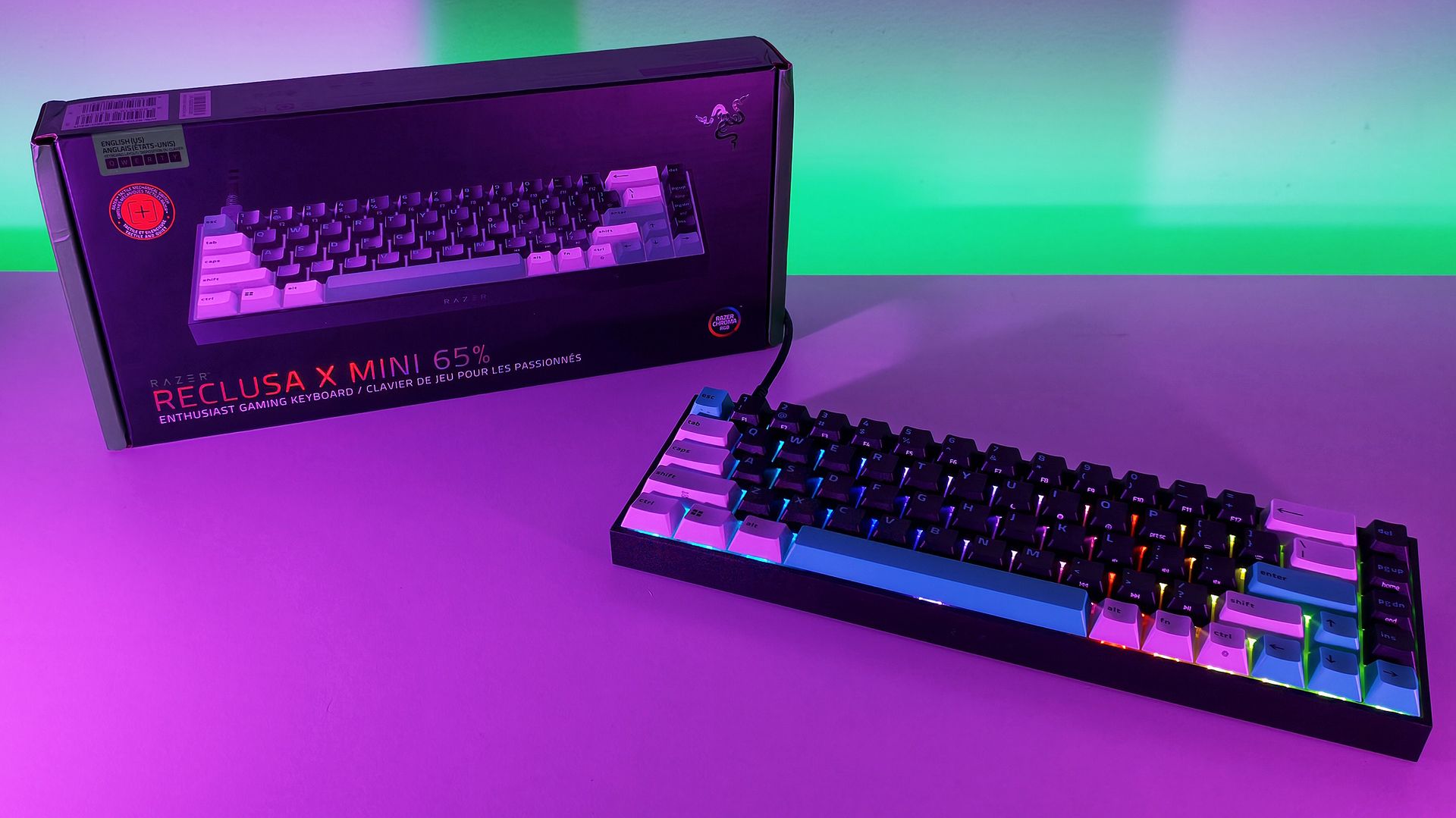
Angled view of the Razer Reclusa X Mini 65% keyboard with active RGB lighting next to its packaging on a purple surface.

(Image credit: Daniel Rubino)

✅You should buy this if...

  • You want a quality mechanical keyboard under $50
  • You want hot-swappable switches without entering the custom keyboard rabbit hole
  • You enjoy tactile switches and satisfying typing acoustics
  • You want enthusiast-friendly features from a major gaming brand

❌You shouldn't buy this if...

  • You need a full-size or TKL layout
  • Dedicated media controls are a must-have
  • Adjustable typing angles are important to you
  • You want flagship-tier RGB lighting

Final thoughts

The Reclusa X Mini 65% feels like the beginning of something larger for Razer.

The company explicitly describes the model as the debut of a new enthusiast-focused Reclusa family and "the first step in the Reclusa journey." While Razer hasn't announced additional models, the messaging strongly suggests the line will expand into other sizes and configurations over time.

If that's the plan, this is an excellent start.

At just $49.99, the Reclusa X Mini 65% delivers a surprisingly refined typing experience, useful gaming features, broad customization potential, and a build quality that belies its budget-friendly price. I still prefer larger layouts, but that's the highest compliment I can give this keyboard: despite my reservations about 65% boards, I genuinely enjoyed using it.

Who should buy it?

The Razer Reclusa X Mini 65% is ideal for gamers and keyboard enthusiasts looking for a genuinely good mechanical keyboard without spending triple digits. If you've been curious about hot-swappable keyboards, custom keycaps, and enthusiast-focused features but don't want to dive headfirst into the custom keyboard rabbit hole, this is one of the easiest and most affordable entry points Razer has offered.

It'll also be a great gift for young aspiring gamers this holiday season.

Razer Reclusa X Mini 65% product image showing the keyboard from a top down perspective.

Razer
Reclusa X Mini 65%

A remarkably affordable enthusiast keyboard that combines hot-swappable switches, excellent tactile feedback, and a premium feel into a package that punches well above its $49.99 asking price.

Click to join us on r/WindowsCentral

Join us on Reddit at r/WindowsCentral to share your insights and discuss our latest news, reviews, and more.
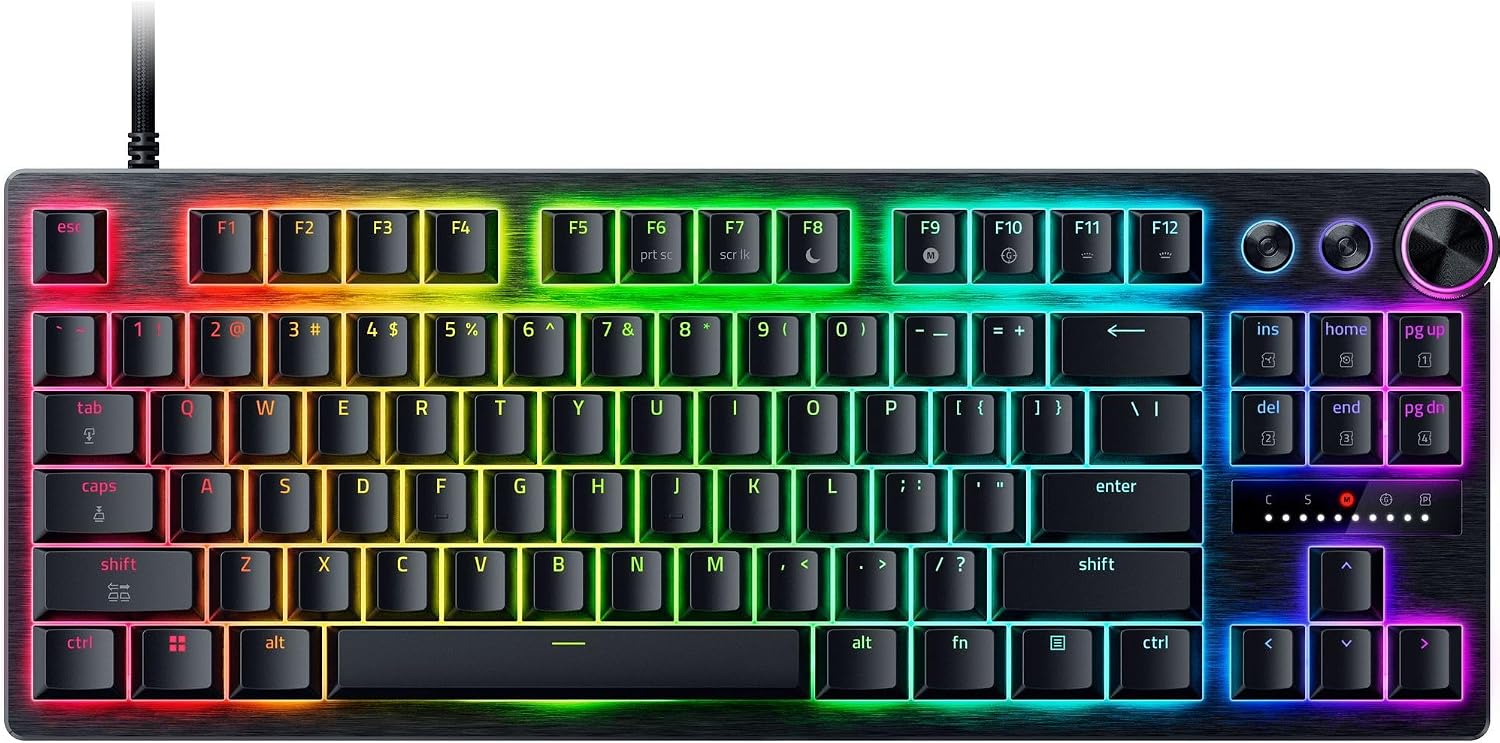
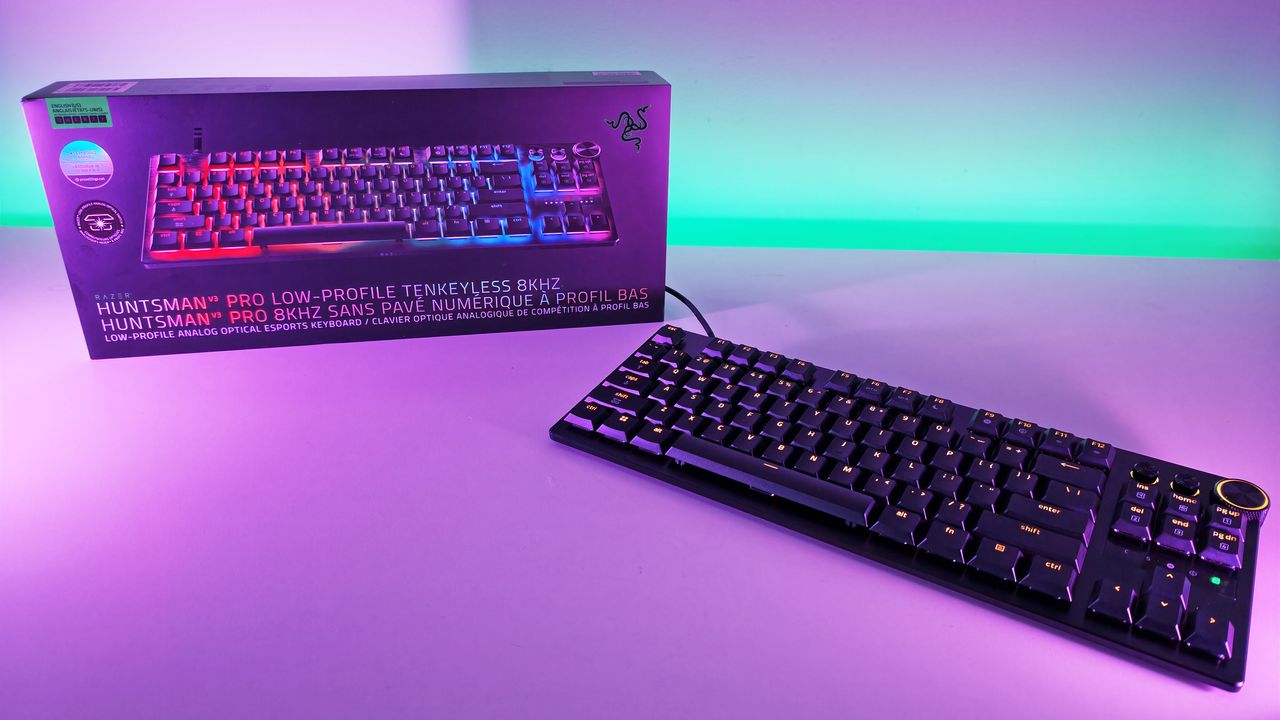
Razer Huntsman V3 Pro Low-Profile TKL 8KHz Review: The thin green line of speed tuned for pro‑level play

For the past two weeks, the just-announced Razer Huntsman V3 Pro Low-Profile Tenkeyless 8KHz (winner of the longest keyboard name yet) has been permanently parked on my desk. Between churning out editorial content and squeezing in late-night gaming sessions, I’ve put Razer’s latest optical deck through hundreds of thousands of keystrokes.

Razer hasn't slowed down its rapid pace of hardware innovation, but bringing analog optical switches to an ultra-slim low-profile chassis is easily one of its most intriguing experiments yet.

After fourteen days of continuous hands-on testing, this slender powerhouse has completely reshaped my daily workflow and play routine.

Razer had no input, nor did it see the contents of this review, prior to publication.

Razer Huntsman V3 Pro LP TKL: Price, availability, and specs

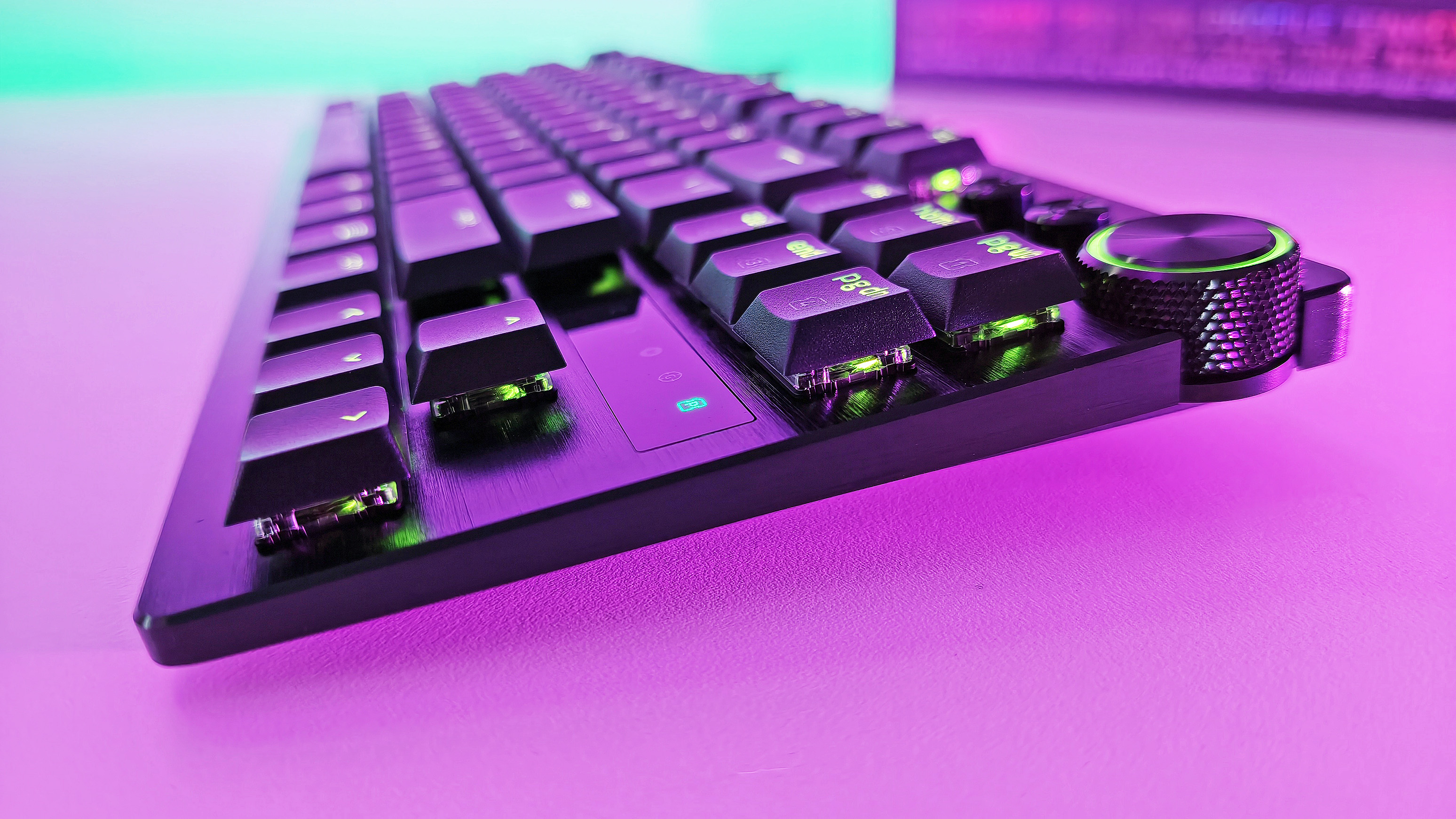
Side profile view highlighting the ultra-slim design and low-profile optical switches of the Razer Huntsman V3 Pro TKL keyboard.

Side profile view highlighting the ultra-slim design and low-profile optical switches of the Razer Huntsman V3 Pro TKL keyboard. (Image credit: Daniel Rubino)

The Razer Huntsman V3 Pro Low-Profile Tenkeyless 8KHz retails for $229.99.

Built around Razer’s Low-Profile Analog Optical Switches, it boasts an adjustable actuation range spanning 0.1 mm to 2.8 mm, 8,000Hz HyperPolling, per-key RGB, a 5052 aluminum alloy top plate, doubleshot PBT keycaps, and a multi-function digital dial accompanied by dedicated media buttons.

It connects via a detachable braided USB Type-C cable, included in the box. No wireless (Razer insists that while many ask for wireless, no one trusts it to last long enough, so everyone just leaves it plugged in. I am 100% guilty of this!)

It is now available from Razer.com and associated retailers like Best Buy, Amazon, and more.

Razer Huntsman V3 Pro LP TKL: Design and typing experience

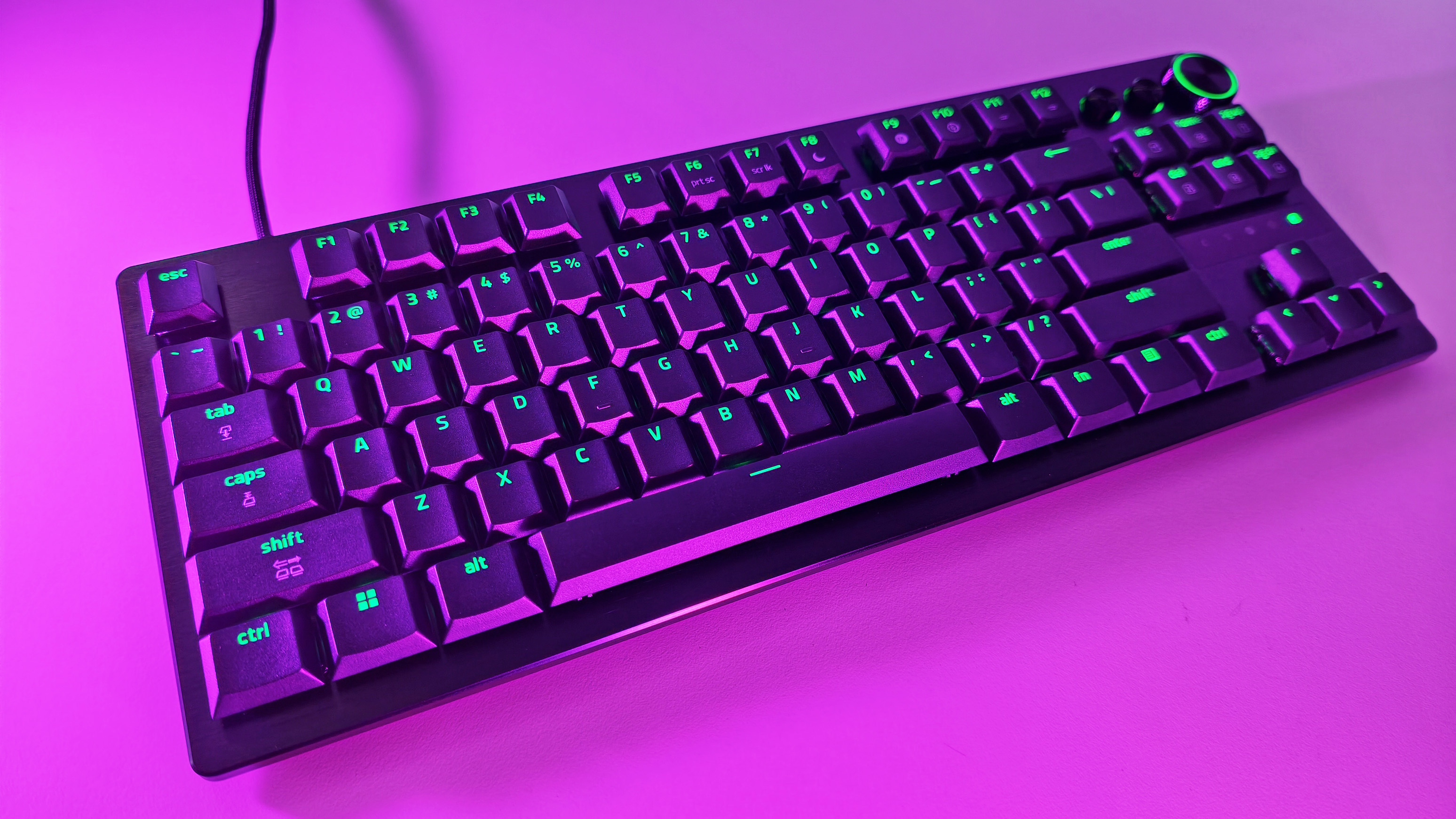
Side-angle view showing the low-profile keycaps, brushed metal plate, and green RGB lighting on the Razer Huntsman V3 Pro TKL keyboard.

Side-angle view showing the low-profile keycaps, brushed metal plate, and green RGB lighting on the Razer Huntsman V3 Pro TKL keyboard. (Image credit: Daniel Rubino)

Razer has officially reached double digits with its flagship Huntsman keyboard lineup, marking this Huntsman V3 Pro Low-Profile TKL as the 10th entry in the family tree, which I find hilarious.

Having tracked the evolution of this sub-brand over the years, watching model number ten land on my desk feels like a milestone. It’ll earn a place on our curated guide for the best gaming keyboards under the low-profile crown.

At a sleek 19.5mm front height, the deck sits lower to the desk than a nickel standing on its edge. I prefer low-profile keyboards for two practical reasons:

  1. Seamless laptop-to-desktop parity: As someone who constantly hops between high-end laptops and a full desktop workstation, low-profile keys eliminate the jarring adjustment curve required when shifting to standard deep-travel mechanical boards.
  2. Speed and reduced fatigue: With shorter overall travel distance (2.8mm total), less physical effort is needed to execute keystrokes. It feels faster and easier to operate, warding off hand fatigue during long writing marathons. Call it lazy hands if you want, but my fingers appreciate the efficiency.

As Editor-in-Chief of Windows Central, my daily workload splits roughly 80% typing for my job and 20% gaming. As a trained touch-typist, I demand a deck that can keep pace with high WPM output without sounding like an industrial typewriter. The sound and feel across all 10 Huntsman iterations remain remarkably consistent, but this low-profile variant introduces a softer actuation due to its reduced key travel.

The acoustics are superb: audible enough to offer satisfying tactile feedback, but quiet enough to keep office mates from plotting your demise.

Razer’s tenth Huntsman brings optical analog power down to desk level—and it sets a new gold standard.

The physical keycaps feature an excellent subtle texture and slight dome profile that guides fingers smoothly across the home row. (If you want a deeper dive into mechanical, optical, and magnetic mechanisms, check out our guide on keyboard switches explained.)

If I could manifest my ultimate keyboard, it would be a Frankenstein fusion of this low-profile Huntsman layout and the 3-pound, forged-metal chassis of the $499 Razer Huntsman Signature Edition. Realistically, we can't have both in a single device. Forced to choose, I’m sticking with the Low-Profile Huntsman over the Signature Edition for daily driving—it is simply a joy to type on.

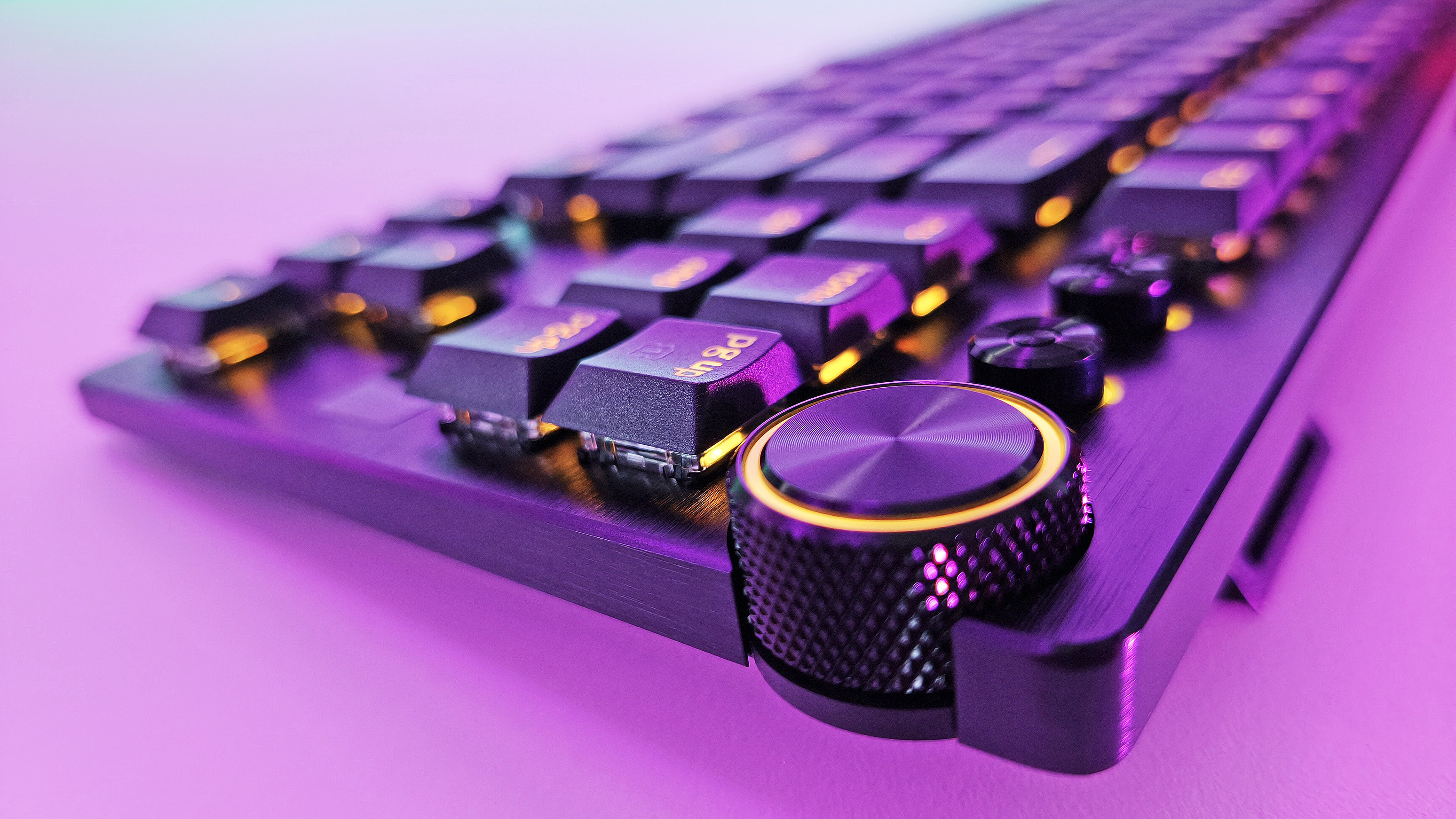
Close-up of the textured volume knob and media controls on the Razer Huntsman V3 Pro Low-Profile Tenkeyless gaming keyboard.

Close-up of the textured volume knob and media controls on the Razer Huntsman V3 Pro Low-Profile Tenkeyless gaming keyboard. (Image credit: Daniel Rubino)

Because there is no wrist rest included in the box, you might assume ergonomic support is an issue. Thankfully, the low frame sits flat enough that wrist extension isn't an issue. However, I paired it with a cheap $26 foam wrist rest (like this foam wrist rest on Amazon), and the setup felt complete.

Razer Huntsman V3 Pro LP TKL: Gaming performance and movement tech

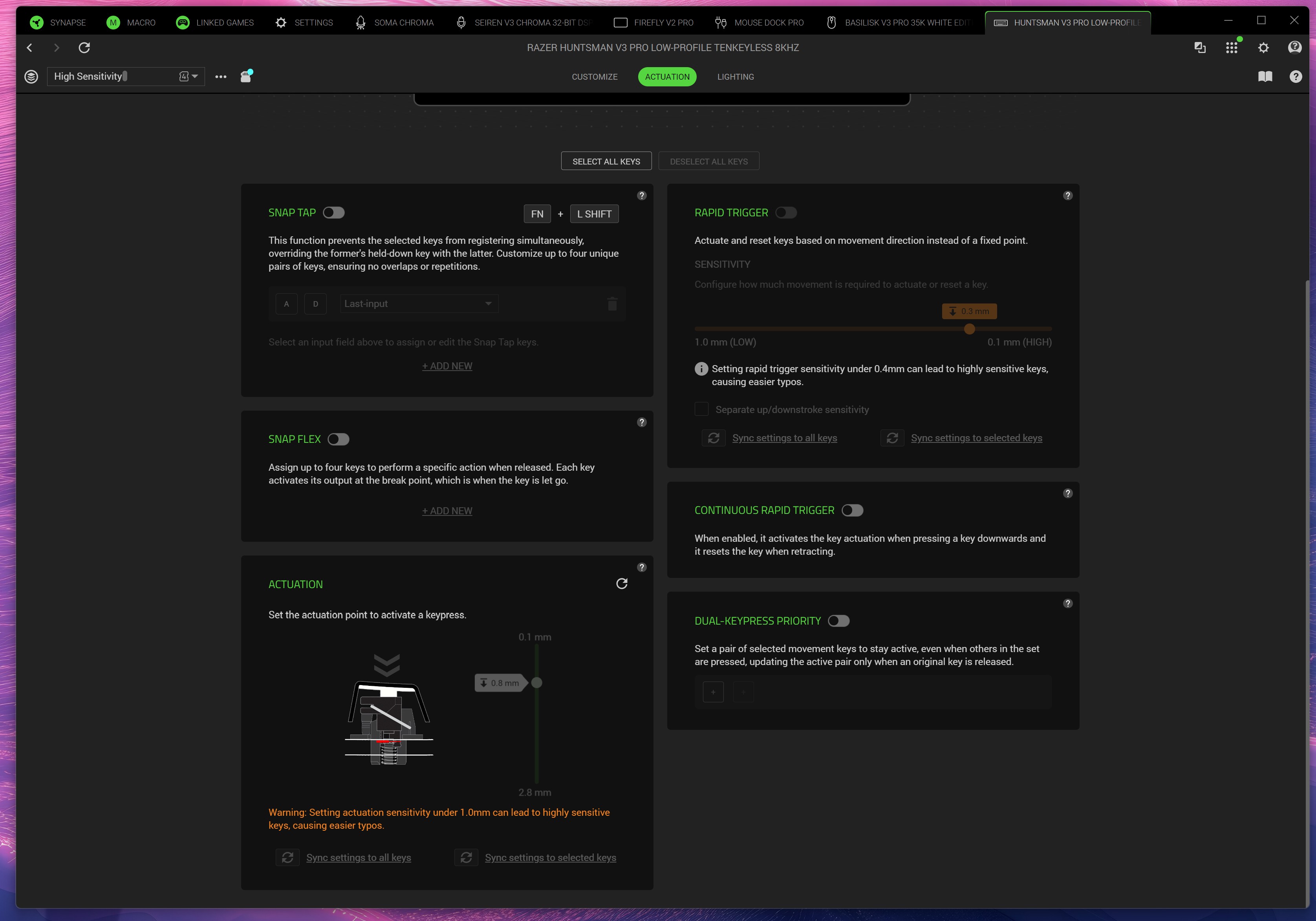
Razer Synapse actuation tab for Razer Huntsman V3 Pro Low-Profile keyboard with Snap Tap, Rapid Trigger, and actuation point settings.

Razer Synapse actuation tab for Razer Huntsman V3 Pro Low-Profile keyboard with Snap Tap, Rapid Trigger, and actuation point settings. (Image credit: Daniel Rubino)

When it is time to drop the editorial work and game, the Huntsman V3 Pro LP TKL reveals its true colors. Testing this board across high-stakes titles like DOOM: The Dark Ages, Warhammer 40,000: Space Marine 2, and 007 First Light, the sheer responsiveness of the analog optical deck became undeniable.

In the chaotic melee of Space Marine 2 and the fast-paced combat of DOOM: The Dark Ages, Razer's aggressive software suite provides a distinct advantage:

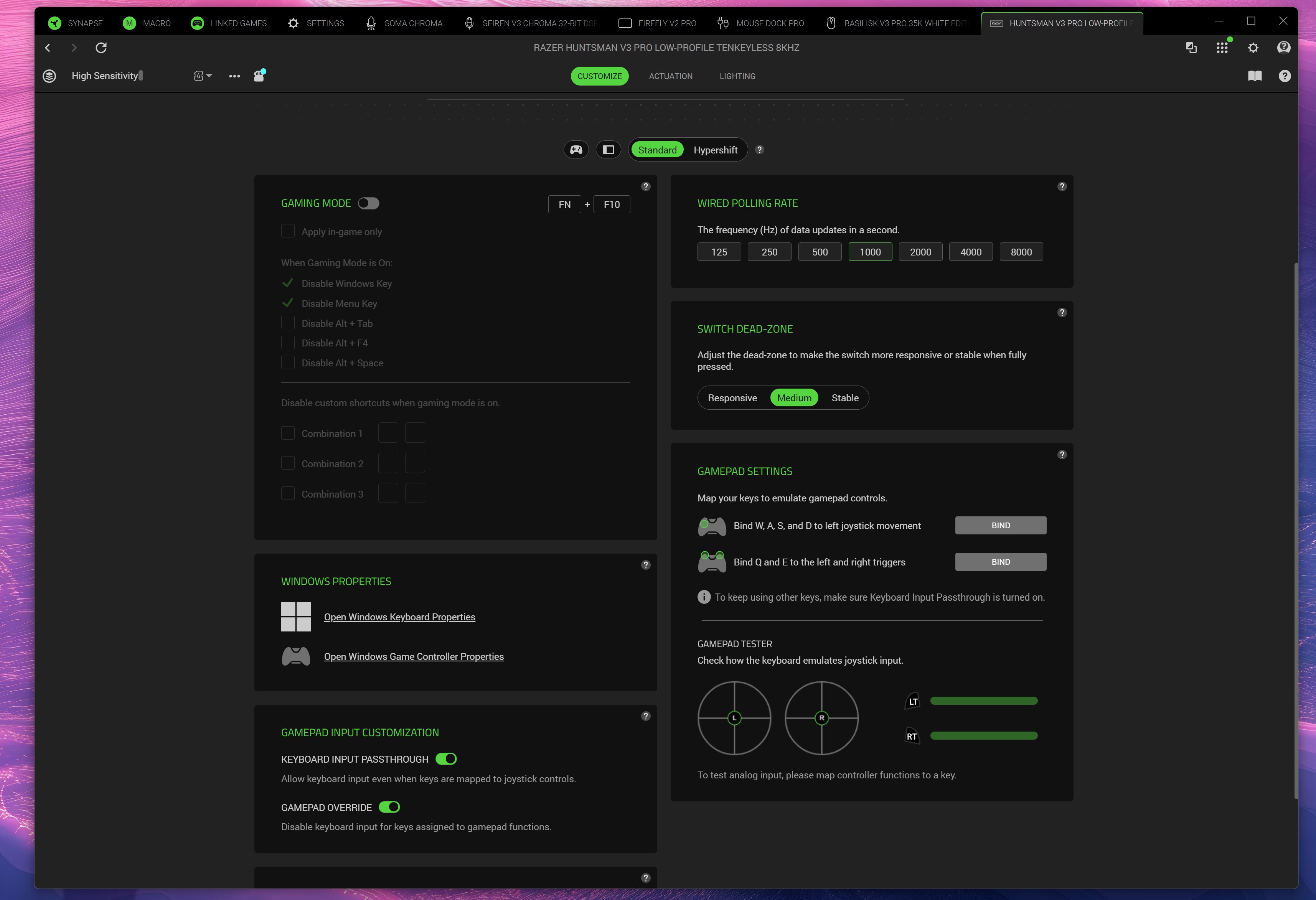
Razer Synapse customizes the menu for the Razer Huntsman V3 Pro Low-Profile keyboard, showing the polling rate and gamepad keybind settings.

Razer Synapse customizes the menu for the Razer Huntsman V3 Pro Low-Profile keyboard, showing the polling rate and gamepad keybind settings. (Image credit: Daniel Rubino)
  • True 8,000Hz HyperPolling: Delivering a 0.39ms latency, inputs register nearly instantaneously—52% faster than key low-profile competitors.
  • Rapid Trigger Mode: Adjust actuation between 0.1 mm and 2.8 mm. Switches reset the moment your finger moves upward, allowing rapid-fire re-keying when strafing or dodging.
  • Razer Snap Tap: Prioritizes your latest directional input without releasing the opposite key. It supports up to four onboard pairs with custom behaviors like Last-Input, Neutral, or Compare Level.
  • Razer Snap Flex: Allows two distinct commands to be bound to a single keypress, making complex multi-key maneuvers execution-perfect.
  • Dynamic Keystroke & Dual-Keypress Priority: Bind up to four actions to a single key based on press depth and release, while Dual-Keypress Priority prevents conflicting movement keys from breaking fluid diagonal movement.
  • Synapse Web: No bloatware installation needed. Razer’s browser-based configurator lets you alter actuation points, key bindings, and Rapid Trigger settings directly on any host PC

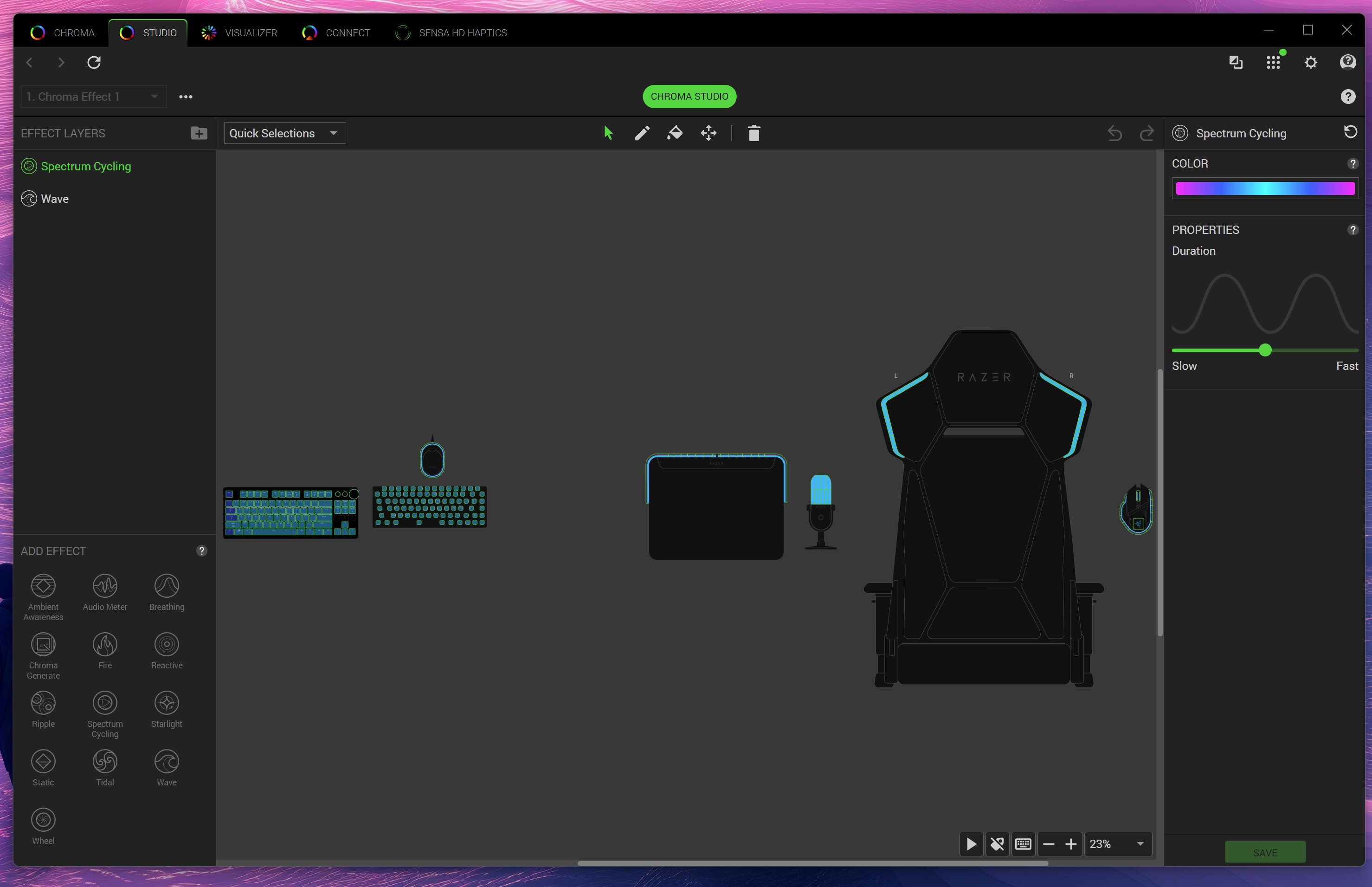
Razer Chroma Studio interface in Razer Synapse software displaying custom RGB lighting effects and layout for gaming gear.

Razer Chroma Studio interface in Razer Synapse software displaying custom RGB lighting effects and layout for gaming gear. (Image credit: Daniel Rubino)

Finally, we have Razer Chroma for configuring the lighting setup on your keyboard, and if you're like me, to sync with all your other Razer accessories like the new Razer Seiren V3 Chroma 32-bit DSP microphone, Razer Basilisk V3 Pro 35K, and the baller Razer Soma Chroma gaming chair.

Razer Huntsman V3 Pro LP TKL: Competition

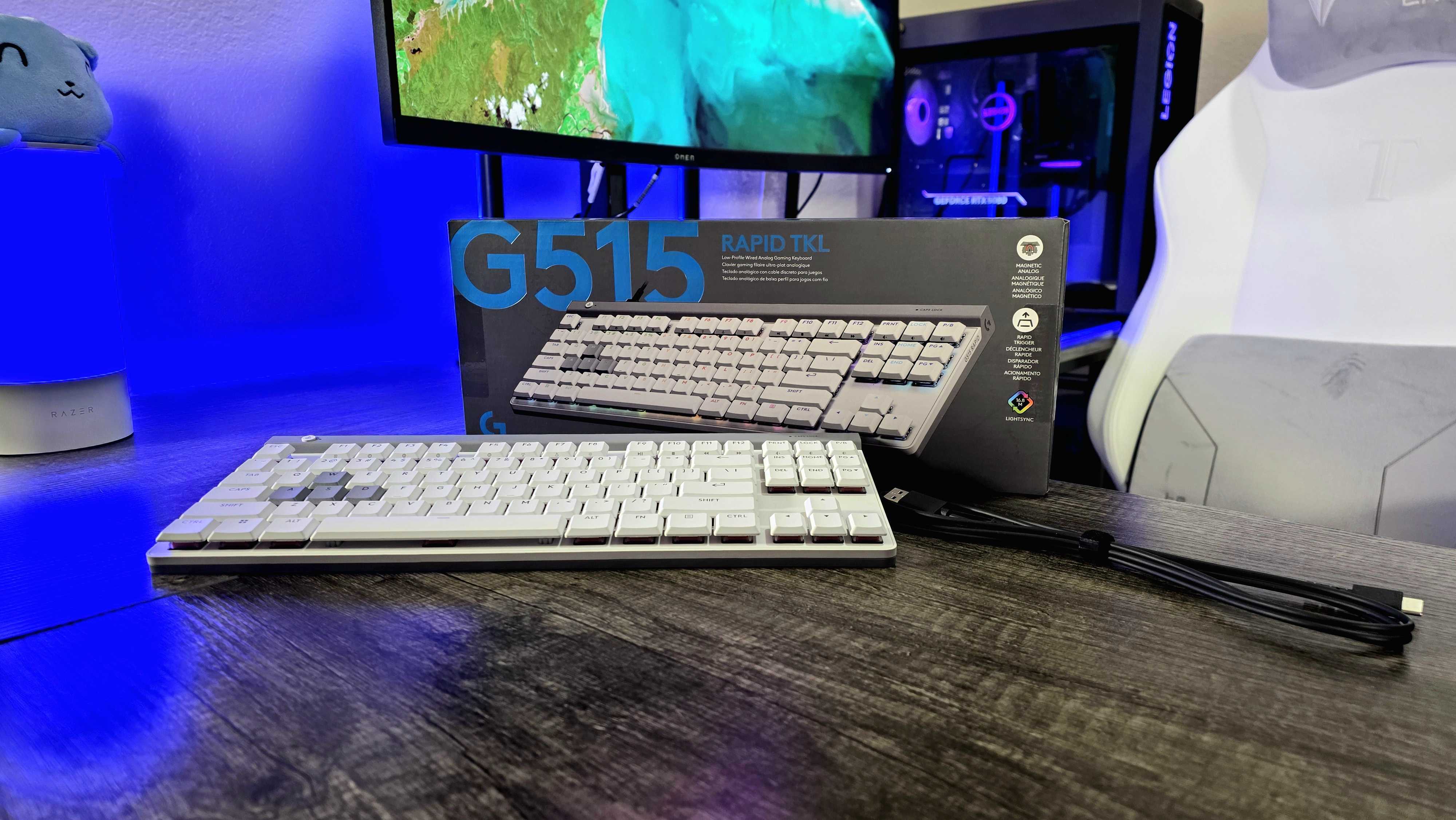
Image of the Logitech G515 RAPID TKL gaming keyboard.

The Logitech G515 Rapid TKL low-profile gaming keyboard we reviewed in 2025. (Image credit: Windows Central | Zachary Boddy)

How does this board stack up against its nearest low-profile rivals?

Against Razer's own BlackWidow V4 Low-Profile HyperSpeed, the differences center on connectivity versus raw speed. The BlackWidow V4 LP offers wireless flexibility (2.4GHz/Bluetooth) with traditional mechanical switches at $199.99, but caps out at a 1,000Hz polling rate without analog support. The Huntsman V3 Pro LP TKL ($229.99) sacrifices wireless freedom for maximum esports performance—delivering 8,000Hz polling, analog precision, and advanced movement software like Snap Flex.

Compared to the Logitech G515 RAPID TKL, which uses magnetic Hall Effect switches, Razer takes the lead in typing acoustics and software versatility. While the G515 RAPID TKL performs well in games, its switches feel mushier for daily typing tasks. The Huntsman V3 Pro LP TKL provides a crisper bottom-out, higher polling rate, and the convenience of driverless configuration via Synapse Web.

Razer Huntsman V3 Pro LP TKL: Should you buy it?

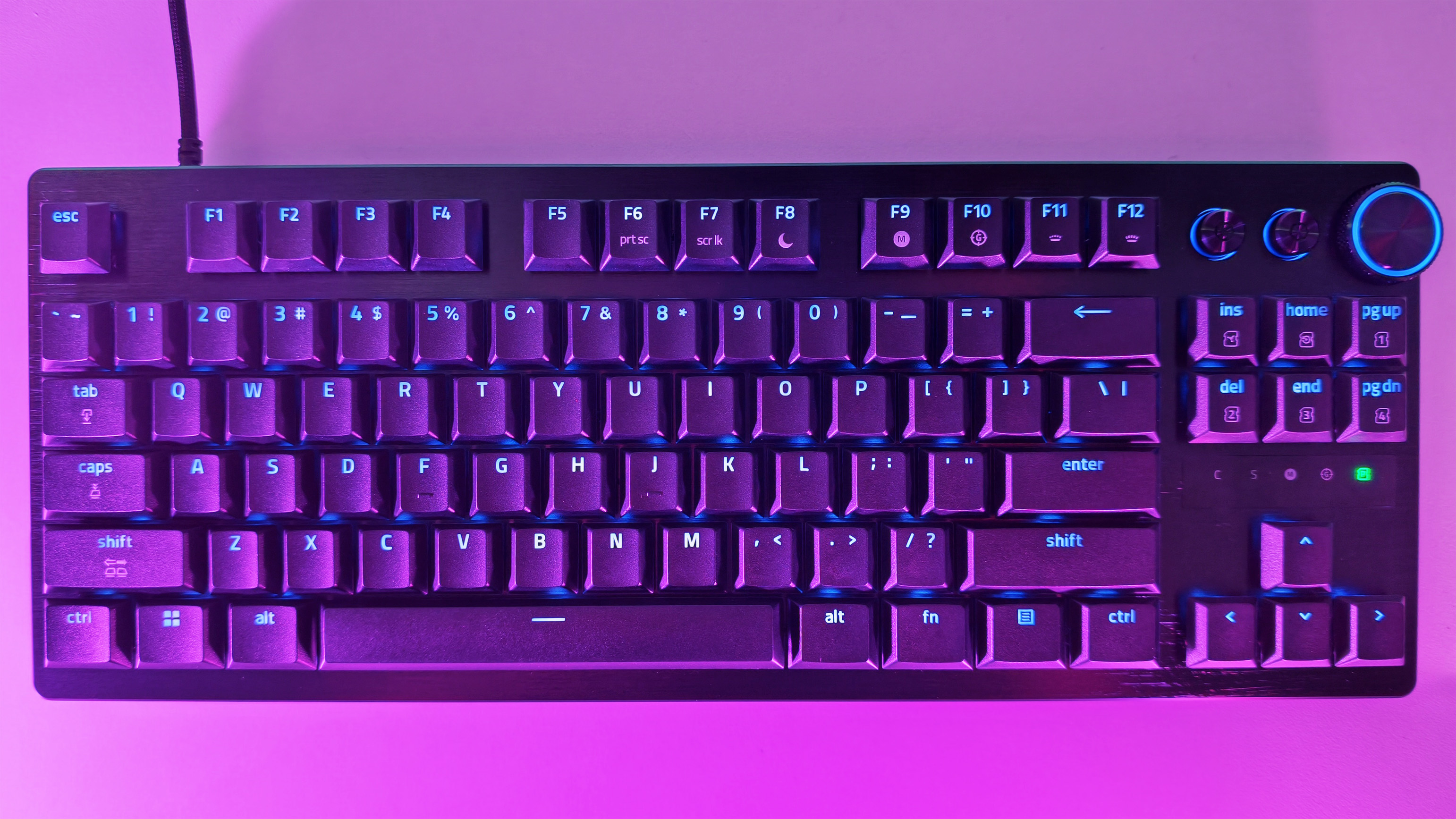
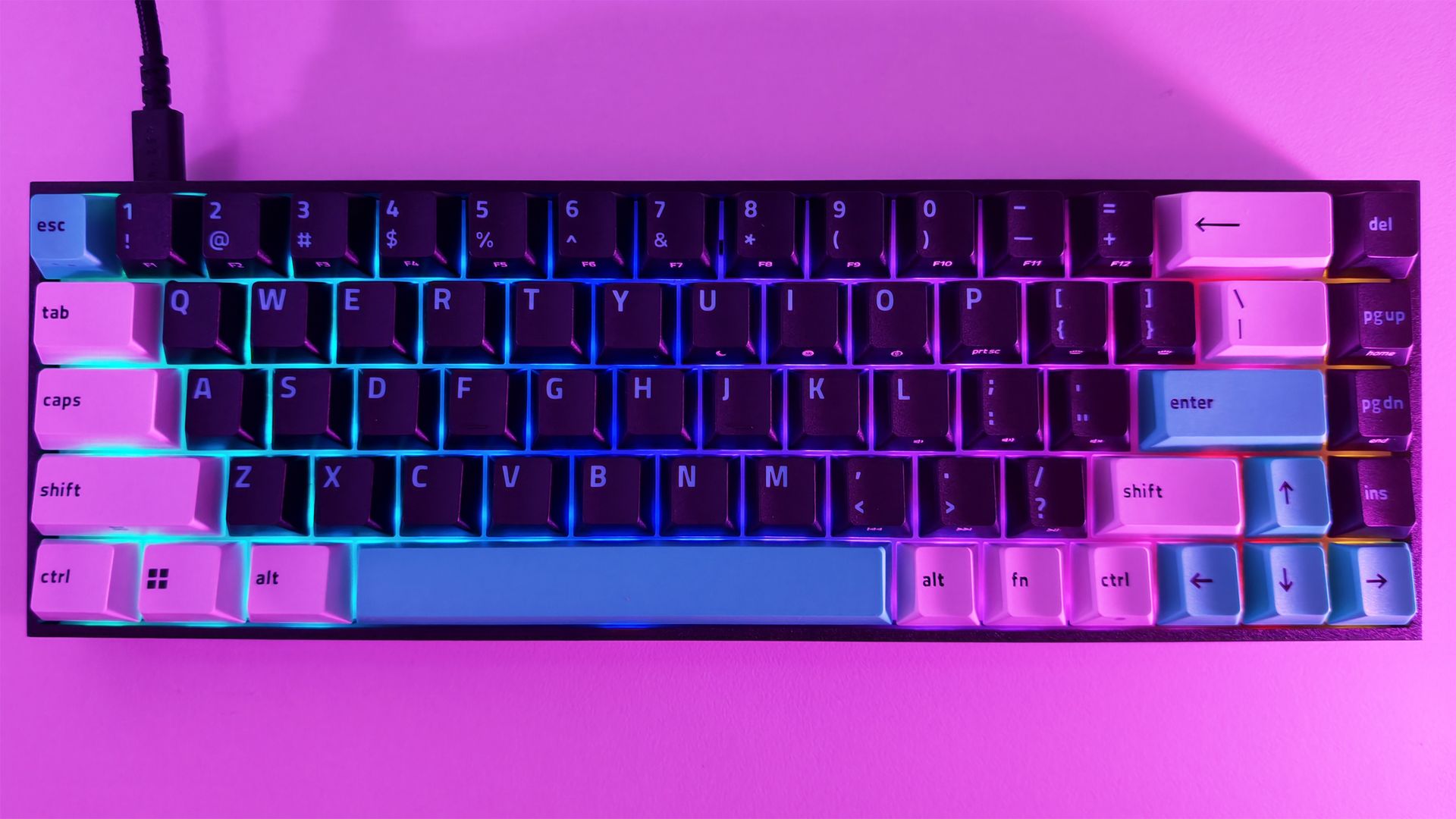
Overhead top-down view of the Razer Huntsman V3 Pro Low-Profile Tenkeyless gaming keyboard layout with backlit RGB keycaps.

Overhead top-down view of the Razer Huntsman V3 Pro Low-Profile Tenkeyless gaming keyboard layout with backlit RGB keycaps. (Image credit: Daniel Rubino)

You should buy it if ...

✅ You want an ultra-fast low-profile keyboard powered by 8,000Hz analog optical technology.

✅ You split time between heavy typing and gaming and demand low finger fatigue.

✅ You want advanced movement software like Rapid Trigger, Snap Tap, and Snap Flex.

You should not buy this if ...

❌ You insist on a wireless setup.

❌ You prefer deep, traditional mechanical key travel.

❌ You are on a strict budget and don't require optical analog features.

Blank Pixel

Ignore

At $229.99, the Razer Huntsman V3 Pro Low-Profile Tenkeyless 8KHz is an investment.

However, if you already like what Razer is doing with its analog optical switches, this low‑profile version feels like the next logical step. It delivers the same competitive edge as the full‑height Huntsman V3 Pro TKL, just in a thinner, faster, more refined chassis that’s easier to live with day-to-day.

The typing feel is crisp, the travel is short, and the 8KHz polling gives you the same responsiveness you expect from Razer’s top‑tier boards. It’s still a premium keyboard aimed at people who care about speed, tuning, and precision, and it absolutely delivers on that promise.

The price is high, but the performance is undeniable. If you want a low‑profile keyboard that doesn’t compromise on competitive features, this is the one that sets the bar. It’s fast, it’s polished, and it’s built for players who want every advantage they can get. In a crowded field of “fast” keyboards, this one actually earns it.

Top down product shot of the Razer Huntsman V3 Pro Low Profile TKL 8KHz gaming keyboard

Razer
Huntsman V3 Pro Low Profile Tenkeyless 8KHz

Dominate your matches with the world’s first low‑profile analog optical gaming keyboard made for pro players. Powered by 8000 Hz HyperPolling, Snap Flex, Snap Tap, Rapid Trigger Mode, and fully adjustable actuation, it delivers top‑tier speed in an ultra‑slim design.

❌