 Connexion
UniFi UNAS Pro 4 vs Pro vs Pro 8 NAS Comparison
UniFi UNAS Pro 4 vs Pro vs Pro 8 NAS – WHICH ONE SHOULD YOU BUY?
Within UniFi, the UNAS line is positioned as a straightforward, storage focused, turnkey NAS platform that fits into the same single pane management style as the rest of the ecosystem, prioritizing file storage, sharing, snapshots, and backup workflows over broader server style expandability. In this 3 way comparison, the UNAS Pro (7 bay, Nov 2024), UNAS Pro 8 (8 bay, Nov 2025), and UNAS Pro 4 (4 bay, Feb 2026) look similar on the surface, but they target different deployment constraints and ceiling limits in rack depth, storage scalability, cache options, memory headroom, network redundancy, and power design. Two of the units (Pro 4 and Pro 8) add M.2 NVMe cache support and higher availability 10GbE networking than the original Pro, while the Pro 8 also pushes furthest on RAM capacity and physical redundancy expectations for a rack install.
| UNAS Pro (7 Bay, $499)
|
UNAS Pro 4 (4 Bay, $499)
|
UNAS Pro 8 (8 Bay, $799)
|
|---|


| BUY |  |
 |
 |
|---|---|---|---|
 |
|
|
|
 |
|
|
|
| Pro | More 3.5 inch bays than UNAS Pro 4 at the same $499 price (7 vs 4) | 1U chassis (smallest height) | Most total bays (8) plus 2x NVMe cache slots |
| Shallower chassis depth than both (325 mm), easier fit in short depth racks | 2x 10G SFP+ instead of 1x 10G SFP+ on UNAS Pro | 16 GB memory (double UNAS Pro and UNAS Pro 4) | |
| Front 10G SFP+ and 1G RJ45 placement can suit front of rack cabling | NVMe cache support (absent on UNAS Pro) | 3 total 10 GbE ports (2x 10G SFP+ plus 10 GbE RJ45), most flexible networking | |
| 1.3 inch touchscreen (absent on UNAS Pro 4 and UNAS Pro 8) | Longer CPU clock than UNAS Pro (2.0 GHz vs 1.7 GHz) | Hot swappable power modules (only model with this design) | |
| Con | No NVMe cache support (both UNAS Pro 4 and UNAS Pro 8 have it) | Lowest bay ceiling and no official expansion path, so it fills up fastest | Highest price up front ($799) |
| Only 1x 10G SFP+ (UNAS Pro 4 has 2x, UNAS Pro 8 has 2x plus 10 GbE RJ45) | Deeper chassis than UNAS Pro (400 mm vs 325 mm) | Deepest chassis (480 mm), most demanding fit in shallow racks | |
| Lower CPU clock than UNAS Pro 4 and UNAS Pro 8 (1.7 GHz vs 2.0 GHz) | No hot swap PSU design (UNAS Pro 8 is the only one with hot swappable power modules) | No touchscreen (UNAS Pro includes a front touchscreen) | |
| Same 8 GB memory as UNAS Pro 4 and less than UNAS Pro 8 (16 GB) | Same 8 GB memory as UNAS Pro and less than UNAS Pro 8 (16 GB) | Higher power ceiling and max power consumption than the other 2 (250 W max) |
At the same time, the lineup is notable for pricing that stays lower than many established rackmount NAS competitors at comparable connectivity, with both the UNAS Pro and UNAS Pro 4 landing at $499, and the UNAS Pro 8 stepping up to $799 for more bays, more memory, and more network paths. The practical decision usually comes down to whether the priority is maximum bays at the lowest buy in, a tighter 1U footprint with newer cache and dual 10GbE links, or a higher ceiling platform with the strongest long term headroom in bays, RAM, and connectivity for users who expect growth rather than a fixed storage target.

IMPORTANT – It is worth highlighting that all three UNAS solutions include the same software and updates in the UniFi Drive and NAS OS services. Alongside the client tools (eg Identity Endpoint and File/Folder services remotely) and can be easily integrated into an existing Ubiquiti/UniFi network landscape. HOWEVER crucially, it is not ‘mandotory’ – you can run any of the UNAS Pro systems completely ‘offline’ (i.e LAN only) and there is no need to already have an existing UniFi network (existing 3rd party network landscapes work perfectly fine) and you also do not need to use/register any kind of UI.com/Ubiquiti account to setup the device.

UniFi UNAS Pro 4 vs Pro vs Pro 8 NAS – Design
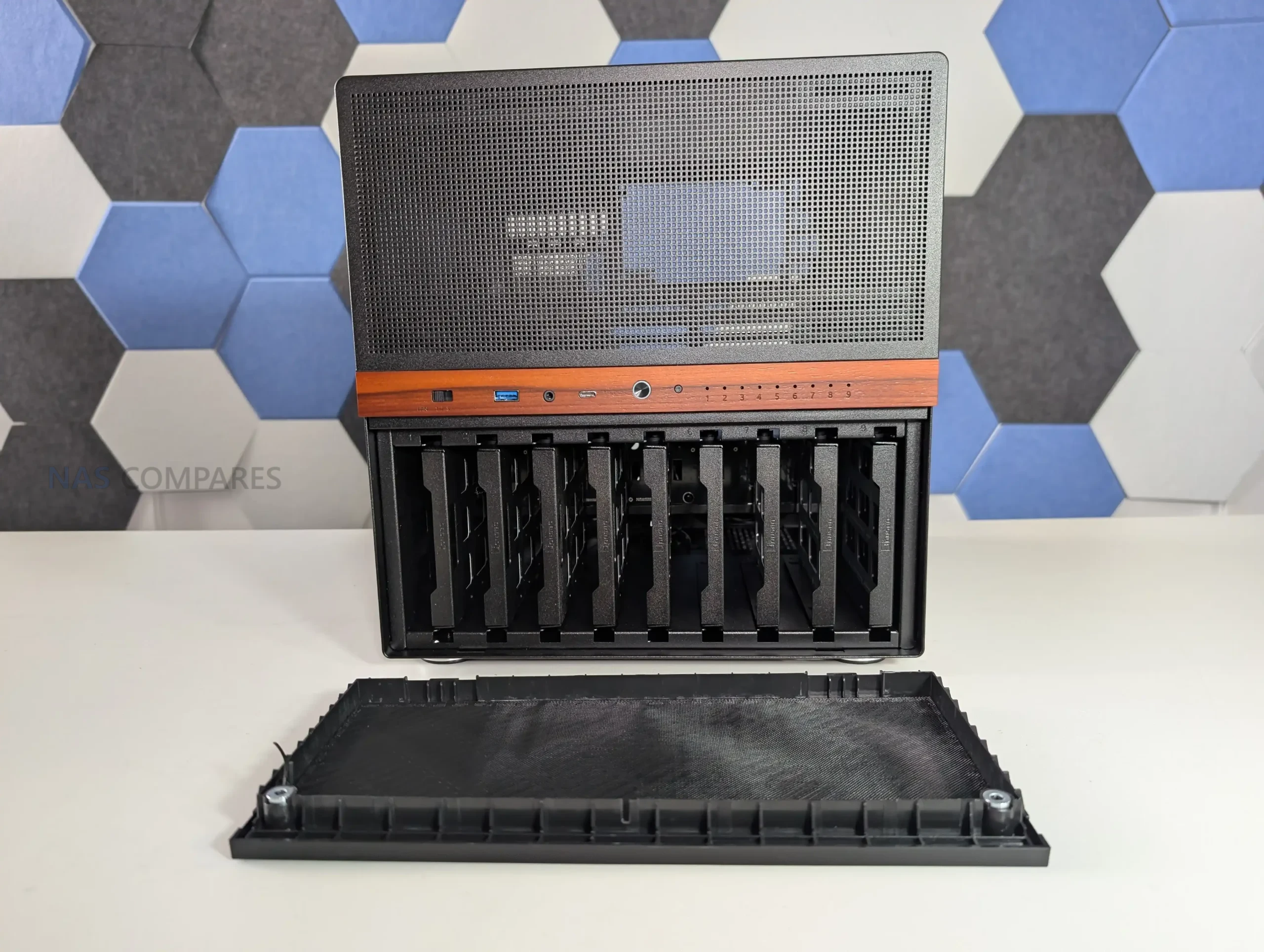
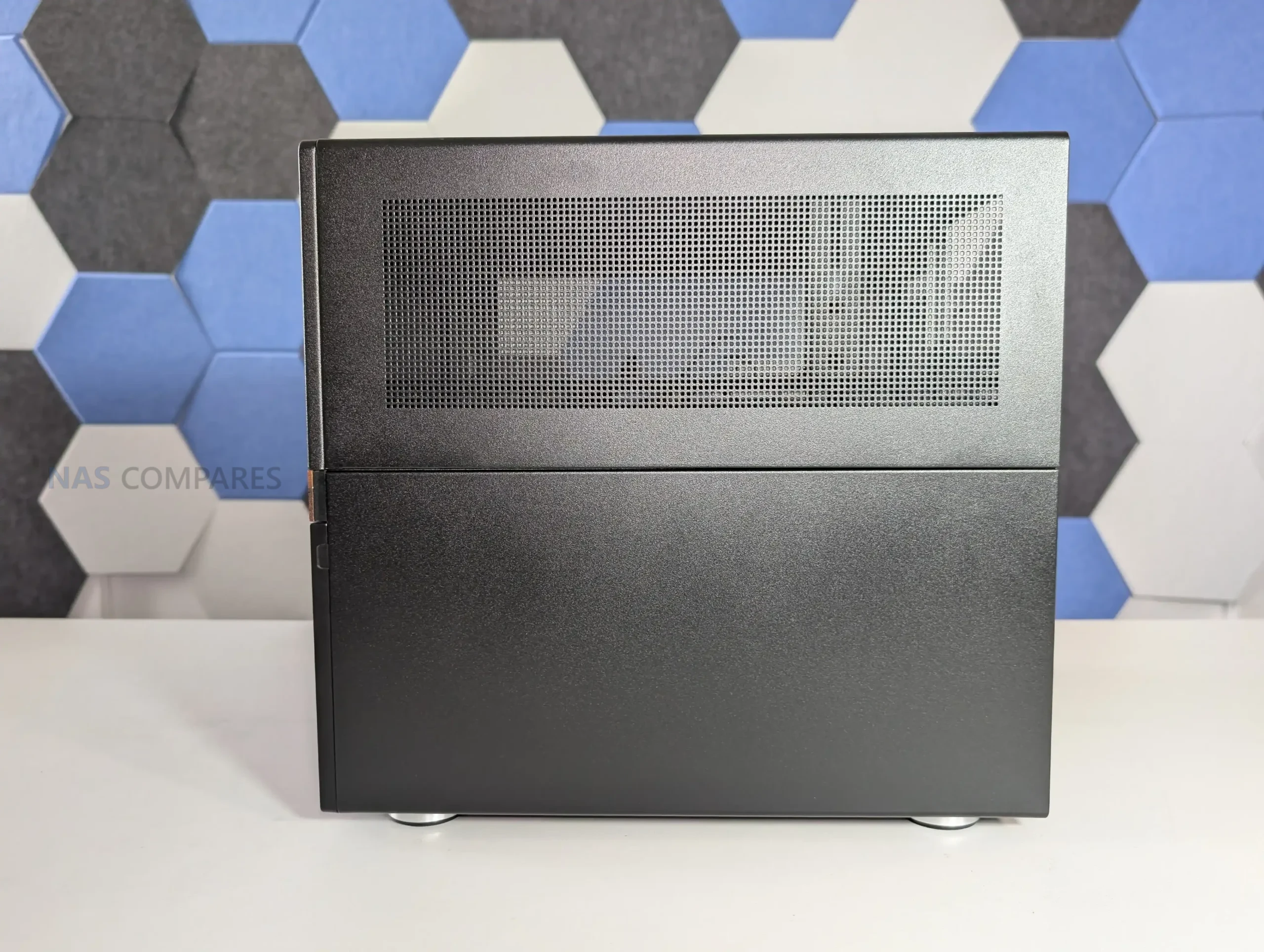
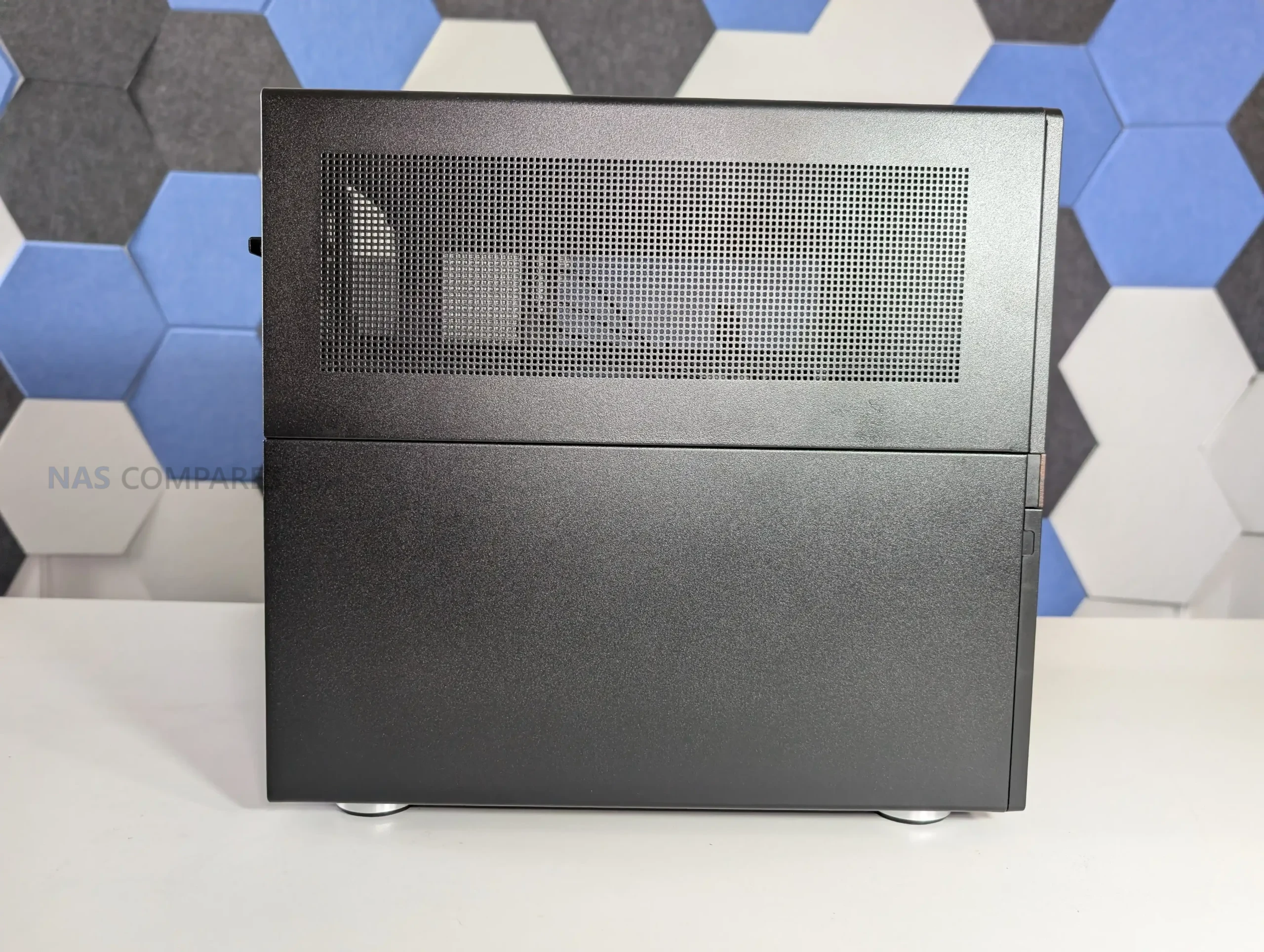
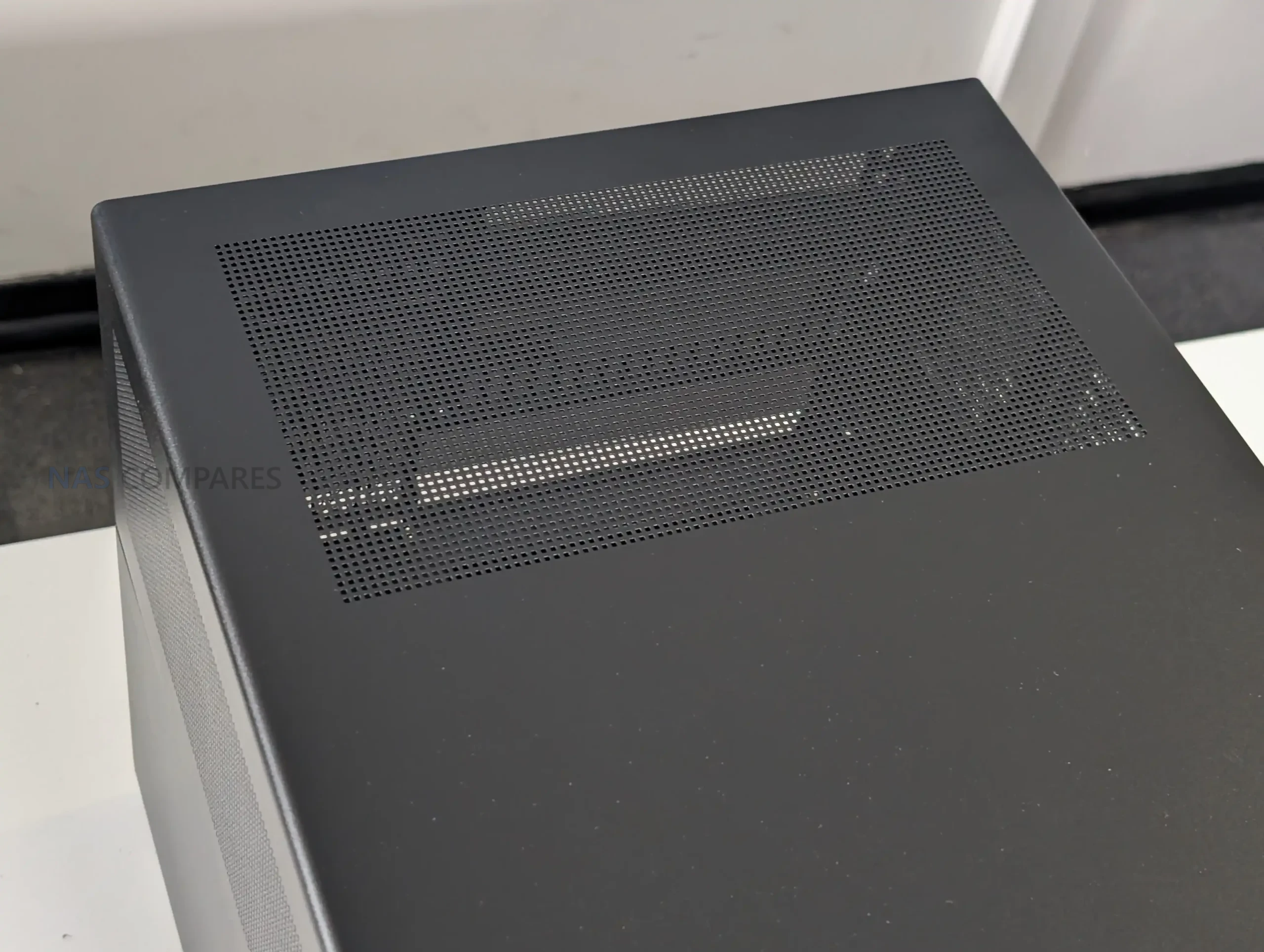
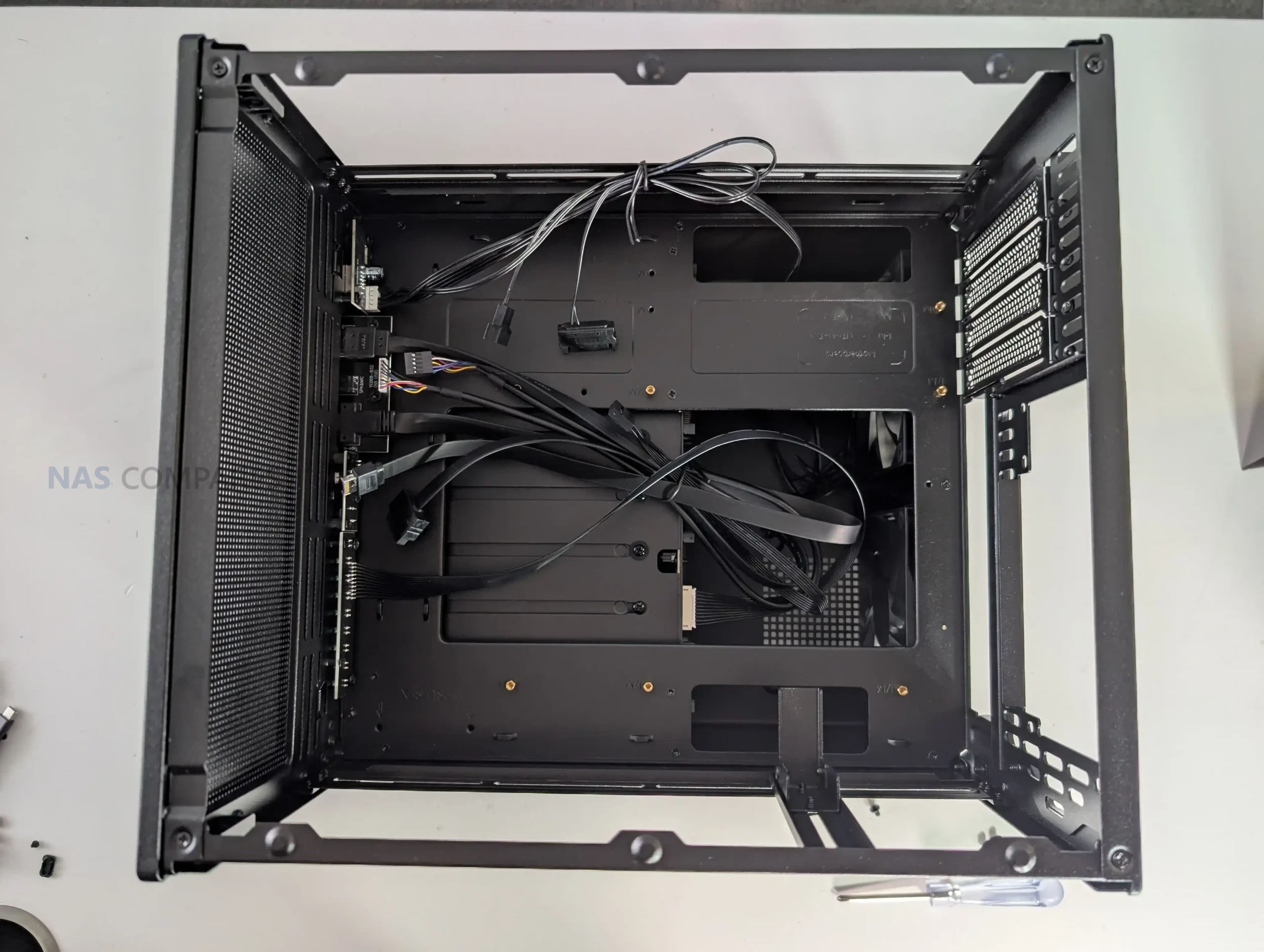
At a chassis level, the lineup splits into 2U and 1U designs, and that difference shapes how each unit fits into smaller racks and shallow cabinets.

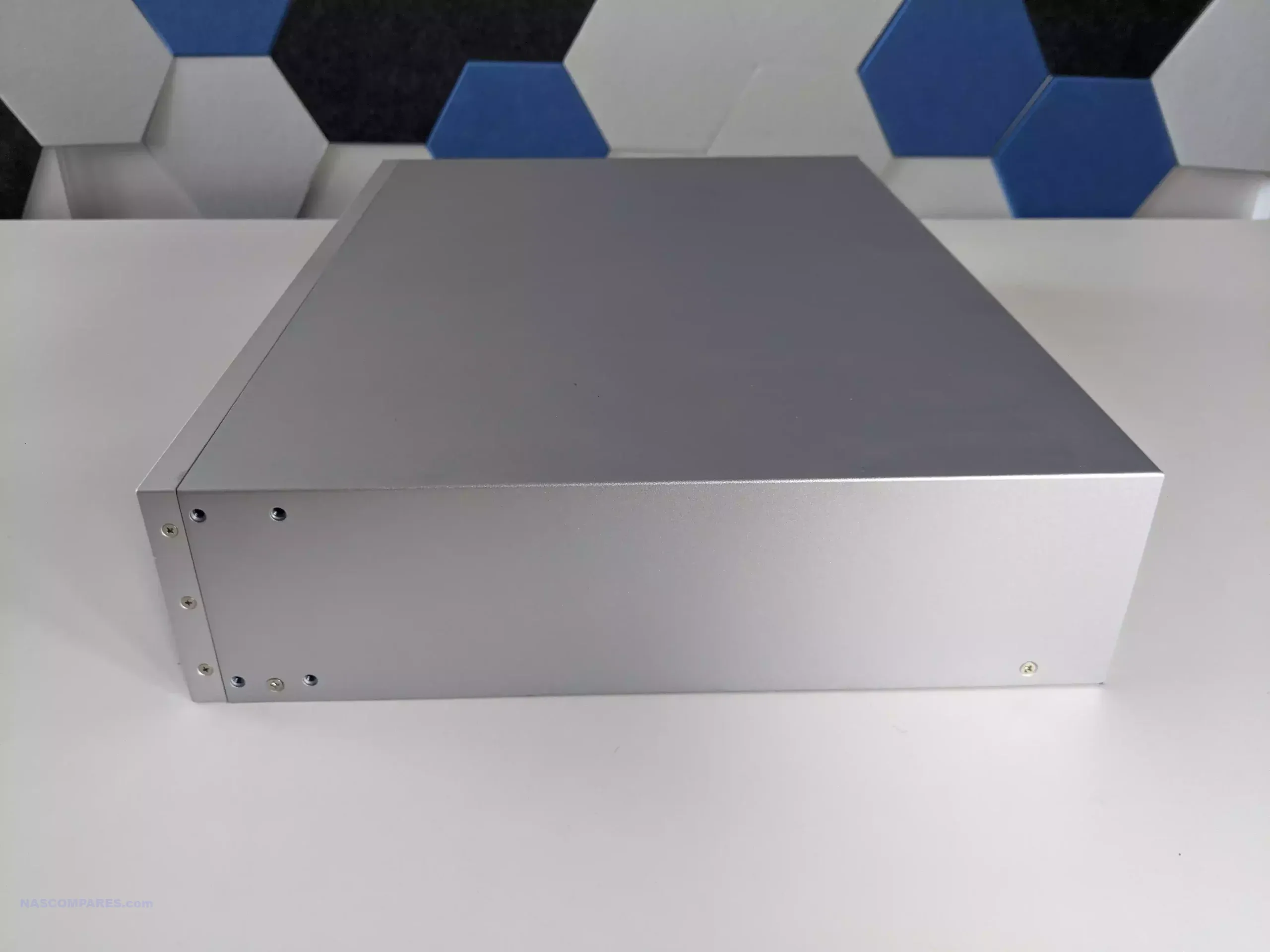
The UNAS Pro is the shortest depth of the 3, while the UNAS Pro 4 and UNAS Pro 8 extend further back, which matters once you account for cable bend radius and rear clearance.

For compact wall racks and shorter cabinets, the older UNAS Pro tends to be easier to accommodate purely on physical depth, even before you consider anything about performance or features.
| UNAS PRO 8 480MM DEPTH
|
UNAS PRO 325MM DEPTH
|
| UNAS PRO 4 400MM DEPTH
|
DON’T FORGET RAILS!!!
|



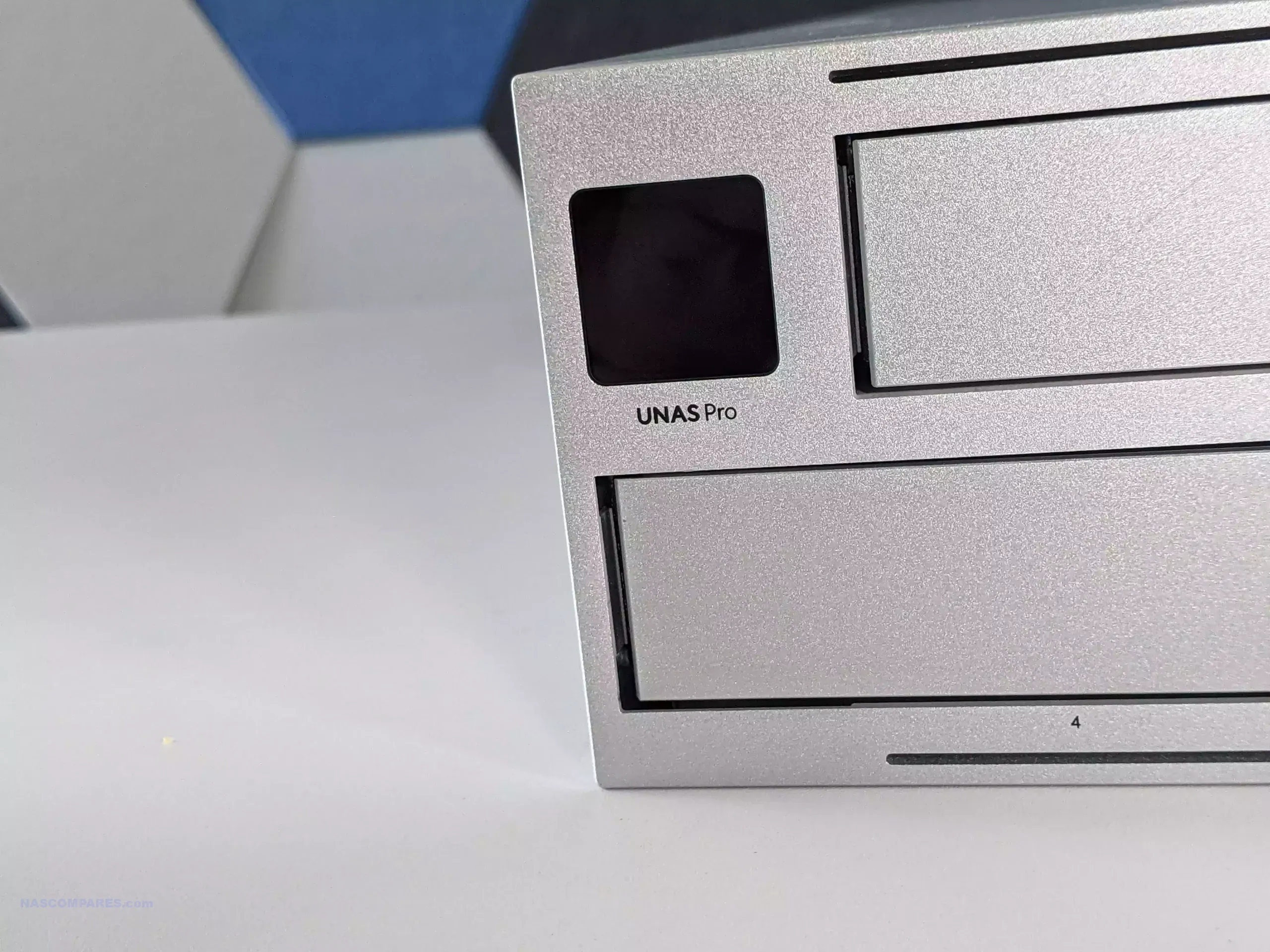
The UNAS Pro also stands apart on the front panel experience, because it includes a 1.3″ touchscreen that can surface live status information without needing to log into the UI. That is not present on the UNAS Pro 4 or UNAS Pro 8, which lean into a more conventional rack appliance faceplate focused on bay access and basic indicators. In day to day use, the screen is mainly a convenience feature for quick checks and basic local interaction, rather than something that changes how the system is deployed.
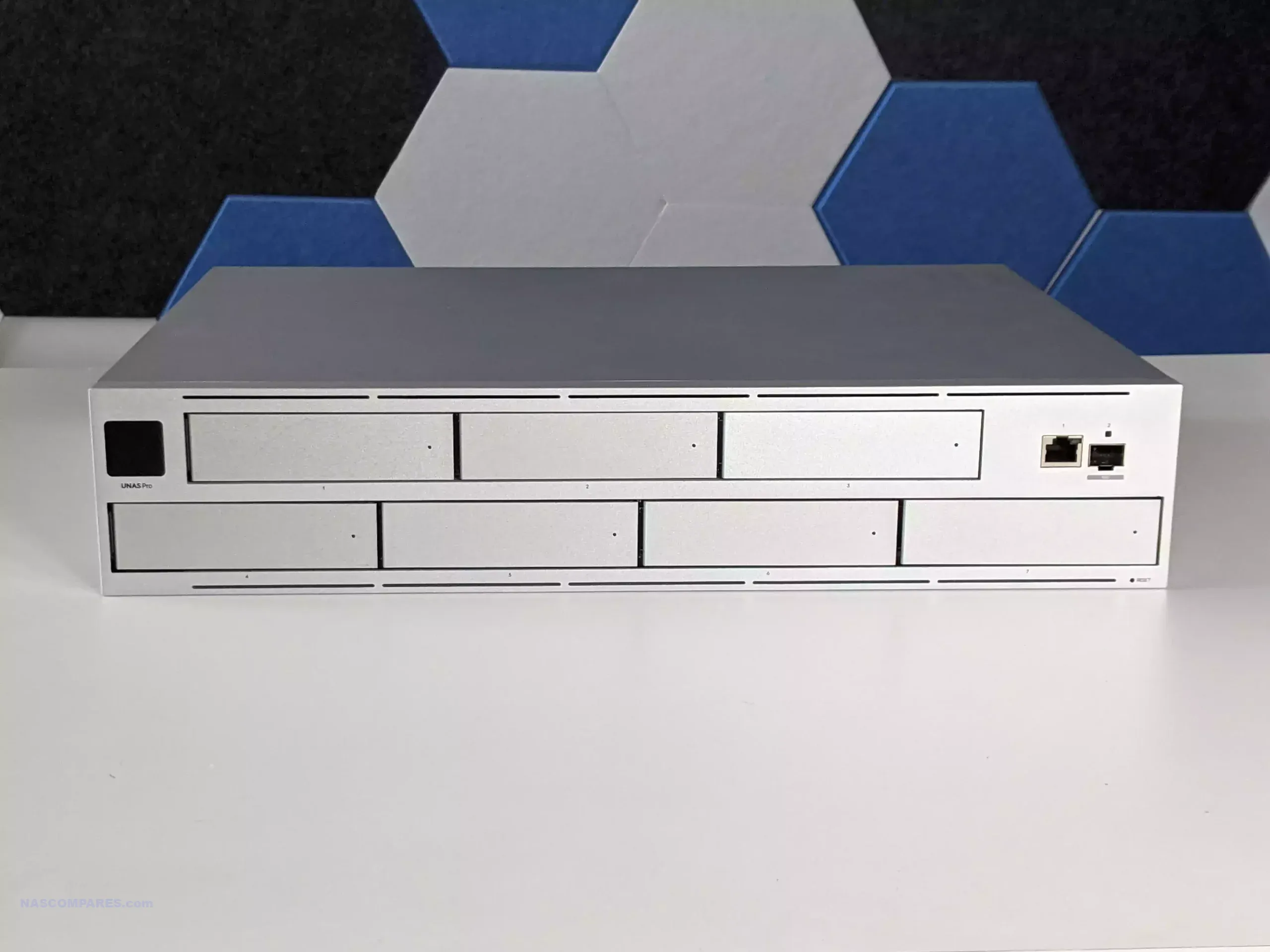
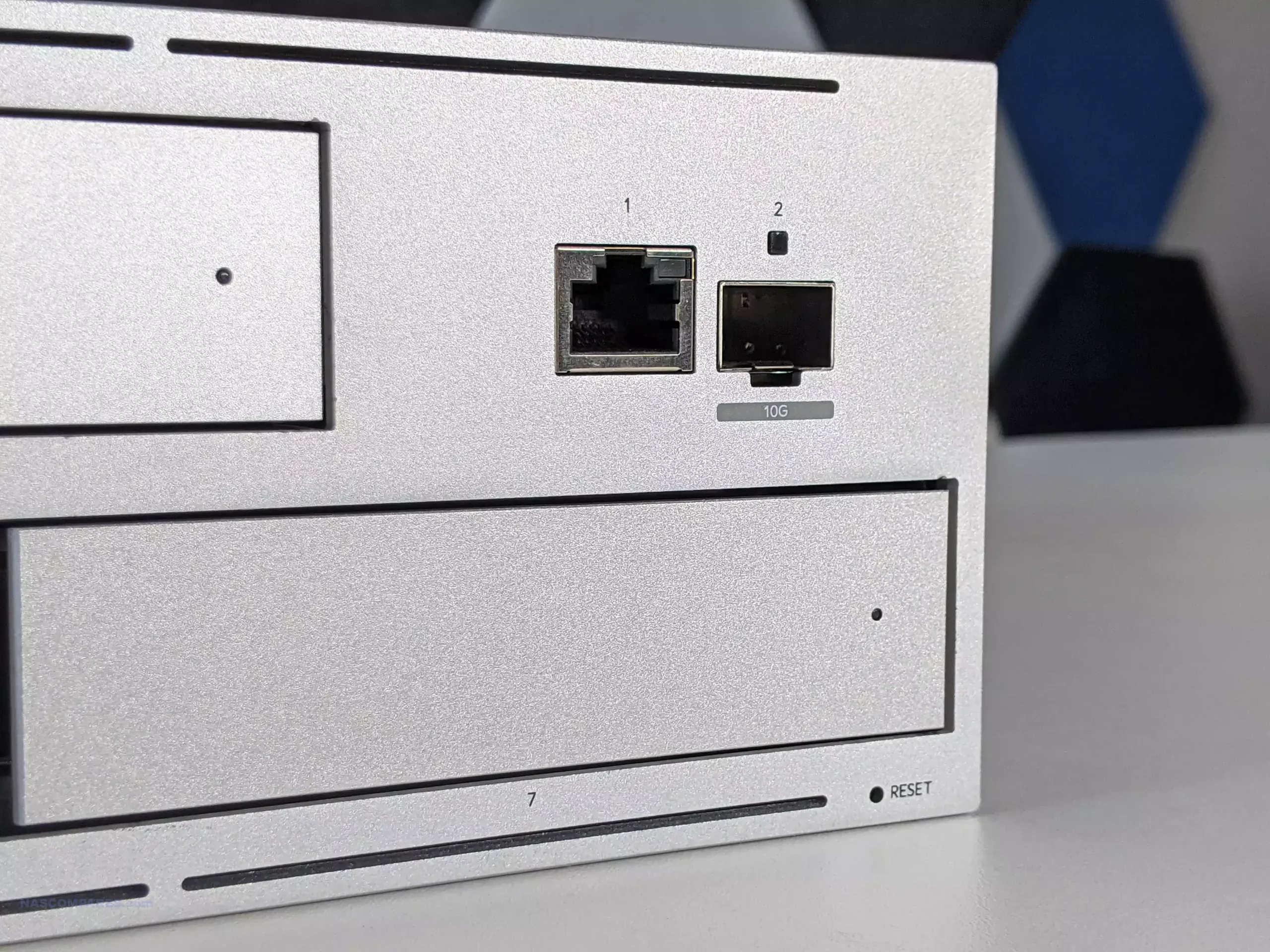
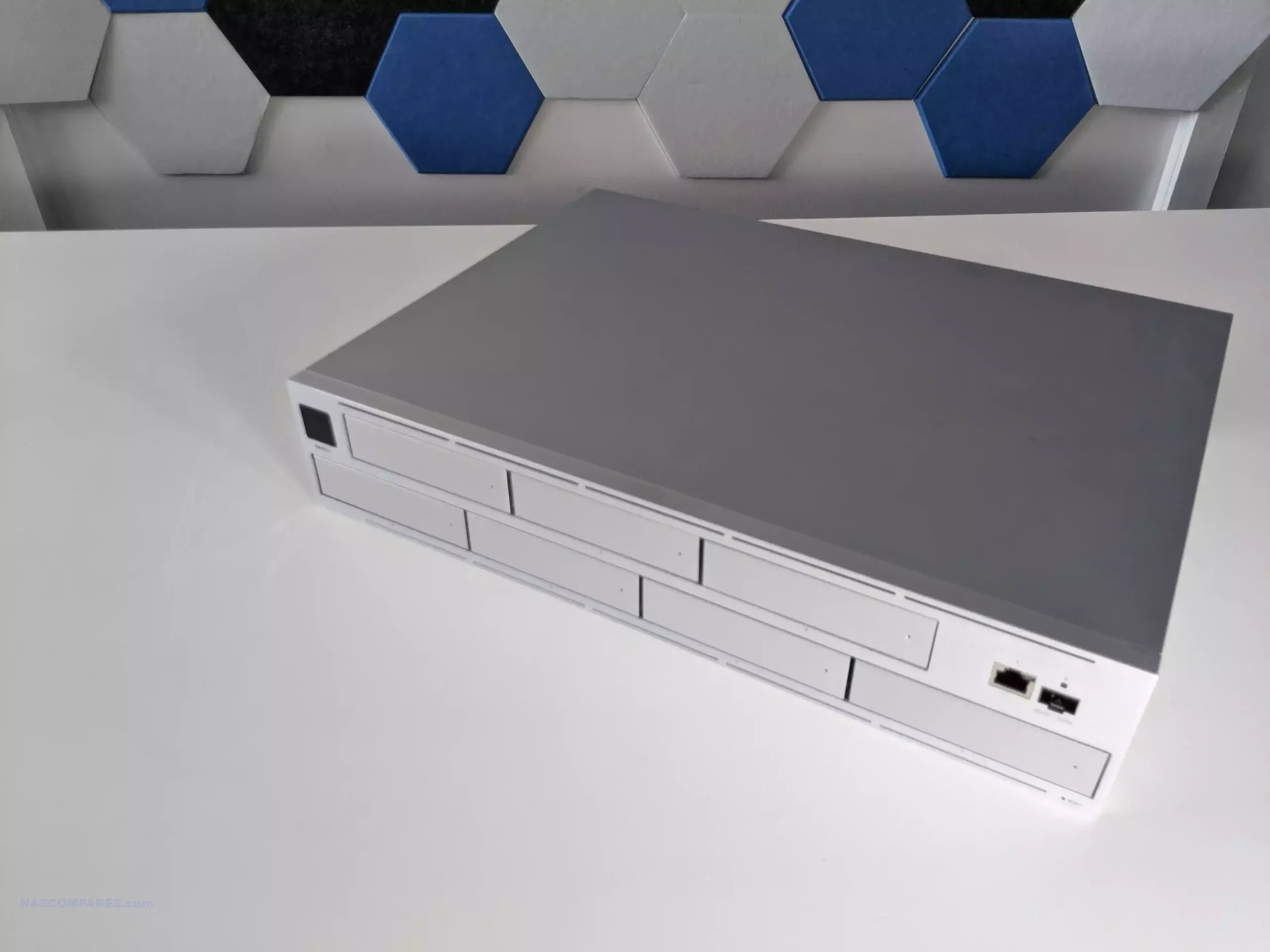
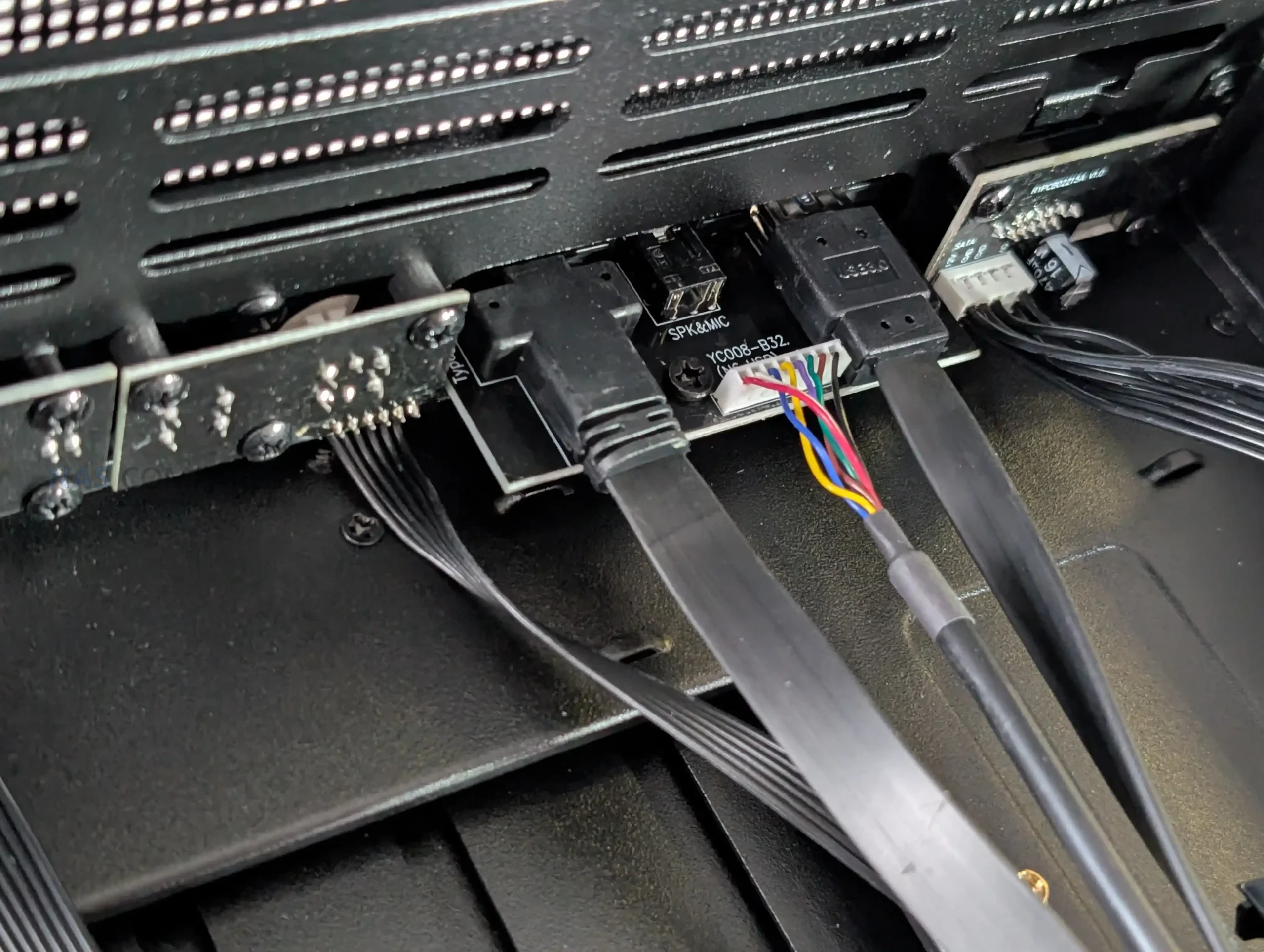
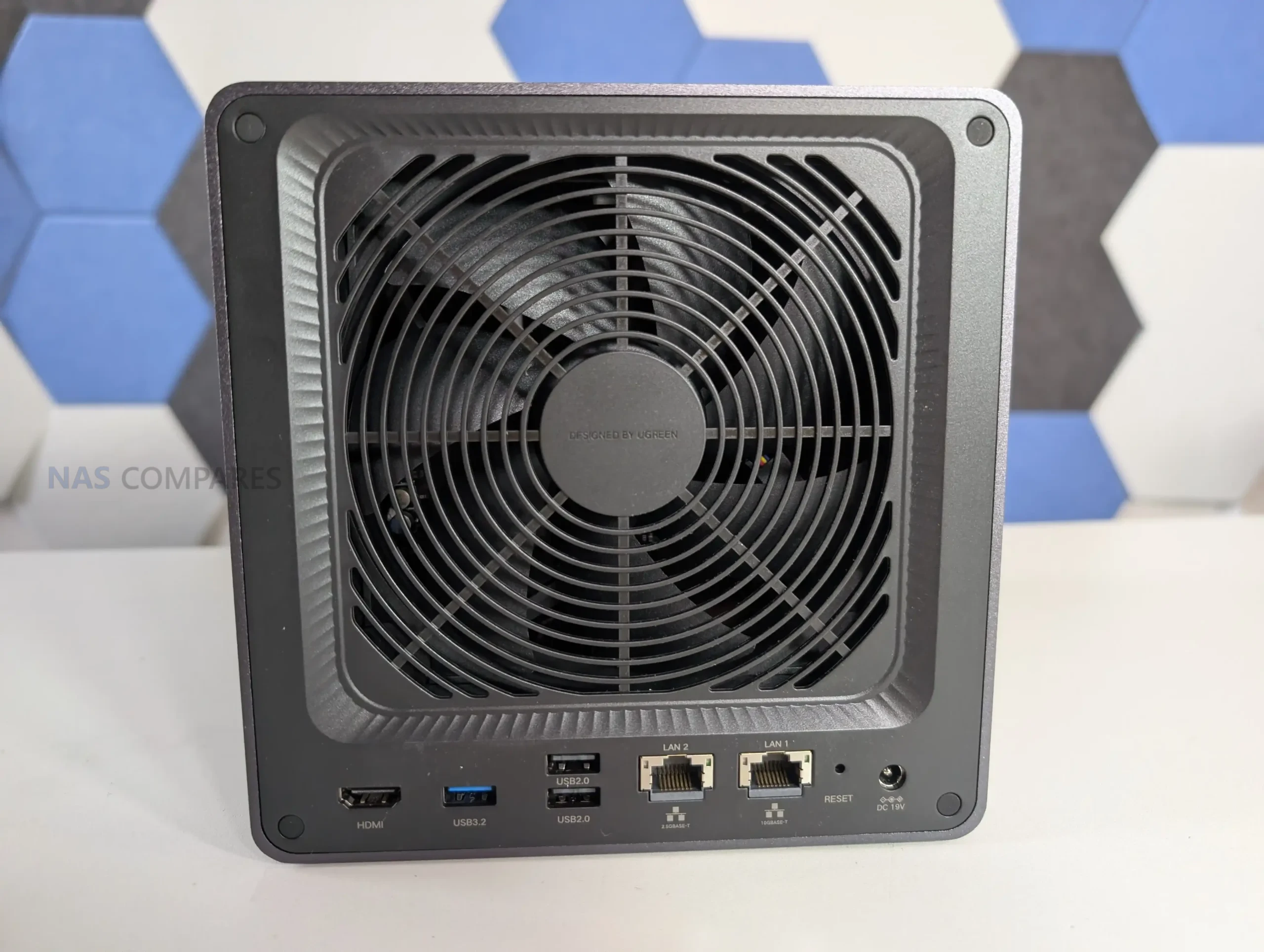
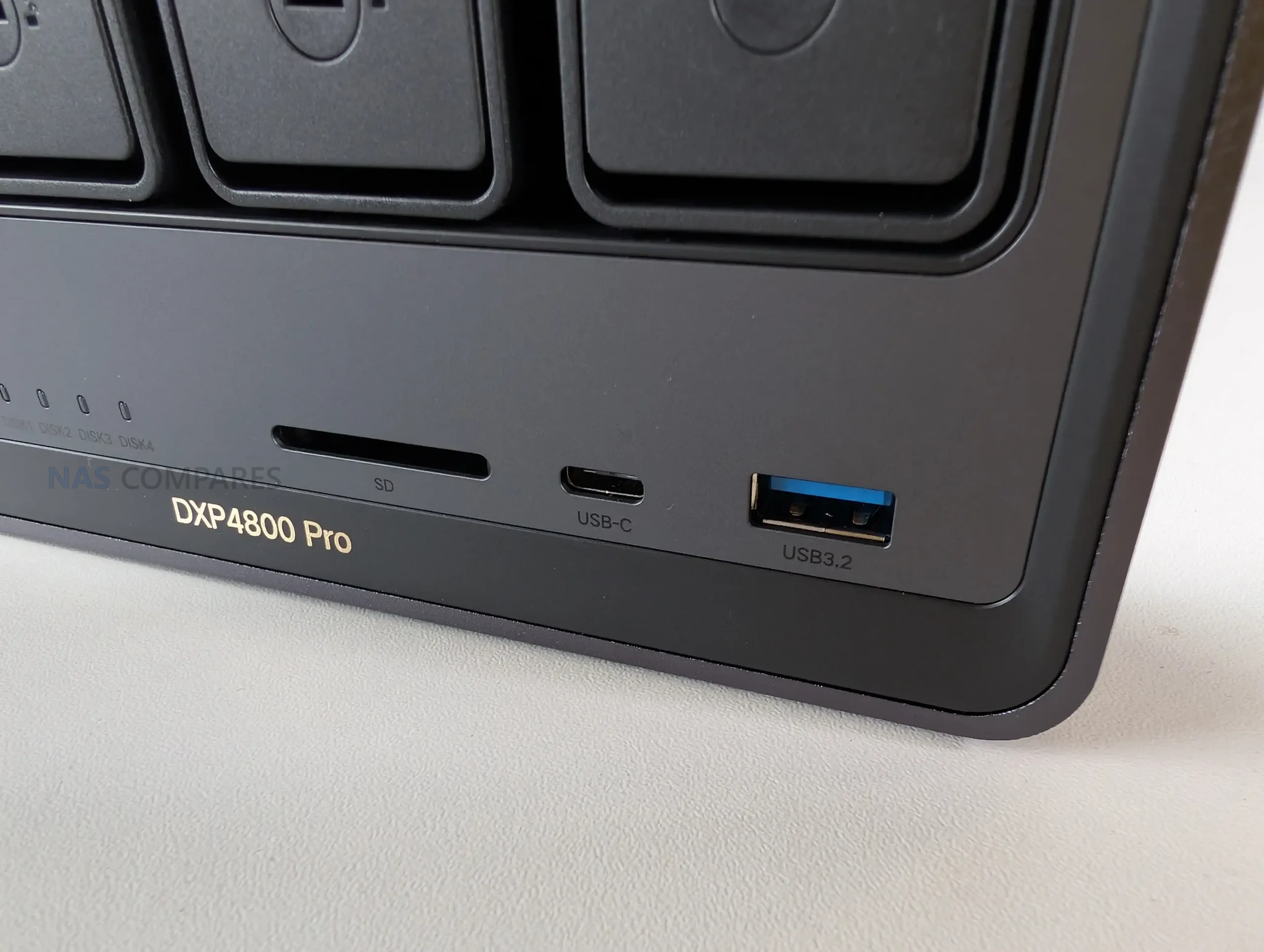
Another practical design difference is port placement philosophy. The UNAS Pro places its primary network connectivity on the front, while the UNAS Pro 4 and UNAS Pro 8 move connectivity to the rear, matching the typical layout most rackmount NAS systems follow. Front facing ports can reduce visible cabling in front of a rack and shorten patch runs in some UniFi heavy layouts, but rear mounted ports are generally easier to route cleanly in deeper cabinets with rear cable management.
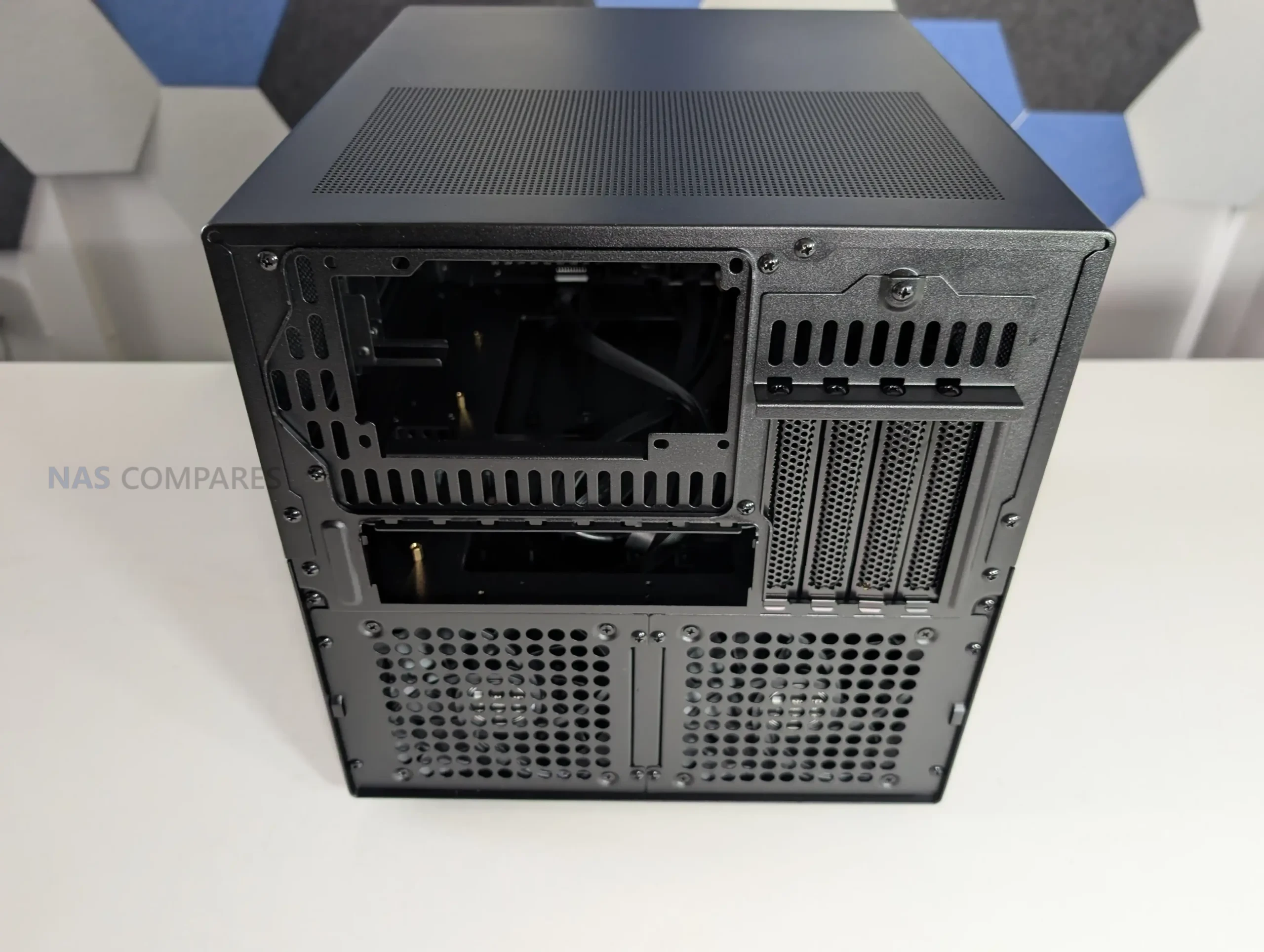
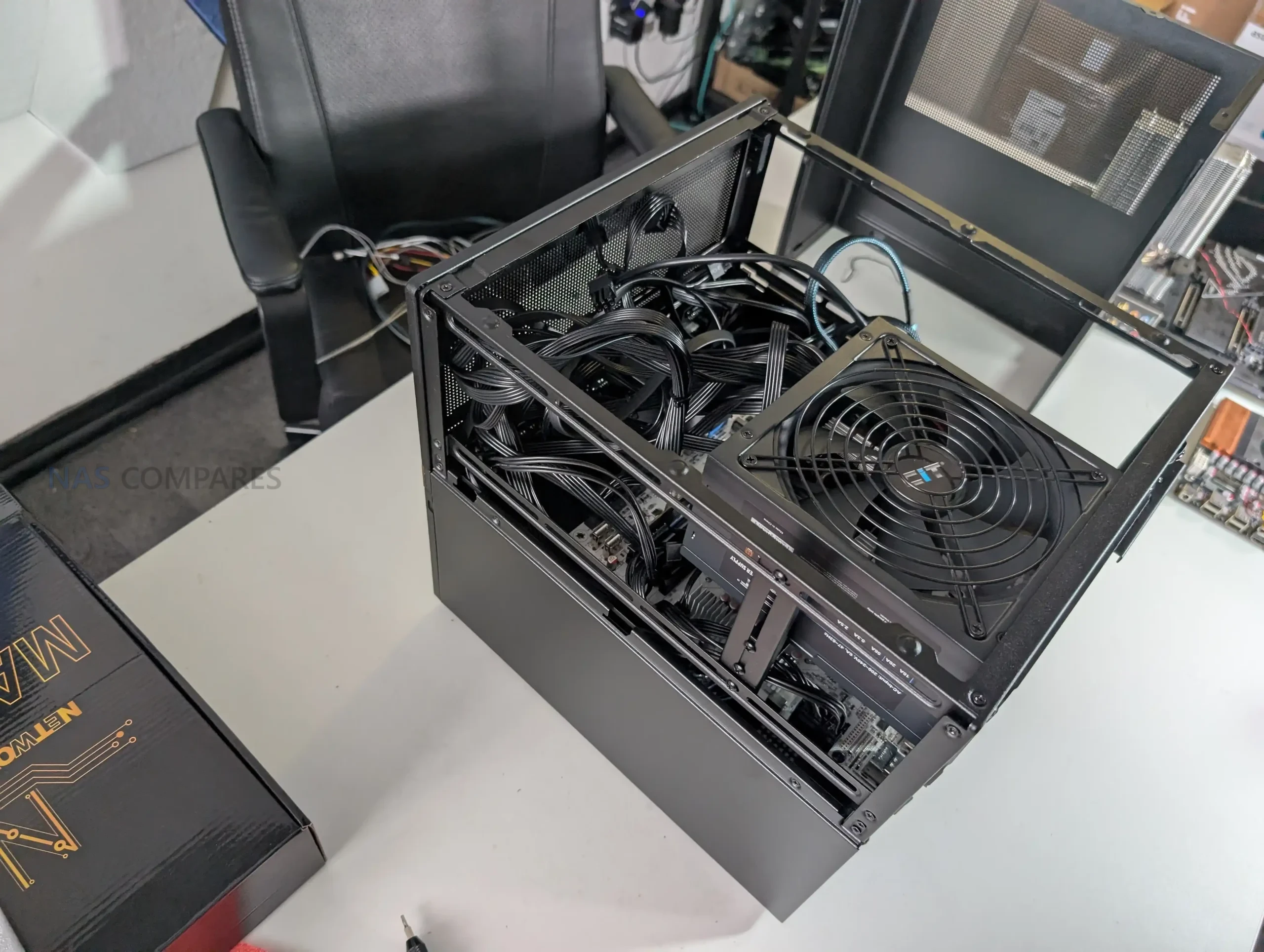
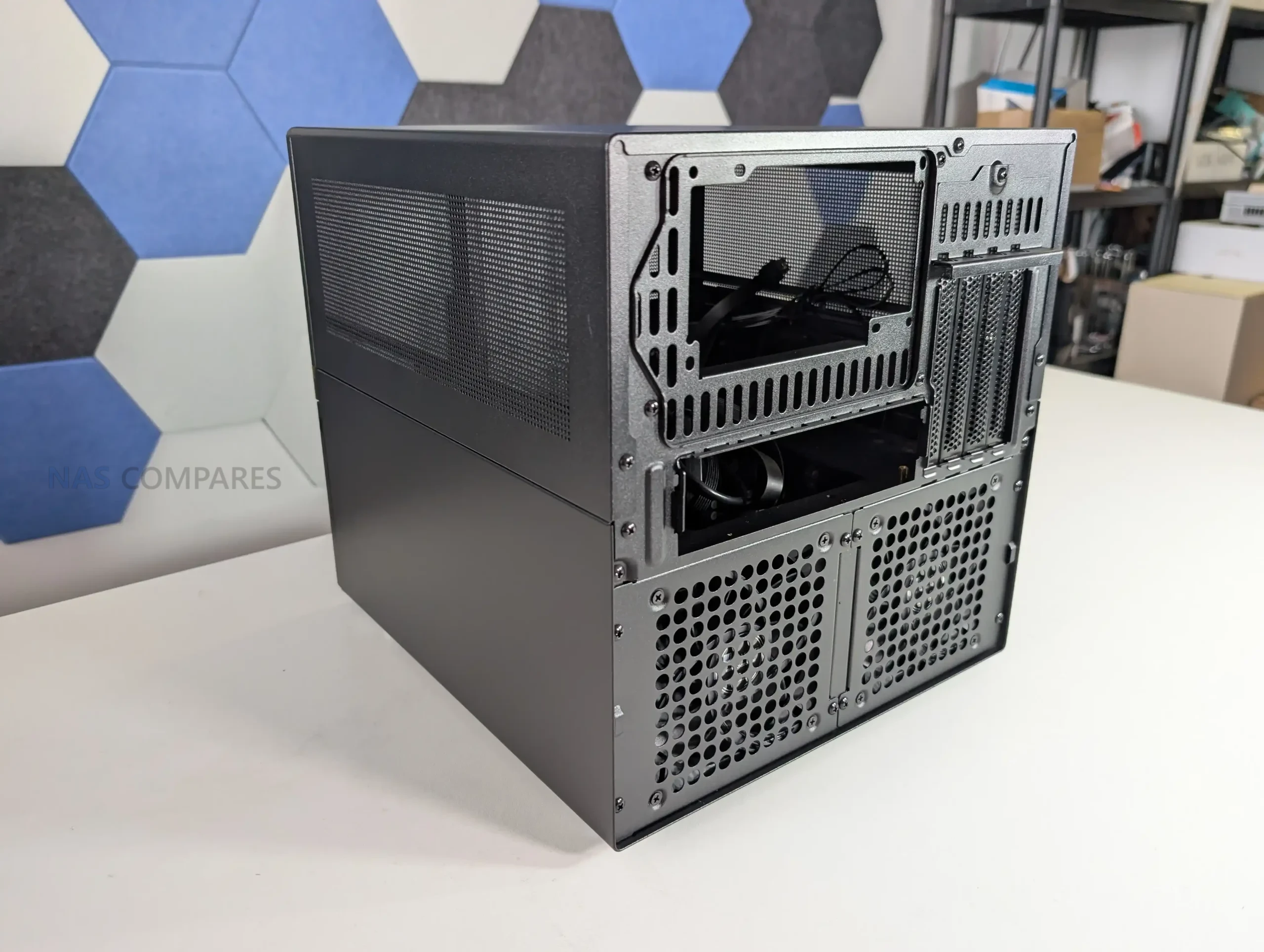
Power implementation also affects the physical serviceability profile of each unit. The UNAS Pro 8 uses hot swappable power modules, which changes how you handle failure or planned maintenance compared with the fixed internal power approach used by the UNAS Pro and UNAS Pro 4.
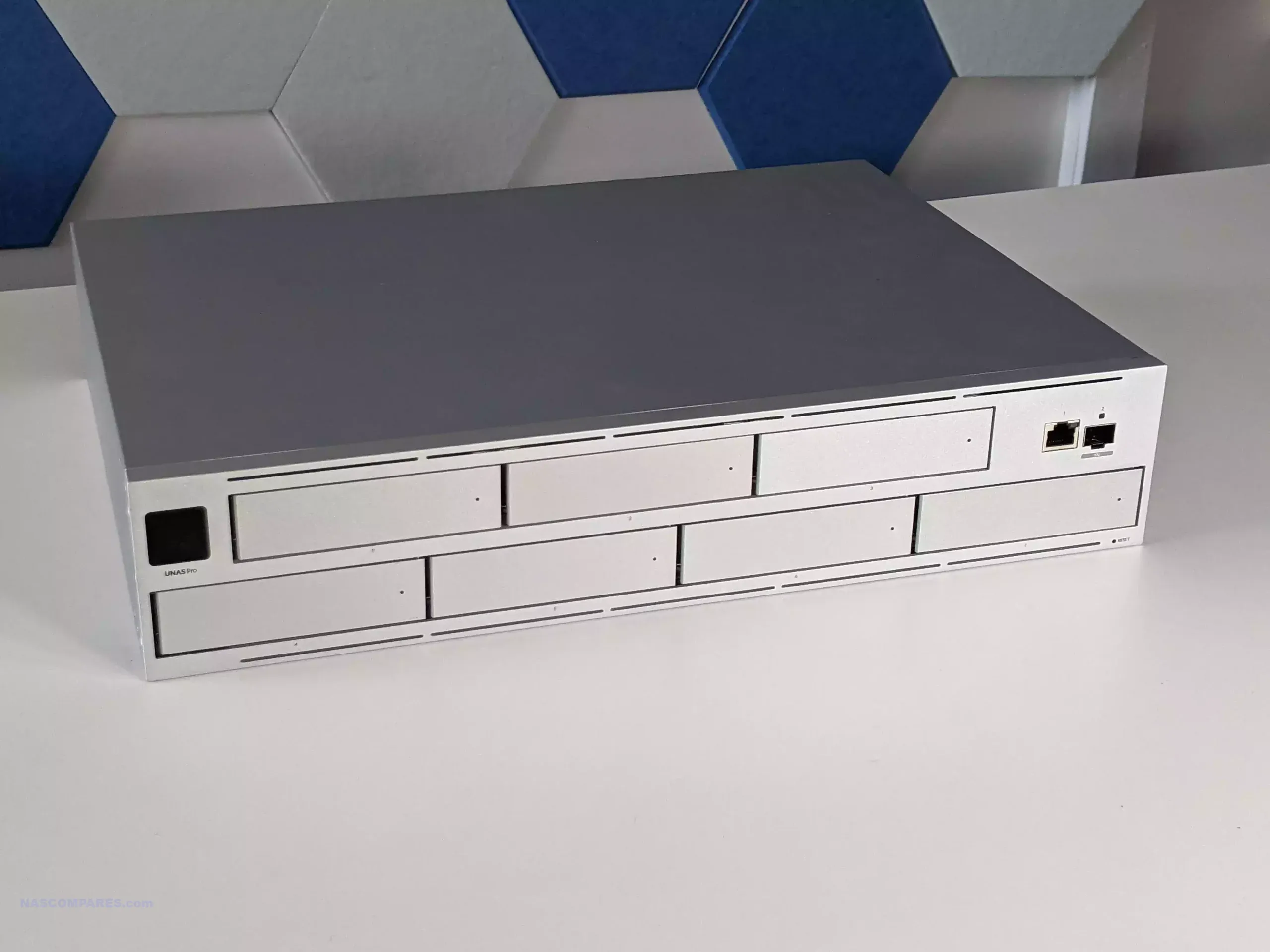 |
 |
 |
|
All 3 use a steel enclosure and ship as purpose built rack devices rather than desktop conversions, but the UNAS Pro 8 is the one that most closely matches what many buyers expect from a higher end rack appliance in terms of field replacement for key physical components.

UniFi UNAS Pro vs Pro 4 vs Pro 8 NAS – Storage
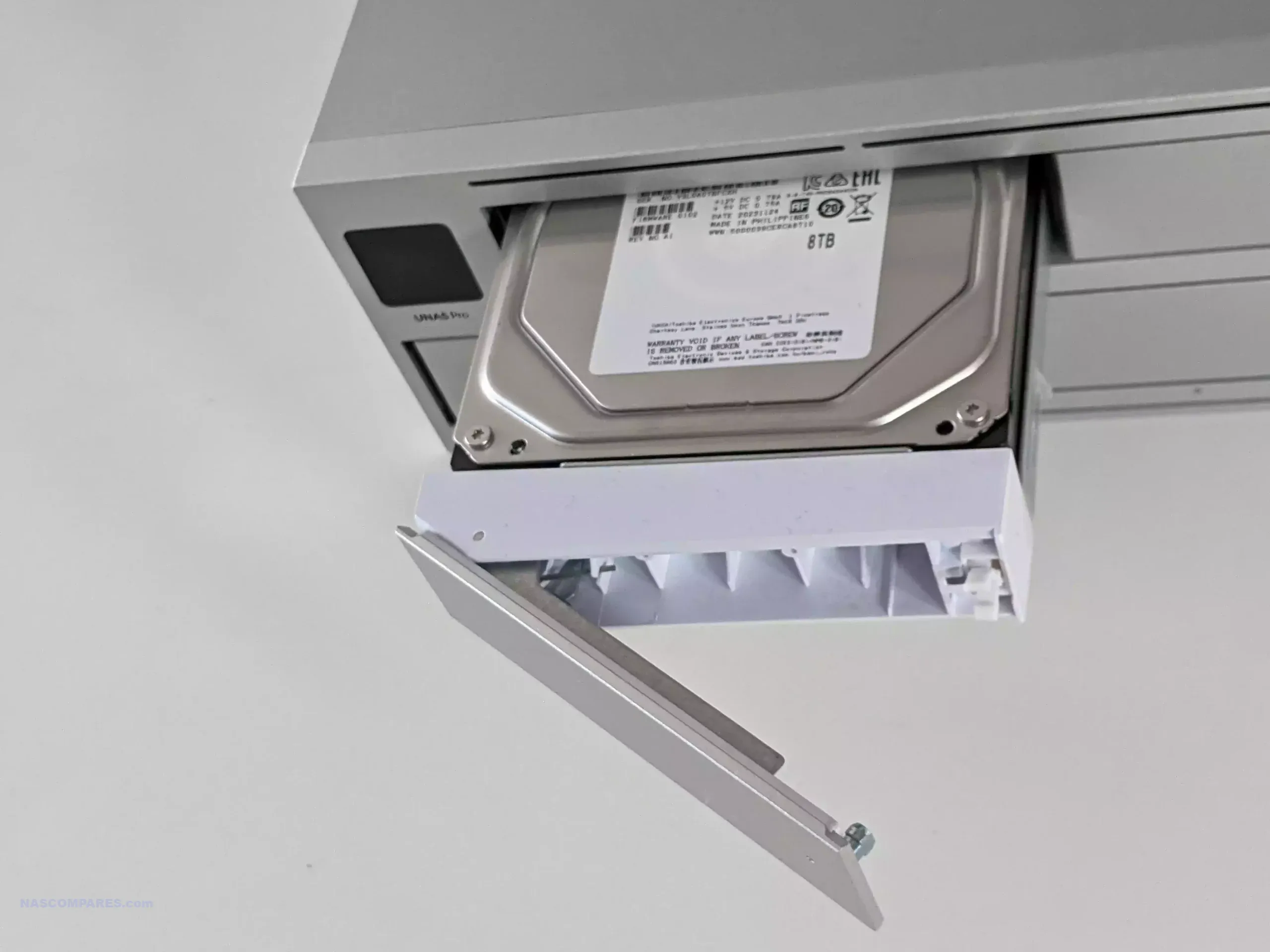
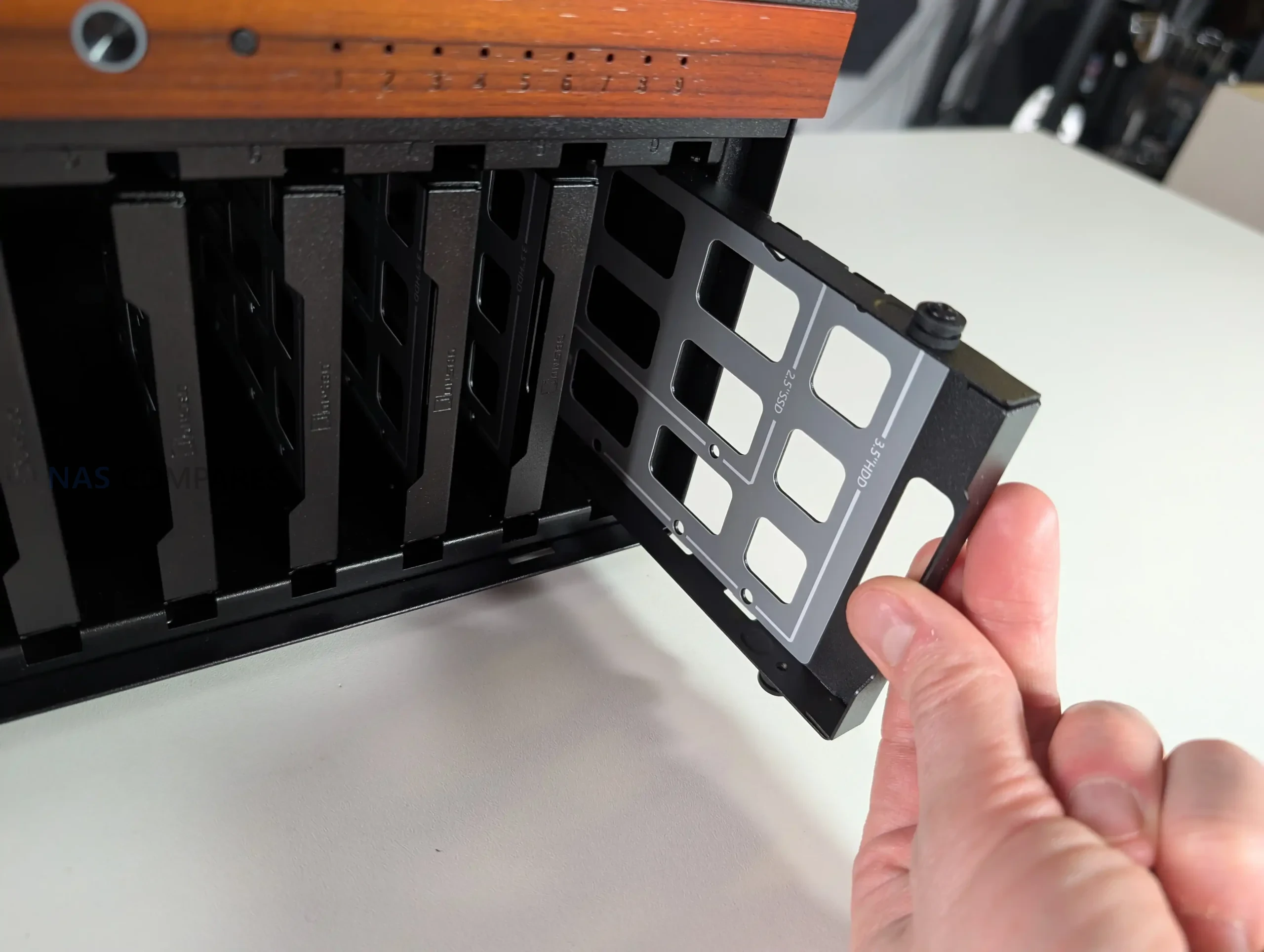
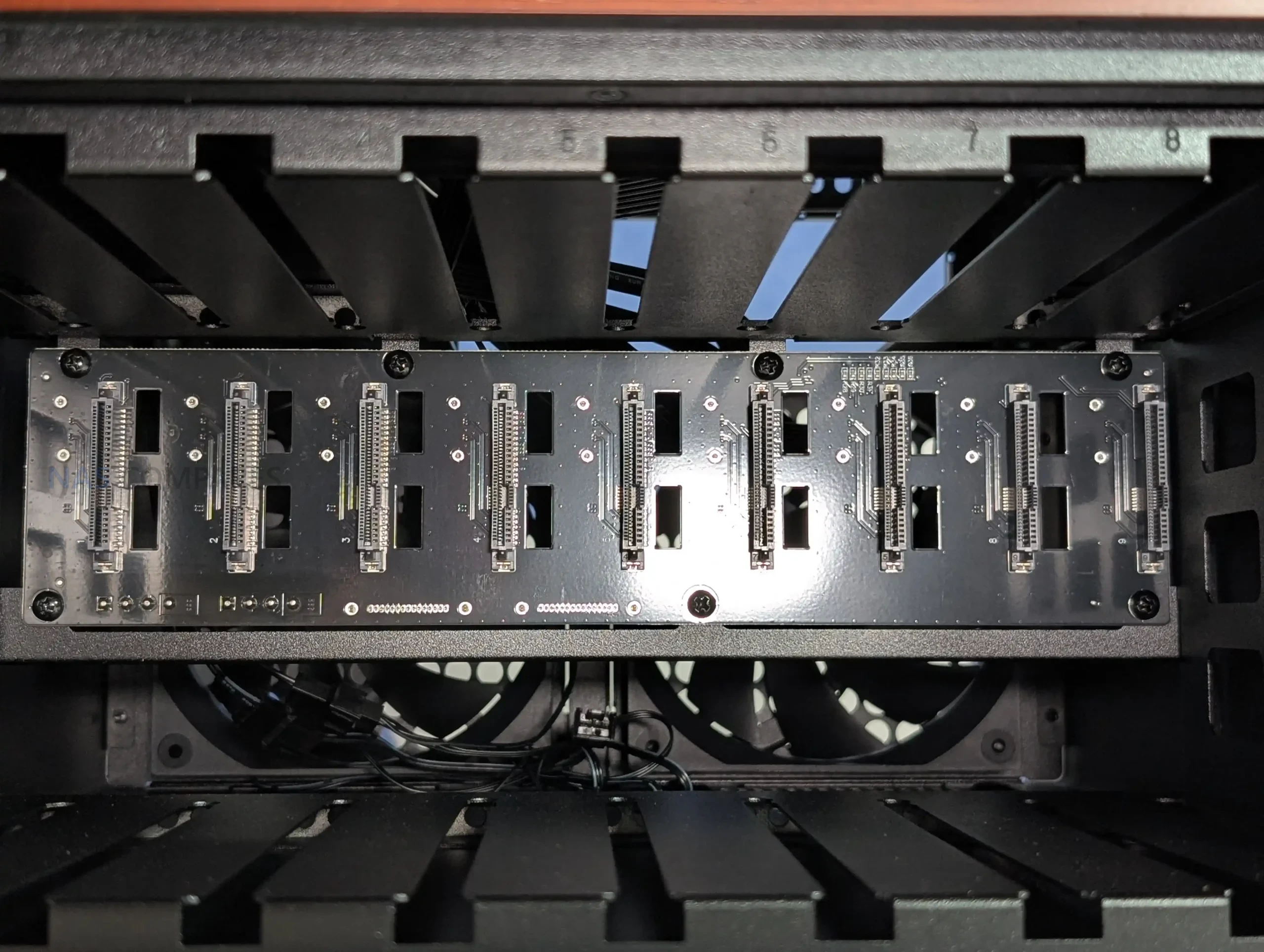
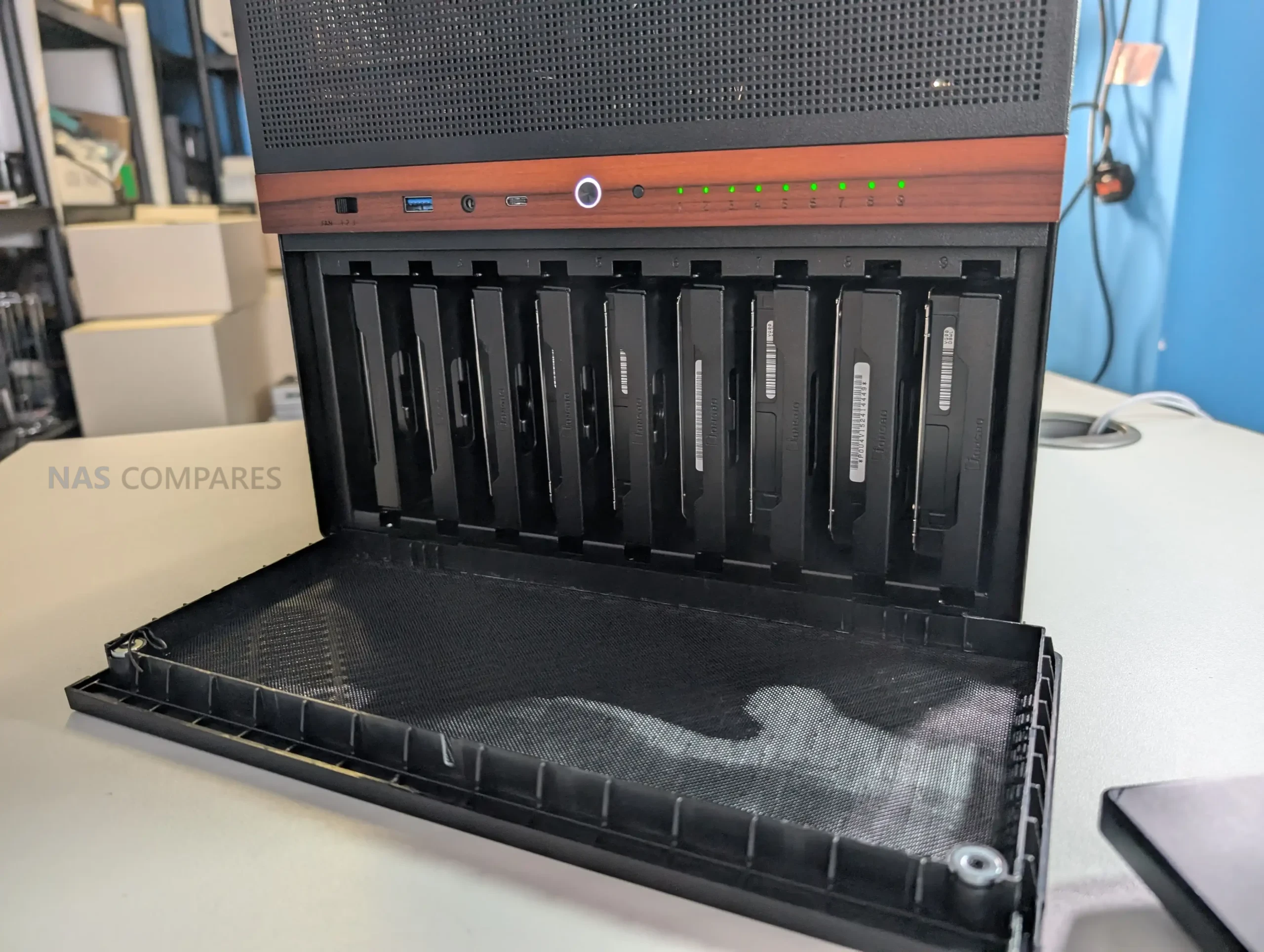
The most obvious storage difference is the bay count and what that does to capacity planning. The UNAS Pro provides 7 front accessible 2.5 inch or 3.5 inch bays in a 2U chassis, the UNAS Pro 4 offers 4 bays in a 1U chassis, and the UNAS Pro 8 increases that to 8 bays in 2U. If you expect to grow into larger pools over time, the 7 bay and 8 bay models give more headroom before you are forced into drive replacements, a second NAS, or a new storage tier. With no official expansion chassis support referenced here, the physical bay count is effectively the ceiling for each system.
 |
 |
 |
 |
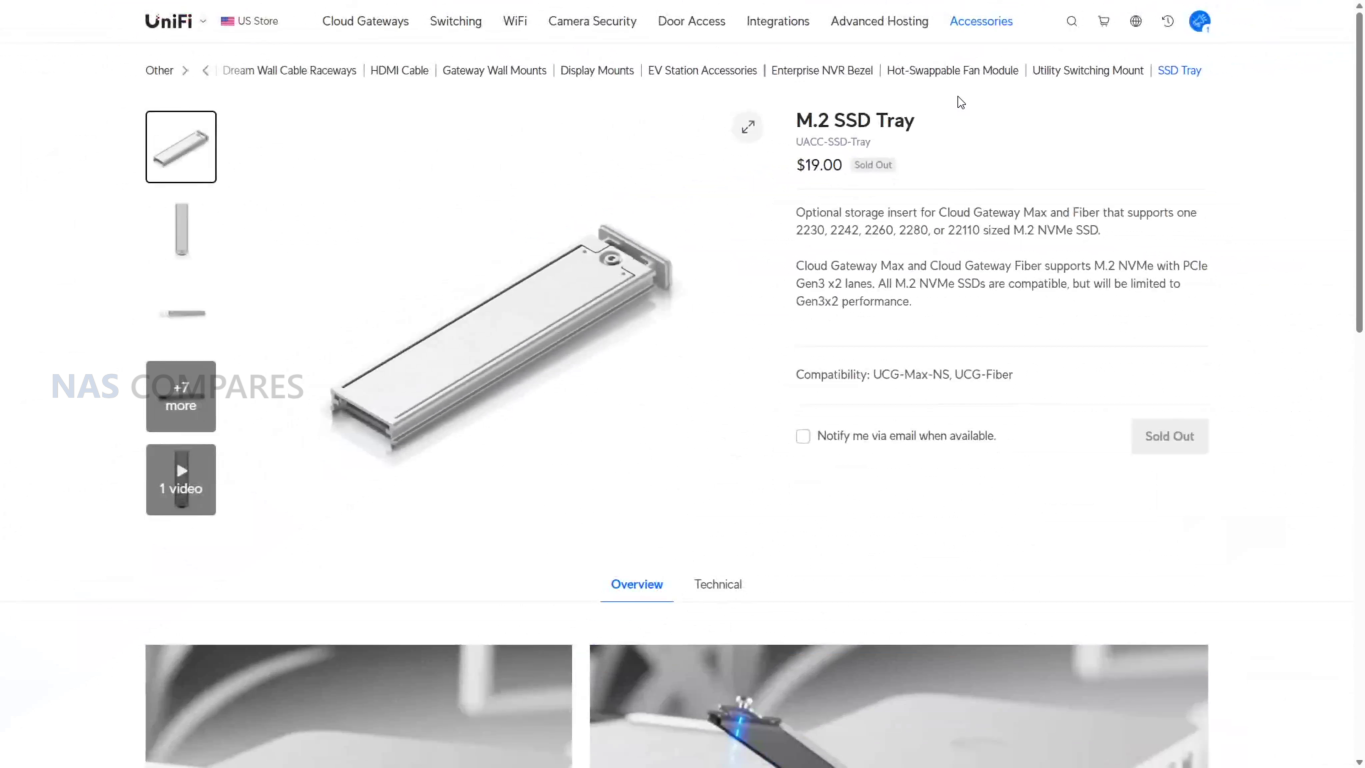
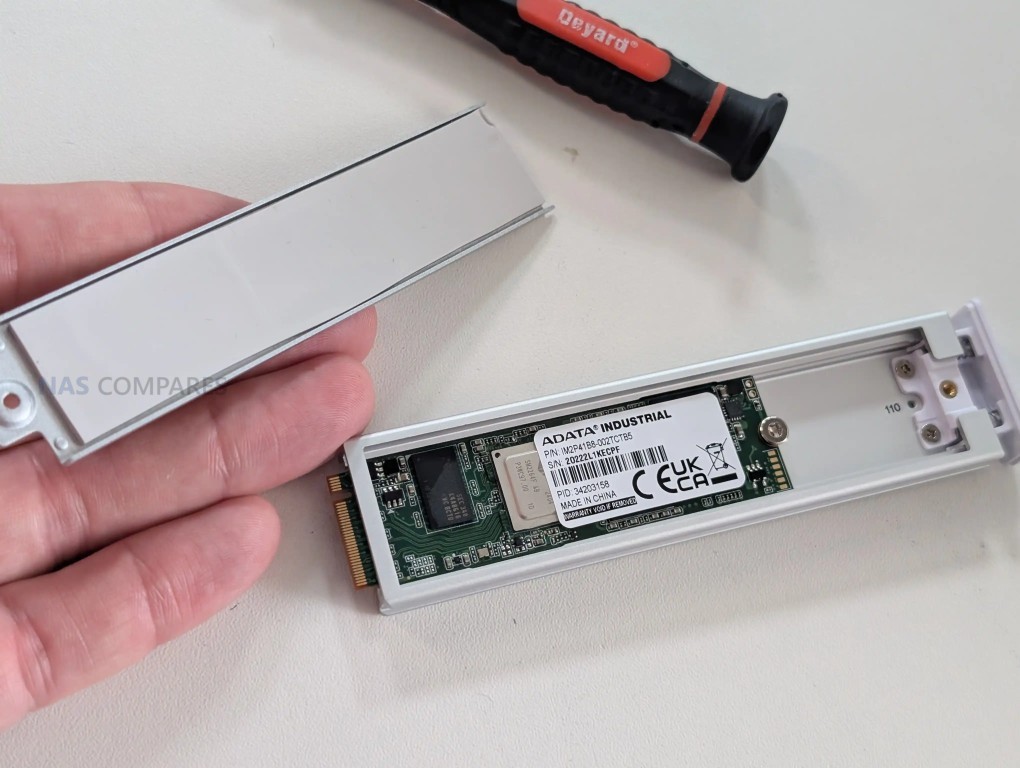
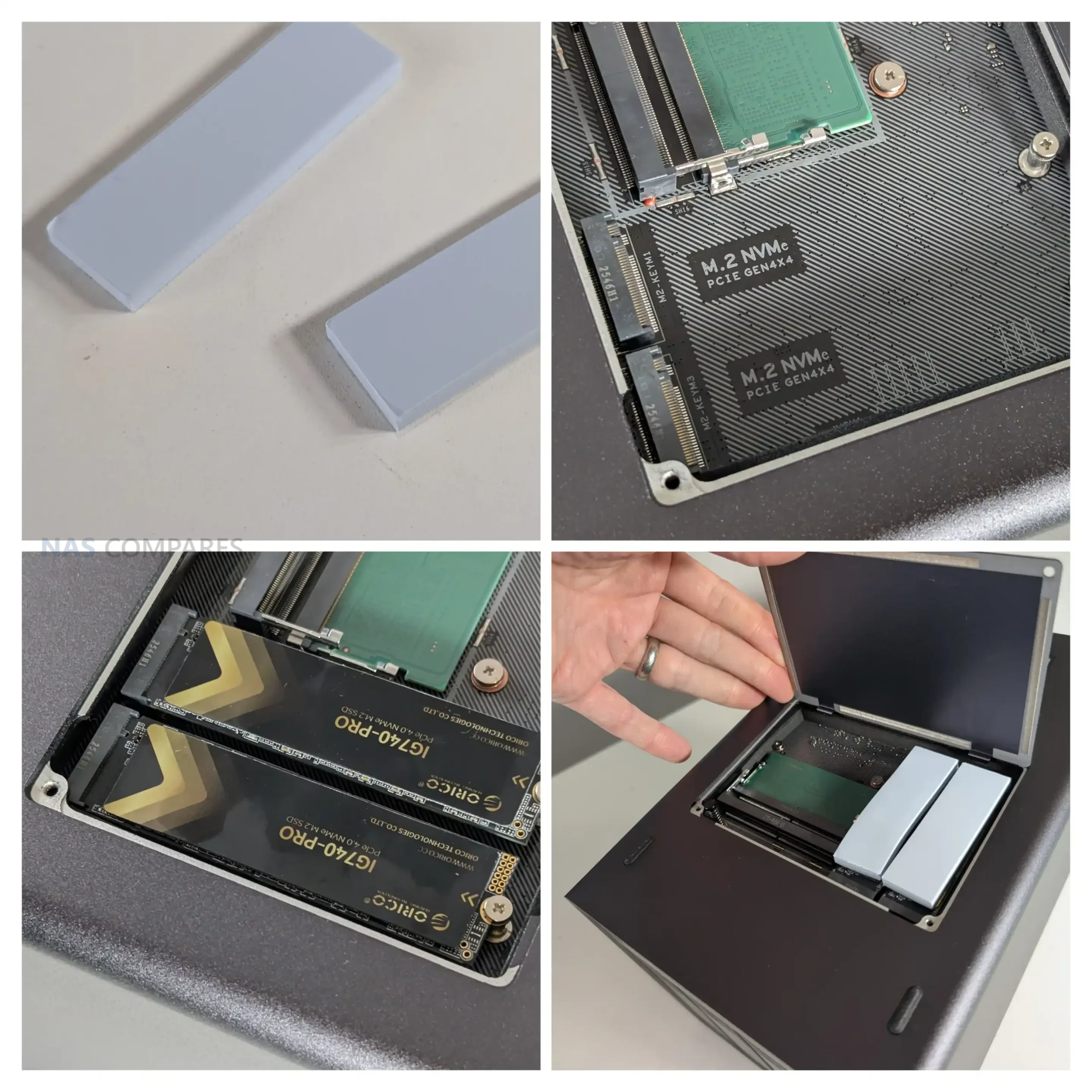
The UNAS Pro 4 and UNAS Pro 8 add 2 M.2 NVMe slots intended for SSD caching, while the UNAS Pro does not include NVMe slots. This changes how you can approach mixed workloads, because cache can reduce latency for repeated small file access and help smooth bursts of writes, depending on how the platform applies caching. It does not change the underlying reality that the main capacity tier is still the SATA bay set, but it gives the Pro 4 and Pro 8 a path to improve responsiveness for specific access patterns without committing to full SSD storage across all bays.
 |
 |
 |
 |
RAID flexibility also varies, not in the list of RAID levels available, but in how storage can be organized. All 3 units support RAID 5, RAID 6, and RAID 10, but the UNAS Pro 4 is listed as supporting a single RAID group, while the UNAS Pro and UNAS Pro 8 are listed with multiple RAID groups. In practice, the single group limitation matters if you prefer separating workloads or isolating different retention policies into distinct pools, rather than placing everything into 1 volume. On the larger models, multiple groups give more options for structuring storage around different priorities, such as performance versus redundancy, or shared storage versus dedicated project space.
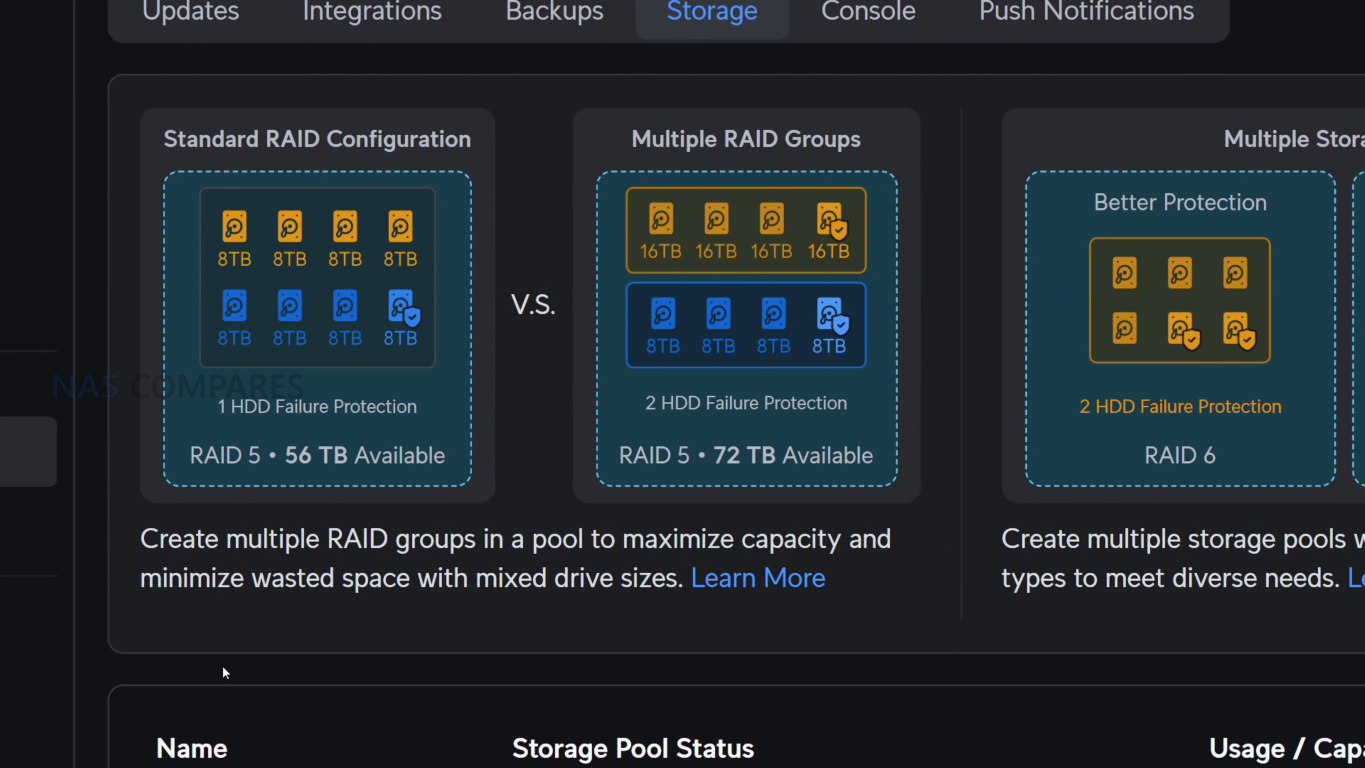
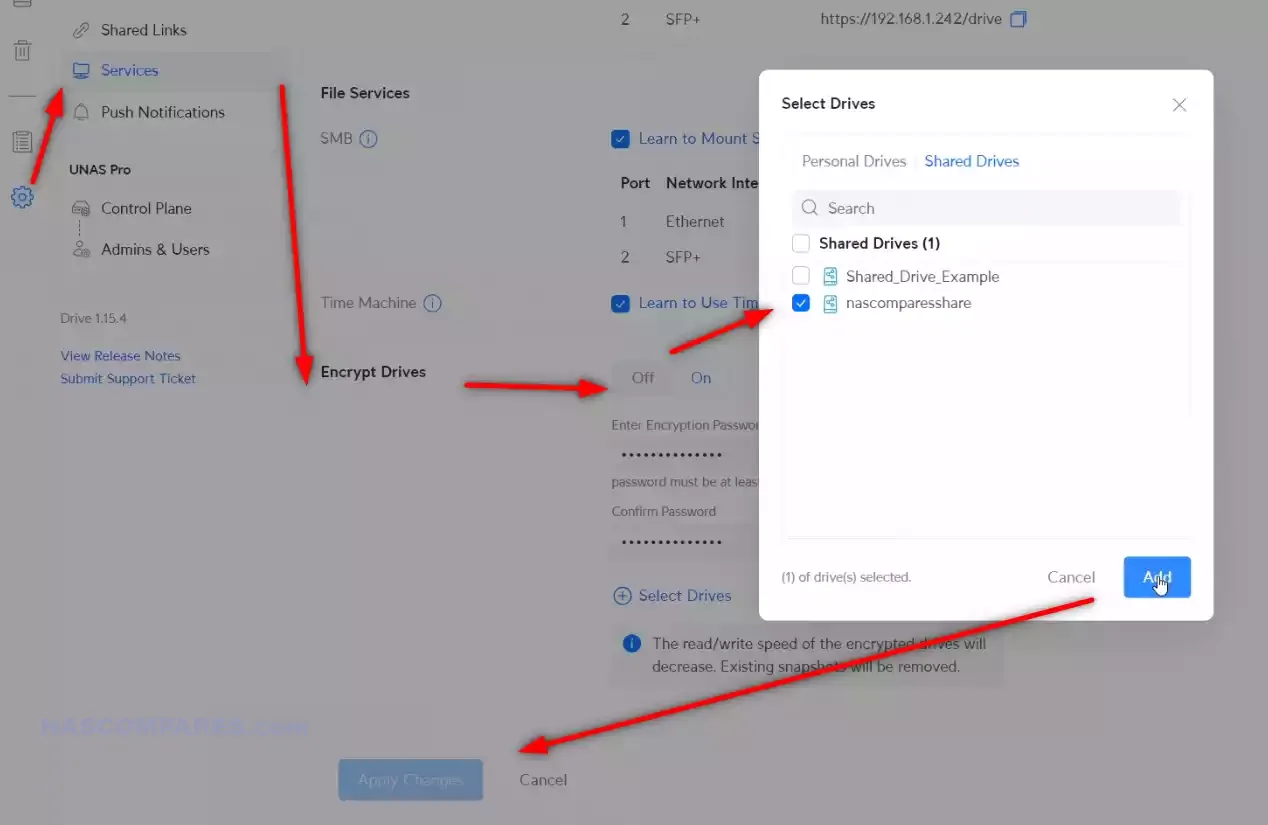
Operational features tied to storage protection are also not identical across the range. Hot spare support is listed on the UNAS Pro and UNAS Pro 8, but not on the UNAS Pro 4, which affects how you plan for unattended recovery after a drive failure. All 3 support snapshots, file encryption, share links, Time Machine backup, and cloud and network backup targets, which makes baseline data protection and recovery workflows broadly consistent regardless of bay count.
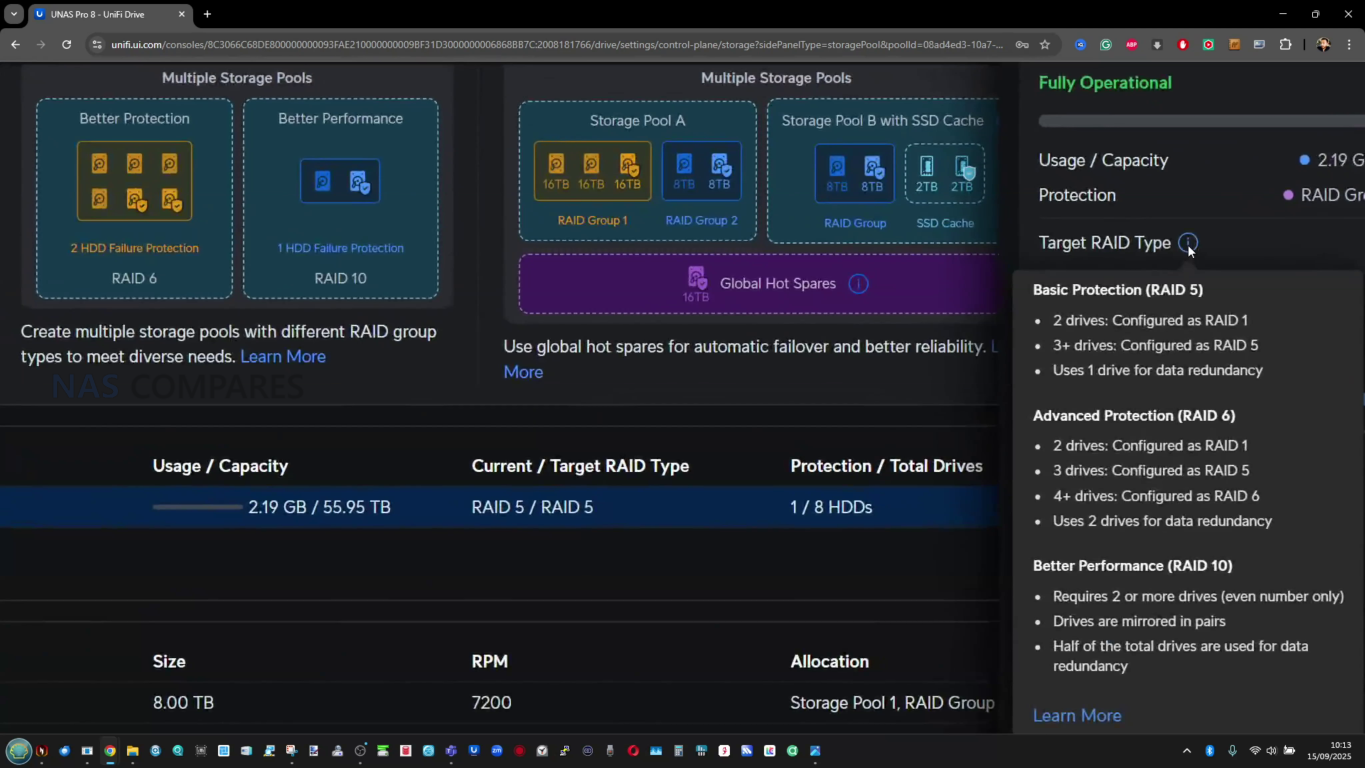
The larger differentiation is therefore less about whether core protection features exist and more about how much flexibility you have in pool layout and drive management within the limits of each chassis.
| Storage Feature | UNAS Pro
|
UNAS Pro 4
|
UNAS Pro 8
|
|---|---|---|---|
| Form factor | 2U rack | 1U rack | 2U rack |
| SATA bays | 7x 2.5/3.5 inch | 4x 2.5/3.5 inch | 8x 2.5/3.5 inch |
| M.2 NVMe slots | 0 | 2 | 2 |
| SSD cache support | No | Yes | Yes |
| Max NVMe capacity supported | N/A | 4 TiB | 4 TiB |
| RAID types listed | RAID 5, RAID 6, RAID 10 | RAID 5, RAID 6, RAID 10 | RAID 5, RAID 6, RAID 10 |
| RAID group support | Multiple | Single | Multiple |
| Hot spare support | Yes | No (not listed) | Yes |
| Snapshots | Yes | Yes | Yes |
| File encryption | Yes | Yes | Yes |
UniFi UNAS Pro 8 vs Pro vs Pro 4 NAS – Internal Hardware
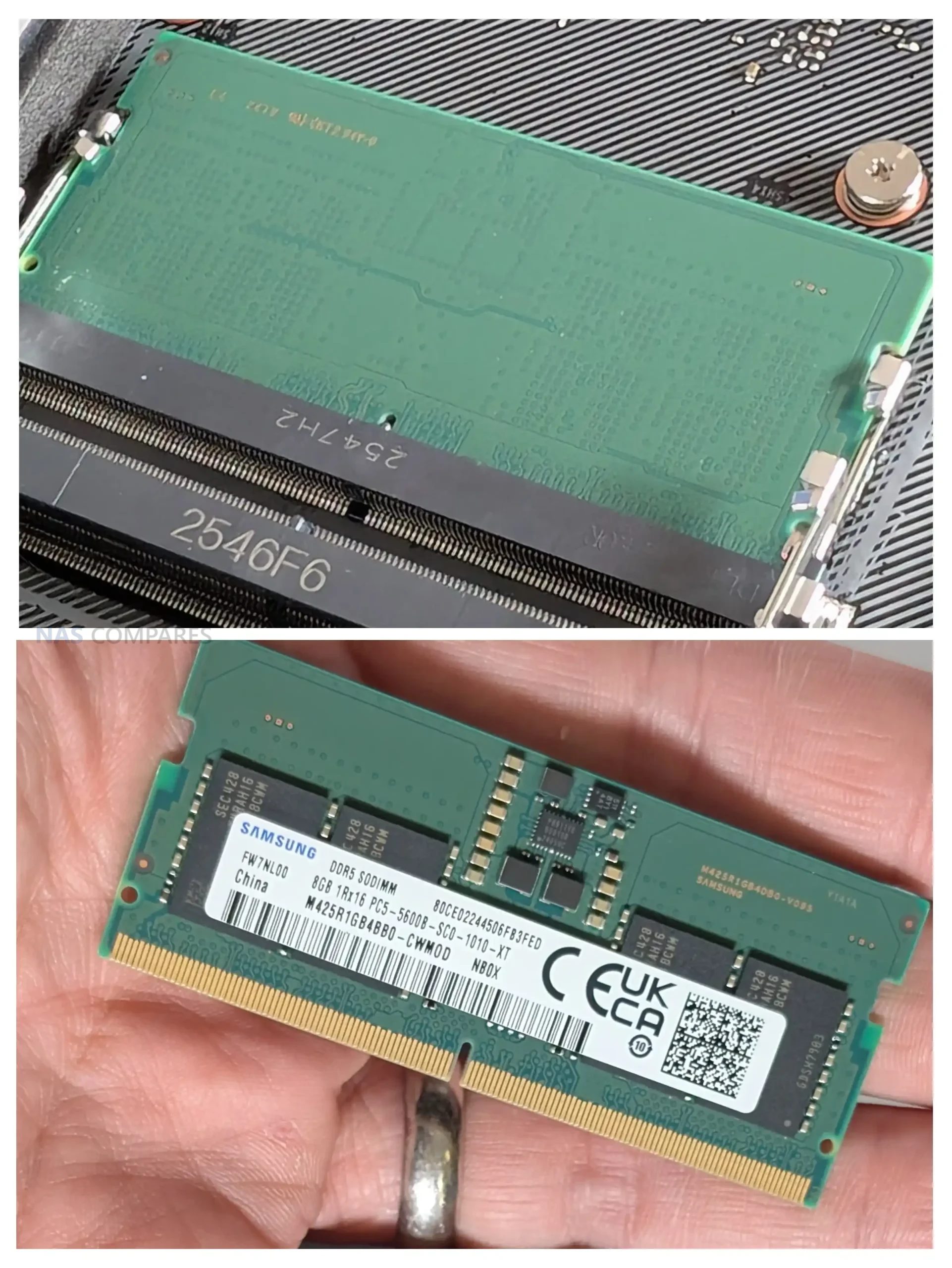
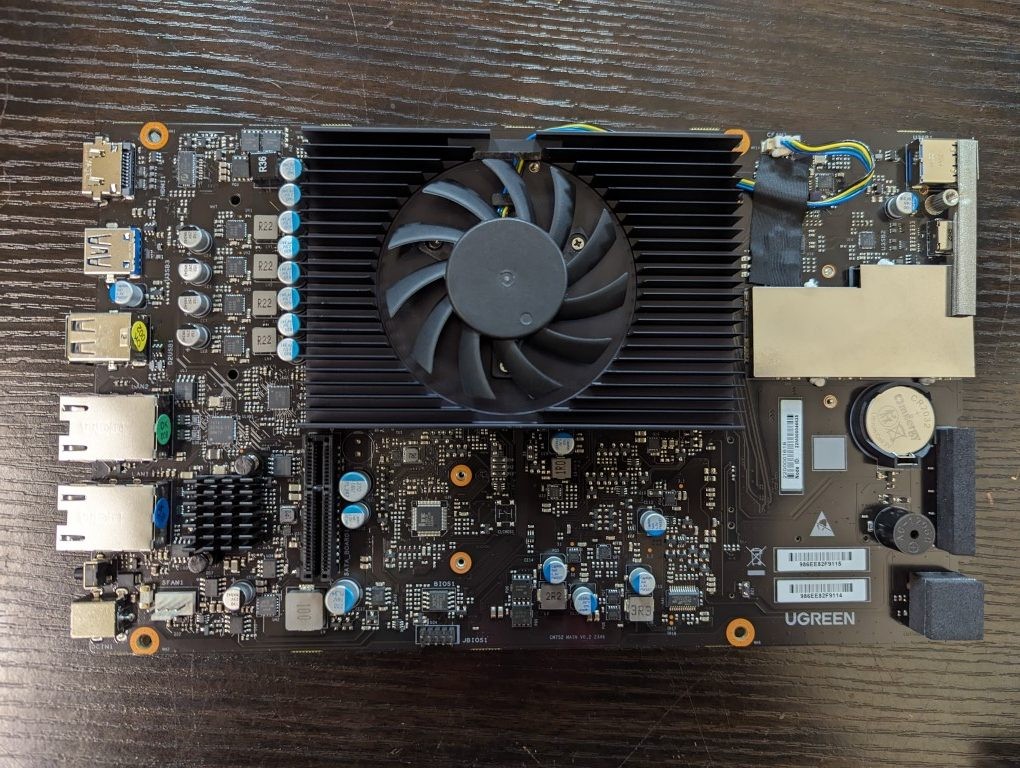
All 3 systems are built around a quad core ARM Cortex A57 platform, but they are not configured identically. The UNAS Pro runs the Cortex A57 at 1.7 GHz, while the UNAS Pro 4 and UNAS Pro 8 are listed at 2.0 GHz. In day to day use, this tends to show up less as a dramatic jump in peak throughput and more as extra headroom when the system is handling several background jobs at once, such as indexing, snapshots, and multi user access, while still servicing file activity. The architecture choice is aligned with lower draw compared with typical x86 NAS hardware, but it also sets a ceiling on heavier compute workloads that some buyers associate with higher end NAS platforms.Memory is where the split is clearer. The UNAS Pro and UNAS Pro 4 ship with 8 GB, while the UNAS Pro 8 steps up to 16 GB. The practical impact is less about basic file sharing and more about how much concurrent activity the system can absorb before responsiveness drops, particularly when you add more users, larger file operations, more snapshot activity, and cache related behavior on models that support it. None of these systems are positioned as memory expandable platforms in the provided specifications, so the installed capacity is effectively the long term limit.
 |
 |
 |
 |
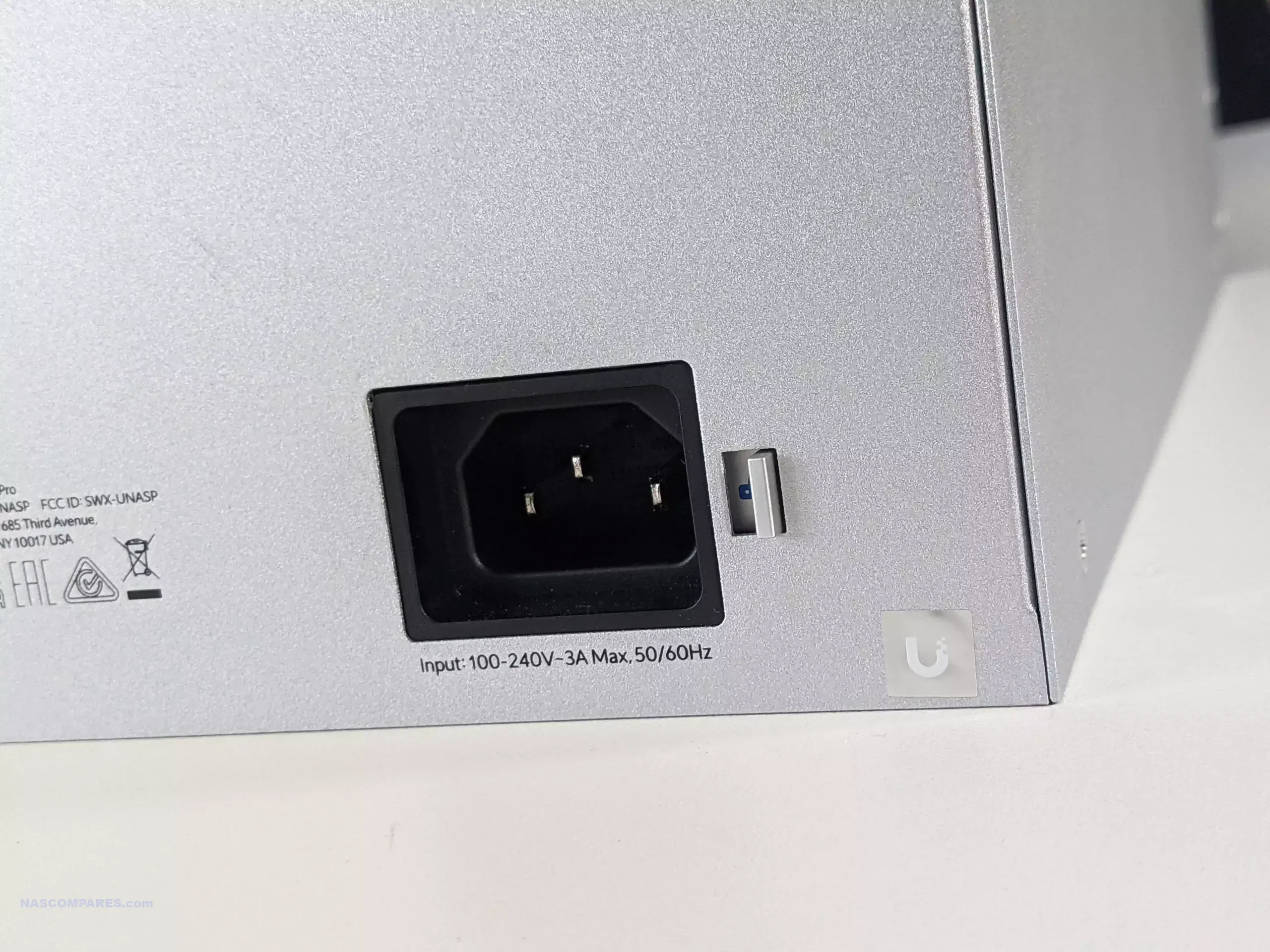
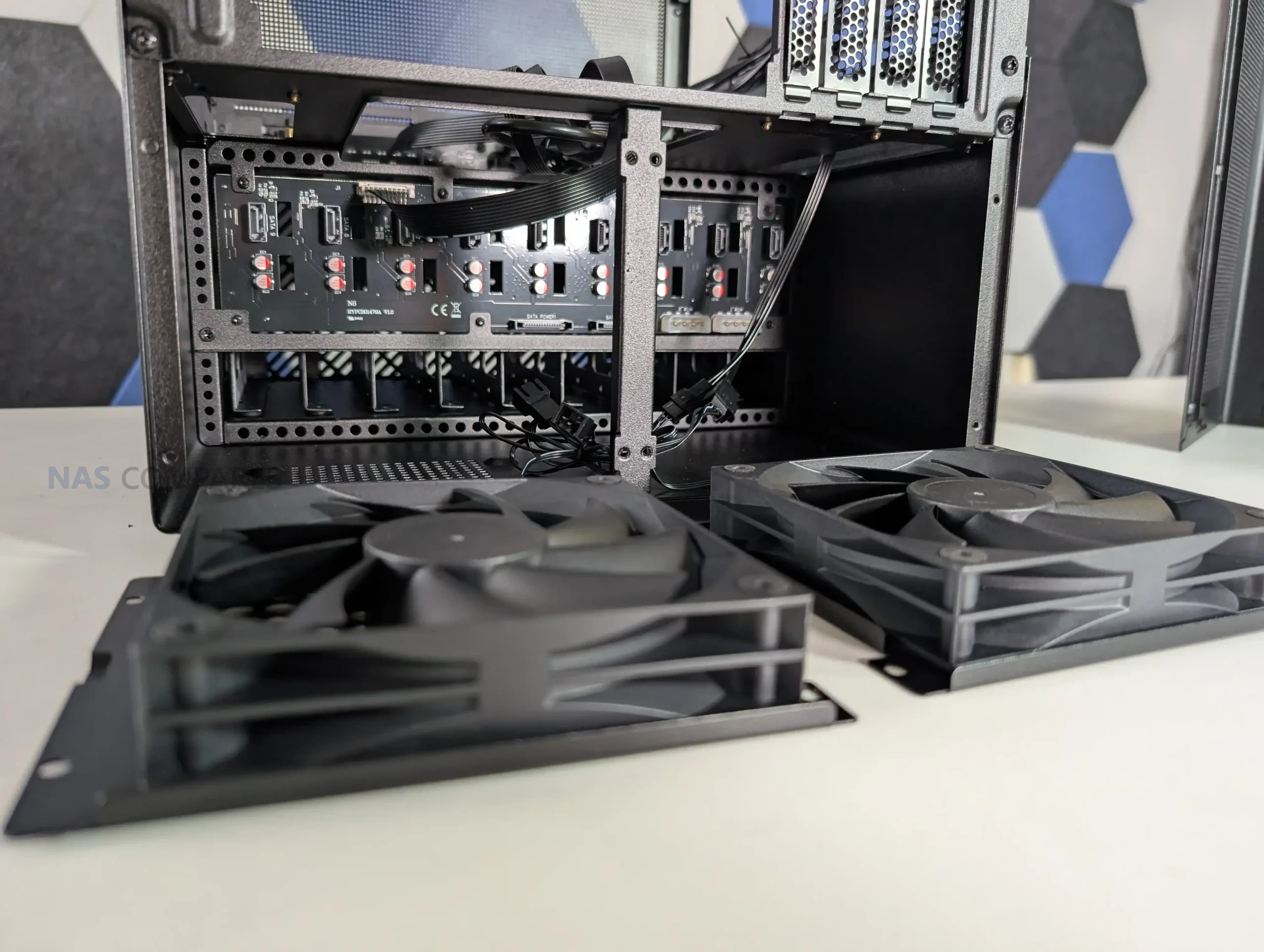
Power delivery and serviceability differ meaningfully between the range. The UNAS Pro and UNAS Pro 4 use internal AC to DC power supplies with an additional USP RPS DC input for redundancy, and their overall platform power limits are lower, matching their smaller scale.
 |
 |
The UNAS Pro 8 uses hot swappable power modules and is designed to support more demanding configurations, reflected in the higher maximum power consumption and the larger drive power budget. This does not automatically translate into higher idle power, but it does indicate how much overhead the chassis is designed to tolerate when fully populated and under sustained activity.
| Internal Hardware Detail | UNAS Pro
|
UNAS Pro 4
|
UNAS Pro 8
|
|---|---|---|---|
| Processor | Quad Core ARM Cortex A57 | Quad Core ARM Cortex A57 | Quad Core ARM Cortex A57 |
| CPU clock | 1.7 GHz | 2.0 GHz | 2.0 GHz |
| Memory | 8 GB | 8 GB | 16 GB |
| Power supply design | Internal AC DC, 200W | Internal AC DC, 150W | 2x hot swappable AC DC modules, 550W |
| Power inputs | 1x AC, 1x USP RPS DC input | 1x AC, 1x USP RPS DC input | 2x AC inputs via hot swap modules |
| Max power consumption | 160W | 150W | 250W |
| Max drive power budget | 135W | 125W | 225W |
| Management and setup radios | Bluetooth 4.1 | Bluetooth 4.1 | Bluetooth 4.1 |
| Display | 1.3 inch touchscreen | None listed | None listed |
| Operating environment | -5 to 40 C, 5 to 95 percent noncondensing | -5 to 40 C, 5 to 95 percent noncondensing | -5 to 40 C, 5 to 95 percent noncondensing |
| Weight | 9.2 kg without brackets, 9.5 kg with brackets | 6.7 kg | 11.5 kg |
UniFi UNAS Pro 4 vs Pro vs Pro 8 NAS – Ports and Connections
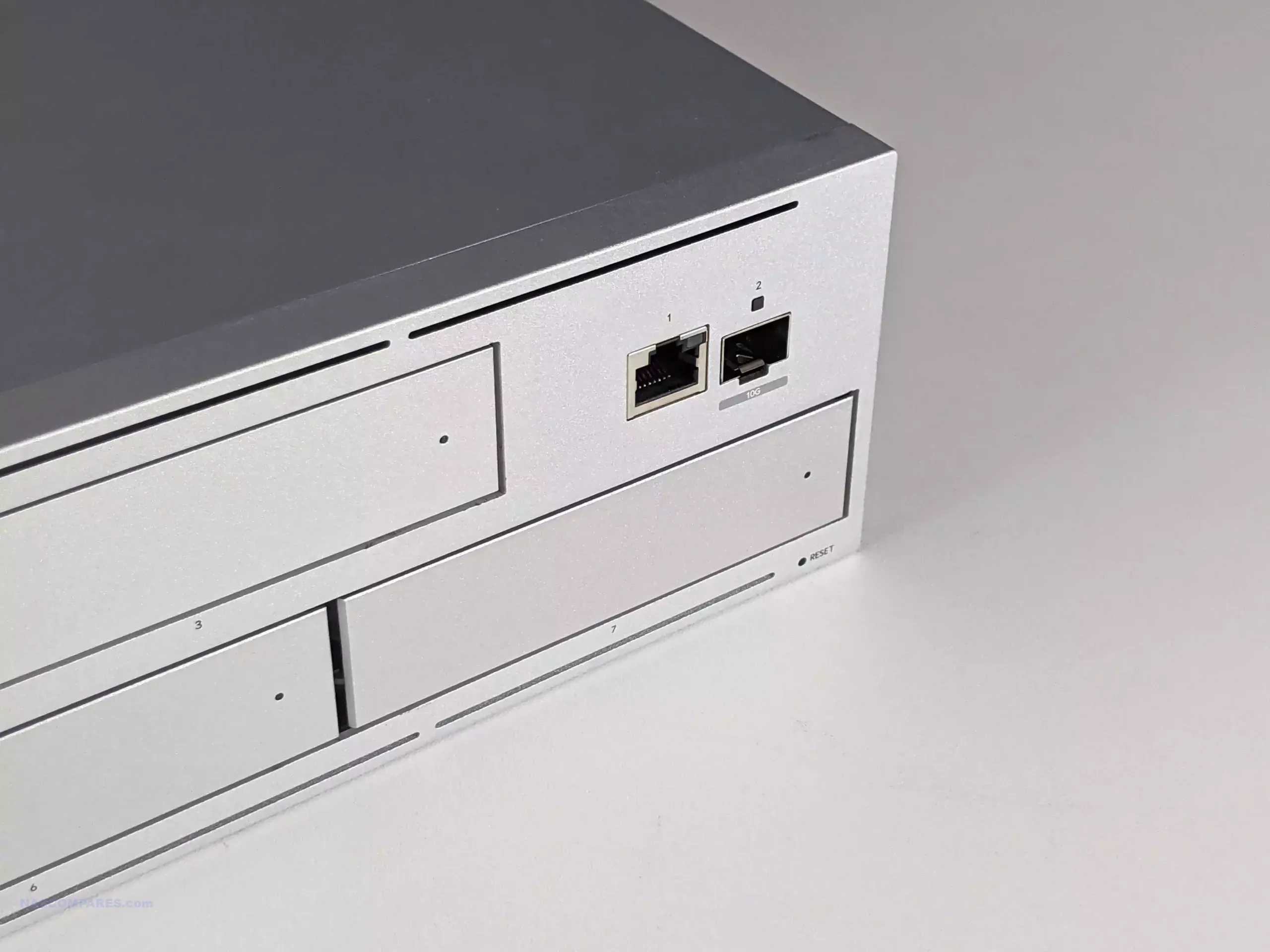
Across the 3 systems, the shared theme is 10 GbE as the primary path for file access, but the implementation differs. The UNAS Pro provides a single 10G SFP+ port plus a 1 GbE RJ45 port, which typically ends up used either for management traffic or as a slower access fallback. The UNAS Pro 4 shifts to a dual 10G SFP+ layout, giving more flexibility for link aggregation or failover planning, even if the practical benefit depends on the storage configuration and client support. The UNAS Pro 8 goes further with 2x 10G SFP+ and adds a 10 GbE RJ45 port that supports multi speed negotiation, which makes it easier to drop into networks that are already built around copper 10 GbE.
 |
 |
Port placement is also part of the decision, because the UNAS Pro uses front mounted networking, while the UNAS Pro 4 and UNAS Pro 8 keep network connections on the rear. Front mounted ports can simplify short patch runs in racks that are set up around front facing switching, while rear mounted ports follow the more common rack NAS convention and can be cleaner in racks that route cabling at the back. None of the 3 is positioned as a platform for network expansion cards, so what you buy is the long term connectivity ceiling.
 |
 |
In day to day operation, the multi port models are mainly about resiliency and network design options rather than guaranteeing linear scaling for a single user. You can plan for redundancy across switches, use bonding where your environment supports it, or segment traffic patterns in a more controlled way.
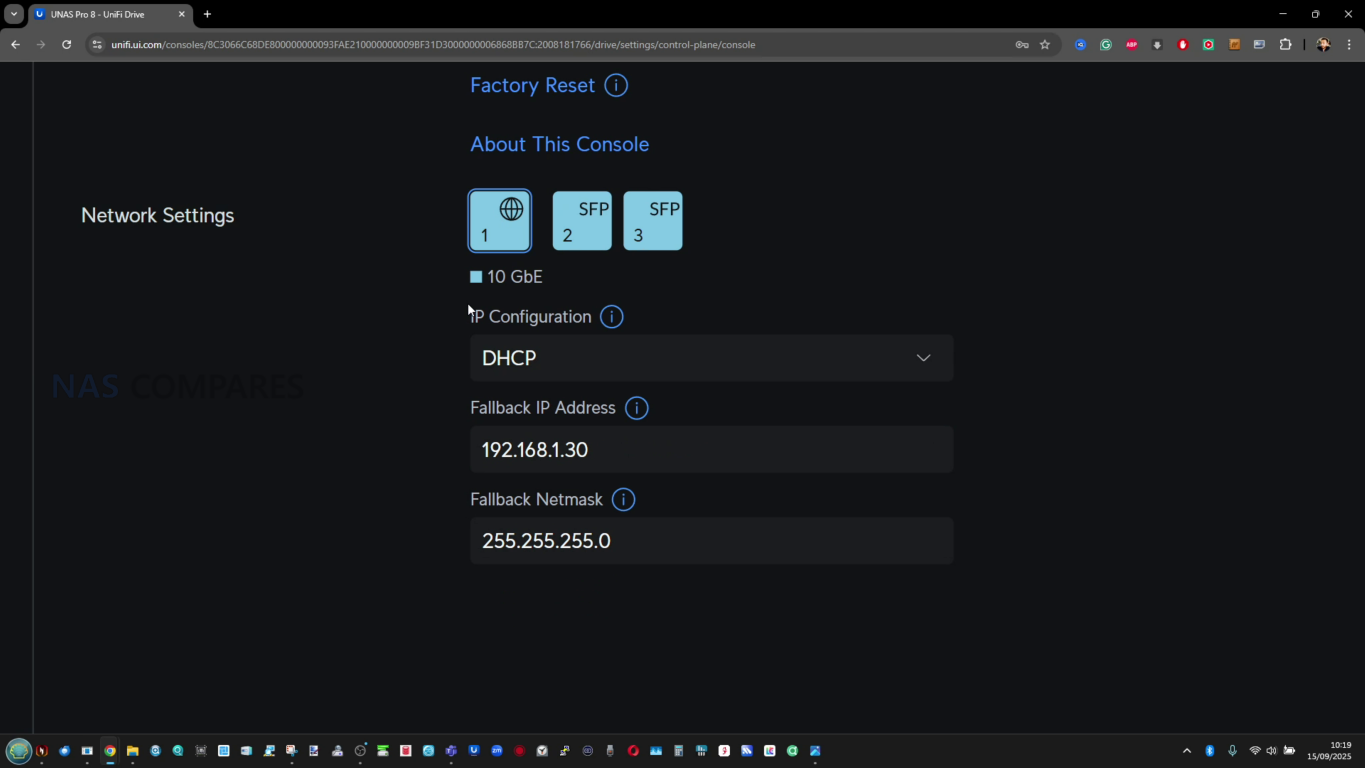
The UNAS Pro 8 is also the only model here with 10 GbE available on both SFP+ and RJ45 in the base hardware, which reduces the need for media converters or additional transceiver planning if your network is not SFP+ centric.
| Connectivity | UNAS Pro
|
UNAS Pro 4
|
UNAS Pro 8
|
|---|---|---|---|
| 10 GbE SFP+ | 1 (10G/1G) | 2 (10G only) | 2 (10G only) |
| 10 GbE RJ45 | 0 | 0 | 1 (10G/5G/2.5G/1G/100M) |
| 1 GbE RJ45 | 1 (1G/100M/10M) | 1 (1G/100M/10M) | 0 |
| Total high speed 10G ports | 1 | 2 | 3 |
| Network port location | Front | Rear | Rear |
UniFi UNAS Pro 4 vs Pro 8 vs Pro NAS – Price and Value
At list pricing, the UNAS Pro and UNAS Pro 4 sit at the same $499, but they are selling different priorities. The UNAS Pro concentrates its value in raw bay count and a shorter 2U chassis, trading away NVMe cache support and additional 10 GbE links to keep the platform simple. The UNAS Pro 4 is priced the same while reducing the HDD bay count and moving to a 1U chassis, but it adds 2x NVMe cache slots and a second 10G SFP+ port, positioning it more as a “small but fast access” rack NAS rather than a capacity first box.

The UNAS Pro 8 steps up to $799 and is priced like a higher tier option, but the spec sheet shows where that uplift is meant to land: more drive bays than either $499 model, NVMe cache capability like the Pro 4, more total 10 GbE ports, and a jump to 16 GB memory. It is also the only one of the 3 with a 10 GbE RJ45 port alongside SFP+, which can reduce friction in mixed copper and fiber environments. If the goal is to keep the same platform longer term, the Pro 8 is the only one here with both the capacity headroom and the memory ceiling to match it.

Using the simplified “price per bay” and “price per element” approach, the headline result is that the Pro 8 looks strongest once you count all the included hardware features rather than only the number of drive bays. The UNAS Pro has the lowest cost per bay because it is a 7 bay system at the same price as the 4 bay model, but the Pro 4 catches up when the NVMe slots and dual 10 GbE are treated as part of the value calculation. The Pro 8 is not the cheapest upfront, but it ends up close to the Pro 4 on cost per bay and is the lowest on cost per element because it stacks more of the “platform” features in one chassis.
| Model | Price | Drive bays counted for price per bay | Price per bay | Elements counted | Price per element |
|---|---|---|---|---|---|
| UNAS Pro 4 | $499 | 4x SATA + 2x M.2 | $83 | 8 GB RAM + 4+2 bays + 2x 10 GbE | $14.60 |
| UNAS Pro | $499 | 7x SATA | $72 | 8 GB RAM + 7 bays + 1x 10 GbE | $22.60 |
| UNAS Pro 8 | $799 | 8x SATA + 2x M.2 | $79 | 16 GB RAM + 8+2 bays + 3x 10 GbE | $14.20 |
UniFi UNAS Pro 8 vs Pro vs Pro 4 NAS – VERDICT
The UNAS Pro 4, UNAS Pro, and UNAS Pro 8 are close enough in naming to look like simple capacity steps, but they are positioned more like 3 different takes on the same UniFi Drive appliance idea. The UNAS Pro is the most capacity oriented at $499, giving 7 bays in a shorter depth 2U chassis with a built in 1.3 inch touchscreen and a straightforward port layout that suits some front of rack workflows. The UNAS Pro 4 shifts the emphasis away from bay count and toward “newer platform features” at the same $499 price, combining a 1U form factor with 2x 10G SFP+ and 2x NVMe cache slots, at the cost of a deeper chassis and fewer total drive bays. The UNAS Pro 8 is the most complete hardware package in the lineup, adding more bays, NVMe cache, more total 10 GbE connectivity including 10 GbE RJ45, and 16 GB memory, while also being the only one of the 3 to use hot swappable power modules. None of the 3 supports an official expansion shelf approach, so the bay count you buy on day 1 is effectively the long term ceiling unless you plan a separate NAS later.

Choosing between them mostly comes down to which ceiling matters first in your deployment: total bays, total network options, or overall platform headroom. If you want the most bays at $499 and the chassis depth is a priority, the UNAS Pro remains the obvious pick, with the tradeoffs being no NVMe cache path and a simpler network layout than the newer units. If you want the $499 option that aligns most with modern expectations for a small rack NAS, the UNAS Pro 4 has the cleanest argument, because dual 10G and NVMe cache can matter more than extra bays in smaller, faster working sets, even if those cache slots are not usable as standalone storage pools. If you are planning for longer retention cycles, heavier multi user access, or you simply want the most complete feature set in a single chassis, the UNAS Pro 8 is the one that most clearly justifies its higher price, particularly once memory, network flexibility, and the power module design are considered together. The main limitation across the lineup is that the ARM platform and fixed memory approach sets expectations about the long term performance ceiling, but within that constraint, the decision is primarily about how you want the hardware budget divided between capacity, connectivity, and overall platform resources.
| UNAS Pro (7 Bay, $499)
|
UNAS Pro 4 (4 Bay, $499)
|
UNAS Pro 8 (8 Bay, $799)
|
|
|---|---|---|---|
| BUY | |
|
|
| Pros | More 3.5 inch bays than UNAS Pro 4 at the same $499 price (7 vs 4) | 1U chassis (smallest height) | Most total bays (8) plus 2x NVMe cache slots |
| Shallower chassis depth than both (325 mm), easier fit in short depth racks | 2x 10G SFP+ instead of 1x 10G SFP+ on UNAS Pro | 16 GB memory (double UNAS Pro and UNAS Pro 4) | |
| Front 10G SFP+ and 1G RJ45 placement can suit front of rack cabling | NVMe cache support (absent on UNAS Pro) | 3 total 10 GbE ports (2x 10G SFP+ plus 10 GbE RJ45), most flexible networking | |
| 1.3 inch touchscreen (absent on UNAS Pro 4 and UNAS Pro 8) | Longer CPU clock than UNAS Pro (2.0 GHz vs 1.7 GHz) | Hot swappable power modules (only model with this design) | |
| Cons | No NVMe cache support (both UNAS Pro 4 and UNAS Pro 8 have it) | Lowest bay ceiling and no official expansion path, so it fills up fastest | Highest price up front ($799) |
| Only 1x 10G SFP+ (UNAS Pro 4 has 2x, UNAS Pro 8 has 2x plus 10 GbE RJ45) | Deeper chassis than UNAS Pro (400 mm vs 325 mm) | Deepest chassis (480 mm), most demanding fit in shallow racks | |
| Lower CPU clock than UNAS Pro 4 and UNAS Pro 8 (1.7 GHz vs 2.0 GHz) | No hot swap PSU design (UNAS Pro 8 is the only one with hot swappable power modules) | No touchscreen (UNAS Pro includes a front touchscreen) | |
| Same 8 GB memory as UNAS Pro 4 and less than UNAS Pro 8 (16 GB) | Same 8 GB memory as UNAS Pro and less than UNAS Pro 8 (16 GB) | Higher power ceiling and max power consumption than the other 2 (250 W max) |
 SUBSCRIBE TO OUR NEWSLETTER
[contact-form-7]
 Join Inner Circle
 Get an alert every time something gets added to this specific article!
Subscribe
This description contains links to Amazon. These links will take you to some of the products mentioned in today's content. As an Amazon Associate, I earn from qualifying purchases. Visit the NASCompares Deal Finder to find the best place to buy this device in your region, based on Service, Support and Reputation - Just Search for your NAS Drive in the Box Below
Need Advice on Data Storage from an Expert?
Finally, for free advice about your setup, just leave a message in the comments below here at NASCompares.com and we will get back to you. Need Help?
Where possible (and where appropriate) please provide as much information about your requirements, as then I can arrange the best answer and solution to your needs. Do not worry about your e-mail address being required, it will NOT be used in a mailing list and will NOT be used in any way other than to respond to your enquiry.
[contact-form-7]
Need Help?
Where possible (and where appropriate) please provide as much information about your requirements, as then I can arrange the best answer and solution to your needs. Do not worry about your e-mail address being required, it will NOT be used in a mailing list and will NOT be used in any way other than to respond to your enquiry.
[contact-form-7]
 TRY CHAT
Terms and Conditions
TRY CHAT
Terms and Conditions
 Ko-fi or old school Paypal. Thanks!To find out more about how to support this advice service check HEREIf you need to fix or configure a NAS, check Fiver
Have you thought about helping others with your knowledge? Find Instructions Here
Ko-fi or old school Paypal. Thanks!To find out more about how to support this advice service check HEREIf you need to fix or configure a NAS, check Fiver
Have you thought about helping others with your knowledge? Find Instructions Here





|
 |



 Dual 10Gb SFP+ networking is unusual in a 1U 4 bay NAS at this price point + failover will not result in bandwidth throttle
 NVMe is cache only, with no option to use M.2 drives as primary storage pools























 où technicité et entraide coexistent harmonieusement.

 Docker pour les nuls – la révolution du conteneur


 Comment participer au concours ?
 Pourquoi aimeriez-vous gagner le NAS Synology DS223j ?
 Dates importantes
 Le lot à gagner
 Conditions de participation











 NAS DIY en 2026 : quel système choisir ?